Tag: TV

  • And now a 3D mobile game for Colors’ 24

    And now a 3D mobile game for Colors’ 24

    MUMBAI: It has been three weeks since Indian audiences have been introduced to a new fictional TV format in the form of real time story telling through the first international adaptation of the American hit 24. With a 360 degree marketing campaign – almost like that used for full length feature films – to help create the buzz around the series, host channel Colors has decided to perk it up by throwing in a sparkling digital ingredient for viewers.

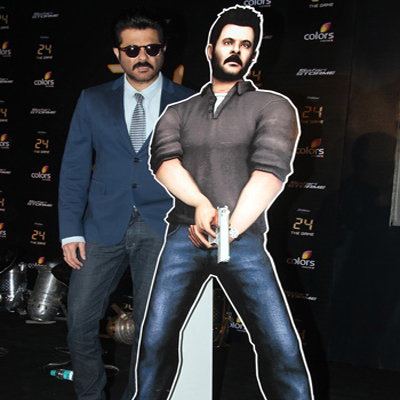
    And it’s coming in the form of a 3D interactive mobile game for iOS and Android phones. Developed by Gameshashtra Solutions, it is targeted at those who want to have the thrill of playing Jai Singh Rathod (Anil Kapoor) – the main protagonist of the show – while on the go. Called ‘Safari Storme 24 – The Game’, it is available for download only in India. It will allow gamers to go through three maps of Worli, Dadar and Parel with 30 levels of two minutes each. As of now only the Worli route is available while the other two will be launched in the coming weeks.The first map of Worli is a rooftop setting.

    Four and a half months went into creating the 3D game. Fans will keep going through levels, scoring points, winning ammunition and then checking scores with others on the ‘leaderboard’ through their Facebook or Twitter accounts.

    “The three locations in the game are also there in the series,” says Colors digital head Vivek Srivastava. “We kept the game in the spirit of the show by taking the concept ‘race against time’ rather than the political drama in it,” he adds.

    Explaining the game technique Srivastava says that players have two ways of surviving – hit and survive or duck and survive. As the game levels progress, the enemies come in hordes and ammunition also stacks up.

    Coming up with a 3D game has probably cost sack fulls of money, apart from what has already been invested in the expensive show. But the channel seems to not be too worried about it.

    Vivek Srivastava is targeting a million downloads of the game

    “For the first season it is not about making money,” says Srivastava who is aiming at getting 1 million downloads for the free game. However, advertisements will be inserted into the game that would give them some amount of revenue.

    24 is Colors biggest fiction property created by Anil Kapoor Productions and Ramesh Deo Productions (RDP). Delly Belly director Abhinay Deo is the series director while Rensil D’Silva is the scriptwriter.

    The show is presented by Safari Storme while Next is one of the associate sponsors. The launch day saw it garner 3.4 million viewers with most of it coming from the urban areas while the second week saw it get an average of 2.6 million viewers.

    “Television executives in India are increasingly understanding that you can take a TV show into other experiences for viewers. Look at KBC which has a game which allows fans to test their general knowledge skills online and on the mobile. And now Colors has developed a 24 game which will allow youngsters and old alike to shoot, and kill while rising up in levels,” says a media observer. “The fact that it is primarily for the mobile will bring in a lot of fans who will play the game when they have a few minutes to spare, whether in the bus or the train or in between meetings. It’s a great move. Hopefully, some of the gamers who are not viewers of the series will be lured to watch it after playing the game.”

    Another media observer says that there is little hope of 24 ever becoming a massy series along the lines of soaps and dramas. “It’s great to flog the horse, but the horse only has that many backers,” says she. “Colors has gambled with 24 and it is to be lauded for the effort especially in terms of taking TV production and narrative to a different level. But it should bear in mind that 24 is going to be a niche affair for some time. So it should not expect too many incremental gains from the game as well.”


  • TLC launches a new India centric food series

    TLC launches a new India centric food series

    MUMBAI: The show is hosted by the award-winning UK TV home cook, food writer and stylist Ravinder Bhogal wherein she will whip up dishes from across the globe in her signature style.


    Discovery Networks Asia-Pacific senior VP and general manager – south Asia and head of revenue, pan-regional ad sales and southeast Asia Rahul Johri, said, “TLC is committed to present the widest range of food programmes and exciting new formats, hosted by the finest and most entertaining personalities. This festive season, we will bring a fresh talent with an Indian lineage – Ravinder Bhogal – whose delicacies will delight the most refined palate. In Ravinder’s Kitchenviewers will experience world flavours presented in a unique style.”


    Excited on the launch of her series on TLC, Ravinder Bhogal, said, “It feels absolutely fantastic to cook for the Indian audience. I am all set to enjoy my new relationship with the Indian viewers on the country’s favourite lifestyle channel TLC.”


    The showwill premiere on 28 October every night at 8 pm only on TLC.

  • O&M and The Hindu tell politicians to behave

    O&M and The Hindu tell politicians to behave

    MUMBAI: With the elections just around the corner, The Hindu has launched an extension of its successful Behave campaign.

    The camping has been conceptualised by Ogilvy & Mather and focuses on some of the concerns like Corruption, dereliction of duty, bad behaviour and inadequate infrastructure of the young voters.

    The campaign boldly poses these questions to the leaders of the country and urges them to behave, for the youth are watching.

    Ogilvy South Asia executive chairman and creative director Piyush Pandey said, “With a huge youth population and our ambition to be a shining nation in the world, there is a great need for us older people in positions of responsibility to set a better example for the young.  I have closely followed cartoonists who have a very effective way of using satire to shame people.  I know that campaigns cannot change behaviour overnight, but I would be very happy if some people are not able to sleep well for a few nights at least.”

    This is the next phase of The Hindu’s Behave campaign, which earlier drew attention to politicians’ bad behaviour. This time, it goes a step further, by not just admonishing bad behaviour but reminding politicians that the power to re-elect them undoubtedly lies in the hands of the youth.

    It uses dark humour to hold up a mirror to a political leader’s bad behaviour, the print and outdoor campaign uses stark facts to bring the issues that the youth face to the forefront. Eventually, it aims to become a crowd-sourced campaign, by asking people to send in their own questions via social media which will be featured as ads in the paper. Going forward, it hopes to address some of these issues so the youth can make an informed decision when they eventually vote.

    The Hindu editor Siddarth Varadharajan said about the campaign: “The Hindu’s ‘Behave Yourself, India” campaign cherishes the spirit of parliamentary debate, which is the true test of a functional democracy. Every Indian has a right to be heard – but that right is only as effective as our ability to listen, engage and disagree courteously with each other. Sadly, the space for tolerance and free speech is narrowing in our republic. This is no surprise because many of our elected representatives – who hold a candle to the rest of society – have failed to debate policy and politics with their peers in Parliament in a civilised manner.”

    He added, “Our campaign shines a light on the errant and discourteous politician, wedded to privilege and power, whose fate now lies in the hands of voters, many of whom are young and who will be exercising their franchise for the first time. The idea has been brought alive through print and a television commercial, beautifully executed by Prasoon Pandey of Corcoise Films.”

    The campaign will be on TV, cinema, print, outdoor across the country and on social media as well.

  • Q W Naqvi joins as India TV editorial director

    Q W Naqvi joins as India TV editorial director

    MUMBAI: India TV today confirmed the appointment of QW Naqvi as its editorial director. QW Naqvi has been a known face for a long time on Aaj Tak where he put in his papers last year.


    A professional with a 360 degree view of the industry, Naqvi as part of the top management at TV Today created editorial workflow templates for optimal resource utilisation. Naqvi will be responsible to take India TV to the next level. He will be reporting to chairman and editor-in-chief Rajat Sharma.


    Starting his career in 1980 as trainee journalist (Hindi) with The Times of India Group, he has served at Navbharat Times, and later “Ravivar”, where he served as chief reporter. Before moving to Aaj Tak, he was part of the team that started Hindi daily – Chauthi Duniya. At “Chauthi Duniya,” the first Hindi weekly broadsheet, his innovations with layout design gained him the reputation as the man with defining ideas.


    Welcoming Naqvi on board, Sharma said, “Naqvi  is a hugely respected professional, with his experience, knowledge and enigma we definitely see India TV growing faster than ever in its quest to reign supreme in the Hindi News Genre and beyond.”


    “With elections round the corner, I think we are on the way, to create a right mix for our viewers and advertisers alike,” he added.


    Commenting on his appointment, Naqvi said, “This opportunity comes as a huge prospect for me to contribute towards furthering India TV’s charge for cementing its leadership position in the news genre.”

  • Content explosion an opportunity for TV

    Content explosion an opportunity for TV

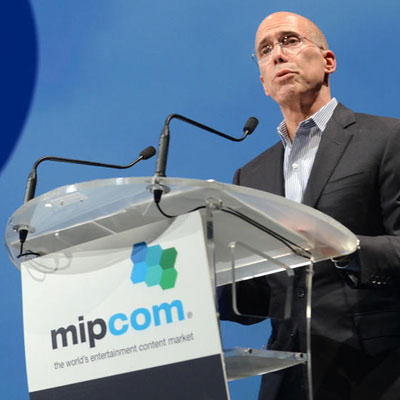
    CANNES: “It is all about opportunities and it isn’t simple. Opportunity involves risk and in many instances, feels threatening,” said DreamWorks Animation CEO Jeffrey Katzenberg.

    Named ‘Personality of the Year’, Katzenberg was delivering the key note speech at Mipcom. “If one person seizes a new opportunity, then someone else has to lose ground,” he added.

    Speaking about the evolving television, film and online video markets, he said: “Over the next two years, there will be an explosion of content on the web. In the 40 years I’ve been in the entertainment industry, I don’t think there’s ever been a time filled with so much new and unique opportunity for the world of television.”

    After a successful stint in the film industry, DreamWorks has expanded its footprint to television production and distribution. The production house recently struck a deal with Netflix for providing more than 300 hours of original content, acquired the YouTube multi-channel network AwesomenessTV and partnered with RTL Disney Fernsehen. 

    Dispelling fears that the era of TV was coming to an end, Katzenberg said, “Linear TV will do just fine, even with the internet explosion.”

    Taking the audience through historical advancements since the invention of the printing press in 1445, he said, “Throughout history, it has never been seen that one form of media was replaced by the other newly launched technology.”

    A firm believer in the concept that each technology imparts a new role to that which has come before it, he said: “Because there are so many emerging distribution options, there will inevitably be more demand for content.” 

    Regarding the AwesomenessTV acquisition, Katzenberg said: “The deal gets us directly in touch with our teen audience in a way that we simply can’t with movies or TV shows. Just like an additional layer in a parfait, the entire media experience simply becomes richer and more satisfying.”

    He pitched for mobile entertainment as a solution to the problem of ‘waiting’ saying: “Up until very recently, we literally twiddled our thumbs while we waited. There was nothing else to do. Now our thumbs have a higher purpose than to twiddle. Through touch screens, we actually now can touch the world. Thanks to these devices, ‘waiting’ as we know it, is dead.”

    “Mobile has become an asset to traditional TV, rather than a threat. There is a crossover phenomenon happening in the relationship between mobile and linear TV. For instance, AwesomenessTV created a show by compiling the best clips from its YouTube channel and airing it on Nickelodeon. Mobile serves as an incubator of talent and concepts, driving additional traffic to traditional TV.”

    Katzenberg concluded his keynote by expressing a need for great storytellers. “Storytelling – in any medium – is very difficult, and great storytellers are difficult to find. Whether the media is old or new, content continues to reign as king. And this is because – like all royalty – it is rare. Once the touch of great storytellers is added, touch screens can take us anywhere and everywhere,” he rounded off.

  • Disruptions are a necessary evil

    Disruptions are a necessary evil

    CANNES: We live in times of fast changing technology where more often than not, the only way to keep pace is to unlearn what we’ve just learnt and re-adapt ourselves to the transformation.

    Exactly the point Deluxe Media Europe senior director, sales and business development Darren Baker was trying to drive home when he said: “Every time you think you have learnt everything, you have to adapt and learn again. The need is to adapt quickly and learn again.”

    Baker was addressing a gathering at Verriere Grand Audi Level one at the Palais on day two of Mipcom.

    “The important thing is to learn quickly and react to the disruption,” he further stressed.  
    Referring to cinema, TV, VCR, DVD, BluRay and now VOD as techniques used for disruptions, Baker said that while the disruptive nature of some technological shifts was immediately evident, in other cases, it became clear only through tracking the patterns of adoption.

    Speaking of one too many portals in the content supply chain, he said: “The consumer wants the content, the content provider wants to provide the content and the portals are ready to carry them. But then there are too many contracts. There needs to be a disruption here.”

    Not just portals, he also pointed out that there are just too many schemes and updates. “By the time the consumer is happy that they have got all the programmes, the portal updates its software and the consumer has to change the entire system yet again,” he said.

    In his view, the proliferation of vendors too posed a problem. “If you have a large number of vendors, you should reduce them,” he advised buyers.

    Offering his take on successful disruptions, he said: “There is a need for constant improvement in every company. A fresh approach is always welcome and refreshing the digital policy every few months also helps,” adding that with every four year old ignoring television and moving towards mobile and social media, “companies need to be open to disruptions”.

  • Facebook making people cling to TV

    Facebook making people cling to TV

    CANNES: Whoever said Facebook and others of its ilk were responsible for driving audiences away from television would be forced to do a rethink after this gem of a revelation from Facebook VP of partnership, Dan Rose.

    “Facebook now talks of television. And discussions or comments between friends are more about content aired on television,” said Rose in his keynote address on the inaugural day of Mipcom.

    And it didn’t end there. He went on to announce: “We have expanded our list of data partners across the globe.”

    Among the ten global TV companies with whom Facebook has partnered is Star India for beta test- this being its first partnership in India. Says Star India, EVP marketing and communications Gayatri Yadav: Star India will be the first media brand in India to partner with Facebook as part of a beta to use their APIs in our programming. The goal is to work closely with Facebook to develop this offering and leverage this tool to gain rich insights into social conversations on Facebook related to our content. Today the first port of call for consumers when they want to talk about content is often social media people love sharing their thoughts and feelings about the latest shows online. This will help us better understand audience reactions to programming and deliver better real time consumer insight.”

    The other networks include: TF1, Esporte Interativo, Canal+, CBC, Food Network, Channel 4, ProSieben, and Discovery.”

    Rose explained how social media had become an inseparable part of television. “There is now an intersection of social media and TV. In fact, now, TV is leveraging new technology to improve its experience with social media,” he said, while addressing a packed auditorium at the Palais des Festivals in Cannes.

    Referring to Facebook as the second screen, Rose said: “So while everyone thought we were driving people away from TV, the second screen is in fact making them cling to TV.”

    Substantiating his statement with facts, Rose elaborated: “There were 29 million interactions on Facebook about Wimbledon. When MTV Video Music Awards was aired, there were 26.5 million interactions about the awards on Facebook. Also, NBA finals received close to 125 million interactions.”

    Statistically speaking, there are 1.15 billion people on Facebook today. An average mobile user in the US spends approximately 14 hours every month on FB and nearly six hours on Instagram. 18 million people in France are active users of Facebook, of which 11 million use mobile phones for it.

    Asked what keeps Facebook alive and ticking, Rose said: “There are three best practices to follow: One, to spark the conversation. Facebook has added #Hashtags and also come up with trending topics to spark conversations. Two, we connect with fans through public figures. People on Facebook love hearing from public figures. And thirdly, leverage tools. We launched public feed API that gives real time feed of public posts.”

  • From television to web on the go

    From television to web on the go

    CANNES: Day two of Mip Junior put the spotlight on how kids today are increasingly moving from television to the web.

    “This year, four trillion gigabytes of social data was generated. In fact, two years down the line, the number will double,” said SuperAwesome CEO Dylan Collins, adding that Netflix and YouTube were two of the biggest platforms for children to watch/upload videos and listen to music.

    “There is a re-definition of trend. This year, YouTube has seen 100 hours per minute of video being uploaded. And this has built up from zero, six years back. YouTube could probably kill half a dozen entertainment companies tomorrow, just because of how many children are there,” he said.

    SuperAwesome recently asked 2,000 children what presents they’d like to unwrap on Christmas Day only to find out that kids favoured iPhones and iPads over traditional games consoles and handhelds.

    Speaking about the shift to multiple screens, Collins said: “A lot of people talk of two screens, but there are actually four – the mobile, laptop, TV, and desktop. If one has to look at China, the usage of mobiles has exceeded that of desktops. This is where every kid is going.”
    Again, kids with their own tablets are using more Android than iPad, Collins pointed out. “So when you’re thinking about creating new IPs and new brands, build them for tablets and not necessarily just iPads,” he said.

    He stressed on the need for producers to think multi-channel from the very beginning. “Parents today are ready to pay $10-20 for tablets. Everything that interacts with kids involves video and that is the way ahead. Video isn’t going away, in fact, online video is getting bigger and everyone needs to think about it from day one,” he said.

    The morning session also concentrated on games, apps, toys and books for kids.

    In a session on ‘Borderless IPs’, MakieLab CEO Alice Taylor informed the audience about her creation of physical goods from virtual ones. “MakieLab is a start-up making customisable 3D printed dolls, born out of the trend where children were seen collecting in virtual worlds like Moshi Monsters and Club Penguin to customise avatars. We wanted to turn these avatars into real dolls.”

    MakieLab now has a website and an app, and will also launch a game in early 2014. “The app helps children build their own doll through simple slide-bar controls. MakieLab is also working at creating an 11-minute 52-episode animated show aimed at girls, based on the Makies characters and world,” Taylor said.

    Compania de Medios Digitales (CMD) COO Marcelo Liberini spoke about his product Gaturro, which started as a comic in 1993, and has now moved to TV and video. “We ended up building a full trans-media property around this character, and this year, we are finishing the work on the TV series,” Liberini said.

    In 2010, CMD also launched Mundo Gaturro, a virtual world, which has since spread to online radio, a social network called Picapon, webisodes and a video-on-demand platform. “We are expanding into mobile too. We are now in the process of porting the virtual world, ready to be used on tablets,” Liberini said.  

  • NBC show will send someone into space

    NBC show will send someone into space

    MUMBAI: The network has announced that it is teaming with Richard Branson’s Virgin Galactic and veteran TV producer Mark Burnett on ‘Space Race’, a competition where the winner gets a ride on the space liner that is expected to begin commercial flights sometime next year.


    “The term  trip of a lifetime’ has for once been delivered on,” said NBC’s president of alternative and late-night programming Paul Telegdy. “This will be a remarkable experience for anyone who has looked at the night’s sky and dared to dream of space flight.”


    Virgin has been testing its rocket-powered space vehicle this year, with pilots reaching a height of 69,000 feet on a 5 Sept flight that landed in the Mojave Desert near Virgin Galactic’s facility there. Virgin has said the goal is to begin commercial flights next year, with Branson and his family taking the first ride.


    Virgin has already collected $80 million in deposits from 640 people interested in experiencing the weightlessness of space.


    A TV show could be great publicity for Branson’s company. Competitors, such as billionaire entrepreneur Elon Musk’s SpaceX, are also working to make commercial spaceflight a reality.


    Burnett, the producer behind ‘The Voice’ and ‘Survivor’, said he has wanted for 10 years to make a show with the goal of letting an average person experience looking down on Earth from the black sky of space.


    However, NBC offered no estimate on when ‘Space Race’ would air.

  • TRAI recommends guidelines for TV ratings agencies

    TRAI recommends guidelines for TV ratings agencies

    MUMBAI: The Telecom Regulatory Authority of India (TRAI) is once again showing it means business. It has come out with its final recommendations on what should serve as guidelines to put in place a transparent, credible and reliable television ratings process in India. These recommendations have been made after the consultation paper which was first issued by the authority on 17 April 2013. The consultation paper had then called for comments from various stakeholders after which an open house was held on 1 July.

    The problems surrounding the television rating system was raised by the Information & Broadcasting Ministry (MIB) in January 2008. It was then that the authority recommended the adoption of self regulation through the industry led body The Broadcast Audience Research Council (BARC).

    Based on these discussions with the various stakeholders, the TRAI has come up with its own analysis and recommendations which were made public today.

    Amongst the recommendation is that the MIB has to notify the guidelines for regulating television rating agencies based on TRAI‘s recommendation within two months. Any agency wanting to offer TV viewership monitoring or rating services has to perforce get itself registered with the MIB if it fulfills the following guidelines: The rating agency shall be set up and registered as a company under the Companies Act, 1956; any member of the board of directors of the television rating agency should not be in the business of broadcasting/ advertising/advertising agency; the rating agency should have a minimum net worth of Rs 20 crore; the rating agency should also meet the prescribed cross-holdings requirements.

    TRAI has said that to keep the ratings process credible, there should be a minimum of 20,000 panel homes which have to be set up within six months of the guidelines being implemented. Thereafter the number of panel homes has to be increased by 10,000 every year until it reaches 50,000.

    It has recommended that it be mandatory for the industry to observe a voluntary code of conduct for maintaining secrecy and privacy of panel homes and that data and reports should be made available to all stakeholders in an equitable manner on a paid basis.

    Also no single company/ legal entity, either directly or through its associates or inter-connected undertakings, should have substantial equity of 10 per cent or more holding in both rating agencies and broadcasters/advertisers/ advertising agencies.
    TRAI says that ratings agencies will be penalised if they fail to follow the guidelines on cross-holding, methodology, secrecy, privacy, audit, public disclosure and reporting requirements. A penalty of Rs one crore will be levied in the first instance; the second instance will lead to the cancellation of registration.

    For other guidelines, the penal provisions shall be a graduated financial penalty of Rs 10 lakh to Rs one crore for the first three instances of non-compliance and, for the fourth instance, cancellation of registration.

    However, TRAI says an opportunity should be given to each party before invoking any penal provisions. Once guidelines for rating agencies are issued by MIB, these will have to be equally complied by all rating agencies including new entrants.

    In keeping with the fact that the existing rating agency (TAM Media) may require some time for complying with the guidelines, the authority has given it six months to allow it to meet the cross-holding and panel size requirements guidelines.

    It says that it would like industry to implement these recommendations and to show that it means business it says it will suo motu intervene in the larger public interest if the former does not comply.

    Obviously, TRAI is trying its hardest to change the paradigm of TV ratings. Will Indian industry pay heed?

    Click here for the complete final recommendation