Tag: TV

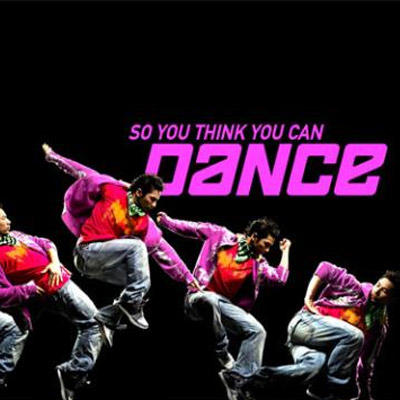
  • ‘So You Think You Can Dance’ to replace ‘Agent Raghav’ on weekends from 24 April

    ‘So You Think You Can Dance’ to replace ‘Agent Raghav’ on weekends from 24 April

    MUMBAI: The Indian adaptation of the American TV reality series So You Think You Can Dance(SYTYCD) is all set make a debut on Indian small screens through &TV. The one hour show will launch on Sunday 24 April at 8.30 pm. SYTYCD will be a weekend show airing on Saturday andSunday.  

    The channel has roped in Chings’ Secret and Yepme.com as co-powered by sponsors and Priyagold as special partner for the show.

    As earlier reported by Indiantelevision.com, Zee Entertainment Enterprises’ Hindi GEC &TV has acquired the rights of the global dance reality format SYTYCD from Dick Clark Productions. The show will be judged by Bollywood dancing diva Madhuri Dixit, choreographer Terrence Lewis and Bosco–Caesar. Endemol Shine India will produce the India edition.

    &TV’s new offering SYTYCD will be replacing its crime fiction show Agent Raghav which was launched on 5 September,2015. Produced by Abhimanyu Singh’s Contiloe Entertainment, Agent Raghav was a finite series and completed 60 episodes on 10 April, 2016. Agent Raghav has received an Indian Telly Award for the ‘Best Thriller and Horror Show’ and was nominated for ‘Best Weekend Show’.

    On the weekend time slot SYTYCD has been pitched against Sony’s Suryaputra Karn at 8.30 pmand The Kapil Sharma Show at 9 pm which is launching on 23 April. The other shows on at the same time are Star Plus’ Silsila Pyar Kya at 8.30 pm and Diya Aur Baati Hum at 9pm, while Sab TV has Sahib Biwi Aur Boss at 8.30 pm and Tarak Mehta Ka Oolta Chasma at 9pm. Life OK  has a prime time show Comedy Classes and Supercops Vs Super villians..Shapath, while Zee TV’s Jamai Raja and Kumkum Bhagya air at the 8.30 and 9 pm time bands.

  • ‘So You Think You Can Dance’ to replace ‘Agent Raghav’ on weekends from 24 April

    ‘So You Think You Can Dance’ to replace ‘Agent Raghav’ on weekends from 24 April

    MUMBAI: The Indian adaptation of the American TV reality series So You Think You Can Dance(SYTYCD) is all set make a debut on Indian small screens through &TV. The one hour show will launch on Sunday 24 April at 8.30 pm. SYTYCD will be a weekend show airing on Saturday andSunday.  

    The channel has roped in Chings’ Secret and Yepme.com as co-powered by sponsors and Priyagold as special partner for the show.

    As earlier reported by Indiantelevision.com, Zee Entertainment Enterprises’ Hindi GEC &TV has acquired the rights of the global dance reality format SYTYCD from Dick Clark Productions. The show will be judged by Bollywood dancing diva Madhuri Dixit, choreographer Terrence Lewis and Bosco–Caesar. Endemol Shine India will produce the India edition.

    &TV’s new offering SYTYCD will be replacing its crime fiction show Agent Raghav which was launched on 5 September,2015. Produced by Abhimanyu Singh’s Contiloe Entertainment, Agent Raghav was a finite series and completed 60 episodes on 10 April, 2016. Agent Raghav has received an Indian Telly Award for the ‘Best Thriller and Horror Show’ and was nominated for ‘Best Weekend Show’.

    On the weekend time slot SYTYCD has been pitched against Sony’s Suryaputra Karn at 8.30 pmand The Kapil Sharma Show at 9 pm which is launching on 23 April. The other shows on at the same time are Star Plus’ Silsila Pyar Kya at 8.30 pm and Diya Aur Baati Hum at 9pm, while Sab TV has Sahib Biwi Aur Boss at 8.30 pm and Tarak Mehta Ka Oolta Chasma at 9pm. Life OK  has a prime time show Comedy Classes and Supercops Vs Super villians..Shapath, while Zee TV’s Jamai Raja and Kumkum Bhagya air at the 8.30 and 9 pm time bands.

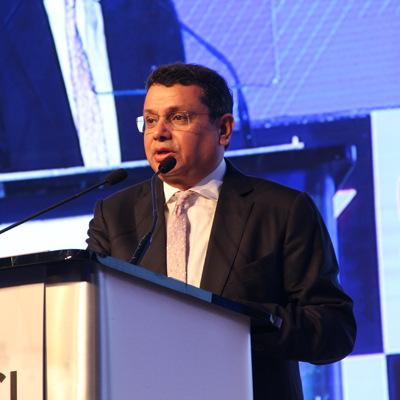
  • Uday Shankar@FICCI Frames 2016: The real digital challenge

    Uday Shankar@FICCI Frames 2016: The real digital challenge

    Good morning.

    Honorable Minister of Communications and Information Technology, Ravi Shankar Prasad Ji, Chairman TRAI R.S. Sharma, Mr. Mukesh Ambani, Ramesh Ji, friends from the world of media and entertainment.

    As co-chair of FICCI’s M&E committee, I have had the opportunity to address you for a few years now. I take this as a rare privilege and hence spend some time thinking through what I should say. A few weeks ago, as I was discussing the theme with some of my colleagues, a young assistant of mine – cocky on youth and his recent admission to Harvard Business School stated rather dismissively that there wasn’t anything new to be said as there wasn’t anything new happening in the M&E sector. While it sounded like a cynical assessment at that time it did set me thinking if there was indeed a grain of truth in what he said. On the surface, it does seem that not much has changed in the last several years except for some incremental growth or decline depending on which vertical you are talking about. Cable TV continues to struggle – struggling to improve its business case, struggling to improve its talent & technology quotient and above all to stay relevant in a rapidly changing world.  DTH, that set out to revolutionize distribution, increasingly seems to be intent on locking its destiny inside an isolated box in a networked world. Even the story of digitalization that started 6 years ago remains incomplete. The advertising revolution of the 90’s when a large number of international and Indian brands were built on television screens, doesn’t seem to be breaking new ground in terms of what I call brand revolution 2.0. Content creators, a community that I belong to, generally seem to be caught in a time warp with the same themes playing in a loop again and again –cursed destinies, rebirth and revenge and deference to elders in public while bickering in private, pretty much sums up what rules national entertainment. The quality of news of course, seems to cause only national consternation, with now even our friendly neighbor taking a pot-shot at our news channels!Over all, it seems the more things change the more they remain the same.  So maybe my colleague was right after all.  

    But then is the picture really as gloomy as this? Because beneath the surface ofentrenched stagnation, quietly – almost stealthily -there is a gigantic disruption playing out. A disruption that’s shifting the ground from beneath our feet.  

    My friends, allow me to recap the year for you.  The creative group to make the most waves last year were 4 youngsters, irreverent enough to take on our entire film industry and then build on that success by putting the entire country under a scanner.  This is a group who has the audacity to have a name so offensive that our news media calls them by their acronym AIB.  Yes, I am talking about All India Bakchod, who are perceived as comedians although this is not a group of people who make imbecile jokes while dressed in a funny manner.  More than once they have set the news agenda for the nation.  They have the gall to take on the combined might of big telcos and Mark Zuckerberg’sFacebook when they felt that the freedom of the internet was being parceled away.  They have used humour to put a spotlight on the state of fire stations in India or for that matter the behavior of the police force. As a group, these four youngsters made more headlines last year than probably all of the creative community put together.

    Very recently one of the pioneers of television entertainment told me that she was so frustrated by the frozen state of traditional media that she was going to create a digital enterprise to tell the stories that traditional media has been too scared to tell.  Of course, I am talking about the totally adorable – Ekta Kapoor.  Think about that for a moment – the person who created the archetype of saas and bahu feels the need to break away from these stifling constraints of the medium that she herself created.  Why?  When that happens, we all need to think hard.

    Friends, the most talked about launch in Indian M&E last year was not a new channel, or a new newspaper or a new production house – actually it was a mobile app that had the gall to ask consumers to go solo.  A call fundamentally at odds with the concept of content consumption in this country, that believes that the entire family watches TV together in the living room. Well, I am talking about the launch of our very own hotstar.  In just about a year, hotstar has been downloaded over 50 million or 5 crore times.  What is the implication of this?  Consider this – more people have watched the English Premier league on hotstar last year than on television.  Yes, EPL was watched by more people on hotstar than on television.  Even for a mass sport like cricket, in the larger cities, hotstar’s watch time is now starting to reach 50% of television.  I urge you to reflect on the potential of that statistic.   This infant service is already becoming a product of habit in India and now this year, my friends, we have set our sight on creating the first global Media & Entertainment product born out of India, when we take hotstar to the rest of the world in a few months.  The numerous and affluent south Asian diaspora which for the longest time has been frustrated by the lack of access to its favourite content will be able to watch cricket, movies and drama through hotstar.  While I am indeed happy for hotstar to be the pioneer, we are very aware that this is a trend that will get replicated again and again, very quickly.

    This colossal shift by no means is limited to television.  At the risk of earning her disapproval, let me share the story of my daughter – she is a serious academic whose job is to analyze the social sector and legislation for a living.  She is always on top of news and opinion articles and yet I have never seen her hold a physical newspaper in her hand.  Her daily dose comes exclusively from the digital universe. Her intake ranges from headlines under 140 characters to ebooks over 14 million characters long. She is a voracious consumer of movies and drama; yet goes to theatres morefor fun than for creative consumption.  Fixed schedule programming sounds as bizarre to her as silent movies to us.  She is obsessed with music but doesn’t own a single CD.  Her near infinite library rests entirely on her iPhone – the same goes for her friends and colleagues who use android devices.

    The world has changed.  There is a tectonic shift happening in our industry right in front of us.And yet, what we see in the world of traditional television is just stagnation. And this stagnation has been made worse by the funny denial that all of us seem to be living in. Even though this change is happening faster than anything we have ever seen, our approach towards it seems to be one of incrementalism.

    I see an even more obsessive desire to protect the antiquated business models that we have painstakingly built over the years and that technology and the youth are decimating like a bull-dozer rolling over glass bottles.  It reminds me of the story of a Japanese soldier who was left stranded and forgotten on a small island in the Pacific. Many years after Japan had lost the war and the world had returned to normal that lone soldier kept guarding that isolated island thinking he was still protecting the Japanese empire.  Herein probably lies the explanation why print companies found it difficult to make the transition to TV and why almost all the digital successes generally come from companies that did not exist even a decade ago.  This is because these are companies and people who are not chained by their legacy businesses.  Just imagine where businesses like Netflix, Twitter and Facebook were a decade ago and what global empires they have created in this short span of time.

    It is pretty clear to me that we are in a battle.  In this battle there are only two options that we have – we can either continue living in denial, hide back in our artificial walled gardens, watching as the bricks crumble down one by one or we can arm ourselves with the sameweapons that our challengers possess, and venture forth into battle, sometimes even against the same businesses that we have created. Change or Perish.

    There is one thing however that will continue to be the same: the power of stories. For those of us who had imagined a world where the so called user generated stories would unseat high quality creativity, the answer comes from the Netflix strategy.  Netflix – the most successful content provider in the US, the challenger to the media behemoths of the west has done so on the back of extremely high quality content, so much so that Netflix’s catalogue today represents the absolute best of American television.

    However there is a twist in the tale here.  No longer is the story enough, within the commoditized consistency of experience.  Technology and creativity are coming together to enhance the experience literally, almost daily.  Indians long used to a life of having to start all over again if the power went for a minute are rapidly getting used to being asked if we want to resume where we left off?

    The new screens have once again highlighted the importance of the story but they have introduced the centrality of the experience at the same time.  Design and engineering can no longer be divorced from the story – this is a radical departure from everything that we were taught all these years.  We learnt this the hard way through hotstar – how small changes even in the browsing experience could lead to dramatic shifts in consumption.  Today I am happy to remark that we at Star probably have more engineers in our team than any other media and entertainment company.  Equally we have more designers and more story tellers than anyone else because those are the three pillars on which we see future M&E companies getting built.  

    Clearly, we need to change the lens with which we look at talent.  In this new world neither technology nor talent will be limited by geographical boundaries.  The best engineers are as likely to be in Berlin as in Bangalore.  We already know that best designers and animators for Hollywood no longer need to be there – because they are already in Goregaon and let’s not forget our very own Priyanka Chopra who is the first home grown star of a truly global show.  We are looking at a truly global world.  But this global world has no patience for traditional forms of reverence.  At Star, we are grappling with this everyday – when we inducted culturally diverse talent we had to create space for that cultural diversity to exist. But that’s easier said than done.  Technology going global, talent going global also means adoption of a new tradition.

    Recently, I just saw amazon.in selling cow dung cakes online.  This humblest of the humble, the most traditional of fuels, being sold at 350 bucks for a small packet.  To me, that is the real power of the world that we are going into.  Power of the idea that someone actually thought that there is a market out there for cow dung cakes and the fact that that market is willing to a pay huge premium for it.  And the fact that the internet has created a market place where ideas and creativity are the only constraints.

    In this context let me draw your attention to the illustrious gathering on this podium today because if India has to make that leap into the new world where everybody can create value for himself or herself by sheer innovation then this group here must deliver.  Minister Ravi Shankar Prasad is not just a senior minister of the Union Cabinet – he holds the key to India’s transition into this digital world.  Chairman R.S.Sharma will have to decide how much can he accelerate that leap, and finally the whole country is looking at Mr. Ambani’s initiative called Reliance Jio to unshackle that truly global, truly democratic dream of 125 crore Indians.  Let’s all hope that they do the right thing, for it is in the best interest of this country they all must succeed.


  • Uday Shankar@FICCI Frames 2016: The real digital challenge

    Uday Shankar@FICCI Frames 2016: The real digital challenge

    Good morning.

    Honorable Minister of Communications and Information Technology, Ravi Shankar Prasad Ji, Chairman TRAI R.S. Sharma, Mr. Mukesh Ambani, Ramesh Ji, friends from the world of media and entertainment.

    As co-chair of FICCI’s M&E committee, I have had the opportunity to address you for a few years now. I take this as a rare privilege and hence spend some time thinking through what I should say. A few weeks ago, as I was discussing the theme with some of my colleagues, a young assistant of mine – cocky on youth and his recent admission to Harvard Business School stated rather dismissively that there wasn’t anything new to be said as there wasn’t anything new happening in the M&E sector. While it sounded like a cynical assessment at that time it did set me thinking if there was indeed a grain of truth in what he said. On the surface, it does seem that not much has changed in the last several years except for some incremental growth or decline depending on which vertical you are talking about. Cable TV continues to struggle – struggling to improve its business case, struggling to improve its talent & technology quotient and above all to stay relevant in a rapidly changing world.  DTH, that set out to revolutionize distribution, increasingly seems to be intent on locking its destiny inside an isolated box in a networked world. Even the story of digitalization that started 6 years ago remains incomplete. The advertising revolution of the 90’s when a large number of international and Indian brands were built on television screens, doesn’t seem to be breaking new ground in terms of what I call brand revolution 2.0. Content creators, a community that I belong to, generally seem to be caught in a time warp with the same themes playing in a loop again and again –cursed destinies, rebirth and revenge and deference to elders in public while bickering in private, pretty much sums up what rules national entertainment. The quality of news of course, seems to cause only national consternation, with now even our friendly neighbor taking a pot-shot at our news channels!Over all, it seems the more things change the more they remain the same.  So maybe my colleague was right after all.  

    But then is the picture really as gloomy as this? Because beneath the surface ofentrenched stagnation, quietly – almost stealthily -there is a gigantic disruption playing out. A disruption that’s shifting the ground from beneath our feet.  

    My friends, allow me to recap the year for you.  The creative group to make the most waves last year were 4 youngsters, irreverent enough to take on our entire film industry and then build on that success by putting the entire country under a scanner.  This is a group who has the audacity to have a name so offensive that our news media calls them by their acronym AIB.  Yes, I am talking about All India Bakchod, who are perceived as comedians although this is not a group of people who make imbecile jokes while dressed in a funny manner.  More than once they have set the news agenda for the nation.  They have the gall to take on the combined might of big telcos and Mark Zuckerberg’sFacebook when they felt that the freedom of the internet was being parceled away.  They have used humour to put a spotlight on the state of fire stations in India or for that matter the behavior of the police force. As a group, these four youngsters made more headlines last year than probably all of the creative community put together.

    Very recently one of the pioneers of television entertainment told me that she was so frustrated by the frozen state of traditional media that she was going to create a digital enterprise to tell the stories that traditional media has been too scared to tell.  Of course, I am talking about the totally adorable – Ekta Kapoor.  Think about that for a moment – the person who created the archetype of saas and bahu feels the need to break away from these stifling constraints of the medium that she herself created.  Why?  When that happens, we all need to think hard.

    Friends, the most talked about launch in Indian M&E last year was not a new channel, or a new newspaper or a new production house – actually it was a mobile app that had the gall to ask consumers to go solo.  A call fundamentally at odds with the concept of content consumption in this country, that believes that the entire family watches TV together in the living room. Well, I am talking about the launch of our very own hotstar.  In just about a year, hotstar has been downloaded over 50 million or 5 crore times.  What is the implication of this?  Consider this – more people have watched the English Premier league on hotstar last year than on television.  Yes, EPL was watched by more people on hotstar than on television.  Even for a mass sport like cricket, in the larger cities, hotstar’s watch time is now starting to reach 50% of television.  I urge you to reflect on the potential of that statistic.   This infant service is already becoming a product of habit in India and now this year, my friends, we have set our sight on creating the first global Media & Entertainment product born out of India, when we take hotstar to the rest of the world in a few months.  The numerous and affluent south Asian diaspora which for the longest time has been frustrated by the lack of access to its favourite content will be able to watch cricket, movies and drama through hotstar.  While I am indeed happy for hotstar to be the pioneer, we are very aware that this is a trend that will get replicated again and again, very quickly.

    This colossal shift by no means is limited to television.  At the risk of earning her disapproval, let me share the story of my daughter – she is a serious academic whose job is to analyze the social sector and legislation for a living.  She is always on top of news and opinion articles and yet I have never seen her hold a physical newspaper in her hand.  Her daily dose comes exclusively from the digital universe. Her intake ranges from headlines under 140 characters to ebooks over 14 million characters long. She is a voracious consumer of movies and drama; yet goes to theatres morefor fun than for creative consumption.  Fixed schedule programming sounds as bizarre to her as silent movies to us.  She is obsessed with music but doesn’t own a single CD.  Her near infinite library rests entirely on her iPhone – the same goes for her friends and colleagues who use android devices.

    The world has changed.  There is a tectonic shift happening in our industry right in front of us.And yet, what we see in the world of traditional television is just stagnation. And this stagnation has been made worse by the funny denial that all of us seem to be living in. Even though this change is happening faster than anything we have ever seen, our approach towards it seems to be one of incrementalism.

    I see an even more obsessive desire to protect the antiquated business models that we have painstakingly built over the years and that technology and the youth are decimating like a bull-dozer rolling over glass bottles.  It reminds me of the story of a Japanese soldier who was left stranded and forgotten on a small island in the Pacific. Many years after Japan had lost the war and the world had returned to normal that lone soldier kept guarding that isolated island thinking he was still protecting the Japanese empire.  Herein probably lies the explanation why print companies found it difficult to make the transition to TV and why almost all the digital successes generally come from companies that did not exist even a decade ago.  This is because these are companies and people who are not chained by their legacy businesses.  Just imagine where businesses like Netflix, Twitter and Facebook were a decade ago and what global empires they have created in this short span of time.

    It is pretty clear to me that we are in a battle.  In this battle there are only two options that we have – we can either continue living in denial, hide back in our artificial walled gardens, watching as the bricks crumble down one by one or we can arm ourselves with the sameweapons that our challengers possess, and venture forth into battle, sometimes even against the same businesses that we have created. Change or Perish.

    There is one thing however that will continue to be the same: the power of stories. For those of us who had imagined a world where the so called user generated stories would unseat high quality creativity, the answer comes from the Netflix strategy.  Netflix – the most successful content provider in the US, the challenger to the media behemoths of the west has done so on the back of extremely high quality content, so much so that Netflix’s catalogue today represents the absolute best of American television.

    However there is a twist in the tale here.  No longer is the story enough, within the commoditized consistency of experience.  Technology and creativity are coming together to enhance the experience literally, almost daily.  Indians long used to a life of having to start all over again if the power went for a minute are rapidly getting used to being asked if we want to resume where we left off?

    The new screens have once again highlighted the importance of the story but they have introduced the centrality of the experience at the same time.  Design and engineering can no longer be divorced from the story – this is a radical departure from everything that we were taught all these years.  We learnt this the hard way through hotstar – how small changes even in the browsing experience could lead to dramatic shifts in consumption.  Today I am happy to remark that we at Star probably have more engineers in our team than any other media and entertainment company.  Equally we have more designers and more story tellers than anyone else because those are the three pillars on which we see future M&E companies getting built.  

    Clearly, we need to change the lens with which we look at talent.  In this new world neither technology nor talent will be limited by geographical boundaries.  The best engineers are as likely to be in Berlin as in Bangalore.  We already know that best designers and animators for Hollywood no longer need to be there – because they are already in Goregaon and let’s not forget our very own Priyanka Chopra who is the first home grown star of a truly global show.  We are looking at a truly global world.  But this global world has no patience for traditional forms of reverence.  At Star, we are grappling with this everyday – when we inducted culturally diverse talent we had to create space for that cultural diversity to exist. But that’s easier said than done.  Technology going global, talent going global also means adoption of a new tradition.

    Recently, I just saw amazon.in selling cow dung cakes online.  This humblest of the humble, the most traditional of fuels, being sold at 350 bucks for a small packet.  To me, that is the real power of the world that we are going into.  Power of the idea that someone actually thought that there is a market out there for cow dung cakes and the fact that that market is willing to a pay huge premium for it.  And the fact that the internet has created a market place where ideas and creativity are the only constraints.

    In this context let me draw your attention to the illustrious gathering on this podium today because if India has to make that leap into the new world where everybody can create value for himself or herself by sheer innovation then this group here must deliver.  Minister Ravi Shankar Prasad is not just a senior minister of the Union Cabinet – he holds the key to India’s transition into this digital world.  Chairman R.S.Sharma will have to decide how much can he accelerate that leap, and finally the whole country is looking at Mr. Ambani’s initiative called Reliance Jio to unshackle that truly global, truly democratic dream of 125 crore Indians.  Let’s all hope that they do the right thing, for it is in the best interest of this country they all must succeed.


  • TEN SPORTS Network says ‘Never Stop’

    TEN SPORTS Network says ‘Never Stop’

    MUMBAI: Ten Sports Network today (29 March 2016) announced a new identity for its bouquet of sports channels with ‘Never Stop’ as the network positioning. Taking forward the bold, young, dynamic, dauntless outlook for the Network.

    As earlier flashed by Indiantelevision.com, the network will also be re-branding its existing bouquet of channels as TEN 1, TEN 2, TEN 3 and TEN 1HD respectively. The new logos and positioning will be officially unveiled on air on Friday, 1st April 2016.

    Ten Sports Network Global CEO Mr. Rajesh Sethi, said, “As a sports network, we have been continuously providing high quality sports programming from across the world, for our viewers. Over the years, we have been enhancing our sports offerings, starting with the launch of TEN SPORTS in 2002, followed by the launch of a 24X7 cricket channel, TEN CRICKET in August 2010, the only dedicated golf channel in this part of the world, TEN GOLF, in March 2012 and then a premium HD channel, TEN HD, in April 2012. In August 2015, TEN SPORTS embarked on a new journey with the launch of a consolidated network rebranding – the TEN SPORTS Network, as well as the launch of TEN GOLF HD to offer the best of golf in HD. Our rebranding effort signals the start of a new era, a contemporary and energized approach to how the network views its sport sphere, with maximum excitement and engagement for its viewers.”

    Elaborating further on the new channel identity, Sethi added, “As we bring across a variety of sports and sportainment for our viewers from across the world, at times it becomes a hurdle to allocate content to a particular sports-specific channel. In order to break free from sports-specific channels, we are taking the numeric route. We strive to bring international-quality sports to our viewers and we want them to watch sports as it is consumed internationally with numeric-based channels. It is our endeavour to ‘Never Stop’ delivering sporting action to our fans.”

    “TEN SPORTS Network’s logo as well as the individual channel logos, have been designed keeping in mind the elements of action and dynamism, as well as immediacy and the spirit to achieve. These powerful thoughts behind the logos point to the Italic nature of the fonts used. The flame has been an intrinsic part of TEN SPORTS’ identity since inception and it has consciously been retained to maintain a connection with viewers, even while it is now surrounded by the new and dynamic network and individual channel fonts,” the network explained through a media statement.

    Post rebranding, the network will be spreading content equally amongst all the channels so that viewers are exposed to the maximum of sports programming. TEN 1 will focus on WWE Weekly Shows & Specials, TEN 2 on UEFA Champions League, Europa League, Super Cup & other football content, as well as US Open, Moto GP and Tour de France, while TEN 3’s primary focus will be Cricket from South Africa, Pakistan, Sri Lanka, West Indies and Zimbabwe. Among the HD channels, TEN 1 HD will broadcast the best of content from across the TEN SPORTS Network’s SD Channels while TEN GOLF HD will primarily showcase premium golf content including the European tour, Asian Tour, Rider Cup and US PGA Championship.

    As a part of its rebranding, Ten Sports Network will also roll out a brand new logo for TENSPORTS.COM which has now become synonymous with the TEN SPORTS Network. TENSPORTS.COM will showcase extensive live sports content with a special focus on Video-On-Demand. The live streaming will include top-class football content from UEFA Champions League and Europa League, including matches that are not broadcast on TV, as well as content from Ligue 1, I-League, Cricket from across the five boards, Tennis, Golf, Moto GP multi-angle feeds and much more.

    The brand refresh will also be accompanied by an extensive new programming rollout which will be developed via insights from new media and fan involvement to the greatest extent. Ten Sports Network has already started producing content in Hindi and plans to expand into other regional languages as well, going ahead.


  • TEN SPORTS Network says ‘Never Stop’

    TEN SPORTS Network says ‘Never Stop’

    MUMBAI: Ten Sports Network today (29 March 2016) announced a new identity for its bouquet of sports channels with ‘Never Stop’ as the network positioning. Taking forward the bold, young, dynamic, dauntless outlook for the Network.

    As earlier flashed by Indiantelevision.com, the network will also be re-branding its existing bouquet of channels as TEN 1, TEN 2, TEN 3 and TEN 1HD respectively. The new logos and positioning will be officially unveiled on air on Friday, 1st April 2016.

    Ten Sports Network Global CEO Mr. Rajesh Sethi, said, “As a sports network, we have been continuously providing high quality sports programming from across the world, for our viewers. Over the years, we have been enhancing our sports offerings, starting with the launch of TEN SPORTS in 2002, followed by the launch of a 24X7 cricket channel, TEN CRICKET in August 2010, the only dedicated golf channel in this part of the world, TEN GOLF, in March 2012 and then a premium HD channel, TEN HD, in April 2012. In August 2015, TEN SPORTS embarked on a new journey with the launch of a consolidated network rebranding – the TEN SPORTS Network, as well as the launch of TEN GOLF HD to offer the best of golf in HD. Our rebranding effort signals the start of a new era, a contemporary and energized approach to how the network views its sport sphere, with maximum excitement and engagement for its viewers.”

    Elaborating further on the new channel identity, Sethi added, “As we bring across a variety of sports and sportainment for our viewers from across the world, at times it becomes a hurdle to allocate content to a particular sports-specific channel. In order to break free from sports-specific channels, we are taking the numeric route. We strive to bring international-quality sports to our viewers and we want them to watch sports as it is consumed internationally with numeric-based channels. It is our endeavour to ‘Never Stop’ delivering sporting action to our fans.”

    “TEN SPORTS Network’s logo as well as the individual channel logos, have been designed keeping in mind the elements of action and dynamism, as well as immediacy and the spirit to achieve. These powerful thoughts behind the logos point to the Italic nature of the fonts used. The flame has been an intrinsic part of TEN SPORTS’ identity since inception and it has consciously been retained to maintain a connection with viewers, even while it is now surrounded by the new and dynamic network and individual channel fonts,” the network explained through a media statement.

    Post rebranding, the network will be spreading content equally amongst all the channels so that viewers are exposed to the maximum of sports programming. TEN 1 will focus on WWE Weekly Shows & Specials, TEN 2 on UEFA Champions League, Europa League, Super Cup & other football content, as well as US Open, Moto GP and Tour de France, while TEN 3’s primary focus will be Cricket from South Africa, Pakistan, Sri Lanka, West Indies and Zimbabwe. Among the HD channels, TEN 1 HD will broadcast the best of content from across the TEN SPORTS Network’s SD Channels while TEN GOLF HD will primarily showcase premium golf content including the European tour, Asian Tour, Rider Cup and US PGA Championship.

    As a part of its rebranding, Ten Sports Network will also roll out a brand new logo for TENSPORTS.COM which has now become synonymous with the TEN SPORTS Network. TENSPORTS.COM will showcase extensive live sports content with a special focus on Video-On-Demand. The live streaming will include top-class football content from UEFA Champions League and Europa League, including matches that are not broadcast on TV, as well as content from Ligue 1, I-League, Cricket from across the five boards, Tennis, Golf, Moto GP multi-angle feeds and much more.

    The brand refresh will also be accompanied by an extensive new programming rollout which will be developed via insights from new media and fan involvement to the greatest extent. Ten Sports Network has already started producing content in Hindi and plans to expand into other regional languages as well, going ahead.


  • ASCI got 1000+ complaints against misleading advertising  for Department of Consumer Affairs

    ASCI got 1000+ complaints against misleading advertising for Department of Consumer Affairs

    MUMBAI: Last year, the Department of Consumer Affairs (DoCA) had appointed the Advertising Standards Council of India (ASCI) to monitor web portal www.gama.gov.in – GAMA being an acronym for “Grievances Against Misleading Advertisements”. 

    GAMA was launched on 18 March 2015 and has received over 1000 complaints till date. ASCI claims that all GAMA complaints have been diligently processed it in a media release. A majority of these complaints came from individual consumers as well as few consumer organizations like the Consumer Education and Research Centre (CERC). The portal received complaints against advertisements of products and services from almost all sectors (telecom, banking, consumer durables, etc. and emerging sectors like e-Commerce) across a range of advertising media (TV, print, web-sites, other digital mediums, etc.). Some of the well-known brands’ advertisements which were complained against were processed by ASCI via GAMA portal and the complaints were upheld by the Consumer Complaints Council (CCC). In all those cases the advertisers either withdrew the advertisements or modified them as appropriate within the stipulated period and compliance to the CCC decisions was assured.

    Commenting on the success of GAMA portal, Department of Consumer Affairs secretary C.Viswanath said, “The problem of misleading advertisements is extensive and needs immediate attention. Launch of the GAMA portal is helping us to accomplish the vision we have towards protecting consumers’ interest. The need for the government and a self-regulatory body like ASCI to work together to provide effective and timely grievance redressal to consumers is key to tackle the issue. This model successfully demonstrates “More governance and less government.”

    Speaking on behalf of ASCI, its chairman Benoy Roychowdhury added, “ASCI was entrusted with the responsibility of GAMA complaints processing. I am very happy that ASCI has been able to speedily address all 1000 plus complaints received till date. This co-regulation initiative between the government and ASCI, has further enhanced effectiveness of protecting consumers from advertisements which could be making misleading, false or unsubstantiated claims. We wish GAMA, entering its second year, greater success.”

    The complaints of misleading advertisements received on GAMA portal, are handled in a three tier system. First complaints are processed by ASCI, the second level of escalation in case of non-compliance to a sub-committee headed by the joint secretary DoCA, under Inter Ministerial Monitoring Committee (IMMC) and in the end, the concerned regulator empowered by law to take action in case of persistent offenders.

  • ASCI got 1000+ complaints against misleading advertising  for Department of Consumer Affairs

    ASCI got 1000+ complaints against misleading advertising for Department of Consumer Affairs

    MUMBAI: Last year, the Department of Consumer Affairs (DoCA) had appointed the Advertising Standards Council of India (ASCI) to monitor web portal www.gama.gov.in – GAMA being an acronym for “Grievances Against Misleading Advertisements”. 

    GAMA was launched on 18 March 2015 and has received over 1000 complaints till date. ASCI claims that all GAMA complaints have been diligently processed it in a media release. A majority of these complaints came from individual consumers as well as few consumer organizations like the Consumer Education and Research Centre (CERC). The portal received complaints against advertisements of products and services from almost all sectors (telecom, banking, consumer durables, etc. and emerging sectors like e-Commerce) across a range of advertising media (TV, print, web-sites, other digital mediums, etc.). Some of the well-known brands’ advertisements which were complained against were processed by ASCI via GAMA portal and the complaints were upheld by the Consumer Complaints Council (CCC). In all those cases the advertisers either withdrew the advertisements or modified them as appropriate within the stipulated period and compliance to the CCC decisions was assured.

    Commenting on the success of GAMA portal, Department of Consumer Affairs secretary C.Viswanath said, “The problem of misleading advertisements is extensive and needs immediate attention. Launch of the GAMA portal is helping us to accomplish the vision we have towards protecting consumers’ interest. The need for the government and a self-regulatory body like ASCI to work together to provide effective and timely grievance redressal to consumers is key to tackle the issue. This model successfully demonstrates “More governance and less government.”

    Speaking on behalf of ASCI, its chairman Benoy Roychowdhury added, “ASCI was entrusted with the responsibility of GAMA complaints processing. I am very happy that ASCI has been able to speedily address all 1000 plus complaints received till date. This co-regulation initiative between the government and ASCI, has further enhanced effectiveness of protecting consumers from advertisements which could be making misleading, false or unsubstantiated claims. We wish GAMA, entering its second year, greater success.”

    The complaints of misleading advertisements received on GAMA portal, are handled in a three tier system. First complaints are processed by ASCI, the second level of escalation in case of non-compliance to a sub-committee headed by the joint secretary DoCA, under Inter Ministerial Monitoring Committee (IMMC) and in the end, the concerned regulator empowered by law to take action in case of persistent offenders.

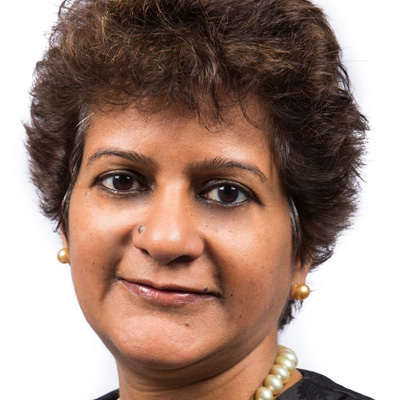
  • ‘There is a ‘church and state’ line between editorial and advertising’ :Sunita Rajan

    ‘There is a ‘church and state’ line between editorial and advertising’ :Sunita Rajan

    MUMBAI: Time and again news media, especially broadcast has come under scrutiny for compromising its editorial because of advertisers. Paid news and native advertising aren’t new to the industry and neither is the eternal debate between editorial and advertorial. Because the fact remains that the industry is heavily dependent on advertisers, and while selling content on entertainment channels is a task by itself, when it comes to news channel or other news media, it’s a completely different ballgame.

    While people are quick to point fingers and accuse media for being ‘sold’ and its content being ‘paid news’, they seldom look at it from the shoes of those who perform the tough balancing act of editorial and advertising sales and keep the machine running so more news is produced and reported.

    To understand how a popular mainstream media goes about doing its ‘business’ while ensuring that its editorial credibility is intact, indiantelevision.com’s Papri Das got in touch with CNN International advertising sales asia pacific VP Sunita Rajan to get some expert insight.

    A key member of the CNN International team, Rajan has been tasked with setting the business strategy to drive advertising revenue for CNN’s global portfolio of multi-platform products among Asia Pacific based advertisers. With an emphasis on integrated advertiser solutions across the full range of CNN’s linear and non-linear properties, she is responsible for managing strategic relationships and brand partnerships. 

    Excerpts from the interaction:

    With broadcast news being heavily dependent on advertising revenue, how does CNN go about creating news content without falling prey to native advertorials?

    I would like to break the response down in three parts. Firstly, as an advertising sales person, I don’t manage or control editorial. That’s part of the business agreement. My role is to run the business which is advertising and sales across the Asia pacific region. I think the best analogy to describe how we look at this is that there should be church and state lines between editorial and advertising. CNN is very clear about it. There is no blurring of those lines. 

    We have maintained that we keep our audiences at the heart of what we do. Our editorial ensures that every piece of content that we produce is of value to the audiences. We don’t make the news, we report the news. 

    Even in the features, long form and analysis pieces that we do, we are mindful and also extremely stringent about selecting the stories that we believe are of value to the audiences. For example, our series on Silk Route, or even a lifestyle series.

    Can you explain the business model for CNN international?

    Our business model for CNN international is of ad sales and content sales. The other stream of revenue is business development which we have initiated in the last couple of years. The three key pillars of all streams of revenue are distribution, content and ad sales.

    What happens when a piece of editorial content has a conflict of interest with an advertiser?

    I wouldn’t say there is a conflict of interest because we are not kept informed of what editorial does. Marketing and ad sales never get into the editorial meets. The only space where there’s a discussion or interface it is with the number of features content that we do special seasons or theme weeks. There are times when the editorial highlights or showcases a particular country. We have a number of franchises, like On The Road, which is focusing on India this time as its relevant to our audiences. India is being talked about and with Modi’s Make In India falling into place, the youth and their aspiration need to be looked at.

    What brings advertisers to CNN?

    We go and talk to brands and partners, we build commercial partnerships. What we sell to clients and what we bring to the conversation is the brand proposition. We talk about our audiences, scale and size, texture and profile and a bit of what these audiences care about and why they consume content on CNN, how they come to CNN for its unique content and CNN as a platform. To be honest, what brands are buying is the quality of the audience, the profile of the audience, and that’s what we showcase when we going for a pitch.

    How do you react to advertisers wanting to get an editorial favour as part of an advertising deal?

    We don’t promise the clients editorial coverage if that is what you are asking. I think the reason the clients come into conversations with CNN is because they recognise the value of the brand and they recognise the principles that CNN as an international platform adheres to. They come to us because of that integrity and the value we bring to the table, and not because they think they can influence the editorial. There are a number of channels that do operate with that market behaviour probably

    From the ad sales point of view, for me and my team, it is our job to identify themes and content relevant to the client. For example we have CNN Money, which is an online vertical that CNN operates and that’s our business proposition as well. It’s about how we present to our audience, what is unique about the content for brands and advertisers, the differentiation between how we capture the story and how others do it. Because we are not just focused in the stock markets, we go beyond that and talk about the aspirational values of stories and stories on finance and wealth etc.

    How different is advertising sales in news channels from that of other entertainment broadcasters?

    Ad sales for news, whether it’s international market or local news is very different from general entertainment channels and sports channels. Those brands and their content are very much a point of view. News, on the other hand is a must have; a daily habit. You dip in and out of it but it’s 24 by 7. It’s less about the specific show. Yes, we do have content on a specific time, be it daily weekly or monthly.  We do offer certain programs for sponsorships, everything except for news and current affairs and business as it can’t be sponsored in Europe like everywhere else. We don’t necessarily take one program to the market and ask for a sponsor for it. That’s because’ when you are buying news, you are buying the brands reach and not its audience at 7 pm or 9 pm like entertainment channels. Now advertisers may choose to place their advertisement at a specific time of the day. That’s where I come in and recommend what the media schedule will look like and which programming would be more relevant to the brand. 

    But there are editorial events such as Heroes which is a very popular franchise and is in its 10th year this year. Or a republican debate, which we do sell as a big point of view. It has specific time bands and exclusives with CNN, so an occasion such as that is sold as a standalone property.

    How important is TV viewership ratings to you from an ad sales perspective? 

    Whole news brands and channels always had a good proportion of viewership command, it is not always that a news broadcaster focuses its ad sales or the opportunity to associate with brands just based on television ratings. We don’t sell on ratings but the reach of the channel across a week and also the context or the value of the environment. It is very much a brands sale than ‘how many people are watching or engaging with the channel.’

    Both in India and in other markets, it is also about brands looking for an international platform and reach. I am not saying that we are not getting the BRAC ratings, but we are not selling on just the BARC ratings. We also very much have a multiscreen and multiplatform presence, be it on TV, desktop or the mobile or through a responsive website. 

    There are a number of digital platforms in India that have started aggregating short form video content on news that audiences can consume on demand. Are they competition to conventional news broadcasters when it comes to the digital footprint?

    From a business owner perspective and media owner perspective, one needs to be able to be where the audiences are, be it on an investment scale or technology scale that drives one’s content. And to be where the audiences are, you need to serve where they consume the content. Rather than concentrating on just creating programming, it is important to recognise who your audiences are, where are they consuming content and what kind of content they prefer. Not forgetting your primary audience on television, it is also increasingly necessary to evolve so that you have as many touch points with your audiences as possible.

    As far as CNN is concerned we look at it positively. It comes as an advantage to have worked in a global market. We own the content we produce and showcase so we work with a number of platforms and partner with them, whether it’s Facebook, Youtube or Snapchat. While we see our content through such platforms, we also aggregate our own content, providing it to enrich the user experience, and driving audiences. So a number of these technology platforms have recognised the value of working with CNN. We don’t see them as threats but as opportunities. 
  • ‘There is a ‘church and state’ line between editorial and advertising’ :Sunita Rajan

    ‘There is a ‘church and state’ line between editorial and advertising’ :Sunita Rajan

    MUMBAI: Time and again news media, especially broadcast has come under scrutiny for compromising its editorial because of advertisers. Paid news and native advertising aren’t new to the industry and neither is the eternal debate between editorial and advertorial. Because the fact remains that the industry is heavily dependent on advertisers, and while selling content on entertainment channels is a task by itself, when it comes to news channel or other news media, it’s a completely different ballgame.

    While people are quick to point fingers and accuse media for being ‘sold’ and its content being ‘paid news’, they seldom look at it from the shoes of those who perform the tough balancing act of editorial and advertising sales and keep the machine running so more news is produced and reported.

    To understand how a popular mainstream media goes about doing its ‘business’ while ensuring that its editorial credibility is intact, indiantelevision.com’s Papri Das got in touch with CNN International advertising sales asia pacific VP Sunita Rajan to get some expert insight.

    A key member of the CNN International team, Rajan has been tasked with setting the business strategy to drive advertising revenue for CNN’s global portfolio of multi-platform products among Asia Pacific based advertisers. With an emphasis on integrated advertiser solutions across the full range of CNN’s linear and non-linear properties, she is responsible for managing strategic relationships and brand partnerships. 

    Excerpts from the interaction:

    With broadcast news being heavily dependent on advertising revenue, how does CNN go about creating news content without falling prey to native advertorials?

    I would like to break the response down in three parts. Firstly, as an advertising sales person, I don’t manage or control editorial. That’s part of the business agreement. My role is to run the business which is advertising and sales across the Asia pacific region. I think the best analogy to describe how we look at this is that there should be church and state lines between editorial and advertising. CNN is very clear about it. There is no blurring of those lines. 

    We have maintained that we keep our audiences at the heart of what we do. Our editorial ensures that every piece of content that we produce is of value to the audiences. We don’t make the news, we report the news. 

    Even in the features, long form and analysis pieces that we do, we are mindful and also extremely stringent about selecting the stories that we believe are of value to the audiences. For example, our series on Silk Route, or even a lifestyle series.

    Can you explain the business model for CNN international?

    Our business model for CNN international is of ad sales and content sales. The other stream of revenue is business development which we have initiated in the last couple of years. The three key pillars of all streams of revenue are distribution, content and ad sales.

    What happens when a piece of editorial content has a conflict of interest with an advertiser?

    I wouldn’t say there is a conflict of interest because we are not kept informed of what editorial does. Marketing and ad sales never get into the editorial meets. The only space where there’s a discussion or interface it is with the number of features content that we do special seasons or theme weeks. There are times when the editorial highlights or showcases a particular country. We have a number of franchises, like On The Road, which is focusing on India this time as its relevant to our audiences. India is being talked about and with Modi’s Make In India falling into place, the youth and their aspiration need to be looked at.

    What brings advertisers to CNN?

    We go and talk to brands and partners, we build commercial partnerships. What we sell to clients and what we bring to the conversation is the brand proposition. We talk about our audiences, scale and size, texture and profile and a bit of what these audiences care about and why they consume content on CNN, how they come to CNN for its unique content and CNN as a platform. To be honest, what brands are buying is the quality of the audience, the profile of the audience, and that’s what we showcase when we going for a pitch.

    How do you react to advertisers wanting to get an editorial favour as part of an advertising deal?

    We don’t promise the clients editorial coverage if that is what you are asking. I think the reason the clients come into conversations with CNN is because they recognise the value of the brand and they recognise the principles that CNN as an international platform adheres to. They come to us because of that integrity and the value we bring to the table, and not because they think they can influence the editorial. There are a number of channels that do operate with that market behaviour probably

    From the ad sales point of view, for me and my team, it is our job to identify themes and content relevant to the client. For example we have CNN Money, which is an online vertical that CNN operates and that’s our business proposition as well. It’s about how we present to our audience, what is unique about the content for brands and advertisers, the differentiation between how we capture the story and how others do it. Because we are not just focused in the stock markets, we go beyond that and talk about the aspirational values of stories and stories on finance and wealth etc.

    How different is advertising sales in news channels from that of other entertainment broadcasters?

    Ad sales for news, whether it’s international market or local news is very different from general entertainment channels and sports channels. Those brands and their content are very much a point of view. News, on the other hand is a must have; a daily habit. You dip in and out of it but it’s 24 by 7. It’s less about the specific show. Yes, we do have content on a specific time, be it daily weekly or monthly.  We do offer certain programs for sponsorships, everything except for news and current affairs and business as it can’t be sponsored in Europe like everywhere else. We don’t necessarily take one program to the market and ask for a sponsor for it. That’s because’ when you are buying news, you are buying the brands reach and not its audience at 7 pm or 9 pm like entertainment channels. Now advertisers may choose to place their advertisement at a specific time of the day. That’s where I come in and recommend what the media schedule will look like and which programming would be more relevant to the brand. 

    But there are editorial events such as Heroes which is a very popular franchise and is in its 10th year this year. Or a republican debate, which we do sell as a big point of view. It has specific time bands and exclusives with CNN, so an occasion such as that is sold as a standalone property.

    How important is TV viewership ratings to you from an ad sales perspective? 

    Whole news brands and channels always had a good proportion of viewership command, it is not always that a news broadcaster focuses its ad sales or the opportunity to associate with brands just based on television ratings. We don’t sell on ratings but the reach of the channel across a week and also the context or the value of the environment. It is very much a brands sale than ‘how many people are watching or engaging with the channel.’

    Both in India and in other markets, it is also about brands looking for an international platform and reach. I am not saying that we are not getting the BRAC ratings, but we are not selling on just the BARC ratings. We also very much have a multiscreen and multiplatform presence, be it on TV, desktop or the mobile or through a responsive website. 

    There are a number of digital platforms in India that have started aggregating short form video content on news that audiences can consume on demand. Are they competition to conventional news broadcasters when it comes to the digital footprint?

    From a business owner perspective and media owner perspective, one needs to be able to be where the audiences are, be it on an investment scale or technology scale that drives one’s content. And to be where the audiences are, you need to serve where they consume the content. Rather than concentrating on just creating programming, it is important to recognise who your audiences are, where are they consuming content and what kind of content they prefer. Not forgetting your primary audience on television, it is also increasingly necessary to evolve so that you have as many touch points with your audiences as possible.

    As far as CNN is concerned we look at it positively. It comes as an advantage to have worked in a global market. We own the content we produce and showcase so we work with a number of platforms and partner with them, whether it’s Facebook, Youtube or Snapchat. While we see our content through such platforms, we also aggregate our own content, providing it to enrich the user experience, and driving audiences. So a number of these technology platforms have recognised the value of working with CNN. We don’t see them as threats but as opportunities.