Tag: TV

  • Earlier, there was a creative courage to be roughly right, rather than precisely wrong: CII The Big Picture Summit 2022

    Earlier, there was a creative courage to be roughly right, rather than precisely wrong: CII The Big Picture Summit 2022

    Mumbai: The Big Picture Summit 2022, organised by the Confederation of Indian Industry (CII) on 16 & 17 November saw the presence of various senior executives and officials from the advertising, film, TV, marketing, and OTT fraternities.

    On a panel discussion on 17 November, Madison World chairman and managing director Sam Balsara brought to the fore that advertising has been through a lot of changes. Opening the conversation, he said, “I started work in 1972, and advertising was a few thousand crores, and there was a time advertising was merely about announcing product availability and making a manufacturer’s statement – that I am the best – this was considered a good advertising approach probably for decades.”

    He added that everything has changed, but on another level, you can argue that not much has changed. He looks back at his favourite definition of advertising, which was given by a humorist – called Stephen Leacock – “Advertising is the science of arresting human intelligence long enough to get money from it.”

    Balsara goes on, “I haven’t come across any definition that, ideally, more accurately describes advertising. The fundamentals of what we try to achieve in advertising haven’t changed all that much. Sure, volumes have changed. Advertising cost a few hundred crores, which was the total outlay of AdEx. It is currently worth around Rs 90,000 crore. Global AdEx, just for perspective, is now $880 billion. So surely advertising works for marketers, and I think there is widespread acceptance that advertising is indeed the gas that fuels the entire economy or the machinery that keeps the wheels of the economy moving.”

    Taking the discussion further about how advertising has changed, columnist and Counselage India founder and managing partner Suhel Seth expressed, “I think advertising has changed for the worse. Earlier advertising was about civility and about creating things in partnership with clients, and the relationship was both mutually beneficial and one of respect. Sadly, nowadays, agencies are treated by clients like vendors, and the relationship by and large has become unequal.”

    He understands that previously, there were times in advertising when they sat and co-created campaigns, but those were created on the basis of deep consumer insight and a rigorous approach to consumer behaviour learnings and insights that one could then weave and work into the narrative of the creativity that was produced.

    He discussed, “We don’t get the kind of people we used to get in advertising in the good old days, and the reason is we don’t pay enough. When you pay peanuts, you get monkeys – and the tragedy is that advertising agencies are paying peanuts because clients are monkeying around with advertising agencies who don’t have the courage to tell the clients that they don’t know what they’re talking about.”

    “In the good old days, when the client asked us to jump, you would say ‘why’- today you ask ‘how high’. When the relationship dramatically alters and changes and becomes a master-servant or a master-slave relationship, advertising and creativity suffer,” pointed out Seth.

    He also reminisced about how earlier liberal arts people also staffed client offices. “I have no grouse against MBAs, but MBA has been the worst disaster for advertising agencies because people who have done management by rote, who have no idea of Shakespeare or Tagore, who have no idea about the sensitivities of music, are asked to produce advertising that is bereft of sensitivity,” he states.

    Seth went on to say that he has a different definition of advertising. For him, the purpose of advertising is to invent desire. “It is not to inform – for that you got to go to Google, Yellow Pages or Wikipedia. What I think advertising was all about – is that it was all about creating magic. It was about engaging the consumer with the brand through the medium of creativity.”

    He also shed light on the proliferation of media. In the previous days, the clients would ask about hoardings, TV, and cinema – that’s about it. Today’s spread is massive—it’s digital. India has changed dramatically. It is no longer consuming advertising that is English-speaking; it is consuming advertising that is vernacular. It is regional to the point where the regional influxes are actually carried forward pan India.

    Expressing his views, Seth said, one of the dramatic changes is that, due to the rush that everybody seems to be in, less time is spent on strategy and agencies are becoming more tactical. That’s not advertising; that’s salesmanship.

    “They also don’t prepare for brands with the rigour that we used to. For example, there were partnerships between Madison’s creative and media agencies. “Now, rather than partnering communication, I see media agencies as a post box or an amplifier for disseminating communication,” he said.

    Seth also put forth his concern, saying that the advertising industry has stopped being inventive and innovative. “We have become more and more risk averse. Because you are talking about billions of dollars being spent, and no one wants to take the risk,” he said.

    “Another thing is that people are wanting to manage not the consumer, but the client. When you start managing the client, you immediately forget the consumer. Nowadays, it’s very important for the CEO and his wife to be happy, rather than the other way round,” he said.

    “Today, we are also fraught with a lot of social tensions in our society. Religion, which was in the background, is now in the foreground. You have discrimination; you have political grandstanding. People using social media are bullying and trolling clients and companies to withdraw advertising, which is actually an attempt at conveying something creatively,” Seth went on to say.

    Ogilvy India head of strategic planning Rohitash Srivastava feels that in an ideal scenario, advertising has become complete. “Earlier we were worried about changing people’s thoughts and beliefs. And the behaviour part was kind of missing, you change a person’s mindset and then you leave him to behave the way he wants to. Now with digital and technology coming in, the promise of technology was that we are going to change behaviour, we are going to drive behaviour change. So that was the ideal scenario. And that’s why I’m saying that now advertising in an ideal world is not just about thinking and feeling; it’s also about thinking, feeling, and doing,” he pointed out.

    He goes on to explain that, in reality, the advertising industry has become more schizophrenic than ever. And there is a lot of speed, but there is no velocity.

    Srivastava adds, “There’s no sense of direction; you’re trying to do a lot, but there is no bigger plan. And this whole short-termism thing is really killing the industry. And I’ve seen so many marketers behave like salespeople. Now, marketing’s role is to create a facilitated environment, so that the scalability of the product goes up, not the sales themselves. But today’s marketers are so worried about that very moment. And when sales happen, they forget the larger tasks of marketing and advertising to create conditions for scalability over weeks of marketing. That is exactly what I mean by ‘short-termism.’”

    Also, information is being confused with knowledge, he said. “There’s a lot of data out there, and it’s called dumb data because you have to look for the right meaning to make sense of it. And then within that, there is data that is readily available, and then there is long-term data, equity studies, and all of that amounts to a lot of hard work. This whole desire to go through spreadsheets and excel sheets is blinding us to the human stories that are happening and what people are really thinking. So whatever data comes in, you want to react to it,” he said.

    Srivastava revealed, “The discernment is going away. And this whole thing about people being more precisely wrong than roughly right—before, being roughly right was such a big gift—In fact, we were paid so much because we could make decisions in grey areas, and there was a creative courage to be roughly right. But this whole obsession, to be precise, is making us precisely wrong.”

    TAM Media Research CEO LV Krishnan commented on the creative aspect of advertising, “The things have changed so much in the last 50 years that we’ve seen advertising kick start in India. And the interesting thing is the fact that the one thing that hasn’t changed between the first year of advertising and today is that nobody knows that the 50 per cent that I spend on advertising is a complete waste.”

    He explained further that until and unless the whole industry puts a finger on it, testing in terms of advertising will continue.

    Krishnan added, “Earlier, for every piece of communication, there was a brand and an advertising positioning strategy, and once they were done, one would know exactly what kind of execution needed to be done. But today, even if those two definitions are not thought through, execution is already happening on the ground to create communication effectively.”

    He is of the opinion that, now that everything is digital, it’s no longer a strategy. There is simply a local influencer using a brand and attempting to showcase it to his or her followers in order to demonstrate that this is the brand that they use. These influencer and social media marketing campaigns are not aligned with the national campaign that is run on television or in national print. So it’s becoming more tactical. Most of the campaigns we’re seeing now are more tactical sweatshop in nature.

    Balsara went on to reveal that out of the $880 billion, 60 percent of all advertising money today is spent on digital, and not on print, television, or any other medium. He believes that the arrival of digital has actually killed the big idea, which we all used to crave, and big production budgets are now a thing of the past.

    Srivastava agreed that digital is a big part of the clients’ spends, and even within digital, the performance part, which is called performance marketing, is really becoming significant. And to that extent, the role of the big idea sometimes gets compromised.

    Seth said, “Clients and agencies want one particular campaign idea and then try to force potential into several other media options, whether it is YouTube or Twitter.”

    “It is tactical; advertising is no longer about the consumer. It’s about the client. And when advertising becomes about the client, advertising suffers because the consumer is sidestepped and disregarded,” he wraps up.

  • Sports provide a lift to broadcast TV in September, streaming remains top in the US: Nielsen report

    Sports provide a lift to broadcast TV in September, streaming remains top in the US: Nielsen report

    Mumbai: The kickoff of the fall TV season in the US and the return of football provided audiences with an abundance of new content in September, fueling a 2.4 per cent rise in total TV viewing. The arrival of new broadcast programming provided the traditional lift that we’ve seen historically, but the 12.4 per cent increase in volume from August wasn’t enough to alter the trajectory of streaming usage, as streaming services captured 36.9 per cent of total TV usage, according to Nielsen.

    Alongside the whopping, but perhaps not totally unexpected, 222 per cent increase in sports viewing on broadcast channels, audiences continued to overindulge on streaming content, resulting in yet another monthly high-water mark. Audiences also continue to expand their choice of streaming service, with YouTube hitting a new platform-best streaming record, claiming eight per cent of TV viewing and equaling Netflix’s July record high, Hulu securing its own record of 3.7 per cent, and Pluto TV capturing one per cent of total TV, enabling it to be showcased outside of the “other streaming” category. HBO Max also gained 9.9 per cent in volume thanks to House of the Dragon and Game of Thrones, pushing its share of TV to 1.3 per cent.

    In several cases, increases in volume did not affect total TV share. For example, Amazon Prime Video usage increased 3.9 per cent in September on the strength of The Lord of the Rings: Rings of Power and specific Thursday Night Football games, but the platform’s share of total TV remained flat at 2.9 per cent. Similarly, Disney+ saw a 2.4 per cent increase in volume, yet its share of total TV stayed at 1.9 per cent.

    Broadcast recorded the largest month-over-month gain, driven by the sports genre, which accounted for 25.1 per cent of broadcast viewing. That said, broadcast’s 24.2 per cent share in September was 7.1 per cent lower than it was a year ago. Cable also benefited from a 40 per cent bump in sports viewing, but the 0.4 per cent rise in usage wasn’t enough to move cable’s share of total TV. In fact, with the other categories gaining share in the month, cable dropped 0.7 share points to finish with 33.8 per cent of total TV, its lowest share ever reported by The Gauge. Cable viewing was 9.3 per cent lower in September compared with a year ago.

    The return of football was the true spark in September, as it provided new content across broadcast, cable, and streaming. But even without sports, streaming—in all of its forms—continues to gain adoption, and it benefits from the emphasis that pure-play streamers and media companies alike are placing on it.

  • Advertising on TV continues to flourish, reveals GroupM’s Consumer Eye Research

    Advertising on TV continues to flourish, reveals GroupM’s Consumer Eye Research

    Mumbai: GroupM has launched Consumer Eye Research, which seeks to uncover insights related to the impact of media-related technologies on brands and society. The latest edition of the report, titled “Advertising on TV: Flagging or Flourishing,” analysed the potential of advertising on television.

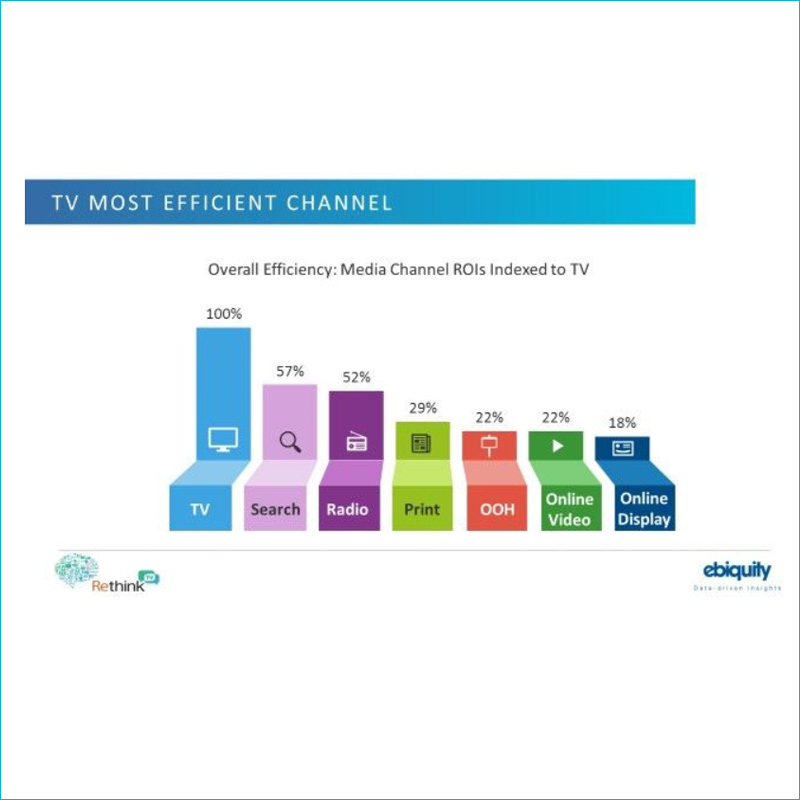
    The findings of the survey reveal that television continues to be the most beneficial and demanding medium for advertising.

    The past two decades have seen rapid transformations in the media landscape, with the number of options available to advertisers significantly increasing. Many of these options offer excellent opportunities for brands to reach audiences with high levels of precision, customization, and measurability.

    While this transformation is beneficial for many advertisers, TV continues to retain a power that can be leveraged by advertisers, according to the report.

    Additionally, the digital extensions of TV have not only given rise to new ways for people to consume content but have also created a myriad of opportunities for brands to engage with audiences through TV.

    TV makes the world a better place

    60 per cent of the surveyed respondents agreed that free TV channels make the world a better place. Hence, TV remains a very important medium for influencing mindsets and shaping cultural behaviour. The second most preferable medium to make the world a better place is the newspaper, according to 56 per cent of the survey respondents.

    TV retains a unique strength in building brand equity

    The report reveals that television is still the most popular channel that conveys the most positive impression of brands. In APAC, TV ads are ranked No. 1 for conveying a positive impression of brands. In fact, TV ads (39 per cent) received equal weightage alongside the recommendations of friends (39 per cent).

    TV offers a brand-safe environment 

    73 per cent of audiences believe it is a brand’s responsibility to control where their advertising appears. 45 per cent will have a negative opinion of the brand if it appears next to inappropriate or offensive content. The report demonstrates that TV is still one of the safest environments that allow for brands to be seen next to premium, high quality content.

    TV is still a tremendous entertainment platform for consumers worldwide. The verdant environment also offers many opportunities for creative innovation and impactful campaigns. More than ever before, brands can take advantage of TV’s addressable transformation by considering new formats like shoppable ads and dynamic creative ads that dangle bespoke offers in front of the target audience.

  • Projects are allotted to creators rather than the brand: Victor Tango founders  Vaibhav and Tabassum Modi

    Projects are allotted to creators rather than the brand: Victor Tango founders Vaibhav and Tabassum Modi

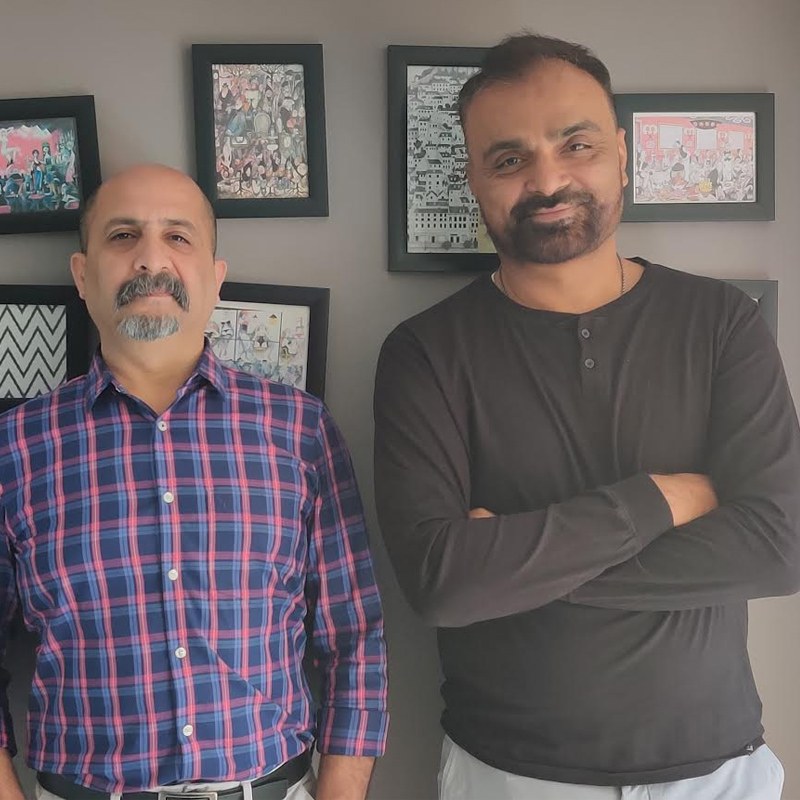
    Mumbai: When someone says ‘Victor Tango’, what comes to mind? Some sort of American intelligence code? This Mumbai-based content creation duo is no less than any international intelligence agency when it comes to delivering the right content.

    Victor Tango Entertainment, named after the founders’ initials Vaibhav and Tabassum Modi, has gone on to build profitable content businesses by producing original content, live events, collaborations, and adaptations of published works for the screen.

    Victor Tango Entertainment is a content powerhouse with a stellar portfolio that includes scripted series, non-scripted format shows, branded content, events, and feature films.

    Producer-writer-creator Vaibhav Modi has over two decades of experience in the media industry. His career has been highlighted by key leadership roles at media conglomerates such as Star India, Endemol Shine, Viacom 18, and Sony Entertainment Television. Tabassum Modi is a serial entrepreneur and business leader with 17 years of cross-functional experience in the media and education sectors. She is a multi-hyphenate who produces content, manages events, and considers business expansion.

    Some of their popular work includes shows like Times of Music (MX Player), It’s Not That Simple (Voot), TVF Tripling (TVF), Grilled (Fox Life), Bekaaboo (Alt Balaji), The Story (Zee5), MTV Nishedh (MTV), amongst others. In the pipeline are a few film scripts, original series, and non-fiction formats, along with many projects in development with leading OTT platforms.

    Victor Tango has a vast slate of wins to its credit, namely Filmfare OTT Awards, Asian Academy Creative Awards, EEMAX Global Awards, Wow Awards Asia and Global Event Awards. Victor Tango has successfully showcased its prowess by disrupting the digital, events, and broadcast spaces with quality innovations.

    Their next ambitious outing is a period espionage drama, Mukhbir – The Story of a Spy, in association with Zee5. In conversation with Indiantelevision.com, Victor Tango’s co-founders Vaibhav Modi and Tabassum Modi shared the experiences of their journey, learning, business, and the future of OTT.

    Edited excerpts:

    On the birth of Victor Tango

    Vaibhav: The inception was an intriguing type of integration. There was a time when I was primarily focused on commissioned content projects. And Tabassum was concentrating on short-format content and events. And we had our own areas of expertise. And we realised that these two businesses can be run in a very synergistic way, because at the end of the day, the front of the house in both businesses is ideas and creativity, and the back of the house is basically finance and production.

    So one business cycle is actually supported by the cycle of the other. So you keep a pool of common resources that are used across projects because their bandwidth and skill sets are mostly in the same ballpark. As a result, we have x = x.

    On the journey  

    Vaibhav: It’s very 360-degree because it spans across genres. We have worked with broadcasters and for broadcasters; with platforms, for platforms and for production companies; and we’ve been entrepreneurs. So there’s a multitude of roles that we’ve had and also in terms of the kinds of content we’ve created—it ranges from short films to long-form series in non-scripted and scripted. So versatile is a word that could summarise the experience. There was tonnes of learning and a lot of fun.

    On the learning  

    Vaibhav: OTT is a comparatively young industry, and it’s almost like we have been in the thick of it, at the heart of the revolution. When OTT appeared on the horizon, the emphasis shifted to digital in a more refined manner. We made some very deliberate decisions to focus on OTT while maintaining our television experience, and in the last four to five years, we’ve had great opportunities that have kind of defined who we are, and some of our work has been really, really appreciated and critically acclaimed.

    Incorporating the best practices we’ve learned from a variety of situations into our professions is one of the main aspects of where we’ve been. Another thing is that we have been able to learn the most efficient methods of doing things by working with some of the major companies in broadcast and content development.

    Tabassum: We have great discipline when it comes to managing our money and making learning a constant process for us. Furthermore, despite our size, we are a successful business. And we’ve been profitable ever since we started, which is something not many people can claim with great pride.

    The second factor is universality. As I mentioned, we produce both scripted and unscripted television, as well as live events. Because of our wide range of activities, we are able to consistently produce work in either stream. And one of the most important lessons we’ve learned along the way is that.

    On the roles  

    Tabassum: We all have our strengths; thus, it is obvious that we don’t define roles in that way. Vaibhav is the expert when it comes to the creative aspect of the company, and I look into anything related to the business’ finances or finances in general. But when it comes to operations, I believe we are both equally involved. We support each other on the project, and we do what is necessary for the project. Thus, we are fairly flexible, and that’s how we manage the company.

    Vaibhav: In our sector, projects are actually given to people rather than organisations because of a certain level of confidence in someone’s ability to come up with original ideas or carry them out. Unless you have a really strong brand around you, or around a large library of work or something, these things come from just knowing people. As a result, in this situation, we frequently wind up serving various clients and projects. One of us takes the initiative on the project, with the other serving as the house’s back. According to the nature of the project and occasionally who we are servicing, the same thing may be reversed on a different project. Therefore, our demarcations are not vertical.

    On fiction vs non-fiction

    Vaibhav: If I were to differentiate between scripted and non-scripted, non-scripted essentially arrives on a structure or skeleton, which we now refer to as a format. It defines the cornerstones of the content and within that you’re creating stories, as well as the format in which they are created.

    And from the perspective of execution, what happens is that a long format or non-scripted series is basically the sum of a lot of people’s efforts; a lot of research; a lot of searching for talent; a lot of finding the stories outside; and then bringing them all in and putting them up in a certain interesting kind of storytelling with passion.

    On the transition of content  

    Vaibhav: One significant change in our functioning that occurred in the last five years is that the majority of what we produce today is based on the brief, which can be very broad or very specific. Previously, it was always necessary to reach out to multiple broadcasters with multiple pitches, constantly adjusting what you had to offer, running like a bit of a catalogue. One big change is that people are spending one to three years in writers’ rooms and doing it like a proper process.

    On the line-up

    Vaibhav: We currently have two thriller shows in development, one of which is almost finished with the scripts and the other of which is under development with a platform and is at the 60 per cent mark.

    A script that we are now developing in-house is a really promising film script.

    We aim to create original material.

    We are co-producers on a long-term project based on a graphic novel. It’s not in the immediate pipeline, but we’re working toward it because these are things where you break new ground and a lot of innovation goes in both creatively and commercially.

    On regional content  

    Vaibhav: It is obviously on the radar. One of the reasons is my personal affinity for Malayalam cinema that I’ve developed over the last few years. I’ve been following it and have been astounded by the fearlessness of that industry.

    It is only because of a different way of functioning that they have been able to come together to create things.

    When it comes to the markets I consider, notably the Malayalam market, I humbly and without reservation refer to myself as a student. However, there are many other lessons that may be learned as well.

    On short format

    Vaibhav: It is not like a shorter format has come now on the horizon. For the last several years, it’s been around, and I’ve experienced working on short format at MTV in 2006-07. With available media, what the short format actually does is democratise the content.

    You don’t need to be a producer to make content; it’s very personal and democratic. All you need is a great idea and a very ingenious plan to execute it. And we can actually see how it has given rise to a new ecosystem called influencers.

    On the business of OTT

    Tabassum: It is a very new market; it’s a very nascent industry. So it is still largely in an investment mode, and how deep the pockets are determines how much risk a platform is able to take in terms of the kind of value of the projects that are put out there.

    All platforms are doing projects of different ticket sizes to just hedge out the risk as much as they can, but it’s in everyone’s interest that the business succeeds and eventually turns profitable so that there is good money flowing in terms of the kinds of stories they want to tell and how they want to produce.

    Vaibhav: It is the nature of the risk. If I produce something in a commission kind of a model, the short term risk is mine, because I’m trying to manage my finances in such a manner that I remain profitable by the end of it and deliver a vision that has been jointly kind of defined by the platform. If you shift the risk to one side of the sections, then it creates absolute value.

    We have a lot of entities to offer financing if we have a ready project. We are evaluating whether it makes sense to do so.

    On the future of OTT

    Vaibhav: Almost 15-20 years ago, when we began our careers, the same kind of concern was frequently expressed about print as well. People used to say that everything would go digital. Similar things are happening with televisions, but they are showing double-digit growth every year. OTT will undoubtedly continue to grow. Other mediums will also flourish alongside.
     
    Tabassum: The future is very bright; it is a new medium and a fantastic opportunity. Not only for creators, but also for us to discover new talent and for youth to express themselves. There was no such opportunity when we started. Before, there was no such medium through which they could express themselves and be seen and heard. It’s now very simple for them to do so. It also allows us to identify a plethora of new challenges. Not only from an acting standpoint, but also from a technical standpoint.

    You can see that many influencers and creators have moved on from short-format to long-format and vice versa. It’s not so much a threat as it is an opportunity for everyone to feed off of one another.

    On the investment  

    Tabassum: We have started the business, run it on our own steam, brought it to a certain level, and are having some discussions about what the next step would be to take that leap in terms of growth. We have a solid portfolio of work and strong financials, we laid the groundwork and established the business.

    I believe we’re ready for the next step in terms of how we’ll grow and expand, and I’ve been talking with people about how we can align with them to help in that next phase.

    We are very open to such discussions with potential investors and companies are interested in the media as an investment opportunity. On the one hand, in terms of the current ecosystem, the changing business model that Vaibhav mentioned, is something that we are very actively exploring and there are many discussions and changes that are happening in the environment with the way things happen, the way things used to happen, and the way things happen now.

    There’s a lot more openness, a lot more discussion, and a collaborative nature in the business of content and as a company, we are open to exploring those options.

  • Gaurav Dhawan is Times Network’s new CRO

    Gaurav Dhawan is Times Network’s new CRO

    Mumbai : Times Network has promoted Gaurav Dhawan as its chief revenue officer. Gaurav will be in charge of the network’s broadcast ad revenue operations as well as the monetisation strategy for the network’s bouquet of channels covering Hindi and English news, entertainment, and branded content.

    Times Network managing director & CEO MK Anand said, “Given Gaurav’s successful background leading go-to-market teams and his relentless focus that drives sustained growth, the decision to move him into the Chief Revenue Officer role was clear. He’s already proven to be a strong leader and I’m confident he will continue to drive our strong revenue growth strategy.”

    Dhawan is a Times Network stalwart who has played a pivotal role in shaping the brand’s market leadership and has been passionately involved in scaling revenue and new opportunities throughout his tenure with the network.

    Talking about his new role, Dhawan said, “I’m excited and honoured to helm this mandate. I have been associated with Times Network for over 17 years and it is heartening to see the Network’s commendable growth over the years, demonstrating market dominance in its respective genres. This is an exciting phase as we continue to build new opportunities for our Hindi news brands and optimize emerging revenue streams and strategic partnerships to propel the network’s growth.”

    Gaurav has over 26 years of experience in the media and entertainment industry, and has a proven track record of driving businesses to profitability, impacting solutions, and innovating to deliver aggressive revenue expectations and sustained growth for businesses in television, print, and web.

  • Zeel’s Ashish Sehgal’s positive ad outlook for Q1’23

    Zeel’s Ashish Sehgal’s positive ad outlook for Q1’23

    Mumbai: Ouch! Speak to any senior advertising or media agency official or even a broadcast sales executive, and they all seem to be yelping in pain, courtesy the evaporation of premium ad spends by innovative and new age digital startups. Forced by investors to tidy up their operations and balance-sheets, the latter have been focusing on consolidation, rather than going berserk spending big on giddying growth through advertising and marketing.

    However, this is not causing broadcast major Zee Entertainment Enterprises Ltd (Zeel) chief growth officer of ad sales Ashish Sehgal to have any sleepless nights. A sales veteran, he’s witnessed the ups and downs that the media industry goes through periodically – needless to say, he’s seen it all.

    Sehgal believes that the silver lining of the advertising drought is that the fast moving consumer goods (FMCG) category has to an extent, come to the rescue and is cushioning some of the blows. He estimates that TV ad spends during the festive season, which is on currently, will show a growth of seven to eight per cent.

    Those used to the heady growth figures of 10-20 per cent may consider this too low, but one has to remember that this growth is coming in at a time of economic upheaval, crashing of global currencies, high fuel costs and rising inflation.

    “The way things have been while it was good, the festive season could have been better. The absence of new clients has made a difference. E-commerce has also reduced spending a bit. While inventory has been going jam-packed, the premium money has not come in the festive season. This has been made up for by the FMCGs to an extent, and TV will see an ad revenue growth during the festive season. This is a good sign as this category will continue to spend even beyond the festive season.”

    He also notes that the TV industry has gone in for a rate hike across the board, which was long overdue. TV viewership was affected in June and August. But post August, the number of eyeballs glued to TV has grown, which is why the FMCG category is spending a lot more.

    Sehgal highlights that general entertainment channels (GECs) are starting to get the reach that they were delivering earlier. Categories like beauty will count on the festive season heavily with the top five advertisers on TV coming in from FMCGs. He feels that the latter’s contribution to overall TV adex could rise by five per cent this festive season compared to the previous year.

    The scenario for 2023

    Sehgal believes that the situation can only improve going forward in Q1 ’23 with spends going up for television advertising and overall ad expenditure. “Every category may come back,” he reiterates.

    He says there are enough signals emanating from the market. Amongst them, the expected spurt in marketing spends by the automobile sector will fire more in the coming months.  “Demand was high during the festive season but supply was low due to the earlier supply issues. So they did not advertise much,” he declares. “They will spend some money in November and December to sell the remaining inventory. That may be a small burst. But now that production capacity has gone up, they will have new launches in Q1’23. That is when they will spend it.”

    “Also, for some new age categories, D2C companies like ed-tech could have digested their heady growth by then. Of course, the banking, financial services and insurance (BFSI) category – say companies like Policybazaar – will be strong in Q1’23, so some of the premium money that was missing in the festive season could come in then,” Sehgal asserts.

    Then, the funding tap for startups could once again open and start flowing by January 2023.

    “This year they have been trying to balance out their bottom line. How long will they continue to do that? They will have to look at growth as well. Hopefully, they will start triggering spends in Q1 ’23,” he says.

    According to him, with FMCG input costs going down, companies will be forced to pass on the benefits to customers through price cuts and promotions. “So they will have to advertise more to promote that,” he says. “A lot will hinge on FMCGs implementing price cuts and promotions. Right now, that has not happened, maybe due to a fear of raw material inflation returning.”

    But he says the FMCG companies would benefit immensely if they slash prices. “Consumer sentiment will bounce back. More consumption will happen. Things look good for Q1’23 as long as no adverse issues come from Europe and America.”

    Sehgal discloses that while travel and tourism ad spends have risen now, most of those are going into print and social media. “TV, too, will get some state tourism ad spend money whether it is on news media, GECs or on regional channels,” he says.

    He feels that while ad spend on OTT platforms is growing, it is seen as an add-on to TV – especially in entertainment. “Whenever there is a TV campaign, the same person likes to also advertise on OTT. OTT helps them add on to their TV reach. It is not an either-or situation,” he explains.

    For the industry’s sake and his too, here’s hoping Sehgal’s forecast does come true!

  • Charter communications signs deal with Zee for distribution in the US

    Charter communications signs deal with Zee for distribution in the US

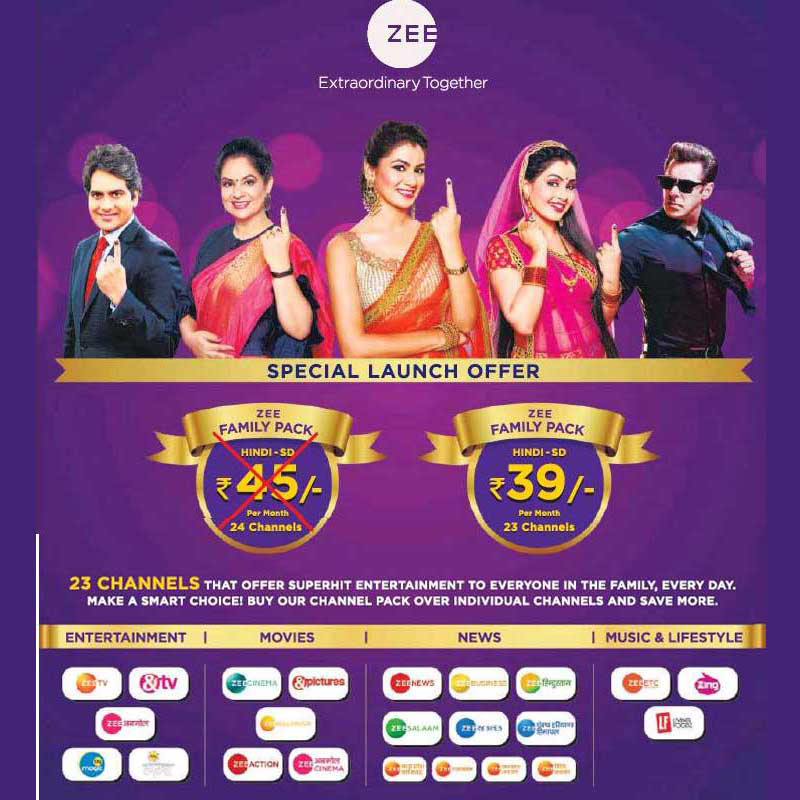
    Mumbai: Charter Communications announced the launch of new South Asian-focused video packages with up to 24 new channels as part of a programming expansion made possible in part by a distribution agreement for all of India’s Zee channels.

    The new India View packages, which feature significantly more content than Charter’s previous South Asian video offerings, are available to spectrum TV subscribers as well as customers who prefer to receive a streaming video package over the Internet+.

    The most popular Indian networks and Zee channels have been added to the India View tiers as part of Charter’s new distribution agreement with Asia TV USA, a Mumbai-based affiliate of Zee Entertainment Enterprises.

    The agreement includes the addition of 22 ZEE channels in multiple languages for spectrum video customers, including &TV, Zee Bangla, Zee Kannada, Zee Keralam, Zee Marathi, Zee Punjabi, Zee Tamil, Zee Telugu, Zee News, Zee World, and WION, in addition to the renewal of the agreement for the flagship Hindi general entertainment channel Zee TV, which is already offered by Charter.

    Charter’s executive vice president of programming acquisition, Tom Montemagno, said,”Our agreement with ZEE gives Spectrum customers access to some of the most popular news, sports, and entertainment programming from India in multiple languages.”

    He further said, “The addition of ZEE’s channels to our lineup enables us to offer our customers South Asian-focused video packages that are meaningfully more robust, with enhanced flexibility and value, and directly aligns with our commitment to provide programming that reflects our customers’ diverse interests and perspectives.”

    To promote the new programming and India View tiers, Charter and Zee have launched a co-branded marketing campaign in Spectrum markets with large South Asian populations, such as Los Angeles, New York, and Dallas, focusing on the streaming packages India View Stream ($19.99/month) and India View Stream Plus ($29.99/month).

    Zee’s agreement with the companies is the latest step in the company’s efforts to serve the growing South Asian communities in the United States. Since 1998, Zee has been present in the United States, promoting culturally rich stories while connecting South Asian audiences to their heartland.

    Zee Entertainment Enterprises content and international markets president Punit Misra said,”The U.S. market is an important part of Zee Entertainment’s international strategy, and the increase in the South Asian population in the U.S. gives us an opportunity to serve the content needs of the growing population segment,”

    He added, “The vast majority of our audiences who live in the U.S. are foreign-born and have immigrated to the U.S. There is a very strong brand affinity in this group towards ZEE. We are delighted to expand our partnership with Charter to make this premium suite of channels available to Spectrum customers.”

    Zee Entertainment Enterprises chief business officer for international business Ashok Namboodiri said, “Our partnership with Charter is extremely vital to our growth objectives in the U.S., and the agreement facilitates the availability of a large variety of entertainment options targeted towards the South Asian audiences for Spectrum customers.”

    He added, “In addition to the Hindi content, we firmly believe that our next set of growth is expected from the vernacular languages like Telugu, Tamil, Kannada, Marathi, Bengali, Malayalam, and Punjabi, and ZEE is evaluating various production opportunities which will bring immense value to this growing population segment in the United States.”

  • Hindi GEC tops GEC genre’s ad volumes in H1 FY’22: TAM Media report

    Hindi GEC tops GEC genre’s ad volumes in H1 FY’22: TAM Media report

    Mumbai : TAM media research’s subdivision AdEx India has released the half yearly report for advertising in the general entertainment channel (GEC genre). According to recent data, Hindi GEC tops with 24 per cent share of GEC genre’s ad volumes in H1 FY22 and  50 per cent indexed growth was observed. 

    GEC contributes 28 per cent of the ad volume share of overall advertising across different genres (H1 FY’21 and H1 FY’22). The GEC genre has five key sub-genres which include Hindi GEC, Tamil GEC, Telugu GEC, Malayalam GEC, Bengali GEC, and other languages GEC.

    During both periods (H1 FY’21 and H1 FY’22), Hindi GEC topped with 24 per cent share of the GEC genre’s ad volumes.  Three out of the top five subgenres retained their ranks in H1 FY’22. The top five subgenres accounted for more than 65 per cent share of ad volumes during both periods. 

    HUL, Reckitt Benckiser, and Brooke Bond Lipton India remained in the top three positions in the GEC genre in both periods  (H1 FY’21 and H1 FY’22). 960 plus advertisers and 2000 plus brands exclusively advertised in the GEC genre during H1 FY’22.

    May 2022 had the highest ad volume share that is 17.4 per cent during H1 FY’22. H1 FY’21 saw the highest share of ad volumes that is 27.9 per cent in GEC.

    580 plus advertisers advertised exclusively in GEC genre during H1 FY’22. JCB Industries was the top exclusive advertiser in the GEC genre followed by Mangalam Matrimony.com. Coca-Cola India and Pepsi Co were the new entrants among the top 10 list.

    Tata Play and Lizol All In One were the top exclusive advertiser and brand respectively during H1 FY’22 compared to H1 FY’21.

    The food & beverages industry topped with 29 per cent share of GEC genre’s ad volumes followed by personal care/personal hygiene with 20 per cent share.

    All industries except services, household products and personal accessories retained their rankings in H1 FY’22 compared to H1 FY’21.

    Prime time was the most preferred time-band on GEC genre followed by afternoon and morning time bands. Prime time, afternoon and morning time bands together added more than 70 per cent share of ad volumes.

    In H1 FY’21 and H1 FY’22,  less than 20-sec ads of the GEC genre had 28 per cent and 23 per cent share of ad volumes respectively. Ad commercials of 20-40 seconds were most preferred for advertising on GEC channels during H1 FY’21 and H1 FY’22.

  • “India is amongst the largest content hub”: Ficci DG Arun Chawla

    “India is amongst the largest content hub”: Ficci DG Arun Chawla

    Mumbai: Ficci Frames is back in 2022. The two-day convention kicked off on 27 September at the Westin in Mumbai. The event focused on creating content and its consumption by eminent media and entertainment industry leaders.

    Ficci Frames Fast Track had plenary and parallel sessions along with workshops and master-classes on issues and topics covering the entire gamut of media and entertainment like films, broadcast (TV & radio), digital entertainment, animation, gaming, visual effects, etc. over a period of two days.

    While giving a welcome address, Ficci director general Arun Chawla remarked that the media has shown resilience and will continue to grow. He said, “According to the Ficci report, India’s M&E industry will grow 17 per cent this year (to $25.2 billion) and try to recover its level from the 2019 pre-pandemic level and maintain a CAGR of 11 per cent. The industry is trying to reach $30.9 billion. This indicates a strong growth rate. India is amongst the largest content producers. Approximately 1,50, 000 hours of TV content, 2,500 hours of premium OTT content, and 2,000 hours of filmed content will be produced in 2021.”

    In his opening remarks, Chawla discussed how the media and entertainment industries not only survived but also kept the country’s morale high by providing entertainment while the rest of the world was suffering from the pandemic.

    He said, “India’s media and entertainment market is one of the most vibrant and diverse groups. Media and entertainment industries have come a long way and are contributing to the GDP of this country. We have over 900 TV channels, more than 1,44,000 print publications, and more than 385 private radio stations. Showing immense resilience, the industry is back on its feet but still must overcome its pre-pandemic level.”

    Chawla further added, “We are all aware of India’s digital transformation. It has caused the number and importance of online media platforms to rise dramatically. The government has actively supported the M&E industry, particularly through several initiatives to increase digitization and the creation of digital communication infrastructure.

    The ministry of information & broadcasting secretary Apurva Chandra, said that the media and entertainment industry in India is about $23 billion. He also talked about setting up a film facilitation office and working with Invest India to build a single-window portal for opening theatres. We were also informed about proposed amends to the Cinematograph Act.

    Also Read : We should aim for the M&E industry to grow more than $100 bn by 2030: I&B secretary at Ficci Frames Fast Track’ 22

    Actor Ranveer Singh, who enthralled the audience with his infectious energy, was awarded the ‘Frames Achiever of the Year’ at the event.

    On receiving the award, Singh stated, “Collectively coming out of a very difficult time, I hope that we crack great ideas at Ficci Fast Track in the rapidly changing hyper-dynamic world. I deliberately say the hyper-dynamic landscape of Indian entertainment that we are going to see because it is so.”

    Speaking at the event, West Yorkshire mayor Tracy Brabin said, “We want to work with the talented and creative people to champion sustainability in the creative industries and the film industry, through investment and support. We are open for business. We would like to invite you to get involved in our cultural festivals; to attend, but also to partner in the exciting programmes of activity.”

    “With the strength of the sector in the region, there are huge opportunities for companies from India to partner with our leading companies and invest in the region. The rewards are there for the taking, and we will support you every step of the way. We want to deepen our relationship with creative India, attracting more investment from production companies, studios, post-production houses, and VFX companies,” added Brabin.

    Film director Ramesh Sippy reflected upon the changes that happened during the pandemic. He said, “As much as the pandemic has affected us, it has also brought in some changes. OTT is certainly getting a big boom. Both cinema and small platforms will perform jointly as they used to, but in a much bigger way.”

    The session on the topic “M&E Consumption: Evolving Trends Across Segments” received a good response from the audience where panellists from various TV and OTT platforms explored trends such as short vs. long vs episodic video, the resilience of radio, the rise of regional and vernacular media, etc.

    A parliamentary representative participated in an engaging discussion on the “Role of M&E in Building the Social Fabric of the Nation” and spoke on the importance of the media in fostering critical and proper public awareness of planners’ goals and limitations.

    On the first day, the event saw actor Ranveer Singh, director Ramesh Sippy, MIB secretary Apurva Chandra, West Yorkshire (UK) mayor Tracy Brabin, and members of parliament (MP) like Sumalatha Ambareesh, Priyanka Chaturvedi & Sanjay Seth.

    The two-day convention saw sessions with renowned names of the industry like Nikhil Advani, Divya Dutta, Madhur Bhandarkar, Paresh Rawal, Tannishtha Chatterjee, Adil Hussain, Revathy, Tamanna Bhatia, Raj Nidimoru, Krishna DK, Sohum Shah, Karan Johar, Ayan Mukherjee, Imtiaz Ali, Anees Bazmi, Abhishek Sharma, Nitesh Tiwary, Ashutosh Gowarikar, to name a few, along with studio heads. They talked about the gamut of media & entertainment like films, television, digital entertainment, radio, animation, gaming, visual effects, film tourism, IP rights, and film incentives.

  • Ad spend to remain bullish this festive season

    Ad spend to remain bullish this festive season

    Mumbai: After two Covid-impacted years, the mood among consumers and advertisers for the festive season is a lot better. Media agencies expect a decent uptick in ad spends.

    The overall sentiment is positive. iProspect India executive vice president Kaushik Chakraborty explains, “Unlike the last two years, this festive season will be far more exciting. We can expect brands to encash on the positive sentiment. While media spends will be primarily driven by TV and digital, print and OOH spends will also grow,” he tells Indiantelevision.com.

    He explains further that there has been a robust growth in ad spends during festive seasons in the last three years. “In 2021, the growth was more than 20 per cent as compared to the previous year. Although the inflationary pressure will impact overall consumer sentiments, we can expect a 10 per cent plus growth in media spend this festive season.”

    The key categories that will witness a strong push in demand are e-commerce, automobiles, e-wallets, BFSI, and retail.

    “Normally, festivities contribute around 40 per cent of AdEx. A similar trend will continue this year. The bulk of the spending will happen till Diwali, and post that, advertisers will rationalise spending,” he says.

    When asked about the impact of startups being under pressure to conserve cash, he points out that startups contribute less than 13 per cent of overall AdEx. “Traditional advertising players will contribute during the festive seasons, while seasonal advertisers will continue their spending.”

    IPG Mediabrands chief investment officer Hema Malik says that ad spend growth will be 10-15 per cent. Print, radio, cinema and out-to-home (OOH) are bouncing back. She expects the print media’s festive season ad spend growth to be over 50 per cent. “This will be the first festive season in three years without restrictions. The festive season will be celebrated in full-swing on-ground. Earlier, there were issues with masks, fewer places to visit and timings. The market should see a good pick-up currently.”

    However, Malik highlights that television ad spends during the festive season will be flat due to the Indian Premier League (IPL) that happened last year. The annual advertising budget was diverted to IPL promotions. Also, the upcoming Twenty20 World Cup in Australia will take place after Diwali, which is an appropriate time and cooling-off period for advertisers. Hopefully, things will pick up in the advertising market and advertisers will likely increase their spending.

    “Companies discontinue campaigns after Diwali and take a break. There will also be a struggle due to the disappointing IPL viewership recently and also the mediocre performance of India in the Asia Cup. It will be difficult to watch the Twenty20 World Cup on television. The challenge for television is that viewership has been steadily declining. The numbers are unexplainable. It is becoming a deterrent to price revisions. This has been a perennial issue for a couple of months now,” Malik tells Indiantelevision.com.

    Elucidating further on the startup situation, she says, “Startups are facing a slowdown that is another challenge for television and digital media. Big sports properties will come under pressure. Other categories will fill up the gap, and selling inventory will not be an issue. The issue is whether those companies would be willing to spend as much as startups who have a target reach.”

    Filling up inventory is never an issue for television, Malik explains further. It is yield maximisation that will be the challenge. The startup issue will also have an impact digitally. “The dampener is the startups and new-age companies that are under a slowdown this year. That is impacting the advertising mood and AdEx growth, she adds.

    She adds that a few categories are firing, but not all. She expects categories like confectionery, paint, and jewellery to do well. “They will come back in full force. Retail is expanding into more areas. E-commerce will also be there,” she concludes.