Tag: TV

  • English movie channels line up movies despite lower advertising

    English movie channels line up movies despite lower advertising

    MUMBAI: Taking advantage of people’s presence at home during Diwali and most likely in front of the TV screens, English movie channels have strengthened their programming lineup.

    Times Network has curated a month long content for each of its English movies channels except MNX. MNX will feature a Harry Potter movie marathon from 16–23 October at 9pm.

    Movies Now has lined up explosive blockbusters from 2 October 2017, every weekday at 11pm including The Pacifier, National Treasure: Book Of Secrets, Race To Witch Mountain, Rush Hour 2, 10,000 BC.

    In communication with Indiantelevision.com Havas Media Group-India MD Mohit Joshi said, “The viewership of English Movies platform is stable as of now. However, the revenues have got impacted because of the downward trend in advertising spends. As the viewership and penetration of OTT platforms mature, content will drive revenues and whoever has better content will be the winner.”

    Joshi pointed out that this year there is no festive rate increment in English movies genre and neither for other genres.

    Romedy Now has a special line-up for the festival of Diwali called ‘Diwali Delights’. It began on 2 October and will go on till the end of the month, everyday at 9 pm. Movies lined up include Serendipity, 2 Weeks Notice, Runaway Bride, A Lot Like Love, Pitch Perfect, 10 Things I Hate About You, It’s Complicated, French Kiss, When In Rome and Pretty Woman.

    Sony PIX brings Hollywood blockbusters via ‘PIX Amazing Aces’ Festival for a full month leading up to Diwali. Movies include The Mummy series, Fast and Furious series and Jurassic Park series.

    AXN, home to iconic shows and characters, brings a special line-up for Diwali week. This Diwali, binge-watch seasons of America’s Next Top Model S22, the Amazing Race S26, American Ninja Warrior S6, Survivor S32 and Fear Factor S5. These thrilling shows are sure to give you a mind rush to keep your Diwali week an ultimate celebration.

  • Airtel Digital and LG tie up, redefine home entertainment

    Airtel Digital and LG tie up, redefine home entertainment

    MUMBAI: Popular brands are coming together to share a symbiotic relationship.

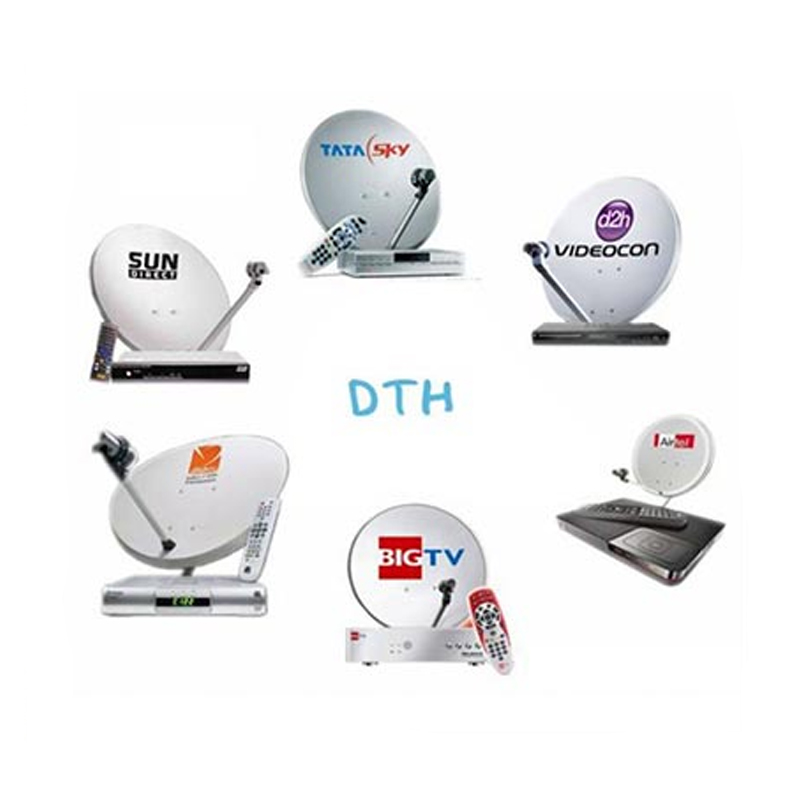
    Airtel Digital TV, the DTH arm of Bharti Airtel, and LG Electronics India have announced an exclusive partnership to redefine home entertainment experience by bringing the best of online and satellite TV content to customers.

    Valid till 31 October, 2017 in select cities, on purchase of a new Internet TV along with the LG panel TV, customers can enjoy benefits of up to 25 per cent.

    Customers purchasing 43-inch and above LG UHD or OLED panel TV, will now be able to add to their ultra high-definition TV experience with Airtel Internet TV – India’s first 4K hybrid STB that offers online content plus over 500 TV channels.

    Airtel ‘Internet TV’ comes with inbuilt-Wi-Fi receiver, Bluetooth based remote control and is integrated with Google voice search feature. Customers can discover their favourite content by simply speaking into the remote and choose from a variety of content sources.

    Airtel ‘Internet TV’ STB enables live TV shows to be paused, recorded or even rewind on connected USB-drive (external HDD). Internet TV supports many digital output ports for consumers to enjoy Dolby ATMOS experience. Inbuilt Bluetooth allows users to connect their speakers or Bluetooth headsets for best-in-class experience.

    Airtel Internet TV requires a broadband or a 4G hotspot connection with a minimum recommended speed of 4 Mbps. Airtel Internet TV customers can also get additional 25GB with their Airtel Broadband plans via MyAirtel App.

  • IPL ownership, key BCCI rights put Star India in position of advantage: ICICI Securities Media Content Meter

    IPL ownership, key BCCI rights put Star India in position of advantage: ICICI Securities Media Content Meter

    BENGALURU: ICICI Securities released a Media Content Meter report today. The report titled Sports – Battle heats up commenced saying that this month was marked by two significant events in Indian sport broadcasting industry: 1) The Supreme Court restrained Prasar Bharti from giving live feed of sport events of national importance to cable TV and private DTH platforms; and 2) Star India won TV and digital broadcasting rights for IPL for Rs 163.5 billion. With sport viewership in India largely dependent on cricket, ICICI Securities believes the ownership of IPL and key BCCI rights puts Star India in position of advantage.

    The report mentions the rise in the value of the Indian Premier League (cricket, IPL). The payout per season for the broadcast and the digital rights rose by two and a half times and thirteen times respectively. Even the payout for the title sponsorship of the IPL had increased by 1.8 times- Vivo paid Rs 4.4 billion for the title sponsorship for a period of five years (2018 to 2022) against the Rs 1 billion paid for a period of two years (2016 and 2017).

    Sports leagues, including homegrown leagues, other than cricket were also gaining traction in India. Among the homegrown leagues, Star Sports has the rights to a majority of successful leagues such as Indian Super League- Football (ISL), the Premier Badminton League (PBL) and the Pro Kabbadi League (PKL). Sony has the rights to the Premier Futsal League – Football and Pro Wrestling League.

    The report says that the Supreme Court decision will help boost up viewership of Star Sports channels and its ability to price channels as pay-TV subscribers will no longer have access to free cricket. With control over so many sports, Star India should be able to command higher ad rates and this was evident from Star India’s exorbitant ad rates during the recent India Australia series.

    In the content space, the report highlights some key developments. These include Zeel’s launch of premium English movie channels &Prive HD, which was fourth channel in the English premium movie genre. Sony Entertainment Television (SET) plans to launch a sub-brand – SET-Originals by the end of 2017. SET-Originals will focus on premium audience-featuring premium content such as concerts, finite series and home grown shows. Further, Sony is also planning to launch a number of new shows in the near future. Colors was also strengthening its weekend programming. Also, Star Plus after re-launching afternoon slots about six months back has decided to shut it down.

    The report says that in the Hindi GEC market, Sony has been gaining market share on the back of the ninth season of Kaun Banega Crorepati (KBC), while Zee TV and &TV were gaining in Hindi GEC all day viewership. Star India’s rebranded Hindi GEC channel Star Bharat gained marketshare with new shows.

    Among the non-South regional channels, in the Marathi space, Zee Marathi was the unchallenged leader, while Star Jalsha led in the largely two-player Bangla space, the other contender being Zee Bangla.

    In the South Indian regional space, Star Vijay and Star Maa gained in the Tamil and the Telugu spaces respectively on the back of Bigg Boss. While Sun TV was the absolute leader in terms of viewership in the Tamil market, Bigg Boss helped Star Vijay bag additional viewers in the primetime band.

    In the Telugu GEC regional space, Gemini TV had slipped to third place in terms of all day viewership. During primetime, Zee Telugu and Star Maa were neck-to-neck. In the Kannada GEC space, Zee Kannada was closing in on leader Colors Kannada, in terms of all-day viewership, though Colors Kannada was a leader during primetime. In the Malayalam GEC space Asianet ruled the all-day and primetime viewership.

    In the annexure to the report, ICICI shared some interesting numbers on viewership share of the Hindi GEC space during primetime starting 1930 hours until 2330 hours. For every half hour from 1730 hours to 2000 hours, Star Plus had the highest viewership share. Colors programmes led the viewership game in the 2000 hours to 2030 hours slot, while Sony SAB led in the 2030 to 2100 time slot. The 2100 to 2130 slot belongs to Zee TV in terms of viewership. Star Plus programmes had led in the 2130 hours to 2200 hours earlier, but in the recent past, it is Zee TV programmes that had the highest viewership share.

    Star Plus programmes have the highest viewership share in the 2200 to 2230 time slot. Over the past few weeks, Colors programmes have had the highest viewership share in the 2230 to 2300 hours, while Sony programmes leads in terms of viewership share during the 2300 hours to 2330 hours time slot.

    On the OTT front, Amazon Prime announced six new comedy series created by some of India’s top comedians. The report says that Amazon is after regional content also, including exclusive digital rights as well as streaming rights before the television premiere of a few Telugu films. Pan-regional OTT service Viu was also planning to launch four new original shows by the end of December 2017 in Hindi and Telugu languages.

    Note: (1) In the specific case of KBC, the ICICI Securities report generally refers to weeks 26 to 38 of 2017, while in the case of primetime and all-day viewership, the charts in the report cover quarterly periods starting from Q3-15 until Q2-18. The report states that the numbers for Q2-18 are estimates.

    (2) This article does not reflect the opinion of The Indian Television Dot Com Pvt Ltd. Group or any of its constituent people, employees, consultants and associates.

  • Media’s best practices and innovations to be shared between India and Ethiopia

    Media’s best practices and innovations to be shared between India and Ethiopia

    NEW DELHI: India and Ethiopia would be signing an agreement on “Cooperation in the field of information, communication and media.”

    The union cabinet chaired by the prime minister Narendra Modi has said that the agreement will harness the growing power of information, communication and media for information dissemination and enhancing outreach between the two countries for inclusive development.

    It will also enhance people-to-people contact through exchange programmes. It would also provide an opportunity for both the nations to share best practices and new innovations in the field of information, communication and media.

    The agreement will encourage cooperation between mass media tools such as radio, print media, TV, social media etc. to provide more opportunities to the people of both the nations and create public accountability.

    The agreement, through an institutional framework, will facilitate exchange of delegations, personnel between the two nations, providing them opportunities to learn from each other’s best practices, bringing in equity and inclusiveness.

  • Govt urges TV and radio channels to publicise ‘Swachhta’ campaign

    Govt urges TV and radio channels to publicise ‘Swachhta’ campaign

    NEW DELHI: Private television and FM channels and radio stations have been requested to give adequate attention to the ‘Swachhta ki Seva’ campaign launched by the prime minister Narendra Modi in his ‘Mann ki Baat’ broadcast on 27 August 2017.

    “Keeping in view the public interest and importance of the matter,” the ministry of information and broadcasting has requested the media to “build the idea of the campaign in their programming so as to bring the message home to the maximum viewers.”

    In his broadcast on All-India Radio, Modi had called upon the nation to undertake the SHS campaign from 15 September 2017, culminating on Gandhi Jayanti, that is, on 2 October 2017.

    The aim of the campaign, he said, was to intensify the focus on cleanliness and create an environment of cleanliness across the country in the spirit of a ‘Jan Andolan’ (public movement).

    The ministry, in its request, said: “(The) media has a strong social and cultural impact on (the) society because of its inherent ability to reach out (to) a large number of people in the shortest possible time. (The) media, therefore, can play an important role in building public opinion and awareness in favour of the campaign.”

    The request was sent to seven different organisations of TV, FM and community radio channels. These are: News Broadcasters Association (NBA), the Indian Broadcasting Foundation (lBF), Association of Regional Television Broadcasters of India, Association of Radio Operators for India (AROI), Community Radio Association (CRA), Federation of Community Radio Stations (FCRS), and Community Radio Forum of India.

  • 14 pc Singaporeans use illicit TV boxes, at malware risk: Casbaa-sponsored study

    14 pc Singaporeans use illicit TV boxes, at malware risk: Casbaa-sponsored study

    MUMBAI: Despite major growth in the number and range of legal online content choices available to them, recent studies have found Singaporeans to be among the top consumers of pirated online content around the world.

    A new consumer research study released by research company, Sycamore, at a Casbaa-sponsored event further examined online piracy behaviour within Singapore and found several striking trends:

    • Almost half the population admit to having engaged in online piracy, with 39 per cent stating they currently illegally stream (OTT / VoD) or download movies, TV shows or live sports channels.

    • Illicit Streaming Devices (TV boxes) are changing the face of piracy in Singapore, with 14 per cent of Singaporeans admitting to currently using an illicit streaming device.

    • Seventy-four per cent of active pirates recognise that accessing pirated content puts them at greater risk of getting viruses, spyware and other malware. In fact, the risk of malware was the primary reason (40 per cent) cited by those who said they had stopped pirating for their change in behaviour, followed by recognition that there were now more legal options available (37 per cent).

    • Sixty-eight per cent of Singaporeans recognise that pirating movies, TV shows or sporting events is stealing or theft, with almost a third agreeing that blocking of sites which profit from pirated content would be the most effective means of reducing online piracy.

    The Sycamore study combined qualitative and quantitative methodologies. This included a survey of 1,000 respondents in Singapore, weighted to be representative of the population, plus a further 300 users of illicit streaming devices, to better understand the details of their behaviours.

    “The implications of these results are significant”, commented CASBAA’s chief policy officer John Medeiros. “Admitted usage of TV boxes which provide illegal access to TV series, movies and live sports events is much greater in Singapore than in other developed markets, such as the US and the UK. While these numbers are already concerning, they rely on the candour of respondents and undoubtedly underestimate the true scale of the problem.”

    These findings point to an equally worrying trend in the Singaporean market. Despite the fact that two-thirds of Singaporeans agree that piracy is stealing, the study revealed that nearly three quarters of the population consider piracy to be a normal or typical behaviour.

    “The notion that piracy is something that everybody does nowadays turns it into a socially acceptable behaviour”, said Sycamore Research director Anna Meadows. “Numerous studies have shown that what we perceive others to be doing has a far stronger influence on our behaviour than what we know we ‘ought’ to do. People know that they shouldn’t really pirate, but they continue to do so because they believe those around them do as well. Interestingly, even among active pirates, almost a third agree that authorities should be able to take more action to deter piracy.”

    Those Singaporeans who admitted to actively streaming or downloading pirated content admitted that the primary incentive behind their behaviour is that it costs nothing to pirate. An overwhelming 63 per cent of respondents answered that their decision to pirate was motivated by the desire to access content for free. “On the other hand”, said Meadows, “there are few perceived downsides to piracy. Whilst the risk of devices being infected with viruses or malware is understood, it is underweighted. In the face of the benefit of free content, people appear to discount the risks, as the idea of getting something for nothing is so psychologically powerful.”

  • Govt steps helping APEJ STB market, global sales may expand at 7.5pc CAGR

    Govt steps helping APEJ STB market, global sales may expand at 7.5pc CAGR

    MUMBAI: Owing to increase in penetration of television and TV services within rural areas as well as urban areas, the set-top box market will receive a boost all across the APEJ region. Disposable incomes are on a rise in India and China, and this is helping the set-top box (STB) market turnover to grow, according to Reportlinker study. In China and India respectively, governments have taken initiatives to focus on HD pictures, HD channels and decline in TV prices. This has led to the growth of the set-top box market in the APEJ region.

    The global set-top box market is estimated to be valued at US$ 22,269 million in 2017 and is projected to reach US$ 46,091 Mn by 2027 end. Sales revenue is expected to increase at a CAGR of 7.5 per cent during the forecast period (2017–2027), the Reportlinker report added.

    Increasing demand for TVs from rural areas boosting the set-top box market in the APEJ region: Due to increase in penetration of television and TV services within rural areas as well as urban areas, the set-top box market will receive a boost all across the APEJ region. In the Asia Pacific region, consumers are more aware about the features, quality and pricing of the set-top box, helping the market achieve greater growth and acceptability.

    Increasing demand for IPTV STBs is fuelling the market for set-top boxes in North America: Increasing demand of 4K TVs is expected to provide support to the growth of the set-top box market in North America. It has been observed that the demand for IPTV based services has increased by 12 per cent and operators are viewing IP-based services as an opportunity to differentiate their products. IP transmission recording features and higher storage specifications are anticipated to support steady revenue growth of the North America set-top box market.

    Domestic production and low-cost products hampering the market growth in APEJ: In the Asia Pacific region, domestic production of set-top boxes by local companies is leading to an increase in price competition with global set-top box manufacturers. Emerging companies are acting as competitors to the established players in the market, thus making the smooth operation of this market difficult.

    Focus on HD videos and powerful interfaces with technology a growing trend in the global set-top box market: It has been observed that set-top box vendors are focussed on supporting devices that enable seamless rendering of high-quality video on a powerful user interface and set-top box vendors have started manufacturing operation systems and app based set-top boxes. The global market is moving towards the 4K android customised set-top box and smart set-top boxes. It has been observed that in the past few years, set-top box manufacturers have shipped a large number of 4K set-top boxes in the APEJ region, and consumers are more aware about the technology and features of set-top boxes in this region.

    Flexible policies and government support encouraging the use of set-top boxes in the APEJ regional market: In November 2015, the Chinese government banned 81 third party apps that allow users to turn television sets into internet streaming devices. The Chinese State Administration of Press, Publication, Radio, Film and Television proposed a rule for governing set-top boxes. In China and India respectively, governments have taken initiatives to focus on high definition pictures, towards HD channels and decline in TV prices. This has led to the growth of the set-top box market in the APEJ region. Manufacturers in this region have also utilised e-commerce retailers such as Alibaba, Ali Express, Amazon, Flipkart etc., and this has propelled the growth of this market.In terms of value, the North America set-top box market is projected to be the most attractive regional market in the global set-top box market during the forecast period

    However, the APEJ market is also poised to register high Y-o-Y growth rates throughout the forecast period. In terms of value, APEJ is anticipated to register a CAGR of six per cent during the forecast period. In 2016, the APEJ market was valued at US$ 6,067.4 Mn and is expected to witness sustained growth in terms of revenue throughout the forecast period.

  • IPL net realisation up, digital ad revenue grew astronomically as compared to TV

    IPL net realisation up, digital ad revenue grew astronomically as compared to TV

    MUMBAI: How have the businesses of brands, advertisers and the allied industry changed since the advent of one of the most popular sporting events — IPL. The net realisation of IPL property has gone up by five per cent despite the depreciation of the rupee against the US dollar.

    Started in 2008, IPL success has been a catalyst for the T20 boom across the sporting world. But, for India, it was the beginning of a journey towards being a sporting nation. In short, the IPL has proved to a true game-changer — with distinct pre-and post IPL eras of sports marketing. It has added a new word to India’s vocabulary: Sport-ainment!

    IPL may see leading sports broadcasters such as Sony Pictures Network India (SPNI) and Star Sports invest over US$ 2 billion to pocket broadcast rights. Duff & Phelps is however expecting the broadcast and digital rights for IPL in next five years to go beyond $2 billion.

    Duff & Phelps 2017 report indicates 26 per cent growth in IPL brand values to USD 5.3 billion compared to USD 4.2 billion last year, boosted by the renewed Vivo title sponsorship deal at Rs 22 billion. A team of 6-7 persons worked on the report which also includes Duff & Phelps London MD Trevor Birch who was also the CEO of Chelsea FC. (As per Brand Finance, however, the value of IPL system grew by nine per cent in 2017 to $3.8 million.)

    Digital content is becoming a strong medium of social media engagement for the sports viewers. The number of tweets pertaining to the IPL has crossed 8.5 million and continues to grow.
    “In the span of next five years, it is a possibility that digital will reign over television, television will remain where it is — which means there would neither be significant growth nor fall. To give an example, Sony’s ad revenues crossed INR 13 billion this year with 10 per cent increase from last years ad revenue, while Hotstar’s ad revenues from IPL rose to Rs 1.2 billion, more than double the previous year,” Duff & Phelps MD Santosh N told Indiantelevision.com.

    The brand value of the individual teams have risen 34 per cent on an average in 2017 compared to 2016. The net realisation of IPL property has gone up by five per cent in the overall value of IPL business.

    Talking about the changes IPL is making to accelerate its growth in coming years, Duff & Phelps MD Varun Gupta said, “IPL is doing great when it comes to audience penetration — viewership in rural areas is going up, significantly. Focusing on international markets is making IPL capture eyeballs in different countries. With Afghanistan players playing for different franchises, it has added Afghani viewers too — for example.”

    IPL 2017 also ascended to new heights, with nearly 45 per cent of viewership coming from rural India.

    Talking about the ad revenue “Cricket is heavily leading with 80 per cent and the remaining is from other sports. India is a cricketing nation, the fact is — it has many slots for ads, everytime a wicket falls between the overs and the time outs,” Santosh added.

    Speaking on the competition among players bidding , “On the television side, the clash is between Sony and Star, but, in the digital space, Amazon, Jio and Hotstar are going to have a tough fight,” Gupta added.

    About whether advertisers are moving to digital, Santosh added, “Every advertiser is looking at the ROI, with digital advertising you can structure it in a better way which is not possible in a linear TV.”

    As per Maxus, a total of approximately six million mentions on social media were registered in the 10th season, more than twice those of the last season (approximately 3.1 million mentions). Mumbai Indians had an incredibly successful digital media strategy, attracting over 83 million engagements across Facebook (50 million), Instagram (29 million) and Twitter (3.95 million).
    “Merchandising continues to be a challenging aspect in India, their needs to be a better understanding as in how to license your brand to maximise revenues, its an area where international franchise has also struggled with and they got it right in the past 5-6 years,” Gupta added.

    Brand finance is an independent branded business valuation and strategy consultancy which has also compiled a report on IPL brand value in 2017. Comparing the data of Duff & Phelps and Brand Finance, Duff and Phelps have Mumbai Indians(MI) on the top with brand value of $106 million in 2017 and 36 per cent increase compared to last year followed by Kolkata Knight Riders (KKR) with $99 million gaining 29 per cent brand value. Royal challengers Bangalore with 31 per cent increase sits at third position with $88 million.

    Whereas, Brand Finance (UK) has KKR on top with $58.6 million and 24 per cent increase in brand value followed by MI with 17 per cent hike and $54.1 million. SunRisers Hyderabad has placed itself at third position with $46.5 million and 23 per cent hike. RCB is on the fourth position with only 4 per cent increase and $44.4 million as its brand value.  

    About the difference in the reports, Gupta said, “This involves a lot of primary and secondary research, it might be possible that we interacted with different stake-holders. The methodology might be different from ours: we use income and royalty approach to arrive at our final output.”

    ALSO READ :

    IPL: Discovery & YuppTV in fray, CoA-BCCI discuss conflict of interest & pay today

    CSA T20 Global League reschedules player draft dates

    IPL: BCCI tells SC rights bidding process under way, hearing on 22 Aug

  • Ministry using TV & social media for updating farmers

    NEW DELHI: The ministry of agriculture is using modern technology in a major way through its mass media scheme to educate farmers through use of print, electronic media such as radio, TV and social media platforms apart from display of exhibits for know-how on new tools and technology, creating awareness about schemes, programmes activities being implemented for benefiting and helping farmers.

    Minister of state for agriculture & farmers welfare Parshottam Rupala told the Parliament that the department of agriculture, cooperation and farmers’ welfare (DAC&FW) has taken up several initiatives in the field of agricultural extension which includes ‘Support to State Extension Programmes for Extension Reforms’ which is popularly known as ATMA Scheme, Mass Media Support to Agricultural Extension and Kisan Call Centres.

    The key objectives of ATMA scheme include setting up of autonomous institutions at the State/District/Block level, encouraging multi-agency and broad-based extension strategies adopting group approach to extension and facilitating convergence of programmes in planning, executing and implementation.

    The Kisan Suvidha Mobile App has been launched by the Government to provide information to the farmers on Weather report, Plant Protection, Input Dealers, Agro-Advisory and Marketing.

    Besides this, the Pusa Krishi Mobile App, Agri-Market App and Crop Insurance Mobile App have also been launched for the benefit of farmers.

  • From lab to end-user: India launches TV, radio & FB integrated server ‘Sagar Vani’

    MUMBAI: The India government, in order to effectively disseminate ocean-related advisories from the lab to the end-user, has developed ‘Sagar Vani’.

    The union minister for science & technology, earth sciences and environment, forest & climate change Harshvardhan has launched the ‘India Quake’ app and ‘Sagar Vani’ at the Foundation Day of Ministry of Earth Sciences in New Delhi on 27 July.

    ‘Sagar Vani’ is a software platform where various dissemination modes will be integrated on a single central server. It ’ includes multi-lingual SMS, Voice Call / Audio Advisory, Mobile Apps (User / Admin modules), Social Media (Facebook, Twitter, etc.), Email, GTS, Fax, Digital Display Boards, Radio / Television broadcast units, IVRS, Cloud Channels, etc. The system also has facility to provide access to various stakeholders so that they too will be able to further disseminate information and alerts to the user community.

    ‘Sagar Vani’ system compares with the most advanced countries’ services in terms of speed of delivery, omni channel capabilities and diverseness of services. With this system, the services will be disseminated in local languages using advanced artificial intelligence and machine learning capabilities. For the first time in India, Sagar Vani is also using the power of television and cable network mediums for topical and alert dissemination services.

    ESSO-Indian National Centre for Ocean Information Services (INCOIS) under Ministry of Earth Sciences (MoES) provides ocean information services for the benefit of various user communities in India. The services are more fruitfully utilized when the advisories reaches the end user in timely manner and in user readable format. Now-a-days ICT facilities in the country are accessible to large population of the country and that plays a major role in effective dissemination of information to the end user. ESSO-INCOIS has adopted the state-of-the-art technologies and tools available in the country for the timely dissemination of Ocean Information and Advisory Services that includes Potential Fishing Zone (PFZ) advisories, Ocean State Forecast (OSF), High Wave Alerts and Tsunami early warnings.

    Presently, the advisories are being disseminated to the stakeholders from different service sections and through various stakeholders and partners, which might cause delay in dissemination of the services. In order to timely disseminate the advisories, ‘Sagar Vani’ has been developed by ESSO-INCOIS through Gaian Solutions Pvt. Ltd.

    The ‘Sagar Vani’ will now serve the coastal community, especially the fishermen community with the advisories and alerts towards their livelihood as well as their safety at Sea.