Tag: TV

  • IBF will resist any move to undercut ad revenue from govt & PSUs

    IBF will resist any move to undercut ad revenue from govt & PSUs

    MUMBAI: The Indian Broadcasting Foundation (IBF), the apex body of broadcasters, has said that it will resist any move by the government to undercut ad revenue from PSUs. This comes after Congress chairperson Sonia Gandhi gave a call to the prime minister to put an end to all advertisements by the various state governments and PSUs for a period of two years.

    In a release, the IBF said that it stands indomitably with the government of India in its fight against the COVID -19 outbreak. Broadcasters, voluntarily seizing the initiative, have been advising, educating and informing the public of the various measures taken by the government of India to fight the pandemic and urging them to stay home and safe.

    “Like other sectors which have been economically impacted by the COVID-19 outbreak, the media and broadcasting industry cannot claim immunity. In these testing times, any decision by the government to curtail budgetary allocation to advertisements carried out by various channels in lieu of government advertising will sound the death knell for the sector and particularly so, for the regional and smaller channels whose overwhelming dependence on government ads cannot be both overstated and undermined. With the closure of cinemas, the complete cessation of production of films and television shows, cancellations of live sporting events and scheduled advertisements and delays in payments by advertising agencies and distribution platform operators, the M&E sector is already facing the brunt of the slowdown. Advertisement bookings have nosedived by 50 per cent,” said the release.

    IBF further says that in such a scenario, it will resist any such move by the government to undercut revenue for government advertising as many of its member channels will lose substantial revenues and will be compelled to shut down resulting in massive job losses. “At this critical moment when the nation stands united to deal with the aftermath of COVID-19 outbreak, we request all parties to give a thought for the media sector which is known for its neutrality and objectivity.  A lot of government ads relate to social messages concerning health, education, etc.  TV still remains the primary mode of disseminating these messages to the citizens of India and stopping these ads is not in public interest,” it added.

  • Star Plus’ nine-month long tryst with ‘Kahaan Hum Kahaan Tum’

    Star Plus’ nine-month long tryst with ‘Kahaan Hum Kahaan Tum’

    MUMBAI: Production of shows across TV and OTT has halted due to the lockdown. While there is no way to predict when normal functioning will resume, GECs are filling airtime with re-runs of popular shows from the past. One show that just concluded before Covid-19 became a pandemic in India and deserves a re-run is Star Plus’ Kahaan Hum Kahaan Tum (KHKT). The 9 pm primetime show, which had its last airing on 14 March, was a refreshing change from the monotonous saas-bahu drama that is a standard across channels, national or regional.

    In June 2019, KHKT replaced Krishna Chali London, which ran for a little over a year. Before Krishna Chali London, Naamkaran ran for about 463 episodes. Now KHKT has given way to a new show Anupama, an adaptation from Star Jalsha’s Sreemoyee about the struggles of a homemaker. The -pm slot has turned into an experimental one for the channel ever since it ended one of its popular shows Diya Aur Baati Hum which had a successful run from 2011 to 2016.

    However, KHKT was a track apart from all these shows. While primetime shows tend to depict traditional families, Sol Productions took bold strides with KHKT. Says Sol Productions’ founder and managing director Fazila Allana, “For KHKT, our effort was to be more reflective of today’s society. Women are becoming stronger and standing on their feet. We did show a wealthier society in the show and we got a great response for it with a huge cult audience too.”

    The premise of the show itself was novel: a love story between a TV actress and a surgeon in predominantly upper-class urban Mumbai. The other stereotype it broke was that every primetime show must make you cry or feel sad. KHKT introduced a lot of humour in its first few months, which was like a breath of fresh air.

    “My heroine wasn’t the ‘roti dhoti abla naari’. She was a confident girl. The romance was also different. They [the lead pair] spoke of things like let’s take a shower together,” says producer Sandiip Sikcand. Indeed, the show attempted to break several taboo topics whether it was sex education between the mother and daughter, the husband and wife discussing their first night together or even something as challenging as suicide.

    Even as the show focused on Sonakshi Rastogi, portrayed by Dipika Kakar Ibrahim, Allana points out the difference in KHKT’s male protagonist Rohit Sippy, played by Karan V Grover. “More than a strong woman, whom you see in multiple shows now, the biggest thing here was the man supporting the woman in having her independent identity whether it was her life, career or having a name of her own,” she says. This track was mildly attempted in Diya Aur Baati Hum where the lead Sandhya Rathi had a semi-supportive husband in her dream of becoming an IPS officer.

    There is a reason why women swooned over the character of Rohit Sippy. While crafting Rohit’s character, Sikcand says, “He is the kind of guy everyone should be like. In my shows, I like men and women to be as real people. They need to be the way I feel they should be. Every human needs to be humble and supportive. A man is not a benchmark for a woman and the woman is not the weaker sex. You are a human first and man/woman later.”

    Even as the love between Rohit and Sonakshi was blossoming from courtship into marriage, trouble seemed to be brewing not just in their marital life but also on the channel and production front. After a few months, the show had to introduce drastic dramatic changes to rake up the TRPs. “They [Star] had maintained from the start that they want to break the 2 GRP barrier for the 9 pm slot. It is a tough slot and is up against the number 1 show. We came close but we couldn’t cross it. The channel probably had their own research and decided that they want to experiment with a different kind of story. Even KHKT was an experiment and it worked up to a point,” shares Allana.

    Sikcand says that the team got the call to pack up on 14 February, Valentine’s Day. When probed about what the channel gave as a reason for winding it up within nine months, Sikcand is tight-lipped stating that the conversation between a broadcaster and a producer is like one that takes place between a husband and wife in the bedroom. “I don’t know what prompted this decision but ratings is what we [the industry] judge by,” he mentions.

    Allana, giving more insight, says that the show only appealed to a certain audience mindset and that is what led to the decision to end the show. “The audience that watched KHKT is more evolved and that number isn't a lot in the country. Which is why in the UK it was the top show,” she says.

    If a conservative audience is what is being catered to by Hindi GEC primetime, is there no hope then for shows like KHKT that want to take the road less travelled? “Given a chance, I’ll make the show the same way again. I will not stop experimenting. KHKT was different and maybe, different takes a little more time. I will continue saying stories which will compel the thinking to change,” says Sikcand boldly.

    On the other hand, Allana says that the change in the show type can only happen when audiences change. “Star is catering to the audience. If the audience prefers to watch drama and woman constantly being beaten up and rising like a phoenix they will be forced to create such shows,” she points out.

    Is TRP a limitation on creativity? Sikcand agrees but adds metaphorically, “You cannot go to the temple and not acknowledge the god. In TV, content isn’t king, TRP is. It’s up to you if you want to dance for that god or not. I will still dance because I need him to wake up, turn around and say don’t take me as a god.” Interestingly, the show got called off a few months after it changed tracks to cater to TRP-led viewership.

    Sikcand’s idea is not to ruffle feathers by introducing extremely off-beat thought-provoking ideas in his storylines. It is to keep introducing them little by little. In his own words, it is by adding a little baingan in your daily bhindi and keep increasing the amount of that baingan little by little.

    Ending at one episode short of 200, KHKT was unable to get a revised timeslot due to lack of vacancy while OTT was a challenge monetarily.

    While Allana feels the show might have been a little early for Indian mindsets, she hopes it still touched a lot of lives.

    For Sikcand, this is only temporary. He will continue to work with Star and is already buzzing with ideas not just for TV but also for OTT. “When you want to win the race, take a step back and sprint. Maybe this is that,” he concludes.

  • &TV to re-air ‘Ramayan’ this Ram Navami

    &TV to re-air ‘Ramayan’ this Ram Navami

    MUMBAI:In the spirit of Ram Navami, a festival that signifies the birthday of Lord Rama, &TV is all set to present (Shri Ram Charit Manas Adharit) ‘Ramayan’ on television. The show features popular actors like Gagan Malik, Neha Sargam, Shikha Swaroop, Rucha Gujarathi, Sachin Tyagi, Divyanka Tripathi amongst others essaying pivotal characters. The viewers will get to watch this iconic tale of ‘Ramayan’ starting 2 April 2020, every Monday to Sunday at 8 am only on &TV. 

     &TV business head Vishnu Shankar said, “Ramayan undoubtedly is one of the greatest and timeless Indian epic tales, read and loved by all. What better day to celebrate this eternal saga of Lord Ram than Ram Navami itself? Knowing the devotional fervour with which families across India celebrate this day, this year amidst the countrywide lockdown, we chose to bring Lord Ram closer to our viewer's hearts and homes through this show. As the entire country unitedly fights the threat amidst us, there’s nothing better to bring the entire family together than this epic battle between good and evil."

    He further said, "At &TV, we are committed to keeping our viewers entertained, especially during this time. From stomach-clutching comedy to inspirational stories to devotional kathas, there will be something for everyone. Not to forget the exciting, heart-thumping weekend line-up of fantasy-horror and thrillers. We have a reasonable bank of one-hour specials of our cult shows – ‘Double Dhamaka’ (Happu Ki Ultan Paltan), ‘Sangharsh Ki Kahaniya’ specials (Ek Mahanayak – Dr BR Ambedkar), ‘Gajab Kisse’ (Gudiya Humari Sabhi Pe Bhari) and Bhabiji Ghar Par Hai Poore Ek Ghante, which will ensure our fans have access to non-stop entertainment. The weekends will get even more exciting with original episodes of the edge-of-the-seat thriller, Raat Ka Khel Sara and new stories of our spine-chilling Fantasy-Horror, Laal Ishq. During this period of social distancing, we at &TV are determined to ensure our shows act as the primary glue to hold families together.”

  • M&E industry grew by almost 9% to reach Rs 1.82 tn in 2019: FICCI – EY report

    M&E industry grew by almost 9% to reach Rs 1.82 tn in 2019: FICCI – EY report

    MUMBAI: The Indian Media and Entertainment (M&E) sector reached RS 1.82 trillion (US$25.7 billion) in 2019, a growth of 9 per cent over 2018 states the FICCI EY report ‘The era of consumer A.R.T. – Acquisition Retention and Transaction,’ launched today. With its current trajectory, the M&E sector in India is expected to cross INR2.4 trillion (US$34 billion) by 2022, at a CAGR of 10 per cent*.

    While television and print retained their positions as the two largest segments, digital media overtook filmed entertainment in 2019 to become the third largest segment of the M&E sector. Digital subscription revenues more than doubled from 2018 levels and digital advertising revenues grew to command 24 per cent of total advertising spend.

    The sector continues to grow at a rate faster than the GDP, driven primarily by growth in subscription-based business models and India’s attractiveness as a content production and post production destination.

    The rapid proliferation of mobile access is enabling on-demand, anytime-anywhere content consumption nationwide. With a population of 1.3 billion, a tele-density approaching 89% of households, 688 million internet subscribers and nearly 400 million smartphone users, India’s telecom industry is poised to become the primary platform for content distribution and consumption. India ranks as one of the fastest-growing app markets globally, where entertainment apps are driving significant consumer engagement.

    Online gaming retained its position as the fastest growing segment on the back of transaction-based games mainly fantasy sports, increased in-app purchases and a 31 per cent growth in the number of online gamers to reach around 365 million.

    Uday Shankar, Senior Vice President FICCI, said, “Riding the wave of exponential progress made towards digital accessibility and adoption, the M&E industry has been a forerunner of a dynamic and aspirational India. New products and business models are being imagined to capitalize on the rise in media consumption. Global players are recognizing the need to build India-centric offerings. The coming years are likely to usher in greater innovation in content formats, means of dissemination, and business models.”

    Ashish Pherwani, Partner and Media & Entertainment Leader, EY India, stated, “The M&E sector witnessed a surge in content consumption as digital infrastructure, quantum of content produced and per-capita income increased in 2019.  Driven by the ability to create direct-to-customer relationships, the sector firmly pivoted towards a B2C operating model, changing the way it measured itself. As entertainment and information options grew and choice increased the era of consumer Acquisition, Retention and Transaction (ART) redefined the media value chain leading to the emergence of many new trends and strategies across content, distribution, consumption and monetization.”

    “The coronavirus outbreak will have a significant adverse impact on the sector, the situation is still evolving both in India and many parts of the world, the scale of the impact cannot be estimated immediately,” he added.

    Key findings

    Television:

    The TV industry grew from Rs 740 billion to INR 788 billion in 2019, a growth of 6.5 per cent. TV advertising grew 5 per cent to Rs 320 billion while subscription grew 7 per cent to Rs 468 billion. Regional channels benefited from the New Tariff Order as their consumption increased by over 20% in certain cases. General entertainment and movie channels led with 74 per cent of viewership. On the back of several key announcements by the central and state governments such as Article 370, the Citizenship Amendment Act, and a general election, the news genre witnessed a growth to almost 9 per cent of total viewership, up from 7.3 per cent in 2018. In sports cricket emerged as the big winner in 2019 as it accounted for over 80 per cent of the sports viewership, up from 70 per cent last year, due to the ICC World Cup.

    Key insights – Television will remain the largest earner of advertising revenues even in 2025, approaching Rs570 billion. Viewership of regional language channels will continue to grow and reach 55 per cent of total viewership in India as their content quality improves further. Content viewed on smart TV sets will begin to reflect that consumed on mobile phones, providing a window for user generated content companies and other non-broadcasters to serve content on the connected television screen.

    Print:

    Despite a 3 per cent revenue degrowth at Rs 296 billion, print continued to retain the second largest share of the Indian M&E sector. Circulation revenues increased by 2 per cent to Rs 90 billion as newspaper companies tactically increased prices in certain markets. Advertising revenues fell 5 per cent to INR 206 billion in 2019 as AdEX volumes fell by 8 per cent. Margins improved as newsprint cost measures were implemented and companies benefited from the reduction of newsprint prices.

    Key insights – 2019 witnessed a significant growth in digital news consumers over 2018 when 300 million Indians consumed news online. Most large print companies had a defined digital business, with two companies crossing Rs 1 billion in digital revenues. Digital subscription, though nascent, has increased as several publications have put digital products behind a paywall.

    ·Digital media:

    In 2019, digital media grew 31 per cent to reach INR 221 billion and is expected to grow at 23 per cent CAGR to reach Rs 414 billion by 2022. Digital advertising grew 24 per cent to Rs 192 billion driven by increased consumption of content on digital platforms and marketeers’ preference to measure performance. SME and long tail advertisers increased their spends on digital media as well.  Pay digital subscribers crossed 10 million for the first time as sports and other premium content were put behind a paywall.  Consequently, subscription revenue grew 106 per cent to Rs 29 billion. Digital consumption grew across platforms where video viewers increased by 16 pe cent, audio streamers by 33% and news consumers by 22 per cent.

    Key insights: By 2020, OTT subscription market will approximate 10 per cent of the total TV subscription market (without, however, considering data charges).  We estimate over 40 million connected TVs by 2025, which will provide a huge opportunity for content creators to reach family consumers.  Better bandwidth will drive large screen consumption. By 2025, 750 million smart phone screens will also increase the demand for regional, UGC and short content, creating a short video ecosystem that can create significant employment.  The battle for content discovery will intensity and move to the unified interface.

    ·Films:

    The Indian film segment grew 10 per cent in 2019 to reach INR 191 billion driven by the growth in domestic theatrical revenues and both rates and volume of digital/ OTT rights sold. Domestic film revenues crossed INR 115 billion with Gross Box Office collections for Hindi films at Rs 49.5 billion – the highest ever for Hindi theatricals. Overseas theatricals revenues fell 10 per cenr to Rs 27 billion despite more films being released abroad primarily as films with superstars didn’t perform as well in 2019. 108 Hollywood films were released in 2019 as compared to 98 in 2018. The gross box office collections of Hollywood films in India (inclusive of all their Indian language dubbed versions) grew 33 per cent to reach Rs 16 billion. As single screens continued to reduce, the total screen count decreased by 74 to 9,527.

    Key Insights: Digital rights continued to grow in 2019 with an increase in revenues from Rs 13.5 billion in 2018 to Rs 19 billion in 2019. Digital release windows shortened with some movies releasing on OTT platforms even before their release on television. In-cinema advertising grew marginally to Rs 7.7 billion in 2019 as multiplexes and advertising aggregators started signing long-term deals with brands. Seventeen hindi films entered the coveted Rs 100 crore club in 2019, which is the highest ever. Interestingly, six movies made it to the rs 200 crore club in 2019, as opposed to three in 2018. The future will be driven by immersive content (technology and VFX rich) experiences to drive theatrical footfalls and some genres of films could migrate to home viewership only.  We can expect to see creation of a segmented Hindi-mass product for the heartland at low ticket prices.

    Mergers and Acquisitions in M&E

    While the number of deals increased to 64 in 2019 from 41 in 2018, the overall deal value was

     much lower at Rs 101 billion as compared to Rs 192 billion in the previous year. This was largely due to the absence of big-ticket deals with only four deals crossing the US$100 million threshold. The highest amount of investment was made in television, followed by digital, radio and gaming. Deal activity was spearheaded by new media such as digital and gaming, which witnessed 54 of the 64 deals in 2019, however, in terms of deal value, the share of traditional media segments such as TV, radio and film exhibition was 63 per cent.

  • Viacom18 beats Monday Blues with fun social media chatter within its brands

    Viacom18 beats Monday Blues with fun social media chatter within its brands

    MUMBAI: The coronavirus outbreak has brought dramatic changes in our lifestyle. To slow down the spread of the pandemic in the country, we have been asked to maintain social distancing. This Monday could have been more gloomy than usual. But, Viacom18 brands started social chatter within themselves to beat the Monday Blues.

    Using #LetsBinge, the brands started talking to each other.  Led by the mother brand, Viacom18, all the other brands followed. From COLORS that encouraged binge watching on VOOT to VOOT that asked MTV India to help it choose between COLORS and MTV shows, to MTV and Vh1 providing music to the background and much more. It also included Viacom18 Motion Pictures or any of our regional channels behind. All in all, it became a long banter chain between Viacom18's channels, whether on air or digital, Hindi or kids or English entertainment, movies or the regional cluster. 

    “We love being close to our fans and engaging with them. So we thought, why not have a social chatter with all our brands; a fun banter on a usually 'blues' Monday, and use the might of the network for something cool. When Viacom18 tagged COLORS and said #letsbinge, COLORS tagged Voot, and so on the chain cut across our channels and reached about 10 million followers. Now that's the power of the digital medium in times of quarantine. We had fun while engaging with our fans and sending out our message to them to watch our content, while sitting at home,” Viacom 18 Corporate Marketing, Communications and Sustainability head Sonia Huria said.

    Through the conversation, the brands wittly highlighted the popular shows and movies available across its portfolio including Barrister Babu, Big Boss, Asur,Marzi, Andhadhun, FRIENDS. While all the brands are constantly reminding people to stay home, there are chances to sound as panic monger and preachy or awkward and opportunistic others. Viacom18 found a different and creative way to stay connected with the audience ruling out both the possibilities. 

  • TV, digital and film shoots stop in Mumbai from today

    TV, digital and film shoots stop in Mumbai from today

    MUMBAI: Mumbai’s content producers were in for a shock. When they reached the gates of Film City this morning, they found them shut.  Until late last evening, Film City officials were adamant that they would keep the government-owned location open till 19 March, until they received official notice from the authorities. Which they apparently did late last night or early this morning in the wake of the Sars-CoV-2 virus scare.

    The producers’ body – the IFTPC – also got instructions from Maharashtra government officials that its members need to wind up their shoots as soon as possible – that is by tonight.

    However, in different shoot locations in Mumbai,  Bombay Municipal Corporation representatives went around  post lunch demanding that shootings be wound up immediately.  And they were given no option but to comply.

    It may be recalled that the various trade and craft unions had announced that they had agreed to cease all production by 19 March, and until the end of the month.

    Says a producer: “We were all working to shoot over time so that we could meet our deadlines with the broadcasters. Now we don’t know, what we will do. We will have to package  good episodes together using sharp edits.”

    How broadcasters will deal with this sudden turn of events with some episodes possibly being left incomplete, is to be seen. The good news for them is that since many Mumbai-kars are going to be home bound until the tide of the CoViD 2019 bad news recedes, a lot of television is going to be consumed.

    The government, on its part, is taking the extreme steps as it is hardpressed to halt the spread of CoVid-2019, which has attained pandemic status the world over. 

  • Hindi GECs saw 4 new show launches in Jan 2020

    Hindi GECs saw 4 new show launches in Jan 2020

    MUMBAI: Hindi GEC witnessed four new shows in the first month of 2020. Colors, Star Plus and & TV launched a new show in January. In the beginning of the month &TV launched two mythology shows Kahat Hanuman Jai Shri Ram on 7 January and Santoshi Maa Sunaye Vrat Kathayein on 28 January. At the end of the month, Star Plus and Colors launched a fiction show Dadi Amma… Dadi Amma Maan Jaao! and Naati Pinky Ki Lambi Love Story on 27 January respectively.

    Kahat Hanuman Jai Shri Ram is directed by Dharmesh Shah and produced by Alind Shrivastava. The cast of the show includes actors like Ekagra Dwivedi, Nirbhay Wadhwa, Jiten Lalwani and Sneha Wagh.

    The lead character in Santoshi Maa Sunaye Vrat Kathayein is played by Gracy Singh and the show is produced by Rashmi Telefilms.

    Produced by Bodhitree Productions Company, Colors’ Naati Pinky Ki Lambi Love Story revolves around the lead character Pinky who is short heighted, the character is played by Riya Shukla.

    Star Plus’ Dadi Amma Dadi Amma Maan Jao is produced by Rajshri Productions and the show is based on a story of two sisters who are raised by their grandparents.

    Sony Entertainment Television (SET) and Colors has also announced the launch of its upcoming shows in February. SET will air Ek Duje Ke Vaaste 2 on 10 February at 9.30 pm, currently the channel is running Tara from Satara at 9.30 pm slot.

    Colors will bring fiction and non-fiction shows in February. On 11 February the channel will premiere Barrister Babu which will replace Ram Siya Ke Luv Kush in weekday’s primetime slot at 8.30 pm and Khatron Ke Khiladi will premiere on 22 February which will replace Bigg Boss in the weekend slot at 9 pm.

    Star Bharat also launched a show Kartik Purnima on 3 February in the primetime slot at 8:30 pm. In 2019, Hindi GEC witnessed the launch of more than 50 shows on their channels throughout the year. 

  • TRAI report: Broadband sector saw growth of 36.52% in 2019

    TRAI report: Broadband sector saw growth of 36.52% in 2019

    MUMBAI: TRAI in its annual report has stated that in the last ten years a substantial number of HD pay television channels have been launched by broadcasters. As on 31 March 2019, there are a total of 99 operational HD channels.

    Let’s have look at detailed description below:

    Internet and Broadband subscribers

    The Internet subscriber base in the country as on 31 March 2019 was 636.73 million in comparison to 493.96 million in March 2018. The total broadband subscriber base of the country as on 31 March 2019 stood at 563.31 million whereas it was 412.60 million as of 31 March 2018.

    The broadcasting and cable TV services sector and FM Radio services continue to exhibit growth over the two decades. Equivalent to the growth in the subscriber base, the number of platforms & service providers has also increased. The broadcasting sector comprises of cable TV services, DTH services, terrestrial TV services, HITS services, IPTV services, and broadcast radio services.

    Satellite TV channels

    Currently, there are 902 private satellite TV channels permitted by Ministry of Information and Broadcasting by the end of the financial year 2018-19, out of which, 229 are SD pay-TV channels and 99 are HD Pay TV channels. The number of Standard Definition (SD) pay-TV channels have grown from 147 in the year 2010 to 229 in 2019.

    DTH Services

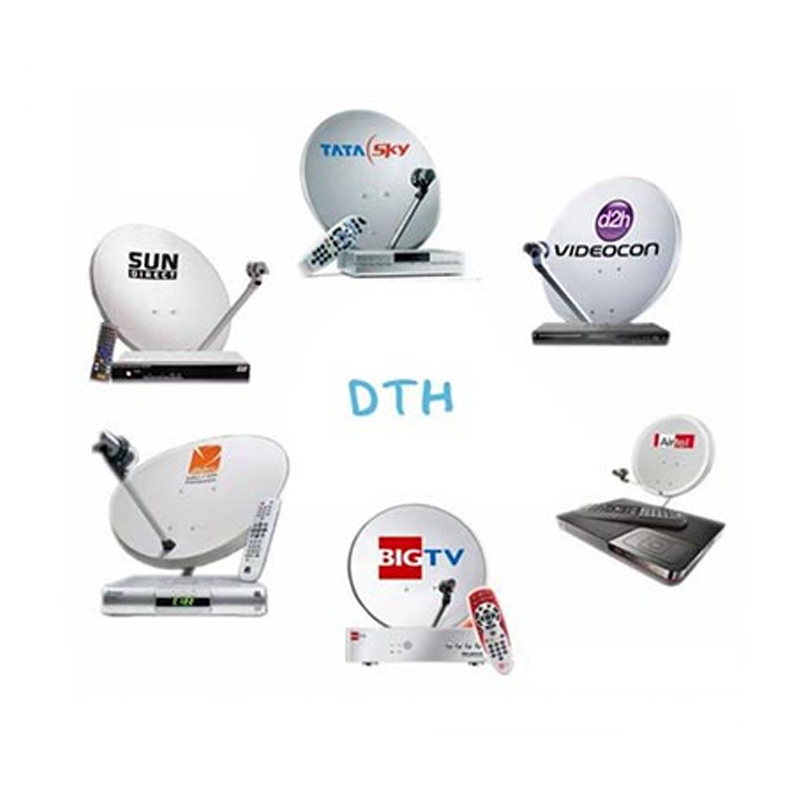
    Ever since its introduction in the year 2003, Indian DTH service has displayed a phenomenal growth. DTH has attained a net active subscriber base of around 72.44 million. At the end of March 2019, there are 5 pay DTH service providers catering to this subscriber base. The database rose to 72.44 in 2019 as compared to 67.53 in 2018.

    Apart from an increase in the availability of conventional TV channels, the pay DTH operators have continued to add several innovative offerings and value-added services (VAS) such as movie-on-demand, gaming, shopping, education etc.

    Cable TV

    The Cable TV segment is the largest of the TV service sector with an estimated subscriber base of around 103 million subscribers

     As per the statistics, the pay TV universe consists of around 103 million Cable TV subscribers, 72.44 million active DTH subscribers and 1.5 million HITS subscribers. Where the terrestrial TV network of Doordarshan alone covers about 92 per cent of India’s population connected via a vast network of terrestrial transmitters. The TV broadcasting sector includes 350 broadcasters, out of which, 39 are pay broadcasters.

     Talking about the television distribution side there are 1469 Multi-System Operators (MSOs) coming under the wings with Ministry of Information and Broadcasting (MIB), an estimated number of 60,000 cable operators, 5 pay DTH operators, 2 HITS operators, and a few IPTV operators. Apart from this public service broadcaster-Doordarshan, also provides a free-to-air DTH service in India.

  • &TV to come up with two new mythological shows in January

    &TV to come up with two new mythological shows in January

    MUMBAI: Capturing the connection between ‘Bhakt and Bhagwan’ (devotee & almighty), &TV is all set to present two stories – ‘Santoshi Maa Sunaye Vrath Kathayein’ and ‘Kahat Hanuman Jai Shri Ram’.

    Produced by Peninsula Pictures, the story of Kahat Hanuman Jai Shri Ram will present the true essence and purpose behind Hanumanji’s ‘bhakti’ towards Lord Ram, which will be premiered on 7 January 2020 at 9:30 pm every Monday-Friday.

    The show will feature a stellar ensemble cast including Ekagra Dwivedi essaying the lead character of Bal Hanuman; Sneha Wagh and Jiten Lalwani as Anjani and Kesari (Lord Hanuman’s parents) respectively.

    Meanwhile, Santoshi Maa Sunaye Vrat Katheyein is produced by Rashmi Sharma Telefilms and to start from 28 January 2020 at 9:00 pm every Monday-Friday.

    Conveying a message of the ultimate triumph for the sincerely devoted in a storytelling format, the show marks the comeback of popular Bollywood actress Gracy Singh as Santoshi Maa.

     &TV’s business head Vishnu Shankar said: “&TV is launching two new shows – Kahat Hanuman Jai Shri Ram and Santoshi Maa Sunaye Vrath Kathayein. While in one show, ‘Shiromani’ Hanuman takes birth in a ‘vanar roop’ to seek blessings of his ‘aradhyay’ Lord Shri Ram and helps him destroy the evil Ravana.”

    “In the second one, Santoshi Maa’s guides her ardent devotee Swati through the medium of ‘vrath-kathay’, which serve as a source of strength and enables her to tackle challenges successfully and live a happier life,” Shankar added.

    Meanwhile, the producers of Santoshi Maa Sunaye Vrat Katheyein, Rashmi Sharma from Rashmi Sharma Telefilms said: “Storytelling is an innately human quality; one that crosses cultures and languages. When it comes to mythology, viewers have always received stories of deities with open arms and admiration.”

    She further added that with Santoshi Maa- Sunaye Vrat Kathayein, we wanted to bring to the audience the authentic stories behind vrats and their deep-rooted meanings and showcase their relevance in today’s life situations.

    Similarly, the producers of Kahat Hanuman Jai Shri sho,  Alind Srivastava and Nissar Parvej, Peninsula Pictures said, “As a genre, mythology breaks through various demographic barriers. Our show Paramavatar Shri Krishna got a great response from the audience. With ‘Kahat Hanuman Jai Shri Ram’ we intend to narrate previously untold stories of Lord Hanuman from his childhood.”

    “We have all grown up hearing his stories and our show will further throw light on his childhood and his equation with his family. The show will highlight different facets of Lord Hanuman’s life and showcase why he is called the ‘param bhakt’ of Lord Shri Ram,” the producers added.

  • &TV presents life story of Babasaheb – ‘Ek Mahanayak – Dr. B.R. Ambedkar’

    &TV presents life story of Babasaheb – ‘Ek Mahanayak – Dr. B.R. Ambedkar’

    MUMBAI: &TV is launching a new powerful socio-drama titled Ek Mahanayak – Dr. B.R. Ambedkar. Produced by Smruti Shinde’s SOBO Films, the show is an inspirational story of Babasaheb and his journey from the tender age of five, to him becoming the prime architect of the Indian constitution. The show Ek Mahanayak – Dr. B.R. Ambedkar will feature Prasad Jawade essaying the lead character of Dr. B.R Ambedkar, Aayudh Bhanushali as young Ambedkar, together with Jaggu Niwangune portraying the role of Ambedkar’s father, Neha Joshi as the Mother, Saud Mansuri as his elder brother, Athar Khan as his younger brother, Tulsa and Vanshika Yadav as his sisters amongst others. The show will premiere on 17 December 2019 at 8.30 pm, every Monday to Friday on &TV.

    Talking about this new offering, &TV business head Vishnu Shankar said, “Dr BR Ambedakar laid the foundation of a unified India by bringing millions of Indians under the ambit of one nation and one constitution. His teachings and philosophy still resonate with the Indians across the country, even today. His ability to challenge and mobilize a revolution that redefined the democracy for the Indian soil made him the greatest leader of our times. We are proud to present a show on Dr. B.R. Ambedkar, which is, in fact, a first for the Hindi GEC space. I’m sure his story will inspire and touch the hearts of Indians far and wide.”

    Adding further, Smruti Sushilkumar Shinde, Director, SOBO Films said “Dr BR Ambedkar, the architect of the Indian constitution popularly known as ‘Babasaheb’ was a great social reformer, educationist and politician. The life of Dr BR Ambedkar is an inspiring story of struggle from his birth till his last breath. We are confident that our show ‘Ek Mahanayak – Dr. B.R. Ambedkar’ will be a landmark life story on what a man can achieve through his clear and evolved vision, indomitable perseverance, and determination. I do believe this television show will have an incredible connection with the audiences. Never before has a story of such a great real struggle been showcased on Indian television and it’s a great honour and a huge responsibility for my production house SOBO Films to present it along with &TV in front of a very eager audience.”

    Aayudh Bhanushali, who is portraying the role of young Ambedkar said, “We have been studying Dr BR Ambedkar’s work and accomplishments in the History lessons at school. But little did I know that one day I will be privileged to essay the role of young Ambedkar on screen. Through this show, I am getting to learn and discover a lot more about him, which I wouldn’t have through the textbooks. It is a great learning experience personally and I am looking forward to it with great enthusiasm.”

    Actress Neha Joshi who is making her debut with this show said, “This isn’t just my debut on Hindi Television but also my debut in the role of a mother. And I couldn’t be more honored to get an opportunity to play the role of a mother of a great man who fought all his life to remove discrimination, degradation, and deprivation from society, and went on to become the founding father of the Indian constitution. Bheema Bai (Ambedkar’s mother) was a humble woman who sincerely supported her husband and encouraged her children to do better. She wished to give them a better life and worked hard for their well-being.”

    Speaking about his character and debut on Hindi Television actor Jagannath Nivangune said, “It is undoubtedly a very proud moment for me to be chosen to portray the role of Raamji, Ambedkar’s father. Bhim Rao’s eagerness to learn and his values were imbibed in him by his father. Although Raamji was a strict disciplinarian, he always worked towards the welfare of his children and wife. The shooting for the show has been underway in full swing and I am eagerly waiting for it to go on air.”