Tag: TV

  • PubNation: Agencies should look beyond just numbers for clients

    PubNation: Agencies should look beyond just numbers for clients

    NEW DELHI: While the local language market has always been a force to contend with in the Indian publishing industry – be it radio, print, TV, or digital – agency partners are not being active enough in providing the deserved monetisation support to them, said a panel discussing the state of local language market on day one of PubNation (print & digital), organised by Indiantelevision.com in partnership with Quintype and Gamezop, opined. 

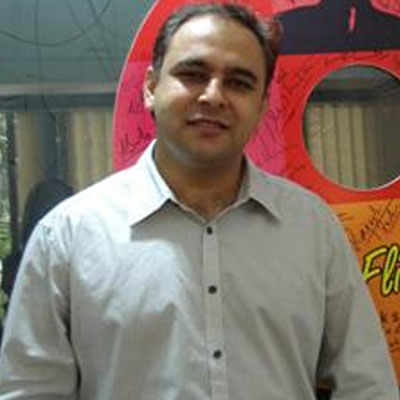
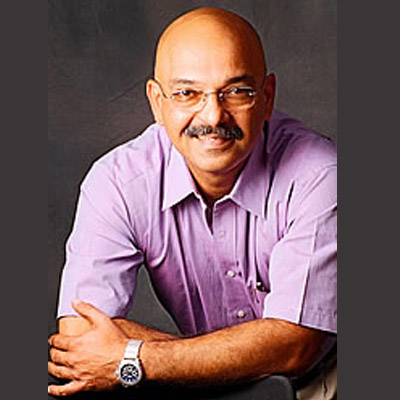
    Moderated by Wavemaker India chief growth officer & south head Kishankumar Shyamalan, the session was attended by Punjab Kesari Group of Newspapers director Abhijay Chopra, Vikatan group MD B Srinivasan (Srini), Lokmat Media Ltd editorial director Rishi Darda, Mathrubhumi director – digital business Mayura Shreyams Kumar, and Eenadu general manager – marketing Sushil Kumar Tyagi. 

    The panel unanimously agreed that local content and publications have always been strong players in India, and this conversation about their relevance and sudden emergence comes up every time a new medium comes into the spotlight. 

    Chopra, who is a fourth-generation leader from Punjab Kesari Group, highlighted that they have existed in the market since 1948 and the audience was always there for the papers. 

    He said, “This point of local languages emerging comes from an advertising standpoint. What happened in the initial days was that we mostly had foreign advertisers and they advertised what they understood. So, English became their preferred language.”

    Srini, in the same vein, noted that India has always been a land of multitude of diversity and it is reflected in the comparative ad spends on television channels – but the same cannot be said for print. “Regional channels are far more successful than the English ones on TV. Sadly, that never reflected on to print publications,” he said. 

    Kumar stated, “We have been active in the regional market since forever. And there is a sense of trust within the readers as well as the advertisers when it comes to our content. So, I won’t say we are an emerging force. Yes, for digital, I can say that our presence is now being amplified but it is certainly not ‘emerging’, so to say.” 

    However, they are still not getting the commercial traction they deserve because the agency and client partners are not making enough efforts to reach out or discover their content capabilities. 

    To drive this point home, Chopra shared a personal experience: “I started this digital property called Yum; it’s all about food, recipes and other related stuff. So when it started gaining good traction, with the intent of monetising it, I mailed a presentation to an agency representative, who never got back to me. In fact, a few weeks down the line, the same advertiser that I was trying to get onboard got in touch with me via our Facebook channel.”

    He added that the clients (advertisers) do not have enough teams. And for most agency managers, the sole focus remains on completing the work and not actually doing research for good content. 

    Srini, supporting this thought, added, “I often wonder if there is any other metric beyond the numbers or ComScore that makes any impact on the planners. The discussion always starts with CTRs, CPLs, CPMs etc. Is there any willingness to look at our storytelling capabilities and the ability to provide the brands with a platform to engage better with their consumers?”

    However, he also agreed that the publishers themselves will have to take the responsibility to promote their content and increase visibility. 

    Tyagi highlighted that consumers are going to get back to credible sources to get their news and advertisers are also willing to associate themselves with credible publications. “The agencies should be coming to us asking what are your editorial policies, how are you dealing with the news, what are the cultural aspects, etc.” 

    Darda and Kumar also noted that advertisers and agencies should look beyond just numbers and take into consideration the impact and the trust metrics for any digital channel.  

  • TV Today Q2 results: Broadcast ad revenues grow marginally

    TV Today Q2 results: Broadcast ad revenues grow marginally

    KOLKATA: TV Today Network has posted an operating revenue of Rs 176.71 crore in Q2. The company has posted a net profit of Rs 27.40 crore.

    Although the operating revenue is up on a like-to-like basis, it has declined compared to the corresponding quarter last year. In Q2 FY 20, the company reported Rs 180.45 crore operating revenue.

    It further reported that the net profit grew by 13.5 per cent. The media company posted a net profit of Rs 23.70 crore in the Q2 2019-20.

    TV broadcasting revenue grew 0.9 per cent YoY to Rs 143. 6 crore led by strong recovery in ad spends across major verticals post the unlock along with the positivity around festive season. It posted a net revenue (in the broadcasting business) of Rs 142.28 crore in the same period in 2019.

    Radio broadcasting segment witnessed a negative growth of 65.7 per cent YoY to Rs 0.95 crore. TV Today posted a net revenue (in the radio broadcasting business) of Rs 2.77 crore in Q2 2019-20.

    Newspaper publishing segment witnessed a decline of 87.1 per cent YoY to rupees one crore. It posted a net revenue (in the print publishing business) of Rs 7.75 crore in Q2 2019-20.

    The company has further realigned its senior management with key elevations.

  • Zeel provisions for outstanding Siti Networks dues

    Zeel provisions for outstanding Siti Networks dues

    KOLKATA: The outstandings of Siti Networks and Dish TV has been one of the major concerns for Zee Entertainment Enterprises Limited (Zeel). While the DTH platform Dish TV is making payments on the line of the revised plan for recovering dues, Siti Networks has failed to play old subscription overdues.

    During the Q2 earnings call of ZeeL, MD & CEO Punit Goenka said that the company has collected the receivables related to revenues in the first half of FY 21 from the cable network. But it has failed to pay subscription overdue in accordance with payment plan agreed earlier due to various challenges including Covid2019, the pressure to prioritise lender’s payments, Goenka added.

    As Siti Networks has made payment for all content delivered during April-September, this cash and carry model will be continued going forward. But as it has failed to pay old outstandings, ZeeL has taken a provision of Rs 81.2 crore towards subscription receivable which was overdue. Goenka emphasised that the company has not written off any debt and it would make all endeavours to recover the dues.

    “Further on account of accelerated payment grievance by some of the lenders due to delay in restructuring by Siti Networks and their failure to negotiate extended repayment plans, the company has provided for extra liability of Rs 97 crore as of 30 September 2020. The provisions have been taken as a provisional  measure and company will take necessary efforts s to recover this due,” Goenka commented.

    On the other hand, Dish TV has been able to cope up with the new payment plan as its financial position has improved. The DTH operator is paying its monthly billing along with clearing a part of its arrears. Currently, Dish TV’s outstanding stands at Rs 4. 98 bn compared to Rs 5.84 bn at end of FY 20. Moreover, Goenka stated the company expects that Dish TV will accelerate payments leading to reduced arrears.

  • India Today Group announces key management changes

    India Today Group announces key management changes

    New Delhi: There's  management changes aplenty afoot at the Aroon Purie promoted India Today group.  Long serving senior executives have been given promotions. 

    The group's listed company TV Today Network's chief operating officer Rahul Shaw has been elevated as CEO of the TV and radio business. A 10 year  veteran of the group, he has held various positions in different verticals that India Today is present in. 

     Salil Kumar, who has been with the group for over a decade, has also been given a legup by being redesignated as CEO of its digital business.  Kumar, who was  COO, digital,  has been with the organisation for over a decade.

    14 year old vet KR Arora has been named as  chief operating officer for distribution and international.

    Another senior professional, Dinesh Bhatia , who was the group CFO has been named group CEO for the whole group. 

    Manoj Sharma will be the CEO for LMI. He was last serving as chief operating officer – publishing for India Today Group. He has spent over 10 years at the group.

    Yatendra Tyagi will be the chief financial officer for TV Today Network.

    Read more news on India Today Group

    India Today vice chairman Kalli Purie announced these changes to the group today. “All will continue to work in close coordination with group roles on legal, compliance, financial, people, and technology matters. I have been on the job regularly with Dinesh, Rahul, Manoj, and Salil during these difficult times and feel that each is highly capable. Various necessary approvals are being initiated towards effecting these changes. Congratulations!," she said in an internal email circulated throughout the organisation.  "Over the next several days I will be hosting pop-up Diwali celebrations with small groups. I hope to meet many of you, alas at a distance, so as to ensure that we are able to celebrate together in spite of the restrictions.”

    Purie also stated that India Today would be going in for regular appraisals of its employees. 

  • Madison Media wins TV business of RSPL Group

    Madison Media wins TV business of RSPL Group

    Delhi: Madison Media begins the festive season with a bang. The agency has bagged the TV business of RSPL Group, the makers of Ghadi detergent. This part of the TV business was previously handled by Wavemaker, a GroupM company. The account will be handled by Madison Media Plus out of Delhi.

    Madison Media & OOH partner & CEO Vikram Sakhuja said, “Ghadi has been an inspiring Local Brand story that has grown only stronger as MNC brands have entered the market. It is a proud moment for Madison to partner with RSPL.”

    Read more news on Madison

    Madison Media Plus CEO Rajul Kulshreshtha said, “We’re happy to have won the account of RSPL Group, a win that has emerged before the festive season begins. We look forward to a great association.”

  • Will OOH industry see a revival during Durga Puja?

    Will OOH industry see a revival during Durga Puja?

    KOLKATA: Even with Dashami a week away, the city of Kolkata lacks lustre. The usual crowd of revellers who throng the streets, flitting from one pujo marquee to another, is significantly smaller. There are fewer lights, fewer billboards, and fewer hoardings. Although, the number of pandals has not reduced but the anticipated footfall is expected to go down especially with the latest Calcutta high court order. All of them are strictly adhering to the West Bengal government’s guidelines to check community transmission of Covid2019.

    During Puja, these pandals turn into a hub of outdoor and on-ground activities. Brands try to leverage every corner of the pandals to create a visual impact and making their presence felt starting from the overhead gates to pillars, stage, stalls, and other parts of the pandals. Several brands release new campaigns, initiatives and products during this time and leverage the massive footfall at the pandals for sampling of its products.

    Clearly, business isn’t booming for out-of-home (OOH) industry in the market as it traditionally does during the festive season.

    Vibgyor managing director Ankur Kalra says brands are spending very cautiously for out-of-home activities, even during Durga Puja. Although they have started spending some amount on TV and digital but on-ground reality is different this year. According to him, all of the brands have deferred their marketing spends to 2021. He has noticed a 75 per cent reduction from all the reputed brands in on-ground activities especially.

    Ad spends on on-ground activities are moving to virtual modes. Since there are fears of crowd gatherings despite restrictions, one bad incident could lead to a PR disaster, adds Kalra. In overall OOH, if the brands were spending Rs 100, the spending has gone down to less than Rs 40 this year.

    Read more news on Durga Puja

    R W Promotions owner Venkatesh Srinivasan echoes Kalra’s bent of mind, saying as brands want to maintain safety standards, they have several questions in mind such as: which are the containment zones, which parts of the city are safe for activations. However, he is more sanguine of a revival. His view is that spends on outdoor are slowly coming back and should go up more during Durga Puja since the government is also supporting celebrations with safety standards.

    He goes on to add that outdoor activations are key, despite digital campaigns. In his view, many people are still not comfortable seeing a product in digital ads and buying it later.

    Moreover, coming off the downturn of the last seven months, the market is considerably more enthusiastic right now with the onset of festive season. FMCGs and automobiles are currently the top spenders in outdoor campaigns, followed by consumer durables and mobile manufacturers. Other than that, beauty brands are spending but very less. Overall, marketing spends could take a 50-60 per cent dip in terms of outdoor and 70-80 per cent in on-ground activation.

    Another executive who is extremely gung-ho about the revival of the outdoors is Laqshya media group CEO Atul Shrivastava. Says he: "The spirit of Calcuttans during Durga Puja is indomitable. The festive spirit started late, but with the government’s go-ahead for puja pandals, everyone has become quite enthused. Keeping in mind the precautionary measures, people are out on the roads and market areas are seeing a healthy flow of customers. As per data generated through Sharp, Laqshya’s in-house measurement tool, traffic in Kolkata is currently 89-92 per cent of normal times. So, we see that situations are coming back to normal, aided by the festive season."

    According to him, most brands have come up with communications catering to the sentiments of Notun Pujo. He adds that no brand wants to miss the opportunity to advertise during Durga Pujo in Kolkata. Even in the current situation, many brands in the jewellery, textiles, retail, garments, footwear, automobile sectors are spending their pent-up OOH budgets. FMCG brands are also advertising, especially for sanitising products.  In addition to that, OTT platforms and entertainment channels have stepped into OOH media to promote new shows and programs. Although clients are not spending 100 per cent as compared to last year, current spends stand at 60-65 per cent.

    While Shrivastava speaks about entertainment brands, the biggest Bengali OTT platform Hoichoi has undertaken an outdoor campaign this year too. The brand’s campaign for Durga Puja speaks of situations which everyone is facing daily due to the ongoing pandemic and how Hoichoi can make them feel better with its vast offering of personalized entertainment, Hoichoi co-founder Vishnu Mohta shares.

    The entire campaign has been replicated on the out-of-home format also. The streaming platform has erected temporary banners all over the city during pujo days. A mix of 600 banners and 100 big facades have been used for this promotional activity.

    However, just three days ahead of the festival, the Calcutta High Court passed a verdict declaring Durga Puja pandals to be no-entry zones for visitors. Only organisers will be allowed inside the pandals, limiting the number to 25 for big pandals and 15 for the smaller ones. The order can negatively impact the brands that were supposed to finalise outdoor spends this week.

    For larger pujo committees which rely largely on corporate sponsorships, this slump in ad spend is a worrisome turn of events. Ekdalia Evergreen, which is among the top draws every year, has seen nearly a 50 per cent drop in sponsors, club secretary Gautam Mukherjee says. Usually, 60 per cent of the expenditure is covered by sponsorships every year but the number has gone down to 10 per cent this year.

    Another mid-budget puja committee, Telengabagan, has witnessed the same trend. Amrit Shaw, a puja committee member, says that the usual sponsors have also backed out leading to more than 50 per cent decline in sponsorships. Among the few brands which have come on-bard, he names Coca Cola, ITC, Kwality Walls.

    While there is derring-do spirit amongst some players, others seem worried. Hopefully, goddess Durga, will come to their and West Bengal's rescue and smile benevolently on her worshipping followers. And there will be no looking back thereafter. 

  • Republic Media provides proof of its innocence in TRP rigging charges

    Republic Media provides proof of its innocence in TRP rigging charges

    NEW DELHI: Republic Media Network has come out with a statement in which it is claiming a thumping victory against the “fake news propaganda being spread by the Mumbai police about it being found guilty of rigging viewership ratings.”

    Republic CEO Vikas Khanchandani has in his possession an official email from the viewership ratings agency Broadcast Audience Research Council (BARC) in which it has said “there is not a single complaint or malpractice found against Republic TV, Republic Bharat or any other affiliate of the news network.”

    The Arnab Goswami founded news network has been claiming from day one of the TRP rigging press conference organised by the Mumbai police commissioner Param Bir Singh that the law keeper has been perpetrating vendetta against him.

    The Republic Media release states that the email “crumbles the pack of lies floated and repeated over the last nine days by Param Bir Singh and a section of the media.”

    The statement mentions that Republic Media received an email from BARC on 17 October 2020, in which the agency has stated that: “If there was any disciplinary action initiated under the said Code against M/s ARG Outlier Media Private Ltd., then BARC India would have communicated the same to you along with necessary documents for your response.”

    With this documentary evidence by BARC out in the public domain, Republic says that three things have been proven: 

    ·   The Mumbai police commissioner Param Bir Singh’s comments against Republic TV were “blatantly false, lies and an extension of political vendetta. It is now incumbent on him to apologise for his lie-ridden campaign against India’s Number 1 news network.”

    ·   That every word uttered across certain sections of the media is false, unsubstantiated and fake news. “Now that the truth is out in the public domain, the onus is now on those portals to correct themselves, apologise for the fake news and put out the truth.”

    ·   The Republic Media Network which runs on the highest professional and journalistic standards has been “vindicated after a nine day slander campaign curated by vested interests and we have been duly informed that there was never a case against us.”

    The news network has demanded that serious action needs to be taken against the police commissioner as well as the political masters behind him, should they be involved for going on a tirade against it based on a series of lies. It says that it is going to fight against any forces and come out unscathed, no matter how hard the Mumbai police or anyone else tries to intimidate and harass it. “We will comply with the law of the land, but not for a moment give in to the coercive attempts to shut down our pursuit for truth through our journalism. We will fight this campaign both in the courts of law and the court of public opinion, with the people of India by our side,” the statement further says.

  • On Uday Shankar’s exit from Disney+Star, a retrospective on his rise

    On Uday Shankar’s exit from Disney+Star, a retrospective on his rise

    MUMBAI: Back in 2007, when Uday Shankar was picked out of nowhere to lead Star India, the organisation was a minnow. It had been a leader in the Hindi GEC space through its channel Star Plus, but it slipped from that pedestal following aggressive moves by competitors like Zee TV, and Sony. It had a small presence in regional languages; its channel portfolio was limited. Long-running teams and senior managers had left the network, for whatever reasons.

    Most professionals asked: “Who Uday?” with the emphasis on the fact that they did not consider him much of an entity when one asked them about his appointment.

    When he leaves the organization on 31 December, he will be leaving behind a massive beast present in almost every Indian language, which is a front runner in general entertainment, drives the sports and sports broadcasting agenda in India, is a pay TV powerhouse, has a globally recognised OTT streaming service Hotstar, that is the envy of gold standard streamer Netflix.

    To add to that the Star India network also has brilliant pedigree attached to its brand – the name Disney, which is the world’s biggest media firm.

    And industry is still asking: “Who? Uday?”

    This time, the emphasis is on the shock that they feel about his decision to leave Disney Star India, having made his mark as a media and entertainment industry leader.

    Read more news on Uday Shankar

    Many expected him to leave on the back of the merger announcement a year and a half ago. Of course, the expectation was that there would be a clash between the rigorous process and the system driven approach that Disney is known for and the entrepreneurial, back-of-the envelope, seat-of-the pants culture that the Murdochs encouraged in Star India and which Uday had gotten used to. But because he stayed put – even as his deputy Sanjay Gupta, digital head Ajit Mohan, strategy and marketing head Gayatri Yadav left – one thought he had managed to meld into the new culture; that he would stay.

    Uday filled the executive gaps quickly by bringing in K Madhavan to look after the TV business, a new Hotstar boss in Sunil Rayan, and everyone thought he was padding up to take Disney Star India into its next innings.

    His announcement comes at a time when the IPL is having its best year yet with higher viewership than ever before; that too in times of dire stress thanks to Covid2019. The IPL is something which has been very close to his heart; hence he bid the seemingly ridiculously high amount he did when he acquired its rights. Yes, revenues may be a little stifled this year thanks to the clampdown on spends by advertisers. But by any yardstick, Uday and his team have done a fairly good job in bringing in the financial numbers they have.

    The channels he runs are in fine fettle – being top of the rung in almost every genre. Yes, there are rumblings that the broadcast sector is a legacy business; digital is going to make it look antiquated. Yes, Covid2019 and subsequent lockdowns have totally upended business and revenue generation plans and accelerated digital adoption.

    Read more news on Disney & Star India

    The wrongly held perception is that we are counting down to traditional television’s inevitable demise. Which is where many are wrong-stepping themselves, at least in the Indian scenario. If one were to look at the demographics of India, television still has a lot many homes to penetrate. Will these homes leapfrog to broadband and streaming TV? Unlikely. Most experts have said no. VoD is here to stay, but the lean-back comfort that TV provides cannot be wished away.

    Uday showed he has the appetite and the aptitude to think big, to think scale.He built a team from ground up. The team listened to him, opposed him, and together they charted the growth of Star. He managed to convince the Murdochs to consolidate management of Star’s India operations into India from Hong Kong, saving them hundreds of millions of dollars in the process. He also convinced them to grant him the independence of Star Sports’ future in India by buying out ESPN’s interest in ESPN-Star, the 50:50 joint venture between the two. He then went about on his sports pursuits, acquiring cricket rights across BCCI, ICC and that of almost every sport and setting up local leagues for football, kabaddi, tennis, badminton and what have you.

    He gave the programming vertical the respect it deserves by labelling it as content; he allowed the setting up of a writer’s room in Star, he encouraged the concept of a show runner, something the broadcast sector was loathe to define. He was willing to take risks on content, on branding the network. His channel campaigns were like the broad brush of a painter who knows his craft, and they hit a chord with all of us. At one time he coalesced the messaging around Star India with the messaging of a new India with the tag line Nai Soch (new thinking).

    He chiseled the Star network into one which is deeply connected to the Indian ethos with stories and shows that talked about uplifting the Indian woman. He brought in a new narrative and seriousness through series such as Satyamev Jayate, TedX talks. Yes, they possibly did not help lift Star’s TRPs but they showed that it cared, and cares. He made many friend in high places, even with rivals. Zee TV’s Punit Goenka and he were opponents in business, but they often exchanged notes as though they were friends.

    Amongst Uday’s biggest initiatives was to give shape to Star India’s digital initiatives after failing on different versions online. With the right teams, technology and investment, he nurtured and grew the streamer, Hotstar,  into one which is driving the local streaming  agenda in India today.

    Uday raged against excessive regulation in the broadcast sector, when all his earlier efforts at diplomacy failed with the industry watchdog Telecom Regulatory Authority of India.

    What does Uday’s departure signal? Nothing much. Except that he is itching to do something different. Like he has been vaunt to do throughout his career – giving up a cushy print media job to do TV, saying ta-ta to news TV to do general entertainment television and running a network. Now giving up a prime executive position to turn entrepreneur.

    Most of the executives who left Disney Star India have left to join either digital or investment oriented ventures. It was not as if they were unhappy with what they had going at Star India. They left for better opportunities – Sanjay as Google India MD, Ajit as Facebook India boss and Gayatri as chief marketing officer at Sequoia Capital. As is Uday himself.

    Uday, in the press statement issued on his departure announcement said that he is going to partner with a bunch of global investors and pioneers to mentor startups and entrepreneurs “as they set out to create transformational solutions that will have a positive impact on countless lives.”

    Rajesh Kamat – the former CEO of Viacom18 – had in the past taken a similar tack, by partnering with Paul Aiello to run media investment funds. But they were focused on media. Going by Uday’s statement, his remit will be wider.

    The release also announced that Uday will work closely with Disney direct to consumer & international segment chairman Rebecca Campbell to find his successor. He has three months to do that. Going by the legacy he is leaving behind, finding someone who can match his energy and chutzpah might be a tall order.

  • Guest Column: TRAI needs to focus on sectoral hygiene rather than economic regulation

    Guest Column: TRAI needs to focus on sectoral hygiene rather than economic regulation

    MUMBAI: A silent crisis has been brewing in the residential segment of TV viewing sector. Even as its viewership increased during the Covid-induced lockdown, sectoral revenues took a severe hit. While Covid was termed an act of god, TV’s current state appears to be a man-made disaster. TV is an integral part of media, the fourth pillar of democracy. Therefore, it is crucial to respect and preserve it.

    TV accounts for over 40 per cent of the Indian media and entertainment ecosystem’s revenues, making it the sector’s largest contributor. As per pre-pandemic estimates, the M&E industry was slated to grow at 10 per cent CAGR to touch $34 billion by 2022. Covid’s impact has slowed down that march, particularly because advertisement revenues have shrunk, production of new entertainment programs remained suspended and the addition of new subscribers, by direct marketing, has become difficult. The alternative lies in adopting a subscription-led model.

    Broadcasters source content from content producers and manage its distribution over electronic media for viewer consumption. There are costs involved in this management such as content editing, server storage, opex for uplinking, transponder rentals and taxes. Broadcasters rely on meeting these expenses through advertisements inserted into and cheek by jowl with content.

    Besides these, distribution platform operators (DPOs) charge broadcasters a fee to carry programs and their placement in their electronic program guides (EPGs). TV players  have to pay this fee even for channels which are free for viewers. Advertisement revenue covers approximately 60 per cent of such costs. The DPOs, in turn charge subscribers for connectivity and pay content charges besides taxes.

    Read more news on Trai

    Since the nineties, business models were skewed in favour of ad-driven revenues because the amount of video content to be distributed over the  networks exceeded network capacity. Further, business practices were not transparent as broadcasters were unable to verify how many subscribers were watching their channels.

    2011 onwards, the TV digitisation process was supposed to usher in transparency and help overcome capacity constraints by relaying encoded and encrypted program streams from broadcasters to consumers via approximately 1,500 MSOs and over 60,000 cable operators. Digitisation improves picture and sound quality and allows more content to be transmitted using the same resources, thus enhancing consumer choice. Coupled with encryption, this system is called the digital addressable system (DAS), which means the facility to enable or disable program viewing selectively and remotely. Encrypted broadcasting signals can only be decoded via a set top box (STB) programmed uniquely for each consumer as per their indicated choice. Consequently, consumers can access and watch only those programs that they have chosen and pay accordingly. Empowering consumers to exercise choice was the intended first step to enable a subscription-led industry model.

    While the government claims that the entire digitisation process was over in March 2017, the truth is otherwise. MIB tracked DAS implementation using only the number of STBs reportedly shipped out of headend service providers’ warehouses. It did not consider if these STBs had been programmed to show only those channels that viewers had opted for. The STBs, therefore, functioned only as digital to analog converters that enabled viewers to watch all programs in the network’s stream. The task force to oversee DAS implementation did not seek proof to verify that ‘addressability’ had actually been implemented in the subscriber management system, which was the very essence of DAS implementation. Thus, a lot of TV subscribers do not have STBs which allow them to watch only those programs that they opt for.

    In 2017, TRAI issued a tariff order that supposedly aligns regulations with the new digital regime. However, the explanatory memorandum of the tariff order is full of contradictions, attributable to limited knowledge of ground realities.

    One possible infirmity, in TRAI’s demonstrated inability, could be that their staff consists of bureaucrats and professionals from the IT enabled services sector. Telecom generically facilitates one-to-one communication without any concern for the content it carries. The charges too cover fixed and variable levies based on usage time. With such a background, TRAI has been entrusted with regulation of broadcast, which is based on content that is intended for mass consumption.  Since 2004, they have not been able to acquire information about how broadcasters price their content.

    Read more news on broadcasters

    In the explanatory memorandum to the tariff order from March 2017, TRAI says that content pricing is a dynamic process, best understood by broadcasters. At the same time, it restricts them from deciding the price of pay programs included in bouquets. A commercial approach to determine prices requires an understanding of the expected channel viewership, and the cost of producing or acquiring content. Addressing ground realities is important to gather accurate data on channel viewership.

    One must understand that most subscribers use cable operators’ networks, which are local monopolies. Such operators get STBs issued in bulk without requisite programming and pairing them with subscriber details. These STBs enable access to all programs contained in the stream net casted from the MSO, since they are not individually programmed to cater to consumer choice. The cable operators then started charging subscribers a fixed monthly sum without any bill or receipt.

    To address this situation, multiple suggestions were made to TRAI. An important one was to incorporate broadcast expertise, which differs from telecom, into regulation. This is especially important for content handling to ensure that the deployed distribution networks meet desired addressability and content security norms. This author too has suggested that an eminent person, with broadcast video distribution experience, should conduct a demonstrative audit for all empaneled auditors. However, TRAI remains reluctant to change its telco-oriented mindset, where the concern for content has never factored in. The most glaring example is  the regulator’s latest list of auditors to audit the digitalization process. Almost all of them are charted accountants with no experience in broadcast audit. The regulations prescribe the employment of a graduate engineer in the empaneled auditors’ teams, without even mentioning his/her educational background. Finding suitable talent is also challenging, as broadcast engineering, in general, and wired line broadcasting, in particular, are yet to find a place in Indian academia. To sum up, one can’t get the TV business right without getting the number of consumers right.

    TRAI will therefore do well to pay attention to the safe and secure delivery of content, rather than economic regulation that is confined to subscription fund flow audits. As it is, the regulator’s misadventure since March 2019, has resulted in a loss of estimated 26 million subscribers, besides reported closing down of multiple video broadcast programs. It can’t and shouldn’t create a situation where more programs are forced to go off air.

    (The author of the article is Lt. Col. V C Khare, a cable TV expert. The views are personal and Indiantelevision.com may not subscribe to them)

  • SWA Awards 2020: Article 15, Soni & Gully Boy win big

    SWA Awards 2020: Article 15, Soni & Gully Boy win big

    MUMBAI: The first ever SWA Awards 2020, organized by the Screenwriters Association, to felicitate screenwriters and lyricists was held yesterday and was a thundering success. Hosted by actors Varun Badola and Rajeshwari Sachdeva, the event focused mainly on the writers – with the jury members who are eminent screenwriters, directors and show creators themselves announcing the winners among almost 90 nominees in 15 categories in feature films, tv shows, web series and lyrics.

    The evening exuded a lot of charm and a celebratory tone with several performers – writer, producer and director aatish kapadia doing a comedy sketch on how the world generally behaves with writers, writer and stand-up comic varun grover taking potshots at the Hindi film and television industry on the bizarre writing inputs and notes that screenwriters often receive; poets and lyricists Shellee and Hussain Haidry doing a lyrical jugalbandi on the hardships and joys of being a writer and mentalist Akshay Laxman weaving his illusionary magic on audience members. The evening concluded with a soulful performance of two songs by singer Rekha Bhardwaj and screenwriter, filmmaker and composer Vishal Bhardwaj.

    The first ever SWA Awards 2020 was held online and the buzz was palpable as the jury panels announced the awards in various categories.

    TV Shows:

    The jury comprising of Anand Mahendroo, Ajai Sinha, Kamlesh Pandey, Liliput Faruqui, Manjul Sinha, Purnendu Shekhar and Sanjay Upadhyay announced the winners in the TV shows categories:

    1. TV Comedy- Best Story: Nitin Keswani for Taarak Mehta Ka Ooltah Chashmah

    2. TV Comedy- Best Dialogues: Bhavna Vyas for Baavle Utaavle

    3. TV Comedy- Best Screenplay: Aatish Kapadia for Bhakharwadi

    4. TV Drama- Best Story: No Award

    5. TV Drama- Best Dialogues: Preeti Mamgain for Mere Dad Ki Dulhan

    6. TV Drama- Best Screenplay: Kartick Sitaraman for Mere Dad Ki Dulhan

    Orginal Series:

    The jury comprising of Ruchi Narain, Suhail Tatari and Weksha Bhagat for original drama; Juhi Shekhar, Reshu Nath & Shiv Subrahmanyam for Original Comedy; and Anuraadha Tewari, Anuya Jakatdar and Ketki Pandit for original series Adaptation announced the winners in the original series categories:

    7. Series- Best Original Drama: Richie Mehta & Sanyuktha Chawla Shaikh for Delhi Crime

    8. Series-Best Original Comedy: Devika Bhagat & Ishita Moitra for Four More Shots Please!

    9. Series- Best Adaptation: Dhruv Narang, Nihit Bhave, Pooja Tolani and Varun Grover for Sacred Games – Season2

    Lyrics:

    The jury comprising of Amit Khanna, Ila Arun, Kausar Munir, Mayur Puri & Panchhi Jalonvi announced the winners in the lyrics categories:

    10. TV/OTT- Best Lyrics: Zama Habib for the song Ek Chup Tum, Ek Chup Main from the show Ishaaron Ishaaron Mein

    11. Feature Films-Best Lyrics: Manoj Muntashir for the song Teri Mitti from the film Kesari

    Feature Films:

    The jury comprising of Apurva Asrani, Ashwiny Iyer TIwari and Leena Yadav announced the winner in the Best Gender Sensitive Script category:

    12. Best Gender Sensitive Script: Ivan Ayr & Kislay for Soni

    The jury comprising of Ashok Mishra, Atul Tiwari, Juhi Chaturvedi, Saket Chaudhary, Urmi Juvekar, Vijay Krishna Acharya and Vinay Shukla announced the winners in the Feature Films categories:

    13. Feature Films- Best Debut Writer: Ivan Ayr & Kislay for Soni

    14. Feature Films- Best Dialogues: Vijay Maurya for Gully Boy

    15. Feature Films- Best Story: Anubhav Sinha & Gaurav Solanki for Article 15

    16. Feature Films- Best Screenplay: Anubhav Sinha & Gaurav Solanki for Article 15

    Several members from the board of Screenwriters Association spoke at the occasion – Robin Bhatt, president; Sunil Salgia, Gen Secretary; and EC members Satyam Tripathy, Shellee, Manisha Korde, Ketki Pandit and Anum Rajabali.

    The event can be viewed on Screenwriters Association’s YouTube Channel at https://youtu.be/A0-EWP4vPSk and on their Facebook Page.