Tag: TV

  • Spielberg, Burnett film based reality show to air on Star World, Star Movies from May

    Spielberg, Burnett film based reality show to air on Star World, Star Movies from May

    MUMBAI: Star World and Star Movies will air the upcoming film based reality show On The Lot in May 2007.

    The show is being done by reality TV guru Mark Burnett and film director Steven Spielberg.

    In the US the show kicks off on Fox from 16 May 2007. The aim of the show is to give aspiring filmmakers from around the world the chance to earn a $1-million development deal at DreamWorks.

    16 undiscovered filmmakers will compete to win the support of the show’s viewers, as their fate will be decided by a weekly audience vote.

    The show will have a one-hour Film Premiere episode, followed by a half-hour Box Office results show.
    After a global search, applicants will be winnowed to a group of 16 talented filmmakers. These finalists will be brought to Hollywood, where they will be divided into teams and begin the journey toward their ‘big break’.

    Every week, the hopeful filmmakers will produce short films from a chosen genre, running the gamut from comedies to thrillers, personal dramas to romance, sci-fi to horror. They’ll have access to the best resources the industry has to offer — professional writers, cast and crew, and maybe even Hollywood celebrities.

    After the teams have battled time frames, budgets and all the usual chaos that goes along with filmmaking, their films will debut and be critiqued in front of a live audience during the Film Premiere episode. Judges will include a high-ranking motion picture executive, a prominent film critic and a succession of well-respected guests, such as directors who are experts in the week’s featured genre. But the filmmakers ultimately will be judged by the harshest critics of all … the public.

    Fox viewers votes will determine which film should be left on the cutting-room floor. On the next night’s Box Office results show, the director whose feature garners the fewest votes will be sent home. Reports indicate that Fox will use American Idol as a vehicle to create awareness for this show.

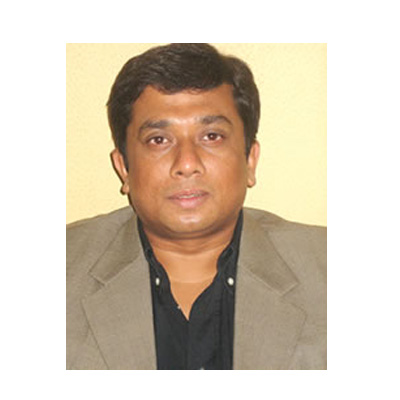
  • ‘We believe that it is not in numbers but in the quality and nature of programming that is getting us noticed’ : Aditya Tripathi – Discovery Lifestyle Networks vice president

    ‘We believe that it is not in numbers but in the quality and nature of programming that is getting us noticed’ : Aditya Tripathi – Discovery Lifestyle Networks vice president

    Discovery Lifestyle Networks VP Aditya Tripathi began his professional career with Living Media India Ltd., and has worked in senior positions with some of the biggest media houses in the country. He made the move to Discovery in 2000 and his expertise in creating brand empathy, marketing and promotion has gone a long way to reinvigorate the various Discovery brands in India, especially Travel & Living.

    India is attaining prominence because of the socio-economic developments taking place in the country. Ahead of Discovery Travel & Living’s (DT&L) first local production The Great Indian Wedding to be aired on 20 August, Tripathi spoke to Indiantelevision.com’s Usha Thomas about how the lifestyle channel was gaining eyeballs with incessant demand from both Indian and foreign viewers for India-centric content.

    Excerpts:

    How did the concept of a lifestyle channel come about?
    With its growing and dynamic TV market and emerging middle-class, India was the right place to begin Discovery Networks’ new lifestyle endeavour. Some years ago, we took stock of the international TV landscape and we identified the presence of established global leaders in different genres: news, sports, movies, factual. And, among all this we identified a niche in the lifestyle space. There was no global brand and given that we had some experience in lifestyle and travel genres, we felt that this was an area we could occupy and dominate in the years to come.

    The senior management from the parent group came to India and wanted to be convinced that India was the right place to launch a lifestyle channel. After a day of the usual presentations, we took them to Gurgaon and showed them the homes, buildings under construction, call centres and malls. They looked around and said if this is the future of India, then lifestyle is the future of India and right there in the middle of a shopping mall, we were given the go ahead to launch DT&L. And, hence India was the first country to launch lifestyle networks.

    What is the positioning of the channel?
    Since its launch in November 2004, DT&L has striven to make its positioning distinct from that of factual channels. From day one, the strategy of our channel was to offer varied, non-fictional content as it is our strength. But, we don’t need to stick to factual alone. We can be factual as well as be in the lifestyle group and our positioning in the lifestyle group is aspirational, yet attainable. It’s just not about enjoying life, it is about celebrating life. It is good looking entertainment. So our channel is aspirational yet attainable, hedonistic, pacy, edgy …always stylish and trendy. We believe in good looking, entertaining television.

    Who is your target audience?
    Our primary target audience is upscale SEC AB audience – males, females and couples, between the age group 18 – 45 years. But, for us SEC, age, gender are limiting definitions. Our focus markets are Top 10 cities in India. Apart from these, the aspirational character of the channel will attract a secondary audience as well. It’s a state of mind that we are looking to capture so we are targeting a person with an international outlook, a person who has travelled abroad, may have even lived abroad, whose kids may be studying abroad and one who has seen international television and international lifestyle. This is common in Travel & Living in the UK, US, Singapore, all over the world. Nationality is not important for people with this mindset.

    Outline your performance in viewership, reach and among advertisers?
    Today, we reach 3 out of 4 cable homes in the country and in the top six metros, we reach 4 out of 5 homes. As far as viewership and relative channel share compared to other English entertainment channels Star World and Zee Café is concerned, we are growing considerably with time. We don’t share content with these channels but almost eight months after our launch, we had overtaken Star World in terms of numbers.

    Word of mouth and strong advertiser response is an indicator of our success. We are looking at the mindset which goes beyond demographics.

    Though TAM is a very democratic form of measurement designed to measure television groups across the country, groups, cities & towns, it is not designed to measure our target audience. For us, it is the people in malls, in fine dining restaurants, our ad agencies who are watching the channel. We believe that it is not in numbers but in the quality of programming and nature of programming that is getting us noticed.

    DT&L is about innovative, up market and interesting programming and we seek to experiment with properties that transverse different genres. We also pride ourselves on understanding our audience. Audience feedback has greatly attributed to our success and word of mouth is what makes us tick.

    In the first year, we had 236 brands on the channel and each time we go to an ad agency, the decision makers and their families are watching the channel so we have got very positive response from the advertisers to this channel. Also, despite the rapid growth of the television industry in India, advertising spends on lifestyle brands have traditionally been restricted to the print medium. The lifestyle channel provides advertisers with a dynamic media vehicle to reach a well targeted and defined viewership profile. It attracts 120 advertisers from across product categories, further cementing the channel’s unique value proposition.

    DT&L is providing a variety of shows, apart from just travel based shows. The programming strategy on DT&L since 2004?
    DT&L is essentially a lifestyle channel and along with travel, the programming will give viewers the inside track on all the latest trends in luxury and includes travel, health, relationships, wine, cuisine, home, car, bikes, the good life with a little bit of celeb and glam life.

    We have evolved keeping our original concept in mind and have grown far more than expected since our launch two years ago. Content is the key driver. We have made it our policy to incorporate as many different genres as possible and to acquire international programs or create localised programming in order to form a strong bond with our viewers.

    The Theme Week and Sunday Brunch strategy introduced in end December 2005 targeted at both viewers and advertisers. These programming blocks were created to appeal to the various target groups at times that they prefer while at the same time giving advertisers a focussed platform to reach key audiences.

    We have introduced a number of genre-defining programmes that have never been seen before in India, for example,American Chopper, Faking It, Million Dollar Agents, Miami Ink. We have all along explored different different genres of programming and experimented with reality factual programming with a difference.

    We don’t do celeb focusssed programming and are not overawed by celebs. Shows that we have incorporated have ranked extremely high in terms of quality and appeal and capitalize on wit and local humor, apart from being real.

    What are your views on DTH in India?
    The encouraging DTH scenario was also one of the reasons why the Indian management had been advocating the case for a lifestyle network in India. The channel has been established as a lifestyle channel, roping in the upwardly mobile. Currently available in 22 million homes across the country, DTL is also now available on the DTH platform.

    Today, we have the choice to choose the bouquet you want and the channel you want, so we welcome it. Internationally, the Discovery family of channels has thrived in all DTH markets. All three of our channels – Discovery, Animal Planet and Travel & Living are available on Dish TV and Tata Sky. We get to see the channel we want rather than with cable ops where they run all the channels and one can’t choose. For DTH, exclusivity is important and that suits us.

    10-15 per cent of the programming will be Indian. At any given point, we will have one local show on air and every quarter, we will premiere a new series

    Can you tell us about Discovery producing programs in India?
    India’s relevance on the world map is increasing. There are more people around the world interested in India, coming to India to work and travel so therefore DT&L is producing programming on Indian audiences but this will go to our channels across the world. The programming will show India in a positive light and in turn we get eyeballs from other regions who see these programs and maybe plan to visit India on seeing it.

    The way the Discovery format is used, we make a program on one part of the world and we show it in other parts of the world. That is the nature of our programming and all the shows on the three channels Discovery, DT&L and Animal Planet are of global interest. Similarly, we know our channel here is an international channel that provides high quality entertainment for a global audience.

    Give us the complete lowdown on the first local production The Great Indian Wedding?
    With our decision to commission local productions in India, we had been identifying various ideas that fit our programming strategy. Amongst many other concepts, we zeroed down to The Great Indian Wedding show. Also, in our discussions with many production houses, Delhi based Blue Mango came up with the very same idea. They were given the go ahead to make a pilot, mainly to serve two purposes: Get the formula right and then make the rest of the series.

    At the time that we decided on the wedding series, the media was all agog about the Chatwal wedding. Many other channels were trying to get the coverage and when we spoke to the Chatwals, they readily agreed to give us exclusive access to all the happenings on the wedding which was to be held in three cities in India – Mumbai, Udaipur and Delhi.

    The Great Indian Wedding is a one of a kind series, allowing the viewer to experience the wedding as an insider. The focus is on weddings with a difference and have a twist to them: opulence, glam quotient, location and theme. The pilot episode premieres on 20 August at 8 pm.

    During the ad break of this pilot episode, a banner will be streamed asking viewers if they have a great Indian wedding coming up. Based on the responses and our research, the 13 part series will be made. The remaining episodes will go into production in the 2006-2007 wedding season. We are looking at ethnic, different weddings and need not be of the same scale as the Chatwal wedding. Apart from the many applications received for the upcoming wedding season, we expect many more once the pilot episode is aired.

    The programme captures the glamorous theme parties extending from exotic locations like Jag Mandir in Udaipur to premium hotels in Delhi, the striking performances by Indian and international artists and the romantic and religious wedding ceremony. The host, Natasha Mago presents an insiders view, chatting up the bride, groom, guests, the challenges and frustrations of the wedding planner and the actual wedding ceremony.

    All guests invited at the wedding who appear on the show have given their signed consent in this regard, mainly to avoid legal hassles later, what with the high celeb turnout for this wedding.

    Our aim is to showcase India and showing a wedding held at the opulent and historical venues at Udaipur & Delhi, we hope to do our bit in promoting tourism in India. Keeping in tune with the high standards that Discovery is associated with, budgets were high especially as it was all shot on digibeta cameras. It was not studio based and there will be no compromise on the quality of the film, light, sound and effects used. We are clear that each programme should include a unique and entertaining story, credible facts and high-quality production values.

    We plan to get into merchandising by early next year by releasing DVD versions of our popular series and those currently on air

    What are the marketing initiatives being undertaken for the new local shows?
    We have already started airing promos and teaser campaigns for the pilot episode from 15 July and these have evinced a lot of interest among the viewers and the advertising fraternity. On the day (20 August) that the pilot episode will be premiered, we will be placing advertisements in all the major national dailies.

    Have you set targets regarding the amount of India centric content?
    It is essentially an international channel and India productions will be a small but significant part of the repertoire of programmes. The Indian programming will never dominate the channel as we clearly make it with the intention of airing it in other parts of the world. So, maybe 10-15 per cent of the programming will be Indian. At any given point, we will have one local show on air and every quarter, we will premiere a new series.

    What outdoor activities are being planned in India in order to extend the brand beyond television?
    We plan to get into merchandising by early next year by releasing DVD versions of our popular series and those currently on air. We have tie ups for the same with firms based out of Singapore and hope to soon associate with local firms.

    Name few acquisitions made recently?
    Among the recent acquisitions are a home interiors show called Trading Spaces and one on the training methods for airline cabin crew called Flight Attendants School. In January, we will be airing another BBC title Hairy Bikers Cookbook which captures the journey of two motorbike freaks as they travel to different places and learn about the local food.

    Are Indian viewers different from their counterpart in other countries?
    Honestly, there is no difference as our target audience matches up to any other in a similar genre in the world. They travel a lot, may have been educated abroad or visit countries on business and their lifestyles, eating habits and aspirations are similar to those abroad.

    Any plans of incorporating broadband and mobile into your business?
    We are looking at what technology may allow and what audiences are looking for and yet marrying that to the core DNA attributes of what Discovery has represented and people have loved through the years. We do not consider them a threat and with time, will integrate them in our business. Flipping channels is a reality and we are evaluating on working with mobiles, VoIP and other different platforms. We have been at the forefront of incorporating technology in the way we program and market the channel.

    For the series aired last quarter Five Takes, we had selected young people in their early to mid-twenties, and have given them $50 a day, a camera to film and software to edit so they document their daily lives. We gave the audience the opportunity to vote on the net and via SMS to decide where these young people should go and what they should do.

    In the niche channel environment where perception counts for a lot customization, do mention any customised solutions that have been done for clients?
    We recently had our first initiative in this regard with HSBC Bank for the HSBC Premiere card. They target the same high net worth individuals like us and they invited their customers and potential customers to a dinner and whisky tasting event at elite hotels in Delhi, Mumbai and Bangalore. We spoke about different whiskeys, their history and they also got to taste the best available in the world. We got tremendous feedback from those invited and HSBC and will hold many more customized events with like minded firms in the future.

  • Alfred Haber to distribute Madonna’s London tour

    Alfred Haber to distribute Madonna’s London tour

    MUMBAI: Alfred Haber, who founded Alfred Haber Distribution (AHDI), has announced that the company has been selected as the international distributor for the two hour Madonna: The Cconfessions Tour Live From London, which will premiere on US broadcaster NBC on 22 November.

    The special was taped this summer at Wembley Arena in London, UK during Madonna¹s worldwide sold-out 25-city Confessions Tour. It marks the first-ever broadcast network programme by this international musical icon.

    Haber says, ” 2006 has definitely been the Year of Madonna. With her top-rated Confessions On A Dance Floor album, her sold-out Confessions World Tour and now her first-ever U.S. Network special, we are delighted to be offering this musical superstar to her fans around the world.”

    The concert special will feature songs from the artist’s albym Confessions On A Dance Floor which debuted at No. 1 in 29 countries and has sold over eight million copies around the globe.
    The broadcast will also include some of Madonna’s greatest hits from her career, including Future Lovers, Like A Virgin, Music, Erotica, La Isla Bonita, Ray of Light and Live To Tell.

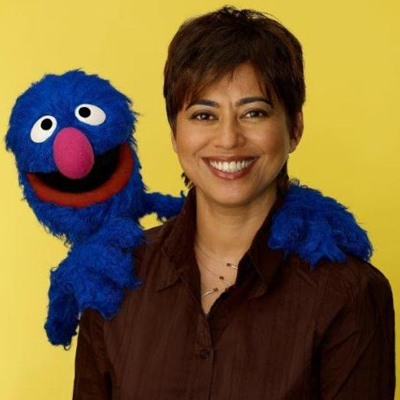
  • ‘Culturally, linguistically diverse India is a test case for us’ : Sesame Workshop India ED Sashwati Banerjee

    ‘Culturally, linguistically diverse India is a test case for us’ : Sesame Workshop India ED Sashwati Banerjee

     For both Sesame Workshop and its newly-appointed executive director for Indian operations, Sashwati Banerjee, India is a big challenge. The US-based Sesame Workshop might have revolutionized pre-school education through various initiatives, including the path-breaking TV show Sesame Street, but replicating a global model here will be a tough task.

    Rather, if communications expert Banerjee is to be believed, Sesame Workshop is adopting an entirely new game plan for India, apart from innovating on some aspects that incorporate what it has done in other parts of the globe. She agrees that India may become the incubator for a model that could be replicated elsewhere too.

    Founded in 1968, Sesame Workshop changed television forever with the legendary Sesame Street. Today, the Workshop continues to innovate on behalf of children in 120 countries, using its proprietary research methodology to ensure its programmes and products are engaging and enriching.

    For Banerjee, who’s dabbled in various assignments from India to Hong Kong to the US, the changeover to children’s education from healthcare communications is a step that was not taken easily. But after initial doubts were cleared by Sesame Workshop CEO Gary Knell, it has been hectic work for the lady who grew up and studied in Delhi, but spent quite a few years in Hong Kong doing “this and that”, as she would modestly say.

    In this conversation with Indiantelevision.com’s Anjan Mitra, Banerjee spells out her priorities and gives a glimpse into Workshop’s plans for India. She also cribs a bit on procedural delays and lack of readily available comprehensive data/research on government-aided education initiatives and child behaviour.

    Excerpts:

    What’s the aim of setting up Sesame Workshop India?
    Sesame Workshop India would primarily be the outreach arm to promote early childhood initiative and the educational curriculum of Galli Galli Sim Sim (the Indian version of Sesame Street) through a multi media platform, especially to children who are most in need or underserved. The educational curriculum of Galli Galli… has been designed by Indian educators, researchers and writers keeping in mind India’s cultural and social diversity and needs.

    How will that be done?
    What Sesame Workshop really brings to the table is technical knowledge and expertise in early childhood education and development. These are the two broad areas we are working with. How will it go about doing it? One arm of the education initiative is the television show Galli Galli… which is going to be broadcast on Cartoon Network, Pogo and (terrestrial broadcaster) Doordarshan. The other aspect of the initiative is to see how we can extend and reinforce that learning through a variety of other activities with the help of technology to bridge the digital divide.

    The target audience is children aged between two to six years and their caregivers, which include parents and teachers using educational materials that are fun and make learning engaging “because all children deserve a chance to dream and discover, to understand the world and their place in it, to reach their highest potential…”

    We would be working with other organizations that are already active in this field and our mandate is to help them develop programmes that will take such initiatives forward.

    Seed Funding has been provided by Turner India

    How would Sesame Workshop leverage Galli Galli…?
    Television is just one of the ways in which the educational curriculum will be delivered is television. Sesame Workshop India will help to deliver Galli Galli… across other mediums – from print, training, interpersonal communication to high technology initiatives like the internet. While the television series is expected to reach audiences across India, there is still a large population who have limited or no access to television. It is through Sesame Workshop India’s outreach efforts that this population will be reached.

    Moreover, research has shown that children who watch Sesame Street or its various local versions in countries round the globe are better prepared for school in terms of cognitive learning and the show has helped prevent children from dropping out of school.

    When is Galli Galli Sim Sim likely to make its debut on Cartoon Network and Pogo?
    Galli Galli Sim Sim will premiere on Cartoon Network in mid-August after which it will be aired on Pogo. But for those broadcasting details, Turner is best placed to provide more information.

    How is Sesame Workshop funding its initiatives in India?
    Seed Funding has been provided by Turner India (a Time Warner company). Sesame Workshop India, like any other not-for-profit organization, will raise funds to support its activities in India.

    When Indiantelevision.com spoke to Sesame CEO Gary Knell, he had said corporate houses too would be roped in for funding activities. Has any development taken place in this regard?
    Those things would take place after we set up shop formally and get our basic act in place. Presently, we are in the process of getting our clearances from various government agencies.

    However, we’d like to tap big corporate houses for funds as part of a corporate’s social responsibilities. There are quite a few business houses that are involved in educational initiatives and we’ll look at partnering with them in various ways.

    What role would the Indian government play in Sesame’s scheme of things? What are those few things that Sesame must consider as it goes forward?
    In order to understand the critical priorities of the Indian government – where Sesame Workshop can collaborate, and highlight areas of concern – Sesame Workshop had organized a workshop that brought together a cross-section of relevant stakeholders in New Delhi in early December 2005.

    Briefly, the discussions were participative and each government department and agency, professional educational bodies, and the voluntary sector brought their own set of issues to the fore providing for comprehensive inputs towards future planning and strategy. In fact, there was a consensus around the fact that the media can help overcome constraints posed by the existing administrative structures across the country, which are highly segmented.

    We are hoping to work with diverse partners, develop and create innovative materials and build capacity at all levels. Our vision is to reach as many children as possible in India by partnering with government’s Sarva Shiksha Abhiyaan or Universal Education programme with material that will make learning joyful and help the government in reaching its educational objectives.

    Considering Turner International India had provided the money for a corpus, what would be its role?
    Turner is the TV series’ co-producer and distributor of Galli Galli Sim Sim. Together, Sesame Workshop and Turner are committed to making Galli Galli Sim Sim a break-through educational programme and brand. Sesame and Turner are working closely to ensure that India’s children will have access to this new show and its educational messages, and are actively pursuing promoting the show on multiple platforms across India.

    Is the telecast deal with Turner exclusive or can it be done with other broadcasters in other Indian languages too?
    As far as the agreement with Turner is concerned, all I can say is that it’s for at least five years or five seasons of Galli, Galli… I cannot hand out any financial details or presently comment on the fact whether we can work with other broadcasters or not.

    Generally, Sesame Workshop works with the public service broadcaster of the country concerned, but there had been some initial problems with Doordarshan, which, I am told, have been sorted out now by Turner India.

    India is a vast country and getting educational initiatives in all the local languages would not be possible. But we would certainly be exploring at least one South Indian language, if not two, apart from Hindi. The details haven’t yet been worked out and would be done in consultation with Turner.

    Will the Indian ops undertake merchandising activities too?
    We are focusing on the launch of the show and have nothing to announce at the moment.

    How are such merchandising activities done elsewhere in the world?
    Sesame Workshop operates in 120 different countries. The modus operandi varies from country to country and partner to partner.

    How is the revenue generated from such activities used and what will be the game plan for India?
    Like I said, Sesame Workshop is a not-for-profit organization. Any revenue generated through merchandising or licensing go towards providing quality early childhood education and development around the world – to those who are most in need.

    How important is India as a market for Sesame?
    Of the 103 million children aged 2-6 years, over 35 per cent in rural areas and 48 per cent in urban areas can’t access Early Childhood Care and Education. Roughly 100 million live in urban slums alone, which have no access to Integrated Child Development Scheme (ICDS) that is the primary vehicle for Early Childhood Care and Education in India.

    While Early Childhood Care and Education is definitely a felt need and lot of efforts have been put in by the government and private institutions, other issues like malnutrition and child heath take precedence for ICDS. Demand has never been an issue in education. Supply is what we need to focus on.

    Does Sesame Workshop feel that the Indian regulatory environment requires too many procedural clearances impeding quick start of operations?
    Actually, the Indian regulatory environment has been extremely supportive for us. We have had representation from the government and other public education bodies right from conceptualization to production of Galli Galli Sim Sim, which is being produced for Turner by Miditech. We work closely with Indian educators to arrive at the educational curriculum that looks at ‘whole child’ approach and is very much in line with the education policy of this country.

    However, India is a test case for Sesame Workshop as it is uniquely ahead of most developing countries in terms of market and economy and the size of population. More importantly, India is not a donor funded country as sizeable infrastructure is being built by Indians. Then in India, we are not working primarily with the terrestrial broadcaster, unlike in other countries. We do hope that the time block on DD will continue airing Galli Galli… for a long time to come.

    I don’t see Galli Galli… broadcasting in 22 Indian languages. What we can do is to take the essence of educational initiatives and roll it out in outreach that can happen in multiple languages.

    In those terms, India is a learning experience for Sesame to see what kind of partnerships work best and how sustainable models can be built up for impact in a country that is culturally and linguistically diverse.

  • Indian television advertising is very much underpriced’ : Joy Chakraborthy – Zee Network executive VP Network Sales

    Indian television advertising is very much underpriced’ : Joy Chakraborthy – Zee Network executive VP Network Sales

    Joy Chakraborthy took charge of Zee Network as ad sales head in early 2005, at a time when Zee TV was going through a crucial phase. Chairman Subhash Chandra was strategising a turnaround for the flagship channel and a number of big ticket shows were being readied, with the expectations of re-writing Zee TV's fortunes in the Hindi GEC arena.

    As Network sales head, Chakraborthy's first challenge was to project Zee in a new light. "Zee had a perception problem in the market and a section of the trade had written it off. We wanted to create a new impression and build on that," Chakraborthy says."There couldn't have been a better time for me to head the network's sales team," he gushes.

    Speaking to indiantelevision.com's Bijoy A K, Chakraborthy elaborates on the strategies that worked for Zee, future plans and on the industry scenario.
    Excerpts:

    You have completed a year as the sales head of Zee network. Please elaborate on the key industry learnings you could gather during this period?
    A crucial lesson we have learnt is on the significance of soaps in the GEC prime time game. We have learnt that GEC is all about soaps, but different from Saas-Bahu sagas. People buy a channel for consistency and not for spikes only. In the industry, on an average, 70 per cent revenue is tied up on a long-term basis and only soaps can fulfill that promise. Innovative programming is fine, but they should be scheduled and timed very effectively. When you innovate, it should not be just a programming decision but a collective decision including sales, marketing and programming.

    Everybody had written Zee off. But we could pull off a turnaround — what seemed impossible until some time back – through team work, discipline, passion, accurate timing and by keeping the faith intact. As expected, the trade has responded to this change very positively, and now we enjoy the backing of the entire market. This is because of the strong relationships we had built during this period. What I am driving at is the fact that, relationships play a key role in this industry. This period also showed us who are our real friends and who are opportunists. Also, it has been a learning for me that both, people and organizations are important, and one cannot exist without the other.

    How is the industry evolving? Give us a low down in the recent developments and the trends?
    Indian television advertising is very much underpriced and we have decided to bring this issue into focus, under the banner of the Indian Broadcast Foundation (IBF). In a couple of months, we are planning to come out with certain guidelines on pricing, which would hold a lot of significance for the industry. Our main concern is the underpricing of television. It is a powerful medium and it should get its due, especially at a time when the costs of programming and marketing have skyrocketed. All network sales heads are now represented in IBF and we are united on this cause.

    The present scenario is very confusing. Television is booming, but clients are very tentative to take a call on TV as compared to the print as television research is more confusing and dynamic and changes everyday. I think an increase of 15 per cent to 20 per cent in rate is due immediately. It should also be noted that cricket of late has not affected GEC/Hindi movies viewership, which are the primary revenue drivers in C&S. The Hindi movie genre is still very much underpriced and same is the case with regional channels.

    I keep hearing that the English entertainment space is shrinking, but I don't agree with this as this is the genre with least wastage and where even an advertiser is a viewer.

    Does GEC still hold an edge over other genres when it comes to delivery and demand? Or has there been a change in the pattern?
    GEC will always hold the edge as maximum revenue comes to this genre. For any client, the reach build up and in some cases, frequency by smart scheduling comes from GEC. According to me, the genre pecking order would remain as: GEC, Hindi Movies, Regional, News, Sports – in that order.

    In the last two years, unique content channels have seen so much of a price cut that the FCT has increased drastically and revenue in the genre has hardly moved. I sometimes wonder how they are still surviving in business.

    Regional television space holds a lot of potential though it faces tough competition from print. The key segments driving growth in regional are: Retail, education and real estate, in addition to general categories like FMCG, telecom services, consumer durables etc.

    Zee has already started working on all these segments. We have started roping in retail clients and our next focus is on the real estate and education. Though there is a slow transition of main print category advertisers to television, the good news is that these clients have realised the power of television.

    Did the recent stock exchange fluctuations impact sales?
    The fluctuations haven't affected us at all. Actually, Zee recorded better sales during this period of May-June. June-July usually has a lean period tag attached to it, but this year, it was different. This is one change in the normal pattern. These days, there is nothing called lean or peak period. This is due to the boom in categories such as telecom, services, finance and the perennial FMCG.

    Today, advertisers are not limiting themselves to a particular genre due to media fragmentation. Most clients are there in almost all the channels/genres. Earlier, there used to be a particular set of advertisers for particular genres, such as premium products for English entertainment channels. These days, even FMCG brands are keen on English channels. It is a trend of aspirational marketing.

    'With the good performance, our viewer base has also expanded and this, in turn, helps us to better our performance on a consistent basis'

    The last one year saw Zee TV pulling off a turnaround in Hindi GEC, by reaching the second position. Could you briefly outline what happened during this eventful phase?
    During this period, the sales team was able to initiate a lot of changes successfully. To start with, we decided to remove the paid bonus system and agreed to reduction of ad sales inventory. This helped to change the general perception that, Zee has unlimited inventory. Then, we made it a point to keep away from attempting any innovation in terms of sales. This is because, the delivery of innovations take too much of time for the value we generate. Also, I have observed that in spite of doing innovations, the clients/agencies are always unhappy with the implementations, however good you might do. So why do innovations?

    We also focused on doing more client/agency meetings and met people at all levels. The Zee Network had a perception problem in the market, and the sales team has positively addressed this. I felt a lot of our positives were not known to the market. We had been very firm in our decisions and we always made it a point to abide by our well-defined sales policy. I have ensured all commitments/deliverables are in writing and not verbal, as this avoids conflict when people change at channel/agency side. When it comes to deals, the attempt has been to create win-win situations. We reduced our FCT to an effective level to create demand and initiated a very transparent sales policy.

    We also introduced the Matrix system, which played a key role in bettering the network performance. We appointed individual sales heads, responsible for strategy, revenues and targets of their channels. We have senior people as branch heads in the business deployed in key markets such as Delhi, Kolkata and the South whose roles are more tactical and they ensure revenue spread across all channels and have their branch targets. Both sales heads and branch heads work very closely with themselves and with me.

    For me, Zee has turned out to be a great place to work. It is a place with total freedom and great empowerment. I would say internal stability in Zee is very high. All decisions are discussed and not pushed down your throat. We have the best bunch of professionals, both at senior and junior level.

    Please comment on your face-off with Star. Star recently initiated its counter strategy to block your surge in the 9-10 pm time band. What impact has it made on your game plan?
    You feel happy when the leader reacts. Zee has pioneered the strategy of launching soaps with innovative media breaks. Seeing Star also doing the same for their show has been an ego booster for us. Coming to the second part of your question, it felt even better when the leader's tactics didn't affect our numbers and the market demand.

    With the good performance, our viewer base has also expanded and this, in turn, now helps us to better our performance on a consistent basis. Earlier, when we launched a show, rating in the range of 1 TVR to 2 TVR was considered as satisfactory or good. Now, our new launches pick up very fast and the shows even record an opening rating of 2+ TVR on an average basis. This has inspired us to fight Star in its own bastion – the 10 – 11 pm band – with non-soaps such as Johny Aala Re and Sabash India.

    So what is the next big idea? What will be Zee's next focus?
    We have now settled ourself comfortably in the 6 pm – 8 pm and the 9 – 10 time bands. You will be seeing some more launches in the months to come which will strengthen our FPC even further. The programming, marketing and sales wings are now working on the strategies to strengthen the 8-9 pm band.

    What is the strategy you follow to sell Day Parts?
    We have made lot of efforts to increase the demand for the Non Prime Time (NPT) band. Each sales package has got a mix of PT and NPT. We ideally would love to sell at 30:70 for PT/NPT. We have also been selling early NPT and late night slots for religious/tele shopping properties. As a result of focusing on NPT, our inventory FCT consumption has doubled in NPT.

    Which are the client segments that top your delivery list these days?
    Still FMCG is number one, though there has been a major upswing in Telecom/Services/Auto/ to name a few. The concern has been the consumer durable category with a few big players not clear about their plans. Additionally, SMS has emerged as a key revenue driver for us for our interactive shows.

    Speaking about the network performance, what is the scorecard?
    Zee TV is on top followed by Zee Cinema. Zee TV was underpriced when I took over, and now we are steadily moving in the right direction of rate. We activated rate corrections twice for the network during the six months and now, as the festival season is coming, you can expect another correction soon. For some channels, it will be across all day parts and for some it will be programme based.

    Revenue wise, maximum share comes from Zee TV followed by Zee Cinema, Zee Marathi, Zee Bangla, Zee English cluster, Zee Music and Zee Smile. The beginning of the year has been very good and I am sure we will touch a new high this fiscal.

    Now let us take it one at a time. To start with, please comment on the performance of Zee Cinema. What is the plan for this year?
    As a sales person, I can't ask for a better channel than Zee cinema which has been consistently delivering for years in the face of stiff competition. My colleagues in programming and marketing have given us a product which is a must have in all media plans, specially if it is targeting the "cow" belt (Hindi heartland). Since the last two years, the Amitabh movie band Shaniwaar ki Raat Amitabh Ke Saath has been our key driver. This year, we have introduced a youth block – Klub. We have our own share of blockbusters for the year also.

    Zee Smile has been keeping a low profile these days. Is the channel in an orphaned state, or is there a plan on the anvil?
    You will soon know our plan for Smile. But for sales, Smile has been a great help to get incremental revenues. The channel is very well distributed in non traditional markets and hence, you will find lots of brands advertising on Smile.

    Speaking about regional channels, you are in charge of sales of two key players Zee Bangla and Zee Marathi. How did these two channels fare in the last one year period?
    This year, we have practically re-launched Zee Bangla with a slew of new programmes and this will boost its sales potential. We are again going to do sales initiated programmes like Durga Pooja and Jatra.

    Zee Marathi has now become the clear number one. We are there in almost all plans. We have also set up a separate sales team to develop retail and non traditional advertisers like educational institutes, real estate, local jewelers, classified etc and the results are showing.

    Comment on the delivery of your event properties.
    During the last one year, there has been an extra thrust on good events, and the efforts have paid off very well, I would say. We have converted the Saregama finals as an on-ground event and the attempt has met with great success. This had inspired us to take the Saregama Ek Mein Aur Ek Tum finals to Dubai. Apart from winning a global appeal, going to international venues helps sales also. Zee Cine Awards, Mauritius and even the Zee F- Awards, have done very well for us.

    We have Zee Astitva Award, Zee Marathi Awards, Zee Gaurav Puraskaar, Zee Amader Gaurav, Zee Songeet Puroshkaar to name a few, lined up in the next few months across various channels.

    Have you retained Amap's service as an alternative rating agency to Tam?
    Yes. We need to have two meters because the industry needs competition in this realm also. It is always good for the trade. It brings out the best of everyone. According to me, each of them can coexist, triggering healthy competition. I am not making a judgment here, but for the betterment of industry, we need two parallel rating systems. The earlier we acknowledge this, the better it would be for all of us.
  • TV spends show 20% increase to Rs 55 billion in 2005

    Media matters and how. Lintas Media Services has churned out a comprehensive media guide, which is an analysis of media spends and buys in the year gone by. Released by Intellect, a part of the Lintas Media Group, it studies all genres; television, print, radio, internet, cinema, outdoor and gives a break up of the media environment and general media industry trends of last year.

    With data compiled from all over the Indian subcontinent, spanning more than 28 states and seven Union territories, the guide is an all-inclusive take on the Indian media industry and players.

    Lintas Media Group director media services Lynn de Souza said, “Media closed 2005 on a happy note and 2006 promised to be an optimistic year. The total advertising media spends showed a growth of 15 per cent reaching a figure of Rs 159.41 billion. While print continued to hold more than 57 per cent of the total media spends, radio, as a means of advertising saw an increase in the ad spends. Cinema, outdoor, and internet on the other hand capitalised on innovations. In many ways, 2006 will be a year that we can all excitedly look forward to.”

    The total media expenditure mix for 2005 was that of Rs 159.41 billion over 2004‘s Rs 120.71 billion, of which press saw a growth of 14 per cent over 2004 with an expenditure of Rs 90.64 billion in 2005. Internet saw a growth of 35 per cent with its media expenditure standing at Rs 1 billion in 2005 over Rs 740 million in 2004. Radio and Outdoor medium saw a growth of 25 per cent each, with outdoor at Rs 8.55 billion and radio standing at Rs 3.75 billion. All in all, an overall growth of 15 per cent was witnessed in 2005 across all media.

    Of the total Rs 159.41 billion media expenditure in 2005, press share comprised 56.9 per cent, television was 34.7 per cent, outdoor was 5.4 per cent, radio was 2.3 per cent and internet was 0.6 per cent.

    In the first of the series, we take a look at what the Television scenario in 2005 was like.

    Television spends showed a 20 per cent increase to Rs 55.26 billion in 2005 as compared to 2004‘s Rs 46.08 billion. While cable and satellite channels contributed significantly to this growth, DD terrestrial channels too clocked a healthy growth figure. What has fuelled this growth is the sharing of cricket rights and the increasing need for the advertiser to reach smaller towns.

    Television not only saw a continued increase in the number of channels but also in ad spends. TV spends increased by news channels, kids channels, niche entertainment channels, continued to add to the existing channel bouquets.

    Not only TV software but immense progress was seen in the TV delivery systems. DTH, IPTV, digital cable, CAS – all have become a feasible reality now limited only by the government stipulations.

    The Lintas Media Guide mentions that these developments promise to aid faster penetration of satellite channels to the hinterlands and at the same time will enable providing a richer and interactive viewing experience for the upper town populace.

    DTH, on the other hand, too became a reality with DD Direct and Zee‘s Dishtv stepping on the pedal to make available their services to small town and rural areas. Now with the impending launch of the Tata Sky DTH platform, this space will gain further impetus.

    On the programming front, as family dramas lost some charm, multiple offerings amongst news, kids and niche entertainment channels brightened the choice for the viewers. However, there was no respite in the rate at which new channels are being added to the current bouquets from the earlier years.

    According to the Lintas Media Guide 2006, the emergence of niche genres and their success in capturing the interest of the evolving TV audiences has affected the share of the general entertainment genre.

    Advertising avoidance is a globally recognized issue and broadcasters, advertisers and media agencies are all aware of it. However, with TV still being the most suitable media for various brands, there is a spurt in the efforts to go beyond the 30 second commercial. Content creation, in-program placements, integration with ground activities and creating interactivity are some of the different ways in which the advertisers are trying to get the TV viewer exposed to the brand messages.

    The Guide also mentions that there have been feeble or no attempts by the broadcasters to reduce ad-clutter. Unless DTH, CAS and other addressable systems append to the subscription revenue of the advertisers, the ad clutter is set to increase. The ad-clutter (of an average ads seen by any TV viewer per week) stands at 313 ads per week and shows an increase of eight per cent over last year.

    Apart from that, TV research also continued to be a matter of hot debate and AMap, the new entrant in the industry steadily but surely managed to set up a formidable TV measurement panel aiming to be far bigger in sample size than the existing TAM panel. The year 2006 will have TAM and AMap waging an even more pronounced battle of ratings, says the Guide.

    The research users expect a larger sample size, more description variables and faster reporting among other improvements in the research system. This year will be the year to see how Tam responds to the competitive challenge and how the TV measurement system in India develops.

    According to Lintas Media estimates based on indicative market costs, the top category of advertisers on TV in 2004 – 2005 are as shown below:

    According to Lintas Media estimates based on indicative market costs, the top advertisers on TV in 2004 – 2005 are as shown below:

    According to Ficci, television advertising pie is set to increase its share to 51 per cent by 2010 and a lot of this growth is expected through subscription and content syndication amongst other things.

    “We look forward to 2006 as the year for TV to re-orient itself in the areas of multiple delivery platforms, maturing of the niche genres, innovation in advertising and improved TV research,” says the Guide.

    Stay tuned for the next in the series…

  • Zoom attempts comedy with Santa & Banta Unlimited; to air from 10 July

    Zoom attempts comedy with Santa & Banta Unlimited; to air from 10 July

    MUMBAI: The original Indian rap king Baba Saigal and popular RJ Siddharth Kannan team up to entertain viewers with Zoom’s first comic bonanza, Santa & Banta Unlimited. This new show aims to redefine ‘time pass viewing’, with it’s two hosts Siddharth Kannan aka Santa and Baba Saigal aka Banta.

    Starting 10 July, the half hour show will air every Monday at 8.30 pm.
    The duo promise to deliver everything from topical news, lifestyle issues, film reviews, TV gags of other shows, parties, call ins for “love” problems and other gyaan, in true Santa Banta style, which is a comical rhapsody, witty repartees and award winning one liners.

    Santa & Banta Unlimited being an extension of the personalities of the two hosts’ reflects the natural camaraderie between Banta, a “cut surd” and Santa, a typical “Tam Bram”. Kannan is known for his spontaneous sense of humor; hence Baba’s rapping will be a great foil to Kannan’s yakking.

    Joking about his rapport with Baba, Kannan remarks with his trademark tongue-in-cheek twist, “We are like a husband and wife team. But we haven’t figured who is the husband and who is the wife. We are two contrasting people with a zest for life. As people in Mumbai would say, we are truly bindaas.”

    “Anchoring is a part of me. It has a different kick, different popularity and a different feedback,” says Baba about his experience. “I have known Siddharth since the past 12 years. We’ve developed a great chemistry and that will be evident on-screen.”

  • Intelsat-Panamsat merger approved by FCC

    Intelsat-Panamsat merger approved by FCC

    MUMBAI: America’s media regulatory body Federal Communications Commission (FCC) has approved Intelsat’s acquisition of Panamsat.

    Noting that the transaction was unopposed, the FCC Commissioners found that “the transaction will be in the public interest,” and they therefore granted Intelsat’s application for a transfer of control of Panamsat’s FCC licenses. No other regulatory approvals are required, in the US or elsewhere, prior to the closing of the transaction.

    Intelsat is planning on completing the Panamsat acquisition on 3 July 2006. Intelsat CEO David McGlade said, “The closing of the merger will open a new chapter for our industry and our customers, who will benefit from expanded services and improved network flexibility and resilience as we bring together these two great companies.

    “Serving our customers with innovation and quality is our highest priority, and the first step in accomplishing that objective is through implementing a seamless integration.”

    Intelsat and Panamsat had announced their merger agreement on 29 August 2005. Under the agreement, Intelsat will acquire Panamsat for $25 per share in cash, or approximately $3.2 billion in the aggregate.

  • Content regulation draft to be redone

    Content regulation draft to be redone

    NEW DELHI: Unhappy with the draft that has been prepared on content regulation, information and broadcasting secretary SK Arora has asked the panel responsible to rework it.

    Though no specific reasons were cited, the ministry is apparently unhappy with the way some of the issues have been dealt with as also the length of the 65-page draft, which is seen as being too unwieldy.

    Earlier in the week, Arora, who heads a 30-member committee comprising representatives from industry, trade and consumer bodies, conveyed his observations to a sub-panel handling the content regulation draft.

    However, no time frame has been set for the work to be redone, which is an indicator that the government might bring in such a regulation through an existing piece of legislation instead of waiting for the proposed Broadcast Bill 2006 to be enacted into law.

    The draft aims at regulating and setting parameters for content to be aired on TV and radio networks, including broadcast of adult fare and sting ops done by news channels.

    A peek into a section of this draft also highlights that the proposed legislation could not only hamper functioning of news channels, but is also intrusive.

    If okayed by lawmakers in its present state, it could well be the end of sting operations and coverage of issues where high profile politicians and personalities are involved.

    Sample this part: TV channels must not use material relating to persons personal or private affairs or which invades an individual’s privacy unless there is an identifiable public interest reason for the material to be broadcast.

    Who decides what constitutes an individual’s privacy? The government or the regulator, of course.

    Examples of public interest would include, according to the draft, revealing or detecting crime, protecting public health or safety, exposing misleading claims made by individuals or organizations or disclosing incompetence that affects the public.

    Nowhere does the proposed regulation dwell on misuse of official power by a public personality — an issue that’s increasingly becoming rampant in India.

    The draft then goes on to state that news should not jeopardize any ongoing criminal investigations and (TV channels) should avoid a trial by media since “a man is innocent till proven guilty by law”.

    Now this could also mean that if a politician’s son is being tried by law for using drugs in the official residence, TV news should not do extensive coverage of the incident. However, the draft regulation is silent what should be done in case such accused themselves go on air and ‘use’ the media to influence opinion making.

    “Channels mounting sting operations with use of hidden cameras and recording devices are required to strictly adhere to the rules prescribed,” the draft states, going on to put the onus on TV news channels of proving such a programme is in public interest.

  • Irdeto to help ETV make the transition to pay

    Irdeto to help ETV make the transition to pay

    SINGAPORE: Irdeto, which works in the area of providing content security for digital TV, IPTV and mobile networks, has announced that ETV has chosen its digital TV solution to help protect ETV and ETV2 as they get converted from free-to-air to pay TV services.

    ETV VP operations K. Bapineedu says, “ETV and ETV2 are known for providing the best of family entertainment and leading edge news, and thus, it was crucial that we protect this content with the most robust conditional access solution possible..

    “Irdeto’s reputation as the proven leader in the industry with an unparalleled record of three generations of uncompromised smart cards in the market was key in our decision to go with their content security solution.”

    Irdeto CEO Graham Kill said, “Leading broadcasters like ETV-Network realise that content security plays a key role in securing revenue. Irdeto offers a choice in proven content security solutions that support many different business models creating new business opportunities for content owners and network operators.”

    Irdeto’s India country manager Rahul Nehra says, “We are committed to curtailing piracy on local and national levels. In order for ETV-Network to achieve a successful conversion from free-to-air to pay TV services, a tried and tested content protection solution was crucial. We are pleased to be selected by ETV-Network to protect two of its key local-language channels.”