Tag: TV

  • &TV to premiere ‘Baal Shiv’ on 31 August

    &TV to premiere ‘Baal Shiv’ on 31 August

    Mumbai: Hindi GEC &TV is set to launch its new mythological show “Baal Shiv” on 31 August. The story of Lord Mahadev’s ‘Baal Roop’ will air every Monday to Friday at 8 p.m.

    Produced by ZEE Studios, the show will depict the untold mythical story of the mother and son, Mahasati Anusuya and Baal Shiv and their eternal bond.

    Baal Shiv features Aan Tiwari as Baal Shiv, Mouli Ganguly as Mahasati Anusuya, Siddharth Arora as Mahadev, Shivya Pathania as Devi Parvati, Krrip Kapur Suri as Asur Andhak, Praneet Bhatt as Narad Muni, Danish Akhtar Saifi as Nandi, Dakssh Ajit Singh as Indra, Anjita Poonia as Indrani, Ravi Khanvilkar as Archarya Dandpani, Rajeev Bhardwaj as Rishi Atri, and Pallavi Pradhan as Maina Devi, amongst others.

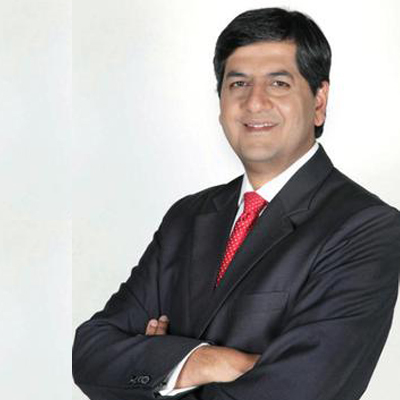
    “Indian mythology is a treasure trove of extraordinary tales and our fascination with them is limitless,” said &TV, business head, Vishnu Shankar. “We have all grown up hearing them so many times and yet we never miss a chance to revisit them. Among these are the legends and tales of Lord Shiva and his various avatars. However, there is one ‘roop’ which is rarely spoken about and that is his ‘Baal Roop’.”

    “At &TV, we are proud to present for the first time on Indian television this untold, unseen story of ‘Mahadev’s Baal Roop’ through our show ‘Baal Shiv’. Through this show we want to narrate the tale of his childhood and the beautiful relationship he shares with his mother Anusuya. We invite all our viewers and Lord Shiva’s ardent devotees to watch and enjoy it wholeheartedly,” he added.

    ZEE Studios business head, Anshul Khullar shared, “We all have grown up listening to stories of Lord Shiva, but this endearing story of ‘Baal Shiv’ is a welcome change in the mythological space of Indian Television. The energy and the excitement with which this project is being worked upon are unprecedented.”

    “I am very happy to be a part of the show and play Baal Shiv’s role. Lord Shiva is my most favourite deity, and I worship him. I know his ‘stutis’ by heart and can recite them effortlessly,” shared Aan Tiwari.

    “Anusuya’s character is one of the most prominent roles in the show. She is the perfect balance of compassion and determination. As the head teacher of Gurukul, Anusuya takes care of its children as her own, imparts the best of her knowledge and cultivates discipline in them,” commented Mouli Ganguly. “She did not have any children of her own. So, she performed severe penance and received the boon to be Tridev’s mother. Her unwavering faith and devotion in her husband earned her the title of Mahasati.” 

    Siddharth Arora said, “I have this eternal belief that one doesn’t choose the role of Lord Shiva. It comes to them as a blessing from him! It is obvious how blessed I feel to have been chosen to essay Lord Shiv’s character. It is not the typical depiction of what the audience has seen before. Viewers will get to see a different side of him in the show. I hail from Banaras, the land of spirituality, and Shivji has been a huge part of my life. I have grown up listening to his tales and he is undoubtedly one of the most revered Gods on my side of the family and also personally for me. I could not have asked for anything more significant than essaying his character on screen.”

  • &TV announces new mythological show ‘Bal Shiv’

    &TV announces new mythological show ‘Bal Shiv’

    Mumbai: &TV has announced the launch of a new mythological fiction show, ‘Bal Shiv’. The show is currently under production and being bankrolled by production banner, Zee Studios.

    For the first time on Indian television, ‘Bal Shiv’ will depict an untold mythical story of the mother and son’s eternal bond (Mahasati Anusuya and Bal Shiv) through exploring various chapters of his childhood and self-discovery. The story revolves around the premise that Lord Shiva had taken several avatars, yet never experienced childhood and mother’s love, said the channel in a statement.

    “Mythological stories always have had a fascination and staunch following amongst viewers of all ages. They have always presented viewers with the hope of direction and protection in uncertain times,” the channel said. “Of all the fascinating stories on the legend of Lord Shiva and his various avatars, one story that has never been told before is the story of Bal Shiv and his Bal Roop,” it added.

    The upcoming presentation will soon premiere only on &TV.

  • BARC India’s new campaign reinforces importance of TV in Indian households

    BARC India’s new campaign reinforces importance of TV in Indian households

    Mumbai: Building on the famous saying, “People hear statistics, but they feel stories”, Broadcast Audience Research Council (BARC) India has launched its latest ad campaign called ‘#MeasuringMoments – Where Data Does the Storytelling’ to reaffirm the importance of television in Indian households.

    The campaign, conceptualised and executed by BARC India’s internal team and its agency partner AGENCY09, showcases the accuracy in viewership trends through a series of narratives backed by data and insights.

    The campaign also highlights the fact that while BARC is capturing data to ‘What India Watches’ report, this data is also measuring and is reflective of moments that touch viewers’ lives and emotions and further reinforces the fact they are deeply connected and engaged with the medium. 

    “BARC India is an organisation that is deeply rooted in measurement science and technology and over the last six years we have been able to ascertain the fact that television continues to be the screen of the household,” BARC India, MarComm, Rafiq Gangjee said. “While the result of all we do lies in the dependable weekly currency we deliver to the industry, there are always greater stories to tell that depict the power that television has over viewers. Our campaign reflects these numerous stories that lie within various folds of data and insights. We hope to bring life to these moments and establish a deeper connection with viewers.”

    The campaign is currently live on BARC India’s social media channels.


    A post shared by BARC India (@barcindia)


  • &TV’s latest ‘Ghar Ek Mandir – Kripa Agrasen Maharaja Ki’ premieres 10 August

    &TV’s latest ‘Ghar Ek Mandir – Kripa Agrasen Maharaja Ki’ premieres 10 August

    Mumbai: &TV on Wednesday announced the launch of its latest offering ‘Ghar Ek Mandir – Kripa Agrasen Maharaja Ki’ set to premiere on 10 August. The socio-mythological show will air every Monday to Friday at 9 pm only on &TV.

    The show is a never-seen-before socio drama on Indian television built around the context of the legendary king, Agrasen Maharaja, who was the founder of the Agrawal community of traders. His teachings and principles hold relevance even today and serve as a guiding force for leading life. The story will depict Agrasen Maharaja’s core principles through his ardent ‘bhakt’ (devotee) and the show’s lead protagonist, Genda, said the statement.

    The cast comprises Shrenu Parekh as Genda, Sai Ballal as Kundan Agarwal, Sameer Dharmadhikari as Agrasen Maharaja, Akshay Mhatre as Genda’s husband, Varun Agarwal, Vishal Nayak as Manish Agarwal, Kenisha Bhardwaj as Nisha Agarwal, Yamini Singh as Santosh, Archana Mittal as Anuradha Agarwal.

    Commenting on the launch, &TV, business head, Vishnu Shankar, said, “In challenging times what helps us stay afloat are our principles, our beliefs and most importantly, our family. We are proud to bring to the television screen for the first time ever, a socio-mytho show around the legendary Agrasen Maharaj, whose principles and teachings are relevant even today, centuries later. While he may have been the founding father of the Aggarwal community, his teachings are universal. ‘Ghar Ek Mandir – Kripa Agrasen Maharaja Ki’ is a captivating tale of faith, family, and life.”

    “The story is an emotional journey of Genda and how she conquers every challenge in her life through her faith,” added ZEE Studios, business head Anshul Khullar.

  • Network18 posts net profit of Rs 121 cr in Q1′ 21

    Network18 posts net profit of Rs 121 cr in Q1′ 21

    New Delhi: Network18 Media & Investments Ltd reported a consolidated net profit of Rs 121.51 crore for the first quarter ended June 2021. The company had posted a net loss of Rs 60.60 crore for the April-June period of the previous fiscal.

    Consolidated revenue from operations rose 50.47 per cent to Rs 1,214.43 crore, as against Rs 807.07 crore in the corresponding quarter a year ago. The operating margin stood at 15.5 per cent, highest-ever in the first quarter, despite the impact of the second wave. News margin at 15 per cent, revenue up 17 per cent YoY, while digital News maintained its break-even; revenue rose 89 per cent YoY (up 44 per cent vs Q1FY20).

    Total expenses were at Rs 1,080.79 crore, up 23.99 per cent from Rs 871.65 crore earlier.

    TV News advertising remained resilient despite the second wave, led by a rise in news consumption and digital events replacing physical ones. News genre viewership jumped 28 per cent quarter-to-quarter led by the second wave and multiple state and elections. “The TV News ad-revenue remained in growth territory vs Q1FY20, adjusted for election-linked advertising, Digital News was minimally impacted by the second wave. Growing salience of the medium for advertisers as well as consumers (especially during COVID peaks) supported revenue,” said the company.

    Network18 Chairman Adil Zainulbhai said, “The second wave of COVID-19 could have been the dominant theme for the industry and indeed for us during the quarter…. but it wasn’t. We have been able to continue our businesses relentlessly and profitably. While advertising hit a speedbreaker (primarily in entertainment), growing engagement on our platforms across TV and Digital make us confident of delivering for all our stakeholders even amidst a choppy environment. We continue to invest to ramp up offerings on our class-leading digital platforms, as their reach expands to highest ever levels. At the same time, we are selectively creating segmented offerings to enhance our TV portfolio in a capital-efficient manner.”

  • Global ad market to top $700 bn in 2022: WARC Data

    Global ad market to top $700 bn in 2022: WARC Data

    New Delhi: Global advertising spend is expected to rise 12.6 per cent during 2021 as a whole to reach $665bn, according to WARC Data’s report tracking global ad-spends. This is a sharp increase from the 6.7 per cent initially forecast, and would result in all of 2020’s losses being recouped, contrary to previous expectations.

    The new report signals renewed optimism in the situation getting better for the overall market as it recovers from the severe impacts of the pandemic. According to WARC Data, a further growth of 8.2 percent is predicted for next year, with the global advertising market to be worth more than $700 billion. While it took six years to move from $500bn to $600bn, it has now taken just four years to reach $700bn. This is in no small part due to rapid investment in online formats, which has doubled in the last five years, it stated.

    India, too, will see strong growth in advertising spend over the next two years, but 2021 investment will not fully recover 2020’s losses, said WARC Data in its latest report, tracking 100 markets worldwide. According to the report, India’s growth is up 16.1 percent to $8.2 billion in 2021.

    Regional advertising investment in the Asia Pacific is forecast to increase by 12.8 percent this year to top $200 billion for the first time. This will be driven by the Chinese ad market, which is expected to grow by 16.3 percent to exceed $100 billion for the first time.

    WARC’s quarterly research also finds that advertising spend in the second quarter rose 23.6 percent to $157.6 billion, marking a new high for a Q2 period and the strongest rise in over a decade. This growth was mainly driven by online formats, which collectively saw spend rise 31.2 per cent versus the previous year. eCommerce was the star performer with growth of 59.5 per cent, though offline media – most notably linear TV saw 11.5 per cent growth – also fared well.

    Linear TV to grow 7.1 per cent in 2021

    For linear TV, spend is projected to grow 7.1 percent to $168.1 billion this year, equal to a quarter (25.3 percent) of the global ad market. Investment is expected to rise by a further 2.7 percent in 2022, though this means just 60 percent of 2020’s losses will be recovered by 2022.

    “The 2020 downturn was felt disproportionately among legacy media owners. While online ad investment rose 9.4 per cent last year, mostly to the benefit of a few pure players, brand spend on legacy media such as print, TV, radio, outdoor and cinema fell by $63bn. Data show that this loss was on a par with the Great Recession,” as per WARC.

    The forecast suggests, legacy media will see two consecutive years of growth in 2021 (8.8 per cent) and 2022 (3.1 per cent) for the first time in a decade, but budgets will continue to move online. More than 60 per cent of spend is expected to be on digital media in 2022, an increase in share from 50 per cent before the pandemic in 2019.

    “New quarterly research, collated from 100 markets worldwide, shows for the first time the true extent of the digital shift in response to the coronavirus outbreak last year. Growth in online adspend has typically tracked some 20 percentage points ahead of offline media, but in the final quarter of 2020, this leaped to a remarkable 41 points—an absolute difference of $41 billion,” WARC Data, managing editor and author of the report, James McDonald.

    “Investment in offline media fell by $63 billion worldwide in 2020, marking the worst year in living memory for the majority of media owners. All media are forecast to record growth this year, with most sustaining this into 2022. Yet, as has been seen before, it is the online platforms that are set to benefit most from the ad market’s recovery.”

    All consumer-facing product sectors are expected to increase advertising spend this year. The travel sector, however, will take more than two years to lift spend back to pre- pandemic levels, it added.

  • Digital & TV steer ad industry’s recovery to pre-pandemic levels in 2021: dentsu

    Digital & TV steer ad industry’s recovery to pre-pandemic levels in 2021: dentsu

    MUMBAI: India has emerged as one of the top five markets with high year-on-year growth rate in advertising spends, said dentsu in its latest Global Ad Spend Forecast June 2021. After suffering a steep 12.9 per cent decline in 2020, the ad spend is expected to bounce back with 10.8 per cent growth in 2021, according to the report.

    The forecast suggests the overall ad spend will reach $ nine billion this year, and expand further by 12.4 per cent in 2022. The growth will largely be led by Television and Digital, as Print, Cinema, OOH and Radio are expected to take a longer time to recover.

    According to the data, Television continues to remain the most popular and resilient media in India, retaining a 40.9 per cent share in ad spend despite the pandemic. The medium also showed a 7.7 per cent spike in growth, as compared to the 2020 spend. Digital’s share of spend has grown rapidly, from 20.0 per cent in 2019 to 29.4 per cent in 2021, and is expected to reach 32.7 per cent by the end of 2022

    India in top 5 mkts-denstu

    The bi-annual report based on data from 59 markets, anticipates a full recovery for the global ad market in 2021, with spends exceeding pre-pandemic levels sooner than was previously forecast. 

    While 2020 remains the weakest performing year since the global financial crisis, the decline in growth during 2020 has improved since the January 2021 forecast from -8.8 per cent to -7.2 per cent. The pandemic-induced decline in global advertising spend during 2020 has also proved less severe than anticipated, it states. The overall ad market outlook for 2021 shows recovery with 10.4 per cent growth and a spend of $634 billion, which represents an improvement of 4.6 percentage points over January 2021 prediction.

    Ad-spend in APAC

    Overall, the ad spend in APAC is expected to grow by eight per cent, with Australia and India showing higher growth rates in 2021 compared to other countries. In APAC, the 6.2 per cent rise in digital spend last year is likely to grow by 12.8 per cent in 2021 to reach $124.5 billion, representing a 54 per cent share of total ad spend. 

    Regional live events such Tokyo Olympics and Paralympics Games will remain significant drivers of growth in Linear TV ad spend in APAC (3.9 per cent increase in 2021 to reach $59.2 billion). The report also indicates a shift towards CTV (Connected TV) and OTT (Over The Top). With audiences moving more towards digital media consumption, Linear TV spend will remain below pre-pandemic levels until beyond 2021.

    With gradual lifting of restrictions on social activities, OOH will bounce back post impact of the pandemic, rising 7.5 per cent in 2021 in the region. Cinema has a slightly longer recovery, with a further decline in 2021 (-5.0 per cent) but expected to bounce back in 2022. Radio will also see growth (4.3 per cent) in 2021.

    While most channels will return to growth in 2021 (Cinema in 2022), Print is seeing a slight decline in 2021 (–2.7 per cent) and expected to continue declining in 2022, as it evolves towards new modes of digital delivery.

    Meanwhile, government spending remained a key growth area, supporting the Covid vaccine rollout and other related initiatives. In APAC’s key markets, the travel and transport sectors, will still be affected by the uncertainty of the past year and see a muted increase in demand (4.9 per cent), while Media & Entertainment is forecast to see growth (9.7 per cent).

    dentsu International APAC CEO Ashish Bhasin said, “It is promising to see a return to growth in the APAC region with two of our markets in the top five contributors of ad spend growth; China and Japan. While China continues to see strong levels of growth driven by Digital and OOH, Japan’s growth will be buoyed by events like the 2020 Olympic & Paralympic Games, and the House of Representative elections and the advertising spend associated with it, particularly in TV.

    By market, the top five contributors to the $ 59.7 billion of growth in incremental ad spend during 2021 will be the US, China, UK, Japan and Australia. The US share of ad spend remains significantly above all other markets in 2021. The highest growth rates in 2021 are forecast to come from spend in India, Canada, the US, Australia and the UK.

    Media APAC CEO & Media Singapore MD Prerna Mehrotra said, “We are optimistic that the region will bounce back to positive growth in ad spend, with some channels likely boosted higher than pre-pandemic levels. The main drivers behind the growth is economic recovery, with the APAC GDP set to increase by 7.3 per cent, and a stronger-than-ever push to digital marketing.”

  • Viacom18 takes a bold bet with Bigg Boss, to launch Season 15 first on Voot

    Viacom18 takes a bold bet with Bigg Boss, to launch Season 15 first on Voot

    KOLKATA: In an industry-first move, Viacom18 will launch its marquee entertainment property, Bigg Boss, first on Voot for six weeks. Titled Bigg Boss OTT, it will premiere in August 2021 with unprecedented access, engagement, and interactivity empowering viewers to immerse themselves in the journey of contestants in the Bigg Boss house. 

    In addition to the hour-long episode on Voot, viewers will get a chance to watch exclusive cuts, round-the-clock content drops, and a fully interactive 24*7 LIVE feed from the house. After the completion of the digital exclusive, the show will move seamlessly into Colors with the launch of Season 15 of Bigg Boss, said the channel on Friday.

    A high-priced entertainment property, Bigg Boss has stamped its pull even in the hyper-competitive digital entertainment space. With over 8.5 billion views, the show has dominated the digital space with a 92 percent share-of-voice. It has also garnered significant patronage of brands and advertisers who continue to engage with the property, season after season.

    Viacom18 Digital Ventures chief operating officer Gourav Rakshit said, “The launch of Bigg Boss OTT exclusively on Voot before TV is poised to be yet another game-changer in digital entertainment and a step forward in further cementing our position as the most loved consumer entertainment brand. This season is set to empower our audiences through unparalleled category-defining innovation through interactivity which we are sure will provide significance to our users, advertisers, and brands alike.”

    While the OTT exclusive starts in August, Bigg Boss will go live first on Voot, and after six weeks of exclusive streaming on digital, the show will launch in a fresh avatar in its 15th season on COLORS.

    Viacom18 Hindi Mass Entertainment chief content officer Manisha Sharma said, “The new digital exclusive format will take the show’s fandom to its next level through active engagement with viewers being able to play a part in the show’s progress. The beauty of this show lies in the versatility of format and the massive popularity it commands – both aspects helping us in customizing the show as two different content offerings for the two different platforms while maintaining its core ethos.”

  • West Bengal consumers look for relatable and aspirational content: Zeel’s Samrat Ghosh

    West Bengal consumers look for relatable and aspirational content: Zeel’s Samrat Ghosh

    New Delhi: After a successful national run, Zee Entertainment Enterprises (Zeel) forayed into the West Bengal market in the year 1999, and Zee Bangla became the first Bengali TV channel to be launched in the country. Over two decades later, the channel continues to enjoy a strong presence in the regional market with several successful shows that connected with the local masses. It further bolstered its regional genre with the launch of the sister channel, Zee Bangla Cinema in 2012.

    As part of the inaugural edition of the Tele-wise Bangla summit, Indiantelevision.com, CEO and editor-in-chief Anil Wanwari got in a fireside chat with Zee Entertainment Enterprises Ltd (Zeel), cluster head, Samrat Ghosh who spearheaded the network’s journey to the east.

    Ghosh has been a member of Zeel for over two decades. He took over Zeel’s Bangla business in 2014 and has been responsible for overseeing a bouquet of channels which includes Zee Bangla, Zee Bangla Cinema, Zee Sarthak, Big Ganga, and Zee Biskope. The conversation delved upon the various facets of the network’s growth in the Bangla market, the psyche of local consumers, channel’s content offering, and the brand’s philosophy. 

    Edited excerpts:

    On Zee Bangla’s journey so far and the challenges along the way

    Zee Bangla had already established a strong brand identity when I took over the channel’s business in 2014. It was perceived to be a pioneer in the non-fiction space and had some advantages over several established brands. In the fiction space, we had some flashes of brilliance here and there. My main objective at that time was to further strengthen this brand identity, create brand equity and transform the brand into ‘a brand of love and relevance’. Adopting a consumer-centric approach is the key to success. So, we reached out to consumers and gained loads of consumer insights, and started designing our products accordingly which was all-inclusive. This inclusiveness helped us to get a wide spectrum of audiences and top the viewership charts. We brought lots of cultural relevance in fiction and non-fiction shows to build more engagement among viewers and remained invested in content.

    On selecting stories in the culturally rich east market

    Bengal consumers are very different from other regional markets. They are bilingual, well-read, and well-informed. The state literacy level is also high at 77 per cent and they are culturally very sensitive. They also look forward to something new all the time, which also makes them extremely loyal to the brand. If the brand talks in their language and understands their needs, then they remain faithful to the brand. They look forward to a unique blend of content offering, where their values are also embedded. Such content resonates well with Bengal consumers. We have also done biopics, including the one on Netaji Subhash Chandra Bose which was well-accepted by the audiences. Bengal consumers lap up content if it is relevant to them and appeals to their aspirations.

    On the choice between chasing ratings and a good story 

    Rating is a by-product of the content that you create. We have always embraced a consumer-centric approach. We take consumer insights to make the content more relatable and aspirational for our viewers. If we can create content like that with relevant storytelling, then the rating is bound to follow. We reach out to consumers before the launch of the product and after launch too. They are quite excited to dissect the product and tell about likes and dislikes, so content correction also happens along the way.

    On reaching out to non-Bengali consumers nationally 

    In the non-fiction space, we have had some reality shows which developed into cult brands in the market. We had a quiz show, called Dadagiri with Sourav Ganguly and Dance Bangla Dance, and the vernacular season of Sa Re Ga Ma Pa. Many non-Bengali consumers also watch some of our shows and find them relevant. Many shows have travelled to other parts of the country within the Zeel network. So, we have catered to a wide spectrum of audiences.

    On whether Bengali consumer is programme-loyal or channel-loyal

    Both exist in the Bangla market. First and foremost, the Brand inertia and affinity in a typical Bengali consumer is very high. So, if you win their heart once, they will remain loyal to you for a very long time. There is a high brand loyalty among the Bengali audiences. If the content is relatable and it appeals to their aspirations, then there is always an appetite for consumption. They will wait a year after year if they develop an affinity for a show. Some shows have been running on the channel for years. But most importantly, the content has to be relatable to them.

    On genres that Bengali viewer binges on

    Any kind of content that has high cultural relevance will always resonate with the consumer. When he sees that the brand understands their needs, they develop an affinity for it. Localised content drives engagement and regional channels always have a higher ability to connect with consumers. The show Didi no 1 is a game show for women and it appeals to their aspirations. At the core, the brand has to be consumer-centric.

    On the challenges in finding talent in writing and acting, and unique solutions adopted

    Bengali TV industry has seen an upsurge in content production in the last decade and ramping up of content production hours. So, the growing demand has led to a short supply of talent for acting, writing, etc. So, we have embraced multiple ways to overcome this challenge. First, we have widened our production eco-system and we are now collaborating not only with established production houses, but the emerging ones too. Secondly, we are producing in-house shows to nurture new talent. Thirdly, we have launched a talent nurturing platform, YesBangla.com for searching for new and nurturing talent. The response has been great for acting, but for screenwriting, it is limited so far.

    On the OTT boom and impact on TV

    Both complement each other. TV works in the family space, while OTT is in personal space. Both platforms cater to a different set of audiences and both will co-exist. If you see, 95 per cent of video consumption is in vernacular, so OTT will grow. But, in West Bengal, for instance, there is 60 per cent penetration of TV. So, there is a lot of headroom for growth there too.

    On some successful partnerships with brands and advertisers

    We have had a couple of examples in the recent past. We believe in providing a value proposition to our advertising clients. We collaborated with Senco Gold and Diamonds, a jewellery brand for a show based on a jewellers’ family. So, while the brand utilized the platform and used it to launch new product ranges, it also lent huge insights for us, especially while taking our main protagonist for workshops. So, we keep doing a lot of integrations, Dadagiri was another such TV show. We have witnessed continuous support from our advertisers who see immense value in the collaboration. At Zeel, we provide a holistic proposition to advertisers, creating a win-win for the channel and the advertisers. 

    (The virtual summit – Zee Bangla was organised by Indiantelevision.com in partnership with Zee Bangla on 29 June and witnessed insightful sessions with representatives from television, advertising, and media.)

  • Telewise Bangla: Why West Bengal’s local brands prefer TV as a medium

    KOLKATA: Behemoths like Hindustan Unilever, Godrej, Procter & Gamble, and others of their ilk, may be lording it over product categories nationally, but in regional markets, they more often than not come up against sprightly, nimble, scrappy local players who give them more than a run for their money.  Not only for space in shop shelves but even as far as media spends on TV, print and digital are concerned. The scenario is no different in west Bengal.

    The sentiment and proclivity of local entrepreneur-led brands to use TV as a communication medium and brand builder was the topic of discussion in a virtual session ‘New Bastions of Growth’ at indiantelevision.com’s  Tele-wise Bangla- the Power of Television summit.  Prestige Ice Creams (owner of Rollick) managing director Gaurav Khemani, Ajanta Shoe, managing director Sagnik Banik, Keya Seth Aromatherapy founder Keya Seth, Initiative Media executive vice president Mahesh Motwani got into conversation with Indiantelevision.com founder, CEO & editor-in-chief Anil Wanvari and senior reporter Gargi Sarkar to give their perspectives.

    Khemani, who took over the company five years ago, is a big believer in television as a medium. The company that was growing 23 per cent year-on-year pre-pandemic started expanding the moment it went on TV, albeit improving product quality and distribution also played important roles, he said. Even this year, Rollick launched a campaign in February which ran till March. As Khemani shared, the campaign led to sales reaching levels never reached before in March.

    “The reach of TV is far ahead in Bengal, compared to print or any other medium. If you take TV, you can get around 75-80 per cent reach, whereas for print it is 30-35 per cent at best. If you look at the rural segment, print almost does not reach there,” Motwani stated, noting that Bengal is almost 68 per cent rural.

    However, the reach of digital still stands at around 50 per cent at best in urban areas of West Bengal. While everyone gets excited about digital, TV is extremely important for any advertiser in the state. Moreover, the brands need to plump for Bengali  TV channels which have the highest reach amongst TV viewers,  Motwani added. For premium programmes like SaReGaMaPa, Dadagiri, advertisers start booking slots way ahead.

    Ajanta Shoes’ Banik said it has only been two years since it signed Sourav Ganguly as a  brand ambassador for its sports shoes  as it pivots the company towards being a complete footwear provider from being a manufacturer of slippers alone. And its constant bombardment of the TVC with Ganguly and his dog on Bengali TV channels, has seen its sports shoes kick in sales of Rs 20 crore, Banik claimed. He added that there is no doubt that  TV is important to reach the masses but digital plays a role in  showcasing the technology that goes into the making of a sports shoe.

    Keya Seth Aromatherapy takes a different marketing tack.  Rather than jumping on to celebrity endorsements, the beauty brand’s founder Keya Seth and her daughter are  the faces in its promotions. The company was compelled to pull back media spends since filming stopped in March 2020. Seth explained that the company was compelled to do so as Keya Seth Aromatherapy used to produce a half-an hour programme for TV rather than buying spots.

    For the past year, it has not opened the lock it has put on its media spend chest  as yet. According to Seth, that has not had much of an impact on its growth with sales rising four-five per cent in the past one year. She asserted that she might opt for ad spends again, but the focus would be on digital.

    One of the major issues that some of the local brands are facing is being “outbid” by national advertisers, Seth highlighted. Earlier, regional channels used to treat local and national clients  differently. Some local brands used to spend even Rs 25-30 crore in a year for TV advertising, she noted. And the sales team would stand by them and give them enough priority. But now TV channels are selling slots to any brand which  is willing to fork out more.

     Hence, many of the local brands are not being able to match up their ad budgets with larger brands and gradually shifting to digital. Most of the local brands ink year long deals while many of the national brands just spend for a few premium properties, for a limited period of one -two months. Seth noted that the TV channels are on the verge of losing those long-term investments of local clients prioritising short-term  gains from national brands. While Seth is still keen on coming back to TV, she is of the view that the channels will have to look at how they can add more value.

    According to Motwani, most clients in Bengal work closely with agencies on their branding and media strategies, with owners getting on top of even negotiating ad rates. ”Sometimes, because of their relationships, the entrepreneurs get a better buy,” he said. “If the clients don’t feel like they are getting the right rate, they hold back their TVCs. Their thinking is that if they accept a higher quote, it will become the benchmark for future deals.”

    What about local Bengal brands spreading their wings nationally? Ajanta Shoes has already started moving beyond the eastern market to enter Punjab, Rajasthan, Uttar Pradesh. Keya Seth Aromatherapy already has a  presence in  Delhi, Jharkhand, Tripura, Assam, Jaipur, Bangladesh, Nepal. As Bengali consumers across the world have emotional attachment to homegrown brands, the beauty brand has some customers in the US and  London too.

    Banik stated that he will depend largely on TV to popularise his brand in new states to which it is spreading out. And he will go for a mix of both regional channels there as well as those with a national footprint. But the weightage will be more towards regional channels.

    However, Khemani pointed out that he would rather concentrate on building Rollick in east India for now. “Covid has given us opportunities to think through new opportunities. Pre-covid, I was interested in going national straightway. At this point of time, we want to stay in the east at least for three years and  take a leadership position here,” he said.

    Motwani in closing pointed out that West Bengal has oodles of entrepreneurial spirit pointing to brands like ITC, Gestetner, tea companies, plywood producers like Century and Green Ply which have come to define and dominate product categories. “They are ambitious and they are great believers of TV as a brand building medium,” he said. “Both locally and nationwide. And that will stand TV in good stead.”