Tag: TV today

  • Vinay Tewari joins Headlines Today as managing editor

    Vinay Tewari joins Headlines Today as managing editor

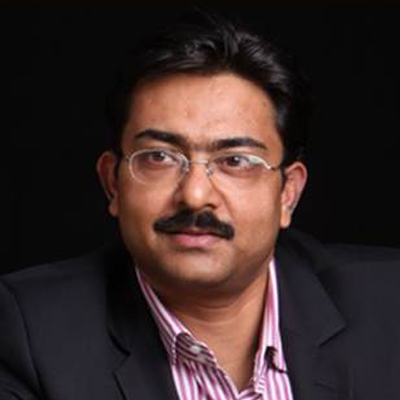
    MUMBAI: Taking charge of TV Today Network’s English news channel Headlines Today as the new managing editor is Vinay Tewari.


    Confirming the news to indiantelevision.com, Tewari said that he would be joining the organisation from 1 October. His role would be to build the brand of Headlines Today. He will report to India Today Group chief creative officer and India Today Group digital chief operating officer Kalli Purie.


    Tewari will take charge of a position that was vacated by Nalin Mehta early this year. Prior to this, he was with Network 18 as managing editor of CNN-IBN. He was also assigned the responsibility of IBN7.


    This will be his second stint with the company. He was earlier Hindi channel Aaj Tak’s Delhi bureau head and also had the responsibility of bringing synergy between the Hindi and English news channel.


    He had started his two decade long career in 1993 with the Pioneer before moving to The Times of India. 

  • Rajdeep Sardesai joins India Today Group as consulting editor

    Rajdeep Sardesai joins India Today Group as consulting editor

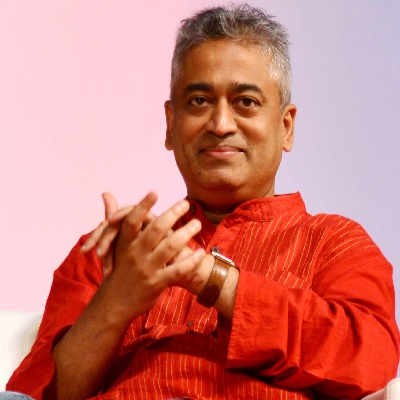
    MUMBAI:  After a hiatus of three months, former editor-in-chief of IBN18, Rajdeep Sardesai has decided to move to India Today Group as consulting editor.


    Indiantelevision.com was the first to report that he would be looking at joining TV Today in August.


    Sardesai announced his new assignment via a tweet “Delighted to be joining TV Today network, India’s largest news network, as consulting editor. Looking forward to working with a great team.” He will be contributing to the revamp of the channel and its alignment with digital assets of the group. 


    At first, he will be doing a prime time show on its English channel Headlines Today. On his appointment, India Today Group chairman and editor-in-chief Aroon Purie said, “Rajdeep has been an asset to whichever team he has belonged to, including the cricketing ones. Great to have him with us. I know he will hit the ball out of the park for team India Today.”


    Recently, the network saw Shekhar Gupta move out of his full time role into a consulting position. The network also saw Karan Thapar and Boria Majumdar join earlier this year. 


    Sardesai has worked with NDTV and CNN-IBN. Prior to this, he was working with Times of India in Mumbai. Recently, he just concluded writing a book on Indian elections while simultaneously launching his own website ‘Breaking Views’.

  • Vinay Tewari quits Network 18

    Vinay Tewari quits Network 18

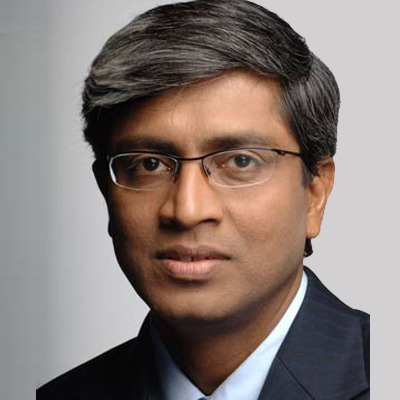
    MUMBAI: Adding to the list of the latest exits from Network 18, CNN-IBN and IBN7 managing editor Vinay Tewari has quit the company.


    Confirming the news to indiantelevision.com, Tewari said that he is evaluating his future course of action. Unconfirmed media reports state that he may be joining Headlines Today.


    Tewari has been associated with the network for nearly a decade. Prior to that, he was with TV today for three years, The Times of India for eight years and The Pioneer. 


    At Network 18, he was responsible for all special projects and news gathering operations.


    Initially Tewari was handling just the English channel but after Ashutosh quit as managing editor of IBN7 earlier this year to join the Aam Aadmi Party, Tewari was given the mandate of the Hindi channel as well.

  • Q1-2015: TV Today q-o-q PAT doubles; radio segment continues disappointing run

    Q1-2015: TV Today q-o-q PAT doubles; radio segment continues disappointing run

    BENGALURU: Driven by a good performance by its television segment,  TV Today Network Limited (TVTN), a part of the India Today group, reported more than double (2.06 times) the PAT in Q1-2015 at Rs 32.79 crore (23.9 per cent of Income from Operations or Op Inc) as compared to the Rs 15.85 crore (16.3 per cent of Op Inc)) in Q4-2014 and 2.74 times the Rs 11.98 crore (13.5 per cent of Op Inc) in Q1-2014.


    The company reported a respectable 40.6 per cent growth in Op Inc in Q1-2015 to Rs 137.01 crore as compared to the Rs 94.71 crore in Q4-2014 and 54.1 per cent more than the Rs 88.9 crore in Q1-2014.


    Note: (1) Rs 100 lakh = Rs100,00,000 = Rs 1 crore = Rs 10 million.


    Two segments – TV Broadcasting (TV) and FM Radio Broadcasting (Radio) contribute to TVTN’s revenues. TVTN’s Radio Broadcasting segment (Oye! FM) under the brand Oye! FM reported a lower operating loss in Q1-2015 at Rs 2.56 crore as compared to the Rs 4 crore in the immediate trailing quarter, but higher than the Rs 2.33 crore in the year ago quarter Q1-2014. The segment reported 14 per cent lower q-o-q operating revenue at Rs.3.37 crore in Q1-2015 as compared to the Rs 3.91 crore in Q4-2014, but 11.6 per cent more than Rs 3.02 crore in Q1-2014.


    Let us look at the other Q1-2015 numbers reported by TVTN


    As mentioned above, TVTN’s TV Broadcasting (TV) segment has performed well. Op Inc of the TV segment in Q1-2015 at Rs 133.64 crore was 42.9 per cent more than the Rs 93.5 crore in Q4-2014 and 55.6 per cent more than the Rs 85.89 crore in Q1-2014. The segment reported a positive operating result of Rs 51.43 crore, which was 86.7 per cent more than the Rs 27.55 crore in Q1-2014 and more than double (2.43 times) the Rs 21.18 crore in Q1-2014.


    TVTN’s total expenditure in Q1-2015 at Rs 89.31 crore (65.2 per cent of Op Inc) was 15.5 per cent more than the Rs 77.31 crore (79.4 per cent of Op Inc) in Q4-2014 and 25.3 per cent more than the Rs 71.27 crore (80.2 per cent of Op Inc) in Q1-2014.


    The company’s Production cost at Rs 13.45 crore (9.8 per cent of Op Inc) in the current quarter was 4.2 per cent higher than the Rs 12.91 crore(13.3 per cent of Op Inc) in Q4-2014 and 48.9 per cent more than the Rs 9.03 crore (10.2 per cent of Op Inc) in Q1-2014.


    TVTN’s Employee Benefit Expense (EBE) in Q1-2015 at Rs 29.29 crore (26.5 per cent of Op Inc) was 35.2 per cent more than the Rs 21.67 crore (22.3 per cent of Op Inc)) in Q4-2014 and 24.1 per cent higher than the Rs 23.6 crore (26.6 per cent of Op Inc) in Q1-2014.


    Other Expense at Rs 17.43 crore (12.7 per cent of Op Inc) in Q1-2015 was 9.6 per cent less than the Rs 19.27 crore (17.3 per cent of Op Inc) in Q4-2014 and 38.2 per cent more than the Rs 12.61 crore (14.2 per cent of Op Inc) in Q1-2014.

  • We will launch more channels in next one year: Rajesh Kaul

    We will launch more channels in next one year: Rajesh Kaul

    MUMBAI: It was in February that the Telecom Regulatory Authority of India (TRAI) released its regulation on the role of content aggregators and since then, several changes have taken place in the structure of the existing aggregators. While MediaPro decided to split post the regulation, good news is that aggregators IndiaCast UTV Media Distribution and TheOneAlliance are still standing strong in their respective joint ventures.


    Announcing the strong allegiance is the MSM Discovery (MSMD) joint venture TheOneAlliance which will continue to be the authorised sole and exclusive distribution agent for Multi Screen Media, Discovery Communications India and TV Today Network to various distribution platforms – Cable (both analogue and digital), DTH, HITS, IPTV and hotels and commercials establishments.


    “As per the TRAI regulation, we will now be the exclusive agents for MSM, Discovery and TV Today,” informs TheOneAlliance president Rajesh Kaul.


    While the distributor earlier had 28 channels in the bouquet, with Times Television Network (Times Now, ET Now, Movies Now and Zoom) moving out from the bouquet, to set up its independent distribution team, TheOneAlliance will now have 24 premium channels to distribute.


    “It was a mutual decision to part ways. We have a strong bouquet and we would like to concentrate on that,” adds Kaul.


    Apart from the current 24 channels distributed by MSMD, the network will be making heavy investments in the form of new channels such as Max 2 – a contemporary Hindi movie channel showcasing Indian cinema, Pix HD, AXN HD and a new entertainment channel from the MSM stable.


    “We have one of the most stable and dynamic distribution partnerships in the industry. Given the current strength and the aggressive future investment plans of our partners, TheOneAlliance will continue to excel as the powerful leader in the industry,” he says.


    TheOneAlliance’s plate seems to be very tempting with MSM acquiring premium sporting properties for its sports and entertainment channel, Sony Six. The channel currently broadcasts sporting events like NBA, UFC, TNA Wrestling and Australian Open tennis along with the Indian Premier League and is home of international football for the next five years with exclusive rights to telecasting the world’s largest sporting spectacle FIFA World Cup 2014 – Brasil & FIFA World Cup 2018 – Russia along with UEFA EURO 2016.


    It is not just MSM that is launching new channels, but Discovery Communications India too is set to increase its channel offerings with: Investigation Discovery (ID), a suspense Hindi entertainment channel, TLC HD and Animal Planet HD. 


    Over the course of the next one year, both the networks are looking forward to launching new channels in both SD and HD across different genres. “We have huge plans of launching many more channels in different genres in the next one year. Our bouquet will only grow from strength to strength,” says Kaul.


    “We believe in nurturing and fostering positive and strong relationships with our partners which is mutually beneficial to both and we are happy to extend this partnership to the future also. We are very confident that TheOneAlliance is perfectly enabled to monetise the valuable and exclusive premium content that we produce and acquire,” MSM CEO N.P Singh said through a statement.


    Added Rahul Johri, EVP and general manager – south Asia, Discovery Networks Asia-Pacific and head of revenue, pan-regional ad sales and southeast Asia, “Discovery has a very strong partnership with Sony and we are fully committed to TheOneAlliance. It is Discovery’s endeavour to provide the Indian viewers with the finest entertainment and TheOneAlliance will continue to distribute our eight current channels and our new launches across India.” 


    The 24 premium channels distributed by TheOneAlliance include: SET, Max, Max 2, Sab, Mix, Pix, Six, AXN, Animax, Aath, Discovery Channel, Discovery Channel Tamil, Animal Planet, TLC, Discovery Science, Discovery Turbo, Discovery Kids, Discovery HD World, Sony HD, Six HD, Pix HD, Headlines Today, Aaj Tak and Tez.

  • TV Today FY-2014 PAT quintuples, OYE! FM operating loss down 15 per cent

    TV Today FY-2014 PAT quintuples, OYE! FM operating loss down 15 per cent

    BENGALURU: TV Today Network Limited (TVTN), a part of the India Today group reported 5.02 times growth in standalone PAT in FY-2014 to Rs 61.32 crore (15.75 per cent of Income from Operations or Op Inc) as compared to the Rs 12.21 crore (3.9 per cent of Op Inc) in FY-2013.  In Q4-2014, the company reported PAT of Rs 15.85 crore (16.28 per cent of Op Inc), which was (-23.21) per cent lower than the Rs 20.65 crore (18.53 per cent of Op Inc) in the immediate trailing quarter Q3-2014 and almost two and a half times (2.49 times) the PAT of Rs 6.36 crore (7.54 per cent of Op Inc) in Q4-2013.


    Note: (1) Rs 100 lakh = Rs100,00,000 = Rs 1 crore = Rs 10 million.


    TVTN’s Radio Broadcasting segment (Oye! FM) under the brand Oye! FM reported a (-15.41) per cent reduction in operating loss to Rs (-11.24) crore in FY-2014 as compared to the Rs (-13.24) crore in FY-2013. However, Oye! FM’s Q4-2014 loss at Rs(-4) crore was 35.86 per cent more than the Rs (-2.90) crore in Q3-2014 and 45.98 per cent more than the Rs (-2.74) crore in Q4-2013.


    Let us look at some of the other numbers reported by TV Today for FY-2014 and Q4-2014


    TVTN reported 24.56 per cent higher Op Inc at Rs 389.44 crore in FY-2014 as compared to the Rs 312.67 crore in FY-2013. Op Inc for Q4-2014 at Rs 97.41 crore was (-12.57) per cent lower than the Rs111.42 crore in Q3-2014 and 15.59 per cent more than the Rs 84.27 crore in Q4-2013.


    Total Expense in FY-2014 at Rs 304.35 crore (78.15 per cent of Op Inc) was 2.29 per cent more than the Rs 297.55 crore (95.16 per cent of Op Inc) in FY-2013. In Q4-2014, Total Expense at Rs 77.31 crore (79.36 per cent of Op Ic) was (-5.99) per cent less than the Rs 82.23 crore (73.9 per cent of Op Inc) in Q3-2014 and (-0.74) per cent lower than the Rs 77.89 (92.43 per cent of Op Inc) crore in Q4-2013.


    Major expense heads include Employee Benefits Expense (EBE), which at Rs 92.97 crore (23.87 per cent of Op Inc) in FY-2014 was (-0.12) per cent lower than the Rs 93.09 crore (29.77 per cent of Op Inc) in FY-2013. Q4-2014 EBE at Rs 21.67 crore (22.25 per cent of Op Inc) was (-12.85) per cent lower than the Rs 24.87 crore (22.32 per cent of Op Inc) in Q3-2014 and (-6.05) per cent lower than the Rs 23.07 crore (27.38 per cent of Op Inc) in Q4-2013.


    Production Costs at Rs 40.85 crore (10.49 per cent of Op Inc) was 9.16 per cent more than the Rs 37.42 crore (11.97 per cent of Op Inc) in FY-2013. In Q4-2013, Production Cost at Rs 12.91 crore (13.25 per cent of Op Inc) was 18.93 per cent more than the Rs10.85 crore (9.74 per cent of Op Inc) and 24.57 per cent more than the Rs10.36 crore (12.29 per cent of Op Inc) in Q4-2013.


    Other Expense in FY-2014 at Rs 60.61 crore (15.56 per cent of Op Inc) was 7.04 per cent more than the Rs 56.62 crore in FY-2013. During Q4-2014, other expense at Rs19.27 crore (17.30 per cent of Op Inc) was 24.52 per cent higher than the Rs15.48 crore (13.89 per cent of Op Inc) in Q3-2014 and 29.38 per cent more the Rs14.90 crore (17.68 per cent of Op Inc).


    Segment Revenue


    Two segments – TV Broadcasting (TV) and FM Radio Broadcasting (Radio) contribute to TVTN’s revenues.


    TV segment reported 23.58 per cent growth in operating revenue to Rs 374.06 crore in FY-2014 as compared to the Rs 302.69 crore in FY-2013. TV’s Operating revenue in Q4-2014 at Rs 93.50 crore was (-12.66) per cent lower than the Rs 107.06 crore in Q3-2014 and 14.54 per cent more than the Rs 81.63 crore in Q4-2013.


    TV segment reported Operating profit of Rs 103.75 crore in FY-2014, more than triple (3.16 times) the Rs 32.79 crore in FY-2013. TV segment’s Operating profit in Q4-2014 at Rs 27.55 crore was (-18.36) per cent lower than the Rs 33.75 crore in Q3-2014 and more than double (2.36 times) the Rs11.69 crore in Q4-2013.


    Radio segment reported Operating revenue of Rs15.38 crore which was 54.17 per cent more than the Rs 9.98 crore in FY-2013. Operating revenue for the segment in Q4-2014 at Rs 3.91 crore was (-10.36) per cent lower than the Rs 4.37 crore in Q3-2014 and 48.11 per cent more than the Rs 2.64 crore in Q4-2013. Radio results have been mentioned above.


    Presently, TVTN runs four 24 hours news and current affairs television channels, namely Aaj Tak, Dilli Aaj Tak and Tez in Hindi and Headlines Today in English and six FM radio stations in Delhi, Kolkata, Amritsar, Patiala, Jodhpur and Mumbai under the name Oye! 104.8 FM.

  • ‘Election Express’ flies high with Quidich’s aerial cams

    ‘Election Express’ flies high with Quidich’s aerial cams

    MUMBAI: In an election season when every second channel is belting out poll-related news and shows, how does one stand out in a crowd?

    The answer lies in how Headlines Today has deployed a new technology from a little-known company, Quidich, to give a facelift to its show, Election Express (EE).

    Launched in December 2013, Quidich provides aerial photography and videography using quadcopters and octocopters. Till date, Quidich members are busy touring the country with Headlines Today editor-at-large, Rahul Kanwal and his EE team.

    Quidich is constituted by three young men including CEO Rahat Kulshreshtha, who studied at the University of Westminster and worked with Star News, Nirvana Films and the British film industry; technical head Tanuj Bhojwani, an IIT Mumbai alumnus who left a management consultancy firm for Quidich; and marketing head Gaurav Mehta, a mechanical engineer from the College of Engineering, Pune. Currently, the office is based out of New Delhi and there are plans to have another one in Mumbai to tap into the Hindi film industry. For now, it’s a six-strong team with four permanent members.

    Aerial machines are fitted with cameras to provide shots which are called drones or multi-rotors. Explains Bhojwani, “The technology behind these drones is easy to grasp, but hard to master. It’s very easy to get something into the air, but to keep it there and stable is a very hard task.’

    The essential part of the equipment is the flying object which needs to be designed based on the client’s needs and the flight time. Next is the flight controller, which consists of a remote in the hand of the pilot and a microchip on the drone that receives the remote’s signal. Handling of this decides the precision and stability of the flight.

    For EE, two quadcopters (four motors) and one octocopter (eight motors) are being used. The batteries used are 7700 mAh, whose drainage is inversely proportional to the size of the copter. For example, an octocopter with a 5D DSLR can work with two such batteries for approximately 15 minutes in air. More motors means capacity to carry bigger cameras.

    Then comes the essential part of stabilizing the camera on the drone. An essential scientific technology called gimbal, which is present in a variety of instruments like gyroscopes and accelerometers, is utilized to stabilize the camera. After all, you wouldn’t want to break expensive cameras! For advanced and larger equipment with expensive flight controllers, the camera may also be programmed for self-control or manipulated using a device such as an iPad from the field so that it can fly on a set pattern.

    Using these drones, the Quidich and EE teams have been touring India for the past few weeks with the day beginning at 6:00 am and ending at 10:30 pm. Of this, a lot of time is consumed by bus travel while shooting goes on for about two to three hours a day. “We have our own drones but Quidich’s drones fit our bill as they are on the higher end and their operators are unbelievably deft with the controls,” says India Today group chief creative officer and India Today group digital chief operating officer Kalli Purie.

    So how did Quidich come up with the idea of the aerial camera? “The idea for the aerial camera actually came from our own experience. Rahat was trying to shoot a video for which he required aerial cameras. Attempting to experiment with the camerawork being employed, he discovered that services in India for aerial footage were literally non-existent or non-affordable. It was then that the idea to facilitate such a process was seeded, and shortly after, Quidich was formed,” says Bhojwani.

    Quidich services have also been employed for a short film for IRCTC, Volkswagen Motor Sports and NDTV for one of their companies called Red Dot Films. Bhojwani points out that such a service is used on a small scale in India mainly due to requirements of large scale production for news services, advertisements, sports coverage and feature films.

    Drones have been used in news channels for producing stock footage, unlike its usage for live telecast in EE. The range of the shot varies from 500 metres to 10 kms while the height can go up to 500 feet. Currently, Quidich owns three GoPro cameras that are used for action shots, one Nikon D500 mini, and one Nikon D800. While the GoPro is built for such shots, it cannot work precisely in low light and narrow areas.  Tie ups with camera rental companies assure that the client’s needs are met with good pricing. Now it is looking at buying the portable Blackmagic Design production camera that records 4k videos and supports different types of lenses.

    The bigger copters weigh about six to seven kg and are built of carbon fibre that is a lighter version of steel while the smaller ones are made of sturdy plastic and weighs about 1.5 kg. This, along with the gimbal ensures that the drone doesn’t crash and neither is it blown away by the wind.

    Although Quidich presently provides video services, it is looking at exploring other possibilities. Work is currently on on developing innovative options for out-of-home branding for marketers in India through quadcopters such as sky writing. “We are not restricting ourselves to being a technology company. There are just eight to 10 such large scale operators in the country,” says Kulshreshtha.

    For live transmission, radio equipment is fitted on the drone that corresponds to receiving stations on the ground. One signal beams back the video to the pilot that works on radio frequency while the main signal sent to the mixing station for live or recorded use is through OFDM (Orthogonal frequency-division multiplexing) technology. This ensures uninterrupted HD video being sent back unlike in radio frequencies. The RF tech can cost around Rs 15,000 to Rs 20,000 while the OFDM is on the higher end at about Rs 1 lakh. The setup for a live link can be up and running in 15 minutes.

    Purie feels that the usage of drones has given the viewer a more realistic experience apart from the five existing cameras on the show. “Good election coverage happens on the ground and drones are a perfect compliment,” she adds.

    The alternative options that are currently in use are helicopters and Jibs that are cumbersome and unable to fly to heights. “In contrast to any of these methods, Quidich’s technology can be availed at competitive rates and less than around one fifth the cost,” says Bhojwani. Pricing for this technology depends on a range of things such as type of copter, camera, timing, footage receiver etc, but for a full day shoot, prices could range from Rs 20,000 to Rs 1.5 lakh.

    The only thing the pilot has to concentrate on is to steer the drone away from obstacles or keep it away from the reach of passer-bys. So how do they deal with people staring into the flying camera while shooting? “We start flying five to ten minutes before actual live time so they get bored after that,” laughs Bhojwani.

    “We at Quidich believe in always providing state-of-the-art service to our clients, so that we can push the limits of what is possible,” says Kulshreshtha. On the experience working with EE, Bhojwani says, “It may be one thing to step out of the comfortable confines of a news studio to make your reporting distinct, but it is another ball game altogether to be negotiating with that amount of travel on a daily basis. With everyone pushing themselves physically and mentally, it was a gruelling but deeply satisfying experience.”

    EE being Quidich’s first big assignment, has the company managed to get some eyeballs? “We are currently in talks with a diverse group of prospective clients. These include an ad film for a sports brand, a full-length regional feature film that may be shot in Ladakh, and a Bollywood film that would be shot in Goa. We are also negotiating offers for corporate films that include property clients. Unfortunately, given that we are still finalizing most of these assignments, I would be unable to get into the specifics of these offers,” says Bhojwani.

    TV Today on the other hand has already decided to sign up with Quidich for a new show.
  • Q3-2014: TV Today PAT up 34.5% on year; Oye! FM operating loss narrows

    Q3-2014: TV Today PAT up 34.5% on year; Oye! FM operating loss narrows

    BENGALURU: TV Today Network Limited (TVTN), a part of the India Today group, has reported its net profit in the third quarter ended 31 December, 2013 rose 34.5 per cent to Rs 20.65 crore from Rs 15.35 crore a year ago.


    The company’s net profit in the third quarter was 60.9 per cent higher than Rs 12.83 crore in the second quarter of 2013-14.


    For the nine months ended 31 December, 2013, TV Today Network’s net profit at 45.46 crore was 7.77 times Rs 5.85 crore a year ago. For 2012-13, the company’s net profit was 12.21 crore.


    TVTN’s radio broadcasting business under the brand Oye! FM reported that its operating loss for the first nine months of 2013-14 narrowed by 31.1 per cent to Rs 7.24 crore from Rs 10.51 crore a year ago.


    For the third quarter, Oye! FM’s operating loss narrowed by 9.5 per cent to Rs 2.9 crore from Rs 3.2 crore a year ago. Its operating loss for the third quarter was, however, higher than the operating loss of Rs 2.02 crore a quarter ago.


    For 2012-13, Oye! FM had an operating loss of Rs 13.24 crore.


    TVTN’s television broadcasting segment reported a phenomenal 68.4 per cent growth in operating profit to Rs 33.75 crore in the third quarter of 2013-14 from Rs 20.04 crore a year ago.


    The television broadcasting segment’s operating profit in the first nine months at Rs 76.2 crore was 3.62 times a year ago’s Rs 21.1 crore. For 2012-12, the television segment reported operating profit of Rs 32.79 crore.


    Let us look at the other Q3-2014 figures reported by TVTN


    TVTN’s Operating Revenue at Rs 110.94 crore for Q3-2014 was 22.8 per cent higher than the Rs 90.37 crore of the corresponding quarter of last year and 21.3 per cent more than the Rs 91.45 crore in the immediate trailing quarter. For the nine month period ended December 31, 2013, TVTN saw a growth of Operating Revenue by 27.6 per cent to Rs 291.24 crore from Rs 228.22 crore in the corresponding nine month period of last year. For FY 2013, TVTN had Operating Revenue of Rs 312.44 crore.


    TVTN’s Total expense for Q3-2014 at Rs 82.23 crore was 9.4 per cent more than the Rs 75.21 crore in Q3-2013 and 11.8 per cent more than the Rs 73.54 crore for Q2-2014. YTD, TVTN’s Total Expense at Rs 227.04 crore was 3.4 per cent more than the Rs 219.66 crore in the corresponding nine month period of FY2013. TVTN’s Total Expense for FY 2013 was Rs 297.55 crore.


    TVTN’s Production Cost for Q3-2014 was 16.3 per cent higher at Rs 10.85 crore as compared to the Rs 9.33 crore in Q3-2013 and 34.7 per cent more than the Rs 8.06 croes in the immediate trailing quarter. For the nine month period ended December 31, 2013, TVTN’s Production Cost went up 3.3 per cent to Rs 27.94 crore from Rs 27.06 crore in the corresponding nine month period of last year. For FY 2013, the company’s Production Cost was Rs 37.42 crore.


    TVTN spent Rs 25 crore in Q3-2014 towards Advertisement, Distribution and Sales Promotion (Ad Spend) which was 8.8 per cent more than the Rs 22.98 crore in Q3-2013 and 9 per cent more than the Rs 22.93 crore in Q2-2014. YTD, TVTN’s Ad Spend at Rs 67.62 crore was 1.75 per cent more than the Rs 66.46 crore in the corresponding nine month period of FY 2013. For FY 2013, TVTN’s Ad Spend was Rs 89.4 crore.


    Television segment had Operating Revenue of Rs 107.05 crore for Q3-2014, which was 21.7 per cent more than the Rs 87.97 crore in Q3-2013 and 22.2 per cent more than the Rs 87.62 crore in the immediate trailing quarter.  YTD, the company’s Television segment saw Operating Revenue grow by 26.9 per cent to Rs 280.57 crore as compared to the Rs 221.06 crore in the corresponding nine month period of FY 2013. For FY 2013, TVTN’s Television segment had Operating Revenue of Rs 302.69 crore.


    Oye! FM had Operating Revenue of Rs 4.37 crore in Q3-2014, which was 76.8 per cent more than the Rs 2.47 crore in the corresponding quarter of last fiscal and 7 per cent more than the Rs 4.08 crore in Q2-2014. YTD, Oye! FM reported Operating revenue of Rs 11.46 crore in the current fiscal, which was 56.4 per cent more than the Rs 7.33 crore during the corresponding nine month period of FY 2013. For FY 2013, Oye! FM reported Operating Revenue of Rs 9.98 crore.

  • Is Ashutosh going to pursue politics?

    Is Ashutosh going to pursue politics?

    MUMBAI: Indian journalism has had few very popular names to boast of when it comes to journalists. One such name is Ashutosh. He just didn’t contribute to the growth of Hindi channels of two of the biggest networks in the country when they were launched, he also became their face during the time he was working for them.  The first one was Aaj Tak from the TV Today group which was launched in 2000, and the second was IBN7, a joint venture between Global Broadcast News and Jagran TV in 2006.


    In 2006, when Ashutosh left the position as deputy executive producer at Aaj Tak to join IBN7 as managing editor, he created a commotion. Once again, he repeated history today when the news of his resignation broke out. The journalist decided to end his eight year relationship with IBN7 as well without notifying anybody about his future plans.


    While there’s a possibility that he could join/open another news channel, rumours are afloat that he is all set to end his more than two decade long journalistic career and join the much talked about newbie political party, the Aam Aadmi Party (AAP).


    And as the rumours are reaching far and wide, one wonders if it is possible for someone who was so committed to his work for such a long time can finally change course at the age of 49 and serve the country is another way! When quizzed about his next course of action he says, “I am open to all options.”


    When probed further and quizzed if he is actually taking the political route, Ashutosh chose to give an ambiguous response that too twice, “Let’s see.”


    While we were still wondering what to make out of his response, a tweet from Ashutosh gave us a slight glimpse of what is going on in his mind. He wrote, “Eight years back I changed my course, now there is another time, another call of destiny, have to swim- have to swim.”


    So, is there a change of course for the journalist who started his broadcasting career in 1996 as a correspondent with Aaj Tak, which at that time was just a 20 minute news bulletin on the pubcaster – Doordarshan Metro. Aaj Tak was just a year old then. When the channel was launched in 2000, Ashutosh became a known face in many Hindi-speaking households with his primetime anchoring.


    In a 2008 interview with indiantelevision.com, reminiscing about his initial days in the field, he had said, “In early 1996 I was working as a correspondent with Aaj Tak I was getting ready to give my PTC for a story on a lonely bumpy road in Ganderbal when suddenly a 10 year old boy appeared from nowhere and shouted…Ashutosh, Delhi, Aaj Tak. I was stunned. I could not comprehend that in a place so removed from civilisation, someone could recognise me. That was the power of TV. Those words still ring in my ears and I cannot forget that small boy’s face.”


    Wonder if he would be able to leave the profession that he so fondly rejoiced once, or is it “country calling” for him!

  • IBF panel hopes to standardise TV ratings system

    IBF panel hopes to standardise TV ratings system

    The Indian Broadcasting Federation (IBF), which has representation from all major channels, is setting up a committee to review the television rating systems in India.

    Presently, there are no uniform guidelines wherein agencies can rate programmes on various channels.


    “The IBF is putting together a technical committee to prescribe the technical specifications for a rating system which would be valid for India,” the Financial Express quoted Bhuvan Lall, executive director, IBF, as saying.


    The IBF has 29 members, including representatives of Doordarshan, Star, Zee, Sony, Discovery, TV Today, Sahara, ESPN, BBC, UTV, Enadu, Sabe and Sun TV, among others.


    The review committee, which is expected to present a final report in the next three to four months will have representatives from all major broadcasters/TV channels, Lall said.


    After the committee finalises its report, independent rating agencies that broadcasters subscribe to will have to conform to the guidelines in the report, according to Lall. The IBF expects the initiative to be the first step in offering a fair rating system for TV programmes.


    Rating of TV programmes is a major issue in the industry, and the IBF is determined to address all issues that impact the industry as a whole, Lall said.