Tag: TV shows

  • Peninsula Pictures eyes new genres for digital foray

    Peninsula Pictures eyes new genres for digital foray

    MUMBAI: Peninsula Pictures, the production house known for its shows like Vishkanya, Dev Anand, Shree Krishna, Mayavi Maling and Aladdin has decided to foray into the digital world, with the intent of providing quality content. One of the key reasons for entering digital is also to retain show IPs.

    Apart from its expertise in genres like mythology and fantasy, the production house has plans to experiment with a romantic thriller, crime, comedy and paranormal genres among others for its new web series. As far as television is concerned, it has plans to produce shows in genres like contemporary love story, thriller, etc.

    The production house, led by Nissar Parvej and Alind Srivastava, highlighted that the year 2018 was a bittersweet one. Parvej said that Shree Krishna has done quite well in the industry and has completed 400 episodes. Mayavi Maling was yet another show produced for Star Bharat that didn’t garner much attention from viewers but it didn’t let them down. Aladdin, a period fantasy for Sony Sab, has already made an entry in the space, while Alibaba for Colors and two other shows are in the pipeline to enter the TV space. It also has plans to produce shows for the regional segment.

    Talking about the challenges that they have faced, Srivastava said, “Detective shows take time for the audiences to pick up. The other challenge was streamlining our studio which was launched last year. In 2018, there were a lot of shows that were VFX. Now, we will be able to take more VFX-based shows. We also want it to become one of our strengths and this does not mean that we just want to stick to VFX shows.”

    Parvej further added that they don’t want to pick up too much work so that they can focus on quality. Srivastava said that there was a wave of shows like Daayan, Chudail that were trendy in 2018. Taarak Mehta Ka Ooltah Chashmah is the show that is still working well with the audience. “One should know that when you are making a show, you are making it for the audience, so whatever relates to them should be made and should follow certain basics like touching the emotional core of it,” he said.

    Talking about OTT, Parvej said that the money is definitely more in the OTT space, but according to him, that does not make TV insecure. However, it will take 4-5 years for OTT to settle. He feels that show production cost on TV will go down because of dipping advertising money.

  • Singapore High Court orders Internet service providers to block access to TV box apps

    Singapore High Court orders Internet service providers to block access to TV box apps

    MUMBAI: As you may already know, Singapore’s High Court has ordered Internet service providers to block access to TV box applications that allow users to stream and download content like movies, TV shows and live sports channels. This follows the hearing of a motion filed in October by Singnet, Fox Networks Group Singapore, NGC Network Asia, Fox International Channels (US) and The Football Association Premier League. The Judicial Commissioner subsequently granted the proposed orders against eight authentication server domains.

    In light of the above, we wanted to share a comment from Irdeto addressing the risks associated with accessing illegal content on such TV box applications, whether consumers do so knowingly or unknowingly, such as getting infected by malware or having one’s account credentials stolen and sold on the Dark Web for a profit. Feel free to use this comment in any follow up stories you might be working on.  

    If you have any further questions or wish to speak with an Irdeto executive, please don’t hesitate to reach out to us. Thank you!

  • Eros Now Joins Freesat’s OTT Line-up

    Eros Now Joins Freesat’s OTT Line-up

    MUMBAI: Eros International PLC (NYSE: EROS) (“Eros”), a leading global company in the Indian film entertainment industry, announced today that Eros Now, its cutting edge digital over-the-top (OTT) South Asian entertainment platform, is now available to Freesat consumers across the UK for a subscription fee of £5.99 per month.  Freesat is the UK’s leading subscription-free satellite TV platform with a reach of over 2 million households. With over 128 million registered users and 13.0 million paying subscribers as of September, 30th 2018, Eros Now offers the largest library of over 11,000 Indian films, music videos, TV shows and originals. 

    Eros Now is the number one destination for Bollywood (Hindi) and other regional Indian content. The platform offers access to a selection of HD entertainment content which is constantly updated to include the best of blockbuster movies in Hindi, Kannada, Tamil and Punjabi as well as Indian music and music videos.

    The addition of the Eros Now app enables Freesat customers to enjoy premium Indian entertainment on-demand. Complementing the current on-demand offering, which includes iPlayer, ITV Hub, Netflix and YouTube amongst others, Eros Now will help Freesat bring together the best content from the South Asia’s key TV and film selection.

    Alistair Thom, Managing Director at Freesat, said: “We are delighted to work with Eros Now to strengthen our growing on-demand line-up. At Freesat, we are constantly looking at partnerships which deliver great value to our viewers and add variety to the content we offer. Our ambition is to provide the best of TV from all over the world and introducing this exciting Bollywood platform to our viewers is a great step in that direction.”

    Rishika Lulla Singh, CEO, Eros Digital at Eros Now, said: “Our integration with Freesat is a further step in our endeavor to reach out globally to those seeking the best in Indian entertainment across multiple screens and seamless user experience by being platform agnostic. We are excited to bring our app into Freesat’s 2 million homes and provide them with rich and compelling content from movies and music, to TV shows.“

  • The List Of Indian TV Serials That Broke Stereotypes

    The List Of Indian TV Serials That Broke Stereotypes

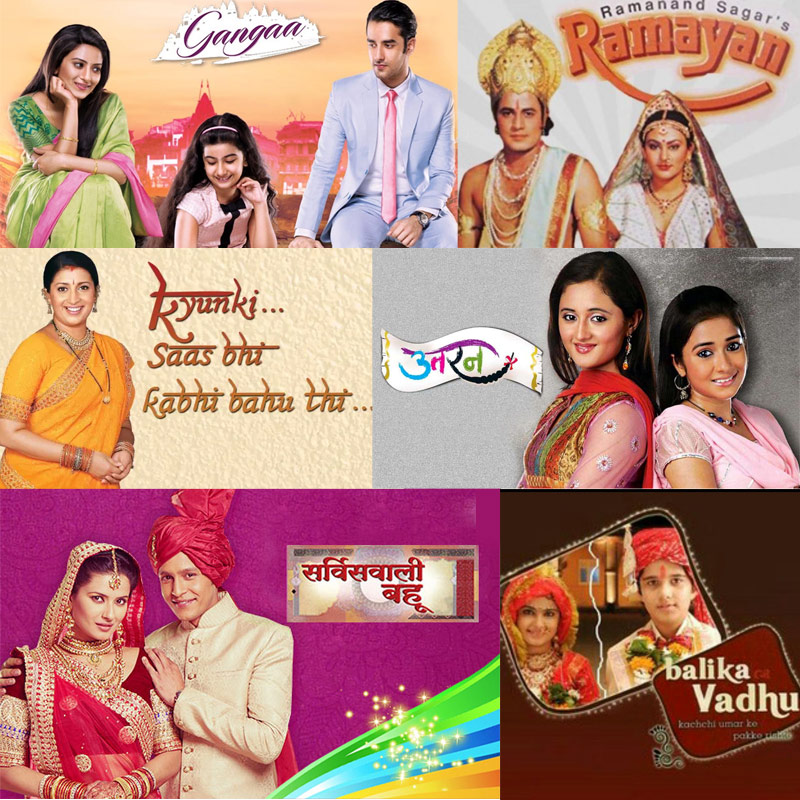
    Since the dawn of the television industry, you all must have seen hundreds of serial dramas. Over the last three decades, serials have been a major part of our daily life. From ‘Ramayana Epic’ to ‘Kyunki Saas Bhi Kabhi Bahu Thi’ to ‘Service Wali Bahu’, everyday family members will sit together in the evening at the dinner table and watch these serials and laugh and cry together. These daily soaps influenced, dominated and established a large part of our society. And there is no doubt in saying that they left their essence to the core of our hearts and minds.

    However, the emerging socialization in the past decade has greatly changed the mindsets of the people of our country. For the better, this has also encouraged our serial directors to deviate from the usual saas-bahu dramas to more social stories, which is both hit among masses and useful to educate new-age India and break stereotypes.

    With the introduction of modern technology, smartphones, online casino, and Netflix we are rarely left with dull moment. Meaningful plots of the TV shows have helped in changing the perceptions of the people who still believed in the items of old faiths, stereotypes, and taboos!

    Here’s the list of Indian TV serials that have broken the stereotypes over the past few years:

    GANGAA

    Gangaa was launched on March 2, 2015 and is still an ongoing TV serial that airs on &TV. This TV series took up the serious issue of child widow custom in India. The plot revolves around Gangaa (played by Ruhana Khanna), a child widow. She has an indomitable will to survive and live her life to the fullest, against all old-age beliefs and norms that society is trying to impose on her. This shows the main aim is to abolish the child widow culture that is still rampant in many parts of the country.

    UTTARAN

    Uttaran debut in December 2008 and we all saw the finale episode of this amazing Indian soap opera in January 2015. This show is about two childhood friends, Ichcha and Tapasya that come from the different strata of society. This TV series showcases how despite the vast difference in their status, these two little girls become the best of friends. However, cut to 10 years we see some jealousy creeping into their relationship due to the entry of some negative characters. However, the initial theme of the show seems to break all the stereotypes regarding friendship and teach us how friendship is about connection and not about social status.

    BALIKA VADHU

    With 2,245 episodes in a span of approximately 8 years, Balika Vadhu swayed the nation from its very beginning. This show's main premise revolves around the still ongoing child marriage in our country. The child groom and bride were played by Avinash Mukherjee and Avika Gor respectively. The story revolves around the two getting married as children, growing up together, and facing difficulties related to child marriage because of their family’s involvement in the process. Through their strong storyline, this shows keeps on throwing across some critical social messages to the audiences. In 2008, the series won the ‘Best Programme With A Social Message’ award at the 8th Indian Telly Awards.

    Service Wali Bahu

    This Indian soap opera was launched in February 2015. The story of this women-centric show revolves around Payal (played by Kratika Sengar), who is a civil engineer, a homemaker and a sole bread-earner of her family. In order to support her in-laws and unemployed husband, she goes out to work. Not only the protagonist is earning bread but is taking care of household and homemaking tasks. This serial shows full support to feminism which also talks about other Indian customs such as the dowry system. Payal’s life has inspired many women in our country and it won’t be wrong to say that it has broken many stereotypes and old norms regarding women.
    These TV serials have changed the way people think and have shattered many stereotypes. And the new open way of thinking will take our country forward.

  • ZEE’s 37 LIVE TV Channels now available for Jio’s Subscribers

    ZEE’s 37 LIVE TV Channels now available for Jio’s Subscribers

    Mumbai: ZEE Entertainment Enterprises Ltd. (“ZEE”), a global media and entertainment powerhouse and Reliance Jio Infocomm Ltd. (“Jio”), India’s leading digital  services  provider,  today  announced  that  an  agreement  has  been  achieved  to release ZEE’s entire content library on Jio’s platforms, with immediate effect, enhancing the growth of the overall digital ecosystem.

    This decision enhances the experience of 227+ Mn subscribers of Jio, giving them an access to ZEE’s rich and engaging content, which comprises of 37 LIVE TV channels.

    In order to further integrate this strategic content alliance, ZEE5 App, the home of extensive digital content library of ZEE, which includes the Video on Demand (VOD) network content along with the recently launched ZEE5 Originals, Movies, TV Shows, Music Videos, Lifestyle shows, Kids shows and Plays, will also be available for download.

    The alliance aims to leverage ZEE’s rich and hugely popular content portfolio and nationwide reach of Reliance Jio to serve customers with exciting and innovative content solutions.

    Speaking on this decision, Mr. Amit Goenka, CEO, ZEE International & Z5 Global said, “We are extremely glad and excited about this positive development. As content creators our primary objective is to create rich and engaging content for our viewers across the nation and the globe. The expansive reach of Jio enables us to entertain a larger base of consumers with an appetite to consume content-on-the-go. Our content which spans across
    12 Indian languages, empowers Reliance Jio’s value offering to its subscribers and we’re
    extremely glad to take this association forward.”

    Akash Ambani, Director, Jio, said, “We are delighted that our esteemed customers will now  have  access  to  the  engaging  and  diverse  content  from  Zee  Group.  At  Jio  we  are

    committed to providing our consumers the best of content from India and the world in our
    quest to accelerate digital inclusion in the country.”

    ZEE Entertainment and Reliance Jio will jointly market the unique content offering by leveraging its independent consumer facing touchpoints.

  • Survey finds word of mouth best way to discover content online

    Survey finds word of mouth best way to discover content online

    MUMBAI: All the world’s advanced technology has not been able to change this simple formula. With more video content to choose today than ever before, picking the best is a challenge. A survey from Parrot Analytics has found that word of mouth still reigns the lot when it comes to new show recommendations.

    The easiest way to find new content today is through YouTube, Netflix and Amazon etc. But it seems that the audience is not satisfied with these automated algorithms predicting their tastes. All the 10 surveyed markets have one thing in common – the habit of consulting friends and family for recommendations.

    Parrot Analytics conducted the survey in the US, the UK, Canada, Australia, France, Spain, Germany, Brazil, Mexico and Japan to get an insight of the ways by which people discover new content to watch. Total 10,000 respondents participated in the survey.

    Among other ways for discovering offline content, TV guide or TV listings also play a major role in many countries. Besides this, television commercials or other sorts of advertisements help people to find new show across all the 10 markets. For online content, browsing articles or blogs help many people.

    People from the US, the largest market of television industry, widely rely on word of mouth for discovering both online and offline content. Other big markets like UK, Canada, Australia also reflect the same habit. The community is a big player to make a show popular since in many markets social media and peer-to-peer network are key sources of finding new content other than word of mouth.

    Germany is one with its peculiarity for the old. Germans mainly prefer television listings and guides for offline content and find online content via browsing articles, news. In other markets, Mexico and Japan highly depend on television commercials and a third of the people in Brazil take clues from TV listings or guides for offline shows and 32 per cent of people go for online platform recommendations.

    The availability of content and demand for it is rising proportionally worldwide. Audiences want new ways of finding relevant content. Content discovering demands more organised algorithms and search engine optimisation to make audiences happy with recommendations and moreover to make the content hunting easier for everyone.

    Also Read :

    Branded content drives Viu

    Discovery Jeet signs content deal with Netflix

  • ‘It is criminal for TV not to think of social change’ – PMC’s Kriss Barker

    ‘It is criminal for TV not to think of social change’ – PMC’s Kriss Barker

    For most programming executives and management in TV companies today, television is all about running on a treadmill chasing ratings, viewership, and the concomitant revenues, followed by the next bonus and promotion. Every trick in the creative book and outside it is resorted to, to keep the ratings of a show on a high.

    Hence, it comes as a breath of fresh air when one comes across a senior media professional who does not care much about ratings or twisted elongated plots, rather focuses on helping the creation of TV and radio content with meaning, which has an impact on society and sparks off social change. US-born Population Media Centre vice-president international Kriss Barker has been behind creative initiatives on TV and radio in 56 countries over her 20-year career.

    She is in India at the invitation of a Hong Kong-based financing and production house and Indiantelevision.com’s founder Anil Wanvari to train Indian TV writers to produce entertainment education, which is based on the PMC Methodology. The latter itself is based on the Sabido scriptwriting methodology, which has been used to write television shows in about 80 languages and more than a 100 countries. The workshop is underway in Mumbai currently and ends on 3 December. Indiantelevision.com ‘s Kirti Chauhan got into a conversation with Barker – who is a PhD in public health  and has made Cape Town South Africa as her home , but travels 300 days each year, preaching the gospel of television with purpose – on the importance of TV as a medium to spark social change and how it can be done in India. Excerpts:

    What are the factors behind your shift from being a health practitioner to a media practitioner and scriptwriter trainer?

    My background is in public health and I have spent a lot of time working on public health inventions. And you find that you are spending so much time treating illness and diseases which are preventable. Public health has avoided doing it for years. We are treating conditions at the very end of the situation, rather than at the beginning. We do not focus so much on prevention, rather we have our eyes on treatment.

    When I found this powerful communication tool, which we call the Sabido or PMC methodology, it really helps to motivate change that can lead to prevention using media.

    Miguel Sabido – a TV researcher from Televisa in Mexico in the sixties and seventies – created this methodology, which focuses not on the story – but the social issue or problem. The story comes last. First, I first need to get ‘what’ is the real problem, and ‘why’ does that problem exist. And then look at ‘positive’ and ‘negative’ values that people in society hold around that. We need to honour these values and we need to integrate those people holding those into the TV show’s script and let those voices be heard.  Sabido or PMC methodology believes there are three characters every story or TV show has: positive, negative, and transitional. The transitional character is the one who has the journey – it is the one, the audience has to identify with. That is the doubting character, who does not know what to do. The positive and negative role models are almost like archetypes – they are too bad and too good to relate to me, but the one in the middle is exactly like me. He or she is the one I relate to.

    In Toilet Ek Prem Katha, the father is the negative character, the daughter is the positive one, and Akshay Kumar is the transitional. You love him.  All three are needed to help tell a story that in turn helps influence and bring about the desired social change.

    There are socially relevant shows being made on TV? What’s so special about a Sabido methodology show?

    A lot of people think they are doing social shows but this is not done effectively. I think it because only some (not all of them) of a whole gamut of theories and golden rules have been captured and used in these shows. You feel you have mastered the techniques but the fact is that you have not mastered the refinements. And you know that a lot of these programmes fail because of this. People have made music videos, short films around responsible parenting etc. Over the years, what we have learnt is that it needs to be a long running TV series, it needs to be a serial drama. You can’t do this in film or documentary, music video or a short number of episodes. You can’t cut short this; everybody is looking at a shortcut. But like in life, you get what you put in and hence, they have failed.

    When we go into a country we do a lot of formative research which helps creative people, the writers, to understand the realities of the situation of the social issues. But we have to be very careful all along the way. For example, we design a show about women inequality, women’s empowerment, the question is how far do you go before women say: no, no, that’s not me! So you have to take it a little bit aspirational, but you can’t take it too far or it is no longer believable.  And it is no longer even desirable.

    How important is it for TV channels and OTT platforms in the modern world to engage in social change shows? Why should they do it?

    It is criminal not to. Media is such an important powerful tool, and it has been misused a lot. We just play with it. And then we get things like the Columbine shooting or people going and shooting a cinema because they saw it in a movie or in a TV show.

    If you want to make a powerful product even more popular, make it more relatable. That’s the big disconnect. That is why the biggies are losing to Netflix and Hulu in the US because the former decide what they want people to see and they forgot that people really want to see themselves.

    What are the challenges you have faced?

    Funding is the big challenge. For example, a radio programme running at least twice a week over a year needs at least 104 episodes. In television, it is at least for a season. However, to get an investor or donor to commit to that is challenging. A radio show of that duration in Africa takes around $1.5-2 million. This is a lot of money for even a donor or investor, or a bucket of investors. They would rather do billboards or a comic book is what we hear sometimes.  The biggest challenge is to convince the investors that if they really want mass change on a big scale, this approach is cost effective as you can reach out to millions of people.

    How receptive have television stations and research been to using television as a tool for changing society?

    They are getting more so now because they have started realising that by not doing this, they would lose the market. For example, we are currently negotiating with Televisa Mexican, they are struggling (especially younger market) to find a way to get back into the market because of Netflix. We come in, and we say that the way to get back that market is to make a show about them.

    We had a hit show in LA, East Los High and the reason behind its popularity was that it was the only show ever produced in LA by Latinos and for Latinos. The whole production and acting cast and crew were Latinos. That’s the first this had ever happened. It seems nuts to me because this was in East LA where the majority of the population is Latino. People will watch shows of a lower production quality as long as they see themselves in the characters and the story. Like in Nollywood where the production quality is not great, but some of them connect so well.

    You have had a legacy relationship with India? Can you elaborate?

    Our predecessor organisation worked here many years ago and helped produce Hum Log, Humrahi on Doordarshan. Since about 2003, we have been wanting to get into India and just haven’t managed to get any inroads. Right now, we have been engaged by south-east Asian investment organisation One Talk Media and then they partnered with Indiantelevision.com. We are training some of the writers in our methodology and we hope to carry something to fruition with the two partners. India is a sophisticated market like Mexico and the US, and this is a model we will follow here. 

     Tell us about your reason to enter India.

    We have been trying to get into India for a long time – it’s a huge-huge market. The reason behind PMC is to try and create a sustainable population for the world. Whether you like it or not, India has a huge demographic impact on world sustainability. So, to be here and looking at societal behaviour change and looking at family planning and population dynamics, looking at women’s empowerment, children’s health – these are exactly the kind of things we need to be doing in a huge powerhouse like India.

    Have you ever cast big stars or are you planning to cast in your social issues related shows?

    We tend not to. And one of the reasons is cost. Our shows are trying to be a slice of life. We want you to believe that these are real people and if you get a big star or a known person, whether for the radio voice over or for a TV show, our viewers are not going to believe that the character is real no matter how good the actor is. So, we tend to take younger, less known voices and faces because we can make him who you want him to be.

    How effective has the Sabido method been in attaining its objective of social change?

    50 of the 55 shows that have been made using the Sabido or PMC methodology have achieved the desired social change objective. So the method works. The four or five that did not work was because we deviated from the methodology or put them in the wrong time slot.

    We lowered the fertility rate in Ethiopia by over a child and a half in a period of two and a half year period.  So it works.

    What is the relevance of societal change in a world of so much audio-video content? What role can it really play?

    A couple of things. Identification is big, these shows are built around that. So it’s entertainment that has a purpose and I feel most of us, I believe, like to be entertained. We want to go in that space where we can just relax, not want to think, but at the same time most of us like learning something. There is no preaching. These are ‘educational’ shows, social change content shows but we are not doing a good job if anybody recognises it to be that. For instance, a viewer in Africa should not tell me that the show is about female genital mutilation. Rather she should tell me it is about Fatima (a character) who had a rough time in her life. Just the educational content should be a part of the entertaining story. If you can build a story about someone who is like ‘me,’ then you have me in. 
  • Cricket, movies, TV shows and Amazon, according to Netflix’s Reed Hastings

    MUMBAI: Hotstar, Amazon, and Sony Pictures Networks India can heave a sigh of relief. Netflix CEO Reed Hastings has stated that the global streaming powerhouse is going to continue to focus on entertainment; cricket is not on the table at all. What this means that it will be refraining from participating in the IPL cricket rights tender which will be coming up for bidding soon.

    Speaking with CNBC on Squawk Alley on 31 May from the Code Conference in California, Hastings was pretty emphatic that both, sports and news, are a no-go area for Netflix. He said: “You know, no plans on news and sports. Those are tough businesses and we’ve got a lot of room to grow in movies and TV shows. Expanding into standup comedy. Unscripted. So, we are going to really focus on that on a global basis.”

    He went on to add that Netflix could do movies about sports as the company was focused on video content that has repeat viewing. Said he: “It’s things that you don’t only want to consume once. Whereas the Warriors and the Cavaliers (two NBA teams) are going up again and people will be intense on that and then it won’t – you know, afterwards, there is no after viewing. Whereas our shows, there really is.”

    Hastings agreed that India was definitely a complicated market for a US company “But, for an Indian company, they feel fine about it,” he said. “We still have a lot to learn. Now, we’ve done awfully well in Latin America and in Europe and, of course, in North America. So, we’ve learned some things. But, we have a lot of room to grow in Asia and a lot to figure out still.”

    He is not disturbed by the explosion of OTT players rushing to grab a few cents from the consumer’s wallet. “Around the world, there’s all kinds of new options coming up that give people opportunity. It is like saying there are too many mobile phone apps. You know, there’s 100,000 but you probably only pay attention to 30. But, different people have a different set of them. So, i think it is great,” he said.

    Hastings disclosed that Netflix is more about being consumed on the mobile phone in Asia – as compared to the US where consumers are spending more time on it on traditional widescreen TVs. “About two-thirds of the viewing is on large screen televisions, either from your Xbox or Playstation or directly with the smart TV. When you get used to watching on a mobile phone, you watch all kinds of content and sports on a phone. You adapt to that,” he explained.

    “We are just doing great content and it is available on any screen. You paid $1,000 for a new television, you are going to use it. You look for the shows and the images. With that and with HDR, which has a color intensity. It makes the TV just pop. 4k transforms the in-home experience. That’s one of the big drivers and with mobile on the low end.”

    Hastings said that cord-cutting is not really being driven by the rise of streaming services like Netflix, Hulu and Amazon Prime. “Very few people have cut the cord. We are about 50 million in the US, and we have seen maybe two million or three million of 50 (million) cut the cord,” he elucidated.

    “Don’t think of it as a big overlap that we are driving cord cutting that is probably mostly from pricing. In general, if you look at cord cutting, it is like two to three per cent per year, like broadcast ratings over the last 30 years. It will take a very long, slow, secular decline no big calamity and then they will adjust the economics.”

    According to him, the rapid expansion of Amazon is what is alarming. He said: “Well, they are so scary. I mean, everything Amazon does is just so amazing. I mean, how are they doing so many different business areas so well? It’s like they are trying to repeal the basic laws of business of limited capability. So, we are continuing to watch them and be impressed with them. And they are helping to grow the industry because they are investing in the content.”

    However, he was clear that Netflix is not going to go head to head with the giant. He explained: “If we try to out-amazon Amazon, then that’s a losing battle. So, what we have to do is be the specialty play. We are trying to be Starbucks and they are trying to be Walmart. So, we have to have brand-intense love and focus. And, what they do is incredible at their breadth. So no, we wouldn’t focus on those things. We would focus on how do we be, really, the embodiment of entertainment, and joy, and movies and TV shows.”

    He maintained that Netflix’s content budgets are only going to grow. Its content purse for 2017 has around $6 billion in it, but that is not going to be enough going forward.

    “As we grow the membership base, we want to grow the content budget. There are so many great shows on Netflix but there are so many great shows we don’t yet have. We are going to continue as we grow the membership base to try to get more shows and more movies. (All this has) Been great for talent and writers for everyone. There is so much competition now between all the new players plus the existing players, like HBO, are beginning to grow. It is this new age of television. Nobody is sure where it is going, except for the quality of movies and TV shows is continuing to decline.”

  • Amazon Prime starts streaming original Indian, foreign exclusive content

    Amazon Prime starts streaming original Indian, foreign exclusive content

    MUMBAI: Amazon India today launched its Prime Video in India. Amazon prime users will get access to Bollywood blockbusters, Hollywood movies and TV shows, and kids’ programming and Amazon original series. Available on Google Play Store as of now, it is expected to be available Apple App Store soon.

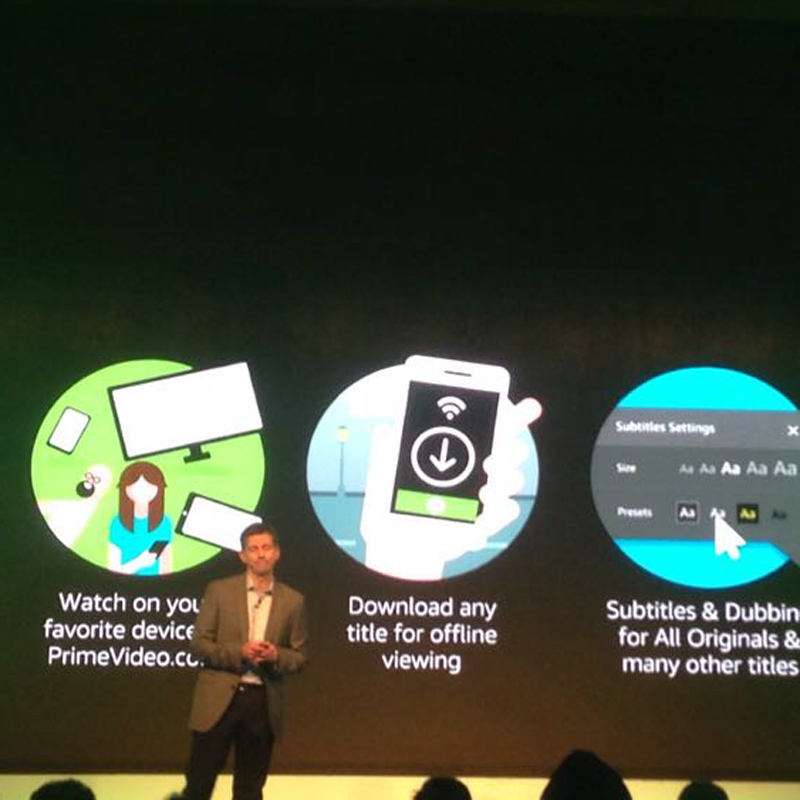
    Amazon Prime is ready to let us watch various entertainment programmes on PrimeVideo.com. Now, one can download any title for offline viewing. Sub-titles and dubbing would be there for all originals and many other titles. Amazon is also working with AIB, Phantom, Excel Media, Farhan Akhtar, Ritesh Sidhwani, Big Synergy, OML for exclusive content.

    Amazon Prime video’s overall subscription structure would be:

    Unlimited ad-free streaming

    Latest exclusive movies and TV shows

    No additional cost to the annual subcription of Rs 499 per Prime membership

    30-day free trial available

    Kids will enjoy their favorite shows from India, and the world, on demand and ad-free. Amamazon India earlier announced tie-ups with content partners such as Asahi Corporation for shows like Shinchan, Doraemon, and Ninja Hattori. Award-winning Amazon Original series will be available exclusively to Prime customers such as Jeremy Clarkson’s The Grand Tour along with Indian original shows.

    Many US TV shows will be available on Prime within a day of telecast, and the selection includes some of 2016’s most awarded shows. Original production like Breathe, The Ministry, Powerplay, Mirzapur, Stardust, The Family Man are being brought for the Indian audience.

  • Amazon Prime starts streaming original Indian, foreign exclusive content

    Amazon Prime starts streaming original Indian, foreign exclusive content

    MUMBAI: Amazon India today launched its Prime Video in India. Amazon prime users will get access to Bollywood blockbusters, Hollywood movies and TV shows, and kids’ programming and Amazon original series. Available on Google Play Store as of now, it is expected to be available Apple App Store soon.

    Amazon Prime is ready to let us watch various entertainment programmes on PrimeVideo.com. Now, one can download any title for offline viewing. Sub-titles and dubbing would be there for all originals and many other titles. Amazon is also working with AIB, Phantom, Excel Media, Farhan Akhtar, Ritesh Sidhwani, Big Synergy, OML for exclusive content.

    Amazon Prime video’s overall subscription structure would be:

    Unlimited ad-free streaming

    Latest exclusive movies and TV shows

    No additional cost to the annual subcription of Rs 499 per Prime membership

    30-day free trial available

    Kids will enjoy their favorite shows from India, and the world, on demand and ad-free. Amamazon India earlier announced tie-ups with content partners such as Asahi Corporation for shows like Shinchan, Doraemon, and Ninja Hattori. Award-winning Amazon Original series will be available exclusively to Prime customers such as Jeremy Clarkson’s The Grand Tour along with Indian original shows.

    Many US TV shows will be available on Prime within a day of telecast, and the selection includes some of 2016’s most awarded shows. Original production like Breathe, The Ministry, Powerplay, Mirzapur, Stardust, The Family Man are being brought for the Indian audience.