Tag: TV services

  • AT&T DirecTV’s satellite woes

    AT&T DirecTV’s satellite woes

    MUMBAI: What happens when a DTH satellite turns rogue?

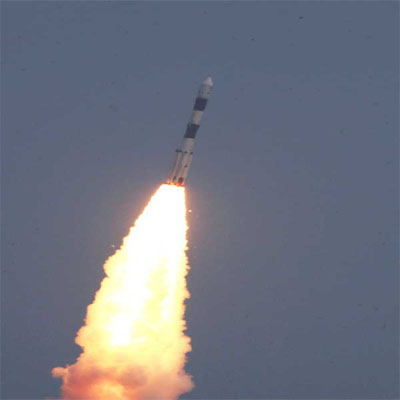
    Well, it has to be sent to the graveyard or junk orbit, which is 300 km above the geostationary orbit (35,786 km above the earth). That’s exactly what the AT&T-owned direct to home service provider DirecTV is dealing with. One of its satellites Spaceway-1 – located at 138.4 degrees west and built by Boeing –  has developed a malfunction in its batteries, which has put it in danger of exploding.

    The Boeing 702HP model spacecraft was functional from 2005 and had been providing high-definition TV services to US subscribers of DirecTV. It was later demoted to the status of a backup satellite. (Normally communications satellite have a life span of 14-16 years.)

    AT&T has now written to the Federal Communications Commission (FCC) seeking permission to allow it along with Boeing and Intelsat to deorbit and decommission the satellite between now and 25 February when the satellite would go into earth’s shadow or eclipse.

    It has told the FCC  that “Spaceway-1 suffered a major anomaly in December that resulted in significant thermal damage to its batteries.”

    The harm to the batteries is  grievous enough  to not support the pressure that would come on them were they to be switched on during the eclipse phase (the period when it enters the earth’s shadow and does not receive sunlight to charge its solar panels; currently the satellite is in the sunlight phase). However, AT&T confesses it cannot avoid switching on the batteries when it enters the eclipse phase as the satellite will not have enough power to be totally deorbited and decommissioned then. And if they are turned on there is a possibility of an explosion, which could possibly damage other satellites in the vicinity.

    AT&T has also informed the FCC that just raising the satellite to the graveyard orbit will take 21 days leaving it with just 7 days to vent out 73 kg of its propellant fuel which is nigh impossible. (For a satellite to be decommissioned it needs to discharge its fuel and normally, it takes two to three months for the task when the spacecraft reaches the end of its life.) Within the time period available to Spaceway-1 only a nominal portion of the fuel will have been removed. Hence, it has sought the FCC’s permission to waive off the complete propellant fuel venting requirement. “Authorising DirectTV’s emergency de-orbit operations will facilitate disposal of Spaceway-1 as safely as possible,” AT&T has pleaded.

    Obviously, AT&T and DirecTV are racing against a deadline. And the clock is ticking away. Hopefully, the Spaceway-1 will find its way to its final resting place in time.

  • TRAI says no blackout of TV channels on 29 December

    TRAI says no blackout of TV channels on 29 December

    MUMBAI: Speculations have been rife about a complete blackout of TV channels on December 29 following the Supreme Court orders of implementing a new tariff regime, as the system allegedly is not ready for such a big move. Squashing all such rumours, regulator TRAI has asserted that it has advised all the broadcasters, DPOs, and LCOs to ensure there is no disruption of TV services.

    It says in the release, “The authority is seized of the matter and hereby advises that all broadcasters/DPOs/LCOs will ensure that any channel that a consumer is watching today is not discontinued on 29.12.2018. Hence, there will be no disruption of TV services due to implementation of the new regulatory framework.”

    The release further reads, “Keeping in view the interest of the subscribers and to enable a smooth transition, the authority is preparing a detailed migration plan for all the existing subscribers. The migration plan will provide ample opportunity to each and every subscriber for making informed choice. This will also enable service providers in carrying out the various activities as stipulated in the new regulatory framework in a time-bound manner.”

    As per TRAI, the new tariff order will give consumers the power to choose and will also lower the prices for TV channels. This new framework allows them to select and pick channels that they like to watch and pay accordingly. It also requires the TV broadcasters to disclose maximum retail price (MRP) of their respective channels and also of the channel bouquets. As per the Supreme Court verdict of 30 October 2018, the service providers were advised to complete the preparation for migration to the new framework by 28 December 2018.

    Earlier, as well, TRAI had asked the broadcasters to work closely with all the service providers to ensure a hassle-free transformation, in the interest of the consumers.

  • Airtel Digital TV Q3 operating profit up amid strong subscriber growth

    Airtel Digital TV Q3 operating profit up amid strong subscriber growth

    MUMBAI: Airtel Digital TV, Bharti Airtel‘s direct-to-home (DTH) arm, continued to post operating profit for the second straight quarter amid healthy net subscription additions and a rise in ARPUs while churn rate has improved.

    The operating profit was at Rs 147 million in the fiscal third-quarter ended 31 December, up from Rs 33 million in the trailing three-month period.

    Airtel Digital TV added net 439,000 subscribers compared to a weak earlier quarter in which it grew just 55,000 new customers.

    “Digitisation and the festive season helped us grow our subscriber base in the third quarter. We expect this quarter (beginning January) to be good. Some of the gains from digitisation (38 cities by 31 March as mandated by government), though, will be captured in April,” Airtel Digital TV chief executive officer Shashi Arora told Indiantelevision.com.

    Airtel Digital TV‘s subscriber base grew 6 per cent to total 7.9 million.

    The company narrowed its fiscal third quarter loss before tax and interest to Rs 1.83 billion from Rs 2.23 billion in the earlier quarter. Revenue grew 29 per cent to Rs 4.28 billion from Rs 3.94 billion.

    A striking feature this quarter has been how Airtel Digital TV has lifted its average revenue per user (ARPU) while at the same time improving its churn rate. ARPU increased 5 per cent to Rs 186 from Rs 177 in the previous quarter. The monthly churn decreased to 1.3 per cent in the third quarter from 1.9 per cent.

    The improvement in ARPU has been achieved through product innovations, pricing corrections and upselling.

    “Our HD (high definition) contribution is relatively higher than the other DTH companies. This has led to a rise in ARPUs for us,” said Arora.

    Dish TV, India‘s largest DTH operator by subscribers, marginally increased its ARPU to Rs 160 from Rs 159 in the trailing quarter.

    During the quarter ended 31 December, Airtel Digital TV incurred a capital expenditure of Rs 1.35 billion in digital TV services.

  • NDS, CyberLink to deliver TV entertainment to PCs

    NDS, CyberLink to deliver TV entertainment to PCs

    MUMBAI: NDS, the leading provider of technology solutions for digital pay-TV, and CyberLink, a world leader in digital home software solutions, have partnered to integrate NDS VideoGuard PC technology with CyberLink’s PowerCinema home entertainment solution for PCs.

    PowerCinema supports full TV services including live broadcast channels, digital video recording (DVR) functions, Electronic Program Guides (EPGs), secure content downloads, on-demand services, and Video-on Demand (VOD). By integrating the NDS VideoGuard® technology, PowerCinema enables operators to expand their services to PC owners, and extend their market reach.

    The VideoGuard PC solution uses hardware-based security and a USB VideoGuard Key™ to provide a secure way of extending content usage rights beyond the set-top box. The VideoGuard PC solution ensures that you can extend your existing services such as broadcast TV and VOD to PCs. It also maintains secure storage for the ultimate solution of content protection convergence.

    “Our partnership with such a ubiquitous PC technology as CyberLink PowerCinema presents a win-win situation for our pay-TV operator customers, PC vendors, and consumers”, said Joseph Deutsch, Vice President of Product Marketing, NDS. “Because VideoGuard combines CA and DRM to protect TV services as well as the licensing and content rights, operators can rely on secure content transfer between DVRs, PCs, and Portable Media Players (PMPs). Users can therefore enjoy their high-definition content on their PCs along with the flexibility to move it to PMP devices or CDs without compromising the content owner’s rights.”

    Alice H. Chang, CEO of CyberLink added: “CyberLink PowerCinema offers a complete TV solution for enjoying high-definition digital TV from satellite, cable and IPTV service providers. By working with NDS to integrate VideoGuard PC, we now support the world’s leading conditional access technology for premium pay-TV content. This collaboration delivers an extremely valuable solution for PC companies and pay-TV operators who can now expand TV’s reach onto a new PC platform within the digital home.”

    “We are delighted to integrate VideoGuard PC into PowerCinema” continued Chang. “We have decided to partner with NDS, a company that has the industry’s best track record for conditional access and digital rights management. This ensures that pay-TV operators will see our “Cyberlink inside” PCs as a natural extension to their network and provide subscribers the freedom to enjoy the best services and content beyond the living room”.

    This solution for the PC market follows NDS’s earlier integration of VideoGuard Mobile and Electronic Service Guide (ESG) with CyberLink’s Mobile DTV player, enabling any pay-TV operator to provide a true end-to-end secure multi-platform, multi-network service.