Tag: TV serial

  • As Rasoda meme trends on social media, brands jump in to leverage the heat

    As Rasoda meme trends on social media, brands jump in to leverage the heat

    NEW DELHI- For the past few days, Rupal Patel Datta aka Kokilaben from a TV serial Saath Nibhana Saathiya has been trending on social media. The show might have ended in 2017 but scenes from the show have kept the humour alive. It also features other actresses Rucha Hasabnis aka Rashi and Giaa Manek aka Gopi Bahu.

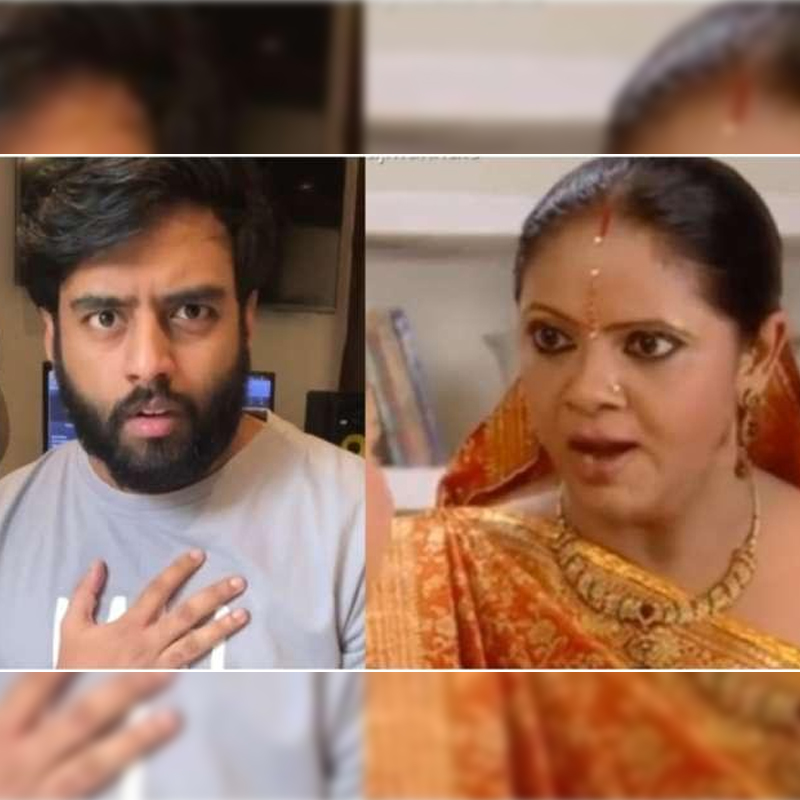
    It started when a Youtuber Yashraj Mukhate posted a hilarious music video which included the dialogues of Rashi Ben Cooker and Rashode Me Kaun Tha! In the scene, Kokilaben is seen scolding her daughters-in-law Gopi bahu and Rashi for putting an empty cooker on the gas.

    “My sister-in-law sent me a message about it. Later my co-actor, Rhea Sharma sent me the rap. My immediate reaction was surprise and shock. I was perplexed about how Yashraj got this clip since I never sang on the show. Later, I realised that it’s a rap and he has used my dialogues for it. I liked it so much that I asked a few friends for his number. I spoke to him and expressed my gratitude,” Rupal said.

    “Only prominent characters or personalities become the subject of memes or caricatures, and I am proud that Kokilaben is one of them,” she added.

    The video instantly became viral and started dominating twitter trends in India. It received more than six million views.

    Participating in a meme trend helps a brand add a dimension of fun to its social media presence and strategy.

    The whole scenario triggered a meme fest online which led brands to join the bandwagon. Even Mamata Banerjee and Jaipur Police also tweeted about it.

    Zomato is known for its quirky posts which grabbed the attention as usual and posted on social media platforms saying; It’s better to order food online, instead of putting empty cooker on stove. Mc Donald’s also tweeted a post which mentioned, McDonald’s k kitchen Mein Fries Hai.

    Even brands like Dunzo, Twitter, Netflix, Hotsar, Parle-G, Manforce India picked up the trend and posted hilarious creative posts on the same.

    View this post on Instagram

    Damn right it's better than yours

    A post shared by Tinder India (@tinder_india) on

    View this post on Instagram

    Kokilaben found out what #Rashi was up to

    A post shared by Manforce Condoms (@manforceindia) on

  • Producers in Maharashtra gearing up to resume shooting

    Producers in Maharashtra gearing up to resume shooting

    MUMBAI: Producers are gearing up to resume production after Maharashtra government on Sunday gave the official sanction in this regard.

    The government gave green signal for the resumption of film and television shootings in non-containment zones.

    Indian Film & TV Producers Council chairman (TV division) and Hats Off Productions founder J D Majethia told Indiantelevision.com that producers have started the process to resume shooting of films and television/OTT serials.  

    He said, “Every producer will have to fill up an application form. If someone wants to shoot outside Mumbai, he/she will need to take permission from the district collector. Currently, we are in the process of filling up an application form with all the details that will be uploaded in the course of next two to three days.”

    After filing the application form, the concerned authority will scrutinise the details based on numerous factors like studio space, SOPs, etc. After evaluating the application and depending on the situation, they might be granted permission within seven days, he explained.

    Regarding the exact shooting date, Majethia said it will be finalised after discussing with other producers in two to three days.

    He added that every broadcaster, film producer and OTT platform will have to apply for permission separately. Shooting outside Maharashtra, however, is not allowed. The cultural affairs ministry said that producers will have to conduct pre-production and post-production works by adhering to the rules and regulation laid down by the government.

    Producers will have to apply to the managing director of the Maharashtra Film City in Goregaon, Mumbai, and to district collectors outside Mumbai for resuming shootings.

    Majethia clearly stated that they are filling up the application form after taking into consideration the well-being of everyone involved. He concluded: “Our topmost priority is to safeguard the lives of our people; we are thinking of all possible measures to resume the shoot without risking anybody’s life.” 

  • IMPPA sets shooting guidelines in Maharashtra

    IMPPA sets shooting guidelines in Maharashtra

    MUMBAI: The Indian Motion Picture Producers’ Association (IMPPA) has written a letter to Maharashtra chief minister Uddhav Thackeray about resuming shoots of films, TV serials and web originals with proper SOP in place.

    This document suggests steps to be adopted to avoid contagion during shoots. It notes down detailed precautionary measures that will be followed by the cast and crew after the permission is granted.

    The report talks about carrying out a daily drill session with the  staff members so that it should be implemented in a proper manner. Crew, artists, technicians and participants will have to report 45 minutes before the shoot. Complete studio will be sanitised daily before the shoot.

    Floor markings need  to be in place so that people maintain social distance. Going forward priority will be given to portable chairs over standard benches.

    The report suggests no physical greetings, handshakes, hugs and kisses and amongst other measures.Wearing triple layer masks and gloves is mandatory. Infact, an alternative to face masks is also provided. “A protective half mask with inhalation and exhalation filter will ensure lower costs, as the number of filming days will gradually increase. It would be specifically worn  by actors and crew members having a negative Covid2019 test.”

    Lightman or anyone handling other equipment has to be provided industrial hand gloves with proper training about their usage. Construction department and other designated individuals must wear protective gloves. Crew members leaving the filming location (e.g. production, drivers or runners, etc.) must be equipped with protective gloves to prevent contamination of the filming area.

    A main element  of the report is the hair and make-up protocol. Artists will remain in their rooms until required on set. Hair and make-up personnel will be wearing masks and gloves, which will be mandatory to wear during the entire shoot.

    The guideline recommends single-use or disposable items; cleaning of hair wigs/ extensions before and after use; use of own make-up; and, most importantly, using a face shield, rather than a mask, once make-up has been applied.

    The guild has also advised production units to avoid crew above the age of 60 years at least for three months from the date of shooting as and when it starts and cast above the age of 60 years should be judicially used.

    As far as costumes used on the sets are concerned, the guild suggested that “every talent will use clothes allocated to him/her and they can never exchange clothes without having them properly disinfected beforehand.” In case of stuntmen, specialists and precision drivers they are to use their own clothes.

    More importantly, every daily wage worker has to be paid their wages daily.

  • Malgudi Days producer TN Narasimhan passes away

    Malgudi Days producer TN Narasimhan passes away

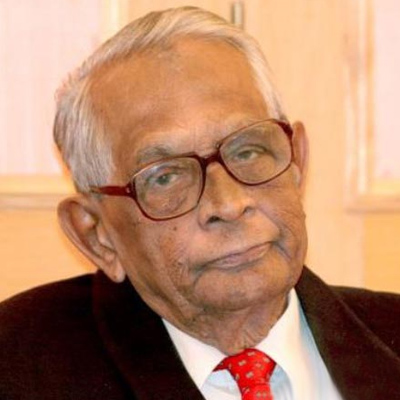
    MUMBAI: TN Narasimhan, producer of popular serial Malgudi Days, passed away on 26 July. The 86-year- old breathed his last breaths at his Tata Silk House residence in Bangalore.


    Narasimhan played an important role in creating international presence for Indian teleserials, children’s movies and films. In 1985, he produced Malgudi Days based on RK Narayan’s book. 39 episodes of the TV serial were telecast on the national channel Doordarshan and became very popular. Later, the series was aired on Sony Entertainment as well.


    The producer had undergone a surgery eight years ago and since then was unwell. His last rites were performed in Bangalore and were attended by family and friends.

  • A fistful of digital ‘fury’

    A fistful of digital ‘fury’

    NEW DELHI: When digital technology meets martial arts, it can produce some really scary moments.

    Hear Mickey Stern and John Brenkus, executive producers for Fight Science, part of NatGeo’s upcoming series on the arts, Fists of Fury. They saw a samurai sword slice completely through a ballistics-gel torso.

    They tell indiantelevision.com in an exclusive interaction: “Watching the sword slice through the ballistics-gel torso, and knowing what it could do to a human body was the most scary moment for us. Examining the data of killer moves that had never been made on a human being, and realising what was possible… there is a frightening level of performance that some of these guys can go to.”

    But ‘examining the data of killer moves?’ What would that mean in terms of making a series on martial arts? Well, if Nasa technology can be used for making a TV serial, anything could be possible, they say.

    This is a series on martial arts in which NatGeo offers its viewers a riveting journey into the extraordinary world of martial arts.

    “A one-stop shop for all martial arts fans”, an announcement from the channel says that “Fists of Fury gives viewers an insight into what is martial art myth and what is not, an insight into what it takes to be a martial arts champion, a countdown of the best killing weapons, revealing the reality behind the deadly martial arts using scientific breakthroughs and gripping footage.”

    The series will be telecast from 12 February at 10 pm. Talking about the Nasa technology used to make the series, Stern and Brenkus told indiantelevision.com: “A company called Tekscan created in-shoe pressure sensors for Nasa space suits – sheets of plastic embedded with thousands of receptors.

    “These provided constant real-time feedback to the computer – a perfect topographical map over the surface of the foot, where we watched the centre of gravity and the base of support, and the exact amount of pressure being exerted over any part of the surface area.

    “Glen Levy, demonstrating a ninja technique of climbing plum poles (ever-ascending poles that become more pliant as they get higher), turned in a jaw-dropping reading. He told us that when he is doing balance techniques, he visualises his centre of gravity all the way down to his ankles, and that he uses all 10 toes as antennae.

    “On the read-outs, you can see his toes working like the fingers of a piano player. He was incredibly precise and incredibly quick and minute in his adjustments. He really did move like a cat. The scientists from Tekscan were looking at it and saying, “This is not a normal human reading.”

    It was a technologically back-breaking series to make. In all, 32 motion picture cameras were used. So how did it all add up to go into the creation of the series?

    The producers explained: “Ultimately, we took the data captured by the martial artists – wearing tight suits studded with reflectors, and duplicating moves they had already made for the live-action cameras earlier in the day – and imposed it on a 3-D model in three layers: one for bones, one for muscles and one for nerves.

    “The angles of motion, the velocity and acceleration of particular motion, the length of an arc through the air… all are things that are measured from the data points that are driving animation.

    “A third layer that we applied, which is very seldom done, is body scanning. So when you take perfect data, real high-end CGI, and scans of the person’s actual body, you’ve got as accurate a model of that person’s movement as you could possibly create using current technology.”

    The producers also said that they used crash dummy tests. But why? They say they wanted a government-certified system which could be held up as one not something that is experimental science.

    “We wanted to know with 100 per cent certainty what force these fighters were capable of generating. The experts in the crash testing industry know more about real-life impacts on the human body than anyone else in the world.

    “This isn’t “theoretical science” – this is about real trauma to real bodies, and we wanted to capture that. We insisted on a government-certified dummy so that there was nothing experimental about our findings.”

    In more than one ways thus is a unique series, brining together hitherto unconnected people and technologis. As they put it: “It’s the first time we’ve brought together the crash test industry, the sports biomechanics industry and the Hollywood animation industry in one place. We pooled their best technology and applied it to a single subject – martial arts performance. These are people from industries who have never looked at the martial arts field before. It was entirely new for them.”

    But is this a comprehensive and all-encapsulating series on the diverse arena of martial arts? Stern says: “There are actually scores or even hundreds of martial arts – we tried to have diversity in geographical and cultural origins. We chose the biggest categories, the archetypal styles – particularly ones that involved grappling, punching, kicking… some hard linear styles and some curving nonlinear styles. We also said let’s make sure we represent the “granddaddies,” so to speak – you’ve got to have kung fu, you’ve got to have tae kwan do, you’ve got to have jiu jitsu.”