Tag: TV news channels

  • TDSAT to accept news broadcasters’ appeal on ad cap

    TDSAT to accept news broadcasters’ appeal on ad cap

    MUMBAI: Is there some relief in store for India’s TV broadcast sector in terms of advertising allowed to be telecast per hour? A slight glimmer of hope appears to have emerged yesterday.


    Media reports are that the Telecom Disputes Settlement Apellate Tribunal (TDSAT) has given directions to the News Broadcasters Association (NBA) to submit its appeal against the 12 minute per hour Telecom Regulatory Authority of India’s (TRAI’s) mandate. It also gave TRAI two weeks to file its responses to news broadcasters’ concerns. And the NBA has been given a further two weeks to file a rejoinder after that, say media reports. A new chairman Justice Aftab Alam was appointed to the TRAI last month.


    TRAI’s order has forced news channels to reduce their advertising commercial time per clock hour down to 20 minutes and general entertainment channels to 16 minutes per hour from 1 July 2013. This is slated to go down further to 12 minutes per hour from 1 October during the peak season of spending by most brands on TV.


    News channels have for the past decade or so operated by having an advertising inventory of between 25 and 30 minutes per hour of telecast, is what the TRAI had observed. This dragged down the quality of viewing experience of TV viewers and it had hence under the quality of service rules for consumers mandated that the advertising air time be brought down almost immediately mid-last year.

        
    Broadcasters had yelped and protested and even challenged TRAI’s locus standi on this decision last year with the TDSAT. But with no chairperson in place, the appeal had been kept in abeyance. The TRAI then came up with the quality of service regulations for advertising on TV on 22 March which have since then been enforced on the industry.


    ”It is true that broadcasters were going overboard in carrying too much advertising per hour,” says a media observer. ”But the business model of high carriage fees, low distribution revenues and relatively low ad rates has forced this upon news broadcasters. At least, general entertainment channels can charge higher rates. The government could have waited till digitisation was completed and the benefits of higher subscription-lower-carriage fees kicked in.”


    In fact most news broadcasters have pleaded that their survival is at stake. Estimates are that news channels in India account for an approximate six per cent genre viewership share.


    Advertising revenues for the almost 150 plus news channels operating in India in various language tot up to about Rs 2,200 crore. Broadcasters have claimed that the reduction in air time will not concomitantly be compensated by a hike in ad rates as advertisers and their agencies have only been eroding those over the past few years. They have also said that a large group of small advertisers who have been the main revenue source for TV news channels will not be in a position to absorb sharp hikes in ad rates. 10 second TV commercial rates for news channels vary between Rs 200 to Rs 2,500.

  • Sixth NT Awards celebrate the best in news business

    Sixth NT Awards celebrate the best in news business

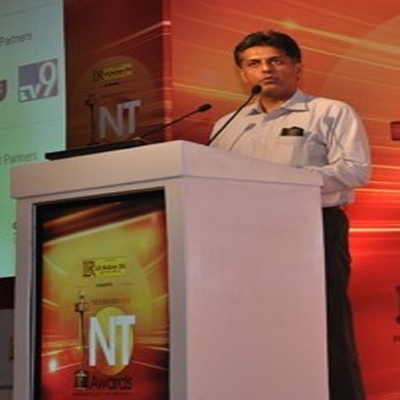
    New Delhi: The news television industry came out in droves to celebrate success on 25 March evening at New Delhi’s Taj Palace Hotel. Representative of TV news channels reporting in Marathi, Hindi, English and Telugu all came together under one roof, forgetting rivalries, news breaks and to hold themselves under the spotlight at the Indiantelevision.com’s Sixth News Television Awards.


    Presented by LR Active Oil, with the support of many other industry partners, the NT Awards had a packed house as 116 awards in various categories were given away by dignitaries from politics, sport, society and culture.


    The chief guest for the evening was Information and Broadcasting Minister of State (independent charge) Manish Tewari. “While the government is all for taking self regulation forward, there is need to decide where freedom of press ends and reasonable restrictions begin,” he said.


    He also congratulated the winners and the organisers for celebrating the vibrancy and robustness of the television industry and presented a host of awards to winners.


    “We received more than 1000 entries from the various news channels and had lots of help from those in public life and from journalists in Delhi, Mumbai and Hyderabad to short list the winners. Ernst and Young helped us in tabulating the peer judging process,” says Anil Wanvari, CEO and Founder of Indiantelevision.com, “The awards are growing in strength and I thank the industry for all the support it has been giving our initiative.”

        
    The event was anchored by Cyrus Broacha and dashing Kavita Kaushik whose quips had news professionals in splits throughout the evening.


    Awards were given for the best in categories like crime shows, sports shows, technology, documentaries with limited episode, TV news presenter, TV news anchor, investigative feature, investigative news report, entertainment news show et al.


    Special awards were given to Contribution to News Television, Innovation and Leadership in App Development, Most Extensive Social Media TV News Brand, Best News Channel Website, and for News Cinematographer.


    Aroon Purie, founder-publisher and Editor-in-Chief of India Today and the Chief Executive of the India Today Group stated that contrary to the general view, self regulation has made great strides in Indian television. He added that the News Broadcasters’ Association is taking a pro-active stance to raise standards of content. “The verdicts are being accepted by the channels and apologies made whenever required,” he pointed out.


    Rajdeep Sardesai, Editor-in-Chief of IBN18 Network, praised the strides by regional channels and expressed the hope that Hindi news channels would mend their “moral compass” by taking up serious issues.


    The awards function came at the end of a news summit on “Getting out of the Squeeze – Learning to live in a digitising India” which saw I&B secretary Uday Kumar Varma, I&B joint secretary Supriya Sahu and representatives of leading news channels, MSOs, technology providers and others in the television news industry taking part in different sessions.

  • Anna obsession boosts TV news channels

    Anna obsession boosts TV news channels

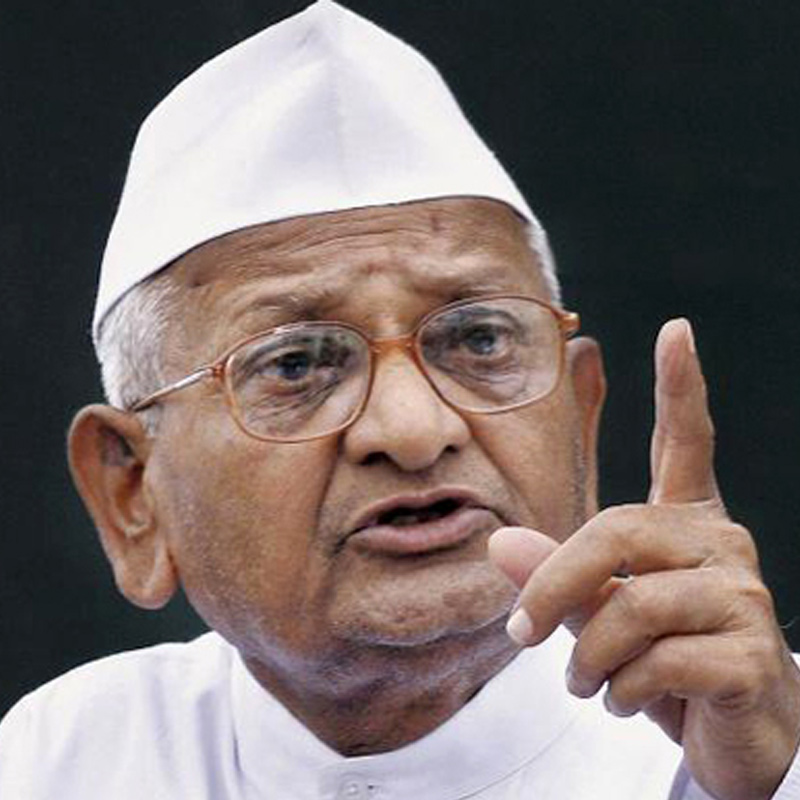
    MUMBAI: Anna Hazare’s indefinite hunger strike has not only created a stir among the political class and the common man but has also gripped the news industry. The obsession is so complete that the news television channels have forgotten about the existence of other news.

    Anna’s movement against corruption hogged the limelight, occupying 88.5 per cent of primetime content on news channels for the period between 16-24 August, according to data from Centre For Media Studies’ TV news monitoring division CMS Media Lab.

    The data consists of total per day news average of four channels – NDTV 24X7, CNN-IBN, Star News and Aaj Tak.

    Among these channels, Star News gave maximum footage to Anna’s fast –97.1 per cent or 1,310 minutes in the week; its focus on other news was just 2.9 per cent.

    On Aaj Tak, news coverage on Anna was as high as 92.2 per cent, while 7.8 per cent was other news. NDTV 24X7 and CNN-IBN gave 85 and 81 per cent of their primetime to Anna’s cause.

    Interestingly, on 24 August all the four channels aired news related to Anna only and no other news was covered, CMS Media Lab’s data revealed.

    The whole news genre, which is under tremendous revenue stress, has seen a dramatic rise in viewership, thanks to Anna. As per TAM data for the week ended 20 August, the genre share of Hindi news channels has seen an 87 per cent jump in the viewership, while the English news genre saw a boost of 74 per cent.

    In the Hindi speaking market (HSM), the share of Hindi news genre grew to 11.02 per cent compared to 5.9 per cent in the preceding week.

    The genre share of English news channels stood at 0.54 per cent, as against 0.31 per cent in the trailing week.

    TAM data also suggests that not just more people viewed the news channels but they watched it longer. The average daily time spent on Hindi news channels increased to 16.9 minutes from 8.5 minutes in the HSM. The time spent on English news channels rose to 0.72 minute (from 0.30 minute earlier) at a pan India level.

  • Editors of TV news channels form body to take up content issues

    Editors of TV news channels form body to take up content issues

    NEW DELHI: Editors of satellite television news channels today formed a Broadcasters Editors Association (BEA) to “strengthen the values of objective and fair broadcast journalism” and to “protect and promote the freedom of expression.”

    BEA president Shazi Zaman of Star News told indiantelevision.com that the Association was a “forum to deliberate on content issues.” Asked if the BEA would take up the Content Code issue, he said the Association would discuss any threats to freedom of creating content.

    So would the BEA also become a negotiating body with the Government in the manner of the News Broadcasters Association (NBA)? “That would depend on a given situation and on whether the Information and Broadcasting Ministry wished to consult them as a stakeholder,” Zaman explained.

    The editors of television channels feel there is a need to evolve healthy norms, promote training of professional journalists at all levels, ensure dissemination of credible and constructive news content and to protect the right to freedom of expression, whenever threatened.

    There are two Vice-Presidents – Arnab Goswami of Times Now and Pankaj Pachauri of NDTV. ETV’s NK Singh is General Secretary and Sudhir Chaudhary of Live India is the Treasurer.

    Members of Executive Committee are: Ashutosh (IBN-7), Vinay Tewari (CNN IBN), Satish K Singh (Zee), Ajit Anjum (News 24), Vinod Kapri (India TV), Sanjay Bragta (Sahara TV) and Pranjal Sharma (UTVi).

    The BEA will soon develop its own website for direct media-public interaction. It will hold seminars and other modes of two-way interaction to receive feedback from civil society organisations and decision-makers in public domain.
     

  • ‘The Hindi GEC market can only grow between 10-15 per cent’ : Anita Nayyar- Havas Media CEO

    ‘The Hindi GEC market can only grow between 10-15 per cent’ : Anita Nayyar- Havas Media CEO

    The Indian advertising and television industry has started to feel the heat of the global economic slowdown. With advertisers trimming their ad budgets and postponing launches of products and services, the entire sector is beginning to feel the pinch.


    In an interview with Indiantelevision.com’s Anushree Bhattacharyya, Havas Media CEO Anita Nayyar speaks about how the Indian television and advertising industry is trying to cope with this financial crisis.


    Excerpts:

    How much has the global financial crisis affected the Indian advertising industry?
    The Indian advertising industry, pegged at Rs 160 billion, has been clearly affected by the global economic meltdown. The television segment, which accounts for Rs 72 billion, was growing at 18-20 per cent. Given the current situation, growth will slow down.


    Lots of big launches of products or services have been postponed. Advertisers are waiting till the first quarter of next year to see how the market is going to evolve. It is too early at this stage, thus, to quantify the pace at which the ad industry will grow.

    Looking at the current economic crisis, how deeply hurt will be the TV sector? Are the Hindi general entertainment channels (GECs) headed for further trouble due to the on-going dispute between the TV producers and workers?
    Out of the Rs 72 billion television ad industry, almost 50 per cent (Rs 36 billion) comes from the Hindi GECs. Looking at the current strike and the global financial crisis, the Hindi GEC market can only grow between 10–12 per cent. The strike between producers and Federation of Western India Cine Employees (FWICE) is, however, a temporary phase and would not continue for long. So the GEC market would pick up pace once again, after the strike in Mumbai gets over.


    FMCG is the category that advertises mostly on GECs. And presently it is one of the least impacted category. Hence advertising will gain momentum once the strike gets over.

    Will the TV news channels feel the pinch?
    It is true that the five to six categories that include banking, insurance, automobile, aviation and real estate are the worst hit by the global financial crisis. And so news channels would be affected. The news television market could see a 5-7 per cent growth. Interestingly, I think now is the time for the banking sector to advertise to regain the confidence of its clients. But it seems like banks are restraining from further advertising spends in a major way.

    What about the growth of sports and movie channels?
    Sports and movie channels are based on events and film titles. Channels like these will not get affected to a large extent and will grow between 5-10 per cent, each time they show events or big titles. Thus for sports channels, the more the sports events they have, the more they will get a chance to grow. In sports, cricket will keep bringing the advertisers in. However since the TV rights acquisition cost for live cricket is very high, it will be difficult for broadcasters to break even.

    Do you feel you have been able to bring Havas out of Euro RSG’s basket?
    I don’t think that we have ever tried to project that Havas Media works under the limelight of Euro RSCG; in fact we are trying to bring Havas Media out of the shadow of Euro RSCG. Today we have Havas Media as the umbrella brand which has various other brands like Euro RSCG, Havas Sports, Havas Entertainment, MPG, Media Contacts etc. Thus wherever there is an opportunity, we try to bring the Havas brand in front.


    Havas Media has clients like Reckitt Benckiser, which is our biggest client. It also has Voltas, Bank of Baroda, Air France, ibibo.com and Hindustan Motors as its clients.

    News channels will feel the heat as banking, insurance, automobile, aviation and real estate are the worst hit by the global financial crisis

    Interestingly, when you moved out of Starcom you were blamed for taking away both people and accounts?
    I don’t know how to answer these allegations. There were people who had shifted from Starcom even before I had joined Havas Media. Nevertheless for people who joined Havas after me, all I can say is that they were all intelligent people and no one has brainwashed them. So they were aware of their decision.


    As for the businesses that I got from Starcom, those moved based on pitches. But this also proves another point – that I share a very good relationship with the clients.

    Havas Group introduced Havas Sports in India. How has sports marketing picked up in India, especially after IPL?
    Sports marketing always existed in India. However thanks to the Indian Premiere League (IPL), it gained recognition. Sports marketing companies like Total Sports Asia and Globosports have been investing in sports like Golf tournament, Tennis matches, marathon etc. After the success of IPL, companies have openly accepted sports as an event to endorse their products or services. Cricket, however, continues to hog the limelight.


    We at Havas Sports have clients like Good Earth products, A1GP, etc. Havas Sports is also involved in celebrity endorsement.

    How are your clients reacting to this financial crunch?
    Fortunately for Havas Media, clients have not yet decreased their advertising budget or postponed launch of their products. So far, we have not seen our clients reducing their budgets.

    How is Havas Media tackling the situation, because sooner or later your clients will also reduce their ad budgets?
    We are looking at various cost efficient alternatives like internet, multiplex, radio and below the line activities.

  • Delhi HC fallout: NBA chastises motivated stings

    Delhi HC fallout: NBA chastises motivated stings

    NEW DELHI: For the first time since its inception, the News Broadcasters Association (NBA) have officially criticised motivated sting operations on TV news channels, saying that the Delhi High Court’s suggestion that an I&B ministry committee clear all stings before going on air is a matter of grave concern.

    In a press note, NBA president G Krishnan said, “We condemn motivated reporting that attempts to fabricate news to gain popularity at the cost of journalistic integrity.”

    Krishnan also added that such acts risk discrediting television news and indeed the news media as a whole.

    “But this does not mean that sting operations are wrong in principle. The NBA believes that sting operations are a legitimate journalistic tool and means of investigation, but like all powerful tools they have to be used with care and responsibility,” he emphasised.

    It may be recalled that on 30 August, the TV news channel India Live had shown a ‘sting’ that purportedly ‘caught’ Uma Khurana, a school teacher, using her students for flesh trade.

    While the so-called news exposé caused rioting in Delhi’s congested Dariya Ganj area, within two days the operation had been found to be fake, the reporter arrested and a while later, Khurana was cleared by the police.

    Dismissing the case two days ago, the Delhi HC chastised sensational reporting and suggested that the concerned ministry set up a committee to subject all stings to scrutiny and give them clearance, which the journalistic circle has been alarmed about.

    If the ministry were to take up the court’s suggestion at all, there would be clear chances of censorship, the media has felt widely.

    “We have noted with concern the suggestion of the Delhi High Court that the I&B Ministry set up a committee to vet sting operations and issue no-objection certificates on being satisfied that they serve the public interest, before the stories are telecast,” a press statement from NBA said.

    Krishnan said, “We are all aware that events of the recent past have called sting operations to question on grounds of authenticity, but stray incidents do not warrant such interference, which is totally against the tenets of democracy, free speech and the freedom of the press.”

    The NBA feels that the suggestion that a telecast of news receive prior permission of the Government would constitute censorship of news and would, for that reason, constitute “content control” and thereby an unacceptable restraint on the right of free speech.

    “As much as stray incidents of irresponsible reporting cannot constitute a basis for imposing censorship upon the print media, such incidents of abuse of ethics cannot constitute a basis of imposing censorship upon the electronic media,” said the statement.

    The NBA is in the process of formulating a code of self-regulation for news and current affairs channels. Senior advocate and former Solicitor General of India Harish Salve is helping the NBA in finalising the self-regulation guidelines and grievance redressal mechanism.

    Krishnan said, “The Ministry of Information and Broadcasting has been encouraging our endeavour towards self-regulation. We trust the government will view the present suggestion in the same supportive spirit and resist attempts and suggestions to interfere with the press.”

  • Government concerned over content in TV news channels

    NEW DELHI: Information and broadcasting minister Priya Ranjan Dasmunsi today wondered why news channels tended to sensationalise entertainment news, and said he would meet editors of the news channels next month in this connection.

    The minister expressed his concern on two occasions, first while addressing a seminar on gender parity in the media on the occasion of World Press Freedom Day, and then in his reply in the Lok Sabha to the Cable TV Networks (Regulation) Amendment Bill 2007 making it mandatory for all cable operators to show Lok Sabha TV and two terrestrial channels of Doordarshan.

    He said 60 per cent of the time on news channels was taken by entertainment news, and very
    little time was given to serious news. There was also a tendency to sensationalise, and gave the example of the ’28 seconds of Shilpa Shetty kissing’ which was shown by channels throughout the day. Noting that the ‘poor woman’ (Shilpa Shetty) was suffering, the minister said ’28
    seconds of Shilpa Shetty kissing was shown 28 times, 48 times, 88 times, even 100 times. Is it for commercial purposes, TRP purposes? In a country of 1 billion people, I don’t know how this becomes breaking news.”

    Dasmunsi was referring to the kissing incident between Hollywood actor Richard Gere and filmstar Shilpa Shetty at a function here to raise AIDS awareness among truckers last month, which had led to a case in Rajasthan and demands for Gere’s arrest for “violating Indian culture”.

    He also said while Indian media barons and employers were enjoying ‘freedom of press’, they did not allow ‘freedom of journalists’. “In India we have freedom of press – yes; but freedom of journalists – not yet. Sometimes journalists work in most pitiable conditions,” commented the minister. He alleged, “75 per cent journalists in India are voucher paid (as against regular salaried employees). Does this reinforce the freedom of press?”

  • CMS Media Lab Analysis China’s Hu remains Who for Indian TV News Channels

    CMS Media Lab Analysis China’s Hu remains Who for Indian TV News Channels

    Contrary to expectations, president Hu Jintao visit last fortnight to India, the first by a Chinese president in a decade, did not evoke much interest in Indian TV News bulletins. It was covered far less than President Bush’s visit earlier this year but got more coverage than Japanese PM Koizumi’s visit last year and French president Chirac’s visit early this year.


    Surprisingly, president Jintao’s visit was covered less than last year’s Chinese PM’s visit, despite Jintao is not only the president of the country but also the chief of the ruling Communist Party of China.


    During president Jintao’s four days stay in India (i.e. 20 to 23 November), news channels continued their preference towards cricket. Six news channels devoted 301 minutes of coverage time on Indian cricket team’s tour to South Africa in comparison to 215 minutes for President Jintao’s visit. Even Brian Lara’s 34th century against Pakistan got 118 minutes of coverage time, during the same period in the news bulletins.


    Similarly, the news of Rahul Mahajan’s alleged beating of his wife, got 214 minutes coverage time. On the day of President Jintao’s visit (i.e. 20 November), Rahul Mahajan’s episode got 10 times more coverage time than the visit, i.e. 175 minutes to Rahul Mahajan and only 18 minutes to Jintao’s visit in four news channels NDTV India, Zee News, Star News and Aaj Tak together.


    The six news channels covered are DD News, NDTV India, Zee News, Sahara Samay, Star News and Aaj Tak. Their prime time (7-11 pm) news bulletins were content analysed. Together these channels are expected to reflect the news media’s priority and the process of national agenda making.


    Except for DD News and Sahara Samay, the other four channels devoted more time on Rahul Mahajan’s episode than for president Jintao’s visit. DD News and Sahara Samay devoted 73 and 83 minutes respectively on the coverage of the visit.


    Whereas, Zee News gave only five minutes coverage to President Jintao’s entire visit. But devoted 57 minutes on Rahul Mahajan’s episode and gave 53 minutes to gossip on Amitabh Bachchan’s possible return to politics.


    President Jintao’s visit got lesser coverage time, than last year’s Chinese PM’s five days visit, which got 315 minutes of coverage time. Despite the controversy over Arunachal Pradesh resurfacing just a week before the visit and increased commerce and political relationship since.


    But president Jintao more coverage than Japanese PM’s three days visit in 2005 and French president’s three days visit in the beginning of 2006. In comparison to president Jintao’s 215 minutes, PM Koizumi and president Chirac got only 79 and 95 minutes coverage respectively, during their visit.


    President Bush’s visit spanning three days got whopping 1392 minutes coverage time in the news bulletins, much higher than the total coverage of visits of all the four head of states to India.C

    lick for graphical representation

    TV news channels had gone overboard and covered President Bush’s arrival and joint press briefing with PM Manmohan Singh live, but President Jintao’s arrival was not covered live. Even his joint press briefing with Indian PM did not get the priority.


    (The views expressed here are those of the author and Indiantelevision.com need not necessarily subscribe to the same.)