Tag: TV news

  • TV news explodes as Operation Sindoor captures India’s attention

    TV news explodes as Operation Sindoor captures India’s attention

    MUMBAI: TV news viewership in India rocketed during the week of 3 to 9 May, driven by the high-octane drama of Operation Sindoor —a military blitz by Indian armed forces against terror hubs in Pakistan.

    Broadcast Audience Research Council (Barc) India reported a staggering 507 million viewers tuning into news content that week—the highest weekly total since 2022. Over the three critical days (7-9 May), news grabbed 16 per cent of total TV viewing, up from its usual 6 per cent slice.

    Hindi news channels led the charge, clocking 254 gross rating points (GRPs), smashing previous highs seen during the 2024 Lok Sabha election results and major state elections. Viewer engagement spiked, with the average time spent on Hindi news jumping to 60 minutes—a 67 per cent rise over pre-operation weeks.

    The frenzy peaked during ministry of external affairs (MEA) briefings on the operation. The first briefing on Wednesday sent viewership soaring by 509 per cent. Thursday and Friday briefings saw gains of 125 per cent and 242 per cent, respectively.

    Operation Sindoor also brought 65 million fresh eyes to Hindi news—viewers who hadn’t touched the genre in the previous month. Daily tune-ins nearly doubled, leaping from 73 million to 142 million.

    In the Hindi-speaking market (HSM 2+), the news genre’s share of TV content surged from three per cent to 13 per cent, with the 15+ age group soaring from four per cent to 15 per cent—outstripping the 2016 surgical strikes.

    Barc India said the data reaffirms television’s enduring role as the go-to medium for news during major national events, underscoring its unparalleled reach and influence.

  • It’s Network18 ahoy for Palki Sharma as managing editor

    It’s Network18 ahoy for Palki Sharma as managing editor

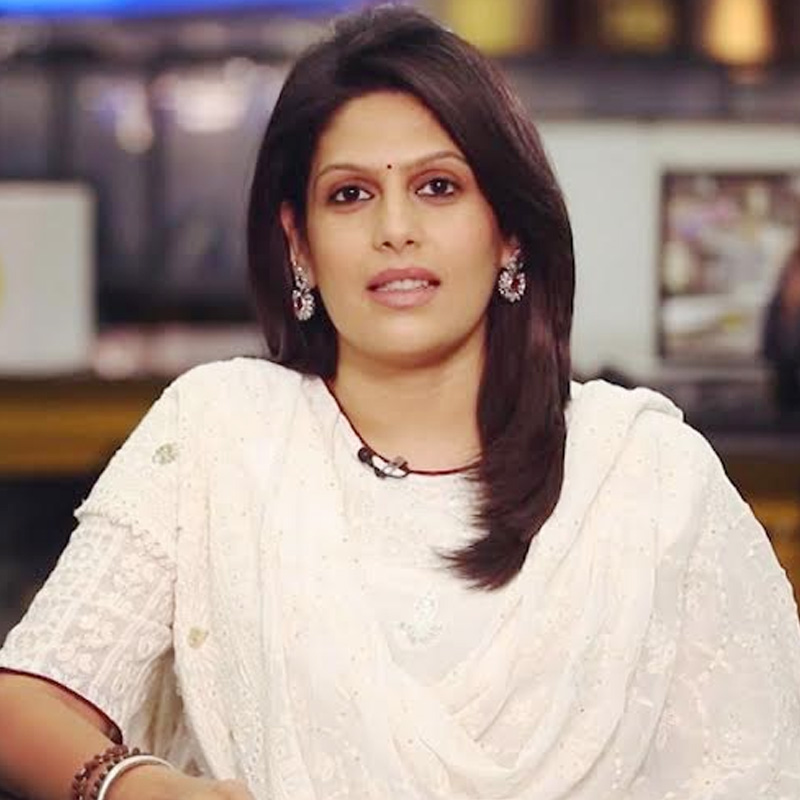
    Mumbai : She built her name as a savvy on-air anchor on the programme Gravitas and as managing editor of Zee Media’s English news channel Wion. Now Palki Sharma has hopped on to Network18 Media as managing editor. She will be heading a new video project which is slated to be multi-platform. This will be her second stint at Network18, where she has previously worked in various capacities.

    “I am excited to join hands with Network18, India’s largest news network, to launch a futuristic project with a global footprint, that will transform the news experience and make India proud,” says Sharma. “It will be a content innovation lab that challenges traditional news formats and experiments with the latest technology and interactive tools to make news stories intelligent, interesting, and accessible for the global audience.”  

    Sharma will build and direct a video project that will cover all aspects of news reporting and presentation. The news product will aim to attract a new generation of viewers for the company.

    Adds Network18 group business news CEO Smriti Mehra: “Palki is a distinctive journalist and editor, thanks to her persona, voice, and audience connect.”  

    She further adds: “The news product she will lead will cater to audiences across platforms. It will help the network expand its footprint, along with imagining new formats of showcasing news content.”

    Sharma has over 21 years of experience in media, having worked for the ITV Network, Network18, Doordarshan News, and The Hindustan Times.

    Gravitas, a popular prime-time English news program, as well as the highly regarded digital program Gravitas Plus on Wion, were both hosted by her. She also created and oversaw the Wion Global Summit, an annual channel event held in Dubai.

    Palki has interviewed several national and international heads of state during her two-decade career. She has also covered major stories and events on the ground, such as the ongoing conflict in Ukraine, the Quad Summits in Tokyo and Washington, DC, and many more.

  • NT Summit & Awards: Experts discuss the importance and relevance of authentic news coverage

    NT Summit & Awards: Experts discuss the importance and relevance of authentic news coverage

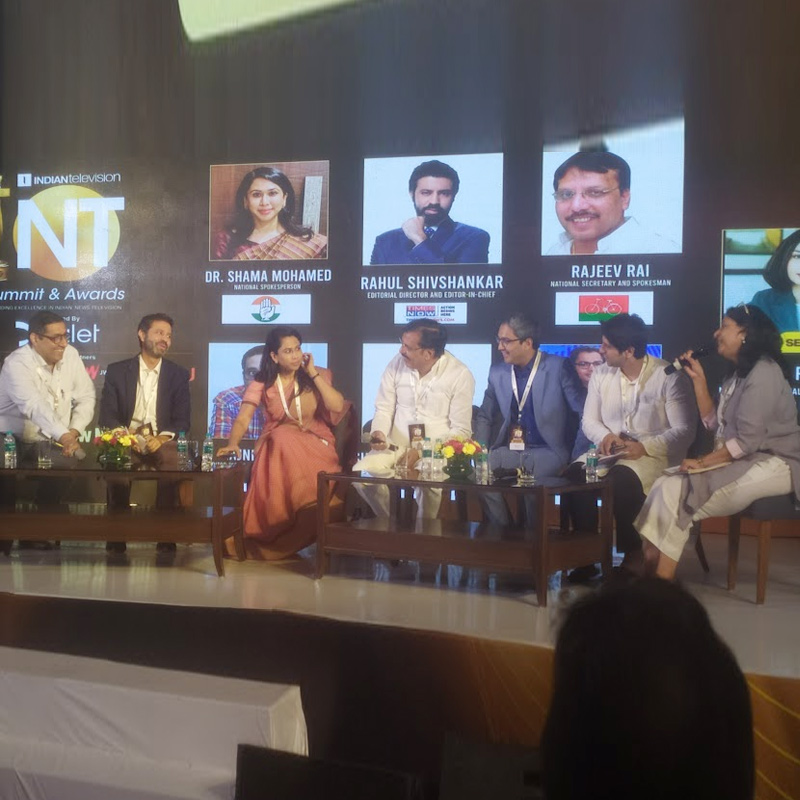
    Mumbai: Is television new coverage balanced or has news journalism become a business? Should news broadcasters present the facts clearly while programming it? Do you think that the coverage of TV news is becoming more communal veering away from national issues such as inflation, rising liquid petroleum gas (LPG) prices and unemployment? Experts & opinion leaders in the news broadcast industry deliberated their views and talked about these tough questions head-on at the recently held News Television (NT) Summit in New Delhi.

    The powerful session was joined by Indian National Congress national spokesperson Dr Shama Mohamed; Times Now editorial director & editor-in-chief Rahul Shivshankar; Zee Media Corporation editor Rajnish Ahuja; Samajwadi Party national secretary & spokesman Rajeev Rai; BJP national spokesperson Shehzad Poonawalla; CNN-News18 managing director Zakka Jacob and moderated by media professional & former editor of Star News Ravina Raj Kohli.

    Mohamed highlighted some data and mentioned that in May, 65 percent of primetime news was dedicated to communal issues and only one percent to LPG price rise. In April, 23 percent of primetime airtime was given to communal issues and seven per cent to the petrol price rise. The coverage of the film ‘The Kashmir Files’ accounted for 20 per cent of primetime news and eight per cent was allotted for fuel hike coverage. In December 2021, 22 percent of primetime coverage was on communal issues.

    She pointed out that there are well-known examples of both historical and modern media’s role in amplifying hate and leading to atrocities such as genocides such as ‘Radio Rwanda’ and the role of ‘Facebook in the massacre of Rohingyas’.

    Mohamed also stated that the role of the media is to ask difficult questions from the established government. “In the US, when a CNN reporter was struck out of a press conference by ex-president Donald Trump, he took the matter to the Supreme Court of the United States. Even right-wing news channels such as Fox News stood by the reporter. The media stood its ground and that’s why Trump is out,” she added further.

    Times Now’s Editor-in-chief Rahul Shivshankar noted that every government is worried about the influence of unregulated media. There are troves of misinformation sent via WhatsApp but by the time someone points it out, the fake news has made the damage.

    BJP’s Shehzad Poonawalla remarked that in the past journalists always had an incestuous relationship with politics and power. “Every media house has to cater to certain compulsions whether it be commercial or political,” he said. “Today, we are in an era of democratisation thanks to prime minister Modi and digital India. Everyone has access to a cheap data connection and fast data. I don’t think the media needs lectures from anybody, especially the opposition or the people in power. They do a fine job.”

    CNN-News18’s managing director Zakka Jacob was of the view that the agenda on TV was not dictated so much by politics and commercial factors as much by what made a great picture. He said, “The best pictures are those that make it to TV. All the news channels were covering the Rajya Sabha elections but due to a picture story, everyone’s agenda had changed in an hour or two. We tend to confuse news with top bands and ticker bands but at the end of the day it is about great pictures.”

    “It is easy to belittle news channels but at the end of the day, it is the easiest medium to switch off from or change the channel. If viewers are not watching opinion shows on TV, then we’ll be the first ones to cut it from the programming. We are answerable to what the viewer wants to know about,” he further added.

    The event was supported by Dalet who was ‘co-powered by’ partner as well as industry support partners GTPL Hathway, Hill+Knowlton Strategies, JW Player and Live U.

  • NBF demands BARC to urgently release news genre ratings

    NBF demands BARC to urgently release news genre ratings

    Mumbai: The News Broadcasters Federation (NBF) has demanded BARC to resume the release of audience measurement data for the news genre which has been unilaterally withheld for almost a year.

    While registering its demand in a letter addressed to BARC CEO Nakul Chopra, the NBF said, “As the only industry body the representing the business interest and editorial freedom of news TV channels, NBF strongly iterate to be included and consulted on all issues surrounding the release of TRP data for news genre.”

    Listing major concerns on the issue, it stated that there was no legitimate reason or rationale for a pause in ratings for one specific genre. “If the process of BARC is faulty and is being reworked, the entertainment and other genres which contribute 88 per cent continue to get the rating data. However, the news genre which constitutes only 12 per cent has been victimised; though the metering boxes and data collection is common for all genres,” the federation said.

    The NBF also alleged that vested corporate interests are overshadowing industry welfare, and this has caused a loss of credibility and revenue to the news genre. In addition, news broadcasters are losing the trust of the viewers and the advertisers are increasingly suspicious about the genuine performance of the channels.

  • NDTV records best-ever Q1 with a profit of Rs 13.9 cr

    NDTV records best-ever Q1 with a profit of Rs 13.9 cr

    Mumbai: The NDTV Group has reported over two-fold increase in consolidated net profit to Rs 16.56 crore for the first quarter ended 30 June, marking its best first quarter result in over a decade.

    Its TV news channel-  NDTV Ltd raked in a profit of Rs 13.9 crores in Q1, along with NDTV Convergence, the digital arm of the Group, which has delivered an increase of 41 percent in revenue over the same time last year.

    According to the regulatory filing, the company had posted a consolidated net profit of Rs 7.55 crore in the corresponding period of last fiscal. Its consolidated revenue from operations during April-June 2021 stood at Rs 85.02 crore as against Rs 72.73 crore in the year-ago period. Total expenses stood at Rs 77.92 crore, compared with Rs 64.64 crore a year ago, the company said. The Group’s total liabilities have been reduced by Rs 23 crores in this quarter; bank borrowings are down by Rs 8.7 crores.

    “NDTV, with the support of each employee, has worked to mitigate any uncertainty caused by the impact of the pandemic on the economy and all businesses. It thanks its team for their superlative reporting and commitment to providing news as an essential service at this difficult time. Given the economic landscape, the Management will control expenses and focus all efforts on ensuring the Company’s financial position strengthens further,” it said in the filing.

    The company also said that its board has appointed Grant Thornton Bharat LLP (formerly Grant Thornton India LLP) as its internal auditors for one year, with effect from 11 August.

  • News18 India to welcome 2021 with an entertaining line-up

    News18 India to welcome 2021 with an entertaining line-up

    NEW DELHI:  With the majority of the country hoping for new and better beginnings, News18 India is all geared up to mark the year-end with its special programming line-up 2021 Shubh Mangal Sawdhaan. As we are bidding adieu to an unprecedented year that taught us to live a new normal, the channel has curated special programming to bring cheer and optimism to its viewers as they enter into the New Year.

    Slated for New Year’s Eve, the programming will comprise of shows such as 2020 ki Sabse Badi Mehfil and Lapete Mein Netaji, accompanied by a sensational performance by the popular Haryanvi singer-dancer, Sapna Chowdhry, and stand-up comedy by KK Naikar.

    Adding a musical touch to the evening, the show 2020 ki Sabse Badi Mehfil will bring together renowned singers on one platform who will perform 2020 v/s 2021 Jawabi Qawwali along with all the heroes of 2020 such as Sonu Sood and Ravi Kishan to name a few. News18 India will also be hosting the grandest edition of Lapete Mein Netaji with seven poets to bring a fresh perspective on the political climate of the country through sharp sarcasm and humour as they face off against the leaders from all the major political parties. The programming will also feature well-known astrologer such as Sanjay Jumani who will share their unique perspectives on the coming year, new beginnings, and hopes.

  • 71% Indians trust their news sources, survey reveals

    71% Indians trust their news sources, survey reveals

    KOLKATA: According to the global survey by The Trust Project and Ipsos titled ‘Trust Misplaced?’, 71 per cent urban Indians and 64 per cent global citizens believe they have easy access to news from sources they trust. At least six in 10 urban Indians (59 per cent) say they read news they can access for free. 67 per cent global citizens hold this view.

    “Media entities are highly evolved in India. There are trusted sources for news; media houses that come with ethos and values and have built reputations over many decades of news dissemination, beating the odds. Further, Indians look at various sources for news and free news is readily accessible across social platforms and digitally. Now news can be accessed at a mere click and it has become easier to stay updated, going beyond the conventional sources,” Ipsos India CEO Amit Adarkar said.   

    Fake news and trust:

    Interestingly, more number of Indians say they can tell real news from fake news – at 60 per cent believe this; but they have less confidence in the ability of people in general to be able to spot real news from fake – only 47 per cent urban Indians believed they could.

    Indians say they pay for news from sources they trust (57 per cent) and are willing to pay for news from the sources they trust (56 per cent).

    The survey also shows that urban Indians are skeptical of news disseminated by influencers, bloggers, leaders, celebrities on social media – they tend to trust news shared by people they personally know – more so from friends and relatives (58 per cent) as opposed to news shared by bloggers, celebrities, leaders (48 per cent) on social media. Global citizens are more circumspect in news consumption – four in 10 (42 per cent) will trust people known personally, while only one in four (24 per cent) will trust news shared by bloggers, celebrities, and leaders.

    Global citizens (46 per cent) and urban Indians (54 per cent) believe their citizens are targeted by other countries with disinformation and fake news.

    “Disinformation and fake news can lead to discord and incite citizens and are in poor taste; sadly, a number of countries face it. Legal action can act as a deterrent,” added Adarkar.

    Where is news read most?

    One thing is clear, Indians are globally one of the largest consumers of news. Conventional media vehicles and new ones are all leveraged for staying updated.

    Daily news is accessed most via TV (78 per cent), social media (77 per cent), news apps (64 per cent), news sites (57 per cent), print – newspapers and magazines (56 per cent), and radio (23 per cent).

    Notably, India has the world’s largest number of those accessing daily news via print.

    And TV for daily news is very popular in Japan (76 per cent), Italy (74 per cent) and Turkey (73 per cent). 

    “News is accessed from multiple sources to stay updated. Some news is accessed on the go, some read for finer nuances and some watched to further get the perspective. It is not about one over the other. Each has its own place in the consumer’s information needs, in times of instant gratification,” said Adarkar.  

    Online adverts – few takers

    One in three global citizens (35 per cent) and two in five (42 per cent) urban Indians say they use software or apps that block online adverts. Global citizens (66 per cent) and urban Indians (69 per cent) say they try and avoid online adverts as far as possible.

  • ‘King’ content will take over monopolistic media entities, says Arnab Goswami

    ‘King’ content will take over monopolistic media entities, says Arnab Goswami

    NEW DELHI: The future of news lies in breaking away from the interdependence of politicians and the media on each other.

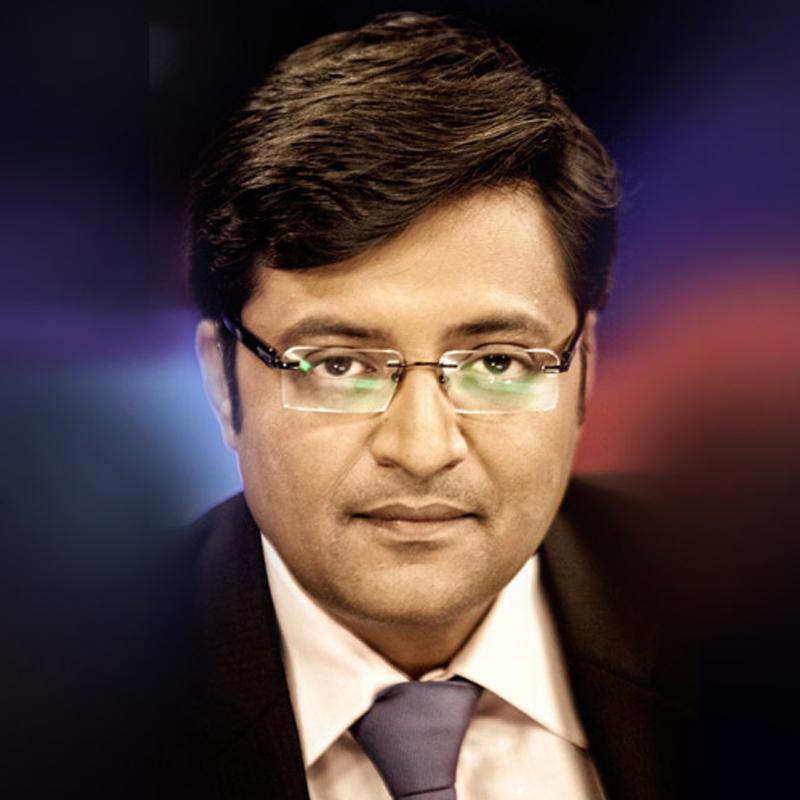
    Not merely that, but the ebullient editor-in-chief of Times Now Arnab Goswami feels the news centres have to move away from the sole centre Delhi. He also feels money is ‘nothing but an enabler’, but content is the king. “So, good content is supreme” and the Indian media will be global (media) in the next three to four years.

    Monopolies will fall and will be taken over by those having good content, he said.

    Addressing a session during the recent CII Big Picture, he also felt that the days of a polite editor were gone, and one had to be hard to challenge everything including religion. Speaking of his own experiences, he said he had taken on powerful persons but put them in their place by bringing the citizen first.

    Terming the conventional “objectivity in journalism” as “greater rubbish”, Goswami said it was wrong to think that journalism has to be devoid of emotions. In fact, he cited many examples of how Times Now had disrupted the news space to redefine how news is practised.

    He urged young journalists to “feel the news to strike the right chord with the audience and express their opinions.”

    “When you believe in something, do not be afraid to make it a campaign. The era of polite anchors is over, and no one listens when you do not shout. TV news is fast becoming a change agent and a true reflection of democracy.” He had touched people’s hearts by taking up their cause and turning them into campaigns.

    He said the cardinal rule was never to express one’s personal views, but the opinion of the people coming from the heart.

    On a personal note, he said one had to take over the reins of the discussion if one had to get a point across.

  • ‘King’ content will take over monopolistic media entities, says Arnab Goswami

    ‘King’ content will take over monopolistic media entities, says Arnab Goswami

    NEW DELHI: The future of news lies in breaking away from the interdependence of politicians and the media on each other.

    Not merely that, but the ebullient editor-in-chief of Times Now Arnab Goswami feels the news centres have to move away from the sole centre Delhi. He also feels money is ‘nothing but an enabler’, but content is the king. “So, good content is supreme” and the Indian media will be global (media) in the next three to four years.

    Monopolies will fall and will be taken over by those having good content, he said.

    Addressing a session during the recent CII Big Picture, he also felt that the days of a polite editor were gone, and one had to be hard to challenge everything including religion. Speaking of his own experiences, he said he had taken on powerful persons but put them in their place by bringing the citizen first.

    Terming the conventional “objectivity in journalism” as “greater rubbish”, Goswami said it was wrong to think that journalism has to be devoid of emotions. In fact, he cited many examples of how Times Now had disrupted the news space to redefine how news is practised.

    He urged young journalists to “feel the news to strike the right chord with the audience and express their opinions.”

    “When you believe in something, do not be afraid to make it a campaign. The era of polite anchors is over, and no one listens when you do not shout. TV news is fast becoming a change agent and a true reflection of democracy.” He had touched people’s hearts by taking up their cause and turning them into campaigns.

    He said the cardinal rule was never to express one’s personal views, but the opinion of the people coming from the heart.

    On a personal note, he said one had to take over the reins of the discussion if one had to get a point across.

  • News Republic’s Shafi Saxena shares India plans

    News Republic’s Shafi Saxena shares India plans

    MUMBAI: In an age where the average time span that a reader spends on an article continues to decline, Indian readers, especially the youth, have emerged as voracious readers, with a knack for in-depth articles heavy on data.

     
    The perspective comes from news consumption surveys done by one of the leading global news syndicators, News Republic that launched in India six months ago.

    “We do regular news consumption surveys on our platform based on global trends. We have found that young Indian readers are very similar to the global readers in terms of topics and trends they follow. The number one reason they follow news is to be connected with the rest of the world,” says News Republic, chief brand officer  Shafi Saxena who recently visited Mumbai.  But when it comes to long form versus short form journalism, Indians, including the young readers who form the bulk of India’s readership, are inclined towards the former.

    “I think India is one of the robust long form markets in the world. Indians like to read and they love data. For instance, in India, right now, the user is reading about a hundred pages on our app every month. In France and Germany which are both well-established markets for us, they are reading two hundred pages a month, with the global average being 150 pages a month approximately. If we look at the fact that we just launched in May in this market, and are still in the process of bringing more partners and content on board, if India is already reading 100 pages on the app, that’s pretty significant,” asserts Saxena.

    In terms of subjects or beats, the Indian news reader is interested in political news, technological news and sports and entertainment. “I have seen huge traction for sites such as cricbuzz, cricinfo, etc.”

    Saxena informs that she is looking at a target group of young educated Indians making more use of the app which is mobile only, and has 40 editions worldwide and content partnerships with over 1,100 leading news organizations. Shafi breaks down News Republics’ syndication partnerships with publications across the board as ‘a simple revenue sharing business,’ while giving due credit to the publication and journalists involved. Available on Android, iPhone, iPad, Apple Watch and Samsung Watch (Gear S2), News Republic syndicated news articles from 1,500 licensed publishers.

    With 50,000 licensed articles made available on the platform daily, curating them for the readers becomes a crucial step. Shafi explains how they go about it while staying impartial to a topic or a publication. “If we find 700 articles written about say Bihar elections, and two of them are being clicked on the most, and readers are spending more time on them, we will prioritise quality and interest and boost those articles. Instead of sending all 700 articles, we will push those two. The algorithm running on the app takes the call based on several variables such as readership, level of interest, how long are people staying on the article as well as how many moods, shares and comments readers have shared on it. It sounds simple but it’s a complex analytical tool that powers our curation,” she ifnorms.

    Infact, the app locates a user with geotagging and pushes local articles relative to their current location if users enable the service. Moreover the service has also curated articles in eight regional Indian languages, from regional news producing partners such as Aaj Tak.

    With Digital India still in the making and most of the country not having uniform internet connection, would an app like News Republic be able cater to tier II and tier II users with same amount of coverage? “We are aware of the limited availability of high speed internet in India and have taken a few steps keeping that in mind,” Saxena clarifies, “For example, in the metros you can opt for the full-fledged robust interface of the app, with videos and photos and all the multimedia. But those in areas of weaker internet connection can access the app in just the HTML format, which is lighter and easily downloadable. You can opt to download rich media when you have Wifi access. Moreover one can access and save articles while in a 3G or 4G zone, and read them again offline as well.”


    Despite such a diverse range and coverage News Republic comes completely free for a user. “Our app is free. We do have a subscription based model, but its contribution is tiny when it comes to our total revenue. The rest is all ad based. We have not turned on ads in India yet. We cannot do advertisement in a market in the first year of our launch. Having said that, we are a revenue generating company in markets we have been in for a while such as Europe and the western market. We use the revenue we generate in such markets and the funding that we have to reinvest  in newer markets like India and Russia,” Shafi explains, while adding that the app just celebrated one year of its presence in Russia.

    The company plans to cash-in on advertisement revenue in India in about a year of being in operation after studying the market. “When you launch in a new market, there are so many variables that are out of your control. Anything from bandwidth to spectrum, to server, to usage, to the kind of phones people are using, affect us. It’s takes about a year to learn the market,” Shafi adds, saying she is highly optimistic about doing business in India, going by the rate at which mobile users are increasing.

    “Indians are spending more time on mobile. They are spending three to five hours per day online, and a bulk of that is on mobile. So an ad revenue generated model of the app will soon launch in this market,” she adds with optimism, while also revealing the kind of advertisers her company sees on-board in a year’s time. “As per our TG, I see automobiles, education and technology related advertisers spending on News Republic. And of course e-commerce players are also major potential advertisers for us.”

    Speaking about News Republic’s future plans for the Indian market she says, “The Indian market is growing very quickly. Strategic conception points can happen overnight in a country as technology savvy and aspirational as India. Mobile and social is the name of the game in the media business here. We have some big plans for the market which we will reveal in about three months’ time.”

    “While we are looking at virtual reality and 3D video and other exciting stuff in the west, we will bring them to India as well, after addressing the country’s bandwidth issues first. For now we will be looking to a multi-lingual, mobile optimised format with respect to the ecosystem. There’s lots in store for sure,” Saxena concludes.