Tag: TV Network

  • Reliance, Star India, IMG brings Indian Super League for football to India

    Reliance, Star India, IMG brings Indian Super League for football to India

    MUMBAI: Reliance Industries, Star India and IMG are set to launch the “Indian Super League”, an unrivalled football championship that will foster local talent and feature international stars with the aim of making the game one of the country’s flagship sport and India – a name to reckon with in the global arena.


    The league promises to revolutionise the sport from the very get-go, leveraging the strengths of all three partners who are focused on growing the game to national prominence, offer Indian football greater global exposure and eventually help India qualify for the 2026 World Cup.


    Reliance, India’s largest business enterprise, Star India, the nation’s biggest TV network and entertainment conglomerate, and IMG, a leader in sports management, have a storied tradition of innovation, competitiveness and institutional commitment that will propel the venture, in which the partners will have proportionate stakes.


    The “Indian Super League” will feature eight city specific teams to start with and will tap the burgeoning interest among the country’s young population that’s increasingly seen taking interest in the sport globally. The League will kick-off in January 2014 and will run through March 2014, with plans for a second window in the same year.


    Annual global revenue for football globally is estimated at USD 28 billion,according to a study by AT Kearney. Star India,which also holds telecast rights to BCCI cricket matches in India,will use its superior content creation,packaging and presentation expertise to whet and retain viewer interest.


    “Football, with its largely untapped potential in the country, has the opportunity to grow to an unrivalled commercial success quite unlike any other sport. We hope the growing football footprint will pave the way for the nation’s sporting renaissance”, said IMG-Reliance chairperson Nita M. Ambani.


    “India is hungry for its second sport. Combined with our expertise in sports production, our attempt is to bring an unparalleled football experience to our viewers”, said Star India CEO Uday Shankar. “For far too long, the Indian sports fan has quietly waited for this revolution on the cusp of which we stand today. Our objective is nothing short of creating a movement around football in India. We want to put India on the global map.”


    “The ‘Indian Super League’ will feature international football stars combined with good football facilities, rivalry between India’s biggest cities and the roar of a billion passionate fans,” said IMG Worldwide chairman and CEO Mike Dolan. “It envisions creating new football powerhouses in this part of the world, which will rise to global prominence as the country and the sport further develop.”


    The League will have world-class international players play with the best from India. Each team will have one marquee player, international players and the best of Indian talent. Given India’s burgeoning interest in football and the country’s long association with the sport, the ‘Indian Super League’ is on the threshold of launching a revolutionary new football culture in the country.


    The ‘Indian Super League’ will also implement various football development projects aimed at holistic development of the sport in the country, including engaging with the masses to get them excited about football, encouraging families to regularly involve their children in football, creating an infrastructure to identify talented footballers at a young age and groom them into elite professionals and creating a critical mass of highly talented coaches to work at all levels of football in India.


  • Twitter Certified Product Flowics launches in India to bring Real-time Social Content Visualization and Engagement

    Twitter Certified Product Flowics launches in India to bring Real-time Social Content Visualization and Engagement

    MUMBAI: Zauber, a US/Latin America based, venture-backed, social analytics’ products company, has entered Indian market with its social curation and engagement platform Flowics – a Twitter Certified Product. Twitter’s Certified Products Program seeks to bring some of the most innovative products and services from Twitter developers to companies that need them the most.


    Flowics filters and displays social media content in real-time on any digital screen and the Web, to increase engagement of brands, TV shows and publishers with their audience.


    Flowics can help brands to build community around their digital presence, and stimulate and grow social conversations about them. For TV networks and shows, Flowics can be used to drive increased social engagement with their audiences, by providing on-air integration and big screen visualizations of real-time social streams,  as well as second screen experiences that can be deployed directly on their digital properties. Publishers can also use Flowics to deploy live data visualizations on any relevant topic, using original content, curated from social media. Flowics’ innovative technology can filter and curate the buzz generated by TV shows, political, sports and entertainment events and any important news stories.


    “We are excited to launch Flowics in India and looking forward to developing our local operations in the TV and media ecosystem.” said Gabriel Ba?os, CEO and Founder of Zauber, the company behind Flowics. “We have proven track record in Latin America and now our emerging collaborations in India will allow publishers, TV networks and brands to better engage with their audience in real-time.”


    Flowics has been already used by major companies in the US, LatAm and Spain like Coca Cola, Al Jazeera, Peugeot, ESPN Brazil, Ora.TV, Caracol.TV and RTVE, among others. Lately, Flowics and Twitter have already worked together in special projects for TV Networks and publishers in Brazil, like R7, Yahoo! and ESPN.


    In the US, Ora. TV with Larry King used Flowics in its coverage of the 2012 Presidential Debates to track and display Twitter buzz for the both the Presidential and Vice Presidential showdowns. During the debates, the TV show used Flowics visualization tools to showcase comments, Tweets and spikes in volume associated with particular comments made by the candidates. Flowics not only visually demonstrates social content, but allows the audience to take part in an interactive social experience.


    Recently, with the support of Twitter, Star India used Flowics, for its coverage of ‘Saath Hai Hum Uttarakhand’ – a fund raising event organized by Star TV on the Independence Day of India. Flowics has powered the visualisation of the Tweets for #AllForUttarakhand in real time.

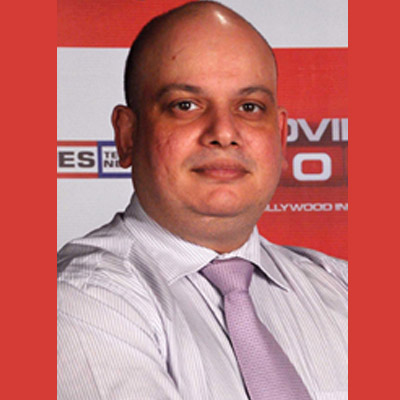
  • ‘We focus on films that have high repeat value’ : Movies Now channel head Ajay Trigunayat

    ‘We focus on films that have high repeat value’ : Movies Now channel head Ajay Trigunayat

    he English movie channel genre is sized at Rs 3.25 billion and is expected to grow at 20-25 per cent due to the entry of new players.

    The competition among the channels has grown the number of advertisers to 340 in 2010, up 21.4 per cent from the year-ago period, which had attracted 280 advertisers.

    Companies advertising more on this genre are the new telecom companies, automobiles, electronics and white goods. FMCG, though, continues to be the largest ad spender.

    Barely three months old, Movies Now from the Times TV Network stable is looking at doubling its advertising rates as it claims leadership among a specific upscale young audience group in the metros.

    In an interview with Indiantelevision.com‘s Ashwin Pinto, Movies Now channel head Ajay Trigunayat talks about the growth of the genre and how important it is to build a library that stresses on repeat value potential.

    Excerpts:

    We are seeing new channels coming into the English space, be it movies, entertainment or lifestyle. What factors are fuelling this boom?

    India is riding on a robust cable and satellite growth. The television household universe has grown from 128 million homes to 145 homes over two years. Within this cable and satellite has grown from 84 million to 110 million.

    There is also healthy digital growth happening. The number of digital homes will touch 30 million by the end of the financial year. Cricket will fuel this growth.

    Channels are looking forward to being able to charge the right price to the consumers, so that they can make the right amount of subscription income.

    What will new entrants do to the English space?

    I believe they will grow the genre. Earlier, you had HBO and Star Movies dominate the English movie genre; nobody challenged their viewership. Our aim is to challenge the status quo of these two players.

    Simultaneously, Star World and AXN dominated the English general entertainment space. Reliance launched a channel, but so far it has not caught the fancy of the viewers. It is important to build the right distribution and the right content.

    What do viewers expect from the English movie genre?

    Their expectations have changed dramatically over the past decade. Earlier, it was important that at 9 pm Terminator 2 would show and you would watch it. Now with a plethora of channels coming in, viewers no longer make appointment viewing. They surf across channels.

    People do not watch a whole movie anymore. They might watch a segment of a movie that they like again and again. There is a dramatic shift to random viewing. This determines how you place content and schedule it. Content selection makes a lot of difference.

    Why did The Times Group launch an HD channel now?

    We decided to look at a key differentiator for Movies Now as our content has played on other channels. We decided to provide the best audio and visual experience.

    As you go along, most channels will be in high definition. The Times Group has a commitment to deliver the best readership or viewership to the upscale audience.

    What challenges do you face?

    Doing an HD channel poses its own challenges. We are a completely tapeless library. We use the best of servers and post production facilities. We use half the space for HD that you would need in standard definition. There are cost benefits that we are trying to exploit.

    But moving from SD to HD is a learning curve for the organisation. If Star Movies and HBO want to do it, they can just transfer their experience in other markets to India. We had to start from scratch. So it took a little longer for us to launch compared to a broadcaster, who is already running HD feeds globally.

    ‘Competition gets Rs 3500-5000 per 10-second spot. We want to reach Rs 3000 per spot by increasing the effective rates by 100 per cent over the next three months‘
     

    What investment has been made and what targets have been set for the year?

    I cannot talk about figures. However as a Group, we believe in being No. 1. Movies Now is ahead of the competition, if you look at C&S 15-34 SEC A,B metros, we have a 34 per cent share in this segment.

    We are not into running new movies. We focus on films that people want to watch over and over again. People watch films like True Lies over and over again. They are not interested in films like The Hurt Locker, The Curious Case of Benjamin Button, though that may be the popular perception. If you can manage and create a library which has high repeat potential, then you will be successful.

    We have also gone for top of the line high definition. This is not pseudo high definition 720p. This is 1080i. We deliver 5.1 surround sound. When we launched, our GRPs jumped to 77 which was an 80 per cent category growth. The category has settled at 68 GRPs. Only in Hyderabad are we behind due to issues of distribution, which we will crack in due course.

    In the last 12 weeks, eight out of the top 10 movies are ours. On the weekends, we are ahead apart from two weeks. Our distribution is at par with competition. We caught up with Star Movies in the last three weeks.

    What time frame has been set to be profitable?

    Most projects set a time frame of three to five years. For us, though, given the start that we have got, we expect to break-even faster.

    But when you have more players content costs go up. Isn’t this a challenge?

    It is. High content costs put pressure on the bottom line. Over the past six years, costs have gone up by around 3.5 times for this genre.

    Earlier, it was a buyer’s market. That started changing when Zee’s deal with MGM ended; they had to buy titles from other distribution companies.

    Revenue can be difficult to push for as there are options for clients. But we have a 34 per cent channel share in our target segment. We want to increase our effective rates by 100 per cent. The key challenge for the next quarter is maximum monetisation, based on our channel’s performance.

    But since you do not have premieres, aren’t content costs much lower than competition?

    Not really! We play the best of the best content. When you pick up a Titanic or a True Lies, you pay for it. But if you just want those titles, you have to pay a significant premium as you are not picking up other stuff from the studio. We deal with studios including Sony, MGM and Warner.

    Long term deals ranging from five to 10 years have been signed. At the same time, the independents have nothing significant. Earlier people were not selling content only for India. They would sell it only at an Asia Pacific level. The first thing we did in 2007 was to convince studios to carve out India as a separate territory. We have proven to them that India has potential.

    The studios are happy with Movies Now. Each month we introduce 30-40 new titles. It is not that we rehash the FPC.

    Could you talk about the library that Movies Now has?

    We have close to 500 films in our library now. We are concentrating on movies like Titanic and Apocalypto that people want to watch over and over. Our strategy is different. Speed was the highest rated movie in the last six months.

    Also in a year, there are only a handful of blockbusters that come in. The viewer wants a good movie, regardless of when it was made.

    So you are not doing what Pix did, which is start with library content and move on to more premieres?

    Pix started with what I call classic, niche movies. We play popular blockbuster movies that appeal to an average English movie viewing person. Pix took nearly two years to realise that they needed to play films like Charlies Angels to get viewership into place.

    We are a very premium, High Definition brand. The perception among viewers is that our audio video clarity and choice of movies is better compared to competition. These two things came across in some dipstick research done.

    But since most homes do not have an HDTV set, aren’t you at a disadvantage?

    If you play an HD file on a laptop, it looks much better compared to a standard definition file. The quality of playout at transmission is five times better even on an average LCD or plasma that is not HD. The picture and audio is better. Six cable operators offer HD like GTPL in Gujarat. The uptake of HD will grow. Even on a regular non HD TV set, HD playout and transmission delivers better picture quality than standard layout and transmission.

    In terms of distribution, did you focus on digital homes?

    We have chosen to get our act right on cable first. This meant a significant investment in carriage fees. Only later did we look at DTH. After all, 88 per cent of viewership still comes from analogue cable. Four per cent comes from digital cable and eight per cent comes from DTH.
    We are available on all DTH platforms, except for Tata Sky. We are at an 18 per cent reach of the TG, which is the same as Star Movies. 19 million viewers watch us in a week.

    How is the programming structured?

    Content is just one piece. We follow a holistic strategy across. People who have seen True Lies many times may want to see it again, compared to The Hurt locker, which many people may not want to see even once. True Lies got a TVR of 0.47. The Hurt Locker on its first airing got a TVR of 0.04. Due to our audio and video quality, people would rather watch a film here than any another channel.
     

    What about programming blocks?

    In terms of programming blocks, we have kept things simple. People like to watch movies on the weekend. There is a distinct dispersion towards weekend viewership versus weekday viewership. Moviethon airs from 11 am-11pm where we play the best of movies back to back. We call it ‘From Sunlight To Midnight’.

    On Saturdays, we have a comedy block in the afternoon, where two movies air back to back.

    There is Love boat at 9 pm on Monday and Grand Nights on Saturdays at 9 pm. We are also actively considering creating an afternoon slot for women.

    Each month we do festivals. We did a complete Rocky festival from January- March. This month, we are doing a festival around Shaolin and Kung Fu movies, which have been digitally mastered in HD and 1080i.

    How do you see HDTV technology spreading?

    There are already five million HD or HD ready TV sets in the country, that are not captured by research. They have come in from outside. If you walk into a shop today, all you see is a display of HD TV sets.

    When people buy a new TV, they go in for HD as the price point has come down dramatically. You can own an HDTV set for Rs. 12,000 – sometimes even for Rs 9000! The adoption of HD is there.

    If you look at the advertising of a Samsung or a Sony over the last three years, you will not find an ad for standard definition. In a TV shop, you see LEDs.

    If appointment viewing has gone, how do you build brand loyalty?

    There is brand loyalty to a channel, but no loyalty towards a time slot. People are not saying that they will watch a film at 9 pm. We are top of the mind recall.

    What are you doing for the summer?

    From 1-28 April, we will have a sci-fi festival on Friday and Saturday at 11 pm. From 18-26 April, there is another festival called Hollywood heroes at the moment. The best films of the likes of Anjelina Jolie, Sandra Bullock and Will Smith will be showcased from Monday to Thursday at 11 pm.

    There are many players creating a unique look and feel. How did you approach this challenging task?

    We were very clear on the brand identity. Our brand needed to be premium. So the packaging had to be at par with Star movies and HBO. We selected London-based DixonBaxi, which has worked for USA Network and MTV; they have done packaging for the Universal Channels worldwide. We also chose the best voiceovers in the world for our ads. Each element that informs the viewer of who we are, was done carefully. We don’t concentrate on a USP. We focus on providing a holistic 360 degree experience to the viewer.

    What kind of promotional activities does Movies Now do?

    We are fortunate because of our parental linkage; we get a lot of coverage in The Times of India. This is the best vehicle to promote any English channel.

    We also do outdoor. We advertised on Ten Cricket. We did an alliance with Gold’s Gym for Rocky. We have just done another alliance with the BJN Group. Two months back, people did not want to do marketing alliances with us. Now, increasingly they are willing. We tied with many retail outlets such as Croma: you only see Movies Now playing there. This is complimentary to the sale of HDTV sets.

    We have done an alliance with Big Cinemas for the DVD release of Harry Potter. There is a contest and two winners get to go to the sets of the film in the UK and Hollywood. Later in the year, we could do tie ups for theatrical releases. The film has to appeal to a mass audience, for us to benefit. There is a film called Sucker Punch being released, but we are not sure if it will appeal to the masses.

    Digital forms an important part of marketing for the English movie genre. What activities do you do?

    We are fairly active on Facebook and have a site. But if you look at Internet penetration, it is still low. So traditional mediums outscore digital. I am not discounting the importance of digital, but it has a long way to go. On websites, we do activities to provide the right experience for the viewer and the trade.
    Isn’t digital more cost effective for you?

    We have found it more expensive. It has not given us the kind of reach and conversions to viewership, the way traditional media has. Digital media is still hype; it has not built up to the extent that it should have. It is traditional media that is giving you 90 per cent of results.

    On the ad front, are you encouraged?

    Clients want an upscale urban audience. Our TG is C&S 15-34 SEC A,B metros as it is the aggregate TG of all our clients. We have 40 advertisers. Our source of revenue is advertising, as we pay hefty carriage fees.

    English movie channels have touched Rs 3.25 billion. The English entertainment channels including the GECs contribute Rs 1 billion. So there is Rs 4.25 billion at stake.

    We expect a 20-25 per cent growth for English movies this year. If competition had not come in, we would have seen 10-12 per cent growth this year.

    Lack of competition led to stagnation in terms of ad revenue for the English movie genre. Now with us coming in, Star Movies, HBO, Pix are all doing more things. There is healthy competition, which will lead to healthy ad revenues.

    How do your rates compare?

    They are not comparable. Competition gets Rs 3500-5000 per 10 second spot. We want to reach Rs 3000 per spot by increasing the effective rates by 100 per cent over the next three months.

    280 advertisers were on English Movie channels in 2009. In 2010, the number grew to 340.

    New telecom companies, automobiles, electronics and white goods advertise more. FMCG continues to be the largest ad spender on this genre, followed by telecom and mobile. Then come consumer electronics.

    Is the cricket season impacting viewership of English movies?

    Yes! Depending on the performance of the India matches, it drops. In one week, there was a dip of 27 per cent. In another week, when the match was not on a Sunday, the dip was 15 per cent. It also depends on how well India is doing.
     

    Does counter programming work?

    We are not doing this. What we have done is build our content before and after cricket in a certain manner, and during the game in a certain manner. A match gets over by 10:30 pm. So our best films air at 11 pm.

    We place non-male viewership films during a cricket match. So people who want alternative content to cricket, can watch us. There are limitations within which we operate. Let us see what happens.

    Are you also looking at film-based shows?

    No! We are just playing movies back to back. In our analysis, whenever there is a film-based show on an English movie channel, the viewership drops – sometimes by as much as 70 per cent! We do not want any drop in viewership for the sake of differentiation. But we are considering doing a show in such a manner, that it would add viewership.

    How much inventory has been sold?

    We are running at 70 per cent inventory utilisation. The push has to come from an increased rate. For the past Saturday, we were sold out, but it was a peculiar case. The Indian cricket team normally plays on Sunday and so people want to use us more on Fridays and Saturdays. We dropped 120 spots.

    Inventory utilisation is at around 95 per cent across English movie channels. But the rates are not right. So you might have to grow the amount of inventory available.


  • Sahara to transfer broadcasting operations to listed firm

    Sahara to transfer broadcasting operations to listed firm

    MUMBAI: Sahara Group will be transferring the broadcast operations of its entertainment channels to the listed company, Sahara One Media & Entertainment.

    This is part of the commitment made to C Sivasankaran and BCCL (Times Group holding company Bennet Coleman & Co Ltd) when they acquired stakes in Sahara One Media & Entertainment last year, a source familiar with the deal says. While Sivasankaran’s Aircel Televentures (later renamed Siva Ventures) picked up 14.98 per cent for Rs 1.2 billion, BCCL acquired close to 6 per cent stake in the company.
    The broadcast operations are currently under Sahara India TV Network, a division of Sahara India Commercial Corporation Ltd. “The plan is for the listed company to also have the broadcast operations under it,” says the source.

    The transfer will mean that Sahara One Media & Entertainment will be able to capture the advertising revenues from the two existing channels, Sahara One and Filmy. The company currently earns from the programming it licenses to Sahara India TV Network and from its motion pictures business.

    “Sahara One will be able to capture the full part of the value chain. The entire infrastructure will be under one company,” says the source.

    The cost of running the channels including transponders and carriage fee will, thus, come under Sahara One Media & Entertainment. But there would be no transfer of the assets and liabilities of Sahara India TV Network. “The idea is to start with a clean slate and then build the broadcasting value,” says the source. “Under the current system, Sahara One does not run any commercial risk in the TV business as it produces content and passes it on to the channel on a cost-plus-commission basis,” he adds.

    Sahara’s news channel business also has a separate broadcasting arm and is under Sahara India TV Network (2). Sahara runs six news channels – in the national, regional and city-centric space.

    Meanwhile, the Sahara One Media & Entertainment board has approved raising of resources up to $ 20 million through foreign currency convertible bonds (FCCBs).

    “This will be used to meet the company’s working capital and content acquisition requirements,” says the source. Earlier, Sahara One had planned to come up with a provision to raise up to $50 million as it was at that stage in talks to acquire an equity in Ten Sports. Later Zee Group bought a 50 per cent stake in the sports channel for $57 million.

  • Kerzner ties with Discovery, Nickelodeon and MTV in bid for IR

    Kerzner ties with Discovery, Nickelodeon and MTV in bid for IR

    MUMBAI : Kerzner-CapitaLand in the bid to build Singapore’s second integrated resort has signed exclusive deals with Discovery Channel, Nickelodeon, MTV and Johnson’s.

    Kerzner-CapitaLand is banking on a fully integrated family concept to secure its bid for the Sentosa integrated resort, asserts an official release.

    Kerzner International Holdings president Tobin Prior said, “MTV is the leading music network in Asia and we believe Nickelodeon is the leading youth TV network in Asia. And we believe that they give us very important content to leverage off and very important exposure into those markets.”

    Both MTV and Nickelodeon will establish state-of-the-art interactive television studios within the resort where young visitors can interact with Nick characters and celebrities during live programming.

    Discovery, on the other hand, will run a kids’ camp on marine life – for children aged 3 to 12, while baby-care specialist Johnson’s will provide baby travel kits and professional baby-sitting services for visitors to the resort.Kernzer is also planning to build a hi-tech aquarium on Sentosa, which will include Aqua Labs where visitors can find imaginatively curated collections and futuristic technologies, adds the release.

    There will also be a 300-seat 4D theatre within the aquarium and an Atlantis Lab where students can participate in hands-on experiments.On the retail end, Kerzner highlighted a chocolate and candy factory and an ice-cream station, targeted at young spenders.

    “I think the distinction between us and the others is what we can develop in an integrated fashion that’s going to appeal to families both from a facility point of view and, very importantly, from a programming and operating point of view,” Prior said.

  • Harris Corporation strikes TV transmission and turnkey services deal with ANTV Indonesia

    Harris Corporation strikes TV transmission and turnkey services deal with ANTV Indonesia

    MUMBAI: Florida-headquartered Harris Broadcast Communications Division has announced that PT Marlin Trisiana has purchased a Harris TV transmission system that will provide over-the-air service to all of Indonesia on behalf of its customer, ANTV, a terrestrial TV network there.

    ANTV is a terrestrial TV station in Indonesia and a joint venture between PT. CMA Indonesia (80 per cent) and Star (20 per cent). First aired in Lampung Province in 1993, ANTV is now a national station with an 85 per cent audience reach in the country.

    Delivery of the $6.9 million system begins this month, with a planned launch in late October. Harris will provide analog transmitters and spare parts, along with turnkey services for commissioning the transmission sites. PT Marlin Trisiana, a broadcast systems integrator based in Jakarta, will deliver the Harris transmission equipment, supply tower and antenna systems and provide civil works.

    As per the official communique, Harris will deliver two 120 kW Sigma analog transmitters, one each to sites in Jakarta and Surabuya where the bulk of the station’s broadcast signals will originate. Eight sets of 20 kW and nine sets of 5 kW Atlas(TM) analogue transmitters will be delivered to other sites in the country.

  • Games on demand TV network TVHead looks to gain momentum in the US

    Games on demand TV network TVHead looks to gain momentum in the US

    MUMBAI: Bringing high-quality casual games to broad television audiences, US firm TVHead has announced the details of its premier games-on-demand TV network.

    TVHead says that it opens up new revenue streams for American cable and IPTV operators by offering the nation’s first massively deployable games-on-demand network for cable and IPTV. This news is the culmination of 18 months of stealth development.

    The TVHead Games-On-Demand Network (TVHead) integrates into existing video on demand (Vod) infrastructure providing a uniform high-quality game experience to 100% of Vod-enabled households. The servicve will target nearly 60 million North American households that spent $11 billion last year to play games on consoles, PCs, the internet and wireless handsets.

    TVHead founder, CEO Sangita Verma says, “Casual gaming is a high-growth market that cable and IPTV operators do not adequately address today. TVHead was created to enable cable and IPTV operators to become a major force in the games industry. By offering a rich gaming experience to all of their subscribers today—not just the small percentage with high-end set-top boxes—TVHead allows operators to monetize gamers directly, and keep them in front of their televisions.”

    Operators that affiliate with TVHead have a chance to provide on-demand interactive casual games to their entire subscriber base, leveraging their distribution reach to become major participants in the gaming economy adds the firm.

    With new and updated games added daily, TVHead showcases a multitude of genres, including puzzle, arcade, card games, word, trivia, sports, and kids games that appeal to everyone in the family. The unrivalled programming lineup features blockbuster brands and classic favorites, including Space Invaders, Bejeweled, Diner Dash, Zuma, Texas Hold’Em, Solitaire, Backgammon, and many more.

    TVHead creates a casual gamer community, including high-score leader boards and system-wide multiplayer that allows players to compete with others throughout the country from the comfort of their living rooms. In addition, players may use internet and wireless devices to check their stats, taunt their opponents and compete for high-score bragging rights.

    TVHead’s two-tiered business model includes a free ad-supported offering that encourages subscriber loyalty while creating revenue streams from targeted advertising, and a premium games offering for subscribers who desire multiplayer options, advanced community features and special brand-name games. On-screen impulse subscription allows customers to purchase and play the service using their remote controls.

  • MobiTV integrates broadcast, cellular networks for seamless mobile TV service

    MobiTV integrates broadcast, cellular networks for seamless mobile TV service

    MUMBAI: Mobile video service provider MobiTV Inc, said it has successfully integrated today’s cellular networks with new forthcoming DVB-H technologies to deliver live and on-demand television via both unicast and broadcast networks in one seamless unified service solution.

    MobiTV chairman and CEO Phillip Alvelda said, “One of the most important lessons we have learned from operating this live TV network for mobile phones over the past few years, is that the future of mobile television requires a multinetwork offering that hides all of the multinetwork complexity from the consumer. This astounding new technology allows us to extend the MobiTV solution that has been so successful over the last few years to encompass any of the new broadcast TV delivery standards and address capacity, interactivity and quality requirements all at the same time.”

    Cellular and broadcast networks address different usage scenarios. While broadcast and multicast technologies address concentrated demand for the most popular content, cellular networks provide a dedicated connection which enables carriers to offer personalized content and integrated mobile-commerce. Combining network infrastructures allows operators to take advantage of the strengths of each to deliver consistently high-quality media content to consumers, said MobiTV executives, according to an official release.

    “As usage grows and the number of customers using mobile television grows, networks will require careful capacity management through co-existing solutions such as unicast, in-band multicast and DVB-H solutions. If broadcast technologies are needed in the future, we believe the ideal solution for operators and subscribers is a system that seamlessly leverages and combines the strengths of the available networks solutions,” said MobiTV COO and co-founder Paul Scanlan.

    MobiTV also will deliver features including seamless navigation and content discovery; unified billing, provisioning and authentication; live and on-demand media ingestion; electronic programming guide; premium channel purchase; mobile commerce; in-stream advertising; integrated music content; integrated clip assets; VoD and PVR functionality; location-based services; blackout management; and DMA content restrictions.

    MobiTV has also announced that over one million users now subscribe to its mobile television services worldwide. Since launching in November 2003, MobiTV has signed-on more than 50 international content partnerships and deployed its television services on more than 20 mobile networks worldwide.

    Earlier this year at the 3GSM World Congress, MobiTV announced support for several other network delivery standards including DMB, MBMS, BCMCS, TDtv, WiMax, and WiFi.