Tag: TV industry

  • TRAI says TV industry saw 12.24% growth in  FY 2018

    TRAI says TV industry saw 12.24% growth in FY 2018

    MUMBAI: While the global scenario reflects an impending death for TV in India soon, factors like rising OTT platforms and cheaper data rates, are also adding fuel to the fire. However, as per the Telecom Regulatory Authority of India (TRAI) Annual Report 2017-18, the TV sector revenue in the country has recorded a growth of 12.24 per cent since last year.

    Even though the growth of data usage by wireless subscribers has reached a new level showing unprecedented growth, the revenue of the TV industry grew from Rs 58.8 crore to Rs 66 crore.
    Indian consumers are still showing willingness to pay for their content as TV subscription revenue plays the major share (59.5 per cent) in the overall industry revenues. It also witnessed a decent hike; from Rs 38.7 crore in 2016-17 to Rs 39.3 crore in 2017-18.

    The cable TV segment came out as the largest of the TV service sector with an estimated subscriber base of around 98.5 million subscribers. The subscriber base in the last fiscal was 92 million.

    Advertisement revenue also showed an upward trend, growing 32.8 percent-from Rs 20.1 crore to Rs 26.7 crore-during the year. DTH attained a net active subscriber base of around 67.53 million.

    The report also revealed that the radio industry is entirely dependent on advertisement revenues and has registered a growth of around 6.03 per cent during the year 2017-18. Advertisement revenues have also risen from Rs 20.46 crore10 in 2016-17 to Rs 21.7 crore in year 2017-18.


  • Guest Column: 3 drivers lending power to create impact in Indian TV industry

    Guest Column: 3 drivers lending power to create impact in Indian TV industry

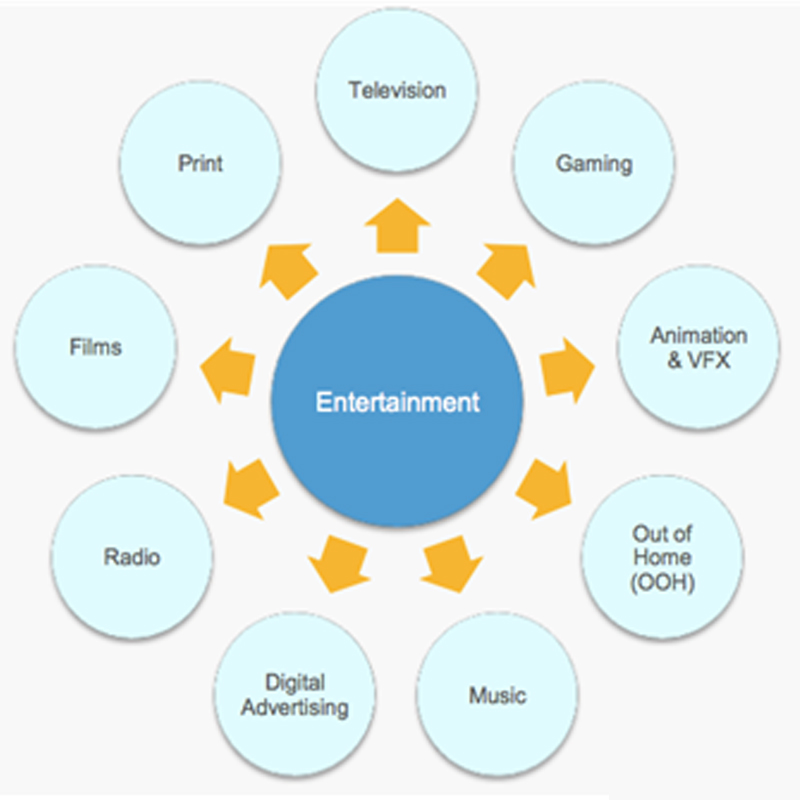
    The Indian Media & Entertainment industry is categorised across nine segments of which Television by far is the largest and is expected to be the largest in the next couple of years.

    India is the second largest Television market in the world characterised by rising number of subscribers.

    public://222222222222222_0.jpg

    Three top long term growth catalysts that are acting as the biggest drivers for the Television industry are:

    1.    Growing Rural Demand
    2.    Increasing FTA channels, and
    3.    Deeper Audience Measurement

    Growing Rural Demand

    Digitisation which is expected to be completed in 2017 is leading to higher digital access and consumption.  High data consumption has already been experienced and there are encouraging trends with rising internet and broadband penetration, declining data charges, proliferation of internet enabled mobile phone, government and private initiatives around wifi and greater emphasis on broadband roll-out by MSOs.  This has led to an unprecedented advertiser interest in digital which played out with a strong performance of digital in 2016.  OTT is therefore seeing a major traction wherein both digital VOD and TV would see a harmonious co-existence.

    Increasing FTA channels

    The big story is 2016 has been that of the rural viewership habits.  BARC viewership data for rural has thrown up interesting insights and goldmine data about rural viewing habits and hence the proliferation of FTA channels.  This development will however require realignment of content for mass tastes.

    Deeper Audience Measurement

    With viewership data leading to better consumer analytics and with advertiser focus and monies increasing in rural HSMs, scientific audience measurement will be the third most important driver for the television industry.

    Conclusion

    The global economy grew at 2.6% in 2016 while the Indian economy is projected to grow at 7.1% in 2017.  The long-term future for the television industry is very robust with CAGR projections above 14% for both segments of ad revenues and subscription revenues.

    public://Untitled-3_17.jpg

    (Piyush Sharma, a global tech, media and entrepreneurial leader, created the successful foray of Zee Entertainment in India and globally under the ‘Living’ brand. The views expressed here are of the writer’s and Indiantelevision.com may not subscribe to them.)

  • TV industry gives mixed reaction to MIB’s DAS III & IV extension

    TV industry gives mixed reaction to MIB’s DAS III & IV extension

    MUMBAI: Even as recently as a month ago, India’s ministry of information and broadcasting (MIB) and the industry regulator the Telecom Regulatory Authority of India announced that the DAS IV deadline of 31 December 2016 was sacrosanct and that the cable TV industry would have to bite the bullet. So, when the MIB announced on 22 December that it was pushing forward the Phase IV date to 31 March 2017 and the Phase III date to 31 January 2017, eyebrows were raised once again globally.

    Can the MIB ever stand firm on deadlines or can it set realistic ones, asked potential international investors who have been waiting to hear some positive developments about India’s digitizing-in-stops-and-starts cable TV sector?

    But, the response on the ground amongst India’s TV broadcasters and cable TV operators was mixed. Some have welcomed the decision; others have been harshly critical of the MIB’s postponement rationale.

    The MIB said the extension was being done “in lieu of uncertainty in the market due to pending court cases and unsatisfactory progress of installation of set-top boxes (STBs) in Phase IV areas.”

    Speaking to Indiantelevision.com, Viacom 18 group CEO Sudhanshu Vats said, “Owing to lack of preparedness of the industry toward digitisation, it is a good move provided there are no more extensions at all.”

    Questions an investment banker unwilling to be identified: “The cable TV trade has been given four to five years to digitize. And, they have not managed to do the job well over this period. What miracle will they perform in one month and three months? What’s to guarantee that the court cases will be settled and that government will not once again become weak-kneed and go in for a further postponement when these fresh deadlines come up? Investors want certainty, not this joke that the government has made of DAS.”

    Hathway Cable & Datacom’s Delhi distributor Vinod Chauhan said, although the order does not directly impact his operation since he was in the area covered under DAS I, it was a good move, but he questioned the logic behind it. Hathway Cable has been expanding into Phase III markets and had hopes that broadband and this expansion would help it increase its ARPUs.

    Siti Networks Ltd COO strategy & compliances Anil Malhotra said that the MSO’s planning for switching over to digital coincided with the government’s deadline of 31 December 2016. He said that there was pickup in demand for digital STBs of late. “We are not worried at all since we have a huge inventory of imported STBs,” Malhotra said.

    As the brief talk veered toward the effect of demonetisation, he said that entertainment was one of the primary essentials in the hectic lives of people today. “Everyone is ready and prepared to shell out Rs 1000-1100 for good quality STBs,” Malhotra added.

    Star India legal and regulatory affairs president and general counsel Deepak Jacob expresed his disappointment about the government’s decision. “When the DAS IV deadline was finally set for 31 December 2016 as per a government notification approved by Parliament, the ministry ideally cannot and should not extend the deadline at all,” he said emphatically. “Now, the government should stick to its new deadline and not allow any posptonment.”

    Smaller cable TV operators are however pleased about the lifeline they have got. Said Maharashtra Cable Operators Foundation (MCOF) president Arvind Prabhoo: “I think the MIB realised that covering diverse areas in a vast country like India was a challenge. Also, taking into consideration the pending court cases against digitisation, the ministry has rightly extended the deadline. It is a good, welcome move.”

    MSO Den Network CEO S N Sharma pointed out that the decision was not going to play a spoiler. He said, “It is not a six month or a year’s extension. It is just three months. The decision looks fine to me. I think this will give everyone sufficient time to do the seeding.”

    Most small cable networks in DAS IV service very few consumers. They are well below the size to viably provide digital cable TV. Most of these have resigned to the fate of losing their business and only livelihood, opined Hyderabad based Sky Vision MD R.S. Raju . “The currency demonetisation put a further damper. Consumers completely stopped spending on non-essential purchases, and STB deployment has been badly hit in rural areas, where plastic money is not prevalent, and new currency notes are in short-supply,” he said.

    He revealed that the MIB had some none to encouraging facts to reveal at the 18 th task force meeting.

    “The I&B ministry has declared certain (un-encouraging) data on STB deployments, up to 25 October 2016. Between 31 August & 25 October 2016, 1.97 million STBs were seeded in DAS IV areas. In Phase III, 0.876 million STBs were seeded in the same period. Combined, 2.84 million STBs were deployed in these two months. To date, pan-India, 92.4 million STBs have been deployed till 25 October 2016, according to MIB data,” Raju said.

    “As per earlier MIB data till 26 July 2016, 17.8 million STBs were seeded in DAS IV areas. Combined with the new data, this indicates that 19.77 million STBs have been seeded in DAS IV areas. DAS IV covers 61.08 million rural TV households spanning 28 states & 6 union territories (2011 Census),” Raju added.

    Raju further informed, “With very low ARPUs and the high cost of laying long length fibre networks to small pockets of Phase IV areas, most MSOs have only ‘cherry picked’ a few DAS IV areas to expand their operations. Few new headends have been set up or are planned in DAS IV areas. Generally, DAS IV areas are serviced from existing headends in neighbouring DAS III areas.”

    He revealed that a representative of the Consumer Electronics and Appliances Manufacturers Association (CEAMA) mentioned that no major purchase orders were received recently by the indigenous STB manufacturers (from MSOs) at the same task force meeting.

    A representative of the Indian Broadcasting Foundation (IBF) mentioned that very few requests had so far been received by its broadcaster members from MSOs for interconnect agreements for Phase IV areas.

    It would be logical to conclude that rural TV viewers will either shift to Doordarshan’s FreeDish or one of the six private, pay DTH platforms, stated Raju.

    At the same meeting, MIB joint secretary (P&A) Mihir Kumar Singh asked the members to suggest measures to implement Phase IV by the notified cut-off date, added Raju.

    And since none of them could offer logical feasible solutions, the MIB has had to take the stance it has. Additionally, the letter from the Andhra Pradesh chief minister N. Chandrababu Naidu to MIB minister M Venkaiah seeking postponement Naidu could have also forced the government to take the decision.
  • TV industry gives mixed reaction to MIB’s DAS III & IV extension

    TV industry gives mixed reaction to MIB’s DAS III & IV extension

    MUMBAI: Even as recently as a month ago, India’s ministry of information and broadcasting (MIB) and the industry regulator the Telecom Regulatory Authority of India announced that the DAS IV deadline of 31 December 2016 was sacrosanct and that the cable TV industry would have to bite the bullet. So, when the MIB announced on 22 December that it was pushing forward the Phase IV date to 31 March 2017 and the Phase III date to 31 January 2017, eyebrows were raised once again globally.

    Can the MIB ever stand firm on deadlines or can it set realistic ones, asked potential international investors who have been waiting to hear some positive developments about India’s digitizing-in-stops-and-starts cable TV sector?

    But, the response on the ground amongst India’s TV broadcasters and cable TV operators was mixed. Some have welcomed the decision; others have been harshly critical of the MIB’s postponement rationale.

    The MIB said the extension was being done “in lieu of uncertainty in the market due to pending court cases and unsatisfactory progress of installation of set-top boxes (STBs) in Phase IV areas.”

    Speaking to Indiantelevision.com, Viacom 18 group CEO Sudhanshu Vats said, “Owing to lack of preparedness of the industry toward digitisation, it is a good move provided there are no more extensions at all.”

    Questions an investment banker unwilling to be identified: “The cable TV trade has been given four to five years to digitize. And, they have not managed to do the job well over this period. What miracle will they perform in one month and three months? What’s to guarantee that the court cases will be settled and that government will not once again become weak-kneed and go in for a further postponement when these fresh deadlines come up? Investors want certainty, not this joke that the government has made of DAS.”

    Hathway Cable & Datacom’s Delhi distributor Vinod Chauhan said, although the order does not directly impact his operation since he was in the area covered under DAS I, it was a good move, but he questioned the logic behind it. Hathway Cable has been expanding into Phase III markets and had hopes that broadband and this expansion would help it increase its ARPUs.

    Siti Networks Ltd COO strategy & compliances Anil Malhotra said that the MSO’s planning for switching over to digital coincided with the government’s deadline of 31 December 2016. He said that there was pickup in demand for digital STBs of late. “We are not worried at all since we have a huge inventory of imported STBs,” Malhotra said.

    As the brief talk veered toward the effect of demonetisation, he said that entertainment was one of the primary essentials in the hectic lives of people today. “Everyone is ready and prepared to shell out Rs 1000-1100 for good quality STBs,” Malhotra added.

    Star India legal and regulatory affairs president and general counsel Deepak Jacob expresed his disappointment about the government’s decision. “When the DAS IV deadline was finally set for 31 December 2016 as per a government notification approved by Parliament, the ministry ideally cannot and should not extend the deadline at all,” he said emphatically. “Now, the government should stick to its new deadline and not allow any posptonment.”

    Smaller cable TV operators are however pleased about the lifeline they have got. Said Maharashtra Cable Operators Foundation (MCOF) president Arvind Prabhoo: “I think the MIB realised that covering diverse areas in a vast country like India was a challenge. Also, taking into consideration the pending court cases against digitisation, the ministry has rightly extended the deadline. It is a good, welcome move.”

    MSO Den Network CEO S N Sharma pointed out that the decision was not going to play a spoiler. He said, “It is not a six month or a year’s extension. It is just three months. The decision looks fine to me. I think this will give everyone sufficient time to do the seeding.”

    Most small cable networks in DAS IV service very few consumers. They are well below the size to viably provide digital cable TV. Most of these have resigned to the fate of losing their business and only livelihood, opined Hyderabad based Sky Vision MD R.S. Raju . “The currency demonetisation put a further damper. Consumers completely stopped spending on non-essential purchases, and STB deployment has been badly hit in rural areas, where plastic money is not prevalent, and new currency notes are in short-supply,” he said.

    He revealed that the MIB had some none to encouraging facts to reveal at the 18 th task force meeting.

    “The I&B ministry has declared certain (un-encouraging) data on STB deployments, up to 25 October 2016. Between 31 August & 25 October 2016, 1.97 million STBs were seeded in DAS IV areas. In Phase III, 0.876 million STBs were seeded in the same period. Combined, 2.84 million STBs were deployed in these two months. To date, pan-India, 92.4 million STBs have been deployed till 25 October 2016, according to MIB data,” Raju said.

    “As per earlier MIB data till 26 July 2016, 17.8 million STBs were seeded in DAS IV areas. Combined with the new data, this indicates that 19.77 million STBs have been seeded in DAS IV areas. DAS IV covers 61.08 million rural TV households spanning 28 states & 6 union territories (2011 Census),” Raju added.

    Raju further informed, “With very low ARPUs and the high cost of laying long length fibre networks to small pockets of Phase IV areas, most MSOs have only ‘cherry picked’ a few DAS IV areas to expand their operations. Few new headends have been set up or are planned in DAS IV areas. Generally, DAS IV areas are serviced from existing headends in neighbouring DAS III areas.”

    He revealed that a representative of the Consumer Electronics and Appliances Manufacturers Association (CEAMA) mentioned that no major purchase orders were received recently by the indigenous STB manufacturers (from MSOs) at the same task force meeting.

    A representative of the Indian Broadcasting Foundation (IBF) mentioned that very few requests had so far been received by its broadcaster members from MSOs for interconnect agreements for Phase IV areas.

    It would be logical to conclude that rural TV viewers will either shift to Doordarshan’s FreeDish or one of the six private, pay DTH platforms, stated Raju.

    At the same meeting, MIB joint secretary (P&A) Mihir Kumar Singh asked the members to suggest measures to implement Phase IV by the notified cut-off date, added Raju.

    And since none of them could offer logical feasible solutions, the MIB has had to take the stance it has. Additionally, the letter from the Andhra Pradesh chief minister N. Chandrababu Naidu to MIB minister M Venkaiah seeking postponement Naidu could have also forced the government to take the decision.

  • TV industry may lose Rs 500-600 cr due to demonetisation

    TV industry may lose Rs 500-600 cr due to demonetisation

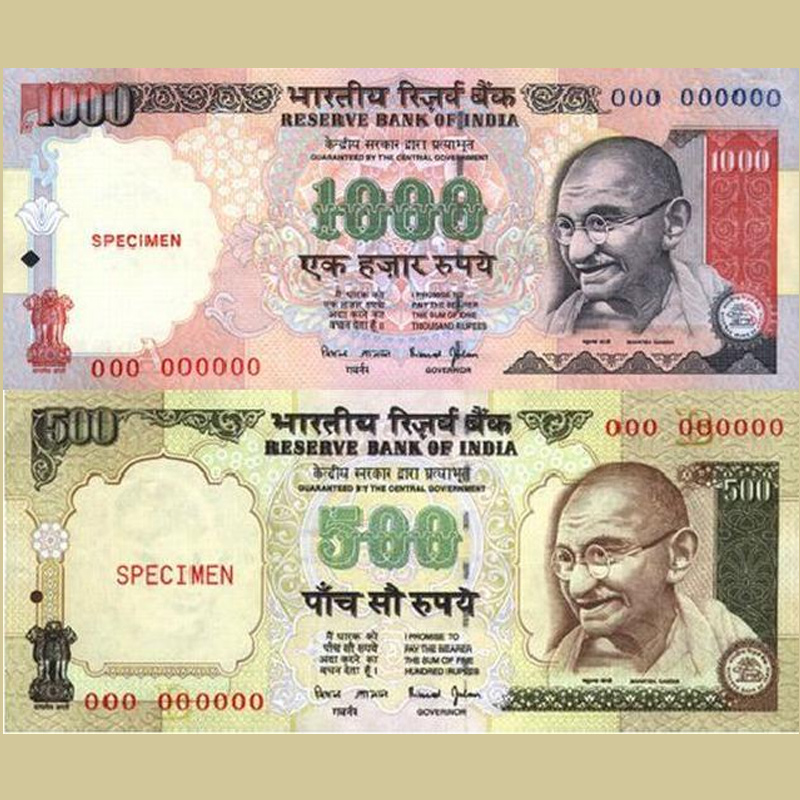
    MUMBAI: The government’s move to not accept Rs 500 and Rs 1000 currency notes as legal tender may affect the TV industry in a big way. 

    A recent media report has estimated that the Indian television industry is to suffer a loss of Rs 500 to Rs 600 crore in advertising revenue as fallout of PM Modi’s decision to demonetise close to 86 per cent of liquid cash in the economy.

    This is because several advertisers are postponing their campaigns scheduled to air in November and December due to a slowdown in consumer spending, a media buyer informed livemint.com. 

    As Colors TV CEO Raj Nayak puts it, “There is disruption in off-take of consumer goods & FMCG (fast moving consumer goods) products.”  According to a press statement shared by Nayak, the situation is also affecting new businesses as most advertisers are “clueless as to how the market will evolve and respond.”

    Dentsu Aegis Network South Asia chairman and CEO Ashish Bhasin feels that the reason for the cut back on the marketing spends could be the impact on sales that the demonetisation has had on the FMCG products.

    Typically, the October-December quarter is the most active quarter accounting for almost 30 to 40 percent of annual billing in terms of advertising spends. With how things are, that is unlikely to be the case this year, a worried Bhasin said.

    ALSO READ:   Demonetisation: Housing, online payment gung-ho; others find solace in India’s larger interest
     

  • TV industry may lose Rs 500-600 cr due to demonetisation

    TV industry may lose Rs 500-600 cr due to demonetisation

    MUMBAI: The government’s move to not accept Rs 500 and Rs 1000 currency notes as legal tender may affect the TV industry in a big way. 

    A recent media report has estimated that the Indian television industry is to suffer a loss of Rs 500 to Rs 600 crore in advertising revenue as fallout of PM Modi’s decision to demonetise close to 86 per cent of liquid cash in the economy.

    This is because several advertisers are postponing their campaigns scheduled to air in November and December due to a slowdown in consumer spending, a media buyer informed livemint.com. 

    As Colors TV CEO Raj Nayak puts it, “There is disruption in off-take of consumer goods & FMCG (fast moving consumer goods) products.”  According to a press statement shared by Nayak, the situation is also affecting new businesses as most advertisers are “clueless as to how the market will evolve and respond.”

    Dentsu Aegis Network South Asia chairman and CEO Ashish Bhasin feels that the reason for the cut back on the marketing spends could be the impact on sales that the demonetisation has had on the FMCG products.

    Typically, the October-December quarter is the most active quarter accounting for almost 30 to 40 percent of annual billing in terms of advertising spends. With how things are, that is unlikely to be the case this year, a worried Bhasin said.

    ALSO READ:   Demonetisation: Housing, online payment gung-ho; others find solace in India’s larger interest
     

  • Serbian Film Delegation to visit India

    Serbian Film Delegation to visit India

    NEW DELHI: A Serbian delegation is visiting India later this month to help increase exchanges in cinema and television between India and Serbia.


    The five-member delegation will be in Delhi on 24 and 25 April and in Mumbai from 28 to 30 April.


    During their stay, the Serbs will meet prominent film/documentary/commercials producers, and interlocutors in film and TV industry.


    The delegation comprises Milos Djukelic of Red Production, Ana Krivokuca from Top Cut, Alek Bdimilic from Dream Dust, Gaga Djurkovic from Visionteam, and Milica Boni of the Serbia Film Commission.


    The Serbia Film Commission (SFC) was established in July 2009 as the independent non-profit association of the Serbia film industry. Members include the leading producers of feature films, television, TV commercials and animation. Today, the SFC has more than 80 members.


    The principal aim of the SFC is to promote and develop Serbia as a cost-effective, high-quality, competitive destination for international filmmaking, and to provide information and support to international filmmakers considering using Serbia for their productions. The commission is therefore dedicated to expanding the film location and crew/business database, improving skills and services and generally fostering a film-friendly environment in the country.


    SFC has created and is continually updating an extensive online database of film locations in Serbia, offering over 250 locations for shooting in Serbia, with over 3000 high quality photos.


    SFC is the only film commission in the region of Southeast Europe, and is a member of the AFCI (Association of Film Commissioners International) where its executive director Ana Ilic is a member of the Board of Directors. SFC is also member of the European Association of Film Commissioners.


    Red Production specializes in print, radio, television and outdoor commercials, industrial and promotional films, television shows, documentaries, short films and feature films. The company has worked successfully with numerous advertising agencies and production companies, earning recognition at a number of advertising and film festivals. It has made several films and commercials.


    Top Cut is one of the first international production houses to establish its branch offices in Belgrade. It is the only Cannes Lion awarded production house in Greece and Serbia and a Bronze winner at the New York Festival, while a large number of awards have been won in the Greek market, including ”Production House of the Year” award in 2006, 2007 and 2009 and the Production Grand Prix in 2007 and 2009. Since December 2012 Top Cut Belgrade office is able to offer its services on locations in Serbia.


    Dreamdust is a creative post-production studio located in the centre of Belgrade, Serbia. Studio of the new generation, focused on giving that magical touch to all kinds of videos, using the latest technologies for creation and communication. For 17 years its team has been providing full service to some of the biggest brands and a large number of creative agencies worldwide.


    Established in 2002, Vision Team is a full service film rental company offering a range of film and video equipment and production service for feature films, television series and commercials. The company became an ARRI rental partner in June 2007.  Vision Team enjoys partnerships with high quality services and equipment companies in Hungary, Germany and the UK.

    The company strives to provide production houses with high quality services related to camera, light and grip rental. Vision team offers an experienced staff, studio capacities, production and postproduction work, and complete in-house services for its clients.

  • Digitisation worked wonders for TV industry, FICCI-KPMG report

    Digitisation worked wonders for TV industry, FICCI-KPMG report

    MUMBAI: The Indian media and entertainment industry grew by about 12 per cent in 2013 amid overall muted growth due to economic slowdown, but digitization of cable TV worked wonders for the television industry, according to a FICCI-KPMG report released ahead of FICCI Frames 2014.


    The three-day trade event for the entertainment industry will be held from 12 March, and is expected to be attended by over 2,000 Indian and 600 foreign delegates.


    The FICCI-KPMG report said due to the economic slowdown, advertising revenue dependent sectors such as TV and print were impacted on a large scale. The depreciation in the rupee also affected print, cable and DTH companies adversely but helped export oriented sectors such as animation and VFX to some degree. At the same time, this was countered by the impact of continued digitisation of media products and services, and growth in regional media.


    Digitisation was moving in the right direction, with the mandatory Digital Access System (DAS) rollout almost complete in Phase II cities. The impact was felt to the extent that carriage fees saw a reduction of 15-20 per cent overall, however the anticipated increase in ARPUs and subscription revenues for broadcasters and MSOs (Multi System Operators) is expected to be realized only over the next 2-3 years.


    Other key highlights in 2013 were the inclusion of LC1 (less than class I) markets in TV ratings, the 12 minute advertising cap ruling and the shift from TRP to TVT ratings.


    What gained was the film industry by recording a double digit growth, albeit slower than in 2012, thanks to the multiple movies scoring big at the box office collections. Approximately 90-95 per cent movie screens are now digitised in the country, with a shift in focus to tier II and III cities. Going forward, multiplex growth is expected to slow down, in line with the overall delays and future expectations for retail sector and commercial real estate development, impacting box office growth in the short term.


    The Print sector continued to buck the global slowdown trend. The sector grew at a CAGR of 8.5 per cent this year to reach INR 243 billion. Regional markets performed exceedingly well on the back of steady advertiser spends, state election impact and new launches. However, with the validity of IRS data called into question by the industry majors, the sector in the short term suffers from the lack of a robust measurement system, critical for decisions on media planning and allocations.


    The total internet user base in India grew to approximately 214 million by end of the year with almost 130 million going online using mobile devices. Mobile Internet users dominated the total internet user base capturing an overall share of 61 per cent.


    Digital media advertising in India grew faster than any other advertising category. Streaming and download services continued to see growth in the music industry, with the growth in mobiles, in particular smartphones, contributing significantly to increased consumption of music ‘on-the-go’. However, with the continued decline in physical sales, compounded by the significant fall in ringback tone revenues (following the backlash of TRAI guidelines issues in 2012), the sector saw an overall fall in size by 10 per cent in 2013.


    Going forward, digital revenues are expected to drive growth in the sector. Further, the vibrant live events sector is expected to continue its role as a catalyst for driving growth in artists’ fan-base, and public performance royalties.


    FICCI M&E committee chairman Uday Shankar said 2013 was a challenging year for the media and entertainment sector. He opines: “2013 has been an important year for the media and entertainment sector. It was a year of challenges and significant change. The industry dealt with a host of issues that will lay the foundation for robust growth in the years to come.”


    Television saw the implementation of the 10+2 advertising cap, seeding of set top boxes in DAS 1 and II phases was largely completed – setting the stage of revenue growth and expansion in genres. The film sector continued to mature on the back of multiplex expansion and a wide range of content succeeding.


    Radio and print continue to defy global trends and await positive regulatory intervention that will take these sectors to greater heights. I am certain that the insights and findings from this report will provide a comprehensive and useful lens for all of us in the industry.


    KPMG head of M&E Jehil Thakkar states: “2013 was a year in which many parts of the M&E industry paused and took stock. Focus shifted from top line growth to bottom line growth with companies focusing on operations and efficiency. Inspite of a very challenging macro environment, the industry grew 12 per cent, a far better performance than many other industries. The structural changes taking place in the industry – especially in television and digital, continued to take the industry down the path of fulfilling its potential.”


    This year, the report also highlights opportunities that could come from tapping international markets such as the US and Middle East, with a special feature on opportunities in South Africa and Nigeria.


    Going forward, there is need for continued positive regulatory intervention, such as implementation of Phase III for the radio sector. In an increasingly digitised media world, the ability to create compelling and targeted content across multiple channels, will be the bedrock for creating differentiation in a cluttered market.

  • Govt says TV industry to be Rs 50,140 crore in 2014

    Govt says TV industry to be Rs 50,140 crore in 2014

    NEW DELHI: With the general elections coming closer, the government is ensuring that the public becomes aware of the good work it has done in the 10 years of its regime. One of the departments flaunting its feat is the Ministry of Information and Broadcasting (MIB) that issued a statement today which claimed a paradigm shift in information dissemination and policy measures which has led to a vibrant information order in the last ten years.


    The Ministry says that with the growth of television channels from 130 in 2004 to 788 in 2014, India has become the third largest TV market with close to 154 million TV households, next to China and the United States. At the same time, the size of the TV industry has witnessed an exponential growth as well. The value of the TV industry is valued at Rs 50,140 crore in 2014 from Rs 18,300 crore in 2006.


    MIB says that the initiatives undertaken by it enabled the discourse of ‘India Story’ to be disseminated across different platforms. It also aimed at providing quality information to the masses, thereby ensuring that the inclusive growth perspective is spread. 


    The Ministry also claims to have pursued policies in order to utilise the benefits of technology and ensure that a framework is built enabling growth and change for the broadcasting landscape in the country. It says that the digitisation process has brought transparency in the system with 30 million STBs being installed in the first two phases.


    Some of the highlights of the decade have been the implementation of various guidelines including policy guidelines for uplinking and downlinking of TV channels (amended in 2011), policy guidelines for HITS broadcasting services (2009), policy guidelines for IPTV (2008), Revision of FDI Policy in five segments of broadcasting sector (2012), policy guidelines for TV rating agencies in India (2014) and policy guidelines on direct to home services (2001).

    In the film sector, the panel under the Chairmanship of Punjab and Haryana High Court retired Chief Justice Mukul Mudgal examined issues of certification under the Cinematograph Act 1952. The Committee reviewed major areas of concern pertaining to Advisory Panels; Guidelines for certification and issues such as portrayal of women, obscenity and communal disharmony; Classification of Films; Treatment of Piracy; Jurisdiction of the Appellate Tribunal; Review of the provisions of the Cinematograph Act, 1952.The committee has recently submitted its report which is being reviewed by the Ministry. 

    One of the key highlights of the film sector has been the National Museum of Indian Cinema (NMIC) showcasing India’s rich film heritage over the past 100 years. The Museum is situated in the 6,000 square-foot Gulshan Mahal – a heritage building. The museum is a ready-reckoner of the history of Indian cinema showcasing technological aspects of production and screening of films, as well as its social aspects during the past 100 years. Through its interactive galleries, it traces the evolution of celluloid from the Lumiere Brothers, Raja Harishchandra onwards, and showcases Indian cinema in three stages – silent era, golden era and the modern era.

  • ETC engages audience to spread anti-piracy measures through short films

    ETC engages audience to spread anti-piracy measures through short films

    MUMBAI: ETC the most credible Bollywood trade channel in association with India’s leading creative crowd sourcing company Talenthouse India, have jointly undertaken the initiative to say ‘Thank You’ along with the Bollywood industry to loyal cinema goers for choosing theatres over other pirated medium to bring about awareness and thereby an end to piracy.


    The initiative, ‘Bollywood Thanks You’ has developed from a simple thought to appreciate people who consume films the way they are supposed to be – in theaters. The objective of the initiative was to represent the entertainment industry for a cause in a country like India where the film and TV industry lose money and livelihood due to piracy. ETC extended this idea to the audience to directly involve them in the initiative by inviting budding filmmakers who are all a part of the entertainment industry to bring forth a strong message.


    Talenthouse India, hosted this exciting opportunity on their platform www.talenthouse.co.in. The participants were required to create an ad film of maximum 30 seconds duration based on the theme ‘anti-piracy’. The crowd sourcing route to this campaign not only resulted in 50 creative thoughts on the theme from across India, but also generated engagement and a challenge to young filmmakers to convey the message in 30 seconds.


    The entries were monitored by the ETC team. 10 winners have been selected by the channel for a career defining opportunities. The films created by these young budding filmmakers will now be showcased at leading multiplexes and aired on ETC for the next one year.


    Zee Entertainment’s Anurag Bedi, said, “We, at ETC, represent the entertainment industry where the audience is the stakeholder and if they stop supporting the industry then the industry can’t make more products for them. Through ‘Bollywood Thanks You’ initiative, we hope to educate and encourage audience to watch films in theaters. Talenthouse India who had the access to the right kind of talent to generate the films gave us an opportunity to be relevant to the younger audience and enabled us to connect to and inspire young film professionals to bring out a strong message through the crowd sourcing activity.”


    From a marketing point of view, ETC has taken anti-piracy to a whole new level. Focusing on a positive and educative route, the aim for them is to develop user generated content that resonate with their brand identity and the initiative undertaken to shape future industry leaders.


    The winning films created by film students and enthusiast would be showcased soon.


    To view the films Log on to http://www.talenthouse.com/zee-2013