Tag: TV channels

  • Horror weekends with Life OK

    Horror weekends with Life OK

    MUMBAI: The appeal of the evil is driving many. And cashing in on the growing popularity are the Indian television channels. After a series of crime-thrillers that have become immensely popular in the last few years, now the TV channels are experimenting with the horror genre.

    While Sony launched its horror show, Bhoot Aaya a month and a half ago, now it’s Star Plus’s sister channel Life OK that is all set to give you sleepless nights with its new offering – Ringa Ringa Roses…Khauff Begins. The series is slated to go on air by early December at the 11:00 pm slot and will run for an hour every Saturday-Sunday according to a source from the channel.


    The show is produced by Majid Azam’s Somersault Productions that also produced the first and second season of Zee TV’s Fear Files. According to the channel sources, the show is aimed at young men aged 15 and above and kids, who are really interested in the genre.


    The story revolves around a father, who is a ghost detective and his daughter, who is kidnapped by Rose – the antagonist. The story moves forward as the father works to unravel the mystery of Rose, the ghost, to save his daughter.


    The channel has dabbled in the horror genre earlier with a special 16-episode series – Ek Thi Naayika – during the release of the movie Ek Thi Daayan. Now, with this show, an official announcement for which will be made soon, the channel is again set to experiment with the genre.


    Life OK has planned a 360-degree marketing activity for the show. “A lot of innovative marketing activities are being planned. At present, we are working on a ring tone (signature tune) for which we have roped in a Pune-based rock band, ‘Agnee’. We are going to have a lot of activities on social media and television as well. The promos of the show will be out in a day or two. This is the first time that we are doing a full-fledged horror series and we are pretty excited about it,” says the source.


    While the channel plans to go overboard on the social media platforms to create the right buzz about the show, they don’t plan to create a separate page. The source says, “We are not going to launch any official page, especially for the show, on the social media sites. It is always integrated through the Life OK page.”


    The show is going to have stiff competition with other horror shows on like Bhoot Aaya on Sony which airs every Sunday at 11:00 pm and Fear Files on Zee TV which airs on Saturday-Sunday from 10:30-11:30 pm.

  • Sony gets permission to downlink more channels into India

    Sony gets permission to downlink more channels into India

    NEW DELHI: The government has approved a proposal by Multi Screen Media for increasing the foreign equity participation for production of television programmes in India.


    The approval has also been given to the company for downlinking certain TV channels, following a recommendation by the Foreign Investments Promotion Board.


    However, the Finance Ministry said this will not require any fresh inflow of foreign direct investment.

  • I&B Ministry dictates channels to follow the programme code

    I&B Ministry dictates channels to follow the programme code

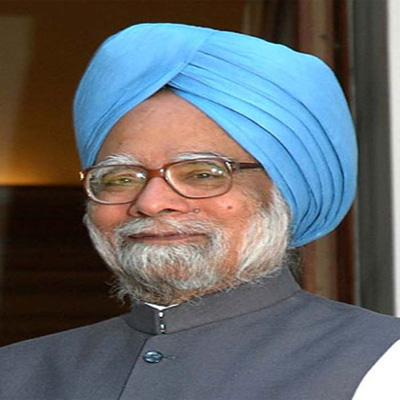
    NEW DELHI: Taking umbrage at constant comparisons of the speech of Prime Minister Manmohan Singh on Independence Day to that of other political leaders, the Information and Broadcasting Ministry today advised all News and Current Affairs TV Channels to follow the provisions of the Programme and Advertising Codes ‘scrupulously’.


    An advisory issued by the Ministry also said it was necessary to keep ‘the significance of the solemn days like Independence Day, etc. in view while carrying the speech of the Prime Minister and the President of India’.


    The Ministry said any further violation of the provisions of the Programme/Advertising Code would attract penal provisions stipulated in Section 20 of the Cable Television Networks (Regulation) Act 1995 and the terms and conditions of uplinking and downlinking guidelines.


    The advisory was issued in exercise of powers under Uplinking/Downlinking Guidelines issued by it, the terms of permission granted to the Channel to uplink or downlink TV Channels and under Section 20 of the Act.


    The Ministry said that the ‘telecast of this kind of programme on a day when the entire nation was celebrating its 67th Independence Day is highly objectionable. The Prime Minister spoke from the Ramparts of the Red Fort as the Prime Minister of the country and not as a leader of a political party.’


    ‘Therefore, on such a solemn day to put him in an artificial competition with anyone is not appropriate. On Independence Day when the Prime Minister addresses the nation and the country is united in the emotions of national integrity, patriotism and national fervor, the attempt by certain TV channels to denigrate the status of the Prime Minister can best be described as sensational against all norms of ethical journalism.’


    The Ministry pointed out that under Section 5 of the Act read with Rule 6 (1Xa) & (i) of the Cable Television Networks Rules 1994 as amended from time to time, ‘no programme can be transmitted/retransmitted on any Cable Service which contains anything offending against good taste or decency; and criticises, maligns or slanders any individual in person or certain groups, segments of social, public and moral life of the country.’


    It added that according to the basic conditions/obligations of permission/approval for
    Uplinking/Downlinking of TV Channels in India, the channels are bound to follow the Programme Code and Advertising Code as prescribed under the Act and rules framed there under.

  • Election Commission mandates poll-related behaviour of media before state polls

    Election Commission mandates poll-related behaviour of media before state polls

    NEW DELHI: With elections to five states on the anvil, the Election Commission has prohibited conduct of Exit polls and dissemination of their results in the hour fixed for commencement of polls in the first phase and half hour after the time fixed for close of poll for the last phase in all the States, as also stated in Section 126A of the Representation of Peoples Act 1951.


    The Commission has clarified that there have been violations in the past of Section 126 of the Act which prohibits displaying any election matter by means of television or similar apparatus, during the period of 48 hours ending with the hour fixed for conclusion of poll in a constituency. There are allegations sometimes during elections of violation of the provisions of the above Section 126 by TV channels in the telecast of their panel discussions/debates and other news and current affairs programmes.


    “Election matter” has been defined in that Section as any matter intended or calculated to influence or affect the result of an election. Violation of the aforesaid provisions of Section 126 is punishable with imprisonment upto a period of two years, or with fine or both.


    Elections in November and December are being held for Chhattisgarh, Madhya Pradesh, Mizoram, Rajasthan, and Delhi.


    A mechanism has been laid out with three-tier Media certification and Monitoring Committees (MCMC) at District, State and Election Commission level to deal with the menace of paid news, it said. Revised comprehensive instruction on ‘Paid News’ has been issued on 27 August 2012 and is available on the Commission’s Website. Necessary instructions have been issued to the CEOs of the poll going states to ensure briefing of political parties and Media in the districts about ‘Paid News’ and the mechanism to check ‘Paid News’. Representatives of Political Parties and Media Organizations of poll going states have also been briefed at Election Commission. The MCMCs of all states have been trained to do their job.


    The Commission has reiterated that the TV/Radio channels and cable networks should ensure that the contents of the programme telecast/broadcast/displayed by them during the period of 48 hours referred to in Section 126 do not contain any material, including views/appeals by panelists/participants that may be construed as promoting/prejudicing the prospect of any particular party or candidate(s) or influencing/affecting the result of the election.


    During the period not covered by Section 126 or Section 126A, concerned TV/Radio/Cable/FM channels are free to approach the state/district/local authorities for necessary permission for conducting any broadcast related events which must also conform to the provisions of the model code of conduct and the programme code laid down by the Information and Broadcasting Ministry under the Cable TV Networks (Regulation) Act 1995 with regard to decency, maintenance of communal harmony, etc.


    The Commission said they are also required to stay within the provisions of Commission’s guidelines dated 27th August, 2012 regarding paid news and related matters. Concerned Chief Electoral Officer/District Election Officer will take into account all relevant aspects including the law and order situation while extending such permission.


    It drew attention of the media to guidelines issued by Press Council of India to follow for observance during the election:


    (i) It will be the duty of the Press to give objective reports about elections and the candidates. The newspapers are not expected to indulge in unhealthy election campaigns, exaggerated reports about any candidate/party or incident during the elections. In practice, two or three closely contesting candidates attract all the media attention. While reporting on the actual campaign, a newspaper may not leave out any important point raised by a candidate and make an attack on his or her opponent.


    (ii) Election campaign along communal or caste lines is banned under the election rules. Hence, the Press should eschew reports, which tend to promote feelings of enmity or hatred between people on the ground of religion, race, caste, community or language.


    (iii) The Press should refrain from publishing false or critical statements in regard to the personal character and conduct of any candidate or in relation to the candidature or withdrawal of any candidate or his candidature, to prejudice the prospects of that candidate in the elections. The Press shall not publish unverified allegations against any candidate/party.


    (iv) The Press shall not accept any kind of inducement, financial or otherwise, to project a candidate/party. It shall not accept hospitality or other facilities offered to them by or on behalf of any candidate/party.


    (v) The Press is not expected to indulge in canvassing of a particular candidate/party. If it does, it shall allow the right of reply to the other candidate/party.


    (vi) The Press shall not accept/publish any advertisement at the cost of public exchequer regarding achievements of a party/government in power.
    (vii) The Press shall observe all the directions/orders/instructions of the Election Commission/Returning Officers or Chief Electoral Officer issued from time to time.

  • Bengal’s broadcasters battle ad slowdown

    Bengal’s broadcasters battle ad slowdown

    KOLKATA: Last week, if one followed the rupee-dollar crisis anything close to a heart attack was inevitable. Thanks to the economic upheaval and slowdown thereafter, the media industry is going through a rough patch.

    Bengali general entertainment channels (GECs), news and other TV channels are seeing a downward trend in ad spends. The urge to splurge is giving way to an urge to curb spends and the Bengali TV ad market is expected to remain flat at last year‘s Rs 700 crore, according to media analysts.

    The largest chunk of this revenue, which is anything between 35-40 per cent, comes from non-banking financial institutions (NBFCs). However, that has melted down, because of a loss of investor confidence in NBFCs. The experts say that the change has come in after the Saradha Group’s chit fund scam that occurred in the beginning of the current financial year.

    “Many other companies which are engaged in money marketing have reduced their ad spends too. Firstly, to stay away from the authorities’ menacing eyes and secondly, they seem to think even after spending a huge amount on advertising, investors are not gullible enough to put in their hard earned money into the chit fund schemes,” says a media buying professional who didn’t want to be named.

    A slowing economy hits smaller companies first as they don‘t have enough resources to get through the downturn. And hence, the first steps taken by them is pulling the noose on marketing and ad spends.

    “The main spenders for ads in the electronic media are the chit fund companies. With these companies now lying low or some even going bust, the regional channels are bleeding badly. And even channels as big as 24 Ghanta and ABP Ananda aren’t spared. If one looks at the current situation in the news genre, the two popular vernacular channels – 24 Ghanta and ABP Ananda – do a monthly business of around Rs 2 crore as compared to Rs 2.5 crore garnered earlier. Hence, they are coming up with several attractive advertising packages to lure clients,” informs a media analyst.

    Some of the main advertisers on these channels are Japani Oil, Chayya Prakashini, Rice Group??? . However, their spends have not managed to compensate for the loss of chit fund advertising and are not adequate enough for the news channels to meet their operational expenses. “These channels must devise their strategies to remain afloat in the market,” media managers added.

    George Telegraph Group, engaged in education, earmarks around Rs 2 crore as its annual ad budget. “We allocate 75 per cent to the print media and in the electronic media, we advertise on mainly news channels and some music channels,” says George Telegraph Group director Atin Dutta. He goes on to add that the group doesn’t advertise much in the month of October because the admission season is over and there is too much clutter during the Puja.

    Kolkata TV editor-in-chief Biswa Majumdar says: “Most of the TV channels whether big or small are in trouble as their ad revenues have gone down by at least 30 per cent due to the slowdown and clients not spending much on regional media.”

    “Within the Kolkata market wherein city-based advertisers contribute almost 25 per cent of the total revenue (Rs 700 crore), the advertising rate is Rs 1,000 per 10 seconds .It is likely to remain the same this year as well. Soon, we all would have to come out with packages. Also, there is a need for national advertising to spread out to regional channels as well,” says Akash business editor Amitabava Banerjee.

    Kolkata TV‘s Majumdar says that the financial scene is so bad that till now nobody has started booking for the festive season (Durga Puja) as well. “The scene is dire with no signs of recovery,” he says.

    Pipalmajik CEO and founder CM Mitra says: “When sales of the companies go down due to downturn, promotion related ads are adopted by companies to increase the topline. Retail and FMGCs are likely to spend on such promotions to liquidate their stocks.”

    Also, with Digital Addressable System (DAS) in place, customers are going to opt for their preferred channels. Therefore, smaller and not-so-popular players will perish.

    GECs gain as others lose

     “In the current year, around Rs 550 crore would be bagged by the GECs while the rest will be split between news, movies and other channels,” asserts media analyst Mrinal Chatterjee.

    “The GECs continue to dominate the canvas of Kolkata television ad  market, with high production values and a robust content bank based on local programming,” he adds.

    BPN India executive VP Mahesh Motwani too feels that considering the viewership trends in Kolkata, GECs will continue to attract more ads than any other TV genre.

    The trend of the maha episode was started by the Late Jishu Dasgupta in his serials likeKuhasha Jhokon and Tithir Athithi on ETV Bangla in the late 90s and has been copied by other GECs like Star Jhalsa and Zee Bangla now. “Clients can spend crores to catch the attention of the TV viewers who are glued to their screens to know what would happen next!” adds Motwani.

    “We Bongs don’t allow ourselves to be deprived of fish in our daily meal, so how could any fast-moving consumer goods brand manufacturing mustard paste let an opportunity go past an audience who are big time foodies?” feels consultant Sayan Chatterjee. He adds that FMCG companies would and should spend on marketing and advertising no matter how bad the economy is.

    Talking about cable TV advertising, Chatterjee, who is also the convener of the Cable Shilpa Bachao Committee, said it has been on the up.

    For GECs, the clients’ aim is to place spots between 7:30 pm and 11:00 pm and for news channels the preferred slot is between 7:00 pm and 9:00 pm, inform media managers.

    Furthermore, with just 40 days to go for Durga Puja, undoubtedly, it is the time for local and national conglomerates to reach out to the hearts, sentiments and pockets of every Bengali family via the Bengali media.

    However, this time, from all indications, it appears as if most of the players in Bengal‘s broadcast space will be in not as celebratory a mood as in previous years. Is the goddess listening?


  • Nickelodeon-Unilever-Amagi enter advertising geo-targeting deal

    Nickelodeon-Unilever-Amagi enter advertising geo-targeting deal

    MUMBAI: Advertisers and their agencies always want a bigger bang for their buck. Especially if it is buying expensive air time on TV channels. And one player that has been working at getting them that extra zing is the Bengaluru-based Amagi Media with its geo-targeted advertising DART technology platform.


    With almost 15 channels as clients and a reach of about 200 million viewers, the hot shot tech firm today announced that it has done a deal with arguably India’s biggest advertiser Hindustan Unilever Ltd (HUL) and the Viacom18 kid’s channel Nickelodeon.


    As part of that deal, an HUL TV commercial will run simultaneously on Nick nationally in different versions , depending on geographical location using Amagi’s DART platform. .Lo and behold, HUL will be micro-targeting its communication, something which would surely delight the savvy marketing behemoth. .


    Terming this pact as ‘creative-versioning’ Amagi claims that it addresses crucial needs of advertisers as well as broadcasters to make the most of the ROI from the television spot.


    Says Viacom18 group CEO Sudhanshu Vats: “We are pleased to partner with Amagi and Hindustan Unilever on this unique concept of micro-targeting. This initiative further builds on our strategic thrust of sharper segmentation.”


    Amagi was rated as the second fastest growing technology company in India by Deloitte Touche Tohmatsu.


    Amagi Media co-founder Srinivasan K.A explains: “This is the first time worldwide in television advertising that a single spot bought nationally has been used to communicate different brand messages in different regions. Such micro-targeting is going to be the future of television advertising.”


    What Amagi does for its other broadcast partners is buy ad slots on their channels and then resells them to regional advertisers. A bar code is added to the ad which is used to identify the placement of ads in specific regions.


    Broadcasters have been wary of this kind of advertising as it would mean giving up national inventory for lower-cost local advertising.


    This is probably why Nick is letting HUL do its own micro-targeting rather than selling its ad space to Amagi to get regional advertisers on board. However it is a boon to local advertisers who only pay for advertising in a particular region of a national channel at a much lesser cost as well as those who want to mould their ad to suit geography-specific cultural demands.


    About Rs 70 crore has been invested in Amagi and it aims to break even somewhere in 2014-2015. Its current yearly revenues are a little less than Rs 50 crore.


    It already has a long list of broadcast partners such as TEN sports, Times Now, CNBC Awaaz, IBN7, CNN-IBN, UTV Movies, Maa TV, Zoom, Udaya TV as well as Tata Sky as its DTH partner. Zee News and Zee Business were recently added to its kitty. Its list of advertiser clients includes Chevrolet, Toyota, Fortuna, Skoda apart from local ones such as Kuberan Silks, YLG, Mysore tarpaulins etc.With Unilever being roped in will other top notch advertisers also follow?


    That’s for later, but the news now is that soon a kid watching Nickelodeon in Kolkata will not see the same ad as a kid watching the channel in Kolhapur. Wonder whether he or she will notice the difference?

  • BCCC asks TV channels to be content sensitive to minorities in their reports

    BCCC asks TV channels to be content sensitive to minorities in their reports

    NEW DELHI: The Broadcasting Content Complaints Council (BCCC) has said TV Channels must rely upon its discretion while depicting any content that leads to the stereotyping of minorities.


    While reiterating that it wanted to ‘avoid being a pre-censoring agency or intrude upon the freedom of media’, the Council said channels should approach content of sensitivity to the minorities with caution and, when necessary, ensure that any such depiction is preceded by a declaration that it is a work of fiction and bears no resemblance to any community, caste or creed.


    Addressing issues and complaints regarding portrayal of content sensitive to the minorities in various TV programmes, it said ‘due diligence should be adopted to ensure that an entire community is not projected as fanatic, intolerant or criminal.’


    ‘The objective is to create an atmosphere congenial to communal harmony, peace and amity without telecasting content that hurts the sentiments of communities and religious groups,’ it added.

  • BCCC advises TV channels against showing acid attacks

    BCCC advises TV channels against showing acid attacks

    NEW DELHI: The Broadcast Content Complaints Council (BCCC) has advised all television channels to be ‘extremely sensitive to the excruciating physical and psychological agony of acid attack victims’ and ‘mitigate the overwhelming implications of any such depiction’ in their reports.


    In an advisory sent to TV channels, the BCCC has said it is time broadcasters were also sensitised against showing acid attacks.


    ‘This is even more pertinent for various crime-based programmes since these shows often depict an acid attack case in some detail through the dramatised version of a real incident’, the advisory said.


    It said it had received several complaints relating to content that depicts acid attacks in TV programmes. In almost all cases, the targets are women and girls.


    The Council considers acid attacks to be ‘among the most heinous of crimes with traumatic, irreversible physical and psychological consequences to the victim’.


    The Supreme Court has taken cognisance of the growing number of acid attacks in India and directed the State to frame and implement most stringent rules to regulate the sale of acid and other corrosive substances.

  • TRAI warns Delhi cable TV customers to speed up on CAF

    TRAI warns Delhi cable TV customers to speed up on CAF

    MUMBAI: The Telecom Authority of India (TRAI) has raised concerns about the slow pace of collection of consumer application forms (CAF) by multi system operators (MSOs) in New Delhi. On 7 June, it had cautioned and warned consumers and cable TV operators/MSOs to get a move on the CAFs, giving 25 June as the deadline, after which the consumers would face the penalty of disconnection.

    TRAI says that despite that warning only 50 per cent of consumers in Delhi have submitted details and choice of channels to cable operators and MSOs until 21 June.

    It says the Digital Addressable Cable TV System Regulations 2012 mandate that CAFs have to be first collected before the activation of set top boxes and transmission of digital signals.

    Come 25 June the cable TV remotes may no longer function in Delhi if the customer forms are not submitted – warns TRAI

    It has therefore once again warned MSOs and cable TV operators that they would have to perforce switch off subscribers who do not send in their CAFs by 25 June 2013 or they “will be in breach of law.”

    Says the TRAI: “We have been issuing public notices on this from time to time to sensitise consumers that they have to submit their CAFs. Broadcasters and the cable TV service providers have also been running scrolls and video programmes on major news and entertainment TV channels for the last few months. The authority has reviewed the progress and observed that even though there has been an increase in the number of subscribers who have provided their details, still there is pendency in respect to the availability of complete consumer details with the cable operators/MSOs.”

  • AAAI comes out in support of TAM

    AAAI comes out in support of TAM

    MUMBAI: The Advertising Agencies Association of India (AAAI) has come out strongly in support of TAM and stated that discontinuing its ratings service as the broadcasters have been wanting to do is not a good step.

    “Ratings are absolutely central to conducting advertising business with TV channels. Their absence will lead to chaos in the short term and to a decline in TV advertising in the medium term,” says AAAI president Arvind Sharma.

    AAAI president Arvind Sharma TAM should continue; BARC is sometime away

    Sharma points out that through the last three decades and across media, clients have preferred to invest in media where there is reliable measurement. “It is therefore in the best interests of broadcaster, agencies and advertisers not to disrupt the current system until the alternative BARC system starts bringing out data. I would urge the constituents to continue to support the current system until then,” he reiterates.

    Media observers have lauded Sharma‘s and AAAI‘s support. But old-timers pointed out to indiantelevision.com, that a stronger response is needed to a very strong IBF.

    To read the official release: Click here