Tag: TV channels

  • ‘Line between credibility and sensationalism is becoming thinner ‘ : Anurradha Prasad – B.A.G Films and Media Limited MD

    ‘Line between credibility and sensationalism is becoming thinner ‘ : Anurradha Prasad – B.A.G Films and Media Limited MD

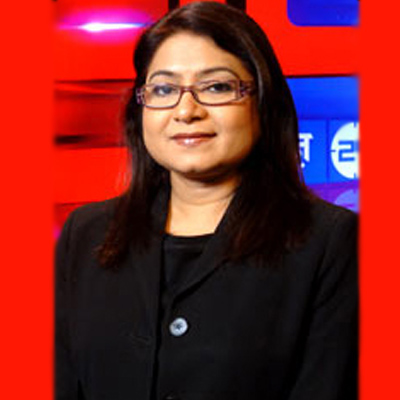
    B.A.G Films & Media Ltd. managing director Anurradha Prasad has her plate full. Having created a long list of popular TV shows, she now has her eyes fixed on FM radio, TV channels, animation and feature films.

    The company has spun separate subsidiary outfits for each of these activities. The news channels will be housed under B.A.G Newsline Network while the non news broadcasting venture will be under B.A.G Glamour.

    FM Radio is under B.A.G Infotainment and is operating under the Radio Dhamaal brand while animation will be via a joint venture with Sieindesign Co.

    In an interview with Indiantelevision.com’s Sibabrata Das, Prasad talks of the changing face of news television with the growth of tabloidisation, the excitement of FM radio and her plans to create a vertically integrated media empire.

    Excerpts:

    Are TV content companies in India under compulsion to foray into broadcasting space as an effort to scale up their business?
    We can go on doing a service job and generate ratings for the broadcasters. But the fundamental problem is that we have no ownership of those shows. So how do we do a forward and backward integration? We were already doing a 360 degree of content; now we have decided to do a 360 degree of media. If we don’t do it now, then when will we? We have taken the organisation into a position of strength. Now is the time to take the leap.

    Is the decision to have control over your destiny a fallout of B.A.G Films losing flagship shows like Sansani as Star News decided to do it themselves?
    It had nothing to do with Star retrenching our shows. It was actually a two-way process and the pullout happened in May-June. We were actually contemplating on our future course of action nine months back and last December we took a call. Having done content, we had learnt a whole gamut of things and we decided to move from B2B to B2C. The things started unfolding when we bid for FM radio stations and created a new company structure. We did our first placement in January.

    Were you looking at a model like Balaji Telefilms where a broadcaster picks up stake in the company and you venture into TV channels space enjoying an assured content supply?
    That is a good business model as it provides a huge element of security. But we wanted to be on our own. Surely, we run a higher risk. But India today is all about challenges. If we don’t take that up right now, we will have slipped an opportunity.

    You mean to say that this is the right timing?
    Media is attracting huge interest and is going to rule the entire consumer process. The whole distribution rejig is also happening. Cas (conditional access system) is being made mandatory, direct-to-home (DTH) platforms are up. Other media vehicles like mobile TV and internet are emerging . The cost paid for distribution is going to drop.

    We have created tried and proven content. We have already set up an infrastructure and have the resource network in place. What we have to do now, and correctly, is marketing, positioning and distribution. For us, it is a very calculative challenge.

    In the broadcasting space, why did you decide to get into the news and lifestyle genre?
    For the last two years, there has been growth in these genres. And they have been eating into the audience share of the general entertainment channels (GECs).

    Are Hindi news channels growing at the cost of the GECs because of crime shows and tabloidisation of news?
    The drama in the news channels is an important driver for getting eyeballs because GECs are totally focused on women. As the GECs provided no alternative for male and young viewers, they went to news channels.

    Won’t it be tough as you are entering at a time when the news market is getting fragmented among 4-5 players?
    The competition is huge and in the process people are going to any level to grab eyeballs. They are expanding the viewership through non fiction entertainment and are getting only TRP-driven. But in the process, they have never marketed their product or channel; they have sold cheap. The truth is that you can have a large number of eyeballs, but you may not necessarily enjoy fat revenues. People who watch news channels are not necessarily what the advertisers want. The perception you have created is very important. Which is why NDTV may have less viewership than some of the competitors but enjoys more revenues than them.

    Isn’t tabloidisation the winning bet for grabbing audiences in the Hindi news space?
    The non fiction entertainment in Hindi news channels has created a new kind of TV. But there are no isms being followed and the editorial staff is getting edgy in this battle for TRPs. We started tabloidisation in India with the properties (Sansani, etc) that we created for Star News. But even in that space, nobody could question our credibility. That is getting lost, especially in the last two years. And some of the good properties which are getting created outside this, are not being marketed or sold properly.

    How could you establish credibility in this genre which thrives on sensationalism?
    When we did Sansani, it was the most credible crime show. We did research and stood by our stories. We provided all the drama but also reflected the interest of the people; several tantriks who were duping people were exposed. More than programming, it was the helpline that added to the credibility. When others took the crime genre, they never did justice to it.

    As a serious organisation which is in the business of news, you can’t be doing certain things which are not credible. That line between credibility and sensationalism is very thin. And it is becoming thinner because of the growth of this genre.

    Do you see this trend growing?
    The cost of making some of this kind of programming, particularly relating to ghosts, is cheap – and there is an audience for this. But I don’t see this going on and on. It is also a happy India that we are in now.

    We plan to make a combined investment of Rs 4 billion in our broadcasting business

    Will we see opinionated news in your network?
    We will carry the opinion of the people. We should have the guts to say whatever we want to say. Otherwise, why should we be in the news business?

    How much will you be investing in your Hindi news channel?
    We plan to make a combined investment of Rs 4 billion in our broadcasting business. We are launching four channels – two in the news space, one lifestyle and `Bliss’ which will be all about mind, body and soul. For the news venture, we are pumping in Rs 2.5 billion. While the first will be a general Hindi news channel, we are still strategising on the second one. We expect to launch the Hindi news and lifestyle channels in October-November. We are using the Insat satellite and have applied for a teleport licence.

    Are you diluting 25 per cent stake each in the two broadcast companies, B.A.G Newsline Network and B.A.G Glamour, to raise Rs 2 billion?
    I can’t comment on it.

    Are India Bulls promoter Sameer Gehlaut and Kolkata-based High Growth Distributors individually picking up 12.5 per cent in each of the two companies? Have you raised Rs 1 billion each from them?
    We are a listed company. We can’t comment at this stage.

    How different will the lifestyle channel be?
    We are trying to create a new space. It will be a celebrity-driven, aspirational channel.

    For the FM radio business, would you require to raise fresh capital in B.A.G Infotainment?
    Our fund requirement is Rs 480 million. We have offloaded 10 per cent in the subsidiary company to IDBI Bank. B.A.G Films is investing through internal accruals and we have also tied up debt. We are adequately capitalised.

    Are you in talks with foreign investors?
    We will launch our brand and grow the business. We will create value before we decide to go in for a further dilution.

    When will all the 10 stations get launched?
    We have already launched Hissar and Karnal. Patiala is coming up next, followed by Muzaffarpur, Ranchi and then Jalgaon. We should have launched all our stations by August-September.

    What is the strategy behind bidding for the stations in the northern region and the sugar belt of Maharashtra?
    We believe that the towns we have selected will push for the radio revolution that has come so late in India. And the cities we have selected in the northern region falls within one extended stretch of tourist belt. Ranchi is an upcoming capital while Jabalpur is fully Hindi. In Maharashtra, the sugar belt has money.

    Will your stations have a common distinct personality?
    The tagline is `Hila ke rak de.’ This is because the belt we have selected, particularly in the north, is high on energy. We have trained our RJs accordingly. We will be a mass-based station as we have to first get the radio culture in those places.

    What are the plans for the animation business?
    We have entered into a joint venture with Sieindesign Co, a firm which has a presence in the production, distribution and licensing of animation movies and TV series. We will see this segment growing.

    How do you see growth in the parent company which will house the TV and film production business?
    We will continue to do fiction programming for general entertainment channels as we see no friction there with our new lines of broadcasting business. The scope, in fact, will broaden as a slew of new channels are in the process of being launched.

    We have also launched an international show Yeh Vaada Raha for Ary Digital, Dubai available in Pakistan, UAE, USA and UK. This is our first step towards going international. We are also foraying into Bengali feature Films with Ami,Yaseen aur amaar Madhubala. Directed by Budhadeb Dasgupta, it is set for release in October. All these efforts should give us topline and bottomline growth.

  • Government warns of stiff action against erring TV channels

    Government warns of stiff action against erring TV channels

    NEW DELHI: Even as the AXN channel has been allowed to resume telecasts in India following an apology, the Information and Broadcasting Ministry has expressed its unhappiness at the fact that the channel should have ignored warnings about its content.

    Sources in the ministry tell Indiantelevision.com that the channel, which was banned on 17 January for two months (till 15 March), “did not even acknowledge the notices of the ministry in this regard, leave aside responding to them.” AXN had been banned for telecasting programmes like The World’s Sexiest Advertisements, which the ministry felt “were against good taste or decency and were likely to adversely affect public morality.”

    I&B Minister Priyaranjan Dasmunsi had said recently that the government was concerned about the content being aired on electronic media and has warned of suitable action in case of violations of the Cable Television Network (Regulation) Act 1995.

    He had noted that some of the programmes being telecast on TV on different channels had poor quality content and women were depicted in a degrading fashion in advertisements etc. “We have to be very tough in this regard,” he had noted. Though he did not name any channels, it is learnt that they included FTV and Zee Café, apart from AXN.

    The ban order under Section 20(2) of the Act was lifted in view of the assurance by AXN that it would put in place a more effective self regulatory mechanism to ensure that the programmes and the advertisements telecast on the channel are in compliance with the Act.

  • Sun ready, DTH play becoming hot chase for satellite space

    Sun ready, DTH play becoming hot chase for satellite space

    MUMBAI: Having finalised on Malaysia-based Astro as his 20 per cent equity partner, Sun network chairman and managing director Kalanithi Maran is preparing the ground to launch his direct-to-home (DTH) service. He has decided on Iredeto as the encryption system while the set-top boxes (STBs) will be from Coship Electronics in China and South Africa-based UEC Technologies, a source close to the company says.

    “He is also looking at more STB vendors. Besides the basic box which will be competitively priced, he will have graded STBs. Multiple vendors will ensure supply safety in case of a huge demand for his service,” adds the source.

    Maran will be using MPEG-4 technology that will allow him to compress more TV channels per transponder. While MPEG-2 can pack in around 12 channels, the advanced compression technology will be able to accommodate over 20 channels.

    Maran will have seven Ku-band transponders on Insat-4B, which launches on 10 March, while Prasar Bharati’s free-to-air (FTA) package DD Direct Plus will have five on the same satellite.

    He may consider himself lucky when the launch of Insat-4C satellite failed in July 2006 after the rocket carrying it veered off course and exploded. He had booked six Ku-band transponders (and one more for digital satellite news gathering) on it for Sun Direct’s DTH service.

    By being located on the same satellite, Sun’s subscribers will be able to access DD Direct’s channels without Maran having to separately put them on his transponders.

    Dish TV which was sharing the NSS-6 satellite with DD, will not be hit badly after the migration. Since NSS-6 is at 95 degree East, a minor realignment of antenna will be required for receiving the channels as Insat-4B shall be located at 93.5 degree East. Tata Sky, on the other hand, will have to recarry DD channels on their transponders.

    The DTH play in India is, indeed, turning out to be a hot chase for satellite space. If Tata Sky had to wait for the launch of Insat-4A as rival Dish TV aggressively went on mopping up customers, it is now the turn of Anil Ambani’s Bluemagic and Bharti Telemedia to plead with the Indian Space Research Organisation (Isro) to provide them with Ku-band transponders.

    In the sprint to start DTH before the market gets taken away, Bharti may be the clear loser. Unless, of course, it gets the approval from Isro to be on Measat-3, a foreign satellite launched from the Astro Group.

    “Measat has made their Ku-band transponders available for us and have supplied the data. We are studying it technically and are making an internal evaluation,” says Isro contract management and legal services director SB Iyer.

    The satellite has 49 dbW (decibel Watts) as compared to Insat’s 53. “We have indicated this problem and Measat has said that it would examine it and come up with a solution. Insat-4B has 53 dcW and offers a powerful beam across the country. We will have to ensure quality and also come into an agreement with Measat. Besides, the users will also have to express their interest in the satellite,” says Iyer.

    Measat-3 has 24 Ku-band transponders and has been designed to provide capability for data services and DTH applications in Malaysia, Indonesia and the Indian Subcontinent.

    If no clearance is given to Measat, Bharti will have to wait the longest with Insat-4G launching only by 2008-end. The DTH market could possibly have settled by then with the spoils being distributed among Dish TV, Tata Sky, Sun and Reliance’s Bluemagic.

    Anil Ambani will get a shot at the DTH market after Insat-4CR (replacement) launches in the quarter beginning July this year. Reliance has asked for eight Ku-band transponders and Isro is reserving the remaining four for other users like National Informatics Centre.

  • Telefónica, Alcatel – Lucent conducting a pilot project for mobile interactive multimedia services in Spain

    Telefónica, Alcatel – Lucent conducting a pilot project for mobile interactive multimedia services in Spain

     MUMBAI: Alcatel-Lucent and Telefónica are conducting a pilot project for mobile interactive multimedia services in Spain. The pilot project will encompass an offer of interactive TV, radio and music services for mobile handsets.

    The tests started in early October 2006 and are scheduled to run for six months.

    Telefónica Móviles España general director of technology Cayetano Lluch says, “We want to offer our customers the most complete personalised best-in class multimedia experience, that brings the full benefit of interactivity and excitement into their everyday lives. In the framework of this multi-faceted trial, we are eager to cooperate with Alcatel-Lucent and we will test its end-to-end solutions portfolio covering mobile TV, radio and music service delivery.”

    Alcatel-Lucent’s convergence activities president Marc Rouanne says, “With more than 80 mobile TV and video services in operation worldwide, Alcatel-Lucent enjoys a leadership position in the booming mobile TV and radio market. We are proud to have been chosen by Telefónica to conduct these comprehensive mobile TV, radio and music trials, as this will allow us to demonstrate our capability to enable interactivity.”

    The framework of this agreement Alcatel-Lucent is providing Telefónica with a trial platform of Alcatel-Lucent’s mobile interactive services. Additionally, Telefónica will test a set of complementary Alcatel-Lucent’s applications to bring full interactivity and enjoyment to the subscribers, all of them using the same platform and some elements already provided.

    With Alcatel-Lucent’s Mobile Interactive TV solution, Telefónica will be able to create new, high-quality, interactive television services, allowing mobile end-users to watch high-quality TV channels, consult an electronic program guide (EPG) in a preferred format, rapidly change channels or content, and use contextual interactive services, such as ordering content associated with a TV programme, with one or two key strokes in their handsets.

    Alcatel-Lucent’s mobile interactive solution will provide Telefónica’s end-users with a new way to hear radio on a mobile phone, allowing them to select different FM radio channels and to browse the Electronic Program Guide of these channels. In addition, interactive services will be linked to the content selected by the operator, that spans voting, alerts and interactive advertising services.

    Alcatel-Lucent’s mobile interactive Music solution includes new music discovery services, music and video catalogues, as well as cross selling of several artist’s related content (ring tones, video clips, full tracks and wallpaper).

    Alcatel-Lucent’s “Unlimited Mobile TV” solution uses a 3G-friendly hybrid satellite and terrestrial infrastructure based on the forthcoming DVB-SH broadcast mobile TV standard in the S-Band (2.2 GHz). It enables the delivery of an unlimited number of TV channels to an unlimited mobile audience with unlimited coverage.

    In addition, to complement this ongoing technical evaluation, Telefónica and Alcatel-Lucent will perform market tests. Creating an ecosystem of key players, Alcatel-Lucent ensures the delivery of mobile interactive services on the right network, suited to the most appropriate content and advertiser sponsorship to the subscribers.

  • NDTV floats subsidiary in Netherlands; Q3 net profit up 85% at Rs 48.8 million

    NDTV floats subsidiary in Netherlands; Q3 net profit up 85% at Rs 48.8 million

    MUMBAI: News major NDTV Ltd, while declaring an 85 per cent rise in net profits for the quarter, anounced that it has floated a subsidiary – NDTV Networks BV in Netherlands.

    This new company will wholly own NDTV Networks Plc and its underlying subsidiaries – NDTV Imagine, NDTV Lifestyle, NDTV Convergence and NDTV Labs and 50 per cent in NGEN Media Services. All these subsidiaries are currently wholly owned by their respective parents and would engage in implementing the new business initiatives to be undertaken by NDTV, the company said in a release.

    Indiantelevision.com had first reported that NDTV Group had floated Networks Plc, UK, which would play a big role in bringing in investments for the entertainment and other non news channels. The company had applied for Foreign Investment Promotion Board (FIPB). Reportedly, the approval is for pumping in $130-160 million in the form of foreign direct investment (FDI).

    Hindu Business Line has reported that the subsidiary would raise funds in the overseas market, particularly through listing on the Alternative Investment Market (AIM) segment of the London Stock Exchange. While $106 million would be invested into NDTV Imagine (a non-news Hindi mass entertainment channel), FDI to the tune of $25.23 million would be pumped into NDTV Lifestyle which would be engaged in the business of content production for TV channels dedicated to travel, food, fashion, shopping and health and wellness in India and abroad.

    NDTV Q3 net profit up 85 per cent at Rs 48.8 million

    Meanwhile, NDTV has reported 85 per cent rise in net profit to Rs 48.8 million in the third quarter ended 31 December 2006 against Rs 26.4 million in the year-ago period.

    Total income rose 15.21 per cent to Rs 793.8 million from Rs 689 million during the same period. The company’s operating profit margin dropped from 22.24 per cent to 17.77 per cent year on year.

    Profits and revenues rose despite huge incubation costs, the company said in a release.

    “NDTV’s Indonesian JV (Astro Awani) made profits this quarter within just six months of its launch. The channel is on track to launch its Malaysian channel shortly. The company has also launched operations in Australia and New Zealand,” the statement added.

  • NDTV Networks Plc, UK, seeks FIPB nod

    NDTV Networks Plc, UK, seeks FIPB nod

    MUMBAI: NDTV Group is setting up a company in the UK as part of its plans to launch a Hindi entertainment channel, sources close to the company say.

    The company, NDTV Networks Plc, UK, is expected to own a stake in the Indian company that will launch the channel. It is not yet clear whether NDTV Networks will wholly own the Indian company or a part of the stake.
    NDTV Networks has already made an application to the Foreign Investment Promotion Board (FIPB) for approval, stating that the company’s activities would include “non news and current affairs channels.” More details are not available.

    NDTV Ltd. had earlier announced it would form NDTV Ventures to start a slew of TV channels, including a Hindi general entertainment channel. The non-news forays would be undertaken by NDTV Ventures and will have under it the entertainment and new media divisions, the company had said.

    NDTV Group will be raising money to support its entertainment channel, market sources say. The UK-based company will play a big role in lining up investments for NDTV’s expansion plans in the area of non news channels, they add. How this will be structured, though, remains unclear at this stage.

    When contacted, NDTV Ltd. director Narayan Rao declined to comment on the issue. “We will make an announcement of our plans soon,” he said. NDTV’s chief executive for growth and strategy Vikram Chandra also refused to talk on the subject.

    NDTV has roped in filmmaker Karan Johar for the Hindi general entertainment channel. His production house, Dharma Productions, will hold a small equity stake in the channel.

  • Broadcast bill may look at news on pvt FM channels

    Broadcast bill may look at news on pvt FM channels

    MUMBAI: The government appears to be veering towards acceding to a long standing demand of private FM radio networks that they be given news broadcasting rights.

    The Broadcasting Bill, to be placed in the next session of Parliament, is likely to contain the provision of giving news broadcasting rights to private FM channels, the Press Trust of India news agency has quoted All India Radio director-general Brijeshwar Singh as saying in Kolkata today.

    Singh, however, said that there was opposition to it already from some political parties, PTI reported.

    Slamming what he termed as the sensationalisation of news by private TV channels, Singh suggested a regulatory mechanism to check this practice. Singh was also quick to point out that AIR “has not been accused of this”.

  • IOL Broadband to soft launch IPTV services on BSNL network in Mumbai

    IOL Broadband to soft launch IPTV services on BSNL network in Mumbai

    MUMBAI: IOL Broadband Ltd is set to soft launch its IPTV services on the state-owned Bharat Sanchar Nigam Ltd (BSNL) network in Bangalore on 14 January.

    The company, which has a non exclusive tie up with BSNL for setting up the content delivery network, has already started trial runs in Bangalore. “We are also looking at launching in Kolkata, Chennai and Bhopal,” says IOL Broadband executive director Oberai.

    IOL is yet to make a commercial launch of its IPTV services in MUmbai, the first city where it kickstarted operations on the MTNL network. “We will make a commercial launch when we are able to offer 100 TV channels. We are currently offering 40 channels and have signed up with Star,” says Oberai.

    The company has also signed a revenue share agreement for its IPTV service with Anytime, a consortium of major Hollywood Studios comprising Disney, Fox, Warner, and Universal which will provide access to Hollywood movies.

    Bennett Coleman & Co Ltd (BCCL), which is the holding company of the Times Group, has picked up a small stake in IOL Broadband for Rs 50 million.

  • Alcatel demonstrates Europe’s first live mobile TV in S-band

    Alcatel demonstrates Europe’s first live mobile TV in S-band

    MUMBAI: A few days ago Paris based communications service provider Alcatel successfully demonstrated Europe’s first broadcast of live TV channels on mobile handsets in S-band. It is using the new DVB-SH standard (Satellite services for Handhelds), which is currently being drafted by the DVB Project. To perform this demonstration, Alcatel was assisted by UK broadcasters Sky, ITV and BBC.

    Representatives from European mobile operators, TV broadcasters, industry analyst firms and regulatory bodies attending this demonstration were able to enjoy high quality images displayed on SAGEM myMobileTV handsets. These terminals are using the S-band telecom frequency between 2.17GHz and 2.20GHz, which is adjacent to the 3G/UMTS band. 30MHz of spectrum is currently available all across Europe and in other major regions in the world.

    DVB-SH is a new technology targetting the S-band. DVB-SH is a related standard to DVB-H. With DVB-SH technology, Mobile TV signals can be broadcast from satellites as well as from terrestrial transmitters directly to handhelds. DVB-SH handhelds can be designed in such a way that they become compatible with DVB-H so that both standards can be received in one end-user terminal.

    In addition, Alcatel demonstrated two possible key technical features using the DVB-SH standard. Reception Antenna Diversity, a feature using two antennas inside the same mobile device, enables improvements in the signal quality under difficult conditions. Furthermore, improved Time Interleaving overcomes fading impairment in mobility conditions. The significant quality enhancement was demonstrated by implementing these DVB-SH features.

    Professor Ulrich Reimers, Chairman of the Technical Module of DVB Project said, “I am delighted to have been given the opportunity to witness a live Mobile TV demonstration in the S-band even before the new Mobile TV standard has been finally designed. Within the DVB -Project, we have decided to give that standard a new name – DVB-SH – digital video broadcast from satellite for handhelds. DVB-SH is a perfect complement to other standards, such as DVB-H, which is typically using UHF frequencies but is capable of using the L-band. Thus DVB-SH may have a significant impact on the global Mobile TV industry.”

    Alcatel’s mobile broadcast activities president Olivier Coste said, “Quality of service is essential for operators to attract and retain Mobile TV users. Today, we demonstrated that high quality live Mobile TV using the S-band works. This can be up and running commercially very soon. With the additional benefits of universal indoor and countrywide coverage, the fundamentals of our solution are already solid enough to enable operators to profit from sustainable mobile TV market growth thanks to the S-band.”

  • Zee intensifies focus in south, redesignates Ajay Kumar as head of south initiatives

    Zee intensifies focus in south, redesignates Ajay Kumar as head of south initiatives

    MUMBAI: As part of intensifying its focus on the Southern states, Zee Network has redesignated R Ajay Kumar as head of the south initiatives.

    Kumar now has an additional charge and independently heads the distribution business of all the 32 Zee and Turner Channels in all the four southern states, says an official release.

    Earlier, he was the business head of Zee’s south-language channels.

    Kumar has been associated with Zee Telefilms in last one and half years, spearheading Zee’s South foray by launching two of it’s South-focused TV channels – Zee Telugu and Zee Kannada.

    Zee made its first move by launching regional channels in Bangla, Marathi, Gujarati and Punjabi, and then came Zee Telugu in 2004.

    Also in the pipeline is the launch of Tamil and Malayalam language channels, the two lucrative and difficult markets to penetrate.