Tag: TV channels

  • Indian HD TV channels: attracting brands, and media agencies

    Indian HD TV channels: attracting brands, and media agencies

    MUMBAI: There was a time not so long ago when Sony Entertainment Television‘s Six HD channel was getting almost no TV commercials. It was the place where you got to watch sports almost uninterrupted.

    No more.

    With the Sony Entertainment Network and other TV networks focusing on increasing their respective HD TV channels‘ reach, and MSOs and cable TV operators and DTH operators beginning to offer and attracting subscribers for the clearer HD TV channel services, it is no surprise to see TVCs on the trot on HD channels.

    Says Sony Six and Max executive vice president and business head Neeraj Vyas: “Advertising has started in HD and it will eventually catch on, after all everyone is looking to do business. You can’t be running a channel which is free of advertising. Once subscriptions settle down post digitisation, we will witness an even greater rise in the number of ad spots on HD TV channels as well.”

    Among the brands which have started advertising on Sony Six HD during the ongoing Pepsi IPL6 include: Pepsi, Parle Krackjack, Raymond, Matrix, Renault Duster, LG, Samsung Galaxy Note 4, Vicco, Frooti, Godrej Good Knight and Coke.

    Media industry sources reveal that advertising on HD entails a fraction of the cost that is usually spent for TV spots on regular standard definition channels. Says a media agency CEO: “If a media buyer wants to buy ad spots for all the 76 matches on Max for IPL6, the rates will be approximately Rs 4,25,000 for 10 seconds and for Sony Six HD the rates will be Rs 50,000 for 10 seconds.”

    Vyas agrees that TV commercials rates today are far lower on HD transmission than standard definition television ad rates, but that is because of low HD TV penetration rates in India. “My estimate is that there are about 1.2 to 1.4 million HD TV subscribers in India,” he says. “But it is, however, a step in the right direction because everything globally is moving towards HD.”

    “The fact of the matter is that advertisers and agencies should look at using HD channels more to air their TV commercials,” says a media observer. “For certain brands and categories, they are ideal vehicles to reach out to selected targeted audiences.

    HD subscribers are normally well-heeled, have travelled, have large disposable incomes, are looking for better things out of life, and are willing to pay for them. Hence, automobiles, expensive phones, travel services, airlines, computers and tablets, high end fashion brands would do well to use HD channels to advertise.”

    Estimates are that HD TV channel advertising accounts for barely a quarter per cent of ad spends on TV in India. But the increasing uptake of HD TVs and channels by consumers indicates that it is a medium that is going to engage media agencies and advertisers.
  • Empanelment with DAVP of 22 TV channels expires

    NEW DELHI: The Directorate of Advertising and Visual Publicity (DAVP) has said that empanelment of certain television channels for the period 2012-15 has expired as they failed to apply for fresh empanelment before the last date, 15 December.

    These include the Lok Sabha TV, two channels of Disney, Hungama TV, Music India, and 17 regional channels.

    It has said that regional channels may apply for the empanelment from the first to the seventh day of every month through the online form.

    Meanwhile, DAVP has extended by three months up to 31 March 2013 the empanelment of FM radio channels.

    This follows the failure of the Information and Broadcasting Ministry to announce the guidelines for empanelment and rate of FM Radio channels.

    The current deadline was to expire on 31 December and it is understood that the Ministry is trying to iron out some thorny issues so that it can also clear the path for ascending e-auction of the FM Radio Phase III.

  • NBA expresses anger at treatment meted out to mediapersons

    NBA expresses anger at treatment meted out to mediapersons

    NEW DELHI: The News Broadcasters Association (NBA) today expressed deep shock and concern that several journalists, camera persons and media crew from various news channels had been injured in the police action at India Gate yesterday while reporting widespread anger against the gang-rape of a young girl and against rapists in general.

    It noted that expensive broadcast equipments had been damaged. The fact that water canons were used at specific media locations, and journalists even with mikes in their hands were injured, suggests that the media was targeted.

    The NBA asserted that “all member channels have reported the protests over the last few days with great maturity, sensitivity and restraint. Any police action against our reporters is therefore unacceptable and condemned in no uncertain terms. It would be a sad day for the country, and democracy, if any attempt is made to muzzle the media.”

    NBA member channels, and indeed, most of the news media, “have condemned the violence that has crept into the protests and have repeatedly advised restraint and requested for peace and calm. However it is the job of the news media to report on events factually and it has done this in the last few days in a balanced manner.”

    The NBA appealed to the Government to ensure that media is allowed to perform their duty in a free and fearless manner.

    Meanwhile, some TV channels carried scrolls late in the evening alerting about anti-social elements who had joined the protests and calling upon the viewers to call back their children and family members as they could be harmed by these elements.

  • ‘India is the only market where we pay carriage fees for our channels’ : BBC Worldwide Channels, Asia senior VP, GM, Mark Whitehead

    ‘India is the only market where we pay carriage fees for our channels’ : BBC Worldwide Channels, Asia senior VP, GM, Mark Whitehead

    BBC Worldwide, the commercial arm of BBC, has decided to shut its two channels in India. This will mark the closure of BBC Entertainment and CBeebies from 1 December and reflects the difficulties that niche channels have in growing their business in an analogue cable TV driven market.


    In an interview with Indiantelevision.com‘s Ashwin Pinto, BBC Worldwide Channels, Asia senior VP, GM, Mark Whitehead explains why.


    Excerpts:


    BBC Entertainment was refreshed last year. What went wrong?
    The nature of the Indian market for pay-TV channels make the economics of running channels very challenging at this time. We have reluctantly concluded that we need to close our channels.


    Could you talk about the carriage costs that had to be incurred versus revenues that were earned?
    India is the only market where we pay carriage fees for our channels. We can’t go into commercially sensitive detail on our revenues.


    BBC Worldwide was talking to platforms like the One Alliance. Why did talks fall through?
    We did not choose to comment on speculation at the time and I’m sure you will understand that we won’t be doing that now.


    Was the decision to exit part of the overall cost re-structuring exercise that is going on?
    This decision has nothing to do with the overall restructuring of BBC Worldwide. We took the difficult decision to close the channels for commercial reasons.


    Some of the reasons included the uniquely challenging pay TV market in India and the delays to digitisation.


    ‘India is a uniquely challenging market and decision to withdraw CBeebies and Entertainment is not part of an Asia-wide view

    Didn‘t BBC Entertainment have an edge over competition as it covered three genres – entertainment, factual and lifestyle?
    Both channels – BBC Entertainment and CBeebies – have been exceptionally well received by the Indian audience. However the uniquely challenging pay TV market in India made the economics of running them very difficult at this time.


    CBeebies was ad free. Is running an ad free channel in India unviable at the moment?
    Advertising is currently a major source of revenue for pay TV channels in India. Without that revenue we found it unviable to run CBeebies in India at this time.


    Having said that isn‘t this the wrong time to exit given that the digitisation process has just started with Mumbai, Delhi already switching off analogue signals?
    Digitisation has been slow and the long term impact on the economics of running a channel is unclear at this stage. If those economics improve with digitisation, we will reconsider launching the channels.


    Is BBC Worldwide Channels looking more carefully at the cost structure across Asia and are you exiting other markets to an extent?
    India is a uniquely challenging market and our commercial decision to withdraw the CBeebies and Entertainment was not part of an Asia-wide review. We have no plans to close channels in any other markets at this time.


    There have been a lot of changes in the BBC such as a new DG and COO. How will this affect the functioning of the channels business?
    The international Channels business is part of BBC Worldwide, the commercial arm of the BBC.


    BBC Worldwide has a strong focus on international markets, and our channels business remains an important part of that strategy for growth. We have a clear leadership structure running the channels business with David Weiland as acting Managing Director of Channels and I (Whitehead) running the Asia business.


    Is there the chance that BBC might re-enter India in 2015 when digitisation is complete?
    We believe India is an exciting market and in the event of changes in the options available to us, we would certainly consider re-launching our non-News channels in the market.


    BBC Worldwide remains committed to India, where BBC World News – the BBC’s international news and current affairs television channel – continues to be available across the market, along with the bbc.com and bbchindi.com websites, BBC Hindi radio and Global India, a new primetime programme produced by BBC Hindi TV which launched on five ETV channels this month.


    In addition, BBC Worldwide operates a TV production business, a content syndication business and Lonely Planet in India. BBC Worldwide is also evaluating the potential for a number of digital initiatives which have been successfully developed in other markets. BBC Entertainment programmes will also continue to be available on other channels in India – both terrestrial and cable, as well as digitally on our YouTube channel.

  • Zovi.com unveils its first TV commercial – ‘Get smart about style’

    NEW DELHI: Online shopping portal Zovi.com has launched its first TV commercial – ‘Get Smart About Style‘, highlighting the site as the destination for the widest range of clothing and fashion accessories for men and women.

    Targeted at value and quality seeking shopping enthusiasts across the country in the age bracket of 20 to 35 years, Zovi.com‘s new campaign emphasizes ‘Get smart about style‘ which communicates the essence of Zovis mission of simplifying fashion and lifestyle to fulfill the aspirations of people, online.

    Conceptualised in a story-telling format, the TVC is designed in a way that the audience realises that it‘s possible to get fashionably transformed with Zovi.com. The campaign highlights situations in which the protagonists are able to fulfill their fashion and lifestyle needs by getting the stylish and effortlessly cool clothing at affordable prices. The TVC is being created in 3 languages – Hinglish, Tamil, Telugu to cater to multiple regional demographics while having a national appeal.

    Commenting on the commercial, Manish Chopra, CEO Zovi.com, said, “Zovi‘s mission has always been of simplifying fashion and fulfilling the aspirations of our consumers at the click of a mouse. This commercial is reflective of our deep focus of making our consumers look good and making the process very convenient. It also talks about the fact that we have the option of cash on delivery and also an extremely fair exchange policy. This commercial marks the beginning of our advertising campaign which I‘m sure will make an impact on the audience.”

    The campaign has been developed by JWT for Zovi.com. The campaign will roll out across the country, through various TV channels to drive awareness and encourage consumers to look for unmatched range and variety on Zovi.com

    The ad is set against the backdrop of a class reunion where a group of women are discussing that there all the guys from their class look really bad now. Suddenly, a very smartly dressed guy appears and catches the attention of all the women. The women fail to recognize him and it is only when he comes and refreshes their memory about the fact that he used to be a geek called Gautam is when they realize who he is.

    They ask him if the credit of this fantastic transformation should be given to his wife. He then turns around and says that it‘s all thanks to Zovi.com.

  • BBC finalises creative services roster

    BBC finalises creative services roster

    MUMBAI: Following a competitive tender, five agencies have been appointed to the BBC‘s restructured creative services roster.  

    “WInterbrand has been appointed for brand strategy work, while the brand identity roster has gone to Interbrand and Devilfish. Karmarama has been hired and RKCR/Y&R reappointed for creative services.

    Thirteen companies participated in the tender process, which began with a pre-qualification exercise in July 2010 and shortlisting in November 2010.

    The roster will be in place for two years, with the option to extend for a further two. It will start in March 2011. Suppliers will work across the BBC‘s public service portfolio including the full range of TV channels, local and national radio networks, and new media services.

  • Govt issues advisory on coverage of Mumbai terror attack anniversary

    Govt issues advisory on coverage of Mumbai terror attack anniversary

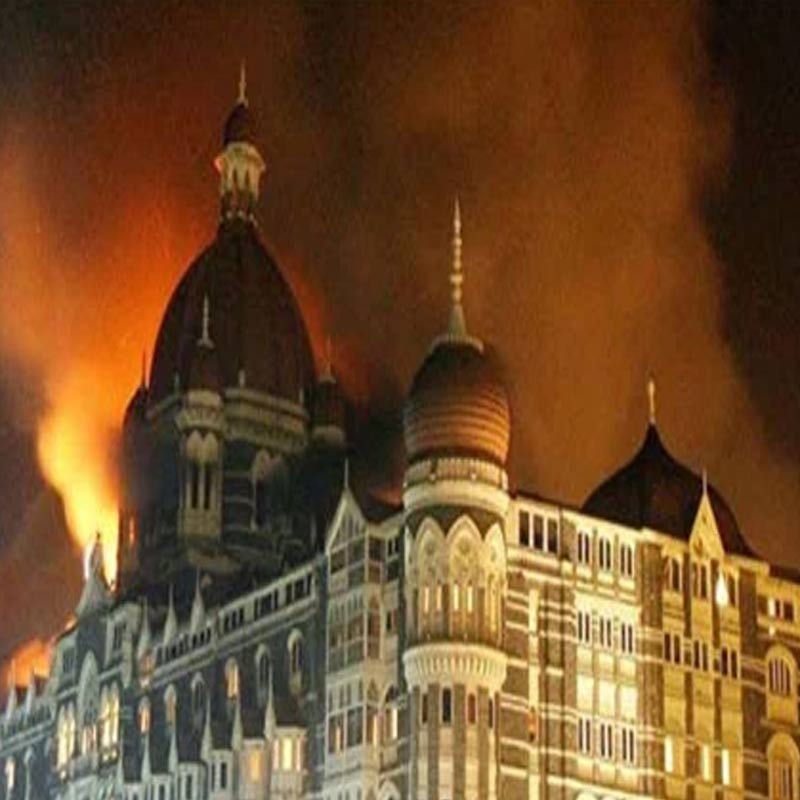
    MUMBAI: Ahead of the first anniversary of the Mumbai terror attack, the Information and Broadcasting Ministry has issued an advisory to all television channels urging them to do “balance” and “responsible” reporting while showing programmes on the incident.

    The Ministry has said that as the investigation and trial of the terror attacks in Mumbai are in progress, there is need for balanced coverage.

    On the occasion of the first anniversary of the terror attacks in Mumbai on 26 November 2009, the Ministry expects channels to show special programmes, news items, talk shows and interviews to highlight the incidents of last year.

    “Replays of disturbing visuals showing scenes of blood and gore or images of dead or seriously wounded or the emotional distress of victims/hostages and their families may bring back dreaded memories of the tragic incident and may indirectly fulfill the basic design of the terrorists to spread fear and insecurity in the minds of people,” the advisory said.

    The media has been advised to keep in mind the contents of the communication while telecasting programmes in connection with the anniversary of Mumbai terror attacks.

    The government had issued directives on 27 November and 3 December last year to media, regarding the coverage of the terrorist attack, in which TV channels were asked to exercise caution while covering the incidents to avoid any adverse impact on the rescue operations.

    The advisory noted that while the media has “always been in the forefront of the crusade against terrorism by building strong public opinion and consensus against the senseless acts of terrorists”, it is necessary to continue to display “a high degree of maturity and sensitivity” while covering events of terror and terror related issues.

    “Perhaps the occasion could be used to reiterate India’s commitment to fight terror and our continuing resolve to effectively counter any acts of terror against the country,” the Ministry communiqué added.

  • ‘India is the only market where we pay carriage’ : Bruce Dover – Australia Network CEO

    ‘India is the only market where we pay carriage’ : Bruce Dover – Australia Network CEO

    Australia Network, the international channel from the stable of Australian Broadcasting Corporation (ABC), has a hybrid mix of news, drama, lifestyle and kids programming.


    The state-funded channel, which has an international presence in over 44 countries across Asia, the Pacific and Indian subcontinent, is planning to launch a kids channel for the pre-school and the 8-14-year-olds.


    The expansion plan in India also includes introduction of subtitles in English and Hindi. Co-production deals are part of the agenda to keep in line with India as a focus area for growth.


    In an interview with Indiantelevision.com’s Ashwin Pinto, Australia Network CEO Bruce Dover talks about how the hybrid programming model has worked in many markets. An old hand at media, Dover was Rupert Murdoch’s right hand man in Beijing. He went on to write a book titled Rupert Murdoch’s Adventures in China.


    Excerpts:

    Being a single channel broadcaster is a tough proposition. Are you planning to launch more channels in India?
    The ABC is looking at an Australian kids channel. This would cover both pre-school and the 8-14-year-olds. The idea is to roll the channel out early next year. But this would depend on the funding that we get from the Australian government.

    The BBC made an entry into India after syndicating their content to the pubcaster. Do you have any such plans?
    We have to be careful not to cannibalise our content. Otherwise you might want to start a kids channel, but find that you have already sold your content to other channels.

    How do you plan to grow in India?
    We are planning to introduce subtitles in the fourth quarter of this year. Perhaps, this is necessary because of the Australian accent that our coverage would have. We are also looking at Hindi subtitling for our movies, dramas and documentaries.We already do subtitling in Vietnam. Indonesian subtitles have been introduced this week.

    India is flooded with strong English international channels. How would Australia Network make a mark in India?
    Our speciality is that we are a hybrid channel with a varied programming mix. We have news and current affairs which make up 25 per cent. Then there is lifestyle and dramas, documentaries and children’s programming.

    Earlier the thinking was that TV channels fit single genres the best. International channels like NHK, though, are now following our model.


    The lifestyle content is in terms of travel shows and what it is like to be an Indian student in Australia and vice versa. We have a show called Student Postcard where one learns about the good, the bad and the ugly of studying in an Australian university. Can you go out? Can you meet girls? You want to know if certain areas are safe to go out at night.


    Our aim is to give Indians more insight into Australia. We do English language learning which is popular in India. This is for students who want to study overseas. We have programming as well as a site which helps you learn and become more proficient in English. Also, there is the cricket link. This helps drive interest in our channel.

    India is a difficult market to get such a niche channel like yours distributed. How much is Australia Network spending on carriage?
    India is the only market where we pay carriage fees. I can’t get into the specifics of that, but we are working with the Setpro team and they have good relations with the operators. We have a five-year deal with them.


    Almost 70 per cent of our viewership comes from the South. We are on the Sun Direct DTH platform. We are also available on several cable networks across the country. We have identified 15 towns where we want a sizeable presence.

    Though the government funds us, the people of Australia support us. We fill up a void left by the commercial broadcasters in kids programming. Our news and current affairs content also does not carry ads

    Are you looking at co-productions in India?
    It is one of the areas we are looking at. We feel there is a big opportunity here. You could get an Australian cricketer and an Indian cricketer coming together for a show. Factual content around interesting issues would be our area of focus.


    We are also looking at doing co-productions around children’s content. We have some IP software. We do kids science programming in other countries. The software and the textbooks can be recreated.

    How many feeds does Australia Network have?
    We have three. One is for the Pacific region, which is important as there are not many channels carrying independent news in this belt. Then there is one for North and Southeast Asia. A third feed is for South Asia. We are now looking to have a feed for the Middle East.

    Which are your key markets?
    Indonesia, Singapore and Hong Kong are key markets for us. We recently launched in Indonesia and Malaysia and are satisfied with the progress we have made.


    India is also an important market for us. We just went through a re-branding process with the tagline ‘From Our World to Yours.’ It is about introducing Australia to India.

    What was the aim of the rebranding?
    We wanted to make it more relevant. We did work with Saatchi and Saatchi as they had the Tourism Australia advertising contract. They spent half a million dollars on research and focus groups as the contract was worth $40 million. We went to them to find out how brand Australia is being perceived in the market.

    How difficult is it to be a public service broadcaster when you have to depend on government for funding?
    We only earn 10 per cent of our costs. The government funds us. The ABC gets its budget every three years. But the people in Australia have no problem with that. The ABC has a long history of producing world class children’s programming. There is an educational bent to it and we have shows like Wiggles. Besides, we do not carry ads, something which parents love. We fill in a void left by the commercial broadcasters.

    Our news and current affairs content also does not carry ads.

    How has the global downturn affected ABC?
    The current economic situation provides an opportunity for us as private networks scale back on their expensive dramas, news and current affairs. They are forced to focus more on studio-based cheap reality shows.

    Do you have plans for the digital space?
    We will take this up as our focus area next year. We are looking at English learning applications. We will also provide news and current affairs video content on the mobile platform.

  • TV channels to face action for showing political ads after deadline

    TV channels to face action for showing political ads after deadline

    MUMBAI: Government has said that it will take action against television channels which are playing political advertisements despite campaigning coming to an end on 27 November.

    ‘We are starting the process of taking action against television channels. We will soon be sending notices to them and action would be taken against them,” the IANS report quoted Delhi chief electoral officer Satbir Silas Bedi as saying.

    Officials decided to take action against television channels when they noticed that many of them were airing ads of political parties even after the deadline for poll campaigning in Delhi was over at 5 pm on Thursday.

    Elections for the Delhi assembly will take place on 29 November.

  • Regulatory bill for TV channels soon, Govt tells SC

    Regulatory bill for TV channels soon, Govt tells SC

    NEW DELHI: The Ministry of Information & Broadcasting is under intense pressure from the judiciary on the issue of a content code and has informed the Supreme Court that it is soon going to introduce a Broadcast Regulation Bill and Content Code.

    The ministry has told the court that it has set up a committee comprising its own officials, as well as those from the ministries of women and child welfare, health and the trade body Advertising Standards Council of India to look into the issue.

    The apex court had asked the ministry to respond to a writ filed on by Pilot Baba that a news sting show on him had been doctored and put him in a bad light, and asked what the government was thinking on these lines.

    This is the third court order and suggestion on the sticky issue of content on news TV. The Delhi HC had already issued an interim order last month on media bodies and to the I&B officials to discuss the issue of stings and content, and report it to the HC within the next month.

    Earlier, the Delhi HC had suggested that the ministry look into forming a committee to vet every sting operation before it is aired. Alhough that was not an order, indications from Shastri Bhavan in the wake of the SC case are that there could be little option now but to do something on these lines.

    Government sources pointed out the Mumbai Police banning two channels for repeatedly showing the recent violence and distorting events in the process.

    The violence let loose by Raj Thackeray’s MNS workers on the North Indians and Big B in Mumbai had taken place on Sunday last. But way through Monday, it was being shown on all channels, giving the impression that the violence remained uncontrolled.

    Mumbai Police has said that this was a distortion because the violence had taken place for less than an hour and communal passions were being stoked by showing the same clippings throughout the day.

    The ministry had already told Indiantelevision.com that the repetition of scenes of violence and distortion of time and the extent of such violence will not be tolerated and the editors of channels must take a call on that, but the recent reportage has again shown that the media is not listening, insiders said.

    Insiders also said that the ministry had decided to give the News Broadcasters Association (NBA) some more time as the current thinking was to take the industry along for an inclusive Content Code. This seems to be the reason why the government has not taken any action when the NBA failed to send its own draft code as promised on 31 January.

    However, the situation as it is panning out from the court’s mood is leaving the ministry with very little option but to usher in the Content Code and a regulatory mechanism.