Tag: TV channel

  • ‘We are entering into an era where capital will be scarce’ :  Citi Venture Capital International managing director India region head PR Srinivasan

    ‘We are entering into an era where capital will be scarce’ : Citi Venture Capital International managing director India region head PR Srinivasan

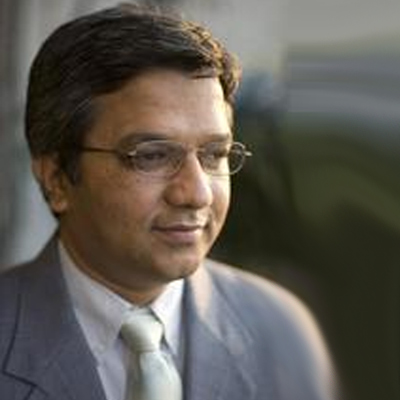
    There may be pressure on Citigroup Inc. to remove the flab with the US government agreeing to infuse $20 billion of capital as part of a rescue package, but Citi Venture Capital International (CVCI) is drawing up plans to make acquisitions at attractive valuations. Out of the $4.5 billion fund, it is yet to invest $3 billion, almost a third of which will pour into the Indian market.


    Though CVCI has made only one media investment in You Telecom, a broadband and cable TV company, it is also eyeing the direct-to home (DTH) and Hindi entertainment broadcasting space.


    In an interview with Sibabrata Das, Citi Venture Capital International managing director India region head PR Srinivasan talks about the opportunities of investing in various sectors including media at a time when capital is going to be scarce.


    Excerpts:

    Being in the midst of an unprecedented global economic turmoil, how comfortable is Citi Venture Capital International (CVCI) in its funding structure to grab buying opportunities in Indian media companies?
    We have a $4.5 billion fund, out of which $3 billion is yet to be invested. We have already invested $500 million in India. We are likely to pump in a further $750 million-$1 billion in this market while the balance will be put in China, Eastern Europe, etc. You Telecom has been our only investment in the media and entertainment sector. But as asset prices come down, we are open to picking up stakes in other verticals within the media sector.

    Have you initiated talks with any of the media companies?
    We see a good investment opportunity in DTH and are talking to one player. We may also start looking at TV channels in the Hindi general entertainment space, if they come at attractive valuations and are managed well. Even if we are headed for a slowdown, the truth is that people will still want entertainment. Since we have already acquired You Telecom, we are not looking at parallel investments in the cable TV sector. We would expand and make further acquisitions through You Telecom.

    Since CVCI has a running investment in a broadband and cable TV company through You Telecom, why is it that you are eyeing a competing distribution platform like DTH?
    There is space for all three forms of carriage – DTH, cable TV and IPTV. No form of distribution is superior or dominates over the other. In the US, both cable and DTH enjoy substantial market shares. The only country which has a single dominant platform is UK where DTH has a content advantage in form of exclusive sports telecast rights. India, however, has a content-neutral policy. The regulatory framework is also in favour of independent distributors and is neutral to broadcasters. The DTH sector also has a 20 per cent equity cap for broadcasting companies.


    The main cost in DTH is advertising. Unlike cable which has a capex requirement in the distribution architecture, DTH doesn’t have a wired cost. If you get scale in DTH, you will become profitable. The expense mix will change with volumes. But in India with so many players getting into the business, not all will get the scale.

    When CVCI bought out British Gas’s broadband business, was the investment attractive because the infrastructure of You Telecom could be used for cable TV service?
    You Telecom had world class network built to FCC standards. We were clear that we would buy this asset and wait for both competition and regulation to fall in place so that this can be developed into a last mile home entertainment network. When the government came out with Cas and DTH became active, digitalisation got a push. For the cable TV business to grow, there was need for competition, the right market, and the right regulation. We are in that environment today. India is in the early stages of having second TV – so we could have a situation where we have both cable and DTH.

    Were you not in discomfort because the cable TV sector has too many players and there is very little of last mile ownership with the multi-system operators (MSOs)?
    In terms of reaching homes, cable with 80 million does much better than telecom. The sector needs to get more organised; it is only a matter of time before this happens. The cable industry in India is a marathon and not a sprint. Though there is a capex requirement and last mile is still not under control of the MSOs, the mix looks good once you have a base of one million digital subscribers.

    ‘For the cable TV biz to grow, there was need for competition, the right market, and the right regulation. India is in the early stages of having second TV – so we could have a situation where we have both cable and DTH

    Why did You Telecom take so long in moving into cable TV service?
    Our efforts to do the video business evolved with the DTH industry. We acquired a 50 per cent stake in Bangalore-based Digital Infotainment, a small-sized cable network, to make our foray into the cable TV business. We also took a majority in Scod18 Networking, an association of cable TV distributors in Mumbai. We have cable TV operations in Mumbai, Bangalore, Vizag and Dharwad in Maharashtra.

    In You Telecom, CVCI has 85 per cent stake. How did you restructure the equity structure as the government allows only 49 per cent FDI (foreign direct investment) in a cable TV company?
    We floated Digital Outsourcing, the company that would handle cable TV business. Tulsi R Tanti and his family members, promoters of Suzlon Energy Ltd, have acquired 49 per cent stake in this company. You Telecom India owns 36 per cent while the rest is held by high net worth Indian individuals.

    How much is You Telecom investing to expand its business?
    You Telecom plans to pump in Rs 4 billion over the next two years to expand its cable TV and broadband business. If we decide to go for Headend-In-The-Sky (HITS), we will require another Rs 1.5 billion. We have 1.3 million cable TV subscribers and expect this to go up to three million. We have seeded 60,000 digital set-top boxes and expect to touch one million in the next 18 months. The cable business will grow through setting up own headends, acquiring networks and forming joint venture partners in different geographies. There is a lot of entrepreneurial talent in the cable community and we want to tap into that.

    Do you have an aggressive plan in acquiring last mile operators?
    The challenge in cable is to get direct points. We bought 5000-7000 points. Our strategy is to own last mile, but all in good time. Our plan is to own a headend and then acquire the last mile. The valuations for last mile were inflated because people thought there was abundant capital available.

    Have the valuations dropped drastically?
    For the last three years, there has been abundant capital and liquidity. Though we purchased at 18-24 months revenue, there were MSOs who bought at 30-40 months turnover. That kind of money is not available; we will not get financing for making purchases like that any more.


    Most of the mid caps have fallen over 80 per cent. The last mile business has to follow along those lines. People are not going to bid prices up. It is only a matter of time before people accept the new world realities. We are entering into an era where capital will be scarce. Business plans will have to evolve accordingly.

    Do you see yourself in an advantageous position because you are sitting on cash at a time when the credit markets are frozen and capital is hard to get?
    Money is not going to be available on tap. This will impact the way the new financial system is going to be reshaped. Every sector will feel the jolt. As new broadcasters need to raise capital, MSOs who have planned carriage revenues over the next 2-3 years to support their business models will find the going very hard. Many of them will have to redraw their plans.


    It is a good time to have cash. For those who are investing now, the returns will be higher than the previous years.

  • ‘Cable companies should start thinking like DTH operators’ : Seemanto Roy – Sahara One Media and Entertainment CEO

    ‘Cable companies should start thinking like DTH operators’ : Seemanto Roy – Sahara One Media and Entertainment CEO

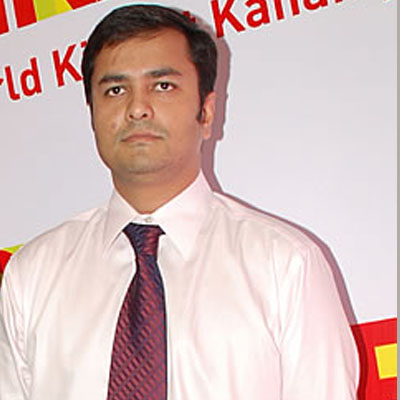
    After taking charge, Subroto Roy’s younger son Seemanto Roy has drawn up an aggressive plan to grow Sahara’s media and entertainment business. His target: launch of five channels over 6-8 months, revival of the motion pictures business and setting up of a film institute.


    In this his first interview to the media after becoming Sahara One Media & Entertainment CEO, Roy spells out his plans to Indiantelevision.com’s Sibabrata Das.


    Excerpts:

    Media companies have seen opportunities and been on aggressive mode in the recent past. Why haven’t we seen that sort of game being played out by Sahara?
    We have just launched Firangi, a world TV channel dubbed in Hindi. We are also going to launch five more channels over the next 6-8 months. This will include a Bengali language channel, details of which I can’t specify now.

    Won’t this be in the entertainment space as the channel will be under the Sahara One Media & Entertainment umbrella?
    In that sense, yes. It will be in the non-news space. But we can’t spell out the positioning of the channel at this stage. We are finalising the details.

    There were plans of launching a music channel and Sahara had also initiated talks to buy out Music India. What is the status?
    Launching a music channel is on our agenda. Though people say it is a cluttered and thin-revenue market, we believe the space is growing. There is an opportunity, if the positioning is done well. We are figuring out the positioning of the channel.

    Sahara had announced in late 2004 an investment plan of Rs 15 billion for its media and entertainment business and Percept was put in an operational role. Are you happy with the speed of the progress since then?
    We relaunched our flagship Hindi general entertainment channel and ramped up our movie production business. We also launched a Hindi movie channel called Filmy. Our focus now is to widen our channel offerings.

    How much money Sahara is going to pump in for this?
    We can’t give you the financial details. We’ll announce them early next fiscal.

    In the news channel business, alliances are taking place. But in any case, we are not interested in diluting majority

    Is there a move to transfer the broadcast operations of the entertainment channels into Sahara One Media & Entertainment?
    The process is on. We want the entertainment business to be in a single entity.

    Obviously this will enhance the turnover of Sahara One Media & Entertainment. Now the listed entity does not capture the advertising revenues which is with the broadcasting entity. But is it that the past liabilities of Sahara India TV Network, the broadcasting arm, will not be transferred to Sahara One?
    No, we are not transferring the liabilities.

    How do you separate the broadcasting arm of the news channel business?
    The news channel operations, because of the regulations on holdings and other issues, will need to be separate.

    Sahara One was planning to raise up to $50 million through foreign currency convertible bonds (FCCBs). Are you going ahead with it?
    We have no plans of raising money at this stage.

    Sahara One had diluted 14.98 per cent to Sivasankaran’s Aircel Televentures (later renamed Siva Ventures) for Rs 1.2 billion. BCCL (Times Group holding company Bennett Coleman & Co Ltd) also acquired close to 6 per cent stake in the company. Are there plans to further dilute equity?
    No.

    Sahara had mandated Ernst & Young (E&Y) for offering suggestions to restructure the news channel business. What were the recommendations?
    They were appointed to look into the growth prospects. We appoint consulting firms to get their perspectives.

    Are you looking at diluting equity in the news business?
    There is nothing.

    Are you in talks with investors?
    It is difficult to comment on this. In today’s market, alliances are taking place. But in any case, we are not interested in diluting majority.

    Why did you drop the Sahara name from Samay, your national news network?
    We gave the channel a new look. Besides, we are developing the sub-brands. Having lots of brands with the Sahara tag can be confusing. We did it in Filmy as well. We are maintaining Sahara as a network brand.


    Isn’t the Hindi news space getting too cluttered and hurting channels like yours?
    There is a lot of sampling happening at the moment. Our region-centric channels continue to perform well.

    One area where Sahara had a big opportunity but let it slip was the motion pictures business which had several hits at one point of time. What went wrong?
    The movie business doesn’t always give you hits.

    But the movie production business stayed dormant for a long time as there was an exodus in the team?
    There was a gap in between. Film production is futuristic – actors are not always available, nor even directors. But it is not that we lost momentum. We went back to get our plans in place. We will be getting back into it big time in the next fiscal. We will be producing 10 movies in 2008-09, out of which 4-5 will be big budgets and the remaining in the medium range.

    Don’t you think Percept hijacked the motion pictures platform?
    Not really, we are still working with them. We are acquiring movies – so we could be buying from them as well.

    Earlier you did a long-term deal with K Sera Sera where you even took an equity in the company. Are you looking at such deals again?
    We will follow all kinds of business models – producing films ourselves, acquiring, locking directors, co-producing (including international). We will have the studio model. We have a strong team and will also be in film distribution. Besides our own movies, we will also be acquiring for distribution. We are, however, not looking at overseas distribution now. We feel the home turf is an important market.

    What about home video?
    We are not getting into it. Nor will we be launching our music label.

    Sahara has not been going slow on movie acquisitions for satellite TV rights. Why is it so when the other movie channels have been more aggressive?
    Acquisition prices have gone up, but we have brought some big titles like Guru. We have also been buying syndicated content.

    Is it that you believe in syndication of titles rather than acquisition?
    We do both. Though we have introduced programming as well, we realise that movie channels will have to revolve around films.

    Is Filmy in course for its revenue target of Rs 500 million in the year?
    I don’t want to comment on the financials. But we are doing well and reaching our targets.

    What are the plans of beefing up content on Sahara One which seems to be hovering around 60-70 GRPs?
    The market is evolving and we have plans for the channel. In future, the fight in the Hindi GEC (general entertainment channel) space will be for slots. We are targeting slots.

    Do you have a strategy for regional channels in the entertainment space?
    We may launch two channels in the regional space. We want to test the regional market. But we don’t plan to grow in every direction.

    What made you launch Firangi and how do you see its growth potential?
    We are looking at the birth of a new genre. In the general offering, it is like a GEC. And it also can be looked at like Star World. Firangi is somewhere in the middle. We can attract audiences from both sides. The content is picked up from across the world, is fresh, contemporary and bold. And its strength is that the stories end in 6-8 months.

    Have you shelved plans to start a film institute?
    We will be in it. We are talking to strategic partners. For location, we are weighing various options including Mumbai.

  • ESPN US in mobile deal with MediaFlo

    ESPN US in mobile deal with MediaFlo

    MUMBAI: MediaFlo USA, a subsidiary of Qualcomm has signed a deal with US sports broadcaster ESPN.

    The deal will bring sports programming to MediaFlo USA’s new mobile entertainment service.

    The new ESPN Mobile TV channel – ESPN’s first on a wireless service – will offer a selection of live, simulcast sports events; breaking sports news, commentary and analysis; and realtime sports scores and game updates. MediaFLO USA will deliver this content directly to subscribers’ mobile phones.

    ESPN Enterprises executive VP Salil Mehta says, “The time is right to offer the first-ever sports wireless channel, ESPN Mobile TV. Historically, ESPN has been the leader in adopting new technologies to serve sports fans, and MediaFLO USA’s mobile entertainment service will make ESPN’s world-class programming come to life on the newest generation of mobile phones.”

    MediaFlo USA president Gina Lombardi says, “MediaFlo USA is revolutionizing television by offering, for the first time, must-see programming from world-class entertainment brands in a crystal-clear mobile viewing environment.

    “One of the keys to the broad adoption of mobile TV is the availability of high-quality content, and our agreement with ESPN will be a compelling draw for sports fans who want anytime, anywhere access to unmatched sports programming.”

    Guided by primary market research and consumer trials, MediaFlo USA intends to secure familiar, full-length content from many of the world’s leading media companies and leverage its dedicated, nationwide multicast network to deliver live, full-length, TV-quality programming to mobile phones.

  • UTV targets June launch of youth channel with Astro

    UTV targets June launch of youth channel with Astro

    MUMBAI: UTV Software Communications’ joint venture with Astro of Malaysia is fast taking shape. The youth-centric channel, aimed at the age-group of 17-25 years, is set for launch by June.

    “We are working on the content research. We plan to launch the channel by June,” says UTV Communications COO Ronald D’Mello.

    UTV will be investing Rs 1 billion in its 50:50 venture with Astro in broadcasting.

    “We will be expanding to a 360 degree entertainment venture including a TV channel as the anchor, to be flanked by activities on the internet, new media, ground events, merchandising and licensing,” says D’Mello.

    UTV will be releasing DVDs of Don and Khosla Ka Ghosla this quarter. Namesake will have an international and national release in the third week of March.

    UTV has posted a consolidated revenue of Rs 704 million, which includes capital gains of Rs 263 million from the sale of United Home Entertainment Ltd (Hungama TV), for the third quarter ended 31 December 2006.

    Net profit stood at Rs 283 million while EBITDA was at Rs 303 million for the period. The company has consolidated the financials of UESL, UTV-US, UTV-UK and UTV-Mauritius.
    UTV also announced an interim dividend of 25 per cent.

    Commenting on the results UTV CEO Ronnie Screwvala said, “The quarter has been a very eventful one; while the Hungama TV deal with The Walt Disney Company was consummated during the quarter, the Company also decided to make investments in two gaming companies – Ignition Entertainment and Indiagames Ltd in console and mobile space respectively. With these proposed investments UTV has acquired worldwide capabilities of content creation and distribution across all gaming platforms.”

    UTV has entered into exclusive sales and marketing tie up with Radaan Media, the largest TV production house in South India. “This will result in significant growth in Television businesses in the months to come. In addition to this and as a step towards entering the South Indian film production space, UTV has tied up with Radaan for co-production of all South Indian films,” Screwvala added.

    UTV is acquiring a 70 per cent stake in Ignition Entertainment Ltd (UK based company with interests in console game development, publishing and distribution across the globe) as well as a controlling stake in IndiaGames (gaming company in India, with interests in mobile and online gaming) for a total consideration of Rs 1.28 billion.

    UTV has inducted Walt Disney International president Andy Bird and Pantaloon’s Kishore Biyani as non executive directors.

  • BBC World again voted the leading TV Channel for travellers

    BBC World again voted the leading TV Channel for travellers

    MUMBAI: BBC World has been named as the Leading TV Channel for Travellers at the 13th Annual World Travel Awards for the second year in a row.

    A total of 110,000 travel agents around the world were invited to nominate their favourite TV channel, as part of an awards ceremony that was established “to acknowledge, reward and celebrate the enormous achievements to be found in all sectors of the global travel industry.”

    BBC World, the BBC’s international news and information channel, received the most votes and was presented the award at a gala ceremony in Turks and Caicos on Wednesday night. The channel also won the same award last year at the Annual World Travel Awards 2005 in London.

    BBC World’s Director of Airtime Sales, Jonathan Howlett said: “This award acknowledges BBC World’s unique appeal to the international traveller and it is a great honour to have received it two years in a row. Through our comprehensive news and business bulletins, and our weekly, award-winning travel news programme, Fasttrack, we keep global travellers fully briefed on the issues that affect them. Travel and tourism is such an integral part of the global economy and this award reinforces BBC World’s commitment to the industry.”

    BBC World’s commitment to travel and tourism has also been recognised in other awards and surveys.

    Fasttrack was voted best television feature of the year in 2005 by the British Guild of Travel Writers. In May 2005, an International Air Travellers Survey [IATS] found that BBC World was the favourite news channel and most trusted international news channel among travellers, who considered it to have greater in-depth analysis than its competitors.

    BBC World reaches nearly half a million frequent flyers per day around the world and has more than 30 tourism board clients across the globe from the Pacific to the Middle East. The channel is also seen in 1.3 million hotel rooms, 36 airlines and 46 cruise liners around the world.

  • ‘Consolidation in news business is an inevitability’ : Laxmi Goel – Zee News Ltd director

    ‘Consolidation in news business is an inevitability’ : Laxmi Goel – Zee News Ltd director

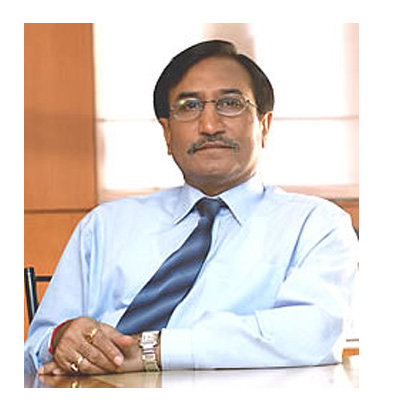
    Laxmi N Goel, director Zee News Ltd and the second of the three brothers of Essel Group chairman Subhash Chandra, is not given to hype and hoopla.

    Even when he has to announce his organisation’s achievements, true to his style, he’s most likely to hold the event in modest surroundings. A case in point being the launch of the book Pehal, which he authored, done in Federation of Indian Chambers of Commerce and Industry auditorium in Delhi instead of a five star hotel. As he says, every paise or penny saved is that much earned, which can be reinvested into the company.

    He doesn’t have any formal training in business management or television programming, but has still managed to oversee the functioning of Zee News channel quite successfully over the years after it was decided to do away with professional CEOs at the helm to manage news.

    These days Laxmi Goel spends more time discussing annual budgets and increments of his colleagues than on the exercising cycle. After all, the restructuring of Zee Telefilms has landed him added responsibilities of all the Zee family regional channels, which have been hived off into Zee News Ltd to conform to government guidelines on foreign investment in television news entities. “I wish I could find some more time for my daily walks,” Goel rues.

    In an interview with Indiantelevision.com, held at the Zee News’ headquarters in Noida on the outskirts of Delhi, Goel discusses some aspects of the restructured Zee News.

    Excerpts:

    Why was the de-merger of Zee News necessary?
    When the organization becomes big, this type of de-merger helps in better control of various aspects of business. However, for me, things still remain the same. We have to do well and show good results to our shareholders. That was the theme earlier. It’s still so.

    Have you settled down in your new role and what would be the agenda now?
    It’s still early to spell out agendas as it’d take five to six months for things to settle down completely.

    But, as I said earlier, the basic process remains by and large the same. We have started a Bengali news channel (24 Ghanta or 24 Hours) and we would evaluate our expansion options as the market pans out.

    The Bengali channel seems to be a case of the Right shaking hands with the Left. Zee’s promoter family are said to be Bharatiya Janata Party and parent RSS sympathizers, while Bengali channel partner Akaash Bangla owners are known backers of the Left parties. Comment.
    I don’t understand what political ideologies, if at all there is one, has to do with business decisions? 24 Ghanta was a business decision where Zee News thought Akaash Bangla to be the right business partner. Moreover, as Akaash Bangla is an existing TV channel, its owners had the advantage of understanding the TV business.

    What would you like to do with the organization now that you have more properties to look after, apart from Zee News and Zee Business?
    The functioning of the organization remains more or less the same. It has just taken a different avatar. What is remarkably different is that there would not be any consolidated profit and loss account for Zee News any more. You journalists can say that we would not be able to hide behind Zee Telefilms with our financial performance any more. Now, that’s a challenge too. We would have to continue showing good results and keep our shareholders happy by nurturing the bottom-line.

    Apart from that, we are now free to take independent decisions on expansion, which will always be guided by market forces. At the moment, we are not actively considering any addition to the present crop of channels, but I cannot predict the future. If a sudden need arises to have a product in a certain segment of television business or geographical area, we can consider it then.

    Do you feel that so many news channels, including those from the Zee News stable, will survive in the long term?
    India is a growing market where increasingly people are formally getting educated. A combination of this has fuelled consumption of news. The trick lies in delivering news quickly and in a manner that is consumer friendly.

    But such mushrooming of news channels all over is unlikely to be supported by the market in the long term. The process of consolidation has started.

    We would have to continue showing good results and keep our shareholders happy by nurturing the bottom-line

    Will the economics of running news channels force consolidation?
    Partly yes. Let’s take, for example, a news channel that aims to have a national presence. On an average capital expenditure on national news channel can range between Rs 800 to Rs 900 million. At times it can go beyond that too. Then the running expense per month for a national news channel comes to approximately Rs 80 million, which would include expenditure on news gathering and marketing activities. Now these figures are not small, though not huge either.

    As different news channels have different business models, over the years mounting expenses will force consolidation. This can happen in the form of mergers and acquisitions or can result in cutting down cost on news gathering and infrastructure by evolving a model where some sharing is done by various players in the industry.

    Carriage fee that most TV channels pay to cable operators, coupled with growing employee wage bill in news organizations, also add to the cost. To outsiders, these costs might not look very important, but let me assure you that carriage fee and increasing pay packets of TV journalists do weigh down a TV news organization.

    Since the Indian news market is still very active, the exact shape of consolidation is difficult to predict accurately. But consolidation is an inevitability.

    How is Zee News Ltd addressing the problems of carriage fee and bloating wage bills?
    We are not as aggressive as other news channels in holding back people who want to leave for another channel for a better pay packet. We do talk to people who want to leave and try to reason out the advantages of Zee News Ltd. However, we feel that beyond a point it’s futile to negotiate on remuneration as the demands and wish list of some people just don’t seem to end. Such people would leave anyway. If not today, then tomorrow.

    In such cases, Zee News lets people go for the larger benefit of the company and its bottom-line. And, there have been innumerable cases when former Zee News employees have requested to be taken back at the salary that they had been drawing at the time of leaving.

    As far as carriage fee is concerned, we feel CAS is the solution. Newer technologies like CAS and DTH would help in arresting the demands of cable operators, which can be unreasonable at times.

    What is the revenue mop up level for Zee News and Zee Business channels?
    A majority of the revenue, of course, comes from Zee News, which is in the range of Rs 10-20 million per month. Out of this, subscription revenue is more than advertising money.

    How are the regional channels doing financially and ratings wise?
    Most of the channels are doing well, but the actual process of consolidation is still on. Only after the formal work is complete, we’d get down to evaluate the prospects of each channel in our company (which include Zee Bangla, Zee Telegu, Zee Gujarati, 24 Ghanta, etc).

    How many news channels do you foresee in the next two to three years?
    At the national level, I foresee 2-4 channels surviving in the next three to five years time.

  • Nike and Maven Networks introduce JogaTV

    Nike and Maven Networks introduce JogaTV

    MUMBAI: Nike, Inc., and Maven Networks have launched a new internet TV channel – JogaTV. People can watch exclusive videos featuring some of the soccer greatest players, as well as some of the world’s best untapped local heroes as they demonstrate Joga Bonito — or Play Beautiful — for everyone to enjoy.

    JogaTV offers an insider view into the world of soccer via multiple video programs, all of which can be shared among friends. Video programming on JogaTV features international stars of the game including Ronaldo, Ronaldinho, Thierry Henry, and Wayne Rooney. Soccer legend Eric Cantona stars in most of the videos as the disruptive advocate leading the rebellion against slow, controlling, boring soccer and the return of a beautiful, creative style of play.

    Nike’s global Joga Bonito campaign is multi-faceted, encompassing: Joga.com, the world’s largest soccer-specific social network; Joga3, a short- field 3-on-3 game that will allow more than three million kids around the world to bring Joga Bonito to life, a Joga Bonito series of commercials and JogaTV.

    Maven Media System is the technology link between video programming from Nike and its growing social network of soccer fans. Based on patent- pending technology, Maven’s integrated video publishing and distribution platform provides unrivalled customer experiences across multiple devices for JogaTV.

    Once the JogaTV internet television channel is launched, the JogaTV icon lives on the soccer fan’s desktop for easy access. Each week, new content is delivered behind the scenes via the Maven Media System and automatically added to JogaTV. At this time a new program series is unlocked for users to explore. Nike will unlock a total of 17 different programs, one each week between April and July.

    In addition to each of Nike’s new Joga Bonito commercials, content on JogaTV includes:

    Original experiential videos featuring global soccer stars,
    Exclusive videos featuring soccer kids around the world demonstrating their skills,
    US National Team star Clint Dempsey and his “Don’t Tread” rap video,
    Viral videos featuring Brazilian greats Ronaldinho and Ronaldo,
    A weekly blog titled This is American Soccer,
    And a running clock counting down the days, hours, minutes and seconds to the US National team’s first game in Germany this summer vs. the Czech Republic.

    “Like all kids who love sport, soccer players and fans have a passion for their game that’s almost insatiable. By launching this viral, online program, we tap into that spirit by delivering highly-coveted content while extending and demonstrating the message of Joga Bonito,” said Nike US advertising director Adam Roth.

    Maven Networks CEO Hilmi Ozguc said, “Maven’s technology allows Nike to directly reach its audiences with an interactive experience that genuinely demonstrates the future of Internet TV, and enables them to accurately target and measure their campaigns. True Internet TV channels are redefining how online content is distributed, and experienced.”

    Maven Networks’ technology is the only broadband video platform that delivers a true Internet TV experience using full-screen, HD-quality video for PCs, Internet-connected TVs, video iPods, PSPs and other portable devices.

    JogaTV is available through select soccer and youth-oriented websites including joga.com and nikesoccer.com.

  • World’s first broadband environmental channel green.tv launched

    World’s first broadband environmental channel green.tv launched

    MUMBAI: The world’s first broadband TV channel dedicated to environmental issues green.tv, developed with support from the United Nations Environment Programme (UNEP), has been launched, aiming to become a “one-stop shop” of broadcast information on the environment covering everything from climate change to children’s stories on wildlife.

    UNEP said green.tv would also go live today as a podcast on iTunes as well as having a front-page listing, courtesy of Apple computers. It will carry films from around the world produced by non-governmental organizations (NGOs), community filmmakers, public sector bodies and companies with a firm interest in protecting the environment.

    “Green.tv is a truly innovative project which will no doubt influence the field of environmental film-making and research. It will eventually offer a comprehensive ‘one stop shop’ for environmental TV programming – something that has so far not been available,” said UNEP’s Division of Communications and Public Information director Eric Falt.

    “Green.tv has the potential to become a broadband reference point or benchmark in this field.”

    It will have seven channels covering: air, land, water, climate change, people, species and technologies, in each of which there will be a feature, a news item and a children’s story. With the look and feel of a global TV channel, green.tv will combine this with the best elements of the internet, giving users access to online chatrooms and the ability to watch video on demand, UNEP said in an official release.

    Director-producer Ade Thomas, who first thought up the idea, compared it to the popular Google search engine. “If you want to see a news item about climate change, watch a kids’ story about penguins or a feature about wind farms, go to www.green.tv and you’ll be able to see some engaging and thought-provoking films about the environment, at a time when a greater understanding and awareness of these issues is critical,” he said.