Tag: TV broadcasting

  • ISA issues advisory to its members on broadcasters pulling out of Barc ratings

    ISA issues advisory to its members on broadcasters pulling out of Barc ratings

    Mumbai: The Indian Society of Advertisers (ISA) has issued an advisory to its members in support of Broadcast Audience Research Council (Barc) India TV ratings. 

    In the letter, it said, “It has been brought to our notice that some publishers would be opting out of the Barc rating system.”

    The advisory draws the attention of advertisers to the practice of broadcasters that do not subscribe to the established system of advertisement measurement, which has been jointly agreed upon by all stakeholders – advertisers, agencies and broadcasters.

    The advisory reads, “advertisers may independently assess the situation and make an informed decision concerning such platforms while dealing with advertisements.”

    “In India, TV ratings are being measured by Barc, print by IRS (Indian Readership Survey) etc.” said the letter. “The primary objective of TV ratings is to know the returns on heavy media investments made by the advertisers.”

    Barc is a joint industry body set up to design, commission, supervise and own an accurate, reliable and timely television audience measurement system for India. It currently measures the TV viewing habits of 210 million TV households in the country, using 44,000 sample panel homes.

    “By using audience data, one (the advertisers) can ensure that very little advertising spend is wasted,” said the letter. “As the 19th-century famous quote by John Wanamaker says ‘half the money I spend on advertising is wasted, the trouble is I don’t know which half.”

    The letter further iterates, “The above quote isn’t true when media is measured! Wanamaker’s quote works only when the media audience is not measured.”

  • Vibhu Agarwal announces foray into TV broadcasting with Hindi GEC

    Vibhu Agarwal announces foray into TV broadcasting with Hindi GEC

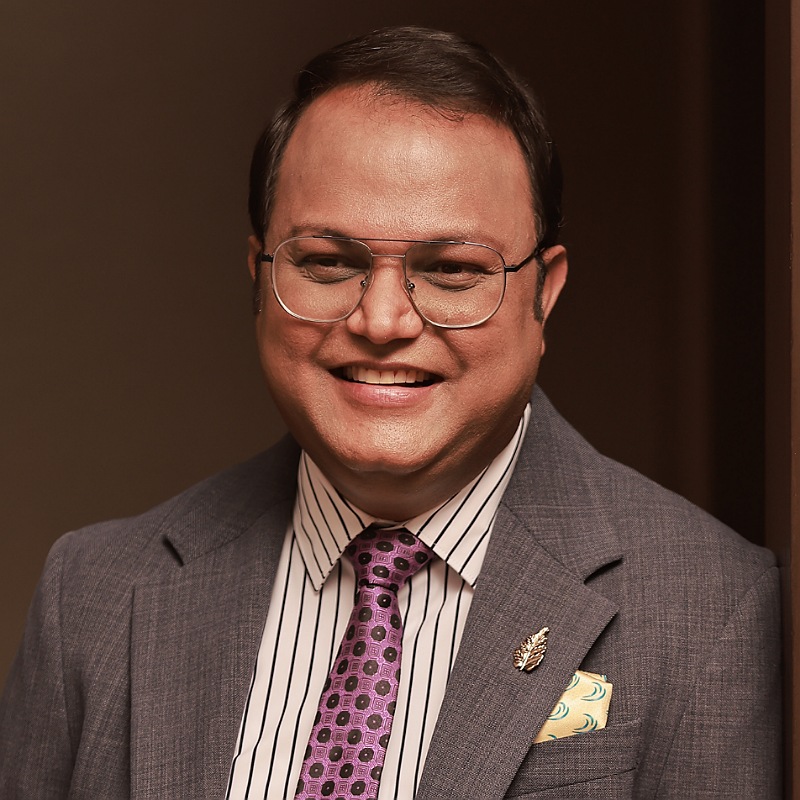
    Mumbai: OTT app founder Vibhu Agarwal has announced his foray into the broadcasting space with the launch of a new Hindi general entertainment channel whose name is yet to be revealed. The channel will primarily cater to the target audience of 15 plus years. 

    In the past, Agarwal has produced a Bollywood film and numerous web series content.

    The GEC is slated to launch in the first half of the new financial year and will have both fiction and non-fiction series spanning genres like action, comedy, and thrillers. Unlike other GECs, however, the channel will run finite series where each show will have a limited number of episodes.

    Television revenue is expected to grow at a CAGR of four to five per cent and reach Rs 826 billion by 2024, as per EY-FICCI media and entertainment 2022 report. The revenue from subscriptions for TV channels is expected to reach Rs 415 billion in 2022. Pay TV will continue to grow as states like Uttar Pradesh, Bihar, Rajasthan, and West Bengal get electrified. Free TV subscribers are expected to cross 50 million in 2025. 

    The report predicted overall growth of TV connections at a pace of five per cent per year to cross 67 per cent of Indian households by 2025.

    “We have experienced tremendous success in terms of subscription and popularity with our unique offering on our flagship OTT Platform,” said Vibhu Agarwal. “Over the last three years, we have built a formidable content library spanning multi-genre content and age groups. While the digital entertainment space is poised to grow exponentially, the broadcasting industry is here to not just stay but also grow.”

    He added, “Our new Hindi general entertainment channel will have a varied bouquet of shows targeting all segments of society. It will be heavy in both fiction and non-fiction which will have genres like thriller, crime, comedy, horror, and suspense, and star some of the most renowned actors. We will be working with the best of production houses and the most noteworthy talent across to bring content-rich hours of programming. Each show will have slick production value, a novel concept, differentiated narrative, characterisation, and a finite run time. The shows will also be available on the television channel’s own new OTT App wherein the audiences will be able to watch them at their own leisure. This is our commitment to bring entertainment to the household of every Indian across the country that enjoys and understands Hindi.”

    The channel will be distributed across Tata Sky, Airtel Digital TV, Dish TV and d2h, and cable networks such as Hathway, Den, and GTPL in India, as per the statement.

  • I&B ministry lays down guidelines for infrastructure sharing by MSOs

    I&B ministry lays down guidelines for infrastructure sharing by MSOs

    Mumbai: The ministry of information and broadcasting (I&B) has given its go-ahead to the multi-system operators (MSOs) to share infrastructure with other MSOs on a voluntary basis. As per the guidelines released by the ministry, the responsibility for compliance with guidelines and other regulations will lie with each MSO independently.

    According to the guidelines, each MSO will have to ensure encryption of signals and addressability of subscribers in all circumstances, and provide access of all the systems and the networks, used to provide broadcasting distribution network services, to the concerned broadcasters for audit as per the regulations and the authorised officers of the government and their representatives whenever demanded.

    The sharing of head-end used for cable TV services & transport streams transmitting signals of TV channels, among MSOs is permitted on a voluntary basis, said the ministry.

    Any MSO willing to share its transport stream of TV channels with another MSO should ensure that the latter has valid written interconnection agreements with concerned broadcasters for distribution of pay TV channels to the subscribers. They may share the common hardware for their SMS applications. But, the details of such arrangements should be reported to the MIB, the Trai, and the concerned broadcasters, 30 days in advance.

    As per the guidelines:

    ·Each MSO shall be accountable for ensuring the integrity and security of the CAS and the SMS data pertaining to such distributor.

    ·Each MSO shall maintain the backup of transaction logs and data of the CAS and the SMS, on a near real-time basis, for at least the past two years, at any point in time, on a secondary storage device.

    ·Each MSO shall undertake to provide access of the CAS and the SMS, used to provide broadcasting distribution network services, to the concerned broadcasters for the purpose of audit as per the regulations and the authorised officers of the government and their representatives whenever demanded.

    ·Each MSO sharing its infrastructure and transport streams of TV channels with other MSO, should set up systems and processes which ensure that the broadcasters are able to exercise their right of disconnection of signals in case of default of payment or due to any other reason, in terms of the interconnection agreement entered into between the broadcaster and the distributor and the relevant regulations in place.

    Under the new guidelines, the new applicant and existing licensee will jointly submit a detailed proposal for infrastructure sharing giving details of the infrastructure proposed to be shared and in the manner, infrastructure is proposed to be shared as well as roles and responsibilities of each to MIB. “The adherence and compliance to all the provisions of the rules and guidelines issued by MIB for grant of license to the MSO operator will be the responsibility of the existing operator and the new applicant proposing to share the infrastructure to the extent as may be required / applicable individually,” it added.

  • Zeel Q2 FY22: New content launches bolsters ad revenue growth

    Zeel Q2 FY22: New content launches bolsters ad revenue growth

    Mumbai: Zee Entertainment Enterprises Ltd (Zeel) announced its financial results for the second quarter FY 2022 ended on 30 September. The company reported 14.9 per cent revenue growth year-on-year (YoY) and 20.1 per cent domestic advertising revenue growth YoY.

    The company’s total revenues stood at Rs 1305 million which was up 17 per cent sequentially. Its EBIDTA was Rs 4121 million and its EBIDTA margins at 20.8 per cent. The company’s advertising revenues stood at Rs 10,893 million and subscription revenues at Rs 7,885 million. Domestic ad revenue grew on a quarter-on-quarter basis by 18.9 per cent. Subscription revenues were down marginally by 1.5 per cent YoY. The company indicated that delay in NTO 2.0 implementation continues to impact pricing. The new timeline for NTO 2.0 rollout was extended till 1 April 2022.

    The broadcaster saw its total TV viewership decrease slightly but grew its network viewership share by 70 bps on account of new show launches across all markets. It released 13 new shows and movies during the quarter. Zee TV, Zee Marathi, and Zee Tamil’s performance was soft during the quarter. The Bengali, Kannada, and Telugu channels posted a strong performance. Genre-wise news and movies led to lower contribution in overall viewership.

    The company reported 93.2 million global monthly active users (MAUs) for its streaming platform ZEE5. Zeel’s film production arm Zee Studios has a strong slate of movies ready for H2 FY22 across Hindi, Tamil, Telugu, Marathi, and Punjabi languages being planned for release.

    In an investor call, Zeel managing director and chief executive officer Punit Goenka shared an update on the merger between Zeel and Sony Pictures Networks India. He said, “After receiving in-principle approval from the board, the due diligence process has commenced and is in steady progress. We are confident that this process will be completed within the stipulated timelines or even before that. Post which we will move on to the next steps as mandated by the law.”

  • Trai extends deadline for NTO 2.0 implementation to 1 April 2022

    Trai extends deadline for NTO 2.0 implementation to 1 April 2022

    Mumbai: The Telecom Regulatory Authority of India (Trai) has extended the deadline for implementation of the new tariff order (NTO) 2.0 to 1 April 2022. The previous deadline was 1 December.

    Broadcasters will have to publish new reference interconnection offers (RIOs) to Trai by 31 December and simultaneously publish the required information about channel and bouquet offerings and their MRPs on their websites. The broadcasters who have already submitted their RIOs in compliance with NTO 2.0 can revise their RIOs by 31 December.

    The deadline was extended as Trai received representations from many service providers and their associations such as broadcasters, DTH operators, MSOs and DPOs, according to a report by ET. The authority, after considering the concerns expressed by various stakeholders and especially with respect to time frame for migration of subscribers and taking their choice, is of the view that paucity of time should not come in the way of implementation of the new regulatory framework 2020 in seeking informed choices of more than 150 million pay TV consumers.

    DPOs will have to obtain an option for subscription of new bouquets or channels from the subscribers in compliance with the provisions of NTO 2.0 from 1 February 2022 to 31 March 2022.

    DPOs will have to report the distributor retail price (DRP) of pay channels, composition of bouquet of pay channels/free-to-air channels and DRPs of bouquets of pay channels by 31 January 2022 besides simultaneously publishing the information on their websites.

    In June, the Bombay high court in its judgement upheld the NTO 2.0 order by Trai barring the second proviso of the twin conditions. The provision states that a-la-carte rates of pay channels shall not exceed more than three times the average rate of a pay channel of the bouquet of which such pay channel is part. TV broadcasters under the aegis of Indian Broadcasting Digital Foundation (IBDF) had moved to Bombay HC in January challenging the Trai order.

    After the Bombay HC pronounced its judgement, broadcasters escalated the matter to the Supreme Court. The final SC hearing is scheduled on 30 November. Meanwhile, Trai directed broadcasters to comply with the Bombay HC judgement and publish new prices of their pay channels and bouquets that comply with the tariff order.

    Leading broadcasters including Zee Entertainment Enterprises, Star and Disney India, Sony Pictures Networks India, Network18 Broadcast, Sun TV Network, Discovery Communications and WarnerMedia have published their RIOs effective from 1 December. As per NTO 2.0 provisions, Trai mandated a price cap of Rs 12 on pay channels to be included in a bouquet. To comply with this provision, major broadcasters pulled their popular channels from bouquets but also hiked the prices of these channels.  

  • NTO 2.0: ETV publishes new RIO effective 1 December

    NTO 2.0: ETV publishes new RIO effective 1 December

    Mumbai: Eenadu TV (ETV) has published its reference interconnection offer (RIO) issued under telecommunications (broadcasting and cable) services interconnection (addressable systems) regulations, 2017 for all distribution platforms. The new RIO will be effective from 1 December onwards. 

    The tariffs for TV channels mentioned in the RIO adhere to the Telecom Regulatory Authority of India (Trai) new tariff order (NTO) 2.0.

    The channel operates 24 channels and is offering three bouquets to viewers. Its Telugu general entertainment channel ETV Telugu and ETV HD are priced greater than Rs 12. As per new tariff regime 2.0 order, Trai has mandated that a channel’s MRP must not exceed Rs 12 for it to be included in any bouquet.

    The implementation of the new tariff order 2.0 is on hold as broadcasters under the aegis of the Indian Broadcasting Foundation (IBF) have challenged the Trai order in the Supreme Court. The final hearing on the matter is scheduled for 30 November.

  • Trai vs broadcasters: Impact could be larger than expected

    Trai vs broadcasters: Impact could be larger than expected

    Mumbai: The TV industry is eagerly awaiting the outcome of the court battle between the Telecom Regulatory Authority of India (Trai) and TV broadcasters led by the Indian Broadcasting Foundation (IBF) on the new tariff order (NTO) 2.0 case that will be heard on 30 November.

    The decision taken by the Supreme Court in the final hearing will significantly alter the dynamics of the TV broadcast industry that have been in place for more than a decade. The conflict essentially from Trai’s point of view is the fight for consumer’s choice that is being taken away by broadcasters.

    There are 346 pay-TV channels available to consumers, out of which leading broadcasters own and operate 255 pay channels. It’s standard industry practice to offer their pay channels in a bouquet that has a significant discount. This way the broadcasters can cross-subsidise their channels in a way that even a weak channel has an opportunity to get viewership.

    There are driver channels whose viewership is self-driven and niche channels that have a small but dedicated viewership. Trai’s contention is that broadcasters are pushing these ‘extra’ channels on to consumers to increase their revenues from advertising which accounts for two-thirds of their overall revenues.

    A senior expert in the broadcasting industry remarked that this view of Trai does not consider the complexities of the sector and understand what the broadcast consumer wants. “India is a price-sensitive market – we want everything to be free or at the cheapest but, at the same time, the best-in-class service,” he said requesting anonymity.

    There’s always going to be content on TV that the consumer doesn’t want to watch. On linear TV if the consumer wants to watch different content, he/she may switch the channel and watch something else. That’s why it makes sense for the consumer to have the option of multiple channels available.

    With the agenda of allowing consumers to pay only for the channels that they want, Trai mandated that broadcasters announce a-la-carte tariffs of their channels. To ensure that broadcasters do not entice consumers into opting for bouquets that are heavily discounted it created provisions in the amendment order to counter the practice. It mandated that a channel must have MRP no greater than Rs 12 to be included in a bouquet. It also prescribed a linkage between the a-la-carte price and bouquet by mandating that the sum of the a-la-carte price of channels in a bouquet will not be more than 1.5 times the bouquet price.

    Whatever consequence Trai had intended, the outcome of the NTO 2.0 has been very different. While the case is being fought in the SC, on 15 October broadcasters announced their reference interconnection offers (RIOs) and new channel rates adhering to the regulator’s order. If the consumer chooses to keep the same number of channels, then his/her content costs are likely to go up when the new tariffs come into effect on 1 December. They have listed the MRP price of their popular channels greater than Rs 12 which means that none of these channels will be a part of the broadcaster’s bouquets.

    There isn’t enough data to predict the resulting consumer behaviour after the implementation of the amendment order. The only example of a-la-carte implementation is the conditional access system (CAS) in 2007. CAS is a digital mode of transmission of TV channels via set-top-box (STB) and was rolled out in select metros – Mumbai, Delhi, Kolkata, and Chennai.

    “When CAS was implemented on a small population the consumer had opted for about 5-15 pay channels,” said a senior official from a leading cable operator on condition of anonymity.

    Note that this was a period when Star India was offering about eight channels versus 76 it is offering today. “Back then you had to offer every channel a-la-carte and Trai had fixed a ceiling price for pay channels at Rs 5,” he added.

    NTO 2.0 implementation will have an impact on a much larger scale. There is a huge economic divide between TV viewing audiences in India. As the official from the cable company puts it, “On the one hand, you have a consumer who decides to be economical and only watch FTA channels. We estimate that there are 30-50 million audiences who only watch Doordarshan on DD Free Dish. On the other hand, you have consumers who are ready to pay Rs 2, 000 to get an OTT subscription including Netflix, Prime Video, Disney+ Hotstar, SonyLIV, ZEE5, and Voot and they will have access to all their TV content as well. The rest of the consumers fall in between these two extremes.”

    So, what will be the consequence of broadcasters pulling their MRP channels out of the bouquet? “Personally, I have yet to see a car (niche channels) run without an engine (driver channels)” said the cable operator spokesperson. “Till date, driver channels have taken other channels to the same viewership level.”

    According to Trai, broadcasters are exploiting the freedom afforded to them by the NTO 2.0 provisions for a-la-carte pricing and have arbitrarily hiked the prices of their channels and that the new tariffs do not reflect consumer demand. The Tamil Nadu Digital Cable TV Operators Association has gone as far as to send a legal notice to Trai demanding that it intervene and ask broadcasters to reduce channel prices. It claimed that the new tariffs may inflate consumer bills by 100-200 per cent.

    “The distributed platform operators (DPOs) have begrudged broadcasters who are not only able to launch more channels, but they also get advertisement revenue. This has led to a corporate rivalry where unfortunately Trai has lent an ear to DPOs without understanding what’s best for the consumer and the larger creative ecosystem,” said an expert from the broadcast business.

    “The success of over-the-top platforms proves that without an overzealous regulator and fragmented/unruly intermediary, the content creators are able to know the pulse of their audience and cater to their needs and tastes. Additionally, content and carriage are neatly differentiated with transparency and accountability,” he added.

    OTT platforms have a mix of blockbuster and long-tail content that they offer to consumers. Most consumers come to OTT platforms to watch their blockbuster content, and some may also enjoy their longtail content. The OTT player can continue making enormous investments in fresh content because of the steady monthly subscription fee that it charges the viewer.

    It’s clear that the implementation of the NTO 2.0 based on the tariffs announced by leading broadcasters will essentially increase content costs for the consumer. The consumer must either opt for fewer channels to keep TV bills at the same levels or pay a higher cost in subscriptions. Trai has said that it will keep an eye on the industry and ensure that consumer bills do not go up. 

  • NTO 2.0: MSOs asks Trai to reject new RIOs published by broadcasters

    NTO 2.0: MSOs asks Trai to reject new RIOs published by broadcasters

    Mumbai: The Tamil Nadu Digital Cable TV Operators Association has  sent a legal notice to the Telecom Regulatory Authority of India (Trai) asking it to reject the new reference interconnection offers (RIO) published by broadcasters. The Association has also sought Trai’s intervention in asking broadcasters to reduce channel prices as it “will cause irreparable loss to the entire industry”.

    Major broadcasters including Disney Star India, Zee Entertainment Enterprises Ltd, Sony Pictures Networks India, and TV18 Broadcast Ltd, had published their new RIOs over the weekend starting from 15 October (Dussehra) with the new a-la-carte pay channel and bouquet pricing that adheres to Trai’s new tariff order (NTO) 2.0.

    The broadcasters had hiked the prices of their driver channels and pulled them from all their bouquets as Trai’s NTO 2.0 provisions mandated an MRP cap of Rs 12 for any pay channel to be included in a bouquet. The broadcasters are currently battling the Trai order in the Supreme Court stating that some of its provisions are arbitrary and outside the purview of the regulator. The final hearing is on 30 November.

    In its notice to Trai, the Association has stated that “major broadcasters have issued their RIOs where it can be calculated that majorly subscribed channels by the consumers will be inflated by 100 per cent to 200 per cent.”

    It added, “It is pertinent to mention here that during the situation when over-the-top service providers are trying to make their services more affordable to increase their subscriber base, the service providers of this industry will have to increase their rates substantially which will certainly cause loss of subscriber base of the local cable operators (LCOs) and multi-system operators (MSO).”

    These “excessive prices” will undoubtedly hurt the subscriber base of cable operators whose subscribers come from the rural areas of the country where income levels are comparatively lower. The MSO mentioned that any regulation/direction/order implemented by Trai should lead to the growth and development of service providers and consumers.

    “It is the contention of the Tamil Nadu Digital Cable TV Operators Association that the RIO published by Disney Star India has an illegal clause that requires MSOs to “continue the channels on the old LCNs and they cannot change it”. If new RIO is being asked to be implemented, then all its terms are liable to be renegotiated and the broadcaster cannot favourably keep the clauses of the old RIOs,” it said.

  • India’s tour of England on Sony Sports sets viewership record

    India’s tour of England on Sony Sports sets viewership record

    Mumbai: Sony Sports has revealed that the final day (17 August) of the second Test match between India and England played at Lords garnered close to eight million impressions. The final session of the match which had team England bundled out for 120 runs achieved an average viewership of 10.7 million impressions, said the channel.

    The average rating for the series to date is almost 30 per cent higher than the 2018 series featuring the same teams. The average ratings grew by almost 70 per cent on the final day of the test.

    “The viewership for ongoing England vs India test match series has been the highest for an away bilateral test match series featuring Indian cricket team in the past three years,” the channel said in a statement. “The ratings for the final day are the highest ever on a pay sports channel for a test match day featuring the Indian team playing away from home. The final session of the match was one of the most-watched test match sessions in recent years,” it added.

    After a draw in the first test match at Trent Bridge due to rain, team India played the England team at Lords. KL Rahul and Rohit Sharma gave a strong start followed by an 89-run partnership between Mohammed Shami and Jasprit Bumrah. Mohammed Siraj took home four wickets on the last day securing India’s first victory in the test series.

    “The India tour of England series has always been a high–profile test series and has lived up to both advertiser and viewer expectations. And after India’s thrilling win at Lords, more brands have come on board Sony Sports channels and look forward to reaching out to their target audiences and leverage on the huge buzz the series is generating,” said the channel.

    Sony Sports roped in 12 sponsors including Mahindra & Mahindra, Byju’s, Pan Bahar, PharmEasy, Fogg, WhatsApp, Samsung, MRF, Cars 24, Ultratech, Airtel, and Kent for India’s tour of England.

    (Source: BARC, All India, U+R, CS 2+, Day-wise impressions on pay sports channels)

  • BARC India revenues at Rs 251 crore in FY21: Crisil

    BARC India revenues at Rs 251 crore in FY21: Crisil

    Mumbai: The Broadcast Audience Research Council (BARC) India revenues stand at Rs 251 crore for FY 2021, according to a Crisil report. Its profit after tax stands at Rs 44 crore. 

    The TV rating agency’s financials for FY 2020 stood at Rs 317 crore in revenues and net loss of Rs five crore. The agency also has a debt obligation of around Rs 38 crore for FY 2022. Crisil reaffirmed its rating of ‘Crisil A/Stable’ for the agency.

    “TV advertisements, the major factor driving revenue for the company, have a high correlation with economic activity. The lockdown imposed to contain the Covid-19 pandemic and weak economic activity in the first half of fiscal 2021 led to a significant drop in ad revenue for television broadcasters, which led to decline in revenue for BARC. However, with an uptick in economic activity in the latter half of the fiscal, revenues have been gradually recovering. Furthermore, the cost-rationalisation measures undertaken by the company ensured better operating profit in fiscal 2021,” said the report.

    Crisil’s report indicates that downward factors such as weakening support from member entities of promoter bodies, change in status as the sole provider of TV viewership measurement in India, and larger than expected debt may impact ratings for the company in the future.  

    80 per cent of BARC India’s revenue comes from broadcasters. It levies a fixed percentage of the ad revenue of broadcasters (0.8 per cent for fiscals 2017 to 2021). As the sole provider of independent TV viewership estimates, BARC India is highly strategic to broadcasters which ensures stickiness and good visibility.

    The agency is promoted by three industry associations, the Indian Broadcasting Foundation (IBF), the Indian Society of Advertisers (ISA), and the Advertising Agencies Association of India (AAAI) with a shareholding of 60:20:20. BARC uses audio watermarking technology and deploys around 46,000 BAR-O-meters. “The company is venturing into viewership estimation for digital platforms, and is increasing the number of BAR-O-meters deployed,” said the report.