Tag: TV broadcasters

  • Rise in inflation likely to hurt advertising revenue growth of TV broadcasters, says market analyst

    Rise in inflation likely to hurt advertising revenue growth of TV broadcasters, says market analyst

    Mumbai: The rising inflation is playing a spoilsport for the television segment currently, impacting its revenue as advertisers are cutting down the marketing spends. The impact of soaring inflation is observed in one of the most significant categories of the TV industry-FMCG sector. The new age internet companies are also reducing their ad spend. Currently, the advertisers are feeling apprehensive due to the macro weakness and inflationary headwinds.

    Inflation heat to hurt profitability

    As per financial analysts at Elara Securities, television was the first traditional medium to recover to pre-COVID levels in the financial year 2022. The company estimated the operating profitability of all broadcasters to be muted due to content investments and lower advertising revenue.

    Earlier, experts stated that the advertising revenue for television broadcasters is recovering and will reach the pre-covid levels. They predicted that the TV ad revenue will grow 12 per cent in the next financial year. However, the rising inflation has created bottlenecks as companies curtailed their advertising campaigns and adopted a wait-and-watch approach. The FMCG companies also have reported a slowdown in consumer spending. Moreover, the rising input costs also have forced price hikes, which is impacting the overall consumer sentiments and behaviour.

    According to data released by the National Statistical Office (NSO), retail inflation touched 7.04 per cent in May 2022. The Reserve Bank of India (RBI) has updated its inflation projection for the current fiscal (FY23) to 6.7 per cent. 

    According to EY-FICCI’s media & entertainment 2022 report, the television revenue is expected to reach Rs 826 billion by 2024 and will grow at a CARG of 4-5 per cent. In such a case, if the advertisers squeeze their ad spends, it will be difficult for the TV industry to recover and reach the target as estimated, the experts believe. 

    In 2021, television advertising revenue grew 25 per cent to reach Rs 313 billion, recovering from a 21.5 per cent drop in 2020. Due to Covid pandemic pressure, TV advertising revenue declined. Moreover, the ad revenue stood at Rs 320 billion in 2019 during the pre-Covid times. 

    Industry’s observations despite challenges

    Elara Securities also estimated that overall revenue of the major players like Zee, Sun TV and TV Today is slated to grow by 4.7 per cent, 23.2 per cent and 23 per cent year-on-year (YoY), respectively. Zee’s revenue growth is negatively impacted by lower operating income (“Dhaakad film”), while its net profit is expected to witness a growth of 26.4 per cent driven by the redemption of preferential shares (paid off in Q4 FY22).

    Zee’s overall revenue was up by 14.1 per cent YoY in FY22 at Rs 8189.3 crore. Its profit after tax (PAT) was up by 32 per cent at Rs 955.7 crore. Sun TV’s standalone revenues were up by 12.46 per cent YoY in FY22 at Rs 3504.88 crore. TV Today’s overall revenue was up by 18.76 per cent in FY22 at Rs 973.99 crore.

    The company also estimates that advertising revenue for Zee, Sun TV and TV Today will grow 12.7 per cent, 36 per cent and 28 per cent YoY, respectively, on a low base, as they remain between two per cent to ten per cent lower than pre-Covid levels. Subscription revenues for Zee and Sun TV are expected to remain flat YoY.

    Zee’s advertising revenue in FY22 stood at Rs 4396.5 crore up by 18 per cent YoY. Its subscription revenue stood at Rs 3246.6 crore. Sun TV’s advertising revenues in FY22 stood at Rs 1300.60 crore up by 30.84 per cent and subscription revenues stood at Rs 1657.13 crore. TV Today’s revenue from television and other media operations stood at Rs 912.03 crore, up by 17.8 per cent in FY22. 

  • Star India consolidated its market share post-lockdown: Kevin Vaz

    Star India consolidated its market share post-lockdown: Kevin Vaz

    Mumbai: In the 18 months post-lockdown, Star TV network has emerged as the top broadcaster with over 30 per cent network share and strong growth across network channels, said Star and Disney India president and head – network entertainment channels Kevin Vaz.

    In the Hindi segment – Star Plus and Star Utsav are leaders, and Star Plus has grown to a seven year high, said Vaz while addressing the APOS India summit that began virtually on Tuesday. 

    While there have been tectonic shifts in the regional markets, Vaz said Star Pravah initially ranked third among the top channels reached the top position, and Star Vijay, which was Star India’s first regional channel competing in one of the toughest markets, became number one in primetime. Markets where Star TV had a stronghold – Malayalam (Asianet) and Telugu (Star Maa) have only grown further.

    In conversation with Media Partners Asia co-founder and senior partner Vivek Couto, he also spoke about the recovery of TV advertising business, the future of regional TV, investments in content on TV, resurgence of free-to-air (FTA) and future of mass TV.

    “There are several positive macroeconomic factors that are indicating that the economy is bouncing back,” noted Vaz, adding that the IMF has predicted 10 per cent growth in the coming year. “IIP Index reported 11.9 per cent growth in August. GST collections are up by 17 per cent compared to 2019. The last three months have seen GST collections crossing Rs one crore every month. The successful vaccination drive where 1.2 billion Indians have received at least one shot has led to a positive future outlook.”

    In terms of depth of advertisers, Vaz observed that the set of advertisers has shifted in the past five years. For instance, five years ago 92 per cent of advertising for the Indian Premier League (IPL) came from categories such as beverages, telecom, handsets and consumer durables. However, now the new age companies such as e-commerce, fintech, gaming and edtech are changing the paradigm.

    “These companies have grown their contribution from eight per cent to 40 per cent with the remaining 60 per cent constituted by traditional advertisers. Five years back there were 35 unicorns in the country. This year there are 72 unicorns which are expected to grow to 100 unicorns in the year ahead. These companies have a lot of funds, they want to grow their customer base and advertising on TV is their first point of call,” said Vaz.

    Discussing the situation during the lockdown, Vaz said TV broadcasters were caught in a dichotomy as advertisers were pulling back yet with the consumer sitting at home, this was the best chance to create strong partnerships and serve them really good content. “We decided to double down on investments and keep investing in brands keeping the consumer at the focus. We also changed the programming schedule. For example, Star Pravah increased its original programming from two hours to five hours and regional channels such as Star Vijay and Star Maa started serving 45-55 hours of original content every week. The result we see today is that every channel is a leader,” he added.

    TV has a lot of scope to grow in the country, noted Vaz. There are 300-325 million households out of which TV reaches 210 million. The rural markets added 20 million homes in the last five years, he said. Every week 750 million viewers tune in to watch TV and consume one trillion minutes of content, indicating that TV is the preferred entertainment medium. Vaz said that TV viewers in regional markets consume four hours of TV every day which is 25 per cent higher than the national average. So, growth in HSM markets will come by getting them to stick to TV for a longer period of time.

    In terms of content investments, Vaz said that Disney and Star India’s strategy is agnostic to screens. He remarked, “We continue to invest more on TV by launching new channels, opening in new markets. In each market, we intend to have one entertainment, one movie and one music channel to serve wholesome viewing to the consumer.”

    He also talked about how the production values on TV have also been scaled up with the launch of big historical dramas and mythological shows. Apart from regular fiction shows, he said finite shows where production values are higher will also be part of TV offering.   

    Speaking about the resurgence of FTA channels, Vaz said, “We are committed to serving every consumer segment. The FTA market is an incremental opportunity. There are 40 million FTA households. The awareness of pay channels is not high in these markets. Most consumers will begin their TV journey with an FTA channel. The monetisation opportunity is to upsell them. It is important to target this audience as their consumption is disproportionate in the rural markets.”

  • Govt committee seeks to set up a specialised regulator for media ratings in India

    Govt committee seeks to set up a specialised regulator for media ratings in India

    Mumbai: The committee on TRP ratings formed by the government has pushed for the formation of multiple rating agencies in competition to Barc India, and recommended creating a specialised regulator to oversee all of them.

    The 39-page report submitted by the committee early this year has recently been shared with Broadcast Audience Research Council (Barc) India and other broadcasters to take the discussions forward. The committee led by Prasar Bharti CEO Shashi Shekhar Vempati was constituted last year in the aftermath of the TRP scam in Mumbai.

    According to the report, the regulation of multiple rating agencies should be a specialised function that requires a suitable regulator and cited Securities and Exchange Board of India (SEBI) in regulating credit rating agencies and Media Ratings Council in the United States as successful examples. As per the committee, the regulator can look at end-to-end regulation of audience measurement in India and also provide for an Appellate Authority to redress grievances and mediate disputes between stakeholders and rating agencies with appropriate powers.

    The committee to review the ‘Guidelines on TV Rating Agencies in India’ had made a total of 20 recommendations to the ministry of information and broadcasting (i&b) that includes both immediate and long-term measures that need to be taken to restore faith in the integrity of TV rating system in view of emerging technology trends and market dynamics.

    Most of the recommendations made by the committee in their report accessed by Indiantelevision.com are aimed at strengthening corporate governance at Barc India at the board level. The recommendations have also laid down specific measures to bring independent oversight of Barc India, mandate the use of return-path data, increase the competitiveness in the TV rating space, and put in place a specialised regulatory mechanism for media rating agencies in India.

    It felt that industry stakeholders must come to a consensus over acceptable business practices to ensure faith in ratings. It also recommended that the government may consider temporarily suspending its license to Barc India until it and stakeholder bodies have complied with directives issued by MIB.

    After consultation with stakeholders such as Barc India, MDPL, Zappr Media, Nielsen India, and Tata Sky AMS, the committee had issued several specific and sweeping recommendations on the technical aspects of TV rating measurement in India.

    It found that there was a broad consensus among industry stakeholders in favour of leveraging return data capabilities. However, apart from Barc and a few platforms, there was a lack of ubiquity in approach or consistency in investment in RPD by platforms.

    It also recommended that RPD should be made mandatory for set-top-boxes (STBs) deployed by distributed platform operators (DPOs). “The increasing convergence between STBs and smart media devices and in view of the emergence of hybrid boxes capable of both CAS compliant linear TV viewing and internet streaming-based OT, the committee sees fewer technical barriers to enable RPD capabilities within households” it noted.

    Adding further, it said, “Smartphone-based apps are capable of interacting with such hybrid boxes paving the way for additional avenues of RPD data capture and relay.”

    The collection of viewership data by DPOs is to be governed by privacy norms prescribed by the government/regulator. The sale of such data by DPOs should be governed by guidelines for TV rating systems. A joint industry working group with representation from all relevant stakeholders and independent experts may be set up to specify norms for an industry-wide RPD mandate, according to the report.   

    The report noted that crowdsourcing approaches could be economical alternatives to RPD and should be open to rating agencies to enrich panel-based measurement. However, it noted that owing to the nascent stage of innovations in cloud-based computing and artificial intelligence and the small pool of talent and expertise with an understanding of TV ratings and media audience measurement domain in India, any integration of crowdsourced data is best left to the discretion of stakeholders.

    Another interesting recommendation by the committee for the imperative is to adopt an open data ecosystem. It drew on the experience of similar data efforts in domains such as digital payments (UPI, India stack) and account aggregator system for credit rating (Sahamati), noting that algorithms and raw datasets should be made available to academics and independent researchers to analyse, validate and enrich.

    The committee observed the global shift towards hybrid audience measurement spanning multiple channels (TV+digital) and the rapid technology innovation hastening this shift. It stated that guidelines prescribed by MIB should not be a barrier to the emergence of more efficient business models that are in pace with global trends and local market dynamics.

    Led by Prasar Bharati CEO Shashi Shekhar Vempati, the four-member team also included – IIT Kanpur, professor of statistics, department of mathematics and statistics, Dr Shalabh; C-DOT executive director Dr Rajkumar Upadhyay; Decision Sciences Centre for Public Policy professor Pulak Ghosh.

    The television rating system in India had come under scanner in October 2020 when Mumbai Police claimed in a press briefing that they have probed a case of manipulation of TRPs and found some incriminating evidence. The police said the accused were allegedly bribing the households to keep a particular channel running, leading to several arrests. Three news channels, Republic TV, Fakt Marathi, and Box Cinema were named in an alleged TRP tampering scam. BARC had also temporarily suspended the publishing of weekly data for news channels, which remains in limbo till date.

  • MCOF demands TRAI resolve pending grievances by 2 October

    MCOF demands TRAI resolve pending grievances by 2 October

    Mumbai: The Maharashtra Cable Operators’ Foundation (MCOF) has written to the chairman of the Telecom Regulatory Authority of India (TRAI) and minister of information and broadcasting (I&B) Anurag Thakur to resolve pending grievances of local cable operators (LCOs) before 2 October.

    According to the association, the inaction of TRAI has resulted in a loss of Rs 600 crore per year for LCOs. “The LCO fraternity will take steps to protect itself no matter the consequences on the rest of the value chain,” the letter reads.

    The LCOs had sought TRAI intervention in the matter of unilateral imposition of inter-connect agreement by multi-system operators. It alleged that MSOs leveraged their portals to impose prepaid terms on LCOs while offering post-paid services to subscribers, and called for redefining the shareable revenues between broadcasters and cable operators, and asked TRAI to clear ambiguity in set-top-box ownership.

    “Our subscribers and we are wondering as to why TRAI has not taken any step to implement the NTO 2.0 after the SC verdict refusing interim relief to broadcasters’ pleadings,” said MCOF. “The broadcasters and MSOs continue to milk the disempowered customers through packaging tricks and also deny a level playing field for standalone broadcasters. On a conservative basis, the forced excess payment towards content that subscribers do not want is Rs 50 per month.”

    Model interconnection agreement (MIA) and standard interconnection agreement (SIA) are signed between MSOs and LCOs for the retransmission of TV signals. MIA ensures that there is a mutual agreement in the terms set between LCOs and MSOs in line with the regulatory framework, to avoid disputes and ensure a level playing field. SIA provides for standard terms and conditions prescribed by regulation that may be adopted by MSOs and LCOs if they fail to mutually agree on an MIA.

    During NTO 2.0 litigation, LCOs claimed that TRAI has incorrectly portrayed them as a conduit between MSOs and subscribers undermining the role they have played as last-mile owners bringing connectivity to lakhs of homes. LCOs fear that subscriber ownership may be transferred to the MSOs and will lead to broadcasters and MSOs benefitting disproportionately at the cost of LCOs.

    LCOs have adopted a prepaid billing model for cable TV subscriptions to bring transparency and plug leakage of revenues. However, LCOs claim that while MSOs impose prepaid terms on the LCOs, they continue to offer post-paid services to TV subscribers by leveraging their portals. This has impacted their revenue collection.

    “The payout of pay-TV channels to cable operators for retransmission of TV signals is much lower than the amount billed to the customer,” said MCOF. “This fact is visible at a glance at the P&L statement of MSOs who disclose Netted Content Costs,”, said the letter.

    LCOs have asked TRAI to clear ambiguity on set-top-box ownership resulting in unilateral pricing without invoicing or service level agreement (SLA) to the subscribers.

    The LCOs service 10 crore homes and employ five lakh semi-skilled personnel. The letter states that the sector is at a make-or-break point with thousands of crores invested in fibre infrastructure at risk of disuse and economical infotainment to 40 crore viewers. It said that LCOs’ long list of grievances has been brushed aside by TRAI without any justification.  

  • Twin conditions ensure broadcasters do not engage in ‘perverse’ pricing: TRAI

    Twin conditions ensure broadcasters do not engage in ‘perverse’ pricing: TRAI

    Mumbai: The twin conditions introduced in the New Tariff Order (NTO) 2.0 seek to ensure that broadcasters do not engage in “perverse pricing”; that consumers do not get a raw deal; and that choices offered by and to all market participants remain real. Both conditions are important in their own ways, observed Telecom Regulatory Authority of India (TRAI).

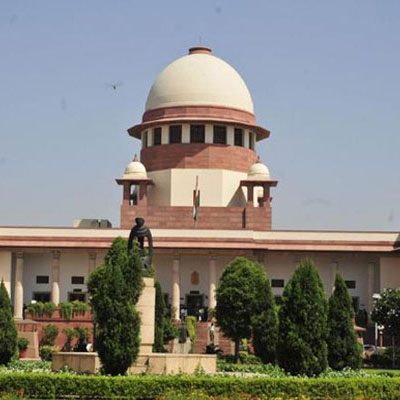
    The regulator made these statements in its counter-affidavit submitted to the Supreme Court quashing the writ petitions by the Indian Broadcasting Foundation (IBF) and other broadcasters to halt the implementation of NTO 2.0.

    The twin conditions introduced in the NTO 2.0 seek to discourage unfair bundling, stated TRAI. The first condition prescribes that the aggregate a-la-carte (MRP) prices of channels in a bouquet must not be more than 1.5 times the bouquet price, hereafter referred to as the “Aggregate Test”. So, if a bouquet has five channels A, B, C, D, and E (with their individual a-la-carte) and a bouquet price of X, the total/aggregate of A+B+C+D+E should not be more than 1.5 times X.

    The second condition, which alone has been struck down by the Bombay high court judgement, states that the MRP of any individual channel in a bouquet, i.e., its a-la-carte price, should not exceed three times the average MRP of a pay channel in that bouquet, hereafter referred to as the “Average Test”.

    TRAI alleges that broadcasters want to maximize their advertising revenue and hence are bundling their popular channels along with less popular channels to claim higher subscription and advertising revenues. The high-demand channels that do not need to be pushed, henceforth called driver channels, are bundled with those channels in which consumers otherwise have no interest.

    “In a large number of cases bouquet prices are the same as the a-la-carte price of the driver/popular channel. In many cases, the bouquet price artificially has reached such perversity that the bouquet price is cheaper than the driver channel in it,” observed TRAI.

    This perverse pricing compels the consumer to pick a bouquet over a-la-carte channel not by choice but out of compulsion, it alleged. 

    In a prior hearing, SC expressed three concerns with NTO 2.0 order: a) Whether the “Average Test” in the twin conditions formed a part of the pre-consultation process b) Are broadcasters and DPOs being treated equally c) Is “Average Test” severable from “Aggregate Test”.

    Referring to a) TRAI responded, “Both twin conditions were fully deliberated on prior to making of the 2020 framework. There is ample correspondence between TRAI and the broadcasters concerning the implementation of the twin conditions. Even the Telecom Disputes Settlement and Appellate Tribunal (TDSAT) has found broadcasters to be in violation of such twin conditions prescribed by TRAI in the past, and held that all reference interconnect offers had to be in consonance with those conditions.”

    TRAI denied discriminating between broadcasters and DPOs stating that there are exhaustive notes on the subject matter that point to the contrary.

    Referring to c) TRAI responded, “The 2020 framework seeks to address two major issues arising out of the formation of the bouquet by broadcasters. The first concerned heavy discounting of bouquet prices, and the second related to ‘pushing’ of unwanted channels to consumers.”

    “TRAI is duty-bound to resolve both issues, in order to safeguard the interest of all service providers and consumers,” it said. 

    The next hearing will be held on Tuesday 7 September.

  • Ad cap case put off to 13 May, court to hear plea challenging stay order

    Ad cap case put off to 13 May, court to hear plea challenging stay order

    NEW DELHI: The ad cap case by television channels continues to linger on, with the Delhi High Court once again putting off the hearing to 13 May when it will hear an application by intervenor Home Cable Network Pvt Ltd seeking vacation of the order staying action against violating television channels.

    The matter was put off by chief justice G Rohini and justice Jayant Nath as they did not have time to hear the matter in view of urgent cases. In the last hearing on 29 March, a plea was made on behalf of the Information and Broadcasting ministry that a proposal was being contemplated to amend the relevant provision relating to limiting ads to 12 minutes an hour.

    However counsel Vivek Sarin of Home Cable counsel pressed for early hearing of his application for vacation of stay. Thereupon, counsel for Discovery Communications said it wanted to press its application to come in as intervenor. The court had on 11 February adjourned the hearing to today when it had agreed to take up the application by Discovery Communications to intervene on the matter.

    Earlier on 27 November last year, the court chaired by the chief justice had said the matter had been pending for some time and therefore it would hear and conclude the case in the next hearing. On that day, the I and B Ministry had informed the Court that it was in talks with the News Broadcasters Association and other stakeholders on the issue of the advertising cap of 12 minutes per hour. This was the first time that the ministry had put in an appearance in the petition filed by the News Broadcasters and others against the Telecom Regulatory Authority of India and others.

    Home Cable Network Pvt. Ltd had been permitted to intervene on 5 January and the Court had agreed to consider contentions on whether pay channels should be permitted to carry commercials in view of subscription fee charged by them. Home Cable Counsel Vivek Sarin had told the court that the petitioners had not disclosed that broadcasters had given their consent to observe the 10+2 ad cap rule under the Cable Television Network Regulation Rules 1994 and the Act that followed a year later and also under the Uplink and Downlink Guidelines. He also said pay TV broadcasters should not be allowed to take ads as they charged subscription fee.

    The case, filed by News Broadcasters Association and others against the Telecom Regulatory Authority of India and the Union Government, has so far been adjourned from time to time on the plea that the government and the broadcasters are in talks on this issue.

    The court has already directed that the order that TRAI would not take any action against any channel pending the petition would continue. In an earlier hearing, the court had, at the regulator’s instance, directed that all channels keep a record of the advertisements run by them.

    The NBA had challenged the ad cap rule, contending that TRAI does not have jurisdiction to regulate commercial airtime on television channels. Apart from the NBA, the petitions have been filed by Sarthak Entertainment, Pioneer Channel Factory, E24 Glamoru, Sun TV Network, TV Vision, B4U Broadband, 9X Media, Kalaignar, Celebrities Management, Eanadu Television and Raj Television.

    Meanwhille, complaints against fifteen broadcasters by TRAI on the ad cap issue are also pending with the chief metropolitan magistrate in Delhi.

  • Ad cap case put off to 13 May, court to hear plea challenging stay order

    Ad cap case put off to 13 May, court to hear plea challenging stay order

    NEW DELHI: The ad cap case by television channels continues to linger on, with the Delhi High Court once again putting off the hearing to 13 May when it will hear an application by intervenor Home Cable Network Pvt Ltd seeking vacation of the order staying action against violating television channels.

    The matter was put off by chief justice G Rohini and justice Jayant Nath as they did not have time to hear the matter in view of urgent cases. In the last hearing on 29 March, a plea was made on behalf of the Information and Broadcasting ministry that a proposal was being contemplated to amend the relevant provision relating to limiting ads to 12 minutes an hour.

    However counsel Vivek Sarin of Home Cable counsel pressed for early hearing of his application for vacation of stay. Thereupon, counsel for Discovery Communications said it wanted to press its application to come in as intervenor. The court had on 11 February adjourned the hearing to today when it had agreed to take up the application by Discovery Communications to intervene on the matter.

    Earlier on 27 November last year, the court chaired by the chief justice had said the matter had been pending for some time and therefore it would hear and conclude the case in the next hearing. On that day, the I and B Ministry had informed the Court that it was in talks with the News Broadcasters Association and other stakeholders on the issue of the advertising cap of 12 minutes per hour. This was the first time that the ministry had put in an appearance in the petition filed by the News Broadcasters and others against the Telecom Regulatory Authority of India and others.

    Home Cable Network Pvt. Ltd had been permitted to intervene on 5 January and the Court had agreed to consider contentions on whether pay channels should be permitted to carry commercials in view of subscription fee charged by them. Home Cable Counsel Vivek Sarin had told the court that the petitioners had not disclosed that broadcasters had given their consent to observe the 10+2 ad cap rule under the Cable Television Network Regulation Rules 1994 and the Act that followed a year later and also under the Uplink and Downlink Guidelines. He also said pay TV broadcasters should not be allowed to take ads as they charged subscription fee.

    The case, filed by News Broadcasters Association and others against the Telecom Regulatory Authority of India and the Union Government, has so far been adjourned from time to time on the plea that the government and the broadcasters are in talks on this issue.

    The court has already directed that the order that TRAI would not take any action against any channel pending the petition would continue. In an earlier hearing, the court had, at the regulator’s instance, directed that all channels keep a record of the advertisements run by them.

    The NBA had challenged the ad cap rule, contending that TRAI does not have jurisdiction to regulate commercial airtime on television channels. Apart from the NBA, the petitions have been filed by Sarthak Entertainment, Pioneer Channel Factory, E24 Glamoru, Sun TV Network, TV Vision, B4U Broadband, 9X Media, Kalaignar, Celebrities Management, Eanadu Television and Raj Television.

    Meanwhille, complaints against fifteen broadcasters by TRAI on the ad cap issue are also pending with the chief metropolitan magistrate in Delhi.

  • Licensed Indian channels drop to 784

    Licensed Indian channels drop to 784

    MUMBAI: It has come under flak in the past for being rather liberal in issuing licences to TV broadcasters. But the Ministry of Information and Broadcasting (MIB) has been cracking down on this front over the past year or so.


    And this is evident from the list of permitted private satellite TV channels which the MIB released on 2 December 2013. According to the list, there are 784 channels which have been allowed to beam over India.


    The MIB’s 2012 official list had 848 channels when it was released on 20 December 2012. That means around 64 licences have been revoked in the past year.


    After the Sarada Group scam last year, the MIB had sent notices to various companies asking for details about their shareholdings and structure. It then started the process of cancelling licences based on their response.


    Among the reasons that it gave for the revocation figured: companies had not started broadcasting even a year after being issued a licence and shareholding patterns and directors were changed without the ministry being informed.


    The MIB has also gone easy on issuing new licences to potential broadcasters. Some 50 applications are pending with it, according to industry officials.


    The files for licence clearances have piled up because several representative meetings between the MIB and the Ministry of Home Affairs have been postponed over the past two months, point out industry executives.


    A highly-placed industry source reveals: “A meeting was supposed to happen last week and this week as well, but it failed to take place.”


    Among some of the channels which are awaiting MIB’s nod include: Epic TV, Al Arabiya News, Maha Movie, Blue TV etc.


    Another source adds: “State elections and general elections have been a priority for the government. We, as an industry, are worried and feel that licenses are not on its priority list.”

  • TV news industry awaits 4G telco services

    TV news industry awaits 4G telco services

    MUMBAI: Zip, zap, zoom – high speed! Don‘t most of us love it – especially when it concerns data transfer speeds? India‘s new TV broadcasters too eagerly await the rapid speed that comes with 4G LTE services. India‘s telecom landscape is going to undergo some drastic changes once 4G LTE starts spreading in more cities and starts gaining traction amongst users, courtesy licensees such as Reliance and Airtel and other telcos.

    And amongst the customers who are just counting down the days to 4G‘s rapid uptake and spread are Indian news broadcasters. Reason: they are looking to use the data pipe to get the video footage to their studios and master control rooms, faster and cheaper, replacing clunky and very expensive outdoor broadcast (OB) vans.

    In fact, what‘s heartening for the industry are reports that more than five news crews including the Beeb reported lived on the UEFA Championship using 4G LTE services on 15 May. In their case, they used Dutch based Mobile Viewpoint‘s 4G technology. Mobile Viewpoint is a subsidiary of Dutch company Triple IT focusing on the development of mobile video solutions for the security and broadcast industries. But there are others such as TVU Networks, SeekFit Technology, AVIWest, which are also offering solutions which entail a shift in live video acquisition away from the super expensive satellite transmission, delivering a cost effective cellular alternative that offers resilient broadcast quality video uplink while enhancing freedom of mobility in the field for TV news journalists.

    Currently, most Indian news broadcasters are functioning on a combination of OB vans and 3G mobile technology. According to industry sources, 3G technology provides a bandwidth of around a maximum of 700 KBPS to one MBPS. Multiple sim data cards are clubbed together in a special 3G unit to stream live footage. It is estimated that compared to that 4G technology would enable a massive bandwidth of up to 2 MBPS.

    Says leading Indian news broadcaster NDTV CTO Dinesh Singh: “4G technology would bring in better clarity as compared to OB vans and 3G technology. Currently, we at NDTV are functioning on a 50:50 ratio of OB vans and 3G mobile technology. 4G technology in India will be a welcome advancement.”

    What gives mobile technology an edge over traditional OB vans, is the cost effectiveness and the convenience it offers. Think about the parking constraints that news broadcasters have to deal with while transmitting live events in a bustling and congested city area through an OB van! With mobile technology, it is a matter of a convenient ‘backpack.‘

    In terms of costs, mobile technology or digital mobile news gathering systems are way less heavy on the pocket as compared to OB vans. Explains Singh: “An OB van would require an investment of around Rs 6 million to Rs 8 million. On the other hand, establishing an infrastructure for mobile technology involves an investment of roughly Rs one million. The difference in costs is quite substantial and hence very attractive.”

    Apart from establishment costs, OB transmissions require access to satellite uplink bandwidth. This burns another hole in the broadcaster‘s pocket at an estimated Rs 5 million a year. Whereas, all one needs for 3G or 4G mobile technology is a couple of supportive mobile handsets and a good data packet plan which would cost a meager Rs 5,000- Rs10,000, says one of the broadcasters.

    However, all is not hunky-dory as far as using 4G LTE services are concerned. â€?OB vans offer a success rate of 99.9 per cent as opposed to mobile technology which leaves scope for an error. In a competitive industry like news, there is no tolerance for an error,” points out a media observer. â€?Mobile technology is ideal for news gathering and live streaming, however not entirely dependable.”

    Network18 CTO Piyush Gupta reasons: “We will all happily welcome 4G technology, if all the telecom providers sort out the loopholes. Many a times, the mobile towers get choked up because of congestion. While OB vans ensure us a dedicated bandwidth, that‘s not the case with mobile technology.”

    Network18 is currently functioning on 80 per cent OB vans and 20 per cent 3G technology. It uses mobile technology for gathering and relaying footage to its studios.

    Besides, compatibility issues may also arise. “3G had high hopes pinned on it. The industry invested in special units which act as receivers and transmitters. And advanced 4G technology would imply advanced transmission units,” Gupta adds.

    Another area of concern is the need for pan India connectivity. TV Today Network general manager Amit Gemini points out: “Mobile technology is not consistent. The moment you go beyond the four metros, the connectivity gets bleak. It would be great only if we are assured pan India connectivity.”

    But a couple of aspects aside, 4G is the way ahead. “4G as a technology is very good for news gathering and distributing content. Currently television consumption is linear. With 4G coming in, the streaming of an entire show could take just a few minutes.”

    All in all, 4G may not entirely replace the good old OB van, but it will definitely revolutionise live broadcasting. Are TV news journos licking their chops?

  • TV broadcasters shine at Creative Abbys 2013

    MUMBAI: Television broadcasters made it big at Goafest 2013’s Creative Abbys, with Sony Entertainment Television (Set) taking away most of the trophies.

    Fox Crime had won a major share of the awards last year.

    The MSM flagship Hindi GEC Sony collected a total of seven awards at the event. It picked three awards for KBC-6, one Gold in the Integrated category- Media & Publications sub category, another Gold for Radio category- Media & Publications for KBC Anthem and a bronze in Print Craft- Copywriting (Above 100 words) for KBC Anthem.

    Set bagged a Bronze in Integrated – Media and Publications for Indian Idol 6. It also won three awards in Film Media and Publications category, a bronze for ‘Guptaji’ campaign, a Gold for ‘Girl Child’ campaign, and a Silver for ‘Style Bhai’ campaign. All the ads for Set were created by its agency Leo Burnett.
    Meanwhile, its sister channel took away a Silver in the Branded Content -Best Use Or Integration of experiential events category for Sab TV Saburbia Board Game, created by Everest Brand Solutions.

    Sab EVP and business head Anooj Kapoor said, “SAB TV has always strived to communicate the joy of togetherness in novel and different ways. The year 2012 has been a special year, where we endeavoured to increase audience engagement through alternate touch-points like SABurbia.com, SAB Dub and SAB Ke Comics internet and mobile apps, SABurbia board game and SAB Play augmented reality app.”

    Movies Now won two awards at the event. The first award it got, Silver, was in the Print-Media & Publications category for ‘Movies Now City Lights’ ‘The Great Dictator’ ‘The Circus’ ‘Modern Times’, created by Movie Now’s in-house team; while the second was a Bronze in Integrated – Media and Publications for ‘Chaplin Chapters’, created by BBH India.

    Like Movies Now, Big CBS Spark too had two awards in its kitty. It won silver and a Bronze, both in Digital- Digital Craft category for Cross Connection and SMS/Interactive voice recognition category respectively. The ads were created by McCann Worldgroup.
    Fox Traveller was awarded a Bronze metal in Print – Art Direction category for Below the line work for ‘Shoe’ campaign. The ad work is credited to Grey Worldwide India.

    Zee Café bagged a Bronze trophy in Print Craft – Typography category for Water saver font campaign made by Draft Fcb + Ulka.

    Max won a Silver in Film- Media and Publications for ‘Phuphaji’ campaign, created by JWT, while National Geographic Channel won a Silver for Film- Travel, Entertainment and Leisure category for Nazis campaign created by JWT India again.

    While Zee Studio Mighty was awarded with a Bronze for Outdoor – Media and publications category for ‘Mighty Joe Young’, ‘A Bugs Life’, ‘Hidalgo’, created by Draft FCB + Ulka, Star Movies managed to take away a Bronze for Digital – Web Banner Rich Media category for ‘Oscar Charades’ created by Grey Worldwide India.