Tag: TV ad volumes

  • TV ad volumes grew 2% in in July-Sept’22 vs Jan-Mar’22: TAM AdEx report

    TV ad volumes grew 2% in in July-Sept’22 vs Jan-Mar’22: TAM AdEx report

    Mumbai: On Wednesday, TAM AdEx released a television advertising quarterly report from July to September 2022. According to the report, the TV ad volume increased by two per cent for the same period over January to March 2022 and by four per cent over April to June 2022.

    The top three industries of advertising on television maintained their ranks during the period as compared to April to June’ 22.

    According to the report, food & beverage (F&B) topped with 21 per cent, while auto registered the highest positive shift in ranking, i.e., from 13th to ninth. Household products and education were among the other industries with positive rank shifts. Personal healthcare was the only sector among the top 10 to move down in rank, the report added.

    From July to September 22, the top ten categories added a 29 percent share of ad volumes.

    Mosquito repellents and ecommerce (online shopping) were the new entrants in the top 10 list. Shampoo moved down from third place in April to June’22 to ninth place in July to September ’22.

    FMCG players ruled the list of the top 10 advertisers, with Reckitt leading the list. HUL, Reckitt, and Brooke Bond remained the top three advertisers, with Reckitt replacing HUL in the top position from July to September’22.

    For the current period, the top 10 advertisers together contributed 40 per cent of ad volumes. Six out of the top 10 brands were from Reckitt Benckiser.

    The top 10 brands added 11 per cent to the total TV ad volumes from July to September ’22.

    Procter & Gamble home products and Colgate Palmolive India were the new entrants in the top 10 list.

    Adding to this, July to September ’22 had the highest number of brands compared to the previous two quarters.

    In terms of categories, toilet soaps topped the list with the highest growth in ad secondages in July to September ’22 vs. April to June’22 i.e. 1.5 times, while mosquito repellents witnessed the highest growth per cent, i.e. 2.2 times, in comparison to April to June’22.

    News and GEC (general entertainment channels) were the most popular genres on television, with more than 55 per cent of ad volumes. When compared to the previous two quarters, the volume share of news ads decreased from July to September 22.

    The top five genres contributed 90 per cent to the total TV advertising volumes in the first three quarters of 2022.

  • E-commerce dominates share of IPL ads in first five matches: Report

    E-commerce dominates share of IPL ads in first five matches: Report

    Mumbai: The e-commerce category has more than 30 per cent share of TV ad volumes during the first five matches of the 15th edition of the Indian Premier League (IPL) that began airing on 26 March, according to data provided by Tam Media Research.

    Under the e-commerce sector, four categories including online gaming, online shopping, ed-tech and digital wallets were the biggest contributors to ad volumes on TV. Online gaming alone contributed 17 per cent of the total ad volumes in the e-commerce sector. Pan masala was the only other category present among the top five categories on TV which contributed up to 40 per cent share of ad volumes, the data revealed. 

    The overall number of advertisers, categories and brands that advertised in IPL 15 declined versus IPL 14 at 29 per cent, 13 per cent and 15 per cent, respectively. The top five advertisers were Sporta Technologies followed by K P Pan Foods, Bundl Technologies, Tata Digital and Gameskraft Technologies. Notably, Sporta Technologies was the number one advertiser during the first five games of IPL in 2021 as well.

    There were 65 exclusive brands that advertised in IPL 2022 (not present in 2021) including Kamala Pasand, Tataneu App, Spotify App, Samsung Galaxy, and Meesho App. There were also 12 exclusive categories including corporate/brand image, online auto rental services, NBFCs, two-wheelers, and footwear.

    (Source: Tam Sports | Event: IPL 15 and IPL 14 | Period: 26-29 March’22 and 9-13 April’21 | Channel count: IPL 15 – 20; IPL 14-19)

  • TV ad volumes in January ’22 up 32% compared to January ’20: Report

    TV ad volumes in January ’22 up 32% compared to January ’20: Report

    Mumbai: TV ad volumes in January this year were 32 per cent higher than January 2020, however, it was marginally lower than January 2021 levels. The number of advertisers in January 2022 stood at 2,670 which was lower than 3,020 advertisers who had appeared in January 2020, according to TAM adex data. Similarly, there were fewer brands and categories visible on TV, the data revealed.

    According to the report, there were over 170 growing categories present in January 2022 compared to January 2021 out of which the fastest was the tea category which saw a growth of 61 per cent followed by e-commerce – education at 57 per cent. E-commerce – media/entertainment/social media, chocolates, wafer chips, cement, coaching centre, cars, e-commerce – gaming, e-commerce – wallets were among the top ten fastest-growing categories.

    The top advertisers on TV were Hindustan Unilever Ltd (HUL), Reckitt Benckiser, Brooke Bond Lipton India, Ponds India, Cadburys India, ITC, Godrej Consumer Products, Procter and Gamble, Amazon Online India, and Colgate Palmolive India. The top ten advertisers comprised 38 per cent of total TV ad volumes in January and Amazon Online India was a new entrant in the rankings.  

    Seven of the top 10 brands belonged to HUL (two brands) and Reckitt Benckiser (five brands) along with Tata Play, Ultratech Cement, and Asian Paints Apex Ultima Protek.

    There were more than 1.5K exclusive advertisers and more than 30 exclusive categories in January 2022 i.e., advertisers and categories that were present in January 2022 but not in January 2021. 

    Kia Motors was the top exclusive advertiser followed by Dell Computer. Commercial vehicles topped among the exclusive categories followed by baby food.

  • #Retrace2021: Content and advertisers return to TV, AdEx remains elusive

    #Retrace2021: Content and advertisers return to TV, AdEx remains elusive

    Mumbai: 2021 was the year of the paradox. The return of LIVE sports and original programming on TV continued to attract new and more advertisers to the medium ensuring a phenomenal growth in ad volumes over 2020 and 2019. While it seemed like the marketers catering to ‘revenge buying’ consumers were on a ‘revenge spending’ spree, the decline in ad rates that had set in as a result of the pandemic, failed to rationalise through the year except towards the end of the festive season.

    Effectively, this meant that despite the economic recovery, positive consumer sentiment, availability of fresh content, and willingness of advertisers to spend, the 2021 AdEx could not reach pre-Covid levels. The negative trend was witnessed across categories.

    Also read: New advertisers make up 19% share of TV ad volume in Nov : Barc India

    According to the third edition of Broadcast Audience Research Council (Barc) India’s yearbook titled ‘The Year After 2019’, TV viewership grew by nine per cent in India in 2020. Yet given the circumstances, advertisers reeling under economic losses used the medium either sparingly or judiciously, mainly to maintain brand recall in anticipation of the reopening. With re-runs of old shows dominating the scene, almost all of television was functioning on a second-tier channel level in the context of content as well as ad rates.

    Picking up from the previous festive, 2021 began on a positive note with some fresh programming and the IPL motivating advertisers to place bigger bets on the medium. The second wave in May-June, however, postponed this recovery to the second half. Even as the rush of new FTA channels launched in 2020-21 and regional ones were making a significant contribution to ad volumes, broadcasters were now equally focussed on achieving pre-Covid ad rates.

    In addition to leveraging their leading IPs to negotiate a ‘fair’ deal once again, channels sought to up the ante with new shows (fiction and non-fiction) and seasons, as well as with LIVE sports programming. According to media planners, AdEx recovery started from July, surpassing 2019 levels in September-October. Contingent upon the possibility and severity of the third wave, it is hoped that this momentum aided by government spending on election campaigns until March 2022, will very soon lead to a full-fledged recovery for the industry.

    Content makes a comeback

    The efficient content strategy of regional adaptations like Star Plus’ ‘Anupamaa’ and ‘Ghum Hai Kisikey Pyaar Meiin’, and reruns implemented by broadcasters to tide over the pandemic turned out to be a success. Buoyed by the TRPs of the reruns, many channels brought back their popular shows and stars with new seasons and narratives in 2021.

    While ‘Sasural Simar Ka’ and ‘Balika Vadhu’ returned on Colors, SET launched season two of its popular series ‘Kuch Rang Pyaar Ke Aise Bhi’ and ‘Bade Achhe Lagte Hain’. Star Plus came up with the new edition of ‘Sasural Genda Phool’. After premiering the second season of ‘Saath Nibhanaa Saathiya’ in October 2020, the channel also re-launched the much-loved mother and daughter-in-law duo of Giaa Manek and Rupal Patel in ‘Tera Mera Saath Rahe’ (August 2021). Star Bharat chipped in with ‘Mann Kee Awaaz Pratigya 2’ in March.

    Also read: Shark Tank to get an Indian adaptation, set to air on Sony TV

    Beginning the year with ‘Teri Meri Ikk Jindri’, Zee TV introduced six new fiction shows this year and a history-based series ‘Kashibai Bajirao Ballal’. On the non-fiction front, apart from bringing back ‘Sa Re Ga Ma Pa’, it launched the new music league championship ‘Indian Pro Music League’. ‘Dance Deewane’ on Colors TV, ‘Dance Plus’ on Star Plus, ‘Super Dancer’ on Sony TV further added to the non-fiction list. Bringing new formats to the reality TV genre were Colors’ visual-based quiz show ‘The Big Picture’ hosted by Ranveer Singh and SET’s business reality television series ‘Shark Tank’.

    Also read: Viacom18 eyes a bumper festive season, with new show ‘The Big Picture’ set for launch

    Return of LIVE sports

    The return of LIVE sports further bolstered the recovery, with a host of new advertiser categories banking on TV to build reach. Whether it was the cryptocurrency brands, gaming, ed-tech or D2C brands, Television saw the ad volume rise across channels. While the 14th edition of the Indian Premier League (IPL) was halted mid-way due to the second wave, it made a comeback in September, with the T20 cricket World Cup. It was followed by the India-New Zealand Test series.

    The year also saw other major sporting events, including the 2020 Tokyo Olympics which was held amid Covid restrictions, and set the stage for India’s spectacular performance across different sports. Not only did India win its first-ever Gold in Athletics (Neeraj Chopra), it witnessed brilliant performances in Hockey, Boxing, as well as weightlifting. Over 48 million viewers watched EURO 2020 on its official broadcaster Sony Pictures Sports Network (SPSN), as per the data shared by the network for its entire coverage of the first 36 matches of the tournament from 11 to 25 June.

    Also read: Over 48 million viewers tuned into SPSN to watch UEFA EURO 2020

    Also read: Star Sports Network logs 3.8 million AMA for 1st India vs England Test

    Then, there was the India-England Test cricket series, ICC World Test Championship Finals in June, India-Sri Lanka series, India-Australia women’s cricket series. The year ended with the return of the Pro-Kabaddi League (PKL) in Bengaluru. 

    Phenomenal recovery in ad volumes

    An analysis of Barc’s monthly data reveals that TV showed a strong recovery in ad volumes since the beginning of 2021, and a noticeable growth over 2020 and 2019 levels. In 2020, TV ad volumes contracted by three per cent over 2019. However, in 2021, ad volumes grew over the last two years for most of the months except March (data not shared), May which saw a marginal de-growth of 3.5 per cent, and December (data unavailable).

    Also read: October records highest TV ad-volume in 2021

    According to media planners, the growth in ad volumes was supported by the launch of new channels in 2020 and 2021 which led to an increase in inventory on TV. Several new channels were launched to cater to the free-to-air audience including Ishara TV (FTA), Dhinchaak TV (FTA), Enterr10 Rangeela (FTA), Sun Marathi (FTA), Zee Pichar (Pay), Zee Thirai (Pay), Shemaroo TV (FTA), DD Retro (FTA), Dum TV Kannada (FTA), Azaad TV (FTA), Colors Cineplex Bollywood (FTA), Dhinchaak 2 (FTA), Republic Bangla, Times Now Navbharat HD (Pay), ET Now Swadesh and Gubbare TV.

    Regional channels also scripted their growth story in 2021, with several Southern languages, Marathi, Punjabi, Gujarati, and Bhojpuri recording a consistent growth in ad volume, not only over 2020 but also 2019 levels. In Q3’21 (July-August-September) almost all language channels saw growth over Q3’19. 

    Also read: Regional TV channels ride the growth wave, show surge in ad volume

    Also read: Television welcomes over 850 new advertisers in July 2021: BARC India

    While the launch of new channels increased the advertising inventory on TV, their contribution to the overall spend is not significant, according to media planners.

    Another reason for growth in ad volumes on TV is the emergence new advertisers in the second half of 2021. As per Barc data, in H1’21 FMCG advertisers dominated on TV accounting for 65 per cent share of the total ad volumes (springing back to action, were also hit by the pandemic, ad spends not as before). But starting from July new categories (compared to H1’21) started advertising on TV. The data for Q3’21 shows that new advertisers comprised 54 per cent of TV ad volumes compared to 41 per cent in 2020 and 45 per cent in 2019. (Note – new advertisers: not present in previous quarter). Similarly, new advertisers had 22 per cent (not present in Jan-Sept) and 19 per cent (not present in Jan-Oct) share of total TV ad volumes in October and November, respectively. 

    Also read: #Retrace2021: The emergence of new advertiser categories in sports genre

    The AdEx paradox

    A like-for-like comparison of top channels on TV show the AdEx trend for 2021 compared to the last two years. The graph below shows that TV ad spends began recovering in July and only increased over 2020 and 2019 levels beginning in August.

    Why compare only the top channels? “The 80/20 principle applies to TV where the top 20 per cent channels get 80 per cent of the ad spends,” explained a media planner. “It was only in the second half of the year that we saw AdEx recovery starting from July, with spends matching 2019 levels during the months of September-October. Otherwise, most of the year was lagging in terms of spends compared to 2019, except in April during IPL, just before the second wave of Covid-19 struck.”

    Also read: Global cost of TV advertising up by 5%: Zenith

    According to E&Y estimates, TV advertising revenues declined by 21.5 per cent in 2020 from Rs 320 billion to Rs 251 billion. The Madison Advertising report estimates that TV AdEx was down by 11 per cent. (Note: TV advertising revenues is different from TV AdEx; TV AdEx may look only at top channels to exclusion of others)

    “The festive period this year has given the much-needed boost to businesses across sectors, including the television industry,” remarked Carat India vice president – digital media planning Megha Ahuja. “The strong growth was driven by two sporting events (IPL and ICC T20 World Cup), GECs and news.” Ahuja expects this growth in AdEx to continue for the next couple of months. “We have elections next year. The government has already started spending on ads, and will continue to do so till March 2022,” she reckoned.

    According to OMD Mudramax senior partner–client lead Sri Harsha, TV adex is expected to make a complete recovery by the end of 2021 and show slight growth over 2019 Adex levels, despite, most of the advertisers losing first-quarter advertising due to Covid second wave.

    “Advertisers still acknowledge the fact that TV is the go-to medium for mass reach. Gone are the days when FMCG, Telecom, Auto, BFSI & Consumer durables contributed the lion’s share to the overall TV Adex. This scenario has changed with the advent of new categories like E-commerce, Fintech, Online education leveraging hugely on TV leading to the growth of Adex. A lot of advertisers are still in the anticipation of current news channels ratings which are not available for over a year now. This will help advertisers apportion definite budgets to news leading to the future growth of TV AdEx,” said Harsha, adding that the average time spent by the consumers watching TV hasn’t dropped either- maintaining 3.5 -4 hrs a day as per BARC – reinstating confidence among the advertisers.”

  • Pro Kabaddi League Season 8 returns after two years: What has changed?

    Pro Kabaddi League Season 8 returns after two years: What has changed?

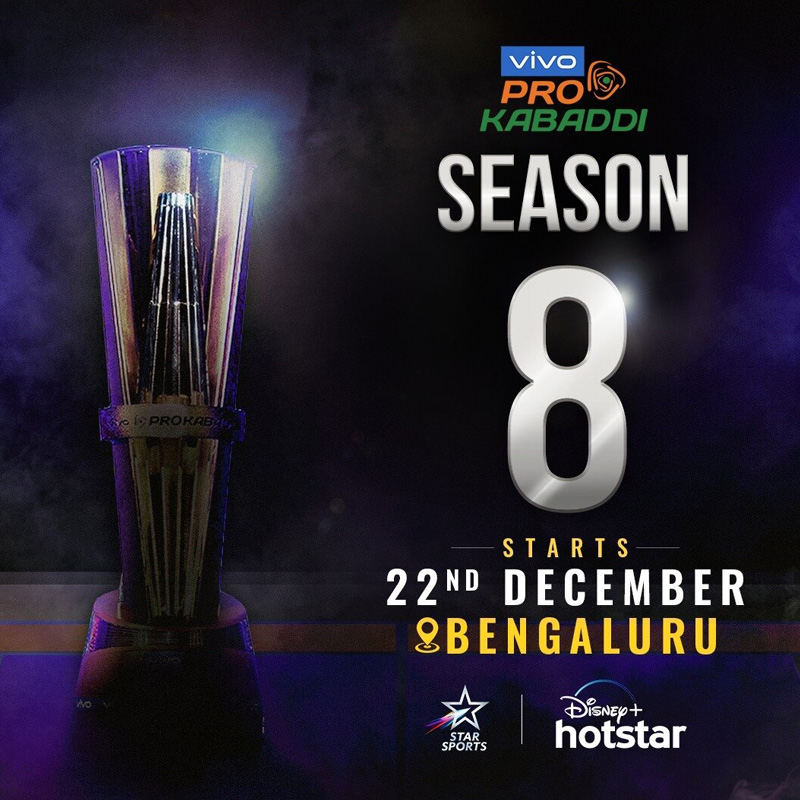
    Mumbai: Pro Kabaddi League, one of the fastest-growing sports franchises in terms of viewership is all set to return on 22 December, after a two-year hiatus, imposed by the pandemic.

    Like sporting events, the league has also undergone format changes owing to Covid-19 protocols. This time, all matches will be played in Bengaluru, sans any LIVE audience to cheer their favourite teams. But, this may not mar the enthusiasm of the fans who have been waiting for the sporting event, say agency experts. The official broadcaster Star Sports Network too has upped its ante and pushed its marketing efforts to regain the viewership that the series enjoyed pre-pandemic.

    Will PKL see a similar resurgence in viewership like the IPL?

    According to the Broadcast Audience Research Council (Barc), the sports genre had 2.4 per cent share in the overall TV viewership before Covid struck. This decreased to 0.7 per cent during the first lockdown, then increased marginally to 0.8 per cent during Unlock period, and grew once again to 4.1 per cent by the end of the year. The Indian Premier League (13th season) that was aired between week 38 and week 45 increased sports viewership by six times compared to previous weeks (week 34-37). (BARC Yearbook 2020)

    “IPL in 2020 had a format shift due to Covid-19, however TV ratings saw an increase by about 50 per cent. One of the major reasons was high TV viewership during pandemic and lockdown. But, the viewership went back to 2019 levels in 2021,” said MediaCom managing partner Vishal Shah.

    It is also significant to note that IPL was the only major sports event that was aired in the pandemic year 2020. Since people were confined to their homes and starved of LIVE sports action, TV viewership increased across genres. While, PKL may not have that advantage, because 2021 has turned out to be a tremendous year for LIVE sports with a packed sporting event calendar, especially in the second half.

    “Looking at the ratings trend this year, the numbers might be slightly lower than what the last season did, as the overall numbers have changed in the past two years,” said dentsu Amplifi India group trading director Sujata Dwibedy. “But, good marketing from the (Star Sports) network, across media is expected. This should pull more viewers.”

    Campaign in full swing

    Star Sports has already kicked off the promotions for the eighth season of PKL roping in M S Dhoni for their ad campaign. More recently, the broadcaster released a regional ad film playing up the opening match of PKL between Telugu Titans and Tamil Thalaivas on 22 December. The promo featured movie star Naga Chaitanya, indicating that the marketing efforts are in full swing.

    “In 2019, PKL witnessed 50-55 per cent growth in viewership from the previous season across different audiences and markets,” observed MediaCom managing partner Vishal Shah.

    Kabaddi being a homegrown sport, the league has enormous support and viewership from the Tier II and III towns. PKL viewership base largely comes from markets like Andhra Pradesh/Telangana (32 per cent) followed by Maharashtra/Goa (24 per cent), Karnataka (12 per cent) and Punjab, Haryana, Himachal Pradesh, Jammu Kashmir (seven per cent) and Kerala (five per cent), as per the BARC data.

    The viewership for PKL is much more evenly spread out according to dentsu’s Dwibedy. “It is not necessary that only people from the hinterland and Tier II towns have been viewing it (PKL), it has its loyal fans across demographics and across audiences but is skewed towards males,” she added.

    No LIVE audience at this year’s spectacle

    This year PKL will be missing LIVE audiences and will shed the caravan style format. Instead, all teams will play at a single location in Bengaluru. Looking back at IPL last year, media planners suggest that format changes will have little to no impact on the viewership of the tournament. Mashal Sports has also announced that triple headers will be played on all Saturdays which may have a positive impact on the viewership over weekends.

    New categories of advertisers likely

    Ad rates and sponsorship for PKL are likely to see a premium in proportion to the growth in audiences that the event saw in 2019.

    According to dentsu’s Dwibedy, brands who found cricket very expensive but want to still associate with some impactful property will be looking to partner with PKL, along with brands who genuinely see a fit with PKL and want to amplify their presence through the series. “We could also see some new categories of advertisers emerging as sponsors,” she added.

    “The other opportunity is also to do with the season and timing, IPL has always been a popular choice for summer brands whereas PKL is happening in a period that will attract winter seasonal brands,” said Mediacom’s Shah.

    Categories such as e-sports, e-pharmacy, auto, telecom, beverages, mobile handsets, paan masala, deodorants, paints, and cement have consistently been associated with the tournament and are expected to do the same this year.

  • TV ad volumes increase by 11 per cent YoY in September

    TV ad volumes increase by 11 per cent YoY in September

    Mumbai: TV ad volumes increased by 11 per cent in September year-on-year (YoY), according to data provided by TAM Media Research. The month saw eight per cent growth in categories, 18 per cent growth in advertisers and 15 per cent growth in brands, the data revealed.

    Ad volumes on TV grew in every week of September 2021 over the same weeks in September 2020; the highest growth of 14 per cent was seen in the first week of September 2021.

    Out of 370 categories on TV, the top categories that advertised in September were milk beverages (four per cent), followed by e-commerce/media/entertainment/social media (four per cent), toilet soap (three per cent), toothpaste (three per cent) and shampoo (three per cent). The top 10 categories contributed 31 per cent share of ad volumes on TV.

    During the month, 190+ categories increased ad volumes on TV versus the same period last year. Milk beverages category advertising increased by 74 per cent and e-commerce online shopping advertising increased by 2.5 times.

    The top five advertisers on TV included Hindustan Unilever Ltd (14 per cent), Reckitt Benckiser (10 per cent), Brooke Bond Lipton India (three per cent), Cadbury India (three per cent), and Amazon Online India (two per cent). HUL and RB were top advertisers for both September 2021 and September 2020. The top ten advertisers contributed 39 per cent share of ad volumes.

    Horlicks, Amazon India, Dettol, Lizol, Disney+ Hotstar, Harpic, and Clinic Plus Shampoo were some of the top brands advertised on TV. More than 3900 brands appeared on TV during the month, said the data.

    There were more than 50 categories that were visible in September 2021 but not in the comparative period last year. Some of the top categories include eyewear lenses, adhesives, childcare products, mouth wash, and frozen foods. The top exclusive advertisers were Lux Industries, Google, Parle Biscuits, BPL, and Travelxp India.  The top exclusive brands were Dettol, Airtel Black, Moov Pain Balm, Lux Cozi, and Reliance Digital.

    (Source: TAM AdEx; Figures are based on secodages for TV; commercial ads only; excluding promos and social ads)  

  • Ranveer Singh was most visible celebrity during IPL 14: TAM data

    Ranveer Singh was most visible celebrity during IPL 14: TAM data

    Mumbai: The Indian Premier League (IPL) 14th season saw 19 per cent rise in the share of celebrity-endorsed advertisements over the previous season, according to data provided by TAM Media Research. The study included all live matches for IPL 13 and 14 and excluded pre-mid-post programs. Ranveer Singh was the most visible celebrity with 11 per cent share of ad volumes.

    The total share of celebrity-endorsed ads accounted for 57 per cent of total ad volumes during IPL 14 compared 48 per cent in the previous season. The share of non-celebrity endorsed ads dropped by 17 per cent over the previous season, revealed the data.

    Film actors led the brand endorsements with 47 per cent share of ad volumes, followed by sports persons with 39 per cent share during IPL 14. The overall number of celebrities visible on TV saw a significant increase of 31 per cent compared to the previous season. The number of sports personalities visible on TV grew by 38 per cent. MS Dhoni and Virat Kohli were the top two most visible sports celebrities during IPL 13 and 14. The share of film and TV actress endorsed ads during the tournament was only 14 per cent.

    The top five most visible celebrities during IPL 14 were Ranveer Singh, MS Dhoni, Shahrukh Khan, Jim Sarbh, and Virat Kohli. Jim Sarbh was a new entrant into the top five list while the rest were recurring from the previous season of the tournament. The top five sports celebrities were MS Dhoni, Virat Kohli, Virendra Sehwag, Neeraj Chopra, and Sachin Tendulkar.

    The top five categories and advertisers accounted for 49 per cent and 36 per cent share of celebrity ad volumes, respectively. The top five categories were pan masala, online gaming, digital wallets, ed-tech and BFSI. The top five advertisers were Dreamplug Technologies, Sporta Technologies, K P Pan Foods, Vishnu Packaging, and AMFI.  

    (Source: TAM Sports; figures are based on secondages for TV; commercial ads endorsed by celebrities only; excluding promos and social ads; 60 matches of IPL 14 and IPL 13)

  • Ed-tech category leads ad volumes during IPL 14: TAM data

    Ed-tech category leads ad volumes during IPL 14: TAM data

    Mumbai: The ad volumes during 51 matches of IPL 14 grew by six per cent compared to IPL 13, according to TAM Media Research data. Ed-tech emerged as the top advertising category for this year’s edition, the data revealed.

    The TAM data looked at ad volumes across 24 Star network channels for IPL 14 and 21 channels for IPL 13. Only data for live matches was counted, pre-mid-post programming ads were excluded.

    The tally of advertisers grew by 10 per cent while brand count decreased by two per cent versus the previous season. Parent companies of the brands Dream11 and PhonePe were among the top five advertisers for both seasons of the tournament. The top five advertisers contributed up to 20 per cent share of ad volumes.

    This year ed-tech was the top category advertiser during the tournament with 10 per cent share of ad volumes. Last year, the mobile handset category was the leader in terms of ad volumes with the same share. Gaming (nine per cent), digital wallets (seven per cent), pan masala (five per cent) and aerated soft drinks (five per cent) were the other top advertising categories.

    The top advertisers for the season include Sporta Technologies (Dream11) (six per cent), Think and Learn (four per cent), FX Mart (PhonePe) (four per cent), EPX Uptech (Upstox) (three per cent), KP Pan Foods (three per cent). The top five brands were Dream11, PhonePe, Upstox, JDmart, and Cred and combined contributed up to 18 per cent of ad volumes.

    There were 30 new advertising categories visible during IPL 14 compared to the previous season. The top five new categories were securities/share broking, fans, hair dyes, pipes/PVC fittings, and hospitals/clinics. This year two-wheelers, wires and cables, banking services and products, washing powders/liquids, and namkeen categories did not advertise during the tournament.

  • TV ad volumes saw 17 per cent growth in August: Barc data

    TV ad volumes saw 17 per cent growth in August: Barc data

    Mumbai: TV ad volumes saw 17 per cent growth in August as compared to the previous month, according to the Broadcast Audience Research Council (Barc) India data. The month recorded the highest ad volumes on TV since the second lockdown in April with 158 million seconds.

    There were 2803 active advertisers and 4415 active brands on TV which is a 23 per cent growth over August 2019 and 19 per cent growth over August 2020. “Indian marketers and brands continue to place their trust in television once again as India kickstarted its festive season for 2021,” said Barc India in a statement.

    “As we kickstarted India’s festive season with Onam, we have seen growth in ad volumes in Malayalam channels for August compared to previous weeks and also compared to previous years,” observed Barc India head of client partnership and revenue Aaditya Pathak. “We continue to see a strong upward trend in the e-commerce category and a new category, corporate and brand image, joining the top ten sectors. Bhojpuri language channels are recording strong growth with ad volumes being almost at par with Punjabi and Marathi language channels.”

    The ad volumes of the top ten advertisers grew by 29 per cent while the next 40 saw 19 per cent growth and the remainder, 22 per cent growth in August, versus the same period for 2019.

    FMCG continued to dominate with the highest share with 92.9 million seconds of ad volumes and has grown by 22 per cent over the same period in 2019. With 4.4. million seconds of ad volumes for corporate and brand image, the industry witnessed a staggering growth of 570 per cent over the same period last year where it had recorded 0.7 million seconds. The E-commerce and BFSI industries grew by 109 per cent and 110 per cent.

    FMCG, e-commerce, building, industrial and land materials/equipment, corporate and brand image and auto, are the top five industries to dominate by share.

    Ad volumes for Bhojpuri language channels grew by 113 per cent, recording the highest growth across languages followed by Punjabi with 47 per cent, Marathi with 32 per cent and Hindi and Tamil at 28 per cent each. 

    Hindi language channels however continue to dominate share with 49 million seconds followed by Tamil and Telugu with 17 million seconds and 13 million seconds. Onam week recorded 2.23 million seconds of ad volumes, 13 per cent higher than 2019. Ad volumes during Onam week for Malayalam channels also increased by 22 per cent compared to the previous four weeks.

  • Retail Jewellers ad volumes grew by 52 per cent in Jan-Aug

    Retail Jewellers ad volumes grew by 52 per cent in Jan-Aug

    Mumbai: TV advertising volumes for retail outlets – jewellers grew by 52 per cent in January-August 2021 over the same period in the previous year, according to data shared by TAM Media Research. More than 150 advertisers and 170 brands were visible on TV.

    The news genre with 63 per cent share of ad volumes was the most preferred genre by jewellers followed by GEC (16 per cent). The primetime, afternoon and morning time bands combined accounted for more than 70 per cent of category ad volumes.

    The top ten advertisers included Lalithaa Jewellery Mart, Kalyan Jewellers, Malabar Group of Companies, Thangamayil Jewellery, The Chennai Silks Group, G R Thanga Maligai Jewellery, SDJ Gold Company, Akshaya Gold Company, K D & Sons and Bhima Group. Altogether, they contributed to 75 per cent share of category ad volumes on TV. There were more than 80 new brands that advertised during this period over last year.

    The news bulletin programme genre was most preferred by jewellers to showcase their ads. Film songs and feature films were also popular programme genres with 11 per cent and 10 per cent share of category ad volumes, respectively. 20-40 seconder ads and <20-seconder ads were the most preferred lengths with 58 per cent and 30 per cent share of the category ad volumes, respectively.