Tag: TV

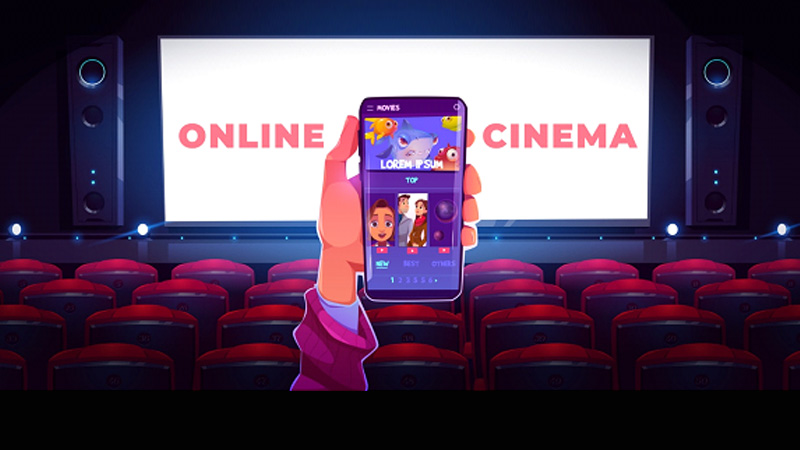
  • Cinema Halls to Smartphones: The Shift in Indian Entertainment Consumption

    Cinema Halls to Smartphones: The Shift in Indian Entertainment Consumption

    India has long been among the world’s biggest film markets in terms of ticket sales, number of films produced, and theatre infrastructure. Over the past decade, the rise of digital streaming, cheaper data, and changing consumer behavior has pushed for a rebalancing.

    According to a recent EY research, the Indian media and entertainment (M&E) industry increased by 3.3% in 2024 and was valued at approximately INR 2.5 trillion (US$29.4 billion).

    Within that, digital media is the largest segment, and contributed around 32% of total revenues. In contrast, traditional media, like TV, print, and radio, saw drops in both advertising and subscription income.

    The Legacy of Cinema Halls

    For so long, the cinema has been the centrepiece of Indian entertainment. Big festivals, major star vehicles, and regional cinema in language hubs built the live-theatre experience. It was in the 2000s and 2010s when multiplexes in large cities boomed. Single screens remained relevant in smaller towns, and cinema halls generated major portions of film revenues.

    However, it can’t be denied that experiencing entertainment at the cinema can be a bit pricey. The cost of theatre tickets, travel, and supplementary expenses (food, parking) slows attendance for many films. Some mid-budget or smaller regional films struggle to recoup costs via theatrical alone. The impact of COVID-19 also forced many delayed releases or direct-to-OTT experiments, which in turn raised questions about the sustainability of cinema as the only route.

    Rise of OTT and Mobile-First Viewing

    India’s OTT universe in 2025 stands at 601.2 million people who watched at least one streamed or online video in the past month. That accounts for about 41.1% of the population.  
    Of those, 148.2 million are active paid OTT subscriptions (including through telecom bundles and OTT aggregators).

    Connected TV usage has surged: the number of Connected TV users is now 129.2 million, up 87% year-on-year.  This shift shows streaming is no longer confined to phones only, as viewers want larger screens and living room experiences as well.

    Data costs have fallen, smartphones have become ubiquitous, and broadband penetration has improved in urban and rural areas alike. Streaming platforms like Netflix, Amazon Prime Video, Disney+ Hotstar (now JioHotstar), Zee5, SonyLIV, and many regional players have scaled voice, subtitle, language localisation, and pricing to reach broader audiences.

    Sports-related platforms or communities, both legal streaming and fan engagement spaces, show another angle of audience shift. For instance, users who follow cricket or other live sports not only stream matches on OTT platforms but also use various digital forums and social media platforms.

    10CRIC and other similar websites are some of those online spaces where fans get access to the latest odds, team stats, and more. That reflects the way entertainment and live content spill over into related digital spaces, though the core viewing remains on OTT and smart devices.

    Regional Content and Language Diversity

    Regional language content is a key driver in this transformation. Ormax Media reports show that in 2024, the number of streaming originals in India dropped by about 18% compared to the previous year, after peaking in 2023. Still among originals, fiction series dominate (around 70% of OTT originals), and Hindi remains the dominant language with 65%share.

    Other languages, such as Bengali, Telugu, and Tamil, have growing representation. Platforms focused on regional content (e.g., those devoted to one language) are just really seeing stronger engagement in their markets.

    Viewers increasingly prefer content in local languages, with dubbed or subtitled versions helping content move across state borders. Films originally released in theatres are seeing extended life on OTT in regional markets.

    Economics: Theatrical vs OTT

    Releasing a film in theatres is expensive. Studios spend on distribution, digital or print delivery, big marketing campaigns, and then share a large cut with theatre owners. If a film doesn’t get a strong opening weekend, it often struggles to recover those costs.

    An OTT release works differently. Platforms can cut down distribution expenses, reach audiences across cities and smaller towns at once, and earn through subscriptions or ads. This makes it a safer option for mid-budget or niche films that may not draw big crowds in cinemas.

    Subscription Video On Demand (SVOD) and Advertising Video On Demand (AVOD) are also coexisting. Many platforms give both options. There is also bundling through telecom providers. Some films release theatrically and land on OTT after a window. Some would have direct-to-OTT release strategies, especially for smaller budgets or niche content.

    Technology, Platforms, and Interactivity

    Better mobile networks (4G, growing 5G), cheaper data, improved video compression, and smart TVs all push streaming quality up. Platform features like offline downloads, profiles, parental controls, and multi-device sync help retain users.

    Interactivity now matters. Live trivia, polls during shows, social features built into streaming apps, and second-screen experiences. Streaming of sports or live events gets further amplified by chat, fan forums, commentary, and behind-the-scenes clips.

    Hybrid content consumption (combining cinema and streaming) is becoming standard. Consumers may watch big action or festival films in theatres, but a large part of their weekly content diet comes from OTT. As streaming grows, the role of theatres adjusts.

    What the Future Looks Like

    Growth projections are strong, and the FICCI-EY report estimates the M&E sector will grow 7.2% in 2025. So, that’s about INR 2.7 trillion at a CAGR of about 7% to reach around INR 3.1 trillion by 2027.

    OTT audience and adoption are also expected to increase, though growth rates might moderate. Connected TV adoption will likely continue its sharp rise.

    However, platforms will still need to combine technology investment, pricing innovation, content localisation, and strong marketing to retain audience loyalty. Those who will are the ones likely to remain relevant for a long time. 

    Disclaimer:This article has been published without the journalistic or editorial involvement of Indiantelevision.com. IndianTelevision.com Group, or any of its affiliated websites. IndianTelevision.com Group does not endorse, subscribe to, or take responsibility for the content, opinions, or views expressed herein.

    Readers are further advised that Online Casino, Betting, Cryptocurrency products, Financial Investments/Engagements, NFTs, and products or calls-to-action related to Health, Booking, Wellness, and Food are largely unregulated and carry significant risk. There may be no regulatory protections or avenues for recourse in the event of financial losses or health-related risks arising from engagement with such products or services.

    IndianTelevision.com Group expressly disclaims any responsibility or liability for the information, views, announcements, declarations, or affirmations presented in this article. By choosing to proceed, the reader acknowledges and agrees that they do so at their own discretion and risk, and expressly absolve indiantelevision.com (IndianTelevision.com Group) from any potential legal claims, liabilities, or actions.

    The content provided is solely for informational and awareness purposes.
     

  • &TV’s new comedy ‘Gharwali Pedwali’ promises a hauntingly hilarious ride

    &TV’s new comedy ‘Gharwali Pedwali’ promises a hauntingly hilarious ride

    MUMBAI: If you thought married life was complicated, wait till you meet Jeetu—&TV’s latest leading man who accidentally ends up with two wives: one human, one haunting.

    After striking gold with shows like Bhabiji Ghar Par Hai and Happu Ki Ultan Paltan, &TV is back to spice up prime time with Gharwali Pedwali, a quirky family comedy with a delightfully paranormal punch. Produced by Peninsula Productions, the show blends classic desi sitcom madness with an unexpected celestial curveball.

    At the heart of this tale is Prithvi Mishra aka Jeetu, a lovable, no-frills everyman whose life has always come in twos. Two mums, two dads, two bosses… and now, courtesy of a last-minute astrological mishap, two wives. Just as he’s ready to tie the knot with the modern and spirited Savi, he’s forced into marrying a peepal tree. Enter Latika, a ghostly bride who believes the symbolic wedding was very much the real deal.

    The show leans into the absurd with flair, promising laugh-out-loud chaos, emotional curveballs, and a double dose of drama. True to its roots, Gharwali Pedwali delivers the signature &TV flavour—relatable, rooted, and ridiculously entertaining.

    No spoilers on how Jeetu navigates this ghostly love triangle, but one thing’s for sure, viewers are in for a spook-tacular treat.

    Gharwali Pedwali is coming soon, only on &TV.

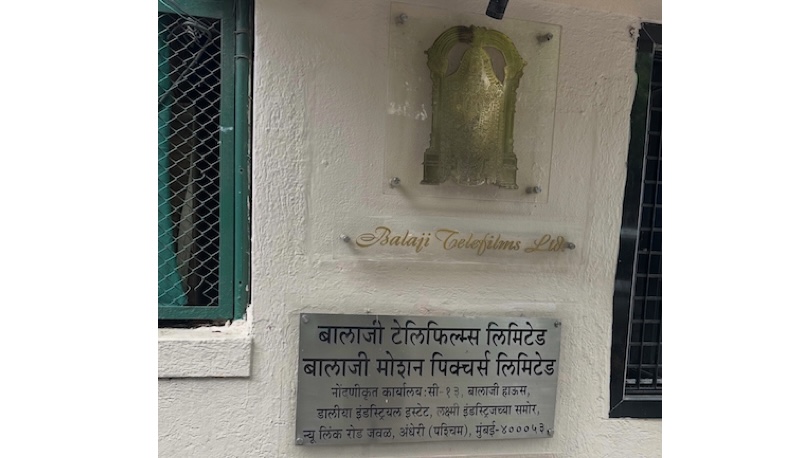
  • Balaji Telefilms goes big on movies and OTT, trims TV bets

    Balaji Telefilms goes big on movies and OTT, trims TV bets

    MUMBAI:  Balaji Telefilms is flipping its script. In a year marked by a strategic overhaul, the Ekta Kapoor-backed entertainment house has declared a decisive pivot from television towards high-growth verticals: movies, digital streaming, and branded content.

    Addressing analysts on its FY25 earnings call, group chief executive and CFO Sanjay Dwivedi outlined a transformation roadmap: “Movies will be our growth engine, digital will scale next, and television—once our mainstay—will become the third line of business.”

    The studio reported consolidated revenue of Rs 453 crore in FY25, down from Rs 625 crore the previous year. Yet net profit surged to Rs 84.6 crore from Rs 19.4 crore, largely due to a rights-heavy strategy in film and digital. The PAT margin stood at 18.7 per cent, and the company ended the year with Rs 172 crore in cash and mutual funds.

    Balaji’s OTT platform ALT Balaji saw a turnaround. Once burning Rs 120–145 crore a year, its cash burn has now dropped to just Rs 35 lakh a month. The platform added 3.29 lakh subscriptions in Q4 FY25, with total active subscribers crossing the 2 million mark.

    The company is also phasing out its pure SVOD model in favour of a hybrid SVOD–AVOD play, supported by a short-form vertical content app called Kutting. YouTube strategy and advertiser-funded content (AFP) are set to bolster revenue.

    Crucially, Balaji sealed a long-term content partnership with Netflix, spanning original films, binge series, telenovelas, and reality formats over 3 to 7 years. “This is not a one-off deal—it’s a foundational alliance for the future,” said Dwivedi.

    Balaji is betting on movies to power future growth. It has de-risked the vertical by recouping up to 90 per cent of production costs via pre-sales and co-production deals. In FY25, films contributed 30 per cent to revenue.
    Its upcoming slate includes Vrushabha (starring Mohanlal), the Priyadarshan-directed Bhoot Bangla with Akshay Kumar, and Vvan, a collaboration with TVF featuring Sidharth Malhotra.

    The studio targets 6 theatrical releases per year and is building on a franchise playbook with sequels like Dream Girl, LSD, and Shootout.
    TV content production touched 133 hours in Q4, with four shows on air. However, broadcaster yields remain 25 per cent below pre-Covid levels, and Balaji is cautious about further TV expansion.

    “TV is a volume game now. Rates aren’t recovering. We’ll stick to 6–8 shows a year, with a cap around Rs 350 crore,” said Dwivedi.

    New shows include Bade Achhe Lagte Hain – Phir Se and a reboot of Kyunki Saas Bhi Kabhi Bahu Thi.
    The company is also experimenting with AI-led production, launching a series titled Kalnagri on its platform. Regional expansion is on the cards, starting with Tamil and Telugu.

    On YouTube, Balaji hit 1 million subscribers in a month, banking on a mix of new shows and IP-retained repurposed content—especially as Indian viewers seek alternatives to banned Pakistani serials.

    Balaji has a Rs 300 crore B2B order book from leading OTT platforms. It expects digital to contribute 20–25 per cent of revenue in two years. The company is not planning a spin-off of the digital business for now, but hints at unlocking value once scale justifies it.

    “We are storytellers, not just platform owners,” Dwivedi said. “Our job is to find the next big content wave—whatever the screen.”

  • Azim Lalani co-founds Bullet, hopes to fire up the two-minute microdrama revolution

    Azim Lalani co-founds Bullet, hopes to fire up the two-minute microdrama revolution

    MUMBAI — Azim Lalani, the digital maverick who’s seen it all from India Today to Fanory, (a career of more than a score years) has now strapped on a new role — co-founder and chief business officer at Bullet, a mobile-first microdrama OTT platform that promises to shoot cinematic stories straight to your phone in under two minutes.

    With a sharp eye on Gen Z and a regional-first, multilingual content play, Bullet isn’t just banking on binge culture — it’s reinventing it. Backed by tokenomics and built on blockchain, the platform wants to do more than stream — it aims to spark a creator economy explosion.

    “As CBO, I’ll be driving business strategy, growth partnerships, content, and monetisation,” Lalani said. “We’re not just building a platform — we’re architecting a storytelling ecosystem that’s sustainable, scalable and rooted in innovation.”

    He gave a shoutout to co-founder and CTPO Saurabh Kushwah for leading the tech charge, and thanked the leadership at Zee Entertainment Enterprises for supporting new-age innovation.

    Lalani’s previous innings include launching Fanory to help creators go direct-to-fan with coin-based monetisation, leading Money9 at TV9, and steering convergence and brand solutions at Network18. Prior to that he did time at India Today, Rediff and Indian Express. 

    Now with Bullet, he’s loading the chamber with big ambitions — where every story is sharp, short, and shot with purpose. Creators, got a drama to drop? The stage is yours — but make it snappy.

  • Balaji Telefilms taps money man Viren Trivedi as new bean counter

    Balaji Telefilms taps money man Viren Trivedi as new bean counter

    MUMBAI: Balaji Telefilms, the entertainment powerhouse, has promoted veteran finance whiz Viren Trivedi to finance controller, effective immediately. The production giant’s board approved the appointment yesterday following a nod from its nomination and remuneration committee.

    Trivedi, a chartered accountant by training, is hardly a fresh face at the firm. Having joined the Balaji Group in 2013, he brings over 11 years of financial savvy to his new role. The company appears to be betting on the devil it knows rather than the devil it doesn’t.

    Before his Balaji stint, the money man cut his teeth at accounting firms Suresh Patni & Associates and Mehta & Vasu Associates, where he honed his skills in everything from tax audits to drafting partnership deeds.

    At Balaji, Trivedi has been knee-deep in the company’s financial affairs, juggling quarterly financials, liaising with auditors, managing day-to-day funds and authorising payments. He’s also had his fingers in the film distribution pie, handling commercials and assisting with revenue deals.


  • A powerhouse move: Deepali Handa joins Endemol Shine India

    A powerhouse move: Deepali Handa joins Endemol Shine India

    MUMBAI: What does it take to lead commercials and production at one of India’s most prominent content powerhouses?

    Endemol Shine India, part of Banijay Entertainment’s global empire, seems to have found the answer in Deepali Handa.

    After an illustrious 15-year journey at BBC Studios as its commercial head, Handa steps into her new role as executive vice president with unmatched expertise in both scripted and unscripted genres.

    This move not only signals a new era for Endemol Shine India but also cements Deepak Dhar’s leadership vision of bringing in seasoned industry stalwarts to drive innovative storytelling and production excellence. With over two decades of experience in shaping content strategies, Handa’s appointment promises to redefine the creative and commercial blueprint for the company.

    Who better to steer the helm at one of the industry’s most dynamic production houses than someone who’s been a cornerstone in scripted and unscripted success stories?

    Handa’s journey and her next chapter at Endemol Shine India are stories waiting to unfold.

    Before joining Endemol Shine India, Handa played pivotal roles at BBC Studios India, where she served as head of commercials, production, and executive producer. Her extensive portfolio includes leading large-scale production operations, enhancing operational efficiency, and driving profitability through innovative strategies.

    Banijay Asia & Endemol Shine India group COO, Rishi Negi expressed confidence in Deepali’s capabilities, “Deepali’s expertise and insights in both production and commercials make her a valuable addition to our leadership team. We look forward to her playing a pivotal role in ensuring we stay at the forefront of delivering quality and cutting-edge content to our partners and consumers.”

    Handa’s addition reflects Endemol Shine India’s commitment to staying ahead in the dynamic world of television and entertainment. Known for producing iconic formats such as Bigg Boss and MasterChef India, Endemol Shine continues to innovate and adapt to meet evolving audience preferences.

    Excited about her new role, Handa commented, “Endemol Shine India has made its mark and held its own, be it in big-scale unscripted format production or scripted content. I’m excited to join the bandwagon and contribute to its legacy of producing world-class content.”

    Her career showcases versatility across diverse formats, including television, films, and documentaries, underscoring her deep understanding of storytelling across mediums.

    Handa’s strategic leadership is expected to enhance operational efficiency while maintaining the high-quality benchmarks Endemol Shine India is known for. She will oversee both scripted and unscripted projects, ensuring the company continues to set industry standards.

  • Mediascope ropes in CNN Intl Commercial senior exec Meher Anand in strategic role

    Mediascope ropes in CNN Intl Commercial senior exec Meher Anand in strategic role

    MUMBAI: She is expanding her scope of work. Until November 2024, Meher Anand was account director south Asia of CNN International Commercial. Now she has gone ahead and joined media sales and content consultant Mediascope as vice-president strategic partnerships.

    Meher spent the last 13 years of her career working with CNN International  Commercial where she was responsible for delivery and development of the south Asia region towards the APAC/global objectives across platforms – TV, digital, social & audio.

    At Mediascope, she is expected to lead ad sales and strategic initiatives across media in both established and emerging markets in south Asia.

    “With her expertise in both domestic and international media sales, she aligns perfectly with our ambitions,” said Mediascope in a posting on Linkedin. 
     

  • Fast platform RunnTV attracts investment from South Africa’s media conglomerate eMedia

    Fast platform RunnTV attracts investment from South Africa’s media conglomerate eMedia

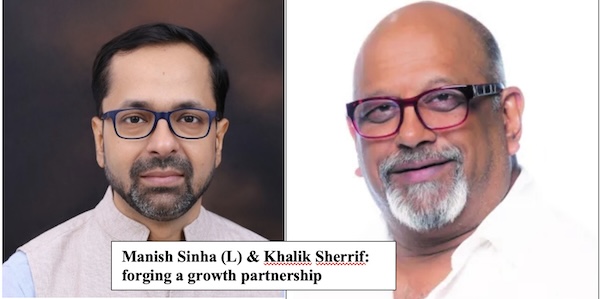
    MUMBAI: In the fast evolving world of television today, partnering is the way to go. That’s the belief of the Runn Media Lab-owned free ad-supported television (Fast)-based content streaming platform RunnTV. Founded by Manish Sinha, the company announced a strategic partnership with south African media group and broadcaster eMedia Investments on 29 November As part of this partnership, eMedia has also made a strategic investment in RunnTV.  The financial terms of the deal remain undisclosed.

    The partnership and investment will enable both companies to combine expertise and resources across media and technology, catalysing their growth across the digital streaming landscape both in India and in the overseas markets.

    RunnTV is a new-age streaming platform offering its users free, entertainment across genres while providing advertisers a premium, brand-safe space to effectively reach their target audiences. Launched in November 2023, it is targeting the emerging and high growth Fast market in India and beyond through mobile and connected devices.

    “eMedia joining us as a partner and a strategic investor presents exciting new opportunities for RunnTV.The partnership will fuel a robust and sustainable growth, technology and product innovation, expanded content offerings, and expansion to new markets,” says RunnTV founder & CEO Manish Sinha. “We look forward to this partnership to reshape digital entertainment, not only in India but across the globe.”

    eMedia is a Rand 3.1 billion (Rs 1,450-odd crore) turnover media conglomerate in South Africa having businesses in television and radio broadcasting, OTT streaming, content production, and properties and facilities. eMedia holds owns multiple marquee media brands including eTV, eNCA, eVOD, Openview,  Cape Town Film Studios and YFM.

    Through this collaboration, eMedia will not only further strengthen its already strong digital portfolio but will also leverage Runn Media Labs’ media technology and RunnTV platform to expand its digital business to other international markets including India.

    “We are very excited to invest in and partner with RunnTV and join forces on this exciting journey,” says Khalik Sherrif, CEO at eMedia. “RunnTV team has built a strong technology that powers its Fast platform and has an exciting and promising roadmap. We look forward to working closely with the talented team at RunnTV to shape the future of media and entertainment together.” 

    Shall we raise a toast to the new beginnings?

  • TAM AdEx: Surge in political advertising during Maharashtra assembly elections

    TAM AdEx: Surge in political advertising during Maharashtra assembly elections

    Mumbai: As the election season approaches, the advertising landscape witnessed a surge in activity, especially across traditional mediums like TV, print, and radio. A recent report by TAM AdEx, a division of TAM Media Research, delved into the advertising patterns observed during the assembly election periods of September 2023 and October 2024. The report highlighted how political parties have strategically leveraged various media channels to maximize their reach and influence voters.

    The analysis focused on the ad insertions and ad volumes across different media platforms, comparing the data from the months leading up to the elections in 2023 and 2024. The study covered a range of advertising categories, primarily focusing on political ads, and provides insights into the evolving strategies adopted by political entities.

    The report noticed an increase in advertising across TV, print, and radio, particularly in the months leading up to the elections. Here’s a breakdown of the media usage trends:

    ●    Television remained the most dominant platform, capturing a large share of political ad insertions. This trend is attributed to TV’s extensive reach and ability to engage a wide demographic, making it a preferred medium for political campaigns.

    ●    Print media continued to play a crucial role, especially in regional advertising. Political parties leverage newspapers to reach specific voter bases, particularly in rural and semi-urban areas where print media retains substantial influence.

    ●    Radio also saw a noticeable increase in ad volumes, highlighting its importance as a medium for quick and cost-effective voter engagement, especially in local languages.

    The Ad Insertions data from the “Assembl Election – Ad Insertion” sheet reveals some interesting trends:

    ●    In September 2023, there was a moderate volume of ad insertions as political parties started ramping up their campaigns. However, by October 2024, there was a marked increase in ad insertions, indicating a more aggressive approach closer to the election dates.

    ●    The report highlighted that political ads constituted a significant portion of the total ad insertions across all three mediums (TV, print, and radio). This reflects the high stakes of assembly elections and the need for parties to maintain visibility across multiple channels.

    The data from the “Assembly Election – Ad Volume” sheet further elaborates on the share of ad volumes:

    ●    There was a noticeable shift in ad volumes between the two years, with October 2024 showing a higher volume compared to September 2023. This could be attributed to the heightened competition among political parties and the increasing significance of assembly elections in shaping state politics.

    ●    The increase in ad volumes suggested a growing emphasis on broadcast and print advertising as key components of election strategies. This aligns with the broader trend of political parties investing heavily in mass media to sway public opinion.

    The report also highlighted the distribution of ad insertions based on the per cent share of different media:

    ●    TV dominated the share of political ad insertions, followed by print and then radio. This aligns with the general perception that visual media has a stronger impact on viewers, especially during the election season.

    ●    The increased usage of radio in 2024 indicates a renewed interest in using audio channels to reach voters in rural and semi-urban areas. Radio’s localized nature allows political parties to tailor their messages to specific regions, making it a powerful tool for regional outreach.

    The comparative data between September 2023 and October 2024 reveals some strategic shifts in political advertising:

    ●    There was a clear escalation in ad spending as parties approached the 2024 assembly elections, indicating a more robust and aggressive campaign strategy. This aligns with the broader trend of political campaigns becoming more media-centric, leveraging high-frequency ad insertions to dominate the airwaves.

    ●    The report also suggested that political parties are increasingly adopting a multi-channel approach, utilising a mix of TV, print, and radio to ensure widespread voter engagement.

    TAM AdEx-Assembly Election Report – Sep’23 and Oct’24

  • Zee Entertainment UK launches &TV on Samsung TV Plus

    Zee Entertainment UK launches &TV on Samsung TV Plus

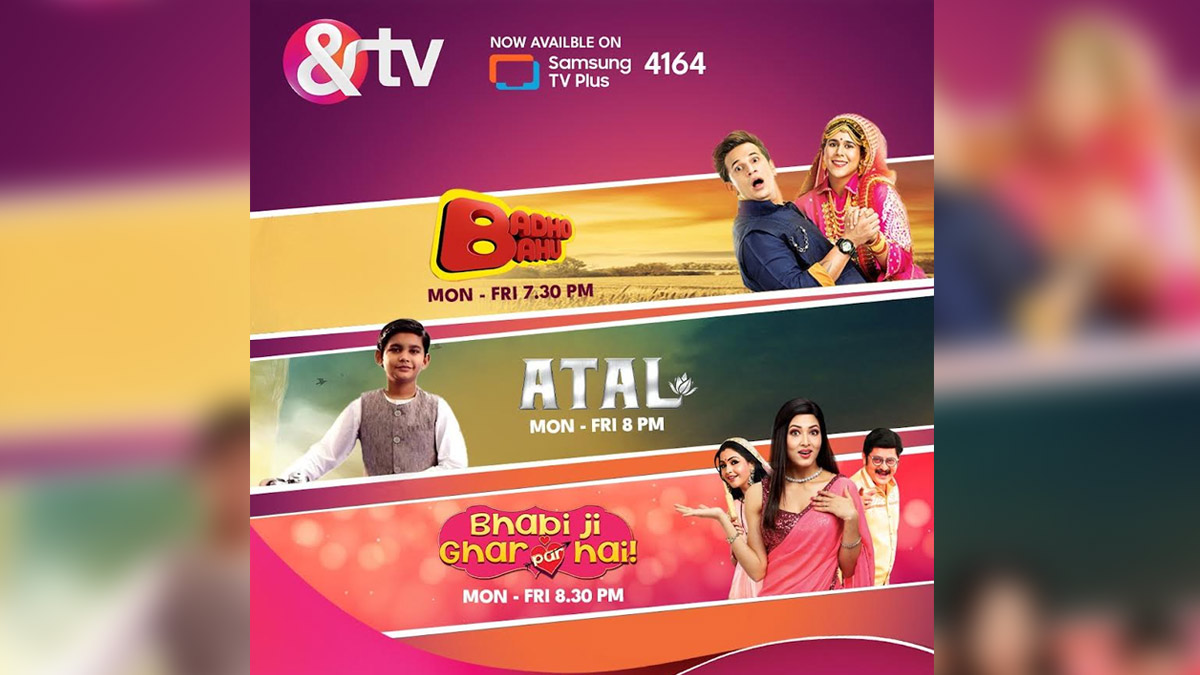
    Mumbai: Zee Entertainment UK is expanding its presence in the UK and Europe with the launch of &TV on Samsung TV Plus. This follows the successful introductions of Zee One in Germany, Zee World English, and Zee Magic in France.

    &TV is the first Hindi entertainment channel on Samsung TV Plus in the UK, targeting the five million-strong South Asian population. It offers popular shows like Bhabhi Ji Ghar Pe Hain, Atal, Begusarai, Tere Bin, and Ghar Ek Mandir, all with English subtitles. These programs focus on relatable experiences, emotions, and cultural nuances that connect with British Asian audiences.

    This launch strengthens Zee Entertainment UK’s relationship with the British Asian community, offering an engaging and enjoyable viewing experience on Samsung TV Plus.

    Samsung TV Plus UK lead, content acquisition Stuart Pearson said, “We are thrilled to introduce &TV to Samsung TV Plus in the UK. This exciting addition brings countless hours of Bollywood-centric content to viewers in the region. Our partnership with Zee is built on robust fundamentals of audience engagement, and we are delighted to continue this successful collaboration.”

    Zee Entertainment Enterprises chief business officer – international business, Ashok Namboodiri, said, “We are absolutely delighted to announce the launch of our new channel, marking the first Hindi language channel on Samsung TV Plus. This incredible collaboration allows us to bring even more of our engaging and popular content to viewers in the UK. Following the successful launches of three other channels in the UK and Europe, this partnership with Samsung TV Plus is truly remarkable and an exciting milestone for us.”

    Samsung TV Plus is Samsung’s free ad-supported streaming service, requiring no subscription, sign-up, or additional devices. It is pre-installed on Samsung Smart TVs from 2016 to 2024 and available for download on Samsung Galaxy devices in select regions. The service is available in the UK and 15 other European regions with only an internet connection required.