Tag: Turner International

  • Turner International hires Ricky Ow as Marcopoto’s replacement

    Turner International hires Ricky Ow as Marcopoto’s replacement

    MUMBAI: Turner International’s Turner Broadcasting System Asia Pacific has been beset with some bad news or the other emerging from it over the past couple of years. Restructuring, layoffs and the sudden stepping down of its long serving boss Steve Marcopoto earlier this year all caught the headlines.


    A hunt for his successor was on, the company had stated at the time of Marcopoto’s announcement.


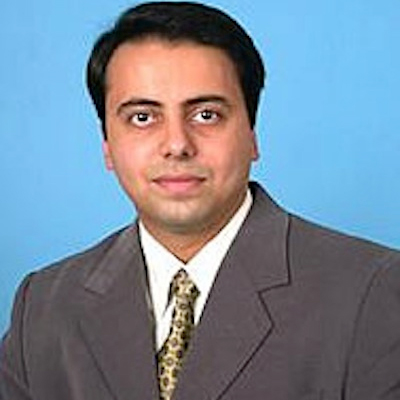
    The good news now is that the company has announced his replacement. And it is international television executive Ricky Ow who will be joining Turner International as President of Turner Broadcasting System Asia Pacific effective January 2014. The announcement was made by Gerhard Zeiler, President of Turner Broadcasting System International.


    Most recently Executive Vice President & General Manager for Sony Pictures Television (SPT) Networks Asia, Ow will lead Turner International’s portfolio in the Asia Pacific region, based in Hong Kong.


    As President of Turner APAC, Ow will have executive oversight for all entertainment and kids networks, the digital and media services offered, the distribution of CNN’s services in that region, and all licensing and merchandising activity in APAC.


    “We are delighted that Ricky is joining us and look forward to the leadership and wealth of international media experience he will bring to one of the most strategically important areas of Turner International,” said Zeiler in a press release. He continued: “His vast experience in the region, his successes in launching and establishing channel brands both locally and regionally, his experience in local content production, as well as his deep understanding of sales and marketing, make him the ideal choice to lead our business in the Asia Pacific region into the next stage of growth. Looking with fresh eyes at our business as a true leader, he will be a strong addition to Turner International. We all look forward to working with him to extend our core brands and build international scale.”


    “I am very excited to join Turner and it is an honour to work with Gerhard and the team that has built some of the most valuable media brands in the world including CNN, TNT, Cartoon Network, Pogo and Turner Classic Movies,” said Ow. “This is an opportunity to leverage on our incredible heritage of creativity and innovation to grow a dynamic portfolio of iconic brands, to develop new ventures and to strengthen relevance and value for our viewers, partners and the business community.”


    Ow joins Turner after a 14-year career at Sony Pictures, most recently as Executive Vice President & General Manager for Sony Pictures Television (SPT) Networks Asia. In that role, Ow was responsible for overseeing the networks business across Asia as well as developing new channel opportunities in the region. He also had oversight of SPT’s two Korean joint ventures, AXN Korea and Animax Korea. Prior, Ow was the Senior Vice President & General Manager, Networks Asia, overseeing the company’s channel brands, including AXN India and Animax India. He joined SPT in 1999 as Head of Sales and Marketing. Under his leadership, AXN became the leading English language general entertainment channel in Asia while SPT Networks Asia grew into a bouquet of entertainment brands including “One”, the leading Asian language channel in Southeast Asia. Additionally, Ow has led SPT’s networks in Asia to pioneer various award-winning pan-regional entertainment productions. Prior to joining SPT, Ow held positions at SBC Enterprises (now Mediacorp TV), Asia Business News, and CNBC.

  • Kids TV channels seek to service adults too

    Kids TV channels seek to service adults too

    Krishna Desai speaks on the business, content and digital sides of Turner International India‘s kids forays.

    What is the local content strategy adapted by the channel to attract viewers and more so encourage co-viewing (kids & parents together)?
    Way back at the turn of the century, realised that there was a growing preference of local content in the kids‘ space, resulting in development of our Desi Toons strategy that emphasises on showcasing locally relevant content that resonates with kids. We will continue to deliver local content be it more of international shows in local languages, acquiring and producing content conceived locally and delivering a platter full of hit shows in different formats.

    Although, traditionally, kids‘ channels are perceived to cater to only to children, the latest findings of Cartoon Network New Generations , our proprietary research, shows that a majority of parents (three out of every five parents) watch television with their kids; morevover, cartoons are their most preferred genre after serials. Our strong portfolio of shows such as Tom and JerryBen 10Oggy and the CockroachesChhota Bheem, etc. cross age limits and appeal to parents as well.

    What kind of numbers are you generating in terms of viewership and what kind of audiences and from where?
    Turner‘s kids‘ network is clearly leading the genre on-air as well as online. Key findings are highlighted below:
    POGO at No. 1 (151 GRPs) and Cartoon Network at No. 2 (119 GRPs) – YTD
    Cartoon Network at No. 1 (159 GRPs) and POGO at No. 2 (151 GRPs) – Week 23
    Cartoon Network, at 159 GRPs, is the maximum in last 5 years – Week 23
    At 188 GRPs, Pogo created a new industry record in the genre of the highest GRPs ever for any kids channel in last 7 years – Week 19
    (Source: TAM | All India | YTD: wk 1-23 | 4-14 years | All SEC)

    www.cartoonnetworkindia.com and www.pogo.tv are the top two kids‘ websites in the country with a million unique viewers.

    What is the competitive landscape like? Who are the main viewers (age, urban, non-urban, etc)?
    * Currently, there are 16 national channels in the kids‘ genre. 
    * Cartoon Network and POGO broadly target kids across the country between the age group of 4-14 years, across all SECs.

    What are the initiatives and plans you have to promote merchandise along with highlighting the scope for partnering with a retailer? 
    The advantage for us is that we are part of a media conglomerate with presence across all platforms such as TV, online, on ground and digital. Apart from leveraging the two channels – Cartoon Network and POGO, we also leverage our predominant position in the market in the digital space. With over 375 unique games on CartoonNetworkIndia.com & POGO.tv, we reach out to 500,000 unique visitors monthly. We also have tie-ups with all the major retail chains to provide children with memorable on-ground experience through character meet and greet events and trade activities.

    Cartoon Network Enterprises has licensee partnerships across all key merchandising categories such as toys, games, apparel and accessories, publishing, back to school, gifts and novelties, sporting goods, confectionary and home video amongst others. We also have significant business coming in from promotional licensing where we partner with large FMCG companies to offer free character branded give aways on purchased goods. Today, Ben 10 franchise is the number one boys action property in India that has sold over 950,000 units of toys and counting.

    Apart from these traditional categories, we have successfully leveraged our business by launching innovative products to keep up with the trends in the market. Some of these include, digital video-ebooks based on the popular Ben 10 series and M.A.D. Let‘s Doodle! School graded art and craft books and M.A.D Live classes based on the successful show M.A.D. (Music Art Dance).

    Taking this engagement to a new level, we recently brought an international stage show called ‘Ben 10 Live: Time Machine‘ to India. The show gave kids the opportunity to see their favourite superhero and his aliens live on stage and the audience response was phenomenal.

    As far as partnering with retailers is concerned, currently our products are sold across traditional, modern retail channels as well as through school clubs and fairs. We have excellent relationship with individual retail chains built on a solid win-win philosophy. While the retail chains are able to provide the requisite infrastructure, we have the unique ability to create branded experiences and environments to engage with our consumers. We actively do in-shop promotions, retail activations, and meet and greet events.

    Juhi Ravindranath speaks on brands that advertise on kids channels, emerging spenders and advertising solutions that Turner International India offers.

    How big is the broadcast advertising market and what is the share of the kids‘ genre?
    The advertising spends of the broadcast industry were approximately Rs 125 Billion in 2012 (Source: Ficci-KPMG Report 2013) and the kids‘ genre contributed Rs 3 Billion to this revenue.

    Which categories spend the most on advertising on your channel? Which companies spend the most money? 
    For the kids channels, categories such as chocolates, noodles/pasta and confectionary that primary target kids, are critical for our business. Advertisers such as GSK, HUL, Cadbury, Mattel, Kellogs, Perfetti, ITC are amongst our top spenders.

    Are there any new emerging spenders?
    For kids‘ brands, we expect to see a rise in advertising by non-traditional categories, as more and more advertisers realise the impact kids have on purchase decisions. We expect to see consumer electronics, mobile handsets and automobiles to show increasing interest.

    What does advertising on such channels offer to these advertisers? Any trends and insights you can share for the same?
    Our audience comprises of kids as well as their parents. ‘Cartoon Network New Generations 2012‘ shows a majority of parents watch television with their kids. After serials, cartoons are their most preferred genre. Even amongst adults, Pogo and Cartoon Network would be within the top 15 most watched channels (All India, TAM).

    Kids are the primary decision-makers when it comes to certain categories, like chewing gum, candies etc. Kids form key influencers on other categories. They have a say on almost all household purchase decisions be it televisions, computers, mobiles, automobiles etc. This is apart from regular household consumption items like oral care, ketchup, ready to eat snacks etc.

    As a result, advertisers come to the channel to target kids, both as primary consumers as well as key influencers. Apart from this they can reach the parents. A large number of advertisers like FMCG, durables are coming in to target the parent – FMCG for the mothers, durables for the fathers. This is the area of new growth for the kids genre.

    At Turner, we believe in selling solutions to customers that can be leveraged across multiple media. Our properties work extremely well for clients on TV as well as beyond TV, and clients increasingly see the benefit of the same. For example:

    *With Johnson & Johnson BandAid, we offered a promo licensing deal of Chhota Bheem, the most popular kids‘ character. This deal offered the brand online presence on our websites, sponsorships and was topped off with a school contact program across six cities tapping over 500,000 students.
     
    *HP printers partnered with Rob, the iconic host of POGO‘s M.A.D. show, to conduct customised workshops and an event that was promoted on both kids channel through attractive vignettes.
     
    *GlaxoSmithkline‘s Horlicks continues to partner with Cartoon Network, to create customised exam videos giving children tips on studying for exams. This is the third year in a row that we have been working with them.
  • Pogo’s ‘M.A.D’ to squirt colours of Holi on 3 March

    Pogo’s ‘M.A.D’ to squirt colours of Holi on 3 March

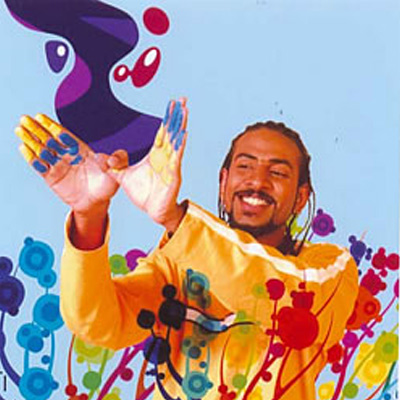
    MUMBAI: In celebration of the festival of colours Holi, Turner’s second channel Pogo will bring a back-to-back telecast of the best episodes of its creative show M.A.D. (Music, Art and Dance) from 6 – 7:30 pm on 3 March.

    Titled M.A.D. on Demand, this specially designed programming package promises to enthrall kids with its entertaining and enlightening art and craft tips, dolled out by the eclectic and popular host of M.A.D. – Rob, informs an official release.

    Turner International India Pvt. Ltd. vice president, advertising sales and networks, India and South Asia Monica Tata said, “Holi is a joyful and fun-filled festival for all Indians, especially for kids who enjoy playing with colours on this wonderful day. As a channel that prides itself on being well integrated in the lives of our viewers, Pogo is happy to extend the fun of Holi, till later in the evening by airing some of the choicest and most exclusive episodes of M.A.D.

    “We hope that when kids are done ‘playing’ with colours, they would enjoy the evening with their families learning to ‘create with colours’ by watching M.A.D., India’s first and only indigenous kids’ show on music, art and dance.”

    Winner of the Best Kids’ Programme at the sixth Indian Telly Awards in November 2006, M.A.D. is one of the highest rated shows on Pogo.

  • Cartoon Network to set up interactive Internet sites

    Cartoon Network to set up interactive Internet sites

    Cartoon Network plans regional websites in different regions across the Asia Pacific. The network will launch a site for Australia by mid year. Other sites planned are for India in English, Taiwan in Mandarin and so on.

    Turner International’s Hema Govindan said that the key difference between the TV channel and the site will be new, interactive elements introduced via the World Premier Tool.

    “For instance, hypothetically speaking, in a chat room, Johnny Bravo will have a dialogue with people visiting our website. It will also be specific to the country the website is being built for. The cultural cues will be very , very different. The characters we champion, the interactive elements will be different.” Govindan said that the net could consider regional sites in Indian languages at a later stage, similar to it’s channel strategy.

    She added that the channel penetration’s was 10 million at present, and plans were to extend penetration beyond urban India. “The tune in will only come with more localisation and customisation. We are also looking at initiatives like Get Tooned, when we actually animated five Indian kids and put them on air as interstentials.”

    The channel has featured five kids in Australia and New Zealand, five in South East Asia, 5 in Taiwan and five in India. Research has shown that Indian kids would like to see winners. Because of that, the channel plans to showcase more Indian kids as winners in cartoon form in the new future.

  • ‘With all the new delivery platforms, we are at the doorstep of a very interesting phase’ : Pradeep Hejmadi – Tam Media Research vice president

    ‘With all the new delivery platforms, we are at the doorstep of a very interesting phase’ : Pradeep Hejmadi – Tam Media Research vice president

    He has been associated with a wide variety of assignments in the domain of media planning and broadcast management. Now he’s buried into hardcore research.


    It’s been just over six months since Tam Media Research vice president Pradeep Hejmadi joined the company and when we mention that to him, he seems shocked at how time has flown.


    His last assignment was with the kids’ channel Nick. His experience traverses through various media organisations like Turner International, Discovery India, HTA and The Times of India.


    Speaking to Indiantelevision.com’s Hetal Adesara Hejmadi dwells on the various issues that concern the television industry today and also on the exciting phase that it entering.


    Excerpts:

    It’s been just over six months since you joined Tam, how has the journey been so far and what was the mandate given to you when you joined?

    The journey has obviously only begun but it’s been good fun. Being on the broadcast side, you see one view of the world. There I was doing a whole host of stuff that is quite different from what I’m doing here. So from that point of view it is a refreshing change to come to audience research and to help people to converse with data.


    In terms of mandate, the idea was simply to focus on two areas: one is on the needs of the broadcasters and to keep the system abreast in terms of the areas that are emerging as interest areas for the industry per se.


    The other mandate is to get people to make decisions on the basis of the information that they have. Some people tend to have a biased approach towards numbers as research sounds like such a difficult animal to manage and tame. Our focus has been to try and make sure that people are able to read audience behaviour and act on it. And hopefully start seeing some response on the basis of what they are doing so that they can get far more structured in the way they go about their businesses.


    The environment is pretty crazy as we are operating in a very heterogeneous market and it is not easy to use any information and just act on it. Many a times the devil is in the details so our focus is really to find that devil and help people tame it.

    Can you throw light on the new initiatives that Tam is or will be undertaking and in which areas?

    Not too much of what we do is an industry secret, so I’m sure that you know pretty much everything. The Elite panel is something that is going to be launched and the current panel expansion is also underway. The panel expansion is a nine month process that we started in the beginning of this year. By the fourth quarter of this financial year, we should be ready. We have consulted the industry and many people have told us not to make a mid-year change in the measurement science. So after consensus from the industry, we are looking at January 2007 to switch to the new universe.

    What about the launch of the Elite panel and what according to you will be the data thrown by it in terms of viewership patterns? How much of importance will it hold in the coming days in terms of tracking viewership?

    The Elite panel will be up by July this year.


    The way that we have crafted the panel has not been to bring out any nuance but to focus on a segment. Everyone wanted to have an audience profile, which is the top end of our entire market structure. So in Mumbai and Delhi, we are now going to have a panel, which will represent the behaviour of the top three or four per cent of the population.


    Our focus has been to use all the quantitative data that we can get and construct that profile in such a manner that it robustly segments the elite from the national panel. Again we have a whole set of variables through which we have been successful in bringing that point out.


    In terms of behaviour, once the panel is up people will see what happens. There are a lot of myths and that is a constant in any industry. But once the panel is up people will be able to see the reality as it is.


    Obviously, given that the elite are the top three or four per cent of the population will have a different lifestyle and it will reflect in their media consumption as well. Right now we don’t have the panel up so I can’t even force a guess as to what the panel will throw up. But it should be very interesting and the industry is very keen on getting that kind of information.

    Which are the broadcasters who are specifically interested in the elite panel?

    Surprisingly, all the broadcasters are interested. For the Hindi general entertainment channels, the aim is to talk to everybody and they don’t want to exclude the elite. English entertainment channels are also very keen because they feel that the core component of their viewership is the elite. But a lot of these feelings and aspirations that broadcasters have at present are driven by perception. But as the data comes out we will be able to find out the reality.


    A few of the things that we have seen is that for the elite the segmenting elements in terms of defining them differ by market. For example, in Delhi, the definition for elite was a much trickier one than it was for Mumbai. But now for both the markets we have been able to arrive at variables that describe that segment very well.

    ‘In the digital age, numbers will keep rapidly changing so we needed to find ways of being able to pull out from a large sample a very robust estimate of DTH penetration as it stands’

    So the elite panel will be only in Delhi and Mumbai?

    Currently we are looking at only these two cities for the elite panel.

    With new delivery platforms like IPTV and mobile TV coming in this year and also keeping in mind the new DTH platforms launching, is Tam undertaking any research in these areas?

    We have just done a penetration study, which has brought out estimates of what the DTH number is for households, the small number of the addressable conditional access boxes that are there and also what the current incumbent players have in terms of market share.


    Those numbers are already in place. The fact is that in the digital age, numbers will keep rapidly changing so we needed to find ways of being able to pull out from a large sample a very robust estimate of DTH penetration as it stands. The large sample needs to be touched, collected and reported in a very short period of time. We were able crack that by using the IMRB household panel, which has shown very interesting numbers. As things pan out, we will be working towards getting the universe estimates updated more frequently. We will also be able to understand the rollout of this phenomenon in different markets in a very different manner.

    Is this a difference of viewership of people watching DTH and those watching C&S?

    At the moment we don’t know because we are not measuring DTH. To us the mandate from the industry was to measure any phenomenon which had a market share of five per cent and above. If any phenomenon was below five per cent of a market then there is no point in measuring that.


    So from our point of view we have been doing establishment surveys to measure a phenomenon. So if CAS or DTH becomes five per cent of the market then we will have to report on it.

    So are you saying that DD Direct and Dish TV DTH subscribers do not add up to five per cent of the market?

    No it is not five per cent of an individual market.

    Once Tata Sky and Reliance launch their DTH, will Tam begin measuring viewership on DTH?

    Once DTH arrives and reaches a five per cent critical mass, we will begin measuring it. Now whether it is pre or post the launch of Tata Sky DTH is immaterial.

    If you get 300 channels as against 100, will you watch three times the TV? It will be interesting to find out

    What will be the difference in the backend infrastructure for measuring DTH?

    There will be a difference because these signals are digital. Currently, primarily because the market is analog is nature, we had meters which worked on analog. Now we’ve brought in state-of-the-art TVM5 meters which can measure DTH and any digital and IPTV signals. These are the meters that we will be deploying for measuring viewership on DTH.


    So the elite panel will be on TVM5 meters and also all the metros will be moving to TVM5 meters.

    What according to you is going to be the impact on programming content after the launch of these new platforms?

    This is a very interesting question you raised. There is one aspect of what DTH providers will do to justify a person to shift from cable to DTH. And there is another part of the picture, which is what the consumer will do once the new DTH platforms are launched.


    DTH platform players have already realized that to drive people to take a box or dish and to go through the motion of having a one on one relationship with the service provider, they will have to add some value over the basic tier. So from their point of view, they are trying to build and aggregate as much content and provide as much variety as possible. Whether consumers will watch or not, we will know once we know what content has been aggregated.


    It will be a game of wait and watch to find out whether tastes will change. But the fact is that tastes changed when we shifted from terrestrial to cable and satellite. So going by that, tastes should change with DTH coming in but how much and by what measure will have to be seen.


    Obviously some rules of the game will change. For instance, currently distribution does play a very critical role. At that time, the kind of TV sets will not matter because all these households will be remote households by default because they will switch channels off the set top box (STB). All of these households will get all the channels on the STBs provided they pay for them. So it will become television neutral and also cable bandwidth neutral.


    In one sense it becomes a level playing field across consumers. Now if you get 300 channels as against 100, will you watch three times the TV? It will be interesting to find out. I have a feeling that over a period of time people and their tastes change. So you will see a change in behaviour but over what period of time and will it be an easy or painful switch-over will be ascertained by various constituents.


    From our perspective, we need to have measurement that is representative and precise. We need to have people understanding what is coming out of this system so that they can then funnel it back.


    We are actually at the doorstep of a very interesting phase. In six to eight months’ time we will start seeing some things changing.

    What are your views on conditional access system (CAS)? How is it going to impact the industry if and when it comes into place?

    From a long term perspective it is obviously good for the industry. Nothing happens very easily. We know the resistance to change that we as human being have. On CAS it has got into a kind of a mess and has had a bad history. It also got much politicized and hence because of that and a whole host of things, it has made life difficult for CAS.


    But I think once DTH rolls out and channels announce their pricing for DTH, it will help CAS. It is very good that we have a body like the Telecom Regulatory Authority of India (Trai), which has put in certain norms to help platforms iron themselves out. So in their regulation the ‘must provide’ clause has been put in and pricing parity has been brought in so that channels can’t have different pricing for different platforms. This will help CAS and DTH.


    Intrinsically there are some issues with CAS. One of them is inter-operatibility. As far as CAS is concerned, if you stay in Chembur and then move to Churchgate, you might not be able to use the same box. Whereas this problem does not arise in DTH.


    In Chennai, for example CAS did not fly because the tastes of that market is very different. Also the popular regional channels are all free to air. So the number of people who were ready to pay for that box was very small. But in a lot of other markets, most of the Hindi entertainment channels are all pay. As long as they don’t buckle because of advertising revenue pressures and stay pay, they could fuel growth of CAS.

    Tam has been tracking viewership in Chennai, where CAS has been implemented. What have been the learnings from there?

    CAS penetration is very low in Chennai. The pricing is very exorbitant. For instance, initially, the channels that were on STBs and were of interest to the mass population were kids channels and English entertainment channels. If you added up all those channels on an a la carte rate, the cost of the box was four times the cost of annual subscription for these channels. Now that’s prohibitively expensive.


    In that market, it was a first launch, so it is understandable if Sumangali might have adopted the strategy of not wanting to price it down that much. But obviously the value proposition was not that compelling. This is not the case with a lot of northern and western markets. In these markets a lot of Hindi content is pay, which has appeal. Therefore it might drive the box much faster than it did in Chennai. So Chennai is really an exception.

    Going forward, what according to you are the issues that broadcasters will face in the coming years with new technologies launching? Do you have any words of caution for them?

    I don’t have any word of caution for them mainly because of one reason – I don’t see any threat, I only see an opportunity in the way things are happening. Consumers have consumed channels for a while and they like the programming they watch. The positive thing that is happening now is that a broadcaster is seeing an opportunity in a disguised form of various distribution routes.


    If broadcasters see that as an opportunity and seize it, it might be a lot more good news for them than what it seems to be, with certain reservations. If you get your pricing right; if you make sure that as a broadcaster you are not biased towards a distribution platform, it is only going to be better because there are issues with the kind of TVs in a household and in what kind of analog frequency band is there with cable. Plus there are issues with the number of people you can serve with one cable system. All of these will cease to exist with DTH.


    A consumer will start making a choice and give their preferences, whereas broadcasters will be able to solidify the product over a period of time. So that revenue line will become a far more solid line.


    Obviously, there will be a painful and uncertain phase but that is there everywhere. People will have to learn to deal with it but it will take a slightly longer time. Consultation can work much better than confrontation in many a situation. At this stage people in the industry need to communicate more effectively… forget strategy and that’s what will help them.

    Do you see any other major event impacting the television industry this year?

    If I say yes, I might be wrong. If I say no, I might be wrong too. I really don’t know. I think the days ahead are going to be fun as all the different genres are reinventing themselves in order to get a lion’s share, whether it is music, kids, regional or Hindi general entertainment channels, all of them are rethinking their approach.


    I don’t know what else will be big this year, but religious channels are catching up big time. Sports is going through the roof in terms of the number of events. With so much of cricket, I’m not sure whether it will have that novelty value. It will have mass appeal but whether all masses will run for it will be worth watching.

    What are the genres that will work this year? Will reality shows still rule the roost?

    Reality is a very broad term, it’s like saying – serials, which brings everything under one category. But within reality we have seen only a few things happening. Reality has its pluses and minuses, you can’t overdo reality and start running it like a soap as it tends to become boring. It needs to have that ‘Wow’ factor.


    Also notable is the fact that unfortunately all the sequels of reality have not done that well. So it also tells you something about such programming. But there is a growing appetite for it from the consumers’ side. So from that point of view it will stay… in what form and format, we will have to see.


    If you see the number of people going to Mipcom from India, you know that reality is not going anywhere. Over a period of time things will start ironing out in the reality genre.


    In reality a unique concept, which is executed well gets you walk-ins faster than a soap. For anybody who wants a shot in the arm, reality is the quick fix solution. But then, they need to have a solid strategy to retain that new audience and capitalise on it.