Tag: Turner International India

  • ‘In a fragmented environment, managing leadership position is a challenge but we’ve done so in the kids’ space’ : Monica Tata – Turner International India VP ad sales & networks (India & South Asia)

    ‘In a fragmented environment, managing leadership position is a challenge but we’ve done so in the kids’ space’ : Monica Tata – Turner International India VP ad sales & networks (India & South Asia)

    The kids’ channels’ space in India suddenly became the talk of the town with the Walt Disney Company buying out UTV’s kids’ channel Hungama TV. In the midst of this hullabaloo, the market leaders – Cartoon Network and Pogo – stood unperturbed and went about their daily business.

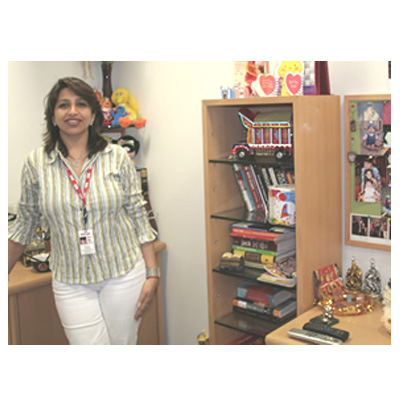
    Turner International India vice president advertising sales and networks (India & South Asia) Monica Tata too comes across as calm, composed and confident. She has recently been given the added responsibility of Cartoon Network and Pogo’s operations in India spanning programming, marketing, public relations, production, research and licensing to drive the channels’ business initiatives and revenue growth.

    What’s more, as part of her portfolio, Tata is also responsible for the development and launch of Galli Galli Sim Sim, the localised version of the revolutionary TV series, Sesame Street, on Turner’s entertainment networks. In addition, she will continue to oversee advertising sales for Cartoon Network, Pogo, CNN and HBO.

    In a chat with Indiantelevision.com’s Hetal Adesara, Tata speaks on the Disney – Hungama alliance as well as Turner’s plans to stay on top… no matter what!

    Excerpts:

    How has last year been compared to the previous year in terms of revenues?
    Year on year, Turner International India has been showing outstanding performances, whether it is in terms of channel shares or revenues. 2005 was a fantastic year. From an ad sales perspective, we grew by 25 per cent and the combined growth between Cartoon Network and Pogo was about 30 per cent.

    We established ourselves in numerous spaces. For example, from a sales perspective, we expanded our base of advertisers when we decided to go into the retail advertising strategy. As a result of this, we added nearly 56 new clients to our portfolio.

    From a network perspective, we further consolidated our position as being the number one and number two kids channels. We came up with huge amount of initiatives on the content and marketing sides. For Cartoon Network, we did the Powerpuff Generation contest and Toon Cricket event. Last year, we had the biggest phenomenon in kids’ programming – Beyblade, which sort of changed the game for us in the market from a content and licensing point of view.

    As far as Pogo is concerned, we had Pogo Funtakshari and Pogo Amazing Kids Awards. We also launched quite a few original productions, which is a clear focus for us even this year.

    We did shows like M.A.D and Bam! Bam! Bam! Gir Pade Hum. Apart from that, we also launched a couple of Indian acquisitions likeKhichdi and Karma. Shaktiman, of course, was not launched last year, but it continued to reinforce our position in that aspect as we wanted to ensure that Pogo was seen as a channel for kids and families.

    From a marketing point of view, we supported all of this. We had a huge amount of on-air and off air activities for Join the Powerpuff Generation and Pogo Amazing Kids Awards.

    As far as licensing business goes, we launched a new range of products. We had started out with a seven categories and then introduced more than 30 product categories. In the licensing business, we had our brands like Johnny Bravo, Powerpuff Girls and Dexter and, of course, Beyblade was added on when it became a huge phenomenon.

    All this kept reinforcing to everyone around and also within the company that we need to keep consolidating and moving on. And, that is what we have been doing very successfully in 2005. Overall, in Turner India, between Cartoon Network and Pogo, we have created new benchmarks for ourselves so that we are able to better that in the coming years.

    What percentage does the licensing and merchandising business contribute to the company’s overall revenues in India?
    Merchandising has recently become big for us. While the division was always there, it was only last year that we came out in a big way by bringing out more categories and consolidation began. We’ve shown a 50 per cent growth so far from a year on year perspective.

    At the moment, this business contributes about 10 per cent to our bottomline, but it’s still tip of the iceberg. The potential is huge with the retail business becoming big in the country and everyone focusing on it. This is one area, which is going to get a huge push by the network in India in the coming years.

    Can you give us a breakup of the revenue contribution of the four Turner channels in India – Cartoon Network, Pogo, HBO and CNN?
    I can’t share the exact figures, but each channel’s positioning is very different. Cartoon Network and Pogo are very focused on the kids entertainment space. HBO is clearly targeted towards upwardly mobile English speaking individuals and CNN has its own distinctive positioning.

    In their individual space, we are leaders when compared to nearest competitors; whether it is in terms of revenue or channel share. CNN’s positioning is more driven with high networked individuals.

    Collectively, we have done extremely well and have shown year on year growth. As a network we have grown by 30 per cent.

    ‘On our merchandising business, we have shown a 50% growth so far from a year on year perspective

    HBO recently hiked its ad rates. What prompted this decision?
    This decision was basically based on the demand and supply graph. As the market grows, so does demand. Whereas the supply is limited as there are not too many players of HBO’s reckoning in the market.

    HBO is the leader of the pack amongst the few channels that exist in the space. And, because HBO has been strengthening its positioning through its content as well, it made sense to come out and consolidate our rate strategy. That’s when we decided that it was time to take the next step and increase the rates. It makes the game a little more interesting.

    Going forward, is there going to be any change in strategy in selling HBO?
    The strategy is pretty much the same. We are focusing on client solutions and integration. Selling time is generic across every channel. But we are looking at bringing additional value to the table for our clients. Our team comes up with ideas and strategies and we go to the client as a problem solver rather than telling them about our channel and rates and asking them to buy it.

    We’ve come up with some great creatively integrated solutions for Titan Xylus, which revolved around Titan’s positioning statement for their brand. So the movie selection, packaging and promotion happened accordingly. The client also felt good about it because there was clearly a distinction that we brought to the table. We have also done similar initiatives for Pepsi TV and are in the process of finalizing something for Marico’s Parachute.

    We keep adding brands and coming up with integrated creative solutions for clients.

    What is going to be your strategy to improve ad sales across the bouquet?
    Ad sales is a critical function. Improvisation on every strategy whether it is ad sales, programming or marketing is always important. The whole objective is to keep bettering what has been done before. Our internal mantra is: we are our own competitors.

    Keeping that in mind, the strategy really is to focus and come up with the best marketing solutions for clients and to be seen more as a partner in the game rather than creating a them-versus-us situation. We try to see wherever a partnership can be further consolidated and figure out how to bring the best value to a client. At the same time not losing focus on what you think is value for your brand.

    So whether it is Cartoon Network, Pogo, HBO or CNN, the distinction we bring to the table is the solution providing techniques or approaches we have.

    With CNN, for example, we did this exercise with the department of tourism. We created six films for them where we needed to identify certain genres to highlight facts about Indian tourism in the international market. Such initiatives make the difference.

    With the news channels space opening up in the last couple of years, how is CNN perceived in the market versus earlier when there was not much competition in India?
    I think the perception is still the same that CNN is a global leader. CNN clearly brings that value to the table wherein it is an international news channel. We are not even in the space of competing with Indian channels and we don’t consider them as competitors. Our position is clearly distinctive and the clients we go and talk to are the people who are looking for international audiences and not so much the Indian audiences. That’s where the clear distinction lies.

    For us, it’s not about what the other news channels are doing because that’s not where we are placing ourselves. With all the surveys that we have done globally and at the Asia Pacific level, CNN is the clear leader in every aspect. That’s where our positioning stands and will continue to.

    What are the properties on each channels – Cartoon Network, Pogo, CNN and HBO – that you believe will drive revenues in the next fiscal?
    We have so many of them. As a channel per se, when you take kids into account, Cartoon Network will have a clear focus on better content coupled with marketing support, more communications techniques and mediums. Between Cartoon Network and Pogo, that’s where the consolidation will happen.

    For HBO again, better content and hence better integrated solutions to clients will be able to drive growth apart from the rate increase that will drive revenues. The same goes for CNN as well. The strategy remains the same.
    For Cartoon Network and Pogo we have defined three pillars, which are: content, creativity and choice. This will be coupled with innovation as well.

    So if we say content is king, then innovation is key. That is important because in today’s dynamic environment where there is so much of choice, if you’re not going to be different then you will be left behind. So, how you make yourself different is not found in just one big Black Book. The difference lies in every aspect of how we do our business.

    In Cartoon Network and Pogo’s case, we’ve been around for the last 10 years and in these 10 years we were in a monopolistic environment so we were obviously number one then. But even in a multi-layered environment we have still maintained our leadership position.

    Therein lies the answer and speaks volumes about our credibility and what we bring to the table. We know the kids best, we listen to them and going by what we hear, we replicate what we have on-air. Those are the things which will continue to be our focus in the coming years.

    You have recently been given added responsibility of overseeing programming, marketing, production, research and licensing to drive Cartoon Network and Pogo’s business initiatives and revenue growth. Are there any new initiatives or new revenue generating areas that you are looking at in the kids’ space?
    Like I said, we believe we are our own competitors and we will be focused on what we think is best so as to take it to the next level.

    New media is going to be a huge focus in India in the coming years. We will be seeing how we can leverage that — whether it is wireless or dotcom – and how we can integrate them in our portfolio.

    Our products and licensing division too has huge potential. It is our philosophy that Cartoon Network and Pogo are super brands in the kids’ entertainment space and we have consolidated our position in the last 10 years. But how do we take our experience of television, outside of television is what this division will help us to. This will create multiple touch points for our brands. From television to a bus stop, mall, shop and a theme park, Cartoon Network will be omnipresent. At every level, wherever you are, your brand will be there and that’s the kind of experiential marketing is what we will be focusing on.

    When will the branded theme parks be ready in India?
    We are launching Pogo Planet first by mid-next year and the Cartoon Network theme park will be launched by the end of 2007.

    What do you think about the recent buyout of Hungama by Disney? How will it impact the overall kids’ channels’ space in India?
    Actually this consolidation is something that we were expecting. In fact, we were expecting it earlier. This doesn’t come to us as a surprise because when you have to deal with well entrenched players, you need things like this to happen.

    That said and done, we will not change our strategy, our thinking and how we want to deal with our business. Those cannot be based on other people’s strategies or on changing market dynamics. We will do what we think is best for us because that’s where our forte lies. We will continue to re-invent and keep pushing the envelope as much as we can to maintain our leadership position.

    All said and done, Disney will now be in a better position in the space and Hungama is a strong brand. How do you see the kids’ channels’ market changing with this development?
    I think fragmentation is a reality and that’s something every genre has experienced in these 10 years of the cable and satellite boom in the country. And what is interesting to know is that despite the fragmentation happening in the kids space, we are still maintaining our leadership position. I just want to reiterate to everyone that just don’t forget that we have been here for 10 years and you can’t overnight come up with something, which our experience has build for us.

    Secondly, in a fragmented environment, managing leadership position is a challenge. So while people have come in and taken a bit of share, within that itself we are in the number one and two positions. In terms of audience shares, the analysis that we do is based on what the industry benchmarks are in terms of a 24 hour channel share. You can’t have an analysis based on specific markets and time bands and say you’re number one!

    While we are still the leaders, we are not being complacent about it. We are rolling out many new initiatives and of course our biggest launch this year is going to be Galli Galli Sim Sim. That’s taking the whole association with Sesame Workshop to the next level. It is going to change the whole game, not only in terms of television viewing but also in terms of education in the country.

    These things are only going to consolidate our position in the kids’ channels’ space.

    Have you seen any new brands/categories coming in the kids space?
    Over the last few years we have seen a huge shift of focus in brands that we used to call originally non-traditional advertisers, who one would have thought would not come on to a television channel — whether it is the banking sector, financial sector or personal products. Now over the last year or so, the lines between the traditional and nontraditional have blurred.

    Even now about 35 per cent of my audience base is adults. So, we are talking to them too and you will see a lot of advertisers who are not just selling confectioneries, sweets and candies. We have grown our advertiser base and that’s where the opportunity lies – how do you increase the pie by tapping into other genres of advertising.

    Clients like L’oreal, TVS, Citibank, ING Vyasa, P&G and Levers brands like Clinic All Clear and Surf have come on to our kids’ channels.

    And what about HBO?
    HBO again has seen a huge shift in advertisers. The base has expanded. Telecom and financial sectors have been new additions, which we have managed to pull away from the English news genre.
    What are the challenges involved in selling a channel where decisions are based to a degree on perception in the absence of high ratings as in HBO?
    It is about managing perceptions and managing clients’ expectations. These are key to brands like HBO. As you rightly said, these are not sold on ratings but on the environment you’re buying into, the value you’re bringing for the brand and on how you’re able to differentiate the buy on the channel versus a rating driven channel.

    Relationship building is another important aspect in the market, which is a big connect that we have in the market across all the brands we represent. While HBO has been a recent entrant in our lives, between Cartoon Network and Pogo, we have built many relationships in the industry. Our aim is to always find ways to consolidate our relationships in the market.

  • BBC Global News appoints Naveen Jhunjhunwala as India COO

    BBC Global News appoints Naveen Jhunjhunwala as India COO

    MUMBAI: Last month, indiantelevision.com broke the news that BBC Global News India COO Preet Dhupar had decided to move out of her 14 year stint with the company. Now, the global broadcaster has found a person to fill the space in Naveen Jhunjhunwala.


    Jhunjhunwala was previously with Turner International India for 15 years as vice president for corporate finance and administration, looking after the financial functions for distribution, ad sales and marketing of CNN International, Cartoon Network, POGO and HBO in India, Pakistan, Sri Lanka, Maldives, Bangladesh, Nepal and Bhutan.


    Speaking on his new role Jhunjhunwala said, “I am delighted to be joining the BBC. I am looking forward to taking up my new role and to being part of the talented team at one of the world’s most renowned news operations. The BBC is an iconic brand and carries a special position for the Indian audience and in today’s dynamic market place, with digitisation, growing online penetration and the BBC’s special focus on India, it has exceptional potential for growth in both television and online space.”


    At Turner, he helped launch the company’s India operatons including the CN subscription business, launch of new channels like HBO, POGO and WB. He also helped set up the Zee Turner distribution JV, including MediaPro as well as CNN-IBN. Prior to Turner, he was with Ernst & Young in New Delhi.


    The role of COO for India was created last year to better organise the company’s business operations in a growing Indian market. Apart from looking at finance, Jhunjhunwala will also be responsible for determining BBC’s commercial priorities and targets for news across the country as well as ad revenue, content distribution and audience growth.


    “I’m pleased to welcome Naveen on board at such an exciting time for the BBC’s news interests in India.  Naveen brings with him a wealth of experience and will be a real asset to the BBC, building on the successful work to date of our teams in Delhi and Mumbai,” said BBC Global News CEO Jim Egan.


    “India is a country we are proud to have been broadcasting to and from for more than seven decades and we remain committed to our audiences here. We have featured India in two dedicated programming seasons on BBC World News already this year, have recently launched a new Indian edition of bbc.com/mobile and are mid-way through our most comprehensive coverage ever of the Indian general election. I am sure Naveen will be invaluable as we work to develop even further in this exciting and dynamic market,” he added.


    Naveen will take up his position in Delhi on 1 May. He replaces Preet Dhupar who left the organisation earlier this month.

  • HBO Defined and HBO Hits now on Tata Sky

    HBO Defined and HBO Hits now on Tata Sky

    MUMBAI: Turner International India has launched HBO Defined HD and HBO Hits HD on Tata Sky.


    With this the two advertising-free movie channels will be available across 11 DTH and digital cable platforms in India.


    Turner is committed to continue bringing compelling content inside homes of consumers in India and on any device they own. HBO Defined and HBO Hits signify a new era of television viewing for the Indian consumer. We have received a very enthusiastic response from all platforms and are happy to have, Tata Sky, one of India’s leading DTH platforms partner with us,” said Turner International India MD Siddharth Jain.


    HBO Defined and HBO Hits feeds will be on Tata Sky channel numbers 358 and 360 respectively at a price of Rs 99 per month.


    “Tata Sky is committed to offering the best picture quality, sound and digital viewing experience to its subscribers and HBO Defined & HBO Hits are great examples of this,” said Tata Sky chief content & business development officer Poalo Agostenelli . “We’re pleased to provide an experience of accessing a wide variety of world class movies with the prestigious HBO original series in pure High Definition which is delightfully ad-free for our subscribers. This is truly a movie and TV series fans’ dreams come true.”


    The channels are also available on Dish TV, Airtel Digital, Hathway, GTPL, Manthan Digital, ABS Star Digital, DDC, JPR Network, Den Satellite (Mumbai) and Seven Star Digital.

  • POGO celebrates a decade of recognising the most talented kids across India

    POGO celebrates a decade of recognising the most talented kids across India

    MUMBAI: POGO, India’s leading kids’ channel, is at the precipice of reaching yet another milestone. Its proprietary talent hunt initiative – POGO Amazing Kids Awards (PAKA), is celebrating its 10th edition this year. PAKA is India’s first kids’ television awards ceremony that upholds the channel’s tradition of discovering, recognizing and celebrating, the amazingly talented children of India across various categories including dance, music, sports, social service, etc.

    It was no easy feat to select one winner from hundreds of candidates across India. Taking up this immense responsibility was a panel of eminent experts within each field. Icon Ayaz Memon judged the sports category, Tobby Fernandes judged the dance category, Salim Merchant judged the singer and musician category, Tathagat Tulsi judged the genius category and Vaibhav Kumaresh judged the artist category. The social service category was judged by Fr. Terrance and the entertainer category was judged by Krishna Desai.

    Krishna Desai, Sr. Director& Network Head – Kids, South Asia, Turner International India Pvt. Ltd. said, “It is an extremely proud moment for POGO to be celebrating the 10th anniversary of POGO Amazing Kids Awards. The fact that we have been able to conduct these awards over the past decade is a testament to the abundant talent in our country. Today, PAKA is a recognizable and credible certification for children who represent the very best of aptitude with a very bright future.”

    PAKA 2013 winners have truly done India proud and continue to strive towards excellence:

  • Indian animation needs a global outlook

    Indian animation needs a global outlook

    MUMBAI: Among the key issues addressed by the recently concluded FICCI MEBC (Media and Entertainment Business Conclave) (South) in Bengaluru on 29 and 30 October was the state of the animation industry in India and what can be done to improve its lot.


    The second day of the conclave saw a dedicated session titled ‘Emerging trends of Indian IP in animation and their exploitation’ with Turner International India senior director and network head for kids in south Asia Krishna Desai, Graphic India co-founder and CEO Sharad Devarajan, Shemaroo Entertainment director Jai Maroo, Krayon Pictures co-founder Nisith Takia and Greengold Animation founder and MD Rajiv Chilaka and Reliance Animation CEO Ashish Kulkarni as moderator.
    Devarajan began by highlighting the need for a cohesive ecosystem favouring the country’s animation industry.


    “Indian consumers today are used to seeing the best of the world and so, we need to transcend the national market and go to the international market,” he said, stressing the need to create content like that made by Stan Lee or Steven Spielberg. “Multi platform and global is how you have to think of stories today,” he said, pointing out how a version of Mahabharat was launched as 18 days, a re-imaging of the original by Graphic India at the San Diego Comic Con and went straight to Youtube.


    Chilaka made a special reference to Chhota Bheem as a kids’ icon while speaking of Greengold’s huge success in the field of animation. “We have grown from just four to over 300 in 12 years. No one knows which show will work, so we have to just give it a shot. Chhota Bheem started off as just 10 products and now it is available in more than 3000 across 30 country stores. We didn’t realize that it would be a phenomenon but now we are confident about making a movie every year,” he said, pointing out that while IP monetisation was happening, it was equally important to build good infrastructure around it to help harness IP better.


    Maroo said Shemaroo would help in distribution and marketing even though it wasn’t actively involved in the creation of animation. “There are people with great production and artistic capacity for whom we can work on aspects like music, distribution and marketing. The reason why characters like Bal Ganesh and Chhota Bheem work well is because of their sheer stickiness. We should have IP with an Indian soul but an international story. What the west has is sharp screenplay that translates across boundaries. That is what we lack,” he said.


    Desai opined there wasn’t enough investment in animation and pointed out the difficulties in creating animated content. “There is less advertising revenue for a kids channel (Turner), so we also have less money to invest in new content,” he said.


    Kulkarni said, “In India, animation is positioned as a kids’ genre,” to which, Devarajan gave an example of the Japanese, who have moved Anime from kids to a sophisticated audience. “Their characters have elasticity and a soul that appeals to various demographics. Why aren’t we creating any Clash of the Titans or Lord of the Rings?” asked Devarajan.


    Chilaka said they needed to come up with interesting ways of promotion to grab eyeballs, citing the example of Raju. “We timed Raju to release three weeks before the football world cup and on TV, we did a premiere during the semi-final,” he said.


    Maroo pointed out that very few screens were available across the country for animated movies, thereby restricting viewership. “This industry is the best when commerce meets creativity,” he said. Takia felt not many people understood the business even if they were superlative on the creative front. “We can call ourselves successful only when we galvanise the creative population,” added Devarajan. Maroo rounded off saying: “The future will be about how many different revenue platforms you build.”

  • CNN rides high on appeal among Indian elite

    CNN rides high on appeal among Indian elite

    NEW DELHI: With a “healthy growth” of 22 per cent in advertising revenue over 2005 in India, Turner International’s CNN news channel is leading the way in the international news channel category in the country, argues Monica Tata, vice president, advertising sales and networks, India & South Asia, for Turner International India.

    Speaking to indiantelevision.com in an exclusive interaction, she claimed also that CNN International has a larger audience than all other international news and business channels put together, and that, in fact, “CNN leads a rival channel (BBC) by 82 per cent in terms of retaining weekly viewers” at the Pan Asia level.

    In addition to the existing categories of advertisers from India, Indian companies like those from sectors like consulting, corporate, white goods, IT, industrial goods, power and automobiles are on CNN International to reach international audiences, Tata added.

    “Some examples are, HCL, the Bihar government, Accenture, Aditya Birla Group, Daikin, Suzlon, etc. And two good examples of the 360 degree approach we take for our clients include CNN International’s “Eye On India” series, which has been held over the past two years in association with Oberoi Hotels & Resorts; and the development of six advertorials, produced by CNN, for the Ministry of Tourism to promote India across the world,” Tata held.

    Citing a report from Synovate Business Consulting, the leading market research and intelligence agency in Asia Pacific, Tata said: “Almost half (47 per cent) of weekly CNN viewers watch no other news or business channel, while the year-on-year audience growth is greater than any other news or business channel.”

    Tata, though, sought to stress that the focus of its viewership is distinct. “CNN International focuses on the International Indian, or the global citizen as we call them, encompassing frequent travellers, high level business decision makers, and not the mass news market.”

    “Online, CNN.com remains the leading regional website, visited by 69 per cent more PAX respondents across a month than the next largest broadcaster or publisher’s website, she said, adding that her channel is 219 per cent ahead of the third closest channel in the international news category in terms or retaining weekly viewers.

    Tata says that the popularity of CNN is what brings them more advertisers and added that CNN has tie-ups with 1,000 TV affiliates around the world “who are very much a part of the wider CNN family”.

    “Clients and agencies have shown an increasing interest in news channels, and for CNN, the response continues to be positive. With increase in news viewing habits in India, new product categories have started advertising on news channels, such as insurance companies, tourism boards, etc.” averred Tata, who quit the Star group to join CNN as vice president in 2004.

    According to Tata, in the recent Global Capital Markets Survey (GCMS) 2006, conducted by Objective Research, CNN International reconfirmed its position as the leading news brand for the global financial community, across all regions (Asia, Europe, Latin America and North America).

    “At the same time, the latest Pan Asia Cross Media survey (PAX research Q3, 05 – Q2, 06) underscores the findings by demonstrating that CNN continues to most successfully reach the wider business elite of financial decision makers regardless of rank/seniority across the Asia Pacific region. CNN has ranked first in the news and business genre every year since 1997, according to the latest set of PAX figures,” Tata observed.

    (PAX represents a universe of 14.2 million adults aged 25-64 within 11 Asia Pacific markets: – Australia (Sydney + Melbourne), Bangkok, Hong Kong, India (Delhi + Mumbai + Bangalore), Jakarta, Kuala Lumpur, Manila, Seoul, Singapore, Taipei, Tokyo.)

    She claimed it is proven that during events of global implications, viewers from around the world, including India, tune in to CNN International, to keep themselves abreast of the latest developments.

    The Indian affluent group continues to grow, travel regionally and globally, do more business around the region while Indian companies are increasingly expanding globally, she explained.

    “With these developments, we are seeing a growing interest in international news and business. CNN’s “Your World Today” being in a prime time slot is an indication of this growth. We are the leading news provider around the world and will continue to grow our position in India,” Tata says. Tata explained that India has always been a key market for CNN and especially more so now because of the country’s geo-political situation.

    “India cannot be ignored by anyone, and is critical from the news point of view. What India does and the developments in this region have repercussions on the international scene, and so it’s natural for us to continue with our focus on India and the region,” Tata stated “We have been covering all major Indian news with international relevance like the Indian elections, the Maharashtra rain catastrophe, the tsunami disaster, important Indian personalities, the Mumbai blasts, IT outsourcing, most recently the, Ardh Kumbh Mela, revival of the Indian railways, the surrogacy report, and many more areas. Besides, the “Eye on India” series focuses on topics like nuclear energy, Bollywood, outsourcing and many more,” she asserted.

    Asked what she thinks is CNN’s edge in India, Tata replied: “CNN International is targeted at the global citizen, who is interested in knowing what is happening around the world. Our content reflects this, and we bring viewers coverage of global events with a regional perspective.

    “On the news front, CNN’s New Delhi bureau chief, Phil Turner along with CNN’s senior International correspondent, Satinder Bindra and CNN’s New Delhi based video correspondent, Seth Doane, focus on covering domestic news and developments and have filed numerous stories from India.

    “In addition, CNN’s feature programmes such as Richard Quest’s ‘QUEST’, Art of Life, Global Office, Global Challenges and Talk Asia have done stories out of India, and we will continue to do many more,” she explained “Actually, we find that the growth of news channels tends to increase the amount of viewers who watch news and business programming, thus creating a bigger audience pool. Through CNN-IBN and CNN International we have a very firm footing in the Indian marketplace. We are constantly exploring business options here and across the region. So wait n watch and stay tuned to CNN!” she quipped.

  • Tata-Sky approaches TDSAT against Zee over bouquet pricing

    Tata-Sky approaches TDSAT against Zee over bouquet pricing

    MUMBAI:There seems to be no end to the thrust and parry going on over the DTH airwaves. Close on the heels of Dish TV wresting a favourable decision against Star India, Tata Sky has moved the Telecom Disputes Settlement And Appellate Tribunal (TDSAT) — against what it terms as Zee’s exhorbitatnt terms for providing its network channels to its still-in-the-pipeline DTH service.

    The petition by Tata Sky before the appellate tribunal makes Zee Turner Ltd, Zee Telefilms Ltd,Turner International India and Dish’s managing company ASC Enterprises LTD as party to the case.

    The Tata Sky petition alleges that the Zee Group has denied supply of Zee Turner bouquet of channels to the former’s yet-to-be-launched DTH service under reasonable terms.

    The petitioner has sought “to obtain appropriate direction for the signals of the channels,” alleging that respondent Zee Turner has quoted unreasonable terms for supply of its signals to Tata Sky.

    Contacted by Indiantelevision.com, a senior executive at Dish TV today refrained from commenting on the issue, saying, “We have yet not received any direction from TDSAT.”

    The disputes tribunal has given the respondents three days from the day they receive an official intimation to file its replies.The next date of hearing is 25 July 2006.

    As per regulatory norms, all content should be made available to all delivery platforms on a non-discriminatory basis.

    Last week, the tribunal had delivered a verdict laying down benchmark rate for channel prices for DTH platforms, while directing Star to make available its channels to Dish TV.

    Main respondent Zee Turner is a 74:26 distribution joint venture between Zee Telefilms and Time Warner company Turner International India.

    The cable pricing of the two Zee-Turner bouquets is Rs 83.65 plus service tax. Zee-Turner’s bouquet one comprises Zee TV, Zee Cinema, Zee Movies, Zee English, CNN, Cartoon Network, CNBC, Trendz, Reality TV, Zee Marathi, Zee Punjabi, Zee Bangla and Zee Gujarati and is priced at Rs 58.85 per subscriber/per month. The second bouquet carries HBO, Vh1, Pogo, Zee Business and Awaaz, which is available at Rs 25 per subscriber/per month.

    Tata Sky’s complaint before TDSAT is that Zee is seeking the same pricing terms for supplying its channels to its DTH service as is its cable rates.

    In what manner TDSAT responds to the Tata Sky complaint will be watched with close interest. After all, in its earlier order in favour of Dish TV, TDSAT, while directing the sector regulator to set a benchmark for channel prices for DTH services, said that Star channels should be made available to Dish TV at half the price at which they are available to cable operators.

    The tribunal’s reasoning in the earlier case was that DTH is an addressable system where loss of revenue down the value chain is negligible, if not zero.