Tag: Turkey

  • Turkey dominates award list, ‘B A Pass’ is best Indian film at OCFF

    Turkey dominates award list, ‘B A Pass’ is best Indian film at OCFF

    NEW DELHI: Turkey dominated the awards tally at the 12th Osian’s Cinefan Festival of Asian and Arab Cinema here, winning as many as four awards in different categories.

    The Turkish film ‘Inside’ by Zeki Demirkubuz won the top award in the Asian and Arab Competition while ‘B A Pass’ received the best film prize in the Indian competition at the Festival which concluded here over the weekend.

    The Best Director award went to Faouzi Bensaidi for ‘Death for Sale’ which is a Moroccan film made in collaboration with France, Belgium, and the United Arab Emirates.

    Both the best actor and best actress awards went for the same film, Iran’s ‘Modest Reception’ – Mani Haghighi who is also the director, and Taraneh Alidousti.

    The Special Jury Prize went to ‘Postcards from the Zoo’ by Indonesia’s Edwin made in collaboration with Germany, Hong Kong and China.

    The jury made a Special Mention of director Yoshimasa Ishibashi’s Japanese film ‘Milocrorze: A love story’ and all his actors.

    Ajita Suchitra Veera won the best director award for the film ‘Ballad of Rustom’ which has been made in 35 mm with optical effects instead of using digital technology.

    The Best Actress award went to Rii for her unconventional role in the film ‘Cosmic Sex’ by Amitabh Chakraborty, while Shadab Kamal was the best actor in ‘B.A. Pass’.

    A Special Jury Award was given to the Indo-American film ‘Patang’ by Prashant Bhargava on how festivities can lead to healing of relationships.

    In the First Feature Competition, the top award went to ‘Beyond the Hill’ by Elmin Alper of Turkey, and the Special Mention went to Thailand’s ‘In April Following Year there was a Fire’ by Wichanon Somumjarn.

    Turkish film ‘Silent’ by L Rezan Yesilbas won the top award in the Shorts in Competition while Special Mention was made of another Turkish film, ‘The Bus’ by Olgu Baran Kubilay .

    Coincidentally both the audience award and the award of the international federation of film critics, FIPRESCI, went to ‘Hansa’ by Manav Kaul.

    The twelve-year journey undertaken by the Festival received a new boost with Delhi Chief Minister Sheila Dikshit offering full support to making Delhi the second film city of the country. She said the city has a large heritage, ecology, people from all states, and “above all, it is a city that responds”.

    Speaking at the grand finale of the Festival yesterday, the Chief Minister said though there are constraints of space in the city, the Government will do everything to facilitate entrepreneurs. She said “we will celebrate the film city with great pomp”.

    She appreciated the work put in by Osian’s and its Chairman Neville Tuli for “being bold enough” in putting together the Festival despite several hurdles.

    Dikshit also unveiled the new trophy in the shape of a turtle. The environmental focus is taken also taken forward by commissioning a new Osian’s – Cinefan Award Trophy crafted out of the eco friendly material – terracotta – by eminent artist K. Laxma Goud. His depictions since the early 1970s depicting the human-animal-nature continuum represent some of the finest examples of modern Indian art. The trophy was first revealed on World Turtle Day, 23 May.

    In his brief speech, to Osian’s Group chairman Neville Tuli said the more efforts one puts in, the better the results. He said there was a new bubbling of change.

    He also referred Osian’s establishing an Osianama Arts complex for promoting art and good cinema culture is coming up in the Kila Complex in Delhi by September.

    Festival Director Indu Shrikent said the festival had proved to be an exhilarating experience. The passion with celluloid had inspired Osian’s and resulted in the section on environment, 7.4. But she quoted Robert Frost who had said “I have promises to keep, and Miles to Go before I sleep”.

    The Turkish Ambassador to India Ambassador Burak Akçapar was also present.

    The Festival marked a return after a gap of two years and proved to be the biggest film event in the country with as many as 176 films from around 38 countries from India, Asia and the Arab world.

    The Film festival which was held in New Delhi from 27 July to 5 August 2012 at Siri Fort Complex and the Blue Frog at the Kila Complex, had 15 World premieres, 8 International premieres, 104 Indian premieres, and 13 Asian premieres. The screenings included 61 shorts.

    The films were shown within a framework which focused on Freedom of Creative Thought and Expression – the special theme for this year.

    The OCFF is organised by the Osian’s Group in collaboration with Delhi Government. But this year, the OCFF also received cooperation from the Information and Broadcasting Ministry, the Morarka Foundation, the Tourism Ministry’s Incredible India campaign, Blue Frog among others.

    Renowned Egyptian film critic Samir Farid received the Lifetime Achievement Award named after the Festival’s founder Aruna Vasudev. He later delivered a lecture on film criticism.

    A new component this year was the introduction of music with performances by renowned artistes every night at Blue Frog under the shadows of the Qutab Minar.

    The Japanese film ‘Asura’ by Keiichi Sato of Japan opened the Festival on 27 July and the Bengali film ‘Chitrangada’ by Rituparno Ghosh was the closing film. This film had Indian premiere at the OCFF.

    The Asian and Arab competition with twelve films were judged by Marco Mueller who is Artistic Director of the Rome Film Festival. Members included the eminent Muzaffar Ali, Iranian filmmaker Ali Mostafa, Egyptian director Magdi Ahmed Ali, and the American filmmaker James V Hart.

    Mr Mueller delivered the first Mani Kaul Memorial lecture on 29 July and Mr Hart held a master class on 2 August which was marked as Horror day because of the genre in which he has specialized.

    The Indian jury which saw nine films was headed by Iranian filmmaker Hamid Dabashi, Indian director and film critic Khalid Mohammed, renowned actor Lillete Dubey, Ms Annemarie Jacir from Jordan, Afghan-born filmmaker Atiq Rahimi, and Dutch documentary filmmaker Sonia Herman Dolz.

    The First Features Jury judging nine films had eminent filmmaker Huseyin Karabey, Korean actor and writer Jeon Kyu-hwan, and Indian filmmaker Gurvinder Singh.

    The shorts competition jury which judged 12 films comprised Iranian filmmaker Panah Panahi, independent Indian filmmaker Ashvin Kumar and National Award-winning filmmaker Umesh Kulkarni.

    In addition, there was a jury set up by the international federation of film critics, FIPRESCI, which has Klaus Eder of Germany, Dr Shoma A Chatterji of India, and Egyptian film critic Tarak el-Shinnawi.

    In all, there were around sixteen press conferences and thirteen celebrity interactions at the ‘Deewar’ in the Green Corridor, featuring over fifty film personalities, apart from a large number of media interactions. The Deewar was the Wall of Celebration which marked a centenary of Indian cinema.

    Known for its bold programming and relentless innovation in introducing new cinemas to Indian audiences, OCFF showed some films that turned out to be milestones in the fight for freedom of expression. These included five features and two documentaries.

    Participating countries included China, Estonia, Indonesia, Iran, Israel, Japan, Philippines, South Korea, Taiwan, Thailand, Turkey, Morocco and Algeria among many others.

    Some of the highlights of the Festival were:
    ·

    • Film Craft: the Art of Animation – This year Osian’s Cinefan began its engagement with the history and contemporary practices of the animation film with a special focus on Animation from Estonia and animation workshops by Priit Tender from that country.
    • Launching of 7.4: Focus on Environmental Films – A focus on the world’s best filmmaking dedicated to the causes of environmental & heritage preservation. This is expected to lead to a full-fledged festival on the environment from next year.
    • Festival Summit: ‘Delhi as India’s Next Cinema City’ – A two-day summit which brought together the Government of India, the Government of Delhi, the Indian film industry and various state and non-state cultural agencies to discuss the way forward to develop Delhi as India’s next Film City. Osian’s announced its aim to create an art and cultural hub with cinema as an important component.
    • Freedom of Expression – The section included a set of five Landmark films from the history of cinema made against prevailing censorship norms – Pier Paolo Pasolini‘s Salo, Virginie Despentes and Coralie Trinh-Thi‘s Baise-Moi, Shuji Terayama‘s Emperor Tomato Ketchup, the Devika Rani-Himanshu Rai starrer Karma and Jafar Panahi‘s This is Not a Film. Most of these films went to full houses.
    • Tribute to Mani Kaul – A salute to the multifaceted contribution of Mani Kaul to the world of cinema, music, art and literature and the launch of the annual Mani Kaul Memorial Lecture.
    • The inaugural lecture was delivered by Marco Mueller, Director of the Rome International Film Festival. Mani Kaul had been associated with Osian’s and had been Director of the 11th OCFF.
    • Tribute to Koji Wakamatsu and Masao Adachi – A set of seven films were shown as a tribute to the illustrious careers of Japanese revolutionary filmmakers Koji Wakamatsu and Masao Adachi.
    • Children at Osian’s Cinefan – Curated events were planned exclusively for children. These include master classes on animation and daily film screenings.
    • Short Films – The festival screened 61 short films.
    • Youth at Osian’s Cinefan – New Stream, Short Features, Master classes, First Features and Events at the Blue Frog were specially programmed to engage the youth in specific activities and debates and discussions.
    • Celebrating 100 years of Indian Cinema:” The Divas of Indian Cinema – 100 Years of Beauty and Grace” – Exhibition from the Osianama Archives honouring the Divas of Indian Cinema marking the year-long celebrations for the 100 years of Indian Cinema.
    • 1st Osian’s Cinefan Auction of Indian Cinema Memorabilia – The finest and rare artifacts and publicity material from Indian Cinema were auctioned on 31 July. Setting a new landmark, the Auction turned out to be a grand success with sales of Rs 6.955 million and 86% Lots sold with records established across all types of publicity material and memorabilia. For the first time the auction received generous participation from the film fraternity and cinema enthusiasts and saw lively competitive bidding from the floor and telebidders which enthralled the attendees.
    • The Turtle at the Blue Frog – There were five events which included panel discussions, film screenings, and high profile Q & A sessions with Festival guests at the ‘Osian’s Cinefan Adda’. Specially curated musical and performance events were held from 10 pm onwards every day, featuring around ten bands and artistes.
  • Spanish filmmaker to shoot road movie in India

    MUMBAI: While our filmmakers hunt for foreign locales to shoot their films, some overseas filmmakers consider India as their to-be-shot films a fitting location.

    The latest to join such band of directors is Spanish documentary filmmaker Chema Rodríguez who has decided to shoot parts of his first feature film in India this October. The project, titled Night is Falling in India, is a road movie about a journey from Spain to the river Ganges.

    The film, based on the real story told in “Night is falling in Katmandu” written by Rodríguez in 2003, tells the story of Ricardo (Juan Diego), who back in the day used to take hippies to India in his van. But he has spent the last ten years of his life in a wheelchair because of a terminal illness that has reached its final phase. His final wish is to die on the shores of the Ganges, so he embarks on this final journey to the river accompanied by Dana (Clara Voda), his Romanian assistant.

    The film is currently being shot in Romania and will then move to Turkey and Sevilla until the end of July. The second half of filming is scheduled for October in India and Almería.

    Rodríguez has made over 50 documentaries for television and three for the cinema.

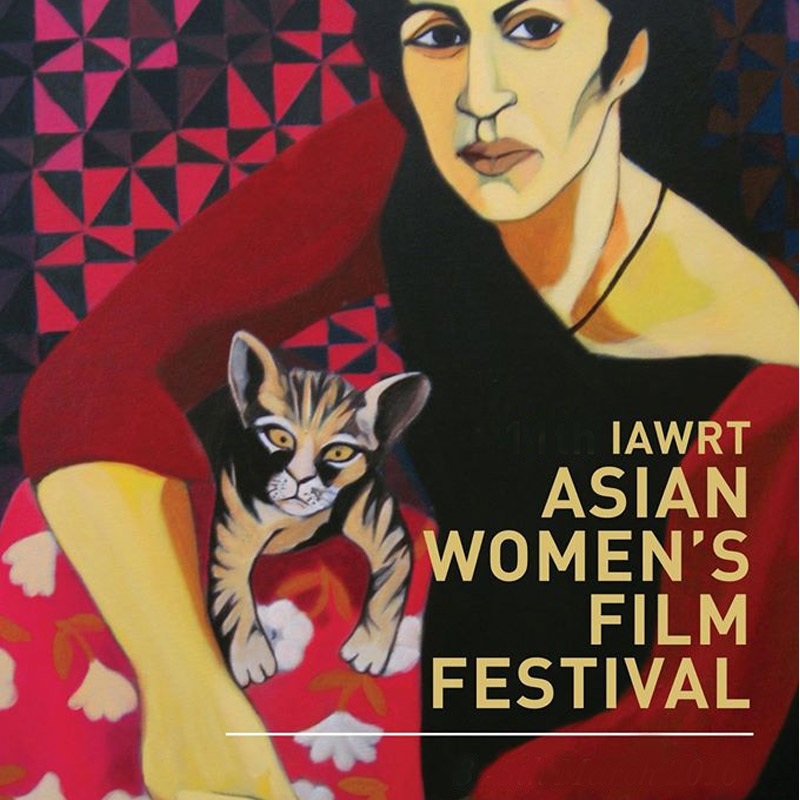
  • 46 films to screen in 8th IAWRT Asian Women’s Film Festival

    46 films to screen in 8th IAWRT Asian Women’s Film Festival

    MUMBAI: Forty six films from 16 countries will be screened in the 8th IAWRT Asian Women’s Film Festival to be held New Delhi from 5 to 7 March. The programme includes three curated packages of films from Japan, Turkey and Hong Kong.

    24 filmmakers from 10 countries will also be present to lead the discussions following the screening of their films. These films would be shown at the India International Centre Auditorium at Alliance Française on 6 March.

    Apart from the film screenings, there will be a seminar on ‘Representing Children’s Worlds: Gender, Media and Society’ on 5 March.

    A panel discussion on ‘Does Nuclear Power have a Future?’ will be held on 6 March.

    The festival is being organised by IAWRT – India, in association with the India International Centre, Sangat South Asia, Japan Foundation and Alliance Française.

  • ‘As there is no clear No. 2 sport in India, NBA has an opportunity to take that spot’ : Emilio Collins – NBA senior VP international development & partnerships

    ‘As there is no clear No. 2 sport in India, NBA has an opportunity to take that spot’ : Emilio Collins – NBA senior VP international development & partnerships

    Cracking the Chinese wall, the National Basketball Association (NBA) plans to break into the Indian market and become the No. 2 sporting power within five years.


    Last week the NBA inaugurated a dedicated basketball court at Nagpada in Mumbai, the first in a series of courts that it plans to develop in line with its long term commitment to grow the sport in India.


    For the first time, the NBA also opened up its live matches to the online viewers in India.


    In an interview with Indiantelevision.com’s Ashwin Pinto, NBA senior VP international development and partnerships Emilio Collins talks about the other plans that the company has to grow the market for basketball in India.


    Excerpts:

    Could you talk about the strategy NBA has employed to grow its reach globally over the last couple of years?
    Our strategy starts with media. This means getting television reach and forming partnerships with other digital outlets to grow the reach of the NBA brand. Post this, we focus on building the sport out. This is done by creating more basketball opportunities. We aim at providing more access to the game like infrastructure development.

    Which are your top five markets outside the US and where does Asia fit in this?
    China is our biggest market. It represents 40 per cent of our international business. Over the last six years, there has been substantial growth in that market. Philippines, Korea and Japan are the other key Asian markets where the basketball population is very high.


    In Europe there is tremendous relevance in Turkey, Spain, Italy, the UK and Russia. A lot of our international players come from Europe and so the relevance is very high. Latin America is a big priority for us, especially Mexico and Brazil. We have recently started to look at the Middle East.

    Did the NBA see good revenue growth last year?
    The NBA is growing at a significant clip at 20 per cent a year. I cannot talk about numbers, though. Asia contributes a little over 50 per cent while Europe accounts for 35 per cent. Latin America makes up the rest.

    How much do television license fees contribute?
    Media license fees contribute 50 per cent. This is followed by sponsorship and consumer products.

    Why didn’t you push NBA into the Indian market earlier and how big a market opportunity do you see here now?
    The biggest challenge that we face at the NBA as far as our international business is concerned is how to size up opportunities simultaneously. We wanted to ensure first that we managed China correctly. A lot of resources went there.


    India is one of our focus markets now, along with the Middle East and Latin America. The emerging middle class provides a big opportunity for us here. Basketball can play a big role in the development of sports infrastructure. The appetite for sports and entertainment is growing which has been proven with the success of the IPL. The NBA also fuses sports and entertainment. The IPL has successfully tapped into this combination.

    How do Indians perceive the NBA as a brand?
    The brand value is very high. We are in the unique position where the best basketball players from around the world play in the NBA. So if you grow up and get exposed to basketball, you automatically aspire to be a part of the NBA. Our players are global icons and by the sheer nature of the presentation of our game, players become larger than life personalities and figures; they are fused into the world of pop culture and entertainment. This has enhanced the status of the NBA brand.


    How tough is India as a market for the NBA to grow, particularly since it is a one-sport nation?
    This, in fact, marks an opportunity for us as we want to be number two. In a market where there is no clear number two, there is an opportunity for growth side by side with the number one sport that is cricket.


    Our strategy revolves firstly around building the sport. We want to provide more access to the sport through infrastructure development. Then we want to get involved with the community and develop activities around it with our local partners. We can use basketball as a means to contribute to the community. Thirdly, we plan to expand the reach of NBA Lifestyle and offer opportunities to fans to experience the NBA. This can be done through basketball competitions, interaction with players and most importantly through broader media distribution.


    Where do you see the NBA in India five years down the line?
    The NBA has a long-term development plan for India. Our goal is to make basketball the No. 2 sport in India in the next five years.

    Outside the US, China is our biggest market. It represents 40% of our international biz. Philippines, Korea and Japan are the other key Asian markets where the basketball population is very high. India is one of our focus markets now

    You have successfully grown the NBA in countries like China and Japan. Are there any learnings from that brand building process which you would want to apply to India?
    We have learnt the most from China. It all starts with spreading the NBA brand through television. This is then followed up with on-ground activities mixed with community initiatives. To make a court for the Nagpada neighbourhood and make this the epicenter of social and physical activities for them would make a difference to the community. This is critical to all the markets where we operate.


    Secondly, we want to introduce the sport to new audiences. This means going into schools and teaching basketball fundamentals through a Junior NBA initiative. We also want to create participation. We can use the Nagpada court to have tournaments there.


    We bring the NBA Lifestyle experience to the market. In the USA, we will be going into malls over the summer and bringing the experience to fans like slam dunk on a small court. One can play NBA videogames. You can meet NBA players and really feel the NBA experience.


    Finally, we want to bring the NBA competition to India. We will bring NBA teams to compete in an exhibition game. But before doing this, the infrastructure in India has to develop at a faster pace.

    How is the deal with Star Sports working out?
    They have partnered with us for many years – in fact, since 1993. In addition to showing our games live on Fridays and Saturdays, they are also increasingly showing repeats during primetime. This is very important in terms of broadening the awareness of the NBA. We go beyond this by offering highlights and condensed programming that allow fans to connect.


    Then there is behind the scenes programming. We focus on what our players are doing in the community and on what our teams are doing day in and day out. We look at contributions teams make in their key markets. It is about capturing what the NBA brand is about in different markets across the US.


    Is there interest from other Indian and Asian television broadcasters as well for the NBA content?
    There is significant interest from other Indian and Asian television broadcasters for NBA content. We are in discussions with various local Indian media outlets to distribute our content in different ways to appeal to Indian fans.


    Does the NBA do a lot of tie ins for film and TV shows?
    The NBA works with a variety of TV broadcasters and film studios to tie in the League’s content – from product placement to guest appearances by NBA players, etc. The NBA brand and its players are a significant part of pop-culture and films and TV shows leverage the League as a platform to reach its target audiences.


    Would this avenue be explored in India?
    Integrating NBA content within TV and film is an important component in creating local relevance for our brand in India. We are developing strong relationships with broadcasters and film studios in India to showcase the lifestyle and pop-culture appeal of our League, teams and players. We have already begun to integrate with Bollywood. This past November, the NBA hosted two Bollywood stars – Lara Dutta and Dino Morea – for an all-access VIP weekend in L.A. NBA Entertainment documented their experience and produced a 30 minute program which aired on ESPN in India on Christmas Day last year.


    Are you looking at specials which can serve as value adds?
    In a game played by LA Lakers, Dino Morea and Lara Dutta took part in many activities around the Staples Centre. We produced a half-hour special with ESPN Star Sports. We will do more activities like this down the road. It helps if that many Bollywood celebrities are fans of basketball. We can create shows on the experiences of Bollywood celebrities with the NBA.


    In addition, there are opportunities for reality-based content. There could be a talent search contest about finding the next great Indian basketball player. We are talking with ESPN Star Sports in this regard as well as with other platforms.

    What kind of content does NBA offer on the mobile?
    It is crucial in India as there are hundreds of millions of subscribers in India. We need our content using this platform. Photos, ringtones, wallpaper and then as 3G comes in, we would offer highlights. This will all be in addition to standard scores and statistics.

  • Fremantle inks deal for Martha Stewart show globally

    Fremantle inks deal for Martha Stewart show globally

    MUMBAI: Television format creator and distributor Fremantle Media (FME) has sold its daytime show The Martha Stewart Show featuring US television icon Martha Stewart to global broadcasters.

    The first season has been newly acquired by Mediacorp, Singapore; African Business Channel, Africa; Ananey, Israel; Show TV, Turkey; TV3/8TV Malaysia and UBC, Thailand.

    The show has been renewed by Vitaya, Belgium; OnMedia, Korea; SBS, Sweden; TVNZ, New Zealand and ABS CBN, Philippines.

    The one hour 180 episode show puts the spotlight on Stewart’s sense of humour and love of fun, with each episode featuring movers and shakers, headline makers, A-list celebrities plus everyday people who’ve accomplished extraordinary things. With guests including Russell Crowe, Jamie Oliver, Olivia Newton-John, Jessica Alba, Harrison Ford, Sharon Stone, Jason Biggs, Paul Walker and the cast of Desperate Housewives, The Martha Stewart Show has received five Emmy nominations and scooped one award.

    The brainchild of lifestyle guru Martha Stewart and reality television svengali Mark Burnett, The Martha Stewart Show aims to offer something different; from cooking, crafting and cavorting with celebrity friends, to entertaining, decorating and home renovating, Martha has all the answers.

    Commenting from the television trade event Natpe in Las Vegas FME CEO David Ellender said, “We are delighted to report on these new sales and renewals of The Martha Stewart Show, now happily at home in schedules in a growing number of territories worldwide. Martha is already an integral part of daytime television across the globe, with these further additions cementing her role as everybody’s favourite daytime host.”

  • America Channel extends reach in Europe and Middle East via BT

    America Channel extends reach in Europe and Middle East via BT

    MUMBAI: The America Channel has entered into a long-term distribution and services agreement with BT Americas, a division of British Telecommunications (BT), for delivery of The America Channel via the HOT BIRD and EUROBIRD satellites. This will be received by an estimated 50 million homes in Europe and the Middle East

    Under the agreement, BT will provide digital conversion, backhaul, multiplexing, technical support, customer service, encryption, program origination, ad insertion, and uplink services, as well as capacity on the HOT BIRD and EUROBIRD satellites located at the 13 degrees East longitude and 28.2 degrees East longitude orbital slots, respectively.

    The America Channel CEO Doron Gorshein said, “There is a global fascination with all things American. We believe The America Channel – a network dedicated to exploring and celebrating our diverse communities, local heroes and ordinary people who accomplish the extraordinary — will find a substantial international audience. At the same time, we believe that by providing this window into America, the channel can build bridges and help the world to better understand our communities, cultures, and way of life. ”

    With immediate access to tens of millions of DTH homes, a freely competitive environment, and a product that is unique on the dial, The America Channel believes it is poised to become the next great American global network.

    “The magnitude of this transaction creates a new economic paradigm for the channel,” added Gorshein. ” The international markets are fertile grounds for American entrepreneurs, and we look forward to working with our partners abroad to deliver great programming to their audiences.”

    BT Americas president Chuck Pol said:, “BT is able to provide The America Channel with a customized worldwide global network solution, effectively and efficiently. Our experience, extensive global reach, highly skilled engineers, and affordable value proposition give The America Channel and other independent American networks the ability to compete in the international marketplace.”

    Initially, The America Channel’s highest European penetration levels will be in Germany, France, Poland, Spain, U.K., as well as portions of Russia. In the Middle East and North Africa, highest penetration levels will be in Turkey, Egypt, Morocco, Saudi Arabia and Algeria. Most of the initial 50 million homes will receive The America Channel via Direct-To-Home (DTH) unencrypted satellite delivery. Subsequent European cable rollout of the channel is expected to generate subscriber growth in the UK and across the continent.

    In addition to 50 million DTH homes, the region also has approximately 70 million cable homes accessible via HOT BIRD, which The America Channel will seek to penetrate. Following this launch, The America Channel anticipates expansion into Asia.