Tag: TSBI

  • How is movie marketing evolving in the times of web 3.0

    How is movie marketing evolving in the times of web 3.0

    Mumbai: Movie marketing has come a long way from static print posters advertising an upcoming blockbuster. In today’s attention-deficit times, the marketing of films has had to evolve to become more engaging and focused in order to grab the audience’s attention. The way movies are marketed has been changing at a rapid pace over the past decade, and now, with the metaverse becoming one of the biggest platforms for marketing, it is due for a paradigm shift in the very near future.

    The film industry is known to devise innovative marketing strategies to promote their movies. Filmmakers need to adapt or risk being left behind in ways to attract the attention of their target audience. Hence, filmmakers, in association with agencies, are now taking their marketing campaigns a notch higher with the advent of blockchain technology and trying to use the metaverse and NFT space to promote films using totally immersive experiences that take the viewers into a different world altogether.

    Rediffusion Red Lab’s report titled “Web 3.0 – A new revolution in the world of Indian Cinema,” which examined the link between web 3.0 and Bollywood, concluded that the convergence will be here sooner than we imagine.

    [[{“fid”:”1092789″,”view_mode”:”default”,”fields”:{“format”:”default”,”alignment”:””,”field_file_image_alt_text[und][0][value]”:false,”field_file_image_title_text[und][0][value]”:false},”type”:”media”,”field_deltas”:{“1”:{“format”:”default”,”alignment”:””,”field_file_image_alt_text[und][0][value]”:false,”field_file_image_title_text[und][0][value]”:false}},”attributes”:{“class”:”media-element file-default”,”data-delta”:”1″}}]]

    In the foreword to the report, Rediffusion managing director Sandeep Goyal says, “Bollywood needs to comprehend, if only to understand how the next generation of consumers hopes to be entertained and engaged.” NFTs, or non-fungible tokens, are digital identifications that are recorded on a blockchain. They certify an owner’s authenticity and rights to a specific piece of digital content, such as an image, a video, or a specific animated character in a franchise.” 

    “NFT holders can start to get fan club-like perks that might include wider access, early screenings, and, in many cases, the right to create their own iterations of the character or asset they own,” further says Goyal. He points out, however, that the ethos could be a direct clash with the tight control that Bollywood studios have long enjoyed over content, while adding that the advent of web3 will change a lot of that. 

    The NFT rage seems to have taken over Indian cinema too. Many movies are riding the NFT wave for movie promotions, with actors launching their own NFT series to connect with their fans. Not long ago, Salman Khan ventured into the NFT space where he launched a series of 200 NFTs based on the “Dabang” film series. The actor also launched the $GARI token by Chingari, a short video app, and became the brand ambassador for the platform’s NFT marketplace.

    Popular South Indian actor Rajnikanth too launched a series of NFTs based on his 2007 movie, “Shivaji the Boss,” even as his peer Kamal Hassan went a step further and celebrated his 67th birthday by launching an NFT series and creating a digital avatar to enter the metaverse.

    According to TheSmallBigIdea (TSBI) CEO & co-founder Harikrishnan Pillai, while the metaverse space is still evolving, it is just a matter of time before it becomes a big part of the movie marketing industry. “People today are aware that the metaverse is beyond just a buzzword. At the moment, a lot of the initiatives are short-term in nature, but soon things will become long-term and immersive in nature. Once that happens, things will become captivating,” he says.

    The TSBI agency recently collaborated with Ajay Devgn and Hefty Verse to devise metaverse marketing strategies for the “Runway34.” On how metaverse marketing is emerging as a new means of movie marketing in the Indian film industry, Pillai says, “Marketing in the metaverse has two advantages. One, it allows you to connect with an audience set that is completely new. Also, it allows the current audience to immerse themselves in a much deeper manner. Both benefit the film marketing process.”

    In such times, when movies, OTT shows, and events are eyeing a similar audience set, the metaverse presents itself as an innovative solution for film marketing, he adds.

    NFTs have also recently excelled as a tool for promoting films, according to the Rediffusion report. Two NFTs honouring the recently released Amitabh Bachchan-starring Hindi movie “Jhund” have been produced by the film’s makers. These NFTs, which cost more than Rs 2,15,000 each, were created in association with the US-based NFT marketplace Superstar Xchange, says the report. 

    Additionally, the film “83,” which celebrated India’s victory in the 1983 World Cup, also introduced a line of “83” collectibles, which included tangible cricket memorabilia that had been personally signed, video clips, animated digital avatars, and previously unseen posters and photos.

    VistaVerse partnered with “Rocketry – The Nambi Effect” to introduce some spectacular and desirable NFTs in the metaverse. This partnership resulted in the film going on to become the first Indian film with 10,000 NFTs claimed, says the Rediffusion report.

    “This film represents my labour of love and the team gave it their all to make my dream come true. I’m ecstatic that the long-awaited “Nambi Narayanan” movie is now being shown on a grand stage with fans getting an opportunity to participate in the web 3.0 environment for a personalised experience,” said the film’s director and actor R. Madhavan.

    “The fundamental edge that the metaverse provides is the bragging value of doing things in a virtual dimension,” says Pillai, talking about the opportunities the metaverse presents to movie marketing. “It allows you to do everything that you do in real life, but in a virtual avatar and setting. The other advantage is that it takes monetisation to a different level. It also cuts physical barriers and has the ability to teleport experiences to any environment.”

    Citing the example of the “Runway34” movie, he says,”For the “Runway34″ game we developed, the audience could interact with Ajay Devgn’s character from the film and fly a plane with him, sitting in the comforts of their home. Or they could buy NFTs of Ajay Devgn’s glasses, or Amitabh Bachchan’s attire, or Rakul’s jacket, and also get the real physical item to own, with the NFT authenticating it.”

    “When we approached Ajay Devgn with the idea of him being in the metaverse space, he seemed quite enthusiastic about it,” Pillai says, while talking further about the collaboration. The actor had the foresight to recognise that this was the next and a new approach to audience engagement, he adds. “Further, to bring to life this entire concept, we found the right technology partner in Heftyverse and joined hands with them. We launched more than a dozen NFTs along with an immersive “Runway 34″ game.” 

    Nevertheless, it’s not a cakewalk, and challenges remain as the space is still evolving. “The effort versus the returns is probably not as high as it should be, but the buzz value is pretty high,” says Pillai. “We have to move beyond the novelty of being first movers. There is still some time left as far as the metrics to convert and measure that buzz to a film’s success are concerned.” 

    The Rediffusion report lists several ways in which the metaverse, along with NFTs, could potentially revolutionise the film industry: Even as NFTs can be utilised to crowdfund film projects, it can give a boost to the industry when movies do not do very well in theatres. Since November 2021, industry players have raised around four million dollars by selling NFTs, going on to show NFTs are here to stay and will add to the revenue streams of the Indian cinema industry.  

    The way we view films is also going to be changed by the metaverse, as they can potentially be used to create more immersive experiences and potentially allow viewers to become part of the storytelling experience.

    “The novelty of short-term initiatives will fade away. Brands and films, especially film universes and studios, should become early entrants and build their space in the metaverse to provide an immersive audience experience and create monetisation opportunities,” opines Pillai on leveraging the metaverse further as an important marketing tool for promoting films. The next and prudent step for marketers would be to think long-term, he signs off.

  • Digital marketing becomes mainstay for OTT platforms during COVID-19

    Digital marketing becomes mainstay for OTT platforms during COVID-19

    MUMBAI: The COVID-19 pandemic has thrown a spanner in the works of every single organisation. Even as the media and entertainment industry comes to terms with this ‘new normal’, the over the top (OTT) industry seems to have got a thrust. As digital viewership keeps increasing week on week, it is imperative for streaming services to ensure viewers are aware and engaged.

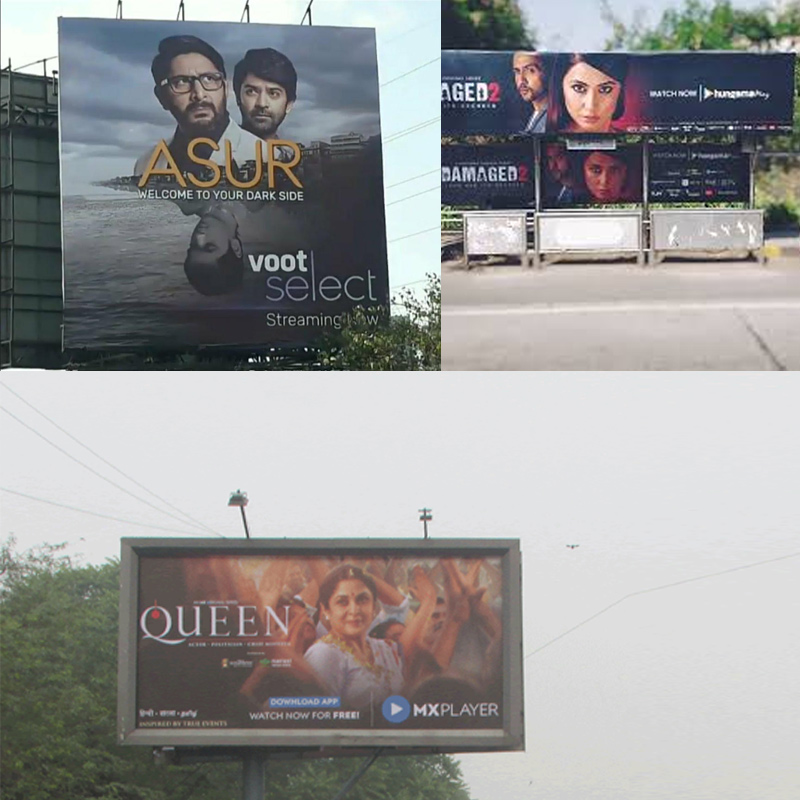
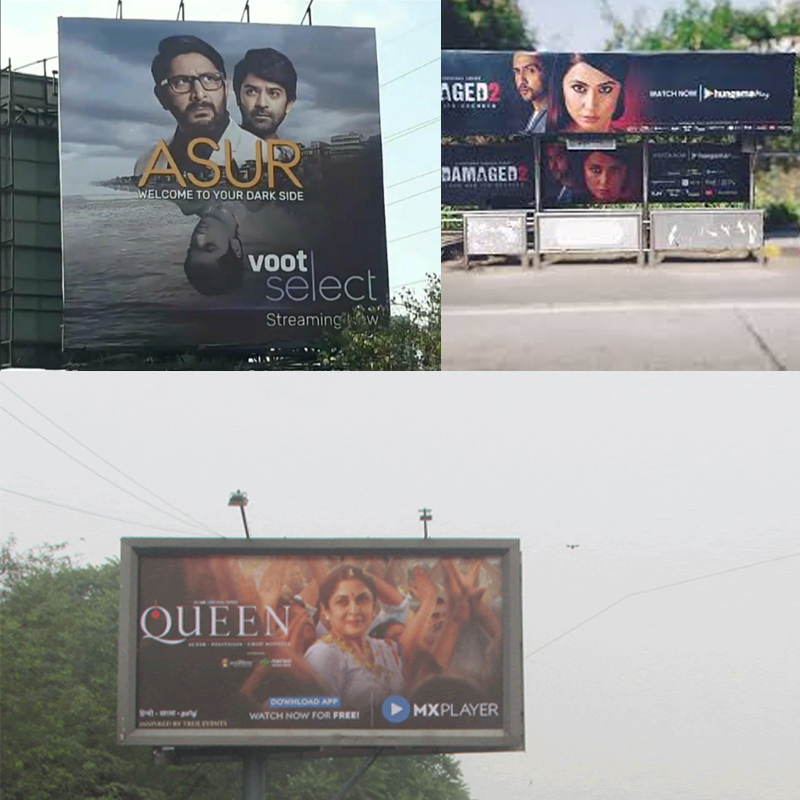
    Right at the beginning of the lockdown, several services opened up their premium content for free viewing. Since there is hardly any chance in the resumption of OOH advertising in the next few weeks or even months, OOT platforms are mulling over innovative ideas to attract and retain customers. In part two of this series, we explore how these platforms are communicating to its consumers who are stuck at home and hungry for good content.

    The BARC-Nielsen report states that VOD viewership on digital is at 3 hours 59 minutes a day in week three of lockdown, with a 12 per cent increase from pre-COVID time. This is being fuelled by movies and original series. Understanding this change, services have shifted their OOH spends to these two mediums.

    On the digital front, ZEE5 is focusing on reach and frequency campaigns along with expertise on entertainment and news websites. “News and entertainment are our two key segments on digital and TV now since people’s attention is currently diverted there. We have moved a lot of our OOH display advertising to the digital medium. We have also started a lot of video advertising,” says ZEE5 India SVOD marketing head Reilly Rebello.

    Voot Select and Viacom18 youth, music and English entertainment head Ferzad Palia is confident that Voot Select, which launched days before the country went into lockdown, has a huge slate of originals that can easily attract consumers. With the ongoing crisis, the aim is to focus on creating awareness. One of the ways is through chat shows with talented artists from their shows. Palia says that Voot had intended to take this approach even without a lockdown.

    According to Palia, the impact lies in how effectively they use the two available mediums – TV and digital – in the crisis as the words need to be maximised.

    ALTBalaji, the streaming service from the house of Balaji Telefilms, struck a deal with Zee TV to air some of its family dramas. The duo also has an OTT partnership in place. ALTBalaji marketing, analytics & direct revenue SVP Divya Dixit says that for them, digital marketing comprises all social media handles, platforms and websites that are being accessed by the audience.

    “We create backlinks across our media communications to ensure our website witnesses a continuous influx of new and existing users. Influencer marketing is another tool that has worked wonders for us and the shows. When you see actors and vloggers talking about the show and the characters directly with their fanbase, it tends to create a personal bond with the audience and engages them in the journey of their favourite characters and actors,” she says.

    She adds that memes have become mainstream and an important and engaging tool for marketers. So, ALTBalaji has incorporated meme marketing as an integral part of its marketing campaigns. “Besides Instagram and Twitter, we also actively use WhatsApp to engage with audiences,” she adds.

    Switching over to digital, ZEE5 has started moving press screenings online. Rebello says that they have sent the key information to reviewers and media people along with a link to a 20-30 minutes preview.

    MX Player launched eight shows in March and the first week of April for which campaigns were seen across social media to create personalised experiences. “We have digital PR, an increase in spends on mobile marketing, optimising performance marketing to reach out to viewers at every possible touchpoint as well as contextual advertising. More so, since our own platform hosts 75 million daily active users, we have used our own internal inventory to cross-promote across categories. It’s more personalised with focused audience buckets,” MX Player marketing and business partnerships head Abhishek Joshi says.

    Hungama Digital Media COO Siddhartha Roy states that on the basis of the double-digit growth in consumption Hungama Play has noticed on the platform since the beginning of March, it will continue channel marketing spends on the digital medium for the next set of original shows that are ready for release.

    It is an opportune time for streaming platforms to target existing customers as well as attain new ones to sample the content in the hope that not only viewership but also revenue through advertising and subscription will increase over time.

  • How OTT players re-calibrate OOH advertising during social distancing

    How OTT players re-calibrate OOH advertising during social distancing

    MUMBAI: The world continues to grapple with the COVID-19 pandemic, an unprecedented crisis in living memory that has almost crippled our everyday lives and left the whole country deserted. And the reality has been unpalatable to the media and entertainment industry, especially the outdoor advertising segment, which is bearing the brunt of the stay-at-home/social distancing stipulations.

    The out-of-home (OOH) medium has been one of the go-to points for OTT services in India so much so that leading streaming platforms had started outdoing even retail brands in OOH advertising. Now, with that option totally shut, streaming services are looking at ways to re-calibrate their ad spends. 

    In this new series, we explore how the OTT industry is coping with its communication strategies amidst the COVID-19 pandemic. We start off with the OOH industry. 

    As people have suddenly been forced to shift to seek entertainment online, digital advertising has gained traction. However, none of the platforms denies the importance of OOH in the media mix.

    ALTBalaji marketing, analytics & direct revenue SVP Divya Dixit says that the platform has been at the forefront of executing creative and innovative OOH formats for its varied shows. However, she mentions that their strategies have always been a mix of varied tools, and in times such as these, they seek to explore the rest of them with innovation and uniqueness. 

    "For marketers, with OOH advertisement being suspended, it does create a dent in the overall marketing outreach. As all of us exercise the mandatory stay-at-home-stay-safe measure during the lockdown, audiences across the country are now consuming content digitally every part of the day. In such a situation, digital marketing, buoyed by social media, influencer marketing, meme marketing, OBD calls, SMS and email blasts etc., can prove to be the best bet for brands right now. Especially for a digital-first platform like ours, it promises to play a crucial role in the overall marketing mix, seeing 50 per cent of the allotted marketing budget," she adds.

    Hungama Digital Media COO Siddhartha Roy comments that the stay-at-home measure has enabled the TV and digital media to find captive audiences while the audience for OOH and other forms of outdoor and experiential marketing has decreased dramatically. "As a platform, we realised a long time ago that our audience is present on the digital medium; hence, our marketing strategy, even in the past, has been heavily skewed towards digital and social platforms," he says.

    Broadcaster-led platforms, like VOOT, ZEE5, etc., whose traditional business has also been bullish on OOH, accept it as a key component of the media mix. Voot Select and Viacom18 youth, music and English entertainment head Ferzad Palia says that outdoor is very important when a new service is launching, especially in markets like Mumbai. But he also adds that they have never been over-indexed on outdoor; hence, cutting back on this area is not a huge change. While having an outdoor option could have been an advantage, he mentions the OOH spends are being shifted to a mix of TV and digital ads.

    ZEE5 India SVOD marketing head Reilly Rebello also echoes Palia's thoughts. While terming OOH as a key component of its advertising mix, he does not forget to mention that there are a lot of other mediums that have been used regularly. Rebello also says that they are focusing a lot on digital and TV. ZEE5 India is doing heavy targetted advertising on the ZEE5 app while focusing on other digital mediums. A major part of ZEE5's OOH cost has moved to the digital medium.

    However, TheSmallBigIdea CEO and co-founder Harikrishnan Pillai has a different take. He is of the view that outdoor was never a pivot platform for OTT. According to Pillai, while OOH builds perception and is a great reminder medium, it is seldom the core medium. "What outdoor helped OTT do is place itself alongside broadcast television in terms of scale. Over the years, TV has built a perception on the back of the outdoors. So for OTT, which is digital-first, absence of outdoor doesn't matter much in these times, since TV, too, isn't making much use of it," he says.

    "Given the stay-at-home, stay-safe mandate, a lot of outdoor media has had to be removed from the marketing media mix, but at MX Player, we firmly believe that all else can wait, but your daily dose of entertainment must go on. We've gone live with eight shows just in the month of March and the first week of April," MX Player marketing and business partnerships head Abhishek Joshi states.

    While OOH hoardings stay barren for now, the hope is that the industry will be back on track after this crisis passes us.

  • TheSmallBigIdea thinks big

    TheSmallBigIdea thinks big

    MUMBAI: In advertising the Big Idea comes from a small insight. That was the inspiration behind former Reliance Big executive Harikrishnan Pillai and Ex-Times Network's Manish Solanki naming their agency soon after they quit their jobs. Six years down the line, their full-service digital agency,TheSmallBigIdea (TSBI), has grown to a team of 84 professionals, having served clients such as Star Sports,&TV, Colors, Zee Bioskope, Seychelles Tourism, IDFC Bank, HDFC Life, Asian Paints, Chennaiyin FC, and Big Magic. Recently,the agency created headlines for winning the social media mandate for movies like Love Aaj kal and Shubh Mangal Zyada Savdhan.

    For Pillai, it has been a dream journey from 2014, when he started the TheSmallBigIdea as a self-funded venture, by imbibing his experience from the Zee network and Reliance Broadcast Network.  
    His fruitful stints at Zee and Reliance helped him a lot. Talking about his past experience, he said: “If we have hunger and perseverance they gave us the opportunity. It is probably the biggest legacy that I have carried into my team. As I have said, most of our team is home-grown, all trained internally with strong ethos. The team at TheSmallBigIdea is creatively strong.  They are leading the team as if they themselves are the entrepreneurs. The second lesson learnt has been a focus on delivery. A great idea without impeccable execution is nothing. So, while we are idea-driven, we are extremely focused on executions, delivery, and measurement.”

    While brands in the media and entertainment category contribute 60 per cent of its business, TheSmallBigIdea has a stronghold and focus in tourism, education, e-commerce and BFSI. Then around 15-18 months ago,  it ventured into movies. “Movies happened last year with Badhaai Ho. Then we did Bala, Good Newzz, Dream Girl, and so on. Our primary focus is on sustainability and growth. What is going to give us sustainability is the large clientele that we have; our focus has been to provide services to them so that they can stick around us. The other most important factor is growth. When you look at sustainability you also look at growth,” said Pillai. 

    Largely based out of Mumbai, it has reps in Bangalore, Delhi, Punjab and Chennai. 

    The agency also has a sprinkling of media-only clients for whom it does the planning and buying like: Seychelles Tourism, Bahrain Tourism, Welingkar Institute and Dalmia College. Realising the potential in going local, TheSmallBigIdea launched TSBI Bharat as it saw the need to reach out to the next 100 million people who are going to come online. It's not just about language translation but studying how regional markets behave, how they consume internet and the role of neo-social apps in their ecosystem. 

    “We want to understand their sentiments, what kind of content they want to consume, etc. It is about addressing a larger ecosystem rather than addressing one particular language,” says Pillai. 

    TheSmallBigIdea is expecting a lot of growth coming from TSBI Bharat. It is pushing brands to create content in regional languages using neo-social apps. “We are also focusing on TSBI studios, which is the production division at TheSmallBigIdea to create more short-format content, podcasts and ad films. Our analytics tool ACE allows business to derive actionable insight through a thorough evaluation of social and enterprise data,”he added. 

    The agency, is looking at hiring more people to reach the 100-mark. Going forward, TheSmallBigIdea envisages a brighter future. “What works for us are the insights and the content,” says Pillai confidently. “Not only our ideation team but our service team is very strong and that is reflected by the fact that 80 percent of our clients renew contract on Y-o-Y basis. What is not working for us is the reputation of being a media and entertainment company, which is not true. Like I have said we get only 60 percent of revenue from media and entertainment. This perception I would like to change.” he concludes.

    Now that’s what sounds like a sound idea. A big sound idea. 

  • Promax & TSBI create quirky campaign

    MUMBAI: Promax has brought on board, Digital first branding agency, The Small Big Idea (TSBI), to partner with them for the upcoming awards ceremony. TSBI recently kickstarted with an innovative social media campaign to announce the key note speaker for the event.

    Conceptualized as ‘#IndustryInsults’, the campaign aims to introduce Mr Bingo, infamous for sending hate emails, in an innovative and quirky manner creating the much desired intrigue on this addressal at the event. The campaign will acquaint consumers to ‘Mr. Bingo’ in a style that’s today benchmarked by his own witty illustrated insults.

    “We have been partnering and participating in Promax for many years, and Mr. Bingo is certainly one of the most unique speakers the event has witnessed. His style fits in naturally to our palette. Through this campaign, we have tried to do justice to Mr. Bingo’s quirky ways and we are sure that our messages will be well received by the industry insiders. It is “SO US”, says The Small Big Idea co-founder Harikrishnan Pillai.

    “Insults can be brutally fun too and our keynote speaker, Mr. Bingo has managed to create a livelihood out of this niche skill. The Small Big Idea, the Digital First Branding agency for Promax has captured this very essence of Mr. Bingo and created a campaign of “#IndustryInsults” that acts as a perfect way of introducing our unique and enterprising keynote speaker by providing witty content in Mr. Bingo’s unique style,” adds PromaxBDA Awards 2017 country head Rajika Mittra.