Tag: TRP

  • Shows that go on endlessly are really the TRP-fetchers, says Purnendu Shekhar

    Shows that go on endlessly are really the TRP-fetchers, says Purnendu Shekhar

    NEW DELHI: Writer Purnendu Shekhar said today that television channels often ask the writer to add sequences in serials that are proving popular with the masses.

    Shekhar told indiantelevision.com that he agreed that some serials had outlived their existence, but said he was asked to continue adding episodes because the respective channel felt the show was fetching TRPs.

     
    Writer of shows like ‘Balika Badhu’, Shekhar has now penned the series ‘Satrangi Sasural’ for Zee TV which is a story of a housewife who has to contend with seven mother-in-laws.

     
    Producer Bhairavi Raichura, who is also an actor said that while there is no pack up at the end of the day as it happens for an actor, but seeing a serial on screen is like seeing a new born baby. But she admitted she preferred playing the actor.

     
    Meanwhile speaking at the press meet, she denied that ‘Satrangi Sasural’ was a woman-oriented show as it involved many elements as it exists in every family.  

     
    Shekhar said the concept for the series had been given to him by the channel and he had then penned a story around it.

    He admitted that a writer had to keep the social issues in mind and taking care of elders was a major issue in this series directed by Nandita Mehra.

     
    He said he had learnt his basics in television from Zee since he had commenced his work as a writer for an earlier show with the channel. His shows include ‘Astitva – Ek Prem Kahani’ and ‘Saat Phere’.

     
    He stressed that the present series was not a typical saas-bahu story and said he would make every attempt to ensure that this does not happen in the coming episodes.

     
    Referring to the return of Farida Jalal on the small screen, he said she will be a surprise as she has always been taken as a character who brings some comedy on screen which will not happen this time.

     
    ‘Satrangi Sasural’ will showcase the life of a girl living in a Delhi-based household with seven mother-in-laws, each of them having their own individual personality traits, quirks and diverse characteristics. The show has locked in an impressive ensemble star cast to play the seven mother-in-laws on the small screen along with the main leads.

     
    The series will see a slew of prominent, popular yesteryear actors making a comeback. Viewers will see veteran actor Farida Jalal return to the small screen as the stern and stoic matriarch – the grandmother of the groom who calls the shots and runs the show.

     She gives shelter to six other women of the family who are either widows, left in a lurch by their husbands or just chose to walk away from troubled marriages. Prominent faces who have stepped in as the mother-in-laws include powerhouse performers like Bhavna Balsavar, Sadia Siddiqui, ReshamTipnis, Sheetal Thakkar, Sonali Sachdev and Samta Sagar.

     
    Shekhar said, “You don’t need to be a biological mother to know what it feels like to be a mother. In that sense, the male lead of our show Vihaan has been raised by not one, but seven mothers. So our leading lady Aarushi is posed with a most unusual scenario where she must deal with seven mothers-in-law – a prospect bound to make any girl turn jittery and develop cold feet about marriage.”

     
    The show explores the interesting dynamics between Aarushi and her seven mother-in-laws.

    Produced by 24 Frames, ‘Satrangi Sasural’ has Ravish Desai as the male lead protagonist – Vihaan, opposite Mugdha Chaphekar who essays the role of Aarushi.


     

  • CNBC India ‘blows the lid on confidential TV ratings’ system in India?

    CNBC India ‘blows the lid on confidential TV ratings’ system in India?

    Business channel CNBC India today broke a story casting doubt on the efficacy of television peoplemeters in India, saying it was “not foolproof, not confidential and definitely open to manipulation.”

    CNBC reporter Naomi Dutta had with her the full list of 627 households supplied with peoplemeters that make up the sample population used by the two market research agencies – ORG MARG’s Intam ratings and AC Nielsen’s TAM data – to calculate television ratings points (TRPs) in the city of Mumbai.

    The business channel’s viewpoint is that the ramifications of a reporter getting hold of the list of members of the peoplemeter sample are enormous. “The reporter had no devious intentions,” is the channel’s view. “A motivated person getting hold of the list could doctor the ratings as and when they please.”

    Dutta was shown on CNBC today morning entering some selected households in Mumbai which had the elusive peoplemeters installed. The family members interviewed on the channel were quite comfortable with the use of the meters and most of the households shown had had the meters in their residences for at least two to three years.

    Asked what benefits the they got from having the meters in their homes, the people interviewed said they got gifts from the ratings agencies during the festival season. Another observation is that the people interviewed were certainly not from the SEC A & B households that most media planners are sold on.

    Among the industry people who were interviewed for their reactions was MTV India MD Alex Kuruvilla.

  • Esha Media Research to go the TAM way

    Esha Media Research to go the TAM way

    KOLKATA: Esha Media Research, a media monitoring and research company, which currently monitors 140 channels, across the nation in all languages is looking at expanding its services. The company has plans to foray into giving out television rating points (TRP) data soon, like Television Audience Measurement (TAM).


    The company, for accurate data, is looking at installing around one lakh peoplemeters, which will be attached to the TV sets in different geographical and demographic sectors.


    Also, a venture capitalist (VC) may infuse around Rs 10 crore into Esha Media as it aims at increasing its reach.


    “We are working on the TRP project from last six months. We are waiting for the new government to settle,” Esha Media Research managing director RS Iyer told indiantelevision.com.


    TRP gives an index of the choice of the people and also the popularity of a particular channel and show. The device, peoplemeter, records the time and the programme that a viewer watches on a particular day. Then, the average is taken for a 30 day period which gives the viewership status for a particular channel.


    Iyer talking about the current TV programmes rating system said that at present for the calculation purpose, many states, especially the north eastern region is not covered. “We will install the device in tier III and IV cities as well,” he added.


    As earlier reported by indiantelevision.com, Esha Media, which currently monitors News channels is also looking at foraying into entertainment genre channels and other new verticals. “We will use the fund pumped by VCs,” informed Iyer.


    The company also has plans to take its channel monitoring number to 200, from the current 140 channels, in the next two months.


    At present the monitoring of channels is done using state of- the-art equipment that allows the agency to record, retrieve, transcribe, translate and deliver reports in formats ranging from CD and DVD to immediate uploads via FTP or a customised web page. “This enables the client to log in and access news of their interest, anytime and anywhere,” he concluded.

  • The year the industry entered the ICU

    The year the industry entered the ICU

    Perhaps that best expresses what Television News underwent in 2013. Simply because it spells out to say: What (the) Hell Ever Happened!

    A pause would have been a positive sentiment; in a year that felt like the roller coaster was going to crash. Yes, flat revenues, would have been a positive. Flat viewership would have been a positive.

    If the TV News industry was a human body, it would have woken up at the end of the year, from a long and deep coma only to discover, multiple organ attacks and multiple surgeries on its meager body had thrashed whatever hope it started the year of 2013 with.

    There was a name change, a year that saw a new expression (and that’s the biggest positive outcome of 2013) – ‘TVT’ replace ‘TRP’ to aid acknowledgement of the growth of TV viewers, was the silver lining on an otherwise dark cloud. But still to gain currency and translate into value. So, at this stage for TV News, just a name change.

    Then came hope, with the promise of new infusion of body muscle with a change in thinking around foreign investment in TV News. But on the day the good Doctor did not show up and the patient will limber on trying to find investment funds. The strong may survive, but many will perish, without new hope of quality investment.

    Tossed from one operating theatre to another, the patient remains in ICU. Not knowing if the doctor will pull the plug or resuscitate.

    A series of cardiac attacks followed, with circulation of blood (advertising income) threatening to be restricted, cutting away supply of oxygen and threatening the very survival of the TV News industry and the consequent ill effects on democracy. Tossed from one operating theatre to another, the patient remains in ICU. Not knowing if the doctor will pull the plug or resuscitate. The patient though is showing visible signs of fighting strong.

    Finally, the cost of medication went up, with Digital Addressable System (DAS) 2 – carriage fees, which were expected and promised to go down (as was experienced with DAS1) headed northwards. The daily dose of vitamins just got more expensive.

    In this mayhem and bodily torture, what kept the soul and the body together, you may ask? The kindred of the TV News industry survives on the very one thing it does best – delivering quality news, round the clock, with commitment.

    There was lots of news. It became more social and digital and TV News leveraged that growth engine.

    It has built a sound set of principles and a robust mechanism to work together as an industry, in unison. This antibody resisted all those attacks and kept intact body and soul. Nourishing it for another day, another year.  One that the TV News industry, knows will not be easy. But it has got smarter and knows how to work together.

    For 2014, the TV news industry must make a Bang – big audacious news and glory. With a major election in sigh, the industry must learn to stick together even more, grow its value and turn away the woes and the Whew to bold steps of business collaboration, to drive down costs and bring profitability into the industry.

    Be it carriage, ad price, inventory, news standards, governance – the TV News business can evolve the industry’s future by creating its own self-regulation on best business practices and best shareholder practices to bring the shine back into it.

    2014 brings hope, renewed faith and will be full of News! Good News! BANG!

    (Sunil Lulla is MD and CEO of Times Television Network. The views expressed in the above article are the author’s personal views)

  • TVT gives us power to negotiate better: Broadcasters

    TVT gives us power to negotiate better: Broadcasters

    MUMBAI: The month of July saw the tamasha related to the ratings – TRPs vs TVTs and it was for a fortnight that the whole industry awaited for the three stakeholders to reach a consensus on how viewership numbers will be dished out and what will be the metric for evaluating how television is faring.

    Several meetings and exchanges of emails  between the involved parties gave birth to television viewership in thousands, colloquially referred to as TVTs. The format was devised to capture and reflect growth in TV audiences in the country in absolute numbers.

    And so from the past three weeks, the industry has been receiving ratings in numbers rather than percentages. Indiantelevision.com spoke to industry professionals to understand the changing scenario and the road ahead.

    Though most broadcasters feel that it is still too early to expect any major changes, but the numbers have surely put them in a better position to negotiate.

    “It is never too easy to get advertisers on board,” laughs and says Zeel chief sales officer Ashish Sehgal. “Currently, the way transactions are happening people sometimes still tend to refer to both (percentage as well as numbers) as they are habituated to the old ways. But to see the real change happening, we will have to wait for a while – till the whole universe is revamped in January,” he adds.

    He further elaborates, “Things like ad cap and ad rate hike are the roadblocks in adaptation of the new currency. However, broadcasters now have higher negotiating power.”

    On the same lines, a senior executive from a leading GEC is happy that TVT which is the accepted norm globally for gauging TV viewership has been finally adapted in India. “The new method is a true reflection of how many people are really watching TV and hence, it helps our sales team to utilise the data in a profitable manner while discussing ad rates with the clients.”

    The new method has benefitted the niche and regional channels the most which at times received zero per cent TRPs. ETV Marathi and ETV Gujarati business head Anuj Poddar says, “The shift of TAM from GRP to GVT is a healthy thing for everyone and I don’t know why the buyers and advertisers were protesting so much. Now it’s all doodh ka doodh, paani ka paani because it shows absolute numbers. It is very easy to compare across platforms.  You can see the reach of the channels and know the number of homes it reaches.It’s a good starting point where TVT helps all of us get our math right and to also know how and where to spend money.”

    However, there is a catch in the consensus achieved which is keeping all the stakeholders happy. For internal evaluation including planning and buying, percentage TVR weekly and all other data is still available to advertisers and advertising agencies as in the past. Hence, for most advertisers it’s business as usual.

    Parle general manager (marketing) Praveen Kulkarni says, “For us, it has not made any difference. We still go by the old currency (TRPs). So, there is no change in our media plans.”

    Similarly, Godrej & Boyce Manufacturing vice-president (sales & marketing) Kamal Nandi states, “The change has just happened so it is too early to say anything. As of now, we still refer to information in percentages.”

    He further elaborates and says that for TVTs to become a reference point will still take some time and it all depends on how fast planners and buyers can cope with the new metric.

    Media planners too think that it is too early to talk about benefits of TVTs over TRPs and continue to refer to the old rating method. A south India based media planner explains, “It is too early to say how it will change the way money is exchanged between the two parties. We are trying our best to make sure that both the parties are in a win-win situation.”

    On this, the GEC executive goes on to say, “Earlier an advertiser who would pay Rs 100 (and if 100 people were watching a channel) will now have to pay Rs 500 as the reach too would have increased to 500 viewers. And that is the main reason they were and are still opposing it.”

    Whatever be the case, one thing which is clear right now is that the broadcasters have engineered change in the way industry views how television programming is being consumed. And that is only phase one of their journey. They still have some road to travel to ensure that TVTs become the currency amongst aadvertisers and agencies.

  • I&B minister wants the industry to define self-regulation levels

    I&B minister wants the industry to define self-regulation levels

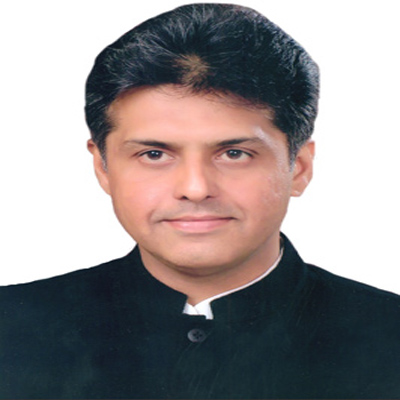
    NEW DELHI: Information and Broadcasting minister Manish Tewari has said the process of mainstreaming self-regulation as a statutory mechanism should be led by the industry and not the government.


    Speaking at a panel discussion on Media Regulation: Is status quo the option?, the minister emphasised that the government’s approach towards the media was an ‘essay in persuasion not regulation’.


    The stakeholders within the industry would have to define the equilibrium levels to ensure that the paradigm of transparency, fairness, sobriety and avoidance of sensationalism becomes the key driver of the national discourse in the media space, Tewari stated.


    He said digitisation as a process could be leveraged to augment sample sizes by re-engineering every Set Top box to function as a virtual people’s meter. Out of the box innovation and creative thinking by media entrepreneurs could surmount the current challenges by a technological leap that could transform the dynamics at the back end of the media sector. Industry could then utilise the data and develop business models that were transparent and workable.


    This process would ensure an alternative to the ongoing conflict surrounding TAM / TRP that the Broadcasting industry held responsible for much of its woes. He emphasised that the way forward was also to fast track Broadcasting Audience Research Council (BARC) as an industry led body that would provide a reliable measurement of popular viewership patterns and help broadcasters overcome corrosive narratives.


    The minister also referred to the growing importance of the new media space which had revolutionised the media landscape. The growth of the internet had led to a situation where there could be a conflict between the physical and virtual civilisation. It was important to comprehend the fact that the power of expression and dissemination through the internet had added a new dimension to innovations in information dissemination. While the opening up of the virtual space had led to democratization of the information paradigm, it had also led to technology becoming a leveller.


    Tewari added that these developments could also lead to a situation where one could also face “Balkanization of the Internet” if agreed rules of international engagement did not emerge as a binding international compact that encompassed states and other entities who controlled the underlying hardware. This situation needed to be avoided at all costs so as to ensure that no artificial divisions are created in the World Wide Web on ideological entities and Westphalian lines.


    The minister also discussed critical paradoxes within the media space that would need to be reconciled. These included proliferation of numerous mediums of communication as qua a growing intolerance to an opposite viewpoint, right to a fair trial qua trial by the media, presence of flawed revenue models qua questionable methods of revenue augmentation, TRP qua the truth and the raging debate between self regulation and statutory regulation.

  • India best place in world for news channels: Purie

    India best place in world for news channels: Purie

    NEW DELHI: ‘India is a very dramatic country, and therefore it is the best country in the world to have television news channel – something is happening here every moment’.

    Accepting the Indiantelevision.com’s Lifetime Achievement Award at the Second News Television Awards function over the weekend, TV Today Group editor-in-chief and chairman Aroon Purie said the 24×7 news channels were probably the greatest invention of recent times since they changed the way people think and also affect public discourse. “A television channel is like a Formula One Car. It just goes on and on at a speed beyond your imagination”.

    “I love news – it is my passion”, said Purie, but added that it was unfair to blame TV news channels for everything. The TV news business was just over a decade old and ‘they still have to find their feet’, he said, adding that news channels had behaved tremendously against adverse circumstances.

    Referring to what he termed the ‘tyranny of TRPs’, he said news channels were judged by the minute. He hoped things would change in a couple of years when people start paying for the few news channels they wanted to see and did not get them all free. The TV news channel business would see greater expansion then,

    NDTV India’s Pankaj Pachauri, who won the Best News Anchor in Hindi award, said he was happy that news had been brought on the agenda as other TV awards were all for entertainment.

    Noting that the awards had been created for the TV news industry, Wanvari added that there was space for both entertainment and news awards. He pointed out that the awards had been decided by impartial juries that were not part of indiantelevision.com

    Rajdeep Sardesai who received the Best News Anchor Award in English for CNN IBN, said TV news was a tough competitive business which was presently facing a content crisis. He urged TV news channels to show greater unity amongst themselves.

    Speaking about the honours that the NDTV group of channels received, CEO KVL Narayan Rao said, “NDTV has a pool of the most talented and bright reporters, anchors, producers, editors and others in the Indian television industry today. We are honoured for being recognised for our quality of work and credible journalism”.

    HDTV-ready English news channel NewsX, from the INX Network was honoured with a special award for ‘Pioneering Initiatives in Digital Technology’ for its leadership role in technological innovation. 

    Said INX News chairman Indrani Mukerjea, “Our aim has been to bring a completely up-to-date news channel to the Indian television audience by combing world class technology with contemporary graphics and set designs. We have used an HDTV-ready format with a view to future proofing the technology. In addition, we adopted MPEG 4 for both, newsgathering and transmission, to ensure superior quality images. We are happy to know that the industry recognises our leadership role.”

  • ‘We are not a business model-oriented channel’ : Suneet Tandon – Lok Sabha TV CEO

    ‘We are not a business model-oriented channel’ : Suneet Tandon – Lok Sabha TV CEO

     ‘The no-confidence motion against the UPA government last month gave Lok Sabha TV’s ratings the much required boost as well as an opportunity to rake in money by sharing its feed with privately run satellite news channels.


    Indiantelevision.com’s Anushree Bhattacharyya caught up with Lok Sabha TV CEO Suneet Tandon to find out more on his plans for the channel. Interestingly, Tandon was elevated as CEO less than a week before the crucial vote. He was earlier the channel’s executive director-marketing.


    Excerpts:

    How has the channel fared in the two years of its existence? What are major changes that have taken place?
    The first year was devoted at consolidating the position of the channel. And in its second year, we established the channel’s presence. People now know who we are.


    There are channels that spend large amounts on advertising and marketing. We have not gone that route, yet we have carved out our very own position. All this has happened primarily due to the coverage of Lok Sabha sessions as well as other programmes like debates, discussion and documentaries.

    What is the composition of Lok Sabha TV? Apart from Somnath Chatterjee (whose brainchild the channel is), who are members of its governing body?
    The channel owes everything to the Speaker. But the channel is institutionalised under the overall power of the Lok Sabha. Under the Speaker, we are headed by the secretary general. In addition, there is also an advisory council to guide the functioning of the channel and is chaired by the Speaker. The vice chairman of the council is the deputy speaker of Lok Sabha. The council also consists of leaders from all the major parties in Parliament. So there is also that structure which has been set up to help offer the balance.

    How much investment has been made into Lok Sabha TV?
    Well, at this point of time, it is difficult to speak about the figures as I don’t have them with me right now.

    The channel has to depend on the audio-visual unit of the Lok Sabha secretariat for its expenses and infrastructure. Do you face any constraints in funding since you do not have a business model as such?
    We are not a business model-oriented channel. We are a public service channel for which funds are made available by the Parliament from Parliament’s own funds. Though there have been no constraints on our funds, it is our desire that we don’t want to become a burden on anyone. We need to do it in an economical and careful manner and are very conscious of that. We do not try to spend liberally just for the sake of spending.

    How many hours of feed were sold by Lok Sabha TV for the two days (during the Trust Vote)? How was the business on these two days for the channel?
    We did not sell any number of hours of feed as such. News channels picked up largely the important segments. We had earlier informed all the news channels about the rates. We had adopted Doordarshan’s practice of sharing feeds for important events in Parliament.


    We are using the same rates used by DD. Apart from charging Rs 1 mn beyond every five minutes of feed, there is also a provision for a one-time payment. For the one-time payment, a news channel has to pay Rs 3 mn in advance and can use the feed for any three important events, which makes it Rs 1 mn for every event.

    We also try to spread cultural awareness not in terms of entertainment but by spreading awareness for our classical heritage and folk heritage. We also air awardwinning films on our channel

    Since it’s all about garnering TRPs, how does a channel like Lok Sabha TV manage to catch the attention of viewers?
    By being a credible, sensible and balanced channel. We are not trying to attract the attention of viewers and TRPs by showing any sensational news. We like to deal with our viewers intelligently and try to reflect their concerns because this channel is meant for the thinking citizens of this country. We are very conscious that Lok Sabha TV has to reflect and balance all shades of political opinion. And I must say that there is a lot of feedback that we have got saying that people like watching our channel because we don’t sensationalise anything.

    Do you keep an eye on the ratings of Lok Sabha TV? Are the ratings satisfying enough?
    Yes, we do. We have subscribed to Tam (television audience measurement) every week. Considering the niche nature of the channel, it is very satisfying. Lok Sabha TV is neither a news channel and nor is it a GEC, yet our ratings have been consistently more than CNN and BBC. Also in metros like Delhi and Mumbai, our ratings have been better than many of the established news channels. It’s actually a good reason to be happy for a young channel which does not offer any traditional sensation to its viewers.

    The channel’s viewership soared on 21 and 22 July. Do you feel that Lok Sabha would have been able to garner more ratings if you had not shared the feeds?
    Of course. Those two days were extremely important for Indian democracy. And had we not shared the feed, we would have got as much viewership as that of all the channels put together… all those who took our feed and our viewership.

    Apart from covering the Lok Sabha, what else does the channel concentrate on?
    People have begun to look at us as in terms of quality discussions, debates and documentaries on socio-economic, constitutional and government issues. Moreover, we also try to spread cultural awareness not in terms of entertainment but by spreading awareness for our classical heritage and folk heritage. We also air awardwinning films on our channel.

    At any point of time, have any member of the Advisory Council or the Speaker shown an apprehension on maintaining balance while covering any session?
    No within the Parliament the balance is maintained by the Speaker himself or whosoever is in the chair at that time. And our duty is simply to cover what has happened. And as far as rest of the programmes are concerned, we have not yet faced any significant criticism. But if there are any observations, we take corrective actions.

    In terms of programming, what are the changes that you would like to bring about?
    Every television channel has constantly tweak its programming and look for new ideas to develop interesting programmes. I think we need to give a little more emphasis on fresh programming. And I would also like to see if we could have some more involvement from other states and cities. We also have phone-in programmes where we have toll-free numbers and people can call from anywhere in the country.

    Though there is a website dedicated to Lok Sabha, there is no online property for the channel. Any plans to develop a dedicated web portal for Lok Sabha TV?
    Well, that is something that we can certainly consider taking up. During the time of the debate, many people who had logged on to watch a simultaneous webcast had found that our server had reached its maximum capacity as people from all over the world had logged on it. The servers for loksabha.nic.in got jammed. So, yes, may be there is a need to set up a separate website and increase the bandwith.

    What lies ahead for Lok Sabha TV?
    Technically, we are already at power with any other channel. Our visual quality is as good as any other channel. Yes, we would definitely like to have more interesting programmes and would also like to increase our scope of operation.
  • News channels, govt welcome BARC; no to weekly ratings

    News channels, govt welcome BARC; no to weekly ratings

    NEW DELHI: News television channels have welcomed the formation of the independent, media-run rating agency, Broadcast Audience Research Council (BARC), saying competition will be good. However, they also insist that this will be meaningless unless weekly ratings stop.

    The government, meanwhile, says competition in the rating sector will be good, provided the BARC partners are serious about implementing their stated goal.

    Currently, Television Audience Measurement (Tam) gives weekly ratings of channels, and it also provides programme ratings each Friday, and this, according to one editor, is “what is polluting television news.”

    BARC is a combined effort of the Indian Broadcast Foundation (IBF), Advertising Agencies Association of India (AAAI) and Indian Society of Advertisers (ISA). Over the next two years, it will invest Rs 900 million to set up 500,000 peoplemeters across the country, with a mix of urban-rural households.

    IBN 7 managing editor Asutosh says, “Broadbasing the households is going to be good and we shall get a much clearer picture. If they are going to bring in those many boxes and spread across the country, that will have a positive impact.”

    However, he adds, “So long as the Friday blues remain, there will be unnecessary competition and chasing TRPs will remain as usual, so that has to be done away with.”

    Asked whether the channels have taken the issue of weekly rating up with Tam Media Research, one editor said, “No we have not, because we have only recently figured this out, and this is the real polluter.”

    Aaj Tak news director QW Naqvi says, “The core issue is weekly ratings, and I do not see why it should be like that because if that remains, there will be no change in the scenario.”

    Naqvi wants staggered rating announcements, arguing, “The newspapers are not judged daily, and the NRS just comes out once a year, stating simply how much each paper sold and what was the market share.

    “This is a must, but look at us; we are judged weekly, programme-wise and even story-wise, and whatever clicks becomes a holy grail to be chased by the rest, so it spoils the whole ethos.”

    “Even if someone does credible work, like a report on the possibility of life on Mars, and next Friday’s report says that was a hit, everyone will start going to Mars and Jupiter, distorting the whole scientific issue, and this is what is spoiling news television,” adds Naqvi.

    B.A.G Films & Media Ltd MD Anurradha Prasad, who launched Hindi news channel News 24 last November, says, “It is good that a second currency is coming up, and I agree that weekly ratings is a big problem, but we cannot have just an annual report on ratings and channels share.”

    She stresses while the weekly rating system must go, there could be monthly reports, saying that even a biannual rating announcement would be too long.

    While Trai is scheduled to hold a meeting on rating system on 7 March and finalise its recommendations latest by April third week, sources said that the I&B ministry is happy with BARC being formed. “Let there be competition, that is good,” said I&B officials.

    Tam had remained absent at the meeting with a Parliamentary Committee on broadcasting that met in Mumbai last year, and the officials said that this was not looked upon kindly by the ministry.

    Though admitting that weekly ratings end up skewing the news television scenario, officials say that the ministry itself was not doing anything; it has left the issue for Trai’s recommendations, expected next month.

    In the meanwhile, officials added that once there is competition, “even Tam will start behaving like a good boy”.

    But they also asked, “Is BARC a serious thing? We had heard of this company in a meeting here at the ministry itself, but this is the first time something has actually come out of it.”

    They added, “If the channels and advertising agencies have got together and if they are serious, this will be a very positive thing.”

  • ‘TRP chasing has done major damage and it is time we took a call on that’

    ‘TRP chasing has done major damage and it is time we took a call on that’

    I will describe this year as one of the lowest points in Indian TV journalism. This has been the year with the most serious crisis of content. And this year has clearly shown how ratings and TRPs can affect content.

    There is a serious need to look at the ratings system. If the ratings system goes on like this, where it is impacting the kind of content that is defining the channel, then it is a bleak future of TV news journalism.

    This has been a particularly bad year, which is why there has been so much hue and cry and there is so much hostility towards TV news channels. The common man is fed up and everyone is saying that there is no news in TV news channels.

    This has been a particularly bad year, which is why there has been so much hue and cry and there is so much hostility towards TV news channels
    _____****_____

    And in the coming year, there is a dire need for all the editors and proprietors to rethink which direction they will take their channels. And if the only factor is ratings, then we should seriously look into the ratings system. A time will soon come when people will lose faith in the news channels.

    And it is this debate that has given the government the alibi to come out with a Content Code so that they can have control over the news channels. We have given the government the entry to come restrict the freedom of expression.

    That’s one thing. About my own channel, we can say that we were bold enough to stand our ground saying, “Whatever rubbish is going on the other channels, let them do it, but we shall not do that.” I won’t say we have been 100 per cent successful, but very, very successful and I am proud that we are probably the only Hindi news channel that can call itself a news channel.

    We provoked ourselves to get news in the right perspective. We have been aggressive and this has given us excellent results, maybe not in terms of ratings, but in terms of perception. We have severely shaken up the political establishment repeatedly.

    We provoked ourselves to get news in the right perspective. We have been aggressive and this has given us excellent results
    _____****_____

    It was our stories on Maharashtra or Uttar Pradesh that has angered the governments and got Mulayam Singh annoyed with us. After he left, we did excellent reporting on the Mayawati government and they were also very angry with us, which I think is a compliment. This showed that we were not targeting any particular government, and this is why our channel was shut thrice in UP.

    The same thing happened with us in Gujarat also, where we had a tough time. Our channel was shut for about a week when we did the story based on Guajrat Riots expose done by Tehelka..

    We have stood firmly on our feet during these difficult times, and even in terms of ratings also, we have improved vastly. When we started last year, we had six points, and in a year, we doubled that and touched 14 per cent market share, so it is not as if people are not watching news channels. And yet, there is a crisis of content in the news industry as a whole.

    The present ratings system is does not define what is a news channel.

    The problem with TV is that if there is anything dramatic happening, whether it is news or not, people have a tendency to watch that. And a few channels have realised that if they have to improve their ratings, then they have to get that kind of content. It is sex that has become very, very important… it is the gory that has become very, very important…

    In fact, I call them low cost reality channels rather than news channels. People go back home after the whole day and want to see what has happened in India or across the world, but what they see is everything other than news.