Tag: TRP Scam

  • Zee Media announces pulling out 14 new channels from Barc ratings

    Zee Media announces pulling out 14 new channels from Barc ratings

    Mumbai: On Saturday, the company announced its bold and definite decision to stop participating in the Broadcast Audience Research Council (Barc) ratings.

    In a statement, Zee Media noted, “This decision is a milestone for the whole news media industry. There are more than 5-8 million people associated with the news and broadcasting industry at large who get adversely impacted if incorrect reporting is published by the rating agencies, and it has been observed in the last few months that the news genre is being shown shrunk by the Barc (rating agency) to extend the benefit to GEC and other genres at large.”

    The company had raised its concerns multiple times to Barc and had questioned the whole structure and their operation transparency towards the news industry, which represents the media and is usually termed as the fourth pillar of democracy.

    “It is pertinent to point out that the rating agency has failed to rectify the news industry’s and Zee Media’s concerns. Barc has not given any white paper on the TRP scam until now and it’s a matter of great concern that who all was involved in this malpractice and if they are still part of the system (people/channels), what action has been taken against them?”, the company questioned.

    The statement went on to say that the biggest concern and challenge is that Barc has not provided or accepted any solution because they are still reporting for landing and barker pages, which benefits those who use them at the expense of those who do not subscribe to these unethical practices.

    Zee blamed that the news genre has been continuously shown to be shrinking since Barc data was restarted, while on the contrary, when the data was stopped, the genre was at its peak.

    “In spite of multiple meetings and conversations with Barc, the agency not only failed but has not been able to explain such a steep fall. Drastic change in viewership is hurting the news genre’s revenue/perception in the advertising fraternity,” noted the statement.

    The company also claimed that this was the biggest fall in the last 25–30 years of the industry, which is unprecedented and far from reality. Zee informed that they have repeatedly pointed out that a far larger sample (of metres) is needed if Barc is serious about ensuring a measurement process that cannot be rigged or manipulated, which they also failed to address until now.

    As per the statement, the company claimed that Zee News, digitally, is number 1 in ComScore as well as on YouTube, which is real data and cannot be manipulated. However, Barc ratings show the completely opposite and different picture. While the same content is placed on both platforms, it again points out the inconsistencies of reporting methodology.

    Barc’s new process of data reporting (four-week rolling average vis.a.vis earlier daily/weekly) is also a big concern for Zee Media. Due to this, the company believes the research has no meaning or outcome for the content producers and they cannot plan or validate content performance.

    “Barc is unable to answer or address any of our queries/questions/suggestions. As an industry body, we believe that due to the monopoly of rating agencies, the industry is suffering at large. Hence, Zee Media decided to move from the rating agency and we have asked them to stop reporting Zee Media’s all 14 channels with immediate effect,” concluded the statement.

  • NBF implores Barc India to resume TV ratings

    NBF implores Barc India to resume TV ratings

    Mumbai: The News Broadcasters Federation (NBF) has once again written to Broadcast Audience Research Council (Barc) India seeking immediate resumption of TV ratings for news channels. The letter dated 28 January is addressed to the chairperson and members of the board of directors of Barc India.

    The ratings for news channels were suspended in October 2020 and are yet to be resumed despite the I&B ministry’s directive.

    Highlighting that its member news channels have been paying Barc subscriptions even during the blackout period of 16 months, the NBF implored Barc to release the news genre data by 3 February 2022 (Thursday). However, no data has been released till the filing of the report.

    “We would like to bring to light how numerous advertisers, have publicly and individually, iterated the need for the return of ratings. In absence of ratings, the entire industry is suffering and faces a steeper challenge with every delay by Barc,” NBF stated.

    The representative body also highlighted that in a sworn affidavit dated 17 August 2021, the Bombay high court had stated that the defendant (referring to Barc) will restore access to the weekly channel data as and when, and if, this is permitted by the government or the regulator. If on the other hand, the government permits the release of all weekly channel data, including for past periods, the defendant will supply that to the plaintiffs. “Now that the government has categorically called for the release of ratings, it is baffling and unfathomable why Barc is refusing to act,” wrote NBF.

    The ministry of information and broadcasting (I&B) on 12 January 2021 had asked Barc to release news ratings with immediate effect and also release the last three months’ data. When queried by a journalist on Twitter, TRP committee chairperson Shashi Shekhar Vempati also stated, “I am hopeful that ratings for the news genre are resumed at the earliest. I see no reason for Barc India to further delay the matter.”

    While the rating agency has decided to remain mum on the issue, several news reports have indicated that ratings will return only in March.

  • News genre ratings: Broadcasters question ‘curious delay’; NBDA calls for additional measures

    News genre ratings: Broadcasters question ‘curious delay’; NBDA calls for additional measures

    Mumbai: Day after the government gave its long-awaited approval to Broadcast Audience Research Council (Barc) India to release ratings for news channels, the News Broadcasters and Digital Association (NBDA) called upon the TV rating agency to take “some additional measures” before any ratings are released.

    In a statement released on Thursday, the association said that while it recognises that a number of reforms are being undertaken at Barc, there is “still room to make systems more transparent, robust and reliable”. The association, which had earlier termed the Barc ratings “unreliable”, further noted that Barc should also evaluate ways to enhance data security and ensure that there is no manual intervention at any step in the ratings process.

    “We hope before any ratings are released, these measures are in place,” stated NBDA, even as another industry association- News Broadcasters Federation (NBF) cried foul over the “unnecessary delay” in executing the orders. 

    “The audience viewership data is with Barc and withholding it despite clear instruction from the ministry, is not necessary. It should comply and release the ratings of news channels without any further delay. If there are news channels that don’t want ratings, they can be voluntarily exempted,” said NBF in a statement, highlighting that it was “disappointed.”

    The representative body of news broadcasters exhorted Barc to put an end to the severe challenge that the news genre was facing as advertising was deeply hurt in absence of any ratings, leading to a loss in revenue. 

    When will the news ratings finally be released?

    The statements come amid Barc India’s continued silence over the release of TRPs for news channels which have been in limbo since October 2020. While the I&B ministry has asked the TV measurement body to “release the news ratings with immediate effect” along with last three months’ data in a monthly format, it is yet to announce when it will publish the same.

    Queries sent to Barc India did not elicit any response till the filing of the report.

    On Wednesday, the I&B ministry directed the rating agency to resume news genre ratings on TV effective immediately on a four-week rolling average concept to ensure fair and equitable representation of true trends.

    Furthermore, the government also assured broadcasters that Barc has undertaken revision in its processes, protocols, oversight mechanism and initiated changes in governance structure, and revamped and tightened the access protocols for data. “Barc has indicated that in view of the changes undertaken by it, they are reaching out to related constituencies to explain the new proposals and are in readiness to actually commence the release as per the new protocols,” it stated further.

    NBDA says it stands vindicated

    Meanwhile, the NBDA also stated that it stands vindicated as the ministry has recognised the need for improvement, acknowledged the deficiencies, and the need to urgently increase sample size and systemic corrections. “The association will continue to work with all stakeholders on refining the Outlier Policy to eliminate statistical anomalies and increasing the sample size to strengthen the credibility of data,” it added further.

    The ministry’s go-ahead comes just weeks ahead of an intense election season in five states, including an electoral battle for India’s most populous state. However, with broadcasters continuing to spar over the issue, it remains to be seen how long the state of suspension will continue.

    The overhaul in the television rating system in India kick-started in October 2020 when Mumbai Police claimed in a press briefing that they probed a case of manipulation of TRPs and found some incriminating evidence. The police said the accused were allegedly bribing the households to keep a particular channel running, leading to several arrests, and FIRs against three news channels. The controversy which quickly turned into a political football for the broadcasters, with allegations and counter-allegation forcing Barc India to temporarily suspend the publishing of weekly data for news channels in October 2020, which hangs fire till date.

  • Barc to resume news genre ratings with immediate effect: MIB

    Barc to resume news genre ratings with immediate effect: MIB

    Mumbai: The ministry of information and broadcasting (MIB) has asked Broadcast Audience Research Council (Barc) India to resume TV audience measurement ratings for the news genre with immediate effect and also release three months of data for the genre in a monthly format.

    As per the revised system, the reporting of news and niche genres shall be on a four-week rolling average concept. “This is to ensure fair, equitable representation of true trends,” said MIB in a statement on Wednesday. 

    The ministry has also set up a ‘working group’ under the chairmanship of the Prasar Bharati CEO for the consideration of leveraging the Return Path Data (RPD) capabilities for the use of TRP services, as also recommended by the Telecom Regulatory Authority of India (Trai) and the TRP committee report. The committee shall submit its report in four months’ time.

    In a statement, the I&B ministry said, “In the spirit of the TRP committee report and Telecom Regulatory Authority of India (TRAI’s) recommendation dated 28.04.2020, M/s Broadcast Audience Research Council (BARC) has undertaken revision in its processes, protocols, oversight mechanism and initiated changes in governance structure etc.  The reconstitution of the board and the technical committee to allow for the induction of independent members have also been initiated by BARC.  A permanent oversight committee has also been formed. The access protocols for data have been revamped and tightened.”

    According to MIB, Barc has indicated that in view of changes undertaken by it, they are reaching out to related constituencies to explain the new proposals and are in readiness to actually commence the release as per the new protocols.

  • #Retrace2021: The year of regulatory challenges and no TRPs for news channels

    #Retrace2021: The year of regulatory challenges and no TRPs for news channels

    Mumbai: The year 2021 began with a rather chaotic legacy handed over by 2020. In the aftermath of the TRP Scam, TV ratings for the news genre remained suspended throughout the year. The legal tussle between Telecom Regulatory Authority of India (Trai) and broadcasters over the rollout of the New Tariff Order (NTO) 2.0 continued to dominate the headlines.

    Adding to this, was the Information Technology (Intermediary Guidelines and Digital Media Ethics Code) Rules, 2021 (IT Rules, 2021), announced in February which set the ball rolling for regulation of digital and social media. This was followed by the Cable Television Networks (Amendment) Rules, 2021 (CTNA 2021) and the proposed amendments to the Cinematograph Act, 1952, all of which sought to regulate content across media including digital, and align it with ‘public interest’.

    Also Read: SC refuses to grant interim protection to Tandav makers

    The year began with the controversy over the Amazon Prime web series ‘Tandav’ which became the tipping point for the government which was already deliberating the regulation of digital media including social. The show and its star cast was accused of hurting the religious sentiments of a particular community prompting the show’s director Ali Abbas Zafar to issue an unconditional apology on social media. The spate of FIRs and threats continued unabated despite the omission of two ‘objectionable’ sequences, and apologies from the platform and its then country head Aparna Purohit.

    Also Read: Tandav : And the future of storytelling

    While the hitherto pampered OTT-verse was bracing itself for government oversight, the pay-TV universe continued to be cannibalised by it and DD Free Dish at the top and bottom tiers. Even as distribution players worked on diversifying their offerings to embrace the imminent digital takeover and on building new ones to challenge Free Dish, they kept pushing for regulatory interventions to tackle the issue at its core. Though well within its rights to strive for survival, in the process of manoeuvring these challenges, the industry ended up creating another flashpoint between the regulators/government and itself.

    2021 closed with a trailer to the next big fight with Trai questioning the availability of linear channels on OTT and telco apps which, it said, is in violation of Clause 5.6 of Policy Guidelines for Downlinking of Television Channels dated 5 December 2011. Broadcasters, on the other hand, invoked section 37 of the Copyright Act 1957 known as Broadcast Reproduction Right (BRR) to justify their channels’ presence on their own OTT platforms and third-party aggregator apps. Also because they are not licensees under Trai Act, they do not fall under the scope of Trai Act or Interconnection Regulations or Clause 5.6 of Downlinking guidelines.

    Here, we take a look back at the regulatory events and challenges that re-defined the Indian TV industry in 2021.

    Legal tussle over NTO 2.0

    One of the biggest developments of the year was the pronouncement of the Bombay High Court order on the NTO 2.0 case on 30 June. After a legal tussle that lasted over a year, Trai had managed to get a green signal from the court on the implementation of the amended rules. While the HC upheld the constitutional validity of NTO 2.0, it termed one of the twin conditions “arbitrary”, according to which the maximum retail price of an a-la-carte channel could not be more than one-third the maximum rate of a channel in the bouquet.

    Also Read: NTO 2.0 Verdict : Who Wins What?

    Following the notification of NTO 2.0 in January 2020, several broadcasters under the umbrella of the Indian Broadcasting and Digital Foundation (IBDF) and a couple of other private channels challenged the amendment terming it “arbitrary and in violation of their fundamental right”. The NTO 2.0 prescribed linkage between a-la-carte price and bouquet via the imposition of twin conditions on bouquet pricing, and reduction in price cap from Rs 19 to Rs 12 for pay channels, thereby incentivising a-la-carte alone.

    Having recognised the adverse impact of NTO (2019) on all stakeholders including consumers, broadcasters and distributors refused to accept the judgement and challenged it further in the Supreme Court in July. After a series of adjournments, the apex court, on 30 November, posted the matter for hearing on 15 February 2022.

    Meanwhile, in November, Trai moved the deadline for implementation of NTO 2.0 from 1 December 2021 to 1 April 2022. Distribution platforms like DTH and cable will now have to seek subscriber choice till 31 March 2022, it said. The deadline for broadcasters to come up with their new reference interconnection offers (RIOs) and simultaneously publish the required information about channel and bouquet offerings, as well as their MRPs on their websites was also extended to 31 December.

    Also Read: Trai extends NTO 2.0 implementation to 1 April 2022

    Several large networks including ETV, Discovery Communications, Sun TV, Times Networks, ZeelL, SPNI, and others had come out with their new RIOs in October-November. In what looked like a refusal to back down, the broadcasters preferred to pull their popular channels out of the bouquets instead of reducing the price to Rs 12. Their move flies in the face of the regulators’ assertion and intention of preserving the interest of customers.

    Despite the short-lived benefits of incentivising à la carte and changes in NCF for broadcasters and distributors, the attempt to regulate channel pricing was soon recognised by all stakeholders as being counterproductive. Aside from having an overall negative effect on reach and viewership for broadcasters, it led to the shutting down of many niche channels which became inviable as a result of NTO implementation. The impact for distributors was felt when customers gravitated towards either OTTs or Free Dish to counter the increase in their monthly subscription bills.

    Also Read: DTH operators write to Trai over broadcasters offering pay channels on DD Free Dish

    The implementation of NTO 2.0 will further hasten this migration. Foreseeing the detrimental scenario, Direct-to-home (DTH) service providers including Tata Sky and Airtel Digital TV wrote to Trai in September asking the regulator to address the issue of broadcasters making their pay channels available on DD Free Dish. Alleging that this goes against the current tariff regime which mandates the designation of channels as either pay or FTA and prohibits their bundling together, they once again raised the demand for such designation to remain constant across distribution platforms.

    Also Read : There needs to be a level-playing field : Tata Sky CEO Harit Nagpal

    Further, in a letter dated 28 December written to Prime Minister Narendra Modi, the Delhi-based All Local Cable Operators Association alleged that the Trai and broadcasters are “forcibly pressurising” MSOs to implement the new tariff order, which will lead to cable TV operators, national MSOs and independent MSOs incurring huge losses. The NTO 2.0, if implemented, will lead to the unemployment of lakhs of families connected with the cable TV industry, it said. Several other representative organisations have also raised the issue with the government and regulators frequently.

    Also Read : Trai vs Broadcasters : Impact could be larger than expected

    IT Rules, 2021 & Cable Television Networks (Amendment) Rules, 2021:

    The introduction of the Information Technology (Intermediary Guidelines and Digital Media Ethics Code) Rules, 2021 by the ministry of electronics and information technology (MeitY) in February sought to regulate social media, digital platforms, and streaming services in the country through a three-level grievance redressal mechanism.

    The “soft-touch regulatory architecture” comprised Level I – self-regulation by broadcasters, Level II – Self-regulation by registered self-regulating bodies of the broadcasters, and Level III – oversight mechanism by the central government. Later in June, the government extended this framework to Cable TV with the Cable Television Networks (Amendment) Rules, 2021.

    Also Read: MIB amends Cable TV rules for redressal of broadcast related complaints

    Also Read: Trai issues new consultation paper to regulate monopoly in Cable TV services

    The new regulations, along with proposed amendments to the Cinematograph Act, 1952, brought together all forms of media in the country barring newspapers under the three-layer regulatory mechanism. Consequently, they also ran into troubled waters with broadcasting associations like NBA and IBDF and some independent players filing several petitions in various high courts.

    News Broadcasters Association (NBA) president Rajat Sharma wrote to the then I&B minister Prakash Javadekar requesting the exclusion of digital news platforms owned and run by traditional news media from the purview of the provisions of the new IT Rules, 2021. In July the organisation approached the Kerala HC with a writ petition contending that the oversight mechanism gives the executive “unfettered, unbridled and excessive powers to regulate the content of TV channels of news broadcasters.”

    Also Read : No exemption for mainstream media from IT rules

    The IBDF, Sun TV Network, and SJ Clement filed separate petitions challenging the constitutional validity of Part III of IT Rules 2021 and CTN Amendment Rules 2021 in the Madras high court.

    In May, IBF had renamed itself as IBDF bringing all digital/OTT platforms under its purview. It also announced plans to form a new subsidiary – an industry-led Self-Regulatory Body (SRB) called Digital Media Content Regulatory Council (DMCRC) to serve as a second-tier mechanism at the appellate level specifically for digital. The DMCRC is similar to Broadcast Content Complaint Council (BCCC) which IBF had successfully implemented for the linear broadcasting sector in 2011. 

    Also Read: Former SC judge Justice Vikranjit Singh Sen appointed chairman of IBF’s new self-regulatory body

    Overhaul of TRP ratings

    The committee on TRP ratings formed by the government in the aftermath of the 2020 TRP Scam came up with its recommendations pushing for the formation of multiple rating agencies in competition to Barc India and creating a specialised regulator to oversee all of them. The 39-page report submitted by the committee early this year was shared with Broadcast Audience Research Council (Barc) India and other broadcasters in November to take the discussions forward.

    Led by Prasar Bharati CEO Shashi Shekhar Vempati, the four-member team also included – IIT Kanpur, professor of statistics, department of mathematics and statistics, Dr Shalabh; C-DOT executive director Dr Rajkumar Upadhyay; Decision Sciences Centre for Public Policy professor Pulak Ghosh.  After consultation with stakeholders such as Barc India, MDPL, Zappr Media, Nielsen India, and Tata Sky AMS, the committee had issued several specific and sweeping recommendations on the technical aspects of TV rating measurement in India.

    Observing a broad consensus among industry stakeholders in favour of leveraging return data capabilities, it recommended that RPD should be made mandatory for set-top-boxes (STBs) deployed by distributed platform operators (DPOs). The collection of viewership data by DPOs is to be governed by privacy norms prescribed by the government/regulator. 

    Also Read : Govt committee seeks to set up specialised regulator for media ratings

    The report noted that crowdsourcing approaches could be economical alternatives to RPD and should be open to rating agencies to enrich panel-based measurement. The committee also batted for an open data ecosystem allowing academics and independent researchers access to algorithms and raw datasets to analyse, validate and enrich them.

    The television rating system in India had come under scanner in October 2020 when Mumbai Police claimed in a press briefing that they have probed a case of manipulation of TRPs and found some incriminating evidence. The police said the accused were allegedly bribing the households to keep a particular channel running, leading to several arrests. Three news channels, Republic TV, Fakt Marathi, and Box Cinema were named in an alleged TRP tampering scam. BARC had also temporarily suspended the publishing of weekly data for news channels, which remains in limbo to date.

    Also Read: MIB to implement TRP ratings recommendations soon: Anurag Thakur

    Making satellite-broadband services cheaper

    The cost of satellite-broadband services continues to remain on the higher side in the country, posing a major challenge to its wide adoption by the end-users. The issue was also taken by India’s telecom regulator which is looking for ways to drive down the rates of satellite broadband. Early this year, Trai also floated a discussion paper and sought views to make satellite communications more affordable in the country. 

    Among other issues, Trai also sought views on whether satellite service licensees should be allowed to obtain bandwidth from foreign satellites for providing IoT connectivity. Also, whether any specific or all bands should be permitted for provisioning satellite-based IoT connectivity. It also invited suggestions on whether a new licensing framework should be proposed for the provision of satellite-based connectivity for low-bit-rate applications or the existing licensing framework may be suitably amended to include the provisioning of such connectivity.

    Also Read: Trai seeks suggestions to make satellite broadband services affordable

    5G roll-out and spectrum clash:

    Earlier in the year broadcasters expressed concern over the rollout of 5G at a near-clashing frequency. Their apprehension was that the spectrum range of 3.0-3.6GHz identified for 5G does not allow for a buffer or ‘guard band’ before satellite television operates at 3.7 to 4.2 GHz. This could lead to disruption in television and radio services in the country. Even though welcoming of 5G has held great opportunity for the M&E industry in the era of convergence, broadcasters said that in the event they had to move to a higher frequency, the government should intervene with subsidies to offset the cost incurred.

  • MIB to implement TRP committee recommendations and bring back news ratings soon: Anurag Thakur

    MIB to implement TRP committee recommendations and bring back news ratings soon: Anurag Thakur

    Mumbai: The union minister of information and broadcasting Anurag Thakur has said that the I&B ministry will ensure that the recommendations in the TRP committee’s report are implemented swiftly and news channels ratings are brought back to give relief to news broadcasters.

    The minister was addressing the News18 India Chaupal summit held on 1-2 December. In conversation with News18 Hindi managing editor Amish Devgan, he said that broadcasters’ associations have shared their comments on the report within the given deadline.

    The I&B ministry had reached out to broadcasters in November seeking their comments on the report by 30 November. The 39-page report highlights 20 recommendations to restore faith in the integrity of the TV rating system in India. The TRP committee was formed in response to the TRP scam that broke out in October last year where three TV channels were named by Mumbai Police for allegedly tampering with rating data.

    The recommendations were aimed towards strengthening corporate governance at Broadcast Audience Research Council (Barc) India which is the premier TV audience measurement company in the country. There were also recommendations pertaining to the technical, technological, and regulatory aspects of the TV measurement system like the use of return path data (RPD), instituting a regulatory mechanism for media rating agencies, adopting an open data ecosystem, and moving towards a hybrid audience measurement.

    The four-member committee included IIT Kanpur professor of the statistics department of mathematics and statistics Dr Shalabh, C-DOT executive director Dr Rajkumar Upadhyay and Decision Sciences Centre for Public Policy professor Pulak Ghosh and led by chairperson and Prasar Bharati chief executive officer Shashi Shekhar Vempati.

  • TRP  Scam: 3 Republic TV employees get anticipatory bail

    TRP Scam: 3 Republic TV employees get anticipatory bail

    New Delhi: A sessions court has granted anticipatory bail to three Republic TV employees in connection with the alleged Television Rating Points (TRP) scam, that came to light in October last year.

    The three employees named Shivendu Mulherkar, Ranjit Walter, and Sivasubramaniyam Sundaram had filed their pleas before the court last year, according to their lawyer Vikram Kamath.

    On Wednesday, the court allowed their anticipatory bail applications. According to their lawyer, the three accused had submitted before the court that they were not named in the FIR registered in the case initially and there was no ground against them (for arrest). Subsequently, a charge sheet was filed and they were named as accused. So, whatever material was there, it was before the court, and so, their custodial interrogation was not required, Kamath had argued.

    In a 1800 page supplementary charge sheet filed in June, the Mumbai police had named the three as accused, along with senior journalist and Republic TV editor-in-chief Arnab Goswami. Apart from him, the Mumbai Police had named four others from ARG Outlier Media– COO Priya Mukherjee, Shivendu Mulelkar, and Shiva Sundaram as accused in the case.

    The alleged fake TRP scam came to light in October 2020 when rating agency Broadcast Audience Research Council (BARC) filed a complaint through Hansa Research Group (HRG), alleging that certain television channels were allegedly rigging TRP numbers by bribing households where BARC bar-o-meters were installed to tune into a particular channel throughout the day. An FIR in the case was registered after former Mumbai Police Commissioner Param Bir Singh named the channel as being involved in the scam. 

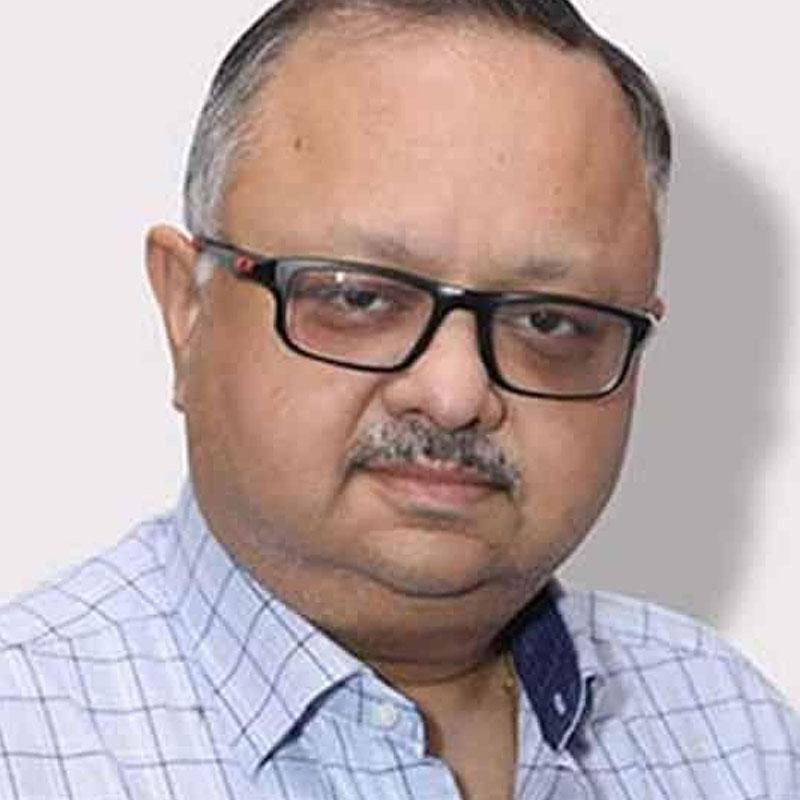
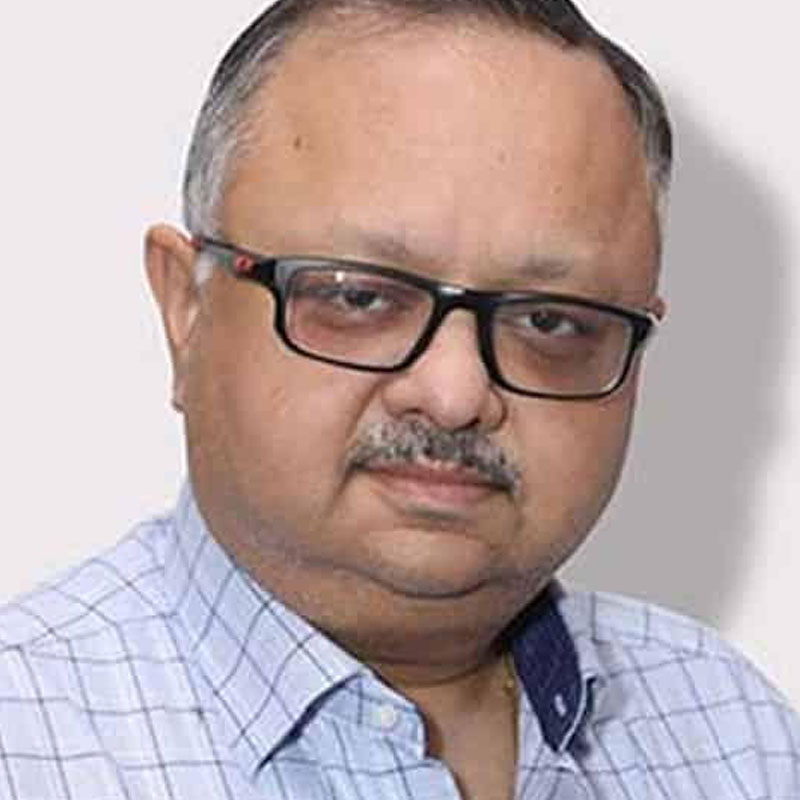
    As many as 15 arrests have been made in the case, the most prominent being former BARC CEO Partho Dasgupta, who later got bail after furnishing a bond of Rs two lakh. The arrested people were charged with cheating, criminal conspiracy, and destruction of evidence.

  • TRP Scam: Mumbai Police names Arnab Goswami as accused in chargesheet

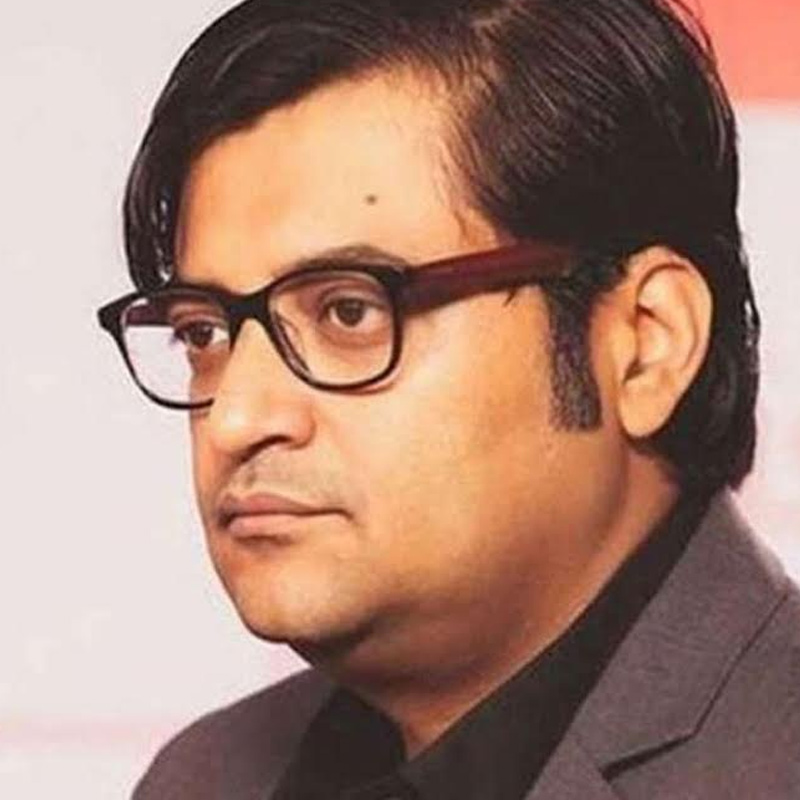
    New Delhi: Nine months after registering an FIR in the Television Rating Points (TRP) scam, the Mumbai Police on Tuesday submitted the chargesheet naming Republic TV’s editor-in-chief Arnab Goswami as an accused.

    Goswami and four others from ARG Outlier Media that owns Republic TV – COO Priya Mukherjee, Shivendu Mulelkar, and Shiva Sundaram – have been named as accused in the second supplementary chargesheet, reported Live Law. Till now, Goswami and others were listed as “suspects” by Mumbai Police in the ongoing investigation.

    The 1800 page supplementary charge sheet was submitted in the Esplanade Metropolitan Magistrate Court.

    An FIR in the case was registered in October, 2020 after former Mumbai Police Commissioner Param Bir Singh named the channel as being involved in the scam. The scam had come to light last year when BARC lodged a complaint with the Mumbai Police through Hansa Research Group, alleging that certain television channels were rigging TRP numbers by bribing households where BARC bar-o-meters were installed to tune into a particular channel throughout the day.

    As many as 15 arrests have been made in the case, the most prominent being former BARC CEO Partho Dasgupta, who later got bail after furnishing a bond of Rs two lakh. The arrested people were charged with cheating, criminal conspiracy, and destruction of evidence.

  • TRP scam: Complete probe against Republic TV within 12 weeks, HC to police

    TRP scam: Complete probe against Republic TV within 12 weeks, HC to police

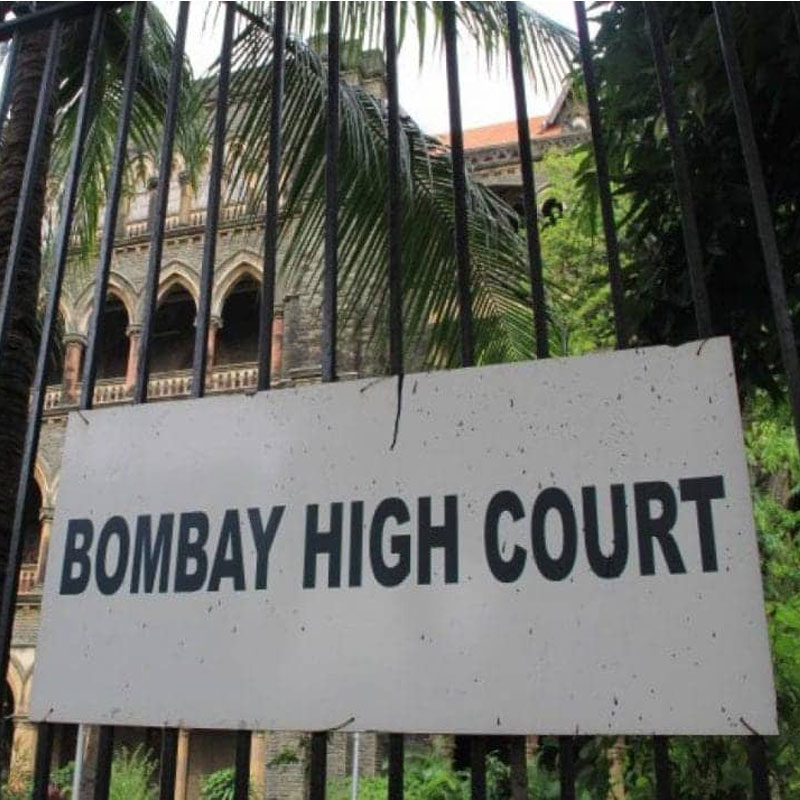
    New Delhi: In a major relief to Republic TV editor-in-chief Arnab Goswami, the Bombay high court on Wednesday directed the Mumbai police to give three days prior notice in case they intend to arrest him in the TRP scam case. Both Goswami and the channel are listed as “suspects” by Mumbai police in the ongoing investigation.

    The court was hearing the petition filed by ARG Outlier Media challenging criminal proceedings initiated against Republic TV channel and employees in connection with the TV ratings manipulation case. ARG Outlier Media had submitted that the law keepers in Mumbai had "falsely implicated" its channels and employees and the entire case arose out of an “unparalleled political vendetta”.

    Earlier during the hearing today, Republic TV’s counsel Ashok Mundargi submitted before the court that while other channels had also been named, the police were only interrogating Republic TV employees and the channel’s role in the case. He argued that the police had been investigating for nearly four months, but had been unable to get any evidence to book the channel or Goswami.

    Having heard the submissions from both sides, the bench directed that in case the investigating officer desires to summon the petitioner Goswami for inquiry/investigation, he shall give clear notice of three days (excluding holidays) to him. It also added that in case such notice/summons is received by Goswami, he shall appear and co-operate with the inquiry before the concerned investigating officer.

    The interim order also noted that in the course of investigation, if the probing officer has reason to believe that he or she needs to take coercive action against Goswami, clear notice of 72 hours should be given before taking such coercive action, to facilitate the petitioner to approach the competent forum for appropriate reliefs.

    The bench headed by justice SS Shinde also stated that the investigating agency can continue with further investigation, but ordered that the probe against Republic TV should be completed within 12 weeks. The directions come a few days after the court pulled up Mumbai police and asked if it intends to proceed with the investigation against the channel, considering it remains a ‘suspect’ on police records, even after filing two charge-sheets in connection with the case.

    The court also clarified that the investigation cannot be stayed right now since neither the channel nor Goswami are made accused yet and there is no clarity from the investigating agency on the status of whether they will be made accused or not.

    The TRP scam had come to light in October last year when BARC lodged a complaint with the Mumbai police through Hansa Research Group, alleging that certain television channels were rigging TRP numbers by bribing households where BARC bar-o-meters were installed to tune into a particular channel throughout the day. As many as 15 arrests have been made in the case, the most prominent being former BARC CEO Partho Dasgupta, who recently got bail after furnishing a bond of Rs 2 lakh. The arrested people were charged with cheating, criminal conspiracy, and destruction of evidence.

  • TRP scam: Have right to investigate a case for as long as needed, state tells HC

    TRP scam: Have right to investigate a case for as long as needed, state tells HC

    MUMBAI: The Bombay high court, hearing the petition by ARG Outlier and Republic TV editor-in-chief Arnab Goswami seeking quashing of the FIR and chargesheet in the TRP manipulation case, was informed by chief public prosecutor Deepak Thakare on Thursday that as there were no statutory restrictions, investigation would go on as long as needed.

    After the state’s assurance to the court that the interim relief against coercive action to Goswami and other employees of ARG Outlier would continue for two weeks, the court posted the hearing for Monday, as reported by the Hindustan Times.

    Responding to the Bombay high court’s query on why Republic TV editor Arnab Goswami and ARG Outlier Media were not named as accused in the TRP manipulation case, the state said it was not in a position to answer the question immediately, but it had the right to investigate a case for as long as required.

    The division bench of justice SS Shinde and justice Manish Pitale on Wednesday had asked the Mumbai police why Goswami had not been named as an accused in the FIR in the case, and had directed the prosecutor to inform it by the following day if they plan to do so.  

    The court, while accepting the state’s submission, said that rather than keeping the petitioners on tenterhooks, the police could call on them as per clause 12 of the charge sheet which mentions chalak and malak (operator and owner) by issuing them notice. Citing the example of another case (Dabholkar and Pansare), the bench said that it was not asking the state to give a time limit for completion of the investigations. However, it wanted to know from the special public prosecutor how much more time they would take to complete the probe.

     Senior counsel Ashok Mundargi for the petitioners drew the attention of the bench to the fact that the alleged crime that the channel was involved in was influencing cable operators to place the channel at the top of the bouquet which they offered to subscribers. The action, Mundargi said, even if constituted an offence, could be dealt with by TRAI. He added that the company and Goswami were willing to cooperate with the investigation provided they were told what their alleged offences were.

    Mundargi claimed that the police was being evasive by keeping the investigations open ended, and hence their apprehension of being arrested was not out of place. He also referred to the two chargesheets filed till now in the case and said the claims that the TRP ratings throughout the country were manipulated by rigging a few barometers in Mumbai was not possible.

    After hearing the submissions the bench observed, “In a democratic set up, there has to be reasonability and objectiveness. Hence what we want to know when will you complete the investigation…There is a concept of welfare state. The state and the investigating officer should stop at one stage. It cannot continue for years together.”

    The fake TRP scam came to light in October when ratings agency Broadcast Audience Research Council (BARC) filed a complaint through Hansa Research Group, alleging that certain television channels were rigging TRP numbers. Hansa is one of BARC’s vendors on engagement with panel homes or people’s meters. TRP, measured by recording viewership data at sample households, is crucial for attracting advertisers. According to the police, certain channels including Republic TV were gaming television ratings and were involved in distorting the system used by BARC to rate TV channels. Republic TV has denied wrongdoing.