Tag: TRP

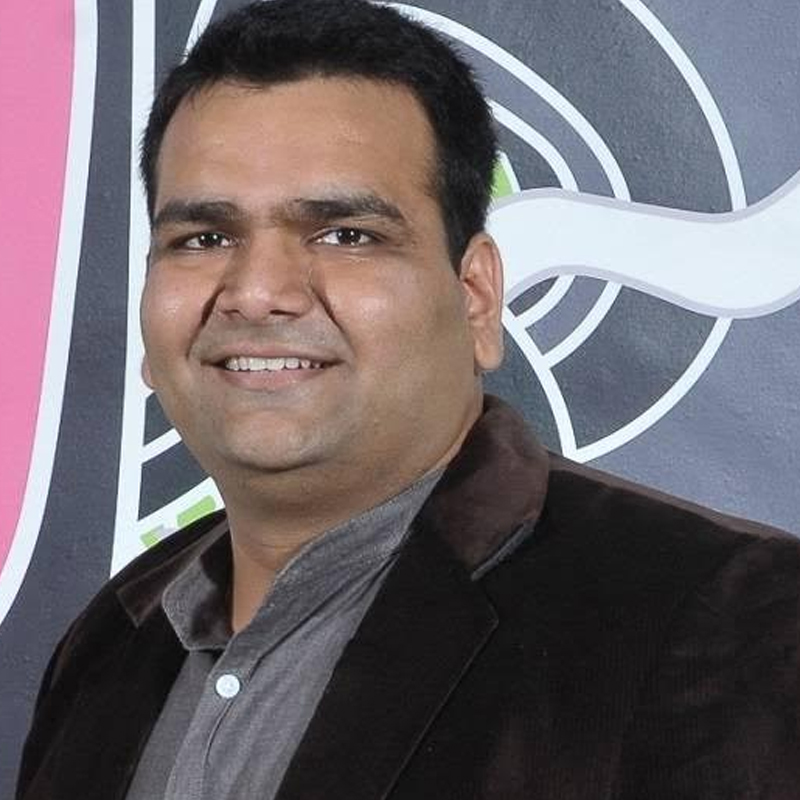
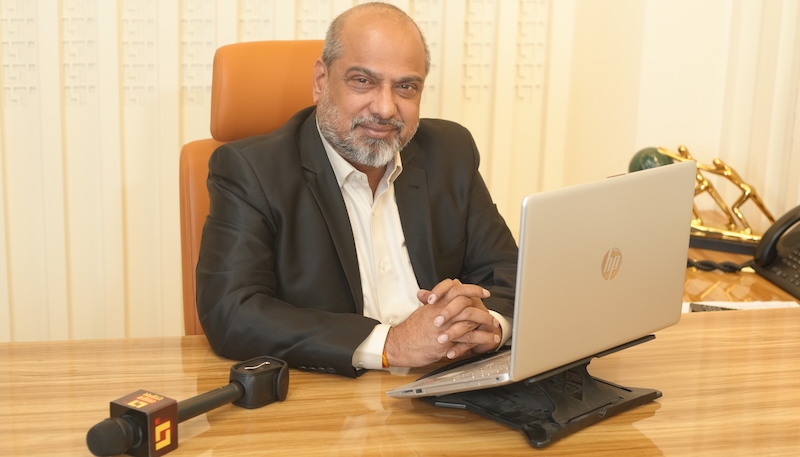
  • “News Must Serve People, Not Power: Credibility Is the True Currency of Journalism” — LiveTimes CEO  Dilip Singh

    “News Must Serve People, Not Power: Credibility Is the True Currency of Journalism” — LiveTimes CEO Dilip Singh

    MUMBAI: Dilip Singh is not your ordinary journo. With over 35 years in journalism and media leadership, Singh has consistently been ahead of the curve, embracing technology long before it became mainstream. From India’s first video magazines to the first private 24×7 satellite news channel, from building the country’s first private teleport to pioneering the head end in the sky  (HITS) for JainHits, Singh’s career has moved at a zippy pace. 
    Today, he is once again redefining news delivery with Live Times’ state-of-the-art multicast news hub in Noida—developed in collaboration with global tech giants to power LiveTimes, a digital First 24×7 satellite news channel across OTT, Fast, D2C, and new-age platforms.

    But Singh is not just a technocrat; he is a newsroom warrior. He has reported on terrorism, insurgencies, elections, parliamentary proceedings, and government affairs, all while building successful news organisations from the ground up. His stints at Mega Telelive and Jain TV cemented his reputation as a content architect and editorial leader before he struck out to create Live Times.

    At the heart of his legacy is an unwavering belief in journalistic integrity. Singh is vocal about “truth over TRP” and “public interest over vested interests,” pushing for meaningful debate, investigative journalism, and authentic storytelling in a media landscape often dominated by noise.

    Today, as Live Times expands its footprint from local to global, Dilip Singh says he remains a pioneer, a defender of truth, and a relentless innovator shaping the future of Indian news.

    Indiantelevision.com did an interaction with him to understand what’s keeping him and LiveTimes going on its first anniversary. Excerpts from the interaction.

    On how true democratization of news ensures diversity of voices, representation of real issues, and independence from political or corporate agendas,
    True democratisation of news means creating a space where every voice matters, not just those with power, money, or influence. It ensures that stories of ordinary citizens, marginalised communities, and real issues affecting the public take center stage. Independence from political or corporate agendas is the cornerstone of credibility—when newsrooms operate without fear or favor, they serve democracy in its purest form. Live Times is committed to this principle by giving equal representation and unbiased coverage, ensuring that news serves people, not power.

    On how Live Times is restoring trust through fact-based, unbiased journalism.
    In an age of sensationalism, Live Times has taken a strong stand for fact-based journalism. Our newsroom prioritizes verification over speed and accuracy over sensationalism. Every report goes through rigorous fact-checking before reaching the public. By consistently delivering unbiased news content, Live Times is rebuilding the trust that many feel traditional media has lost.

    On fighting misinformation and clickbait in the age of virality.
    Misinformation thrives in a world obsessed with speed and virality. Clickbait headlines may grab instant attention, but they erode trust over time. At Live Times, we have adopted a zero-tolerance policy toward fake news and misleading content. Every story is validated through multiple credible sources before publishing. We believe that while speed is important, responsibility is non-negotiable. Our editorial strategy focuses on depth, accuracy, and context rather than chasing meaningless trends.

    On how journalism is a responsibility to the public.
    Journalism is not just about breaking news; it’s a public service that comes with immense responsibility. Citizens rely on media for facts that shape their understanding of the world and influence critical decisions. Misreporting or bias can have severe consequences for society. Live Times views journalism as a duty to empower, not manipulate, the public. Our mission is to deliver news that informs, educates, and upholds democratic values, reaffirming journalism’s role as the fourth pillar of democracy.

    On sensationalism giving instant fame, while authenticity ensures lasting respect.
    Sensationalism is like a sugar rush—short-lived and damaging in the long run. While it may fetch quick ratings, it corrodes credibility. Authentic journalism, on the other hand, builds a foundation of trust and respect that endures. At Live Times, we choose authenticity over theatrics because we understand that citizens seek truth, not drama. Respect in journalism is earned through consistency, honesty, and transparency, and that’s the benchmark we aim to set.

    On balancing TRP and digital metrics with meaningful content.
    The pressure to chase TRP and engagement metrics often tempts newsrooms to prioritize sensational content over meaningful stories. Live Times refuses to compromise its core values for numbers. We believe that meaningful journalism can also drive engagement when delivered compellingly. By blending strong storytelling with factual accuracy, we ensure that our content resonates with viewers while maintaining editorial integrity. The goal is sustainable growth through credibility, not short-term spikes.

    On sensationalism vs credibility – How news channels can build credibility.
    Credibility cannot be manufactured overnight; it is earned over time through consistent honesty and transparency. News channels must make editorial integrity their north star, resisting the lure of sensational headlines for quick attention. Credibility is strengthened when journalists verify facts, acknowledge errors, and prioritize public interest over TRP games. Live Times leads by example, demonstrating that credibility and audience loyalty go hand in hand when trust is never compromised.

    On how clickbait journalism may bring short-lived attention, but credibility builds loyalty and brand.
    Clickbait may capture fleeting attention, but it undermines the very foundation of journalism—truth and integrity. Real journalism thrives on credibility because audiences rely on news not just for information, but for understanding and trust. Sensational headlines might drive quick clicks, but they erode confidence and damage the profession’s core purpose. Credibility, on the other hand, builds a loyal audience that values accuracy and depth over drama. In the long run, it’s not the loudest voice that prevails, but the most trusted one—and that is where responsible journalism creates lasting impact.

    On how Live Times is setting a benchmark in responsible journalism.
    Live Times prioritises truth over trends. We have built systems to fact-check rigorously, avoid unnecessary sensationalism, and provide context to every story. From investigative reports to citizen-centric coverage, our goal is to inform rather than inflame. By refusing to bow to political or commercial pressure, we are setting an example for the industry: credibility is the true currency of media, and we intend to preserve it.

  • Zee Media announces pulling out 14 new channels from Barc ratings

    Zee Media announces pulling out 14 new channels from Barc ratings

    Mumbai: On Saturday, the company announced its bold and definite decision to stop participating in the Broadcast Audience Research Council (Barc) ratings.

    In a statement, Zee Media noted, “This decision is a milestone for the whole news media industry. There are more than 5-8 million people associated with the news and broadcasting industry at large who get adversely impacted if incorrect reporting is published by the rating agencies, and it has been observed in the last few months that the news genre is being shown shrunk by the Barc (rating agency) to extend the benefit to GEC and other genres at large.”

    The company had raised its concerns multiple times to Barc and had questioned the whole structure and their operation transparency towards the news industry, which represents the media and is usually termed as the fourth pillar of democracy.

    “It is pertinent to point out that the rating agency has failed to rectify the news industry’s and Zee Media’s concerns. Barc has not given any white paper on the TRP scam until now and it’s a matter of great concern that who all was involved in this malpractice and if they are still part of the system (people/channels), what action has been taken against them?”, the company questioned.

    The statement went on to say that the biggest concern and challenge is that Barc has not provided or accepted any solution because they are still reporting for landing and barker pages, which benefits those who use them at the expense of those who do not subscribe to these unethical practices.

    Zee blamed that the news genre has been continuously shown to be shrinking since Barc data was restarted, while on the contrary, when the data was stopped, the genre was at its peak.

    “In spite of multiple meetings and conversations with Barc, the agency not only failed but has not been able to explain such a steep fall. Drastic change in viewership is hurting the news genre’s revenue/perception in the advertising fraternity,” noted the statement.

    The company also claimed that this was the biggest fall in the last 25–30 years of the industry, which is unprecedented and far from reality. Zee informed that they have repeatedly pointed out that a far larger sample (of metres) is needed if Barc is serious about ensuring a measurement process that cannot be rigged or manipulated, which they also failed to address until now.

    As per the statement, the company claimed that Zee News, digitally, is number 1 in ComScore as well as on YouTube, which is real data and cannot be manipulated. However, Barc ratings show the completely opposite and different picture. While the same content is placed on both platforms, it again points out the inconsistencies of reporting methodology.

    Barc’s new process of data reporting (four-week rolling average vis.a.vis earlier daily/weekly) is also a big concern for Zee Media. Due to this, the company believes the research has no meaning or outcome for the content producers and they cannot plan or validate content performance.

    “Barc is unable to answer or address any of our queries/questions/suggestions. As an industry body, we believe that due to the monopoly of rating agencies, the industry is suffering at large. Hence, Zee Media decided to move from the rating agency and we have asked them to stop reporting Zee Media’s all 14 channels with immediate effect,” concluded the statement.

  • Rampant cord cutting on cable continues: Chrome Data Study

    Rampant cord cutting on cable continues: Chrome Data Study

    Mumbai: The new findings from Chrome Data Analytics and Media’s July Subscriber Establishment Survey (SES) reported a significant drop in cable and satellite (C&S) homes, where the subscriber base has dropped from 201.2 million to 165.1 million households since 2019.

    This is based on a pan India ground survey that was done between January and July 2022; the sample included one out of every 175 households and included over 219 million TV households across the nation.

    Chrome DM surveys regularly, and it plays an important role in shaping our understanding of the changing TV landscape.

    Speaking on these findings, Chrome DM CEO and founder Pankaj Krishna said, “The reason for the decline is that the medium is changing. In television, in terms of content, it will keep booming, but the modes of consumption are changing so it is affecting Cable and Satellite (C&S) homes.”

    He further added, “This is the great race to entertainment, and OTT looks to be the reigning champion. I believe this trend will continue till ‘streaming’ is cemented as the new alternative in this turn of transition.”

    Pankaj believes with 5G coming in, we will witness a lot of disruption as well on how people consume content. “So the reason for the decline in cable and satellite homes is that the homes are wired through a cable and satellite connection but the overall consumption is increasing through the broadband internet (Connected TV) consumption. TV shows are increasing as well,” he added.

    Pay DTH and digital cable

    According to the Chrome Data Analytics and Media July report, pay DTH has a market share of nearly 38 per cent and digital cable is close to over 37 per cent.

    Digital cable experienced a significant decline of 18.5 per cent, whilst Pay DTH experienced a more restrained decline of 5.1 percent in the same findings. Pay DTH continues to have a significant presence in southern markets, where Andhra Pradesh reigned supreme with considerable share growth of 11.9 per cent.

     In terms of its total subscriber base, Tamizhaga Cable TV Communication (TCCL) was the leading gainer by a sizable margin of 33.2 per cent.

    Covid Impact

    The report stated that it would be an understatement to say that Covid-19 disturbed the market economy. The pandemic ushered in a new period of hesitation and unpredictability when any fleeting sense of assurance was purchased on the cheap.

    The markets fell, and the major players warned that the economy was on the verge of a devastating downturn.

    According to the report, the commercial sector was completely destroyed by the Covid-19 outbreak, and the cable and satellite industries were just one of the numerous victims.
     
    Before the first economic downturn, the profits appeared to be guaranteed, but after Covid, it served as a foreshadowing of what was to come. The numbers foretold the end of this once-dominant sector.

    The pandemic caused changes in social and cultural dynamics, which quickly followed as the economy began to slow down in the backdrop. The lockdowns forced a lot of migratory workers to return to their small rural villages, which caused a huge flood of subscribers to leave urban marketplaces, the report mentioned.

    The report found that to combat rising inflation and the economic slump, many people unsubscribed to curtail domestic expenditure, which includes keeping a TV set and paying for cable subscriptions.

    Freedish

    Freedish was the only one to experience a positive increase of 5.4 per cent while continuing to ascend north in rural areas.

    The other transmissions were impacted by the pandemic’s dwindling market share, but Freedish managed to hold onto its lead while the others did not.

    Again, this was largely the result of it being provided for free and having a substantial market share in rural India, which was untouched by the migrant issue. Odisha continued to be a top gainer, with its rural market growing by only about 16.8 per cent throughout this time.

    OTT impact

    Similar to this, urban residents were losing interest in cable TV and rapidly shifting their viewing preferences online. Many people have joined the growing number of cord-cutters and are now satisfying their watching needs online. Thus, the cord-cutting epidemic has ushered in a streaming-era digital revolution.

    The report stated that cable and satellite subscriptions have consistently decreased as viewers’ interest in traditional linear TV has declined, but a further rise in streaming usage is increasing.

    According to the survey, many cord-cutters still find this to be an appealing alternative because they don’t want to pay extra for the cable or digital subscriptions that are usually included with standard TV equipment.

  • Barc Wk36: CNN-News18 beats Republic TV and Times Now, ranks No 1

    Barc Wk36: CNN-News18 beats Republic TV and Times Now, ranks No 1

    Mumbai: CNN-News18 has strengthened its position as it has maintained its dominance over the past 21 weeks while claiming to be the top English-language news channel in the country.

    CNN-News18 has a market share of 33.4 per cent, which is 29 per cent higher than Republic TV in terms of viewership this week (TG: 15+ AB | Full Week: 0200-2600 hrs | Wk 36), according to Barc data (eight channels considered).

    Meanwhile, Republic TV is ranked second and Times Now is ranked third, with a 25.9 per cent and 22.5 per cent market share, respectively.

    When the Barc ratings resumed in March of this year, the channel opened at number one and has remained consistent in cementing its leadership position since then.

    [[{“fid”:”1095539″,”view_mode”:”default”,”fields”:{“format”:”default”,”alignment”:””,”field_file_image_alt_text[und][0][value]”:false,”field_file_image_title_text[und][0][value]”:false},”type”:”media”,”field_deltas”:{“1”:{“format”:”default”,”alignment”:””,”field_file_image_alt_text[und][0][value]”:false,”field_file_image_title_text[und][0][value]”:false}},”attributes”:{“class”:”media-element file-default”,”data-delta”:”1″}}]]

    The channel has been able to generate good traction for its content, even on digital. Its YouTube channel and social media handles are popular, with a high engagement rate.

    CNN-News18 also outperforms Republic TV and Times Now during prime time, with a 32.1 per cent market share between 1800 and 2400 hrs (AB15+ weekdays).

    CNN-News18 is part of the News18 Network, the country’s largest news network, which is watched by more than 70 million Indians each year across 21 news channels in 18 languages.

  • Barc week 34: TV9 bounce back in rating secures fourth slot

    Barc week 34: TV9 bounce back in rating secures fourth slot

    Mumbai: TV9 Bharatvarsh has grown profitably for seven weeks running; the top of the Hindi news market is expected to experience new turnover.

    According to the latest BARC data, TV9 Bharatvarsh has secured the fourth slot as per ratings for week 34. The channel has registered a sustained growth beginning in week 28.

    The Hindi news channel from TV9 Network saw a severe decline in Barc rolling viewership after maintaining leadership for 13 weeks following the rating reinstatement.

    As per reports, viewer interest has declined as a result of the Ukraine war. The editorial leadership at the channel was in flight mode, which contributed to the fall, it added.

    But the channel has made a strong comeback. Over the past seven weeks in a row, it has maintained an upward trend in terms of ratings.

    If the data trend over the past three weeks is any indicator, TV9 Bharatvarsh currently appears poised to reclaim the top spot.

    It maintained its top position for 13 weeks, establishing a new standard after the ratings were resumed early this year.

    After 13 weeks, the channel experienced a rapid continuous decline over a short period of time, and its market share among the top 14 national Hindi news channels dropped from over 17 per cent to 9 per cent.

    An editing strategy has been implemented to increase the ratings even more. The channel’s leadership wants to take the top spot after falling behind for a while.

  • Sun TV maintains lead; Star Utsav climbs to third spot in week 52: Barc

    Sun TV maintains lead; Star Utsav climbs to third spot in week 52: Barc

    Mumbai: Maintaining hold on the top position, Sun TV garnered 2826.17 (‘000s) AMA in Broadcast Audience Research Council (Barc) week 52 (25 December to 31 December 2021).  With weekly rating of 2625.44 AMA Star Plus was second. 

    Riding on weeks of success as the most-viewed channel in the Hindi heartland (Rajasthan, and UP/Uttarakhand), Star Utsav climbed up to the third spot in the last week of 2021. The channel clocked 2495.18 AMA.

    Star Maa slipped to the fourth position. It was followed by Star Vijay, Colors, Sony SAB, Zee TV, Zee Kannada and Dhinchaak.

    Sun TV led the mega cities at 473.13 (‘000s). Star Plus, Colors, Star Vijay and Sony SAB grabbed the remaining slots. The South market was also dominated by the Tamil major where it registered a weekly rating of 2817.58. Star Maa, Star Vijay, Zee Kannada and Zee Telugu were at the positions from two to five.

    Among the regional markets, Star Pravah was the most viewed channel in Maharashtra/Goa with 1457.32 AMA, Star Jalsha (1334.12) in West Bengal, Tarang (484.16) in Odisha, Zee Kannada (1576.18) in Karnataka, and Star Utsav in Rajasthan (262.2) as well as in UP/Uttarakhand (412.6).

  • Absence of TRPs has not impacted legacy media brands much: M K Anand

    Absence of TRPs has not impacted legacy media brands much: M K Anand

    Mumbai: Times Network did not follow the playbook when they launched the Hindi news channel Times Now Navbharat HD in August. The Hindi news genre is saturated with many channels but Times Network entered the HD space where the only incumbent was Aaj Tak HD, said Times Network MD and CEO M K Anand.

    “When we launched our channel in the HD news space, the only other channel was Aaj Tak HD which is a great comparison set to have,” said MK Anand at an event on Tuesday. “The opportunity to come top-down in the Hindi news category helped us to focus on the brand first and then go to the mass audience.”

    The broadcaster is planning to launch Times Now Navbharat SD channel on 1 January 2022 four months after the launch of the HD channel. The launch coincides with the upcoming UP Assembly elections 2022. About two months of additional revenue is generated by news broadcasters during an election year.

    “The cost of marketing and distribution is much cheaper during the elections and will help our SD channel achieve mass reach in a short period,” said Anand.

    Elaborating on the performance of the newly launched Times Now Navbharat HD, he said, “The channel has garnered 100+ million video views per month on its digital content. Our ad volumes are already at 55-60 per cent of Aaj Tak HD while maintaining the same ad rates. Maintaining the same ad rates has been very limiting for the ad sales team but they have still been able to reach such high ad volumes which is remarkable.”

    The network also launched Hindi business news channel ET Now Swadesh in August. While there have been no business news channel launches in several years in the language space, Anand stated that there was a huge gap for such content in the Hindi-speaking market.

    “After demonetisation and interest rates coming down, people began participating in mutual funds and financial markets. This has become a necessity if they want to beat inflation. Foreign institutional investors, sophisticated retail investors, and corporates are taking advantage of the great growth that the Indian stock market is seeing currently. But ordinary Indians are not. That’s why we launched ET Now Swadesh with the proposition ‘India is rising, come rise with us,” he said.

    Times Network MD and CEO also talked about how 60-70 per cent of the year’s revenue is coming from pre-booking anchor sponsors. “If we pushed our sales team for higher revenues then there is no chance of maintaining our ad rates and that would destroy the brand and the category competitors. Our rates are in proportion to where we stand compared to our competitors” he added.

    Anand observed that the absence of TRPs for the news genre has not affected legacy media brands as much as news channels without strong brand recognition. “This genre is bought on the basis of effective rate (ER) and not cost-per-rating-point (CPRP). The absence of ratings hurts broadcasters as they are not able to design their product, FPC, etc in the absence of data as to what is working and how they are performing vis-à-vis others in the genre.”

    The Broadcast Audience Research Council (Barc) India had suspended the Television Ratings Points (TRPs) for the news genre in October last year.

    The network is planning to distribute Times Now Navbharat on the free DTH platform DD Free Dish as and when MPEG slots become available. “We will bid for the MPEG slots if they become available,” noted Anand.  

    “At the Times group, we are obsessed with brand development. As you can see from the array of iconic brands that we have created over the years such as TOI, ET, TN, Femina, Filmfare, etc,” said Anand. “In our checklist of people, content, distribution, marketing and sales, we have been ultra-focussed on the brand right from day one.”

  • TRP scam: Former BARC COO Romil Ramgarhia arrested

    TRP scam: Former BARC COO Romil Ramgarhia arrested

    NEW DELHI: Mumbai police has taken in custody former Broadcast Audience Research Council (BARC) COO Romil Ramgarhia, marking the 14th arrest in the TRP manipulation case. He has been remanded in police custody till 19 Dec. 

    The development comes a day after Republic TV CEO Vikas Khanchandani was granted bail in the same case. 

    Ramgarhia had left BARC in July this year after a six-year-long stint with the council. 

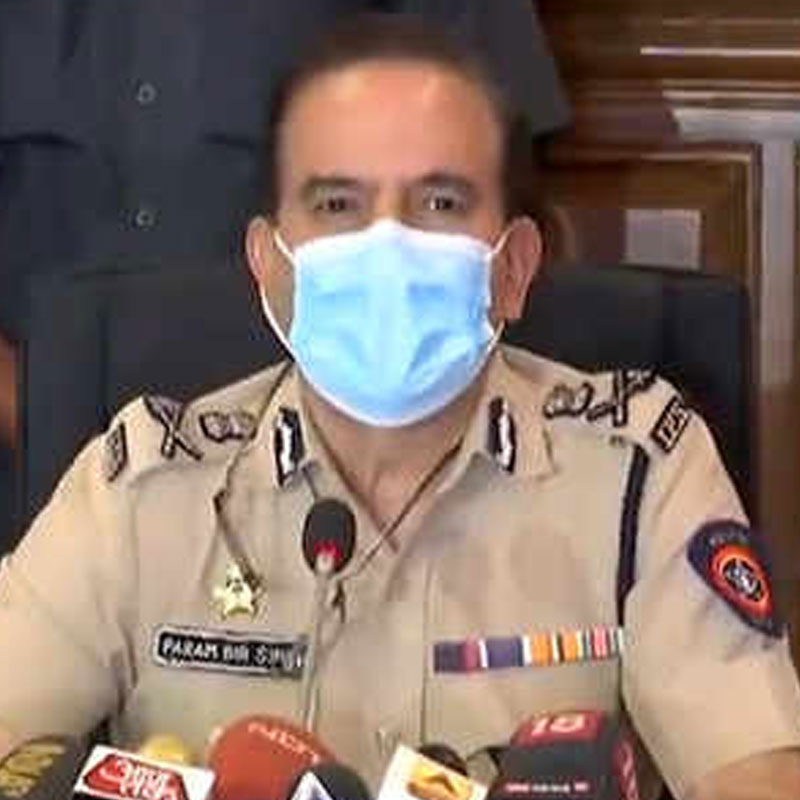
    The alleged scam was busted in October this year when Mumbai police commissioner Param Bir Singh held a press conference stating that three channels – Republic TV, Box Cinema, Fakt Marathi – were rigging ratings by paying people to keep the channels on even when they were not watching them. The TRP contracts were given to a company named Hansa Research Group Pvt Ltd. During the investigation, it was found that the ex-employees of Hansa were sharing the TRP data with the channels.

    Following this scandal coming to light, BARC suspended ratings of news channels for three months to "review its already stringent protocols and further augment them."

    Mumbai police has been hot on the heels of Republic TV’s top executives, while the channel and its editor-in-chief Arnab Goswami claim the case to be vindictive action against it.

    Earlier this month, Republic's chief operating officer Priya Mukherjee got anticipatory bail in connection with the TRP gaming case. On 5 December, the sessions court had granted bail to Republic TV's assistant vice president, Ghanshyam Singh, who was arrested in the same case on 10 November.

  • TRP scam: Mumbai Police files charge sheet

    TRP scam: Mumbai Police files charge sheet

    NEW DELHI: After a rigmarole of over one month, Mumbai Police has filed a charge sheet in the court, in the fake TRP scam, which was busted by the city police following a complaint by Hansa Research Group, a part of the Broadcast Audience Research Council (BARC). 

    So far, 12 arrests have been made by the crime brand in the case, including owners of Fakt Marathi, Box Cinema, and distribution head of Republic TV. 

    The fake TRP scam came to light last month when rating agency Broadcast Audience Research Council (BARC) filed a complaint through Hansa Research Group, alleging that certain television channels were rigging TRP numbers. Hansa had been tasked with installing barometers, which record viewership data at sample households.

    Mumbai Police Commissioner Param Bir Singh last month claimed that Republic TV and two Marathi channels Box Cinema and Fakt Marathi- were involved in manipulating TRPs.

    The Maharashtra government last month withdrew its "general consent" given to the Central Bureau of Investigation to probe cases in the state, in the wake of the CBI taking over a case registered by Uttar Pradesh Police against "unknown" channels and persons over alleged fudging of TRP.

    The Enforcement Directorate (ED) recently filed a money laundering complaint in the alleged TRP rigging scam being investigated by the Mumbai Police.

  • Bombay high court gives India today TV a clean chit

    Bombay high court gives India today TV a clean chit

    New Delhi: If anyone thought that the TRP manipulation row has ended, the news is that it is far from over.

    Last fortnight, the Bombay high court stayed an order passed by BARC disciplinary committee and directed BARC India not to take any coercive action against India Today group subject to a deposit of Rs 5 lakh with the court.

    In the latest development, as per a court order the Bombay high court has set aside the BARC disciplinary committee  order against India Today TV.  It has ordered that the Rs 5 lakh deposited with the court registrar be returned to the India Today group in full.

    A statement from the group said: “Over 45 years, we have painstakingly built on the principle of credible journalism. Story by story. Edition by edition. Platform by platform. We have created a deep legacy of credibility, excellence, trust and bipartisanship. We are widely recogised as the gold standard of journalism in the country. In a landscape marked by shrill polarities, we have only one political alignment: the Indian constitution. And, we follow it without fear or fervour.”

    We tried reaching BARC for comments but no one was available to respond.