Tag: Transportation

  • Different modes of transportation covered in marine insurance

    Different modes of transportation covered in marine insurance

    You shipped a batch of high-value machinery overseas. However, on its way, a high wave crashes into the vessel mid-ocean, damaging not only the hull but also soaking your entire consignment. A few days later, you despatch the consignment again, but this time, the truck carrying the cargo from the port meets with an accident, damaging your goods. Now, as your cargo suffers loss after loss, you must be wondering which insurance to purchase. The answer is marine insurance, which extends coverage to various transportation modes.

    Different modes of transportation under marine insurance

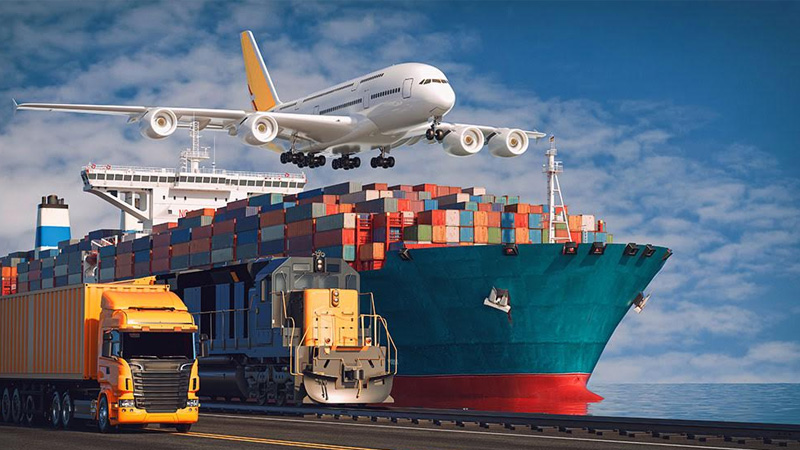
    The three different modes of transportation that marine insurance covers are: 

    Sea transportation 

    Sea transportation involves the movement of cargo via ships and vessels across oceans and seas. Businesses prefer sea routes for international shipments, particularly for goods such as electronics or commodities, due to their cost-effectiveness and suitability for transporting large quantities. Under marine insurance for sea transportation, the insurer covers the following:

    •    The policy covers hull damage from grounding. That means if the vessel accidentally hits the seashore and results in a dent or misalignment of the hull structure, the insurer will pay for repairs.

    •    If the insured ship collides with another vessel and damages the cargo, navigation system, or hull under the third-party liability coverage provision in the policy, the insurer will compensate for the loss.

    •    If a fire breaks out on board due to faulty wiring, combustion of goods, or machinery overheating, the insurer will compensate for the resultant loss to the engine room, deck, and adjacent containers. However, a claim will only be approved if the cause of the fire is found to be unintentional and without negligence.

    •    While delay alone is not covered, if it causes perishable goods to deteriorate and the delay is because of a covered peril, such as a collision or a storm, the insurer compensates for the loss.

    •    During trans-shipment, when the cargo is moved from one ship to another, and incidents like container slippage, damage due to misaligned lifts, or exposure of cargo to seawater occurs, the insurer will offer compensation.

    Air transportation 

    Air transportation involves using aircraft to move goods from one place to another. Although costly, it is ideal for time-sensitive deliveries where speed is crucial. It is also perfect for transporting perishable goods. The marine insurance for air transportation covers the following situations:

    •    The policy covers damage that occurs during the loading and unloading of goods from the aircraft, including cases involving broken conveyor belts, misaligned loaders, or mishandling by ground staff. However, it does not cover damage caused by poor packing of the cargo.

    •    If the aircraft carrying your shipment diverts mid-route due to technical or weather issues and the delay causes perishable cargo to spoil, the insurer will pay for the incurred losses. 

    •    The event of pilferage, also known as partial theft by ground staff or baggage handlers, is covered. To qualify for such claims, it is essential that the cargo be properly inspected and verified and that the results are documented.

    •    If the airline mistakenly ships your cargo to the wrong destination and it gets lost, stolen, or damaged in the process, marine insurance will compensate for the value of the goods.

    •    If cargo is stolen from secure airport storage areas or while awaiting customs clearance, the policy compensates the declared value of the shipment. The coverage extends to thefts occurring inside bonded terminals.

    Land transportation 

    Land transportation is ideal for delivering goods within domestic borders and involves vehicles such as trucks, lorries, vans, and even railways. If you have purchased marine single transit insurance for such transportation, the policy will cover the following:

    •    The policy covers damage to cargo during transit caused by collisions, overturns, and crashes. However, if the damage is intentional or the goods being transported are illegal, no compensation will be provided.

    •    If cargo is stolen or forcibly taken from the vehicle while in transit, the insurer compensates for the loss. This applies to both highway thefts and hijackings, where goods are forcibly removed.

    •    The policy covers accidental damage to goods during loading or unloading processes at warehouses, depots, or roadside stops. The coverage extends to damage caused by mishandling, dropping, or crushing incidents during the loading and unloading process.

    •    If the goods spoil or become worthless due to unavoidable delays, such as those caused by accidents or strikes that block transit routes, the insurer will cover the loss.

    •    The policy covers damage during inspections, customs checks, or government-authorised examinations en route.

    Conclusion

    Marine insurance covers sea, air, road, and land transport. The policy extends coverage to incidents like collisions, theft, fire, pilferage, and accidental damage during loading or delays. Whether your cargo travels across oceans, flies in the air or moves by road within the country, marine insurance ensures your goods are financially protected at every step of the journey. 
     

  • Greaves Cotton shifts gears with Parag Satpute as group CEO

    Greaves Cotton shifts gears with Parag Satpute as group CEO

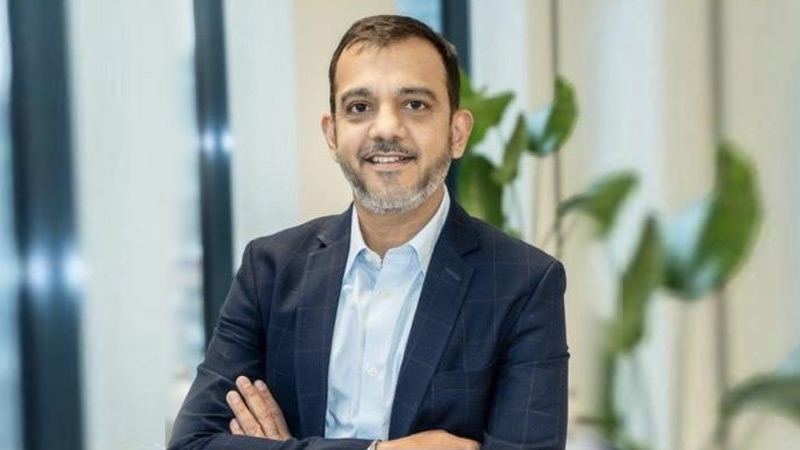
    MUMBAI: Greaves Cotton Ltd has turned a fresh chapter in its storied 165-year history, appointing Parag Satpute as group CEO and managing director. Satpute, a seasoned leader with a career spanning over three decades, steps into the driver’s seat of the engineering powerhouse, renowned for its pivotal role in powering India’s growth story across agriculture, transportation, and infrastructure.

    Under Satpute’s stewardship, Greaves Cotton is set for a transformation — evolving beyond its roots to become a fuel-agnostic mobility solutions provider. With a portfolio that spans diesel, petrol, CNG/LPG, electric, and even hydrogen-powered engines, the company is charging towards its vision of “Empowering Lives,” aiming to touch a billion lives by 2030.

    Satpute’s credentials speak for themselves. His leadership stints at Bridgestone and Sandvik have honed his expertise in change management and strategy, making him a perfect fit to lead Greaves Cotton through this next phase of growth. From leading Bridgestone Mobility Solutions in Amsterdam to overseeing Sandvik’s India operations, Satpute has a proven track record of steering industry giants through transformative journeys.

    As he steps up at Greaves Cotton, Satpute aims to build a digitally integrated ecosystem that connects consumers, business partners, and service providers across the mobility and power generation value chain — setting the stage for a new era of sustainable, inclusive growth.

  • Rajeev Singh appointed leader for transportation & mobility at Publicis Sapient

    Rajeev Singh appointed leader for transportation & mobility at Publicis Sapient

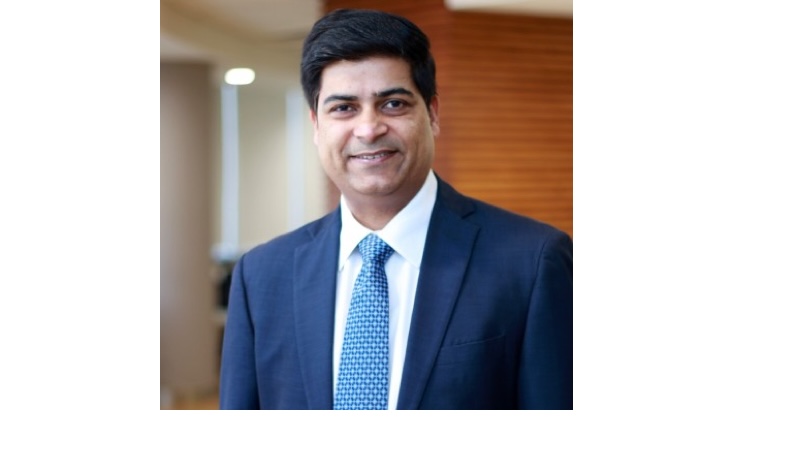
    MUMBAI: Rajeev Singh has announced his new role as leader for the transportation & mobility industry across EMEA and APAC at Publicis Sapient. In this position, he will focus on developing strategic visions and driving profitable growth within a rapidly transforming sector. 

    His leadership will focus on leveraging Publicis Sapient’s Speed capabilities—strategy, product, experience, engineering, and data & AI – to support clients’ digital transformation journeys.

    Rajeev brings extensive experience, having previously served as consumer industry leader at Deloitte Asia Pacific. With a strong background in automotive and consumer sectors, he is well-equipped to facilitate large-scale digital transformations and explore new business opportunities.

    He holds an MBA in operations management from SP Jain Institute of Management & Research and a bachelor’s degree in mechanical engineering from the College of Engineering, Pune.

    Excited about his new journey, Rajeev expressed gratitude for the support received during his transition and looks forward to leading innovation in tech-driven transportation solutions.

  • CS Tech AI: The right way to rebrand a technology solutions provider

    CS Tech AI: The right way to rebrand a technology solutions provider

    MUMBAI: You are a technology solutions provider. Your company and the solutions  you provide are well known to those involved in the automotive, architecture/engineering, transportation, telecom, water management, energy and geospatial engineering spaces.  And to top it all your company name is Ceinsys Tech. And most people find the name strange and difficult to pronounce. Especially in the domestic sector; internationally, things are good as the name looks fancy enough for a tech firm.

    So what you do?

    Do you run a campaign telling customers the right way to pronounce the company’s name?  Or do you  totally change your moniker? Or  do you take the tack that  Rs 250 crore plus turnover Ceinsys Tech India operations managing director  Kaushik Khona did?

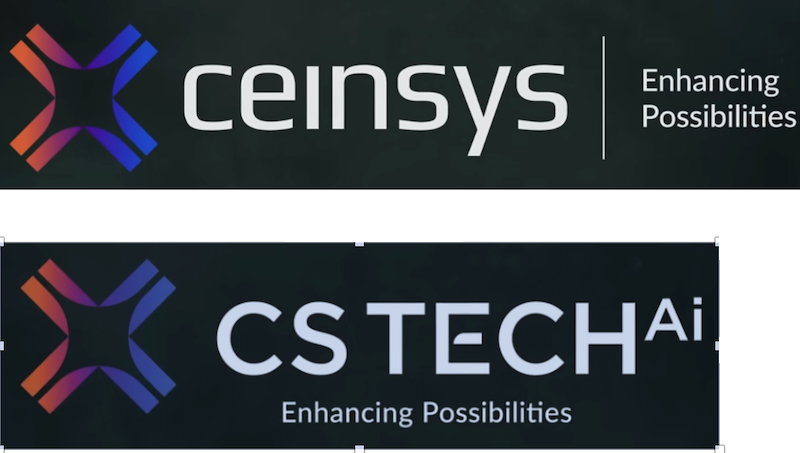
    What Kaushik and team did is they took the C and the S from the name and removed the redundant “einsy.”  So they were left with CS Tech. Well, to everyone that looked like a great change , but they also wanted to make the  brand look edgy and very design-driven  like many a tech company  takes the effort to look (remember Apple and its classy designer look in everything it does).

    In line with its  strategy to grow globally and be seen as a cutting edge global technology company which is adding dollops of artificial intelligence into its solutions and processes, a decision was taken to add the words AI next to the logo as a suffix.  This change, for the company,  marked a strategic shift to underscore its  focus on artificial intelligence (AI) and its role in driving technological innovation.

    “The move comes as Ceinsys positions itself for a future shaped by AI-driven solutions. The addition of “.ai” to the new rebranding reflects the company’s roadmap to integrate newer technologies including AI into the geospatial and technology solutions that enable smart infrastructure and utility development,” said the company.

    Hence the name of the company was changed to CS Tech AI.  

    Said Khona: “The rebranding of Ceinsys into CS Tech with inclusion of suffix ‘.ai’ is more than just a rebranding exercise—it represents our focus on the adoption of advanced technology into providing of solutions to our esteemed clients. AI is becoming the backbone of smart solutions, and this rebranding reinforces our commitment to innovation and relevance in a rapidly evolving landscape. It also allows us to communicate our vision more clearly and differentiate ourselves in the market.”

    A decision was taken to maintain the icon next to the logo as well as the tagline “Enhancing possibilities” as both only reinforced the high-tech look for the branding.  

    The corporate name Ceinsys Tech Ltd was maintained with  only the URL being changed to www. cstech.ai from www.ceinsys.com

  • EKA Mobility & GreenCell Mobility sign MoU to roll out 1000 electric buses

    EKA Mobility & GreenCell Mobility sign MoU to roll out 1000 electric buses

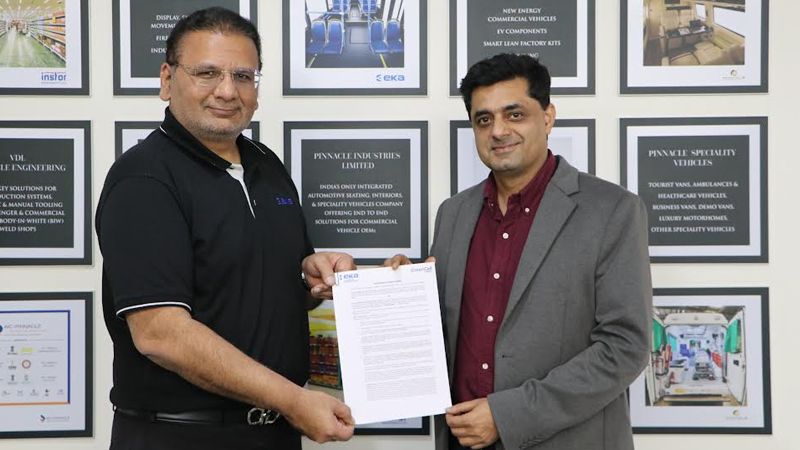
    Mumbai: EKA Mobility, an electric vehicles & technology company (with Mitsui Co., Ltd. & VDL Group as equity partners), and GreenCell Mobility, a player in the electric mass mobility space, announce the signing of a Memorandum of Understanding (MoU). Under this collaboration, EKA Mobility will supply GreenCell Mobility with 1000 intercity electric buses in 12-meter and 13.5-meter categories, in the next few years. EKA Mobility and GreenCell Mobility are committed to working closely together to drive positive change in the global automobile sector by producing industry leading electric buses to transform public transportation.

    EKA Mobility founder & chairman Dr. Sudhir Mehta, emphasized the strategic synergy, saying, “Our collaboration with GreenCell Mobility is strategically positioned to usher in a cleaner, more sustainable future through electric mass transportation. Public transportation, especially the intercity bus transportation is the primary mode of transport for more than 50 per cent of Indians. Electrification of public transportation will pave the way for cleaner air, quieter streets, more efficient, convenient, safer, and cost-effective travel for all. At EKA, we are committed to developing sustainable, environmentally conscious, and profitable products. By combining our expertise, we hope to set new standards in commercial electric mobility, contributing considerably to the nation’s sustainability objectives.”

    In response to the MoU signing, GreenCell Mobility, MD & CEO Devndra Chawla commented, “We are delighted to announce our collaboration with EKA Mobility, a leader in the electric vehicle domain. This partnership not only strengthens our position in the market but also significantly aligns with our long-term vision for sustainable mobility. At GreenCell mobility as market leaders, we are setting a new benchmark in the industry. Our combined efforts are poised to transform public transportation, offering a cleaner, more efficient, and environmentally friendly solution. This initiative is a significant stride towards our commitment to innovation and sustainability, and it underscores our dedication to a greener, more sustainable future. We are excited about the possibilities this partnership opens up and are committed to leading the charge in the evolution of electric mobility.”

    EKA Mobility shall be responsible for supply, sales, and service of these buses, along with delivering quality certification reports to ensure the highest standards in this collaborative endeavour. The supply of 1000 electric buses are expected to have a large and positive impact on our environment. The associated figures illustrate the potential benefits, estimating annual fuel cost savings of Rs 70 crores and the avoidance of 120 lakh gallons of diesel, which is equivalent to growing 15 lakh trees. Furthermore, an estimated 6 lakh individuals will benefit every day from an improved and sustainable public transit infrastructure. Overall, this initiative is expected to result in a projected saving of 32400 Tonnes of CO2 emissions, greatly contributing to the reduction of tailpipe emissions and building a cleaner, more sustainable future.

    This collaboration underscores major national and worldwide initiatives towards sustainability, recognizing the critical need for cleaner and more environmentally friendly transportation options. EKA Mobility and GreenCell Mobility’s collaborative initiatives represent an important step towards a greener India and a cleaner world.

    EKA Mobility is one of the commercial vehicle manufacturers approved under the Champion OEM Scheme & EV component manufacturing scheme of the Government of India’s Auto PLI policy. EKA is one of the only Indian companies offering end-to-end design, manufacturing & technology of electric new energy commercial vehicles from scratch in India. The company has set up a state-of-the-art research, development, engineering & innovation center in Pune, Maharashtra, and has significantly grown its order book, with more than 700 electric buses and more than 5000 electric light commercial vehicle orders in the pipeline. All these vehicles will be completely designed & manufactured in India, at EKA’s proposed & existing state-of-the-art manufacturing facilities in Madhya Pradesh and Maharashtra. In the last two years, the company has introduced electric city bus, staff carrier & school bus, 9-meter hydrogen fuel-cell electric bus, and is now all set to enter the last mile delivery with its range of e-LCVs designed & customized to suit Indian customers and businesses.

  • Wipro Global restructures media & telecom services wing

    Wipro Global restructures media & telecom services wing

    New Delhi, 8 November: Software major Wipro Global media and telecom Business head Ayan Mukerji has quit, leading to a shake-up.  No reasons were given for Mukherji’s departure as the head of the nearly $1 billion business. Mukherji played a major role in growing the various businesses across geographies during his 28 years of association with the outsourcing major.


    Wipro said the global media and telecom business will have a new structure with its sub-vertical communication services providers carved out into a separate strategic business unit (communications) with Vice President Anil Jain as its head. Jain will report to

    president and chief operating officer Abidali Neemuchwala.


    A  statement from the company said the media vertical has been merged into the retail, consumer goods, transportation and government (RCTG) business unit headed by Srini Palla to tap increasing synergies. The network equipment providers’ (NEP) vertical that works with customers such as Cisco has been merged into the manufacturing and hi-tech business headed by NS Bala to strengthen the company’s position in this space.


    Product engineering services business will also report to Neemuchwala who joined Wipro in March after leaving Tata Consultancy Services.


    In the second quarter of fiscal 2016, Wipro generated 13.4 percent revenue from Global Media & Telecom, 26.7 percent from Finance Solutions, 18.7 percent from Manufacturing & Hitech, 11.4 percent from Healthcare, Life Sciences & Services, 15.1 percent from Retail, Consumer Goods & Transportation and 14.7 percent from Energy, Natural Resources & Utilities. Its revenue rose 2.1 percent sequentially to $1,832 million in the second quarter ended 30 September.


    The Americas region contributed 53 percent revenue in Q2, Europe 25.2 percent, India & Middle East business 10.6 percent and APAC and Other Emerging Markets 11.2 percent.