Tag: transparency

  • TRAI tariff order: MSOs welcome its direction

    TRAI tariff order: MSOs welcome its direction

    NEW DELHI: At least two multisystem operators (MSOs) have welcomed the broad drift of the Telecom Regulatory Authority of India’s  (TRAI’s) Telecommunication (Broadcasting and Cable Services) (Eighth) (Addressable Systems) Tariff Order, 2016. The draft, released on Monday, seeks to bring in transparency to an otherwise disorganized sector.

    Indiantelevision.com spoke to a bunch of executives from broadcasting, cable TV,  and even the TRAI advisor on the proposed regulation. Most said it was too early to comment as they had not got the time to study it.

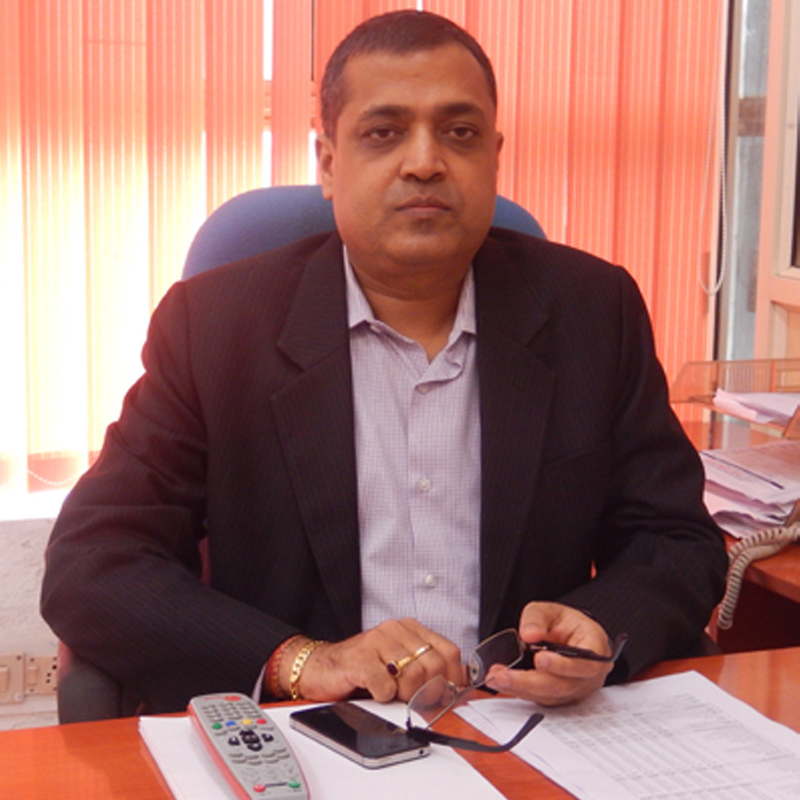
    S N Sharma, who surprised many earlier this year by returning to the national multi-system operator (MSO) DEN Networks as its  chief executive, said “It is a good draft; we welcome it. It brings a lot of transparency and ease, especially in the life of the consumer. We, as an MSO, look for a fair share of revenue, and hope to get the same.” He said he still had to study the draft in full, and would give further comments later.

    public://sn-sharma_0.jpg
    S.N.Sharma CEO,DEN Networks Limited

    Regional MSO Ortel Communications President & CEO  Bhibhu Prasad Rath, welcoming the draft, said “We believe that this draft regulation, if implemented, will bring in path-breaking changes to the industry structure with a lot of transparency and non-discrimination.”

    Rath added: “Currently, there is widespread discrimination in the content deals done by some broadcasters with various DPOs (distribution platform operators). The prices of the same channels or bouquet of channels vary widely from one DPO to another across the country. The new proposed regulation intends to bring in uniformity in the cost structure so that a level-playing field will be created while we all compete in the same market.”

    Rath also noted that the other major issue that the regulations attempts to address is the unbundling of channels. “Currently, many broadcasters offer around 80-90% discount / incentives on a bouquet deal as compared to the sum of a la carte prices of the respective channels. This, in my view, is unreasonable and intended to discourage a la carte subscription. The proposed regulation, by capping the bouquet discount at a maximum of 15%, will be a big relief to consumers who want to subscribe to channels on a la carte basis and will encourage DPOs to pass on to the benefit to consumers.”

    “Overall, this regulation, in addition to bringing in non-discriminatory and transparent practices in the industry, will go a long way in implementing digitization in its true spirit where “choice” is in the hands of the consumers,” he concluded.

    “I think it is a fabulous piece of proposed regulation,” says HITS consultant Castle Media director Vynsley Fernandes. “I think the TRAI has really outdone itself. I can only see the industry opening up and growing from hereon.”

    However, National Cable and Telecommunications head and founder of Home Cable Network of Delhi, Vikki Choudhry was the dissenting voice. Said he:  “This draft order is still not a cost-based tariff fixation, TRAI was supposed to conduct an exercise according to the Supreme Court and TDSAT orders. This draft tariff is completely anti-consumer. When the present tariff (rates) were coming down by 70 per cent, the regulator has further provisioned an increase of about 45-55 per cent for the Pay TV broadcasters.”

    (In May this year, TDSAT had said it thought TRAI “will be well advised to have a fresh look at the various tariff orders in a holistic manner and come out with a comprehensive tariff order in supersession of all the earlier tariff orders.”) Sunil Gupta, advisor to TRAI, responding to this allegation said: “We have protected the interests of the consumer: why should he pay even one extra rupee for a channel he does not want to watch? This draft brings the power of choice to the consumer’s hands. He can choose to have a lower cable TV bill or higher.”

    Gupta further added that the new category of  premium channels will allow broadcasters to offer specialized channels at higher MRPs – even Rs 100 – if the consumer wants them at this price, thus overall increasing the ARPUs of all those in the value chain.

    Gupta also said that the interconnection paper for local cable operators and multi-system operators would come out soon. The entire industry value chain should read this and understand we have protected everyone’s interests – the cable TV operators, MSOs, broadcasters, customers. The  ARPUs of the entire industry would go up in the coming months, he said.

    Also read:

    Tariff Hike Case: SC rejects appeal challenging TDSAT order; asks TRAI to out new tariff
     

  • LCOs demand access to SMS from MSOs

    LCOs demand access to SMS from MSOs

    KOLKATA: The process of shifting from analogue to digital feed is not without its share of problems; a key issue being the resultant tug-of-war between local cable operators (LCOs) and multi system operators (MSOs) over access to the subscriber management system (SMS).

    The Digital Addressable Cable TV Systems (DAS) requires MSOs to establish a subscriber management system (SMS), where details of all subscribers, along with their choice of services including channels and bouquets, are maintained.

    While cable and entertainment analysts feel, “This brings in addressability and consequently, complete transparency in the whole system,” LCOs have a different take on the matter. They are of the opinion that once MSOs start billing consumers directly, they may end up losing control over their hard-won subscribers. Hence, they’re now asking MSOs to allow them access to the SMS to avoid such an eventuality.

    Says Rajiv Sharma, lead analyst (telecom and media), HSBC Securities: “LCOs are worried about losing control over their subscribers if MSOs bill directly. They are of the view that MSOs should allow LCOs access to subscriber management systems, which are similar to what is being done for airline ticketing.”

    A city-based cable op told indiantelevision.com, on condition of anonymity, that he had worked very hard for the last 20 years and it would be very unprofessional if his business and database were to go out of his hand and to the MSO whom he would then have to depend on totally.

    Meanwhile, an MSO questioned as to how he could allow LCOs access to the SMS which his company had spent a few crores on. Typically, it’s the MSOs that invest in infrastructure including network, encryption, ERP, call centers and SMS.

    Director Manthan Broadband Services pointed out the benefits of SMS as enabling subscribers exercise their choice of services and budget their bills accordingly. “It also helps us in managing their accounting and billing of the services rendered effectively in the long term,” said he.

    Cable analyst Namit Dave suggested that MSOs and LCOs should work hand-in-hand for mutual benefit. While Sharma pointed out that the battle between MSOs and LCOs was sending out wrong signals to the investor community. “Gross billing remains a deterrent for MSOs and we anticipate some delay as we don’t expect clarity on the entertainment tax issue anytime soon,” he said. News is Hathway has suggested it expects to move to gross billing not before phase I i.e. the fourth quarter of the current fiscal.

  • I&B minister wants the industry to define self-regulation levels

    I&B minister wants the industry to define self-regulation levels

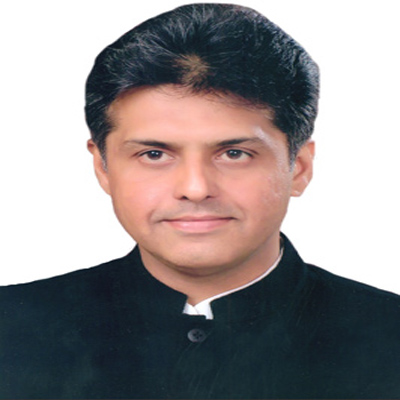
    NEW DELHI: Information and Broadcasting minister Manish Tewari has said the process of mainstreaming self-regulation as a statutory mechanism should be led by the industry and not the government.


    Speaking at a panel discussion on Media Regulation: Is status quo the option?, the minister emphasised that the government’s approach towards the media was an ‘essay in persuasion not regulation’.


    The stakeholders within the industry would have to define the equilibrium levels to ensure that the paradigm of transparency, fairness, sobriety and avoidance of sensationalism becomes the key driver of the national discourse in the media space, Tewari stated.


    He said digitisation as a process could be leveraged to augment sample sizes by re-engineering every Set Top box to function as a virtual people’s meter. Out of the box innovation and creative thinking by media entrepreneurs could surmount the current challenges by a technological leap that could transform the dynamics at the back end of the media sector. Industry could then utilise the data and develop business models that were transparent and workable.


    This process would ensure an alternative to the ongoing conflict surrounding TAM / TRP that the Broadcasting industry held responsible for much of its woes. He emphasised that the way forward was also to fast track Broadcasting Audience Research Council (BARC) as an industry led body that would provide a reliable measurement of popular viewership patterns and help broadcasters overcome corrosive narratives.


    The minister also referred to the growing importance of the new media space which had revolutionised the media landscape. The growth of the internet had led to a situation where there could be a conflict between the physical and virtual civilisation. It was important to comprehend the fact that the power of expression and dissemination through the internet had added a new dimension to innovations in information dissemination. While the opening up of the virtual space had led to democratization of the information paradigm, it had also led to technology becoming a leveller.


    Tewari added that these developments could also lead to a situation where one could also face “Balkanization of the Internet” if agreed rules of international engagement did not emerge as a binding international compact that encompassed states and other entities who controlled the underlying hardware. This situation needed to be avoided at all costs so as to ensure that no artificial divisions are created in the World Wide Web on ideological entities and Westphalian lines.


    The minister also discussed critical paradoxes within the media space that would need to be reconciled. These included proliferation of numerous mediums of communication as qua a growing intolerance to an opposite viewpoint, right to a fair trial qua trial by the media, presence of flawed revenue models qua questionable methods of revenue augmentation, TRP qua the truth and the raging debate between self regulation and statutory regulation.