Tag: Transformation

  • GoaFest 2025: Future Tense Rishad Tobaccowla urges leaders to rewrite the rules before AI does  

    GoaFest 2025: Future Tense Rishad Tobaccowla urges leaders to rewrite the rules before AI does  

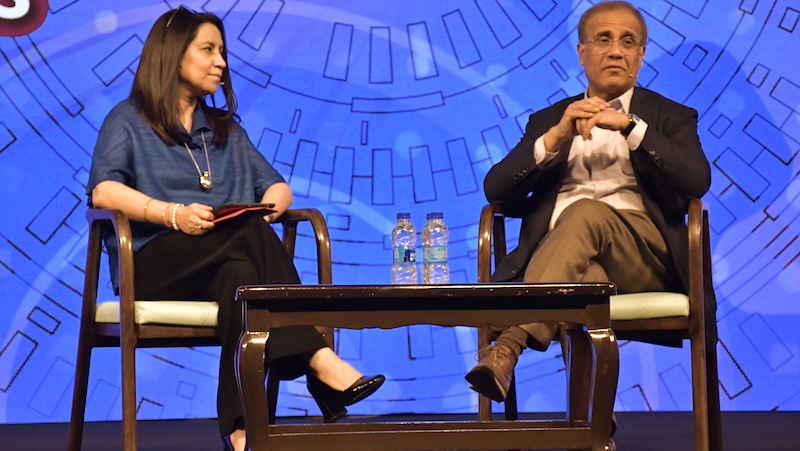
    GOA: Change sucks, but irrelevance sucks harder. With that disarming one-liner, author and Publicis Groupe senior advisor Rishad Tobaccowala had the GoaFest 2025 crowd hooked. In a sharp and soul-searching fireside chat with Publicis Groupe CEO of  South Asia Anupriya Acharya Tobaccowala offered a crash course in survival and soul in an era increasingly dominated by algorithms, automation and AI anxieties.

    Tobaccowala’s core thesis was clear: AI won’t replace you, someone using AI better will. But the real danger isn’t the technology, it’s complacency. “Too many companies are trying to use AI to make their broken models slightly more efficient,” he warned. “You don’t just want faster printing presses you want a new way to communicate entirely.”

    To prove the point, he spotlighted the New York Times, a legacy media brand that reinvented itself from a print-first paper to a digital-first platform with 12 online subscribers for every print one. Today, 35 per cent of its revenue comes not from news, but from games, recipes, and other lifestyle content. “They don’t call themselves a newspaper anymore, they’re an entertainment brand with a news vertical,” he quipped.

    Referencing Andy Grove’s classic Only the Paranoid Survive, Tobaccowala argued that the age of paranoia has passed. In its place? Dual thinking. “Successful companies must run two business models at once, one for today, and one for tomorrow,” he said.

    His advice: Spend five to 10 per cent of your money and 20–25 per cent of your best talent building the future. “Don’t assign tomorrow’s strategy to the person you don’t know what to do with,” he warned. “That’s like watering your grandfather’s grave instead of feeding your kids.”

    “I worked 37 years in one company, lived 45 years in the same city, and met my wife 53 years ago,” he said. “So when I say I hate change, I mean it. But irrelevance? That’s worse.”

    He dismantled the sugar-coated corporate approach to transformation. “Telling people change is good is a lie. It’s painful. It makes you look stupid. It scrapes your knees like learning to ride a bike.” What works instead? A three-part formula: incentives, training, and personal relevance. “Tell employees what’s in it for them, not just what’s in it for the company,” he urged.

    Tobaccowala didn’t mince words about leadership either. “We’ve entered the age of de-bossi-fication. Nobody wants a boss. They want a leader.”

    Monitoring, allocating, and measuring won’t cut it anymore. Today’s leaders must inspire, create, and mentor. If you’re not spending at least 50 per cent of your time leading instead of managing, he warned, “you’ll be retired by machines or Gen Z sooner than you think.”

    Tobaccowala also had sharp advice for younger professionals: “You’re in a 50-year career. Stop thinking in 6-month cycles.” He urged them to chase growth over glam, pick the right boss, and resist jumping ship just because the grass looks greener. “The grass is greener because it’s fertilised with… well, you know what,” he joked.

    Despite all the AI hype, Tobaccowala believes the machines may help us rediscover what makes us human. In 2023, the most popular AI tools weren’t just about productivity, they were about relationships, purpose, and self-growth.

    “AI will amplify your creativity, but it can’t replace your conviction,” he said. “It’s not about resisting AI. It’s about partnering with it without outsourcing your soul.”

    As he signed off, Tobaccowala reminded the audience of something many forget. “India is not the future. It is the present. Publicis gets 65 per cent of its workforce and a growing chunk of its global revenue from India, China, and the US,” he noted. “You’re not a footnote. You’re a headline.”

    He ended with a final, cheeky mic-drop about his book’s global release: “My publisher didn’t want to launch in India first. Said it wouldn’t sell. Now India is the only place it’s sold out twice.”

  • AI to AR: Key trends driving the next era of branding in India

    AI to AR: Key trends driving the next era of branding in India

    MUMBAI: In an era where digital transformation is reshaping every aspect of business, marketing, and branding are undergoing revolutionary changes. With India’s digital consumer base projected to reach 900 million by 2025, the convergence of technology, changing consumer behaviours, and evolving market dynamics are creating new paradigms that will define the future of how brands connect with their audiences.

    The rise of hyper-personalisation through AI

    Gone are the days when segmentation meant dividing consumers into broad demographic groups. Today’s marketing is moving towards individual-level personalisation, powered by sophisticated AI algorithms. According to recent studies, 76 per cent of consumers are more likely to purchase from brands that personalise their experiences.

    Indian success stories

    – Myntra’s “Style Squad” AI engine analyses over 15 million fashion products to provide personalised recommendations, resulting in a 25 per cent increase in customer engagement
    – HDFC Bank’s EVA AI assistant handles over 50,000 customer queries daily with a 95 per cent accuracy rate
    – Swiggy’s AI algorithm processes over 40 data points per customer to customise food recommendations, leading to a 30 per cent increase in order values

    Immersive technologies reshaping brand experiences

    The metaverse and augmented reality (AR) are no longer futuristic concepts but present-day marketing tools. The global AR market in retail is expected to reach $45 billion by 2025, with India showing one of the fastest adoption rates.

    Notable Indian implementations

    – CaratLane’s “Perfect Look” AR feature has increased online conversion rates by 40 per cent
    – Lenskart’s AR try-on technology serves over 10 million virtual trials monthly
    – IKEA’s AR app in India has reduced furniture returns by 35 per cent

    – Flipkart’s “Camera, Your Story” AR feature enables users to virtually place furniture in their homes, with 30 per cent of furniture buyers now using this feature

    Purpose-driven branding takes centre stage

    Modern consumers, particularly Gen Z and millennials, are increasingly aligning with brands that demonstrate genuine commitment to social and environmental causes. Research shows that 88 per cent of Indian consumers want brands to help them make a positive difference.

    Indian brand initiatives

    – Tata Tea’s “Jaago Re” campaign increased brand loyalty by 45 per cent while raising social awareness
    – Hindustan Unilever’s “Water Conservation Program” saved over 900 billion litres of water while strengthening brand trust
    – Patagonia India’s “Repair, Reuse, Recycle” initiative has led to a 60 per cent increase in brand advocacy among young consumers

    Emerging technologies transforming marketing

    Blockchain in marketing

    Supply chain transparency: ITC’s “Know Your Product” blockchain initiative allows customers to trace product origins
    Digital assets: Tata Motors’ NFT collection generated ₹5.2 crore in revenue while building brand engagement
    Loyalty programs: Mahindra’s blockchain-based rewards program has increased customer retention by 40 per cent

    Internet of things (IoT) integration

    Smart packaging: Dabur’s IoT-enabled packages track freshness and usage patterns
    Retail analytics: Reliance Retail’s IoT sensors analyse customer movement patterns, optimising store layouts
    Connected experiences: Asian Paints’ IoT-enabled colour visualisation system has increased conversion rates by 35 per cent

    Advanced data analytics and predictive marketing

    The future of marketing relies heavily on predictive analytics and real-time data processing. Indian brands are investing heavily in these technologies:

    Implementation examples

    – Marico’s predictive demand forecasting has reduced inventory costs by 25 per cent
    – BigBasket’s real-time analytics engine processes over 15 million data points daily to optimize delivery routes and inventory
    – PepsiCo India’s AI-driven market analysis has improved campaign ROI by 45 per cent

    Voice and visual search optimization

    Voice commerce in India is expected to reach $40 billion by 2025, with 82 per cent of smartphone users regularly using voice search features.

    Market leaders

    – Amazon India reports 3x growth in voice shopping queries in regional languages
    – Google Lens processes over 50 million visual searches daily in India
    – Flipkart’s visual search feature has improved product discovery by 50 per cent

    Sustainability and circular economy

    Environmental consciousness is driving major changes in brand strategies. Studies show that 79 per cent of Indian consumers prefer sustainable brands.

    Brand initiatives

    – Hindustan Unilever’s plastic waste collection program has recycled over 100,000 tons of plastic
    – Flipkart’s sustainable packaging initiative has reduced plastic usage by 50 per cent
    – Godrej’s circular economy program has created a new market for recycled products

    The integration of online and offline experiences

    Omnichannel presence is becoming crucial, with 74 per cent of Indian consumers using multiple channels before making a purchase.

    Success stories

    – Reliance Digital’s integrated shopping experience has increased cross-channel sales by 45 per cent
    – DMart’s hybrid model has shown 60 per cent higher customer retention compared to single-channel shoppers
    – Tata CLiQ’s phygital presence has reduced customer acquisition costs by 30 per cent

    Social commerce evolution

    Social commerce in India is projected to reach $70 billion by 2025, revolutionising how brands engage with consumers.

    Platform innovation

    – Meesho’s social commerce model has enabled over 15 million resellers
    – Instagram Shopping has seen a 120 per cent growth in Indian merchant adoption
    – WhatsApp Business’s shopping feature processes over 1 million orders daily

    The future of marketing and branding is being shaped by technological advancement, changing consumer values, and evolving market dynamics. India’s unique position as a rapidly digitalising economy with a strong traditional retail presence creates opportunities for innovative marketing approaches.

    For brands in India and globally, success lies in leveraging these trends while maintaining authentic connections with consumers. The most successful brands will be those that can:

    – Implement technology thoughtfully and purposefully
    – Maintain strong ethical and sustainable practices
    – Create seamless omnichannel experiences
    – Build genuine connections with their audience through personalization and purpose

    As we move forward, the key to success will be balancing innovation with authenticity, technology with human touch, and global trends with local relevance.

    (This article has been authored by Thinkin’ Birds CEO Bhavik Mehta. The views expressed here are his own and indiantelevision.com need not subscribe to them)

  • Singapore is a strategic location for our expansion – Prateek Kumar

    Singapore is a strategic location for our expansion – Prateek Kumar

    Mumbai: Visionary entrepreneurship is not just vital for establishing a business setup but making a strong position in the eyes of the clientele. Yield goodwill is a long-term process with anticipation of the right marketing mix. A proactive approach is not just eye-catching but astonishes sustainability in the brand market. On different parameters about technology and transformation, we discussed with NeoNiche founder and CEO Prateek Kumar to know his perspective.

    Indiantelevision.com exclusively speaks with Prateek Kumar on data security, data integration, communication methods, marketing mix, differential clientele services in a dynamic environment whether it is AI, technology, metaverse, future prediction, and his visions.

    Here are excerpts –

    On ISO certification in 360 degree marketing –

    NeoNiche is not only ISO Certified in Data Security and Quality assurance but also is SOC2 and GDPR Compliant. All kinds of certifications hold significant importance for a “Full Services” and “Marketing Product Company” as they foster quality, credibility, efficiency, and responsibility. It aligns with the demands of a dynamic and interconnected business environment, contributing to the overall success and sustainability of a company and the Customers it serves.

    On differential services in NeoNiche agency –

    NeoNiche is “Digital First: full services agency where we merge creativity with technology. Our data-driven insights, A Partnership network across major global locations, Our International Branch in Singapore, and our extensive domestic network across India help us increase our “Speed to Market”

    NeoNiche is known for offering a wide array of services beyond traditional Marketing offerings, Marketing Automation, Managed Marketing Services, Outsourced CMO, Influencer Marketing, Performance Marketing, Data-driven insights, Content Studio, Experiential Marketing, and consultancy services. This diversified portfolio allows NeoNiche to provide comprehensive solutions to clients, integrating various aspects of marketing and communication strategies. We don’t believe in the “One Size Fits All” philosophy and have different offerings for Large B2B enterprises, SMEs, and startups.

    NeoNiche places importance on building strong and enduring relationships with its clients. A client-centric approach involves understanding the unique needs of each client and tailoring solutions to meet their specific goals. This focus on client satisfaction and partnership can set WPP apart in the competitive landscape.

    On AI in  advertising and its inclusive role of transformation in digital agencies –

    Yes, AI has a transformative impact on Marketing agencies’ digital services, particularly in the realm of inclusive advertising. Including Targeted Advertising, Content Creation and Optimisation, Language Translation and localization, Better Customer Insights and Analytics Chatbots for Customer Interaction, and Inclusive Representation as AI image analytics can align products with gender, ethnicity, and demographics. By leveraging AI technologies, agencies can create more personalised, representative, and effective advertising campaigns that resonate with a broad and diverse audience.

    On NeoNiche Strategical expansion in the Singapore Market –

    Different markets have different characteristics even in India different States react to a particular Marketing Stimulus in different ways our Growth and metamorphosis from “Marketing services Organization” to “Marketing Product and Services organization” as NeoNiche is catering to Enterprise in B2B marketing in a huge way be it our offerings like “NeoFlo”, “ Nsync”, “B2B Digital Marketing Services”, “Community Building”, “Managed Marketing Services” or more traditional “Experiential Marketing Services”

    Singapore is a strategic location for our expansion as Its proximity to major markets in the region, such as China, India, and other Southeast Asian countries, can provide logistical advantages for businesses. due to its dynamic business environment, strong infrastructure, and pro-business government policies. The city-state’s reputation as a regional hub for technology, finance, and innovation aligns perfectly with our growing clientele and our vision for future growth. Additionally, Singapore’s diverse talent pool and multicultural society provide us with the resources and expertise to effectively serve our clients across the Asia-Pacific and ANZ regions.

    On strike balance with affordability and quality including ROI –

    Balancing affordability and quality is a common challenge in any industry, but it’s crucial for success. Since we are no longer just an “Experiential Marketing” or an “Event Company” as we have long moved to a space where we have moved from a “Marketing services Organization” to a “Marketing Product and Services organization” this gives us a “Full Services Capability”; Our Products and Solutions provide deep insights and generates ROI on Every project that we undertake.

    On a journey to become an entrepreneur –

    NeoNiche was started with the single dream of bridging the gap between the marketers and the understanding of his/her hired agency. We started with the single aim to reinforce the relationship between the company & customers, brand & buyers, and product & prospects, by creating experiences, delivered in real-time across multiple platforms of Social, Digital, and on-ground Event experiences. While We embarked on this journey with our team, we realised this was only possible if we truly cared about people who mattered to us, our team, families, Our Suppliers, our customers, the society that we live in, and the law of the land.

    On generalisation of creativity-focused business –

    The proliferation of digital marketing agencies worldwide does indicate a significant trend in the business landscape. While the widespread presence of these agencies may suggest a generalisation of creativity-focused businesses, it’s important to recognise that not all digital marketing agencies operate in the same way or prioritise creativity equally.

    Digital marketing agencies serve a variety of purposes, and their services can range from basic advertising and social media management to more specialised areas like search engine optimization (SEO), content marketing, and data analytics. The level of creativity involved often depends on the specific goals of the client and the nature of the services provided. Also, consolidation always happens in any industry, remember the Dotcom boom of the early 2000s only the one that creates real value for customers to thrive and grow.

    On anticipation of industry performance in upcoming financial years –

    The pace of technological innovation is expected to continue, with advancements in areas like artificial intelligence, quantum computing, 5G, and the Internet of Things (IoT). Industries that effectively integrate and leverage these technologies may experience significant growth. As environmental concerns continue to rise, there’s a growing emphasis on sustainable practices. Industries involved in renewable energy, eco-friendly products, and sustainable technologies may see increased demand. Economic landscapes can impact industries differently. Global economic trends, trade policies, and geopolitical events may influence the growth and development of various sectors including Marketing.

    With the increasing digitisation of businesses and daily life, the importance of cybersecurity is expected to grow. Industries dealing with cybersecurity solutions and services may experience increased demand.

    Automation and AI adoption are likely to increase across industries, impacting jobs and processes. Industries that effectively integrate these technologies may enhance efficiency and productivity. While this is my guess it is important to note that unexpected events, such as global crises, technological breakthroughs, regulatory changes, or geopolitical shifts, can significantly alter industry trajectories.

    On the suitability of metaverse in the Indian continent –

    The metaverse offers various economic and business opportunities, ranging from virtual commerce to immersive experiences. Indian businesses could explore these opportunities, especially in sectors like gaming, e-commerce, education, and entertainment. It is important to note that the success of the metaverse relies heavily on robust digital infrastructure and widespread internet connectivity. India has been making strides in improving digital infrastructure, including the expansion of broadband access. The continued growth in this area would positively influence the adoption and success of metaverse technologies.

    It is also important to note that the adoption and success of the metaverse are influenced by a complex interplay of technological, cultural, economic, and regulatory factors. As the concept continues to evolve, ongoing developments in these areas will shape its impact on the Indian technology landscape.

    On over-dependency on AI and the quantum of work –

    While generative AI has the potential to revolutionize the media industry by improving efficiency and creativity, it’s essential to approach its adoption with caution. A thoughtful and balanced integration of AI, combined with human oversight, is crucial to harness the benefits while mitigating potential drawbacks. Regulatory frameworks and ethical guidelines can help guide the responsible use of AI in the media sector.

    On future objectives plans of NeoNiche  –

    NeoNiche has embarked on a transformative journey from being an Indian Experiential Marketing company to a global one, we strive to bring the richness of our heritage and a dynamic approach. We are mastering brand experiences in the vibrant Indian market, our vision extends beyond borders. As we evolve into a Global Full full-service marketing entity, our goal is to craft narratives that transcend cultures, break barriers, and inspire positive change.

  • Wavemaker India names Vishal Jacob as chief transformation officer

    Wavemaker India names Vishal Jacob as chief transformation officer

    Mumbai: GroupM’s media agency Wavemaker India on Tuesday announced Vishal Jacob as the chief transformation officer. Vishal will take on the additional responsibility in addition to his existing role as chief digital officer.

    In this extended role, Vishal will work with office heads and business leaders to structure and create diverse skill sets within business teams to manage current and future business requirements. He will also work along with practice leads to break silos and create more cross-functional teams to deliver unified solutions to clients, one of Wavemaker’s key focus areas. Vishal will also work on strengthening existing capabilities beyond digital and incubating new ones that will make Wavemaker’s future ready for the challenges.

    Wavemaker South Asia CEO Ajay Gupte said, “The environment around us is rapidly changing, and we need to continuously upskill ourselves to lead this change so that we continue to provide unique and innovative solutions for our clients. With Vishal taking over the additional responsibility of transformation, we will be better placed to craft customised strategic initiatives, particularly related to digitalization and driving company culture.”

    Speaking on this new role, Vishal Jacob said, “Consumer behaviour and the media landscape are forever evolving. Embracing these changes through a culture of agility becomes critical for success. Driving this transformation at an organisational level is highly challenging yet very exciting, and I am looking forward to it.”

    Vishal started his digital journey with GroupM in 2005. He has led and assisted clients across industries (auto, FMCG, telco, media, and retail) in their digital transformation journey, hinging it on creating a connected ecosystem of paid, owned, and earned properties. Vishal has also authored a book called “Connecting with Yourself: Why we Think, Feel, and Act the Way We Do.” He is a certified coach from ICF with further specialisation in transactional analysis and NLP, and he continues to nurture and coach talent to prepare them for leadership roles.

  • Experience Driven Businesses Likely To Grow Revenue 1.8x Faster Than Other Companies: Adobe – Forrester APAC Research

    Experience Driven Businesses Likely To Grow Revenue 1.8x Faster Than Other Companies: Adobe – Forrester APAC Research

    MUMBAI: New Adobe-commissioned research has confirmed that brands which invest in experience transformation across people, processes and technology, achieve superior business performance. By investing across these disciplines, businesses in Asia Pacific (APAC) can trigger a transformation in customer experience that results in increased revenue and a rise in the acquisition and retention of customers.

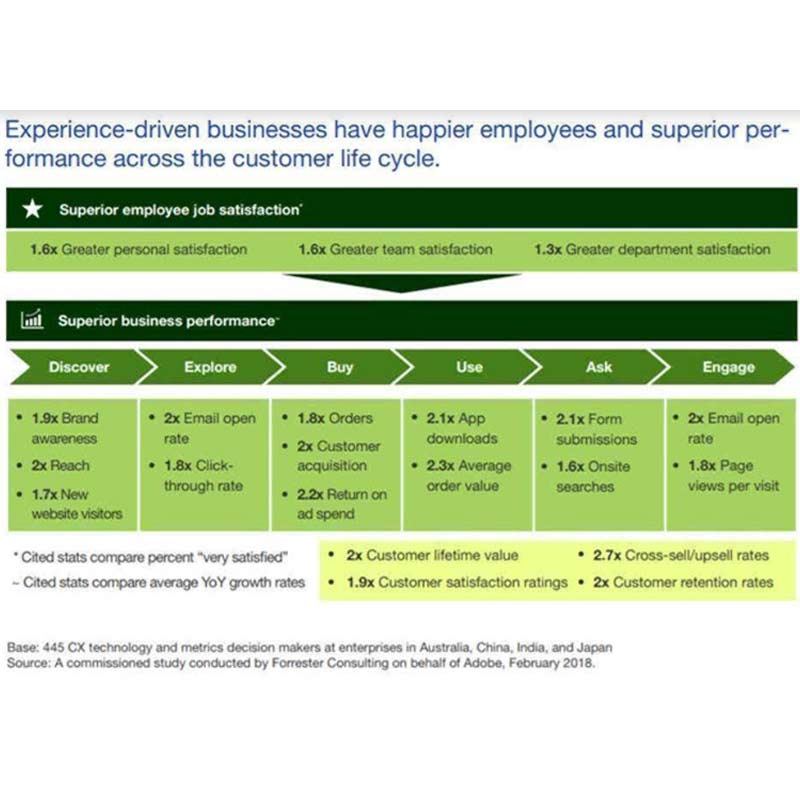
    Adobe commissioned Forrester Consulting to evaluate the business impact of investing in customer experience across the customer lifecycle. The study, The Business Impact of Investing in Customer Experience – A Spotlight On Asia Pacific, found that long term investment in customer experience is paying off for those brands willing to embrace it. The study found that APAC brands focusing on customer experience achieve an average revenue growth rate of 23%, compared with 13% of other companies surveyed.

    “It is amply clear that customer experience has moved from being a competitive differentiator to a business imperative for brands, said Kulmeet Bawa, Managing Director, South Asia, Adobe. “In evolving markets like India, significant advances in technology coupled with increasing internet penetration and mobile proliferation have had a huge impact in the way brands are interacting with their audience. The need to be able to provide rich and meaningful customer journeys across channels is leading brands to assume the role of experience makers, to succeed in today’s digital era.”

    Key findings of the study include:

    · Experience driven brands sacrifice short term wins in favor of creating holistic experiences.  Organizations that prioritize holistic customer experiences report higher costs, however they enjoy more than twice as much return on ad spend and are also 1.8x more likely to see revenue growth. They report 80 per cent higher year-on-year growth rates, and a doubling of their customer lifetime value.

    · Experience driven businesses are customer obsessed. They invest in specific customer experience and marketing initiatives such as loyalty programs and customer analytics; they are also twice as likely to increase their investment year-on-year.

    · Experience driven businesses report happier and more engaged employees. Employees in these businesses enjoy 60 per cent greater personal and team satisfaction than their counterparts in other businesses. They also feel 30 per cent greater company-wide satisfaction. 

    “The age of the experience driven business is well and truly upon us and it’s encouraging to see brands across APAC investing in experiences and customer loyalty,” said Scott Rigby, Head of Digital Transformation, Adobe.

    “There is a higher cost for these businesses, but the boost to their revenue growth rate, customer lifetime value, and even the happiness of their employees all mean the investment is worth it.

    “Customers are responding to businesses that are clearly dedicated to providing a unique and customized experience for their entire journey. As customers become more accustomed to this, businesses that don’t manage to deliver that experience are likely to be left behind.”

    Forrester conducted this survey with 1,269 marketing, advertising, CX, digital, and analytics business leaders at global enterprises to explore this topic. This spotlight focuses on the results of the 445 respondents surveyed in Asia Pacific (APAC): professionals with responsibility for CX technology decisions and metrics in Australia, China, India, and Japan.

  • Guest Column: Dear Me…Be a good loser!

    I failed often, failed bitterly, had my fair share of ups and downs. I had my apprehensions and my faults. I share here the positive convictions I have gained. May be they hold some wisdom for the millennials of today too as they venture for their first inclines.

    A line in a poem by Czeslow Milosz that’s always stuck with me: “Love means to learn to look at yourself/ The way one looks at distant things/ For you are only one thing among many.” The key to happiness, the poem suggests, is to understand that you need to become less self-obsessed – so that you can better relate to the world around you.

    I was fortunate to rise to the job of a CEO within 11 years of take-off.

    24 years since I started and as an athlete at the peak of his game today, here are 7 things I would want my younger self to take care of. 

    1. Seize the moment. Carpe Diem. I would volunteer for the next responsibility and rise to the occasion. I would not make ‘best’ the enemy of ‘better’. No work is too small. I would relish the opportunity to work. If you’re not progressing, you’re regressing; so, keep moving forward. The key to success in any field or endeavor is to keep moving forward. In the block-buster Indian movie Baahubali, the Hero gives the dark horse a piece of advice – “Zindagi Ek Baar Sher banane ka mauka sabko zaroor deti hai” (Life gives you the chance to become a Hero at least once). This one moment must be seized. Also as goes the popular Hindi saying “Behta paani nirmala” – translated into English which is “Rolling Stones gather no moss”.

    2. Take care of myself. Your body is the greatest instrument you will ever have. I would keep it in fit condition. You are beyond your body. The quality and power of your mind will determine how you well you would fare in the wake of challenges. I would train my mind. The importance of constant upgradation of your intellect cannot be emphasised enough.

    3. Kill my ego. Adapt to the world. You need them. They don’t. Simple. Adapt to the situation or the challenge. Not even a whiff of entitlement. Please. Half of my problems is me. The other half is the circumstances. I would find the best combination.

    4. Choose to be happy. I would not be rigid about my wants. I would awake to the truth that I can change my wants. Happiness does not depend on anything but me. Wants are changeable.

    5. Save money. I would start early to create wealth by saving money. A dollar yesterday is bigger than one today. Money grows. The power of the exponential function is one of the most misunderstood!

    6. Be a good loser. I would rise every time I fall. You only fail if you do not get up. I would fail fast, fail often, fail uninhibitedly and fail – not quit – till I succeed. And again… A progressive mentality doesn’t mean that you’ll never experience major setbacks, or even utter failure–which can deliver vital lessons and invaluable experience. Additionally, reflecting on how far you’ve come can provide necessary motivation. Remember, there are no shortcuts. True success is as much about hard work as about resilience–the ability to keep getting up when you’re tempted to throw in the towel. Never give up. Ever.

    7. Find my spiritual center. I would involve myself in spirituality much earlier than I did. To know how to live better, be content and spend life so that it is worthwhile.

    Some of the above are convictions because they invariably stood me in good stead. Some of them I did not practise but would be wise to – were I to do it again! Happy Living.

    public://Untitled-4_3_0.jpg

    (Piyush Sharma, a global tech, media and entrepreneurial leader, created the successful foray of Zee Entertainment in India and globally under the ‘Living’ brand. The views expressed here are of the writer’s and Indiantelevision.com may not subscribe to them.)