Tag: Trai

  • TRAI extends time for interconnect agreement reactions

    TRAI extends time for interconnect agreement reactions

    NEW DELHI: Several stakeholders have complained to the Telecom Regulatory Authority of India that most consumers are not even aware of the rates of various television channels and so the local cable operators were at the receiving end as they had to deal with the viewers.

    At an Open House discussion on the interconnection network for broadcasting TV Services distributed through addressable systems most stakeholders comprosing local cable operators and multi system operators raised issues that they said needed greater introspection. Cable Operators President of India President Roop Sharma said there was shortage of set top boxes and the consumer was not aware of what STB he should acquire.

    K K Sharma who edits Cable Quest said that no attention had been paid to the entry of OTT and the cross ownership that has come with this new phenomenon. The agreement has to be clear on this issue.

    Later, TRAI extended the date by one week to 10 June for comments on its consultation paper on
    Interconnect agreements for DAS areas. The date for counter-comments will remain the same – 17 June.

    TRAI had asked stakeholders to give suggestions on how a level playing can be created among different service providers using different addressable systems.

    It wanted to know whether there should be a common interconnection regulatory framework be mandated for all types of addressable systems.

    In the Consultation Paper issued on 4 May, it asked if there is any need to allow agreements based on mutually agreed terms, which donot form part of RIO, in digital addressable systems where calculation of fee can be based on subscription numbers. .

    The Paper has been issued not merely because the country is marching towards the last phase of DAS, but also in view of several judgments of the Telecom Disputes Settlement and Appellate Tribunal where it has disallowed payments in the absence of agreements despite mutual oral agreements.

    TRAI wants to know how the interconnection agreements entered on mutually agreed terms meet the requirement of providing a levelplaying field amongst service providers can be ensured, and the ways for effectively implementing non-discrimination on ground.

  • TRAI advocates help of cable operators to spread broadband

    TRAI advocates help of cable operators to spread broadband

    NEW DELHI: Telecom Regulatory Authority of India chairman R S Sharma said connectivity was vital for digital India and Aadhaar had built the foundation for online linkages, adding that cable digital television systems could be used to enable delivery of broadband.

    Speaking as the chief guest at the 2nd International Summit ‘India Satcom – 2016’ on the theme of Broadband for all using NextGen Satellite Technologies. Sharma admitted that certain ‘policy constraints have to be crossed.’

    He said internet connectivity in India was barely fifteen per cent, though wireless connectivity was growing at a fast pace through smartphones. There were only twenty million phones in the country but almost the entire country was connected through mobile phones. He also suggested the introduction of wi-fi at all public places.

    Referring to the Ka Band on satellite as earlier speakers had said the C-Band and Ku-band were already exhausted, Sharma said that the Telecom Regulatory Authority of India had issued a paper in this connection in April last year.

    The summit organized by the Broadband India Forum was aimed at showcasing the scope of catalysing achievement of socio-economic objectives with the use of innovations in Satellite Communications technology. It was supported by the Department of Electronic and Information Technology.

    Department of Telecom Secretary and Telecom Commission chairman J S Deepak stressed the need of satellites for reaching difficult terrains and said that a new network in ten states using 2,200 towers had been put into operation for this purpose. Twelve per cent of the communication in these states was through satellite.

    He said the Bharat Net Optic Fibre aimed to reach 2,50,000 gram panchayats in the next few years and 1,00,000 will be reached in the first phase by next year.

    Phase II aimed to reach the rest through underground optic fibre, towers, radio and satellite which had already connected ten to 12 per cent of the country.

    He also said that the country had adopted an liberal foreign direct investment regime with 74 per cent FDI being allowed in this sector. He claimed that India had received $ 200 billion in the last two years.

    He said 90 per cent of the 6,00,000 villages in the country were covered by mobile phones and he wanted internet proliferation to growth on the same path. He said that Internet had grown from 300 to 400 million (from 30 to 40 crore) in fourteen months. The only way to reach all villages was a combination of broadband and smartphones.

    All services that benefit people were expected to be online in the next two years, he said.

    He said all this presented great opportunities for satellite communications and said the policy environment was conducive for this and was being further changed for migration to new technologies.

    He said that even virtual network operator licences were not available in the country, he concluded, adding that ‘satcom is an idea whose time has come.’

    In a message read out in absentia, Indian Space Research Organisation chairman and secretary in the Department of Space A S Kiran Kumar said it was necessary to set up robust growth technology and the networks to receive this.

    Hughes Networks Systems president Pranav Roach said, “We know broadband penetration levels are extremely low in India. High throughput satellites are a natural fit to help improve broadband penetration. Satellite broadband is a proven technology, delivering high-speed services to users worldwide. Ka-band satellite-based networks are able to deliver affordable, immediate and ubiquitous broadband access to users.”

    He said it was ironic that India was the largest exporter of software but lagged behind in consumption, and therefore government had to step in to help the industry.

    BIF chairman M F Farooqui said “Broadband in India will have to be delivered not by one technology but through a mix of technologies. Satellite communication is one of the more important means of achieving broadband to the rural and remote areas and for fulfilling the goals of Govt’s Digital India initiative.”

    Phases X and V Satcast, USA, Chairman and CEO Ven Fotheringham said the cost of distribution, the increasing demand for more content through video and OTT, and the need for newer and better set top boxes were some of the problems that had to be grappled with. He said in the United States, 72 per cent of the content was generated by just 30 per cent experts within the country.

    The summit in different sessions deliberated on the deployment of satellite communication (satcom) technologies – existing and next generation – to expedite penetration of affordable Broadband in India, especially in remote, rural regions, to complement other broadband technologies such as optical fibre, mobile, cable etc.

    BIF president T V Ramachandran said “India has much to gain once broadband penetration, currently at a low 10 per cent or so, picks up momentum from new technology innovations and investments. Satellite sommunication technologies with its manifold innovations & applications could lead the country to the cusp of a digital revolution with associated boost to the efforts of other initiatives like Make in India, Skilling India and a spurt in FDI.”

    The summit deliberations also covered policy and regulatory issues to drive deployment of satcom technologies in support of national socio-economic programs such as Digital India, Make in India and Broadband for all. But such flagship programs need billions of dollars in annual funds – a huge challenge due to misconceptions surrounding satcom technologies. Though one of the fastest means to ensure Internet and Broadband connectivity across India, satcom is erroneously termed as unaffordable, inaccessible and, therefore, unavailable for deployment in India’s highly price-sensitive market. This is as erroneous as the early 1990s’ perception that mobile phones were expensive technology toys not needed by common people.

    The summit speakers stressed broadband service over satellite needed to be affordable (consumer price), accessible (all across India) and available 24×7 (both fixed location and mobile). Affordability is crucial because Broadband Satellite services in India are far more expensive than in the US (284 times on a normalized scale of package capacity, services price and pricing parity). Innovation, long-term commitment of public projects, liberalised policies that attract more local private players and foreign companies were important measures to curb costs and ensure affordability. These measures could also boost accessibility and availability.
  • TRAI advocates help of cable operators to spread broadband

    TRAI advocates help of cable operators to spread broadband

    NEW DELHI: Telecom Regulatory Authority of India chairman R S Sharma said connectivity was vital for digital India and Aadhaar had built the foundation for online linkages, adding that cable digital television systems could be used to enable delivery of broadband.

    Speaking as the chief guest at the 2nd International Summit ‘India Satcom – 2016’ on the theme of Broadband for all using NextGen Satellite Technologies. Sharma admitted that certain ‘policy constraints have to be crossed.’

    He said internet connectivity in India was barely fifteen per cent, though wireless connectivity was growing at a fast pace through smartphones. There were only twenty million phones in the country but almost the entire country was connected through mobile phones. He also suggested the introduction of wi-fi at all public places.

    Referring to the Ka Band on satellite as earlier speakers had said the C-Band and Ku-band were already exhausted, Sharma said that the Telecom Regulatory Authority of India had issued a paper in this connection in April last year.

    The summit organized by the Broadband India Forum was aimed at showcasing the scope of catalysing achievement of socio-economic objectives with the use of innovations in Satellite Communications technology. It was supported by the Department of Electronic and Information Technology.

    Department of Telecom Secretary and Telecom Commission chairman J S Deepak stressed the need of satellites for reaching difficult terrains and said that a new network in ten states using 2,200 towers had been put into operation for this purpose. Twelve per cent of the communication in these states was through satellite.

    He said the Bharat Net Optic Fibre aimed to reach 2,50,000 gram panchayats in the next few years and 1,00,000 will be reached in the first phase by next year.

    Phase II aimed to reach the rest through underground optic fibre, towers, radio and satellite which had already connected ten to 12 per cent of the country.

    He also said that the country had adopted an liberal foreign direct investment regime with 74 per cent FDI being allowed in this sector. He claimed that India had received $ 200 billion in the last two years.

    He said 90 per cent of the 6,00,000 villages in the country were covered by mobile phones and he wanted internet proliferation to growth on the same path. He said that Internet had grown from 300 to 400 million (from 30 to 40 crore) in fourteen months. The only way to reach all villages was a combination of broadband and smartphones.

    All services that benefit people were expected to be online in the next two years, he said.

    He said all this presented great opportunities for satellite communications and said the policy environment was conducive for this and was being further changed for migration to new technologies.

    He said that even virtual network operator licences were not available in the country, he concluded, adding that ‘satcom is an idea whose time has come.’

    In a message read out in absentia, Indian Space Research Organisation chairman and secretary in the Department of Space A S Kiran Kumar said it was necessary to set up robust growth technology and the networks to receive this.

    Hughes Networks Systems president Pranav Roach said, “We know broadband penetration levels are extremely low in India. High throughput satellites are a natural fit to help improve broadband penetration. Satellite broadband is a proven technology, delivering high-speed services to users worldwide. Ka-band satellite-based networks are able to deliver affordable, immediate and ubiquitous broadband access to users.”

    He said it was ironic that India was the largest exporter of software but lagged behind in consumption, and therefore government had to step in to help the industry.

    BIF chairman M F Farooqui said “Broadband in India will have to be delivered not by one technology but through a mix of technologies. Satellite communication is one of the more important means of achieving broadband to the rural and remote areas and for fulfilling the goals of Govt’s Digital India initiative.”

    Phases X and V Satcast, USA, Chairman and CEO Ven Fotheringham said the cost of distribution, the increasing demand for more content through video and OTT, and the need for newer and better set top boxes were some of the problems that had to be grappled with. He said in the United States, 72 per cent of the content was generated by just 30 per cent experts within the country.

    The summit in different sessions deliberated on the deployment of satellite communication (satcom) technologies – existing and next generation – to expedite penetration of affordable Broadband in India, especially in remote, rural regions, to complement other broadband technologies such as optical fibre, mobile, cable etc.

    BIF president T V Ramachandran said “India has much to gain once broadband penetration, currently at a low 10 per cent or so, picks up momentum from new technology innovations and investments. Satellite sommunication technologies with its manifold innovations & applications could lead the country to the cusp of a digital revolution with associated boost to the efforts of other initiatives like Make in India, Skilling India and a spurt in FDI.”

    The summit deliberations also covered policy and regulatory issues to drive deployment of satcom technologies in support of national socio-economic programs such as Digital India, Make in India and Broadband for all. But such flagship programs need billions of dollars in annual funds – a huge challenge due to misconceptions surrounding satcom technologies. Though one of the fastest means to ensure Internet and Broadband connectivity across India, satcom is erroneously termed as unaffordable, inaccessible and, therefore, unavailable for deployment in India’s highly price-sensitive market. This is as erroneous as the early 1990s’ perception that mobile phones were expensive technology toys not needed by common people.

    The summit speakers stressed broadband service over satellite needed to be affordable (consumer price), accessible (all across India) and available 24×7 (both fixed location and mobile). Affordability is crucial because Broadband Satellite services in India are far more expensive than in the US (284 times on a normalized scale of package capacity, services price and pricing parity). Innovation, long-term commitment of public projects, liberalised policies that attract more local private players and foreign companies were important measures to curb costs and ensure affordability. These measures could also boost accessibility and availability.
  • ISRO stresses on indigenization; TRAI for Open Sky policy

    ISRO stresses on indigenization; TRAI for Open Sky policy

    NEW DELHI: Even as he advocated an Open Sky Policy for satellites usage, Telecom Regulatory Authority of India (TRAI) chairman R S Sharma said an early formulation of a satellite communication (satcom) policy was desirable if the goals of Digital India have to be achieved.

    On the other hand, Indian Space & Research Organisation (ISRO) agreed satellite services were crucial to the success of Prime Minister Narendra Modi’s dream of Digital India, but laid stress on indigenisation to become “self-reliant” over the next few years.

    Speaking at the ‘2nd International Summit ‘India Satcom – 2016’ on the theme of Broadband for all using NextGen Satellite Technologies, TRAI’s Sharma said connectivity was vital for a digital India and satellite can help in increase this connectivity.

    That was why, he said, TRAI is in favour of an Open Sky policy and had earlier too recommended on these lines in a report to the government.

    Sharma admitted that the internet connectivity in India was barely 15 per cent, though wireless connectivity was growing at a fast pace through smart-phones. There were only 20 million phones in the country but almost the entire country was connected through mobile phones, he said.

    Suggesting use of cable and digital television systems to enable delivery of broadband, the TRAI chairman admitted that certain “policy constraints have to be crossed.”

    He said if this is not done soon, then Digital India will not move forward much.

    Referring to Ka Band on satellites, Sharma said TRAI had issued a paper in this connection in April last year.  

    While Sharma pushed for a more liberalised satcom policy to realise the dream of Digital India faster, ISRO stressed on indigenisation for self-reliance without directly dwelling on an Open Sky policy.

    In a message read out in absentia, ISRO chairman and secretary in the Department of Space A S Kiran Kumar said there was need to hold full-fledged discussions on satellite services’ contribution to Digital India and also on formulation of a satcom policy.

    He stressed that ISRO was committed to an indigenous satellite system and added more (Indian) satellites were expected to be launched over the next few years to make the country self-dependent.

    ISRO has been criticised in the past on stifling the growth of Indian users of satellite services (like DTH and VSAT operators to name a few) owing to its inability to meet the demand with supply on INSAT, while mandating time-consuming processes for Indian customers to lease capacity on foreign satellites.

    Hong Kong-based Asian industry organisation CASBAA in a recent report had highlighted how stifling satellite policies were hampering a faster rollout of a digital India.

    Titled Capacity crunch continues: Assessment of satellite transponders’ capacity for the Indian broadcast and broadband market and released in March 2016, the CASBAA-PwC report had questioned the role of ISRO and Antrix (ISRO’s commercial arm) as a satellite operator, a research institute and an independent commercial entity.

    “The roles of a policymaker and enforcer should be assigned to independent entities,” The CASBAA-PwC report stated, indicating ISRO/Antrix present roles lead to conflict of interests.

  • ISRO stresses on indigenization; TRAI for Open Sky policy

    ISRO stresses on indigenization; TRAI for Open Sky policy

    NEW DELHI: Even as he advocated an Open Sky Policy for satellites usage, Telecom Regulatory Authority of India (TRAI) chairman R S Sharma said an early formulation of a satellite communication (satcom) policy was desirable if the goals of Digital India have to be achieved.

    On the other hand, Indian Space & Research Organisation (ISRO) agreed satellite services were crucial to the success of Prime Minister Narendra Modi’s dream of Digital India, but laid stress on indigenisation to become “self-reliant” over the next few years.

    Speaking at the ‘2nd International Summit ‘India Satcom – 2016’ on the theme of Broadband for all using NextGen Satellite Technologies, TRAI’s Sharma said connectivity was vital for a digital India and satellite can help in increase this connectivity.

    That was why, he said, TRAI is in favour of an Open Sky policy and had earlier too recommended on these lines in a report to the government.

    Sharma admitted that the internet connectivity in India was barely 15 per cent, though wireless connectivity was growing at a fast pace through smart-phones. There were only 20 million phones in the country but almost the entire country was connected through mobile phones, he said.

    Suggesting use of cable and digital television systems to enable delivery of broadband, the TRAI chairman admitted that certain “policy constraints have to be crossed.”

    He said if this is not done soon, then Digital India will not move forward much.

    Referring to Ka Band on satellites, Sharma said TRAI had issued a paper in this connection in April last year.  

    While Sharma pushed for a more liberalised satcom policy to realise the dream of Digital India faster, ISRO stressed on indigenisation for self-reliance without directly dwelling on an Open Sky policy.

    In a message read out in absentia, ISRO chairman and secretary in the Department of Space A S Kiran Kumar said there was need to hold full-fledged discussions on satellite services’ contribution to Digital India and also on formulation of a satcom policy.

    He stressed that ISRO was committed to an indigenous satellite system and added more (Indian) satellites were expected to be launched over the next few years to make the country self-dependent.

    ISRO has been criticised in the past on stifling the growth of Indian users of satellite services (like DTH and VSAT operators to name a few) owing to its inability to meet the demand with supply on INSAT, while mandating time-consuming processes for Indian customers to lease capacity on foreign satellites.

    Hong Kong-based Asian industry organisation CASBAA in a recent report had highlighted how stifling satellite policies were hampering a faster rollout of a digital India.

    Titled Capacity crunch continues: Assessment of satellite transponders’ capacity for the Indian broadcast and broadband market and released in March 2016, the CASBAA-PwC report had questioned the role of ISRO and Antrix (ISRO’s commercial arm) as a satellite operator, a research institute and an independent commercial entity.

    “The roles of a policymaker and enforcer should be assigned to independent entities,” The CASBAA-PwC report stated, indicating ISRO/Antrix present roles lead to conflict of interests.

  • DND Mobile App developed by TRAI to complain about unsolicited commercial calls

    DND Mobile App developed by TRAI to complain about unsolicited commercial calls

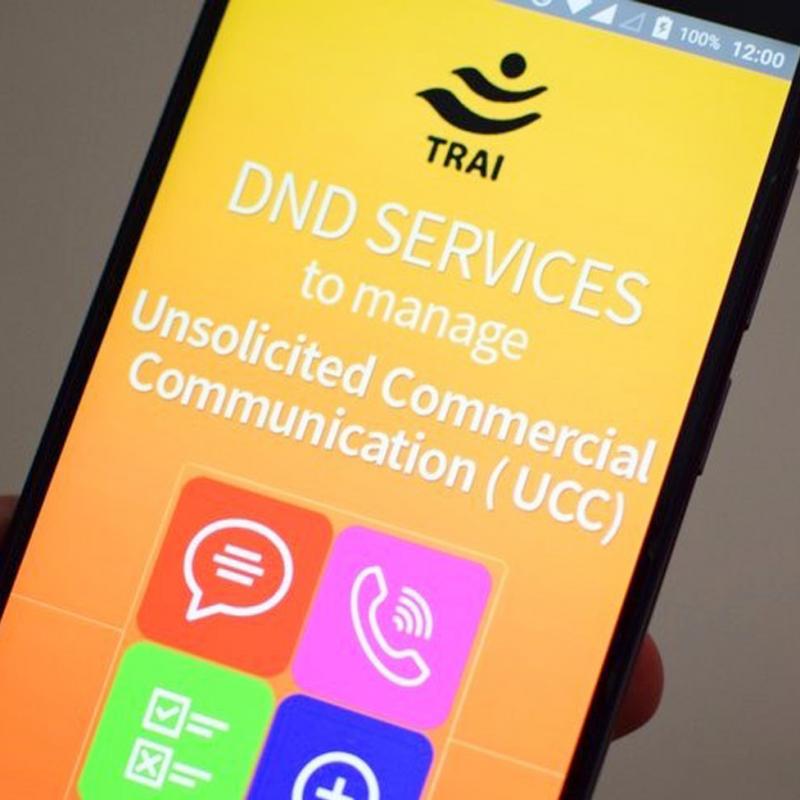
    New Delhi: A DND Mobile App has been developed by the Telecom Regulatory Authority of India for easy registration of complaints against Unsolicited Commercial Communications to the service providers and for the consumers to check the status of the complaint.

    TRAI had in December 2010 issued the Telecom Commercial Communications Customer Preference Regulations (TCCCPR) 2010 to provide an effective mechanism for curbing Unsolicited Commercial Communications. These regulations came into force with effect from 27 September 2011.

    The National Do Not Call Registry (NDNC) has been renamed National Customer Preference Register (NCPR). The Telemarketers after registration from TRAI get permission to access the National Customer Preference Register (NCPR).

    The regulations have been framed keeping in view the interest of the customers and telemarketers while ensuring effective implementation and therefore provided for a Do Not Disturb registry for consumers to register on to avoid marketing calls.

    Being complaint based regulations, there was need to put in place a complaint mechanism which is easy to use by the consumer.

    The app is available in the Google App store and Mobile Seva App store. The links for the apps are:

    https://play.google.com/store/apps/details?id=com.trai.dnd&hl=en

    https://apps.mgov.gov.in/descp.do?appid=1087

  • DND Mobile App developed by TRAI to complain about unsolicited commercial calls

    DND Mobile App developed by TRAI to complain about unsolicited commercial calls

    New Delhi: A DND Mobile App has been developed by the Telecom Regulatory Authority of India for easy registration of complaints against Unsolicited Commercial Communications to the service providers and for the consumers to check the status of the complaint.

    TRAI had in December 2010 issued the Telecom Commercial Communications Customer Preference Regulations (TCCCPR) 2010 to provide an effective mechanism for curbing Unsolicited Commercial Communications. These regulations came into force with effect from 27 September 2011.

    The National Do Not Call Registry (NDNC) has been renamed National Customer Preference Register (NCPR). The Telemarketers after registration from TRAI get permission to access the National Customer Preference Register (NCPR).

    The regulations have been framed keeping in view the interest of the customers and telemarketers while ensuring effective implementation and therefore provided for a Do Not Disturb registry for consumers to register on to avoid marketing calls.

    Being complaint based regulations, there was need to put in place a complaint mechanism which is easy to use by the consumer.

    The app is available in the Google App store and Mobile Seva App store. The links for the apps are:

    https://play.google.com/store/apps/details?id=com.trai.dnd&hl=en

    https://apps.mgov.gov.in/descp.do?appid=1087

  • 133 news and non-news pay channels violated adcap rule in 1st quarter

    133 news and non-news pay channels violated adcap rule in 1st quarter

    NEW DELHI: While the adcap case continues to drag with no sign of an early hearing, a study shows that a total of 133 pay channels including 30 news and current affairs channels continue to violate the regulations for telecasting a maximum of twelve minutes of advertisements and commercials per hour.

    The report released today by the Telecom Regulatory Authority of India for the period from 28 December to 27 March shows that the number of violators has come down marginally from 149 during the three months ending 27 December.

    While there has been a very miniscule increase in the violators among news channels from 28 top 30, there is a sharp fall in non-news channels from 121 to 103 as on 27 March.

    Average duration per hour of Advertisements (commercial and self promotional) during peak hours (7pm ‐ 10 PM) in Pay News Channels for the period 28 December to 27 March shows that the highest of these was 24.83 minutes by ETV Rajasthan and the lowest was 12.15 minutes by Times Now.

    Among pay non-news channels for the same period, the highest was 23.41 minutes by B4U Movies (which had topped the list in December last year as well) and the lowest was 12.04 by Odiosha TV’s Tarang.

    There are at least sixteen news and 24 non-news channels clocking more than fifteen minutes per hour.

    TRAI has made it clear that ‘the information is based on the data submitted by the broadcasters and TRAI bears no responsibility for correctness of same. As per information available with TRAI, the rest of the Pay News and non-news channels are carrying less than 12 minutes of average duration per hour of advertisements (Commercial & Self promotional) during peak hours (7PM – 10 pm)’.

    While asking TRAI not to take any coercive action against any channel pending hearing of the case in the first hearing almost two years earlier, the Delhi High Court had asked all channels and TRAI to keep a record of the advertising time consumed including commercials.

    The petition had been filed by the News Broadcasters Association and some channels challenging the TRAI decision to implement the directive of 12 minutes contained in the Cable Television Networks (Regulation) Act 1995. The Information and Broadcasting Ministry and TRAI are the respondents in the petition.

    After the Information and Broadcasting Ministry told the Court on 27 November that it was discussing the issue with broadcasters, the matter was put off to 11 February and then to 29 March. In the 11 February hearing, Discovery Communications moved for intervention while Home Cable sought early hearing.

    In its intervention MSO Home Cable Network (P) Ltd said it wanted to intervene as it was directly affected by the outcome of the present petition. It wanted the NBA petition to be dismissed and added: “The Pay channel broadcasters are profiteering at the expense of subscribers and the DPO’s. There is no justification for changing monthly subscription when commercial advertisements are inserted. The Standards of Quality of Service (Digital Addressable Cable TV Systems) Regulations 2012 (with Amendments thereafter) is justified to the extent they are applicable to Pay Channels. The pay channel broadcasters cannot charge the subscription fee while inserting commercials into the content or in the alternative, the subscribers have to be compensated for the revenue earned on the basis of their being subscribers of the channels.”

    Interestingly, I and B Minister Arun Jaitley had in January last year said that he was in favour of any ad cap in the print or electronic media.

    In the petition, the news channels have taken the plea that most of them are free to air and therefore do not get any subscription fee from the viewers as the GEC channels do.

  • 133 news and non-news pay channels violated adcap rule in 1st quarter

    133 news and non-news pay channels violated adcap rule in 1st quarter

    NEW DELHI: While the adcap case continues to drag with no sign of an early hearing, a study shows that a total of 133 pay channels including 30 news and current affairs channels continue to violate the regulations for telecasting a maximum of twelve minutes of advertisements and commercials per hour.

    The report released today by the Telecom Regulatory Authority of India for the period from 28 December to 27 March shows that the number of violators has come down marginally from 149 during the three months ending 27 December.

    While there has been a very miniscule increase in the violators among news channels from 28 top 30, there is a sharp fall in non-news channels from 121 to 103 as on 27 March.

    Average duration per hour of Advertisements (commercial and self promotional) during peak hours (7pm ‐ 10 PM) in Pay News Channels for the period 28 December to 27 March shows that the highest of these was 24.83 minutes by ETV Rajasthan and the lowest was 12.15 minutes by Times Now.

    Among pay non-news channels for the same period, the highest was 23.41 minutes by B4U Movies (which had topped the list in December last year as well) and the lowest was 12.04 by Odiosha TV’s Tarang.

    There are at least sixteen news and 24 non-news channels clocking more than fifteen minutes per hour.

    TRAI has made it clear that ‘the information is based on the data submitted by the broadcasters and TRAI bears no responsibility for correctness of same. As per information available with TRAI, the rest of the Pay News and non-news channels are carrying less than 12 minutes of average duration per hour of advertisements (Commercial & Self promotional) during peak hours (7PM – 10 pm)’.

    While asking TRAI not to take any coercive action against any channel pending hearing of the case in the first hearing almost two years earlier, the Delhi High Court had asked all channels and TRAI to keep a record of the advertising time consumed including commercials.

    The petition had been filed by the News Broadcasters Association and some channels challenging the TRAI decision to implement the directive of 12 minutes contained in the Cable Television Networks (Regulation) Act 1995. The Information and Broadcasting Ministry and TRAI are the respondents in the petition.

    After the Information and Broadcasting Ministry told the Court on 27 November that it was discussing the issue with broadcasters, the matter was put off to 11 February and then to 29 March. In the 11 February hearing, Discovery Communications moved for intervention while Home Cable sought early hearing.

    In its intervention MSO Home Cable Network (P) Ltd said it wanted to intervene as it was directly affected by the outcome of the present petition. It wanted the NBA petition to be dismissed and added: “The Pay channel broadcasters are profiteering at the expense of subscribers and the DPO’s. There is no justification for changing monthly subscription when commercial advertisements are inserted. The Standards of Quality of Service (Digital Addressable Cable TV Systems) Regulations 2012 (with Amendments thereafter) is justified to the extent they are applicable to Pay Channels. The pay channel broadcasters cannot charge the subscription fee while inserting commercials into the content or in the alternative, the subscribers have to be compensated for the revenue earned on the basis of their being subscribers of the channels.”

    Interestingly, I and B Minister Arun Jaitley had in January last year said that he was in favour of any ad cap in the print or electronic media.

    In the petition, the news channels have taken the plea that most of them are free to air and therefore do not get any subscription fee from the viewers as the GEC channels do.

  • Panel of experts checks possibility of STB inter-operability: TRAI

    Panel of experts checks possibility of STB inter-operability: TRAI

    NEW DELHI: A panel of 12 experts from institutions like the Indian Institute of Technology Mumbai and the Indian Institute of Science (IISc) Bangalore is working on the challenge of overcoming the problem relating to inter-operability of set top boxes (STB). Even though it has already issued a consultation paper on the subject, broadcast regulator Telecom Reguatory Authority of India has still to find solutions for inter-operability of STBs.

    TRAI chairman R S Sharma said inter-operability of STBs was a major programme in the interest of the consumers as this would help consumers get better service from their service providers who would be aware that one can switch to another operator if not satisfied with a service.

    He said he was aware that many felt that it is not possible to have a common STB because of security reasons and the need of broadcasters to keep their content encrypted and safe from piracy.

    “Because it is essentially a technology issue, we have brought on board professors from IITs and other institutions to look at it from a technology perspective,” Sharma said adding that C-DoT is the technology partner in this venture.

    TRAI is attempting to find a solution to this problem as soon as possible, Sharma told a press meet.

    The press meet was held to apprise the media about the spate of consultation papers and other decisions taken by TRAI in recent weeks.  (Earlier, it is learnt by Indiantelevision.com that some broadcasters also called on Sharma to discuss various issues.)

    TRAI officials said while a common STB for cable services may be a bit easier as shown by lab tests, another challenge is bringing STBs which are inter-operable between cable as well DTH operators.

    Another major initiative, for which TRAI has initiated a consultation process in the broadcasting sector is ensuring that the broadcasters share infrastructure. Sharma, said that “learning from the Telecom sector” where competitors also share towers, it is being examined if such a practice can be instilled in the broadcasting sector.

    Referring to sharing of infrastructure by broadcasters as suggested by the regulator in its latest paper, TRAI officials said different broadcasters are using different satellite system to carry the same channels.

    “The idea is whether there is a need to have a different head-end, or different optical fibre network or different satellite system and if we can combine, are we not able to reduce the cost of operations,” a TRAI official said.

    The official said that while broadcasters have been initially “closed” to this idea, they were positive that the idea may yield results as seen from the example in the telecom sector.

    The TRAI official said that are some licensing conditions which do not allow sharing of infrastructure. After consultations, the regulator would work to see that a proper framework can be provided which allows sharing of infrastructure by broadcasters.

    TRAI is also pushing for provision of broadband services through the cable sector, officials added. The regulator is also working to create guidelines for audience measurement for radio and guidelines, officials said.