Tag: Trai

  • Jio registers Airtel’s support, inadequate measures

    Jio registers Airtel’s support, inadequate measures

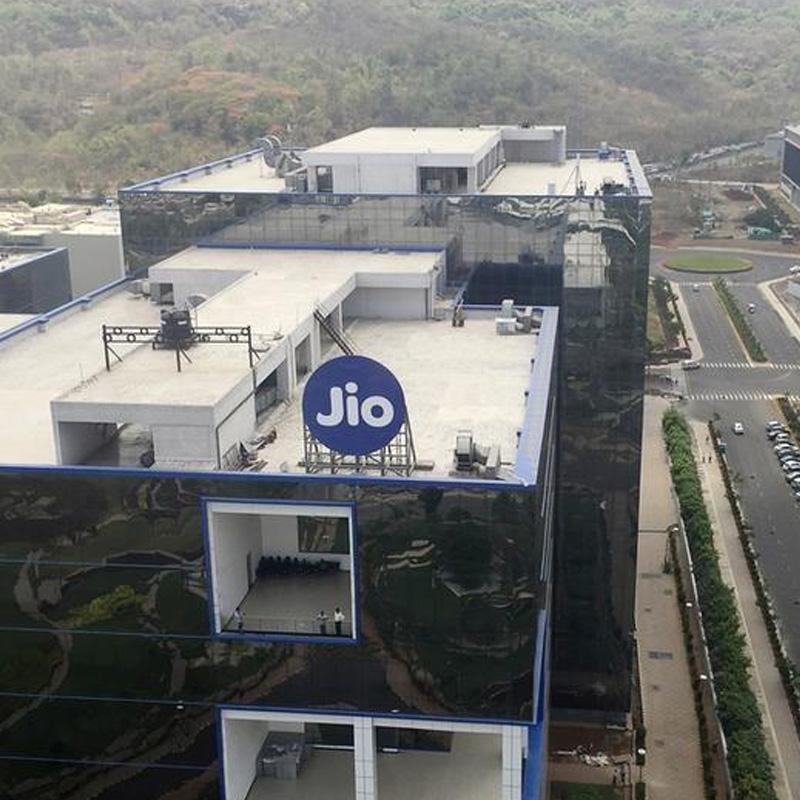
    MUMBAI: Reliance Jio, in a press release, has hailed Airtel’s decision to provide more points of interconnection but laments failing of calls between the two networks and alleged blockage of network portability.

    Reliance Jio Infocomm Limited (RJIL) has welcomed the decision of Bharti Airtel Limited (Airtel) of providing more points of interconnection (POI) to it, as was communicated in the bilateral discussions. However, the quantum of POIs proposed to be released by Airtel is substantially less than the estimated requirement.

    More than two crore calls are failing everyday between the two networks, which is far in excess of QoS parameters. It is unfortunate that TRAI’s intervention was required for Airtel to resume augmentation of POIs.

    Airtel has also insisted on certain unilateral deviations from the Interconnection Agreement with respect to installation of one-way E1s as against both-way E1s. Airtel allegedly continues to abuse its market dominance by imposing onerous conditions which will imminently hinder RJIL’s ability to efficiently utilize the additional E1s.

    Airtel has also been allegedly blocking the mobile number portability
    (“MNP”) facility for its subscribers who wish to subscribe to Jio services on baseless and unsubstantiated grounds, the release stated.

    RJIL hopes that Airtel will enhance the PoI’s sufficiently to meet its license obligation of QoS. Airtel must also immediately make available MNP to all its subscribers opting to port to RJIL.

    Reliance Jio Infocomm has built a world-class all-IP data strong future proof network with latest 4G LTE technology. It is the only network born as a Mobile Video Network from the ground up and supporting voice over LTE technology.

  • Trai effect: Vodafone falls in line with Jio

    Trai effect: Vodafone falls in line with Jio

    Vodafone telecom service provider is committed to continue playing its responsible role in further developing the Indian telecom sector and in creating value for the consumer.

    Vodafone India has always provided Points of Interconnect (PoI) to other operators for all their fair, reasonable and legitimate requirements and will continue to do so.

    Following guidance from Trai and clarifications from Jio regarding its commercial launch, Vodafone India has decided to increase the Points of Interconnect (POIs) between the two operators by three times.
    Accordingly, it will increase the capacity to connect.

    Vodafone is hopeful that all issues that it has raised with Trai and Jio will be duly considered and resolved at the earliest.

    To create a truly connected, inclusive and Digital India, it is vital to have a level playing field between providers offering the same service, encourage innovations and judiciously use a portfolio of technologies – 2G, 3G & 4G to service the evolving needs of consumers across the country.

    Vodafone is one of India’s leading telecom service providers, a co-creator of the telecom ecosystem, and a catalyst of the telecom revolution in India.

  • Trai effect: Vodafone falls in line with Jio

    Trai effect: Vodafone falls in line with Jio

    Vodafone telecom service provider is committed to continue playing its responsible role in further developing the Indian telecom sector and in creating value for the consumer.

    Vodafone India has always provided Points of Interconnect (PoI) to other operators for all their fair, reasonable and legitimate requirements and will continue to do so.

    Following guidance from Trai and clarifications from Jio regarding its commercial launch, Vodafone India has decided to increase the Points of Interconnect (POIs) between the two operators by three times.
    Accordingly, it will increase the capacity to connect.

    Vodafone is hopeful that all issues that it has raised with Trai and Jio will be duly considered and resolved at the earliest.

    To create a truly connected, inclusive and Digital India, it is vital to have a level playing field between providers offering the same service, encourage innovations and judiciously use a portfolio of technologies – 2G, 3G & 4G to service the evolving needs of consumers across the country.

    Vodafone is one of India’s leading telecom service providers, a co-creator of the telecom ecosystem, and a catalyst of the telecom revolution in India.

  • Trai proposes radio audience measurement on lines of Barc

    Trai proposes radio audience measurement on lines of Barc

    NEW DELHI: The Telecom Regulatory Authority of India (Trai) has come out with a set of recommendations on radio audience measurement (Ram) in India setting limits on ownership of stakeholders in the ratings agency, but there is no limit on the number of such agencies.

    In a preface, the regulator said there is a need to prescribe “a soft touch, conducive, forward looking, growth oriented framework” for Ram, which protects the interests of all stakeholders.

    The guidelines for rating agencies will be notified by the Ministry of Information and Broadcasting (MIB) based on the recommendations of Trai and there will be no ceiling on the number of rating agencies.

    Trai has a recommendatory role on such issues as final decisions rest with nodal ministries like MIB, Department of Telecoms (DoT) and Department of Space (DoS). In the past, many recommendations of the regulator had not been implemented at all or done so partially by the Ministry concerned.

    The Ram proposed guidelines mandatorily cover registration, eligibility norms, cross-holdings, methodology for conducting radio rating, complaint redressal, sale and use of ratings, audit, disclosure, reporting requirements and penal provisions for rating agencies.

    This will be very similar to the existing policy guidelines for television rating agencies issued by MIB under which Barc operates.

    Trai suggested the ratings agency should have adequate and equal representation from the three associations concerned — Association of Radio Operators for India (AROI), Indian Society of Advertisers (ISA) and Advertising Agencies Association of India (AAAI).

    The salient features of the TRAI recommendations are as follows:

    (i)Guidelines for rating system to be notified by MIB.

    (ii)Any agency meeting eligibility conditions can apply and get registered with MIB for doing the rating work. No cap on number of rating agencies has been prescribed.

    (iii)All rating agencies, including industry led body are required to comply with the guidelines.

    (iv)Guidelines to cover registration, eligibility norms, cross-holding, methodology for conducting rating, complaint redressal, sale and use of ratings, audit, disclosure, reporting requirements and penal provisions.

    (v)Voluntary code of conduct by the industry for maintaining secrecy and privacy of the listeners included in the rating process.

    (vi)Restrictions on ‘substantial equity holding of 10% or more’ between rating agencies and broadcasters/advertisers/advertising agencies have been prescribed.

    (vii)The rating agency to set up an effective complaint redressal system.

    (viii)Data/reports generated by the rating agency to be made available to all interested stakeholders in a transparent and equitable manner.

    (ix)The rating agency to get its entire methodology/processes audited internally on quarterly basis and through an independent auditor annually. All audit reports to be put on the website of the rating agency.

    (x)Penal provisions for non-compliance of guidelines.

    Since All India Radio (AIR) has a large geographical and population coverage and is not a member of AROI, representation of AIR should be ensured in the technical committee formed within the industry led body for guiding and supervising various radio rating processes.

    Trai said in its report that once guidelines are issued and implemented by MIB, these will be made applicable to all the rating agencies including the industry-led body.

    An independent rating agency, carrying out the rating process, can also outsource the field work, data collection and processing to third parties. The guidelines will not be applicable to the entities which have been contracted to carry out the field work, data collection and processing.

    At present, radio audience measurement in India is conducted by AIR and TAM Media Research.

    The full TRAI recommendation can be obtained at http://www.trai.gov.in/WriteReadData/WhatsNew/Documents/Recommendations_15_September_2016.pdf

  • Trai proposes radio audience measurement on lines of Barc

    Trai proposes radio audience measurement on lines of Barc

    NEW DELHI: The Telecom Regulatory Authority of India (Trai) has come out with a set of recommendations on radio audience measurement (Ram) in India setting limits on ownership of stakeholders in the ratings agency, but there is no limit on the number of such agencies.

    In a preface, the regulator said there is a need to prescribe “a soft touch, conducive, forward looking, growth oriented framework” for Ram, which protects the interests of all stakeholders.

    The guidelines for rating agencies will be notified by the Ministry of Information and Broadcasting (MIB) based on the recommendations of Trai and there will be no ceiling on the number of rating agencies.

    Trai has a recommendatory role on such issues as final decisions rest with nodal ministries like MIB, Department of Telecoms (DoT) and Department of Space (DoS). In the past, many recommendations of the regulator had not been implemented at all or done so partially by the Ministry concerned.

    The Ram proposed guidelines mandatorily cover registration, eligibility norms, cross-holdings, methodology for conducting radio rating, complaint redressal, sale and use of ratings, audit, disclosure, reporting requirements and penal provisions for rating agencies.

    This will be very similar to the existing policy guidelines for television rating agencies issued by MIB under which Barc operates.

    Trai suggested the ratings agency should have adequate and equal representation from the three associations concerned — Association of Radio Operators for India (AROI), Indian Society of Advertisers (ISA) and Advertising Agencies Association of India (AAAI).

    The salient features of the TRAI recommendations are as follows:

    (i)Guidelines for rating system to be notified by MIB.

    (ii)Any agency meeting eligibility conditions can apply and get registered with MIB for doing the rating work. No cap on number of rating agencies has been prescribed.

    (iii)All rating agencies, including industry led body are required to comply with the guidelines.

    (iv)Guidelines to cover registration, eligibility norms, cross-holding, methodology for conducting rating, complaint redressal, sale and use of ratings, audit, disclosure, reporting requirements and penal provisions.

    (v)Voluntary code of conduct by the industry for maintaining secrecy and privacy of the listeners included in the rating process.

    (vi)Restrictions on ‘substantial equity holding of 10% or more’ between rating agencies and broadcasters/advertisers/advertising agencies have been prescribed.

    (vii)The rating agency to set up an effective complaint redressal system.

    (viii)Data/reports generated by the rating agency to be made available to all interested stakeholders in a transparent and equitable manner.

    (ix)The rating agency to get its entire methodology/processes audited internally on quarterly basis and through an independent auditor annually. All audit reports to be put on the website of the rating agency.

    (x)Penal provisions for non-compliance of guidelines.

    Since All India Radio (AIR) has a large geographical and population coverage and is not a member of AROI, representation of AIR should be ensured in the technical committee formed within the industry led body for guiding and supervising various radio rating processes.

    Trai said in its report that once guidelines are issued and implemented by MIB, these will be made applicable to all the rating agencies including the industry-led body.

    An independent rating agency, carrying out the rating process, can also outsource the field work, data collection and processing to third parties. The guidelines will not be applicable to the entities which have been contracted to carry out the field work, data collection and processing.

    At present, radio audience measurement in India is conducted by AIR and TAM Media Research.

    The full TRAI recommendation can be obtained at http://www.trai.gov.in/WriteReadData/WhatsNew/Documents/Recommendations_15_September_2016.pdf

  • TRAI extends date on exercise on common mobile banking for all sectors

    TRAI extends date on exercise on common mobile banking for all sectors

    NEW DELHI: The Telecom Regulatory Authority of India has decided to receive comments on a Consultation paper on regulatory framework for the use of USSD for mobile financial services by 14 September 2016.

    In an extension notice to the paper issued early this month, it said counter-comments can be given by 28 September 2917. Stakeholders had been set of ten questions and the earlier dates were 31 August with counter-comments by 14 September 2016.

    With consumers gradually getting attuned to it and the growth of Mobile Apps and OTT requiring mobile banking, the Telecom Regulatory Authority of India has started an exercise to find the best way of making or receiving payments through the mobile.

    Keeping in view the success achieved by many countries in delivering financial servicesthrough mobile telephone, the Government of India, in November, 2009, constituted an Inter-Ministerial Group (IMG) to submit a report and recommendations on the framework fordelivery of basic financial services using mobile phones. The framework proposed in the IMGreport has been accepted as the basis for delivery of basic financial services using mobile technology by a Committee of Secretaries under the chairmanship of the Cabinet Secretary in April 2010. The IMG framework envisages opening of mobile linked ‘no- frills’accounts, which would be operated using mobile phones.

    In the IMG framework, TRAI was expected to provide the required regulatory framework governing the quality of service, provisioning and pricing of mobile services for delivery of basicfinancial

    Also see

    http://www.indiantelevision.com/regulators/trai/trai-begins-exercise-on-common-mobile-banking-for-all-sectors-160805


  • TRAI extends date on exercise on common mobile banking for all sectors

    TRAI extends date on exercise on common mobile banking for all sectors

    NEW DELHI: The Telecom Regulatory Authority of India has decided to receive comments on a Consultation paper on regulatory framework for the use of USSD for mobile financial services by 14 September 2016.

    In an extension notice to the paper issued early this month, it said counter-comments can be given by 28 September 2917. Stakeholders had been set of ten questions and the earlier dates were 31 August with counter-comments by 14 September 2016.

    With consumers gradually getting attuned to it and the growth of Mobile Apps and OTT requiring mobile banking, the Telecom Regulatory Authority of India has started an exercise to find the best way of making or receiving payments through the mobile.

    Keeping in view the success achieved by many countries in delivering financial servicesthrough mobile telephone, the Government of India, in November, 2009, constituted an Inter-Ministerial Group (IMG) to submit a report and recommendations on the framework fordelivery of basic financial services using mobile phones. The framework proposed in the IMGreport has been accepted as the basis for delivery of basic financial services using mobile technology by a Committee of Secretaries under the chairmanship of the Cabinet Secretary in April 2010. The IMG framework envisages opening of mobile linked ‘no- frills’accounts, which would be operated using mobile phones.

    In the IMG framework, TRAI was expected to provide the required regulatory framework governing the quality of service, provisioning and pricing of mobile services for delivery of basicfinancial

    Also see

    http://www.indiantelevision.com/regulators/trai/trai-begins-exercise-on-common-mobile-banking-for-all-sectors-160805


  • TRAI gives 2nd extension to Internet telephony consultation

    TRAI gives 2nd extension to Internet telephony consultation

    NEW DELHI: The Telecom Regulatory Authority of India (TRAI), in a rare break with its own tradition, has given a second extension for stakeholders to respond to its consultation paper on Internet telephony, which discusses converged services like IPTV, mobile TV, etc.

    One extension had been given an extension for responses to come by today but has now said that responses can come by 5 September and counter-comments by 13 September 2016 with a noting that no further extensions would be allowed.

    Noting that unified IP based backbone and the benefits associated with the converged telecom access scenario has enabled service providers to launch more and more converged services such as Internet telephony, IPTV, mobile TV, etc., TRAI has on 22 June 2016 sought to know the format of voice over internet telephony (VoIP) in India.

    In the consultation paper, TRAI has also pointed out that use of Internet Protocol (IP)-based networks, including the Internet, continues to grow around the world due to the multitude of applications it supports and particularly due to VoIP. IP-based networks are capable of providing real-time services such as voice and video telephony as well as non real-time services such as email and are driven by faster Internet connections, widespread take-up in broadband and the emergence of new technologies.

    The terms “IP telephony”, “VoIP”, Internet telephony and other variants often generates confusion as there are many different definitions used by various organizations. Some use them interchangeably, while others give them distinct definitions. Further confusion is caused by using the terms to refer to both the IP-based technologies and the services that are enabled by these technologies.

    Convergence is primarily driven by increasing processing power, high capacity memory storage devices, reduced price, lesser power requirement and miniaturization of the devices. High-speed data transfer is now possible which is necessary for delivering innovative and advanced multimedia applications.

    Recent trends indicate that telecom operators are adopting converged platforms to deliver multimedia rich applications containing voice, video and data.

    The separation of service provisioning and its management from the underlying network infrastructure in packet based networks is further increasing the acceptability of IP based networks. It is now possible to separate provision of service contents, configuration and modification of service attributes regardless of the network catering such service. There has been enough evidence to suggest that in future IP networks will play much important role and may ultimately encourage migration of conventional networks towards Next Generation Networks or an All-IP Network.

  • TRAI gives 2nd extension to Internet telephony consultation

    TRAI gives 2nd extension to Internet telephony consultation

    NEW DELHI: The Telecom Regulatory Authority of India (TRAI), in a rare break with its own tradition, has given a second extension for stakeholders to respond to its consultation paper on Internet telephony, which discusses converged services like IPTV, mobile TV, etc.

    One extension had been given an extension for responses to come by today but has now said that responses can come by 5 September and counter-comments by 13 September 2016 with a noting that no further extensions would be allowed.

    Noting that unified IP based backbone and the benefits associated with the converged telecom access scenario has enabled service providers to launch more and more converged services such as Internet telephony, IPTV, mobile TV, etc., TRAI has on 22 June 2016 sought to know the format of voice over internet telephony (VoIP) in India.

    In the consultation paper, TRAI has also pointed out that use of Internet Protocol (IP)-based networks, including the Internet, continues to grow around the world due to the multitude of applications it supports and particularly due to VoIP. IP-based networks are capable of providing real-time services such as voice and video telephony as well as non real-time services such as email and are driven by faster Internet connections, widespread take-up in broadband and the emergence of new technologies.

    The terms “IP telephony”, “VoIP”, Internet telephony and other variants often generates confusion as there are many different definitions used by various organizations. Some use them interchangeably, while others give them distinct definitions. Further confusion is caused by using the terms to refer to both the IP-based technologies and the services that are enabled by these technologies.

    Convergence is primarily driven by increasing processing power, high capacity memory storage devices, reduced price, lesser power requirement and miniaturization of the devices. High-speed data transfer is now possible which is necessary for delivering innovative and advanced multimedia applications.

    Recent trends indicate that telecom operators are adopting converged platforms to deliver multimedia rich applications containing voice, video and data.

    The separation of service provisioning and its management from the underlying network infrastructure in packet based networks is further increasing the acceptability of IP based networks. It is now possible to separate provision of service contents, configuration and modification of service attributes regardless of the network catering such service. There has been enough evidence to suggest that in future IP networks will play much important role and may ultimately encourage migration of conventional networks towards Next Generation Networks or an All-IP Network.

  • TRAI issues consultation paper on AGR issues relating to Spectrum

    TRAI issues consultation paper on AGR issues relating to Spectrum

    NEW DELHI: Following a query by the Department of Telecom on 25 Jun e 2016, the Telecom Regulatory Authority of India has asked stakeholders if spectrum assignment on location basis/link-by-link basis on administrative basis to ISPs, be continued in the specified bands.

    In a new consultation paper issued following the DoT letter, the regulator has discussed issues relating to minimum presumptive AGR for ISP licenses and VSAT licenses and other issues raised by DoT in its reference of 25 June 2014, and 15 May 2015. The information/clarifications were furnished to DoT in the letter of 2 March 2016.

    Stakeholders have been asked to respond by 19 September 2016 with counter-comments if any by 3 October 2016.

    The DoT had sought TRAI’s recommendations in terms of clause 11(1) of TRAI Act 1997 (as amended) on:

    (A) ISP license

    (i) Rates for SUC;

    (ii) Percentage of AGR including minimum AGR;

    (iii) Allied issues like schedule of payment, charging of interest, penalty and Financial Bank Guarantee (FBG).

    (B) Commercial VSAT license

    (i) Floor level (minimum) AGR, based on the amount of spectrum held by commercial VSAT operators.

    The Authority said in 2014 it had suo motu undertaken the exercise of review of definition of revenue base (AGR) for the reckoning of licence fee (LF) and spectrum usage charges (SUC). The Consultation Paper was issued on 31st July 2014 and Recommendations on 6 January 2015. The Recommendations along with other issues also contain recommendations on minimum presumptive AGR.

    In the Recommendations of 6 January 2015, the Authority had recommended that minimum presumptive AGR for the purpose of LF and SUC should not be made applicable for any licenses granted by the Government for providing telecom services. The recommendation was based on the fact that in the new licensing regime, spectrum is allocated through an auction process and TSPs are required to pay market-determined prices which can generally be expected to be sufficient motivation to licensees to start the commercial operations. Further the respective licence agreements include provisions on rollout obligations to be met by the licensee within a specified time frame, failing which, there are provisions for penalty (including prospects of cancellation of assigned spectrum).

    Therefore, it said the rationale for imposition of levies based on presumptive AGR does not hold good. However as the DoT letter of 25 June 2014 contains specific reference on minimum presumptive AGR in respect of ISP license and VSAT license, the same has been discussed afresh
    Some of the questions asked by TRAI are:

    Q1: Should the spectrum assignment on location basis/link-by-link basis on administrative basis to ISPs, be continued in the specified bands. If not, please suggest alternate assignment mechanism.

    Q2: Should minimum presumptive AGR be introduced in ISP license for the purpose of charging SUC? If yes, what should be the value of minimum presumptive AGR and basis for its computation?

    Q3: Is there a need to introduce SUC based on percentage of AGR for ISPs or should the existing formula based spectrum charges continue? Please give justification while suggesting a particular method of charging SUC.

    Q4: If AGR based SUC is introduced, whether the percentage of AGR should be uniform for all ISP licenses or should it be different, based on revenue/spectrum-holding/any other suitable criteria?

    Q5: What mechanism should be devised for ISP licensees to identify revenue generated from use of spectrum and revenue generated without use of spectrum?

    Q6: In case minimum presumptive AGR is prescribed for the ISP license, what percentage should be applied on minimum presumptive AGR to compute SUC?

    Q7: In case, Formula based spectrum charging mechanism in ISP license is to be continued, do you feel any changes are required in the formula being currently used that was specified by DoT in March 2012? If yes, suggest the alternate formula. Please give detailed justification.

    Q8: Do you propose any change in existing schedule of payment of spectrum related charges in the ISP license agreement?

    Q9: Should a separate regime of interest rates for delayed payment of royalty for the use of spectrum be fixed in ISP license or should it be the same to the prevailing interest rates for delayed payment of license fee/ SUC for other licensed telecom services?

    Q10: Should separate financial bank guarantee or single financial bank guarantee be submitted by the ISP licensee covering LF payable, fees/charges/royalties for the use of spectrum and other dues (not otherwise securitized)? If yes, what should be the amount of such financial bank guarantee in either case?

    Q11: Is there a need to specify minimum presumptive AGR for commercial CUG VSAT license for the purpose of charging SUC? If yes, what should be the value of minimum presumptive AGR and basis for its computation?

    Q12: Should the SUC applicable to commercial VSAT services be reviewed? If yes, what should be the rate of SUC to be charged? Please give your view on this with justification.