Tag: Trai

  • TRAI to review terms for captive VSAT licences

    TRAI to review terms for captive VSAT licences

    MUMBAI: Telecom regulatory authority TRAI has started a comprehensive review of various fee and charges related to captive VSAT (very small aperture terminal) licences, including entry fee, licence fee, bank guarantee and royalty charges.

    VSAT, a satellite communication technology, is useful for remote and inaccessible locations which lack proper terrestrial connectivity, PTI has reported.

    The consultation paper “Captive VSAT CUG (Closed User Group) policy issues” also seeks to remove the difference in licence fee for operating two hubs (earth stations that control and monitor activities of remote terminals).

    “Is there a need to review some or all of the fee or charges viz. Entry fee, licence fee, royalty charges and bank guarantee etc. For captive VSAT CUG licenses…If yes, what should be the appropriate fee or charges,” TRAI asked in the consultation paper.

    ‘Captive VSAT Licence’ refers to licence for those networks in which the equipment and facilities are owned and operated by the licensee itself for its own use under one Closed User Group (CUG). The Captive VSATs are deployed by commercial organisations like National Thermal Power Corporation, Oil and Natural Gas Corporation, as well as government bodies to cater to their own requirement and applications.

    The TRAI paper has also sought industry views on whether licence fee for a second VSAT hub, (being used independently or for redundancy purposes) should be the same as the first VSAT hub, and also the quantum of per annum fee for the second hub. The deadline for sending written comments is November 25, 2016.

    At present, the licence fee stands at Rs 10,000 per annum per VSAT earth stations installed, in case of the first hub. But in case the licensee wants to put second hub for geographical redundancy or, say, operational diversity and if that second hub station remains commissioned, a minimum license fee of Rs 16 Lakh per annum for up to 100 captive VSATs is applicable in addition to the license fee payable for the first hub.

    “…Due to such a huge difference in the license fee, a licensee is discouraged in installing a second hub…Even though their operations demand so for maintaining a hot standby,” TRAI said.

    TRAI has also asked if the captive VSAT categories should be split into Government oganisations and departments handling important missions, and commercial organisations.

    It also sought industry’s opinion on the entry fee, licence fee and royalty charges for the two categories, if separated, and whether the proposed rates for not for profit government organizations should be at a discount compared to business organisations.

  • MIB favours self-regulation, TRAI says some regulation mandatory

    MIB favours self-regulation, TRAI says some regulation mandatory

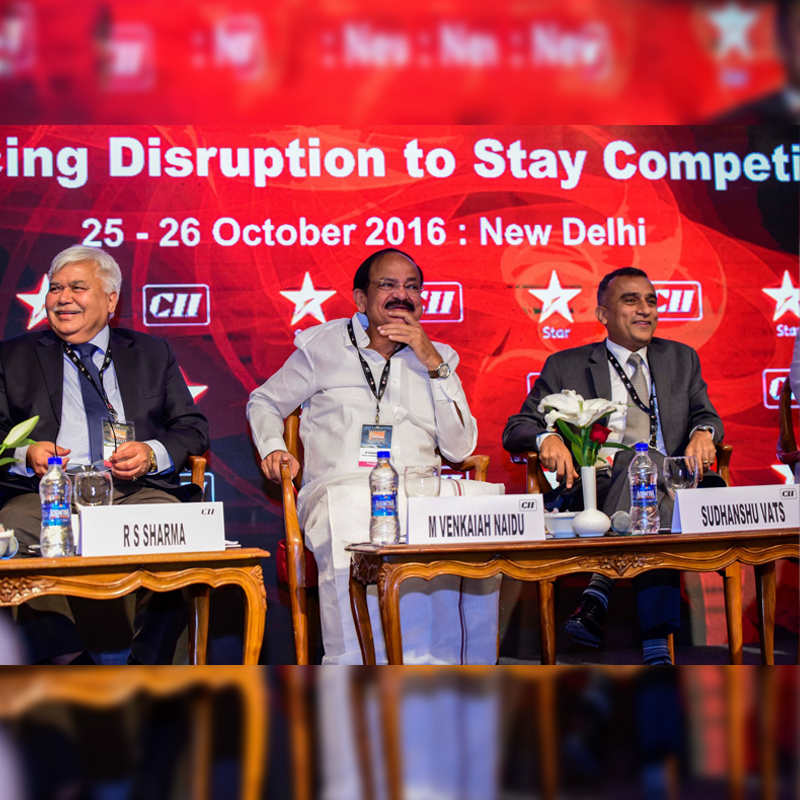
    NEW DELHI: Even as he favoured the idea of self-regulation in the media, Minister for Information and Broadcasting (MIB) M Venkaiah Naidu stressed that “regulation should not become strangulation” and added the government wants to be a facilitator for creating a good business environment for the media and entertainment (M&E) sector.

    Delivering the keynote address at the inaugural session of 5th edition of CII-organised `Big Picture Summit’ at New Delhi here yesterday Naidu said that digital and mobile tools have been leading to paradigm shifts in the M&E sector and the growth of varied platforms such as 4G, broadband, mobile technologies and digital media has enabled the sector to move towards “convergence across platforms and content”.

    According to the Minister, 500 million mobile phones were expected in India by 2020 and music streaming had grown from 49 per cent to 61 per cent in just one year with video on demand gaining popularity as number of internet connections had grown to 81 million of which 41 million used local languages. “The entertainment industry was today capable of creating five billion jobs a year,” he said.

    Referring to the broadcast segment, the MIB Minister said Indian television was very vibrant and exciting, which is exemplified in the over 800 TV channels licensed by the government.

    Dwelling on some initiatives taken by the government to boost the M&E sector, Naidu said that foreign direct investment norms had been liberalized further earlier in the year with an aim to help the industry grow. Similarly, the Minister said, the radio category too has shown impressive growth and the third Phase of auctions of Radio FM licenses was expected to bring in $390 million.

    While he was impressed with the growth achieved by cinema — India produced more films than any other country in the world — Naidu took note of a big problem of less number of screens in the country and that Indian cinema had a share of less than one per cent in world cinema.

    Expressing his concerns on the growth of the media, the Minister highlighted that there were some problems that had been inherited by this government and that those would take some time to be resolved as he plans to hold separate meetings with all stakeholders.

    TRAI Says Regulatory Framework Necessary For Big M&E Sector

    While MIB made a case for self-regulation, Telecom Regulatory Authority of India Chairman R S Sharma said some regulatory framework was necessary for such a large media sector, but regulations should be non-discriminatory, transparent, ensure quality and empower the consumer.

    Speaking at the inaugural session, along with the Minister and industry representatives, Sharma said India was a very cost-effective market where the average mobile recharge was just Rs 10. As connectivity had to be cost-effective and price-sensitive, cable television can be used to provide broadband connectivity as well.

    Holding forth on audience measurement, Sharma said there was still scope for better audience measurement systems as it was important to let the consumer decide what he wanted.
    As TRAI has a recommendatory role in the broadcast sector, except the carriage part where its recommendations can be implemented by it, Sharma also highlighted that several set of recommendations by the regulator on a variety of issues were pending at the Ministry concerned.

    Viacom18 Group CEO Sudhanshu Vats’ On Disruption & Competition

    Amongst the pantheon of Indian gods and goddesses, the Trinity of  Brahma, Vishnu and Shiv hold a special place as they ensure the world, as we know it, goes through a cycle of creation, preservation and destruction to continue growing and surviving. Is this also true for a business sector? Yes!

    Dwelling on the theme of the two-day media conference, ‘Embracing Disruption to Stay Competitive’, Sudhanshu Vats, Chairman of National Committee on Media & Entertainment, CII and Group CEO, Viacom18, said if the cycle, as highlighted in the Indian Trinity or to some extent in economist Schumpeter’s theory of creative destruction, is not followed by businesses (including those in the M&E sector), it’d be disrupted

    “Our systems discourage destruction. In our minds we have this notion that the word ‘destruction’ itself is wrong. But if you look back, our belief system has always emphasised on the need to destroy. If we don’t destroy, then we will be disrupted,” Vats said setting the tone for the Big Picture Summit and emphasizing the need for a well-balanced mix of all three — creators, preservers and destroyers.

    Vats went on to give some examples of the Big Picture Summit’s theme of disruption or reinvention to stay relevant and competitive, which are as follows:

    –    It’s a theme that explains how the sport of cricket reinvented itself 8 years ago to create a completely new avatar (called the IPL) that is arguably it’s most lucrative and successful one till date.

    –    It’s a theme that explains how a new Hindi GEC called Colors launched in 2008 and became number 1 in just 9 months of launch.

    –    It’s a theme that probably explains how a government owned distribution platform known as DD FreeDish revolutionized the world of Indian television so much so that it is a topic of conversation in the boardroom of every M&E organization.

    –    It’s a theme that explains how a show idea rejected by MTV, led to the creation of one of India’s most iconic YouTube channels: The Viral Fever.

    –    It’s also a theme that explains why a telco called AT&T is expected to close a deal to acquire a media conglomerate called Time Warner in what is amongst this year’s biggest acquisitions.  “Of course, I’d like to see this as ‘convergence in action’,” explained Vats.

    Dwelling on some industry vital stats — based on knowledge partner Boston Consulting Group’s yearly report for the event — Vats said the M&E industry’s size had been pegged at approximately Rs. 13, 000,00 million, almost one per cent of the Indian GDP with a direct employment base of half a million.

    “If we look at indirect employment, the number will multiply several times over. If we look at employment in sectors in which we have a multiplier effect, say telecom, tourism, sports and so on, and we are looking at a much larger base. If we have to, say, double in size (and this is not impossible)… then there are three fundamental truths that we need to prepare for. Bear in mind, that none of these can be leveraged if we fear ‘destruction’. Each of these truths has significant implications for us,” Vats elucidated.

    Vats also dwelt on several issues ranging from the need to develop direct-to-consumer offerings, importance of listening to suggestions and ideas, benefits of discovering new talents and embracing technology and data as a friend and not foe, apart from several other issues, including the need to put aside squabbles amongst stakeholders in the M&E sector.

    However, not the one to every shy away from making a factual statement, even though it may sound contentious, Vats aptly said the M&E sector was amongst the biggest stars of the PM Modi’s  `Make in India’ programme. “In the last two years, India has seen 35 new smart-phone factories, with a production capacity of 18 million devices per month and employment to 37,000 Indians. While the focus here – at least in the popular context- is on telecom handset manufacturing, think what is the use of the smart-phone with a 5-inch screen if you don’t have video content? I have no qualms in stating that our industry will play the biggest role in the 4G revolution that this country is about to witness,” he concluded.
     

  • MIB favours self-regulation, TRAI says some regulation mandatory

    MIB favours self-regulation, TRAI says some regulation mandatory

    NEW DELHI: Even as he favoured the idea of self-regulation in the media, Minister for Information and Broadcasting (MIB) M Venkaiah Naidu stressed that “regulation should not become strangulation” and added the government wants to be a facilitator for creating a good business environment for the media and entertainment (M&E) sector.

    Delivering the keynote address at the inaugural session of 5th edition of CII-organised `Big Picture Summit’ at New Delhi here yesterday Naidu said that digital and mobile tools have been leading to paradigm shifts in the M&E sector and the growth of varied platforms such as 4G, broadband, mobile technologies and digital media has enabled the sector to move towards “convergence across platforms and content”.

    According to the Minister, 500 million mobile phones were expected in India by 2020 and music streaming had grown from 49 per cent to 61 per cent in just one year with video on demand gaining popularity as number of internet connections had grown to 81 million of which 41 million used local languages. “The entertainment industry was today capable of creating five billion jobs a year,” he said.

    Referring to the broadcast segment, the MIB Minister said Indian television was very vibrant and exciting, which is exemplified in the over 800 TV channels licensed by the government.

    Dwelling on some initiatives taken by the government to boost the M&E sector, Naidu said that foreign direct investment norms had been liberalized further earlier in the year with an aim to help the industry grow. Similarly, the Minister said, the radio category too has shown impressive growth and the third Phase of auctions of Radio FM licenses was expected to bring in $390 million.

    While he was impressed with the growth achieved by cinema — India produced more films than any other country in the world — Naidu took note of a big problem of less number of screens in the country and that Indian cinema had a share of less than one per cent in world cinema.

    Expressing his concerns on the growth of the media, the Minister highlighted that there were some problems that had been inherited by this government and that those would take some time to be resolved as he plans to hold separate meetings with all stakeholders.

    TRAI Says Regulatory Framework Necessary For Big M&E Sector

    While MIB made a case for self-regulation, Telecom Regulatory Authority of India Chairman R S Sharma said some regulatory framework was necessary for such a large media sector, but regulations should be non-discriminatory, transparent, ensure quality and empower the consumer.

    Speaking at the inaugural session, along with the Minister and industry representatives, Sharma said India was a very cost-effective market where the average mobile recharge was just Rs 10. As connectivity had to be cost-effective and price-sensitive, cable television can be used to provide broadband connectivity as well.

    Holding forth on audience measurement, Sharma said there was still scope for better audience measurement systems as it was important to let the consumer decide what he wanted.
    As TRAI has a recommendatory role in the broadcast sector, except the carriage part where its recommendations can be implemented by it, Sharma also highlighted that several set of recommendations by the regulator on a variety of issues were pending at the Ministry concerned.

    Viacom18 Group CEO Sudhanshu Vats’ On Disruption & Competition

    Amongst the pantheon of Indian gods and goddesses, the Trinity of  Brahma, Vishnu and Shiv hold a special place as they ensure the world, as we know it, goes through a cycle of creation, preservation and destruction to continue growing and surviving. Is this also true for a business sector? Yes!

    Dwelling on the theme of the two-day media conference, ‘Embracing Disruption to Stay Competitive’, Sudhanshu Vats, Chairman of National Committee on Media & Entertainment, CII and Group CEO, Viacom18, said if the cycle, as highlighted in the Indian Trinity or to some extent in economist Schumpeter’s theory of creative destruction, is not followed by businesses (including those in the M&E sector), it’d be disrupted

    “Our systems discourage destruction. In our minds we have this notion that the word ‘destruction’ itself is wrong. But if you look back, our belief system has always emphasised on the need to destroy. If we don’t destroy, then we will be disrupted,” Vats said setting the tone for the Big Picture Summit and emphasizing the need for a well-balanced mix of all three — creators, preservers and destroyers.

    Vats went on to give some examples of the Big Picture Summit’s theme of disruption or reinvention to stay relevant and competitive, which are as follows:

    –    It’s a theme that explains how the sport of cricket reinvented itself 8 years ago to create a completely new avatar (called the IPL) that is arguably it’s most lucrative and successful one till date.

    –    It’s a theme that explains how a new Hindi GEC called Colors launched in 2008 and became number 1 in just 9 months of launch.

    –    It’s a theme that probably explains how a government owned distribution platform known as DD FreeDish revolutionized the world of Indian television so much so that it is a topic of conversation in the boardroom of every M&E organization.

    –    It’s a theme that explains how a show idea rejected by MTV, led to the creation of one of India’s most iconic YouTube channels: The Viral Fever.

    –    It’s also a theme that explains why a telco called AT&T is expected to close a deal to acquire a media conglomerate called Time Warner in what is amongst this year’s biggest acquisitions.  “Of course, I’d like to see this as ‘convergence in action’,” explained Vats.

    Dwelling on some industry vital stats — based on knowledge partner Boston Consulting Group’s yearly report for the event — Vats said the M&E industry’s size had been pegged at approximately Rs. 13, 000,00 million, almost one per cent of the Indian GDP with a direct employment base of half a million.

    “If we look at indirect employment, the number will multiply several times over. If we look at employment in sectors in which we have a multiplier effect, say telecom, tourism, sports and so on, and we are looking at a much larger base. If we have to, say, double in size (and this is not impossible)… then there are three fundamental truths that we need to prepare for. Bear in mind, that none of these can be leveraged if we fear ‘destruction’. Each of these truths has significant implications for us,” Vats elucidated.

    Vats also dwelt on several issues ranging from the need to develop direct-to-consumer offerings, importance of listening to suggestions and ideas, benefits of discovering new talents and embracing technology and data as a friend and not foe, apart from several other issues, including the need to put aside squabbles amongst stakeholders in the M&E sector.

    However, not the one to every shy away from making a factual statement, even though it may sound contentious, Vats aptly said the M&E sector was amongst the biggest stars of the PM Modi’s  `Make in India’ programme. “In the last two years, India has seen 35 new smart-phone factories, with a production capacity of 18 million devices per month and employment to 37,000 Indians. While the focus here – at least in the popular context- is on telecom handset manufacturing, think what is the use of the smart-phone with a 5-inch screen if you don’t have video content? I have no qualms in stating that our industry will play the biggest role in the 4G revolution that this country is about to witness,” he concluded.
     

  • Interconnect tussle: Vodafone, Airtel, Idea may move court against proposed Rs 3,000-cr penalty

    Interconnect tussle: Vodafone, Airtel, Idea may move court against proposed Rs 3,000-cr penalty

    MUMBAI: The Telecom Regulatory Authority of India (TRAI) plans to impose a heavy penalty on three major telecom operators for failing to provide adequate interconnectivity to RJio even as operators attempted to comply with the rules. Jio had written to the TRAI seeking action against incumbent operators for not giving an adequate number of interconnection points.

    Several thousand customers of Reliance Jio’s new 4G network were facing disruption in service due to shortage of interconnection with other operators for some weeks now. TRAI had earlier called Idea Cellular, Airtel, Vodafone and Jio for a meeting. Point of interconnection, the place where two networks connect, is needed for seamless communication when a user of one operator calls a user of another operator.

    TRAI has now proposed penalties on Vodafone India, Bharti Airtel, and Idea Cellular for denying interconnection to Reliance Jio Infocomm (RJio), the new entrant into telecom space in India.

    The three incumbent operators meanwhile may take a legal recourse to challenge TRAI’s suggestions. A source from one of the operators told the Hindu, it was ‘surprising that RJio’s network was having congestion in all the circles’.

    TRAI has suggested levying of a ₹50-crore penalty per circle on the three incumbent players, which could total more than ₹3,000 crore. According to TRAI, Airtel and Vodafone have to pay ₹1,050 crore each, and Idea Cellular ₹950 crore. The penalty has been imposed for violating quality of service norms.

    RJio had written to TRAI seeking action against incumbent operators for not giving an adequate number of interconnection points on July 14 and July 15, to which TRAI had communicated to all three operators on July 19 to do the needful.

    According to RJio, it is targeting 100 million subscribers, for which it had approached existing operators seeking adequate interconnection. “Instead of augmenting the PoIs, other operators are blocking the PoI augmentation on various unreasonable grounds,” RJio said in a letter to DoT.

    However, incumbent operators initially refused to give these points of interconnection. The operators earlier said they could not release more interconnections because RJio was allegedly bypassing regulations by offering full-fledged services under the guise of test connections.

    However, after a meeting between the rival operators, hosted by TRAI, the incumbent operators started releasing points of interconnection. Though this eased the congestion on RJio’s network, the operator said that a majority of calls on its networks were still dropping.

    Meanwhile, the three incumbent operators may take a legal recourse to challenge TRAI’s suggestions. According to sources from one of the operators, it was ‘surprising that RJio’s network was having congestion in all the circles’.

    Under the licence conditions, operators are required to offer interconnection to each other. TRAI has set a cap of 14 paise as the interconnection charge, which means that operators on whose network the call originates have to pay that fee to the operator on whose network the call terminates. However, incumbent operators have refused to give interconnection.

  • Interconnect tussle: Vodafone, Airtel, Idea may move court against proposed Rs 3,000-cr penalty

    Interconnect tussle: Vodafone, Airtel, Idea may move court against proposed Rs 3,000-cr penalty

    MUMBAI: The Telecom Regulatory Authority of India (TRAI) plans to impose a heavy penalty on three major telecom operators for failing to provide adequate interconnectivity to RJio even as operators attempted to comply with the rules. Jio had written to the TRAI seeking action against incumbent operators for not giving an adequate number of interconnection points.

    Several thousand customers of Reliance Jio’s new 4G network were facing disruption in service due to shortage of interconnection with other operators for some weeks now. TRAI had earlier called Idea Cellular, Airtel, Vodafone and Jio for a meeting. Point of interconnection, the place where two networks connect, is needed for seamless communication when a user of one operator calls a user of another operator.

    TRAI has now proposed penalties on Vodafone India, Bharti Airtel, and Idea Cellular for denying interconnection to Reliance Jio Infocomm (RJio), the new entrant into telecom space in India.

    The three incumbent operators meanwhile may take a legal recourse to challenge TRAI’s suggestions. A source from one of the operators told the Hindu, it was ‘surprising that RJio’s network was having congestion in all the circles’.

    TRAI has suggested levying of a ₹50-crore penalty per circle on the three incumbent players, which could total more than ₹3,000 crore. According to TRAI, Airtel and Vodafone have to pay ₹1,050 crore each, and Idea Cellular ₹950 crore. The penalty has been imposed for violating quality of service norms.

    RJio had written to TRAI seeking action against incumbent operators for not giving an adequate number of interconnection points on July 14 and July 15, to which TRAI had communicated to all three operators on July 19 to do the needful.

    According to RJio, it is targeting 100 million subscribers, for which it had approached existing operators seeking adequate interconnection. “Instead of augmenting the PoIs, other operators are blocking the PoI augmentation on various unreasonable grounds,” RJio said in a letter to DoT.

    However, incumbent operators initially refused to give these points of interconnection. The operators earlier said they could not release more interconnections because RJio was allegedly bypassing regulations by offering full-fledged services under the guise of test connections.

    However, after a meeting between the rival operators, hosted by TRAI, the incumbent operators started releasing points of interconnection. Though this eased the congestion on RJio’s network, the operator said that a majority of calls on its networks were still dropping.

    Meanwhile, the three incumbent operators may take a legal recourse to challenge TRAI’s suggestions. According to sources from one of the operators, it was ‘surprising that RJio’s network was having congestion in all the circles’.

    Under the licence conditions, operators are required to offer interconnection to each other. TRAI has set a cap of 14 paise as the interconnection charge, which means that operators on whose network the call originates have to pay that fee to the operator on whose network the call terminates. However, incumbent operators have refused to give interconnection.

  • Welcome offer lands Reliance Jio in 4G speed soup

    Welcome offer lands Reliance Jio in 4G speed soup

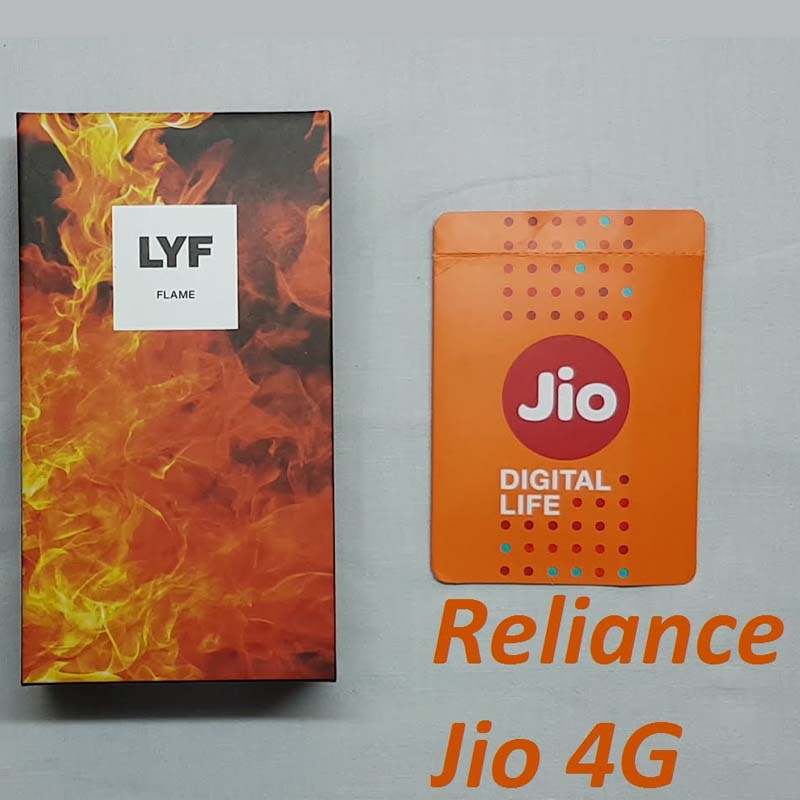
    MUMBAI: Even as Reliance Retail today launched 4G F1, the first device under the LYF brand outside the four elements branding, Reliance Jio seems to have received a setback with TRAI declaring its speed to be the poorest among five telecom operators. LYF F1 has been launched with advanced 4G for Reliance Jio at 13,399.

    Reliance Jio entered the telecom market with the aim of democratising Internet access in India. But, according to data by Telecom Regulatory Authority of India recently-launched My Speed website, the average pan-India 4G download speed by Reliance Jio stands at 6.2Mbps, making it only the fifth-fastest network in the country. TRAI data has found Reliance Jio 4G speed is the slowest in India. It is sixth in upload speed, and lags in internet speeds in all major markets. However, Jio has said that its Fair Usage Policy (FUP) policy has caused the average speed to come down

    In Delhi circle, for example, Jio’s ranking on the same parameter rises to third, but the speed decreases to 5.9Mbps. In Mumbai, a major market, Jio’s download speed goes up to 10.7Mbps and its position rises to second. In Karnataka circle, Jio fell out of the top 5 entirely, despite an average download speed of 7.5Mbps. Jio’s average download speed of 6.2Mbps, on the other hand, still makes it the fastest network in the country if the ‘technology’ on the TRAI website is set to ‘all’, which includes 2G and 3G networks as well.

    In a statement, Reliance Jio said that it has performed an internal analysis of its network and found that “the comparison of Jio speeds with other operators has an inherent bias against Jio data usage.”

    Statement from a Reliance Jio spokesperson:

    “With reference to statistics published TRAI’s analytics website, we have performed an internal analysis of the same. The nature of this skew is explained below. As you may be aware, under the Jio Welcome Offer, there is a daily fair usage policy (FUP) limit of 4GB data consumption per user. This limit has been setup with the express intention of preventing heavy data users from degrading the experience of other users.

    Before this FUP limit is reached, Jio customers enjoy unmatched 4G LTE speeds on the Jio network. However, after the FUP usage limit is reached, speeds are reduced to 256kbps. Full 4G LTE speeds are once again restored once the next 24-hour period begins. Historically, we have observed that a disproportionate number of speed tests are performed once the FUP comes into effect. This is so since most users don’t consider performing the test until they observe a deterioration of speed. Such users also tend to perform multiple tests until full speeds are restored.

    Given that data usage under Jio Welcome Offer is completely free, a higher proportion of Jio users run up against the FUP limit. In comparison, not all non-Jio users have FUP based plans (rather their usage is completely stopped, and they are entirely prevented from performing the speed test), and even those who have FUP based plans face this situation only once a month. Further, such customers tend to recharge quickly and restore full speeds.

    This difference in the offer structures, and associated customer behaviors, result in a large proportion of the speed tests being conducted on Jio network when the speeds are reduced via FUP to 256kbps. This has the effect of dragging the average far below the speeds experienced by Jio customers who are enjoying full 4G LTE speeds.

    Having said that, we continuously measure the speeds experienced by Jio customers – adjusting for factors such as FUP, and are proactively working to improve service levels for all our customers.”

  • Welcome offer lands Reliance Jio in 4G speed soup

    Welcome offer lands Reliance Jio in 4G speed soup

    MUMBAI: Even as Reliance Retail today launched 4G F1, the first device under the LYF brand outside the four elements branding, Reliance Jio seems to have received a setback with TRAI declaring its speed to be the poorest among five telecom operators. LYF F1 has been launched with advanced 4G for Reliance Jio at 13,399.

    Reliance Jio entered the telecom market with the aim of democratising Internet access in India. But, according to data by Telecom Regulatory Authority of India recently-launched My Speed website, the average pan-India 4G download speed by Reliance Jio stands at 6.2Mbps, making it only the fifth-fastest network in the country. TRAI data has found Reliance Jio 4G speed is the slowest in India. It is sixth in upload speed, and lags in internet speeds in all major markets. However, Jio has said that its Fair Usage Policy (FUP) policy has caused the average speed to come down

    In Delhi circle, for example, Jio’s ranking on the same parameter rises to third, but the speed decreases to 5.9Mbps. In Mumbai, a major market, Jio’s download speed goes up to 10.7Mbps and its position rises to second. In Karnataka circle, Jio fell out of the top 5 entirely, despite an average download speed of 7.5Mbps. Jio’s average download speed of 6.2Mbps, on the other hand, still makes it the fastest network in the country if the ‘technology’ on the TRAI website is set to ‘all’, which includes 2G and 3G networks as well.

    In a statement, Reliance Jio said that it has performed an internal analysis of its network and found that “the comparison of Jio speeds with other operators has an inherent bias against Jio data usage.”

    Statement from a Reliance Jio spokesperson:

    “With reference to statistics published TRAI’s analytics website, we have performed an internal analysis of the same. The nature of this skew is explained below. As you may be aware, under the Jio Welcome Offer, there is a daily fair usage policy (FUP) limit of 4GB data consumption per user. This limit has been setup with the express intention of preventing heavy data users from degrading the experience of other users.

    Before this FUP limit is reached, Jio customers enjoy unmatched 4G LTE speeds on the Jio network. However, after the FUP usage limit is reached, speeds are reduced to 256kbps. Full 4G LTE speeds are once again restored once the next 24-hour period begins. Historically, we have observed that a disproportionate number of speed tests are performed once the FUP comes into effect. This is so since most users don’t consider performing the test until they observe a deterioration of speed. Such users also tend to perform multiple tests until full speeds are restored.

    Given that data usage under Jio Welcome Offer is completely free, a higher proportion of Jio users run up against the FUP limit. In comparison, not all non-Jio users have FUP based plans (rather their usage is completely stopped, and they are entirely prevented from performing the speed test), and even those who have FUP based plans face this situation only once a month. Further, such customers tend to recharge quickly and restore full speeds.

    This difference in the offer structures, and associated customer behaviors, result in a large proportion of the speed tests being conducted on Jio network when the speeds are reduced via FUP to 256kbps. This has the effect of dragging the average far below the speeds experienced by Jio customers who are enjoying full 4G LTE speeds.

    Having said that, we continuously measure the speeds experienced by Jio customers – adjusting for factors such as FUP, and are proactively working to improve service levels for all our customers.”

  • Free data, net neutrality: Discussion on TRAI paper to be held

    Free data, net neutrality: Discussion on TRAI paper to be held

    NEW DELHI: Given the complicated issues around net neutrality, an open house discussion is to be held in Hyderabad this month on Telecom Regulatory Authority of India’s consultation paper on free data. The OHD will be held at Hotel Trident in the Telangana capital on 24 October 2016.

    On 14 June, TRAI had given more time to stakeholders to send in their comments and counter comments to the paper issued on 19 May 2016 with final replies to come in by mid-July.

    Stretching the discussion on net neutrality, TRAI wants to know whether there is a need to have TSP agnostic platform to provide free data or suitable reimbursement to users without violating the principles of Differential Pricing for Data laid down by TRAI.

    It also wants to know if free data or suitable reimbursement to users should be limited to mobile data users only or could it be extended through technical means to subscribers of fixed line broadband or leased line.

    The paper says that in the recent past, some data services plans of the Telecom Service Providers (TSPs) came to the notice of TRAI which amounted to discriminatory tariff through offering zero or discounted tariffs to certain contents of certain websites/applications/platforms. The objective of offering such plans was claimed to be the desire of various service providers/content providers or platform providers to enable people of this country, especially the poor, to access certain content on the internet free of charge.

  • Free data, net neutrality: Discussion on TRAI paper to be held

    Free data, net neutrality: Discussion on TRAI paper to be held

    NEW DELHI: Given the complicated issues around net neutrality, an open house discussion is to be held in Hyderabad this month on Telecom Regulatory Authority of India’s consultation paper on free data. The OHD will be held at Hotel Trident in the Telangana capital on 24 October 2016.

    On 14 June, TRAI had given more time to stakeholders to send in their comments and counter comments to the paper issued on 19 May 2016 with final replies to come in by mid-July.

    Stretching the discussion on net neutrality, TRAI wants to know whether there is a need to have TSP agnostic platform to provide free data or suitable reimbursement to users without violating the principles of Differential Pricing for Data laid down by TRAI.

    It also wants to know if free data or suitable reimbursement to users should be limited to mobile data users only or could it be extended through technical means to subscribers of fixed line broadband or leased line.

    The paper says that in the recent past, some data services plans of the Telecom Service Providers (TSPs) came to the notice of TRAI which amounted to discriminatory tariff through offering zero or discounted tariffs to certain contents of certain websites/applications/platforms. The objective of offering such plans was claimed to be the desire of various service providers/content providers or platform providers to enable people of this country, especially the poor, to access certain content on the internet free of charge.

  • Competition regulator okays Goldman Sachs stake purchase in Den Networks

    Competition regulator okays Goldman Sachs stake purchase in Den Networks

    MUMBAI: Investment banking major Goldman Sachs has received the Competition Commission’s approval to increase its stake in Den Networks to over 24 per cent by acquiring additional shares through preferential allotment route.

    indiantelevision had reported that MSO Den Networks existing shareholder Goldman Sachs is picking up 1.58 crore equity shares at a price of Rs 90 per share via a preferential allotment. This will take Goldman Sachs’ equity stake in the cable TV service provider up from 17.79 per cent to 24.49 per cent and involve an injection of much needed capital to the tune of Rs 142.43 crore. The divestment is expected to trim promoter stake in the company to 37 per cent.

    Media observers say that the Indian cable TV ecosystem – including the government, the regulator TRAI, broadcasters, MSOs and cable TV operators – has stumbled in the digitization process which was mandated by the ministry of information and broadcasting four years back. They have also been saying that investor sentiment towards the sector is pretty weak. Shares of most leading Indian cable TV companies have been depressed, and have been parked at lows. However, DEN Networks has been taking steps to correct the perception. It has brought back its CEO SN Sharma who has since been working on raising revenues and profitability.

    The transaction has now been cleared by the Competition Commission of India (CCI), as per the regulator’s website.

    The additional acquisition would be done by the holding companies of Goldman Sachs — Broad Street Investments (Singapore) Pte (BSIPL) and MBD Bridge Street 2016 Investments (Singapore) Pte (MBD), according to filing submitted to CCI. BSIPL and MBD are investment holding companies and are not engaged in business of manufacturing of products or the provision of service, PTI reported. Den Networks is into distribution of television channels through analog as well as digital modes.

    The Goldman investment came as a shot in the arm for Den Networks as well as the Indian cable TV sector which is grappling with reinventing its business model.

    Investors had greeted the Goldman Sachs announcement with delight. Den Networks had made an investor presentation in which it stated that its digital rollout is progressing well. Of the 13 million subscribers it has had, almost 9.8 million of them upgraded to digital in Q1 2017. Five million of these are in DAS Phase I & II areas with the remainder being in Phase III and phase IV.