Tag: Trai

  • Broadband rose 8.3 per cent till June 16; teledensity fell in urban, hike in rural

    Broadband rose 8.3 per cent till June 16; teledensity fell in urban, hike in rural

    MUMBAI: The number of telephone subscribers in India increased from 1,058.86 million at the end of Mar-16 to 1,059.86 million at the end of Jun-16, registering a growth of 0.09% over the previous quarter. This reflects year-on-year (Y-O-Y) growth of 5.25% over the same quarter of last year. The overall Teledensity in India declined from 83.36 as on 31 March, 2016 to 83.20 as on 30 June, 2016, according to TRAI statistics.

    Trends in Telephone subscribers and Teledensity in India: Subscription in Urban Areas declined from 609.69 million at the end of Mar-16 to 609.45 million at the end of Jun-16, and Urban Teledensity also declined from 154.01 to 153.22. However, Rural subscription increased from 449.17 million to 450.41 million and Rural Teledensity also increased from 51.37 to 51.41 during the same period.

    Of the total subscription, the share of Rural subscription increased from 42.42% at the end of Mar-16 to 42.50% at the end of Jun-16.

    Composition of Telephone Subscribers: With a net addition of 1.49 million subscribers during the quarter, total wireless (GSM+CDMA) subscriber base increased from 1,033.63 million at the end of Mar-16 to 1,035.12 million at the end of Jun-16, registering a growth rate of 0.14% over the previous quarter. The year-on-year (Y-O-Y) growth rate of wireless subscribers for Jun-16 is 5.54%.

    Wireless Tele-density declined from 81.38 at the end of Mar-16 to 81.26 at the end of Jun-16, according to TRAI statistics.

    Wireline subscriber base further declined from 25.22 million at the end of Mar-16 to 24.74 million at the end of Jun-16, registering a quarterly decline rate of 1.90%. The year-on-year (Y-O-Y) decline rate in wireline subscribers for Jun-16 is 5.38%.

    Wireline Teledensity declined from 1.99 at the end of Mar-16 to 1.94 at the end of Jun-16.

    Total number of Internet subscribers increased from 342.65 million at the end of Mar-16 to 350.48 million at the end of Jun-16, registering a quarterly growth rate of 2.28%. Out of 350.48 million, Wired Internet subscribers are 20.76 million and Wireless Internet subscribers are 329.72 million. Composition of internet subscription.

    The Internet subscriber base of 350.48 million at the end of Jun- 16 comprises Broadband Internet subscriber base of 162.06 million and Narrowband Internet subscriber base of 188.42
    million.

    The broadband Internet subscriber base grew by 8.22% from 149.75 million at the end of Mar-16 to 162.06 million at the end of Jun-16. On the other hand, the narrowband Internet subscriber
    base declined by 2.32% from 192.90 million at the end of Mar-16 to 188.42 million at the end of Jun-16.

    Monthly Average Revenue Per User (ARPU) for GSM service increased by 0.96%, from `125 in QE Mar-16 to `126 in QE Jun-16. Monthly ARPU for GSM service grew by 0.09% on Y-O-Y in this
    quarter, according to TRAI statistics.

    Prepaid ARPU for GSM service per month increased from `107 in QE Mar-16 to `108 in QE Jun-16, and Postpaid ARPU per month increased from `488 in QE Mar-16 to `495 in QE Jun-16.

    On an all India average, the overall MOU per subscriber per month for GSM service declined by 1.07% from 381 for QE Mar-16 to 377 in QE Jun-16.

    Prepaid MOU per subscriber for GSM service declined from 356 in QE Mar-16 to 351 in QE Jun-16, and postpaid MOU declined from 892 in QE Mar-16 to 889 in QE Jun-16.

    Monthly ARPU for CDMA full mobility service declined by 4.86%, from `103.50 in QE Mar-16 to `98.51 in QE Jun-16. Monthly ARPU for CDMA full mobility service declined by 7.95% on Y-O-Y
    basis in this quarter.

    The total MOU per subscriber per month for CDMA full mobility service declined by 12.54%, from 260 in QE Mar-16 to 228 in QE Jun-16. The outgoing MOUs declined from 150 in QE Mar-16 to
    130 in QE Jun-16, and incoming MOUs also declined from 110 in QE Mar-16 to 98 in QE Jun-16, according to TRAI statistics.

    Gross Revenue (GR) and Adjusted Gross Revenue (AGR) of Telecom Service Sector for the QE Jun-16 has been `73,344 Crore and `53,383 Crore respectively. GR and AGR increased by 7.33% and 10.34% respectively in QE Jun-16 as compared to previous quarter.

    The year-on-year (Y-O-Y) growth in GR and AGR over the same quarter in last year has been 12.79% and 13.26% respectively.

    Pass-through charges increased from `19,956 Crore in Q.E. Mar- 16 to `19,961 in Q.E. Jun-16. The quarterly and the year-on-year (Y-O-Y) growth rates of pass-through charges for QE Jun-16 are 0.03% and 11.54% respectively.

    The License Fee increased from `3,872 Crore for the QE Mar-16 to `4,314 Crore for the QE Jun-16. The quarterly and the year-onyear (Y-O-Y) growth rates of license fee are 11.43% and 14.05%
    respectively in this quarter.

    Access services contributed 83.84% of the total Adjusted Gross Revenue of telecom services. In Access services, Gross Revenue (GR), Adjusted Gross Revenue(AGR), License Fee and Spectrum Usage Charges(SUC) increased by 9.20%, 12.21%, 13.55% and 12.42% respectively whereas, Pass Through Charges declined by 0.67% in QE Jun-16, according to TRAI statistics.

    Monthly Average Revenue per User (ARPU) for Access Services based on AGR increased from `126.91 in QE Mar-16 to `140.88 in QE Jun-16.
  • TRAI to examine whether 4G offer can ‘Jio’ till Mar ’17

    TRAI to examine whether 4G offer can ‘Jio’ till Mar ’17

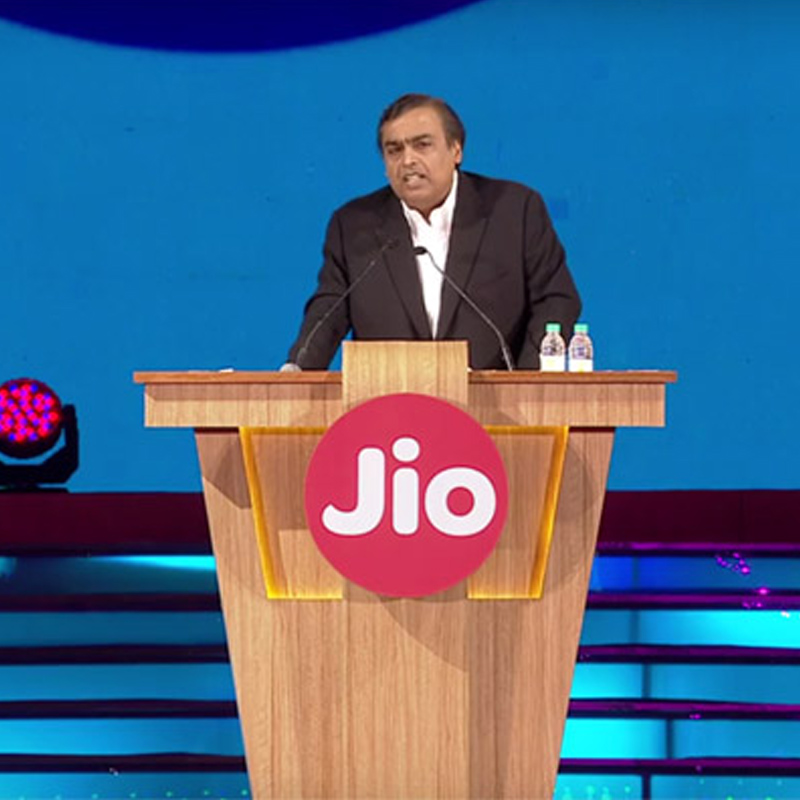
    MUMBAI: In his attempt to arduously chase the 100-million subscriber base, Reliance Jio CMD Mukesh Ambani announced extension of free domestic voice calls and data till 31 March, 2017, having crossed 50 million in 83 days. The Telecom Regulatory Authority of India (TRAI), however, said it will examine Jio’s latest offer providing free 4G services for all till 31 March.

    Jio’s new offer, meanwhile, struck a blow at competing incumbent operators — Idea Cellular, Bharti Airtel, and Vodafone India. The latest offer hurt the rivals’ share price. Airtel was down 1.66% at Rs 319.10 on the Bombay Stock Exchange (BSE), and Idea Cellular and Reliance Communications, respectively, dropped around 6% and 5%. By contrast, RIL price was up 0.45%.

    Ambani, on Thursday, announced the continuation of freebies currently being offered for fourth-generation (4G) long-term evolution (LTE) data and voice services till March next year. TRAI had earlier allowed Reliance Jio to provide free service till the end of this year.

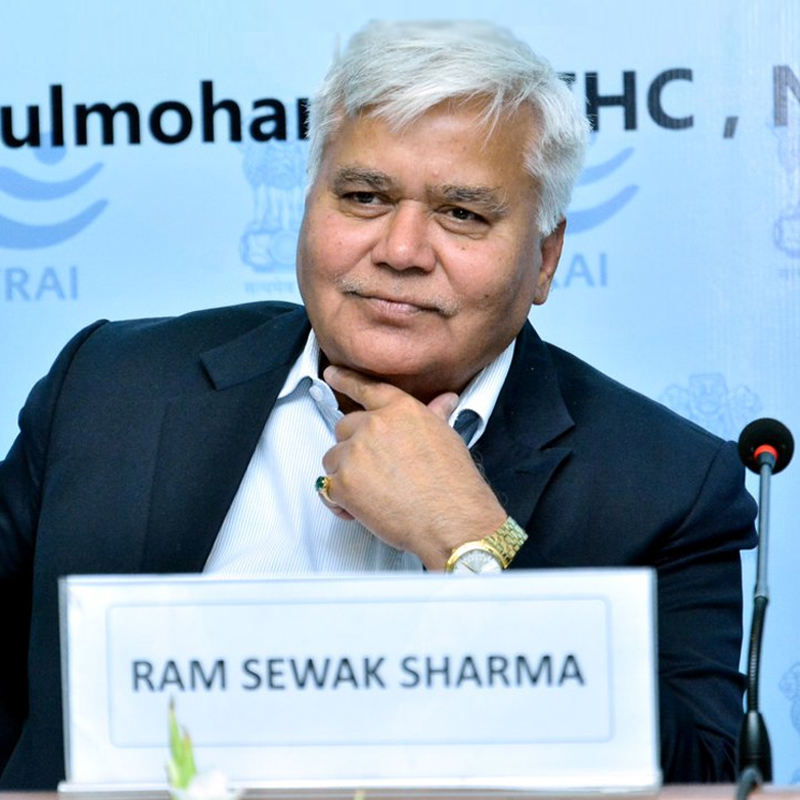
    About the validity of Jio’s offer, TRAI chairman R S Sharma said that they would look into it. Every tariff that was filed before the authority was examined. TRAI would give its response at an appropriate time, Sharma added. TRAI had earlier allowed the new operator to provide free services till the end of 2016 for subscribers who joined till 3 December.

    The Prime Minister’s Office (PMO) meantime stated that it did not formally allow use of the prime minister Narendra Modi’s picture in electronic and print advertisements of Reliance Jio.

    Meanwhile, lower penetration of broadband (7 per cent) may slow down the ‘Digital India’ drive, according to TRAI. Sharma suggested that a potential solution would be to use connections for cable TV for broadband delivery. TRAI has already made the recommendation to the government, he added. Digital India would have to ride on that infrastructure, and if India did not have robust infrastructure, it was not going to achieve the objective of knowledge economy, Sharma added.

    Also read:

    http://www.indiantelevision.com/iworld/telecom/jio-money-merchant-app-helps-transition-to-cashless-economy-161201

    http://www.indiantelevision.com/iworld/telecom/jio-extends-hny-free-data-offer-up-to-31-march-17-161201

  • TRAI to examine whether 4G offer can ‘Jio’ till Mar ’17

    TRAI to examine whether 4G offer can ‘Jio’ till Mar ’17

    MUMBAI: In his attempt to arduously chase the 100-million subscriber base, Reliance Jio CMD Mukesh Ambani announced extension of free domestic voice calls and data till 31 March, 2017, having crossed 50 million in 83 days. The Telecom Regulatory Authority of India (TRAI), however, said it will examine Jio’s latest offer providing free 4G services for all till 31 March.

    Jio’s new offer, meanwhile, struck a blow at competing incumbent operators — Idea Cellular, Bharti Airtel, and Vodafone India. The latest offer hurt the rivals’ share price. Airtel was down 1.66% at Rs 319.10 on the Bombay Stock Exchange (BSE), and Idea Cellular and Reliance Communications, respectively, dropped around 6% and 5%. By contrast, RIL price was up 0.45%.

    Ambani, on Thursday, announced the continuation of freebies currently being offered for fourth-generation (4G) long-term evolution (LTE) data and voice services till March next year. TRAI had earlier allowed Reliance Jio to provide free service till the end of this year.

    About the validity of Jio’s offer, TRAI chairman R S Sharma said that they would look into it. Every tariff that was filed before the authority was examined. TRAI would give its response at an appropriate time, Sharma added. TRAI had earlier allowed the new operator to provide free services till the end of 2016 for subscribers who joined till 3 December.

    The Prime Minister’s Office (PMO) meantime stated that it did not formally allow use of the prime minister Narendra Modi’s picture in electronic and print advertisements of Reliance Jio.

    Meanwhile, lower penetration of broadband (7 per cent) may slow down the ‘Digital India’ drive, according to TRAI. Sharma suggested that a potential solution would be to use connections for cable TV for broadband delivery. TRAI has already made the recommendation to the government, he added. Digital India would have to ride on that infrastructure, and if India did not have robust infrastructure, it was not going to achieve the objective of knowledge economy, Sharma added.

    Also read:

    http://www.indiantelevision.com/iworld/telecom/jio-money-merchant-app-helps-transition-to-cashless-economy-161201

    http://www.indiantelevision.com/iworld/telecom/jio-extends-hny-free-data-offer-up-to-31-march-17-161201

  • Consumers may get 60-day notice from unprofessional telcos

    Consumers may get 60-day notice from unprofessional telcos

    MUMBAI: The latest consultation paper of the Telecom Regulatory Authority of India (TRAI) is about issues related to closure of mobile phone services. TRAI seeks to extend the time mobile users get to change their service-provider if a particular company is shutting shop or selling its spectrum.

    The paper titled ‘Closure of Access Service” will seek feedback from telecom eco-system stakeholders to set up a framework to give an extended time and more options to users facing termination of services. A licence coming to fruition or failure of the service provider to bag spectrum or spectrum trading are normally the reasons behind an entity shutting shop.

    TRAI took note of three significant instances. Reliance Communications stopped CDMA services and migrated to LTE. Airtel acquired spectrum from Aircel and Videocon through trading deals. In some cases, operators do not renew the spectrum and stop offering services in a particular area. Tata Docomo has lost subscribers due to such non-renewal.

    The paper follows complaints from the subscribers who said they did not receive adequate notice or communication from their service-provider and their mobile number was disconnected. If TRAI has its way, cell-phone users will get more time to change their company in such a case.

    A mobile user currently gets 30 days to change its service-provider but this has been found to be far less than expected. The law requires the company to give the department of telecommunications (DoT) a 60-day notice in such a scenario.

    India’s low broadband penetration is a matter of concern and the government needs to do a lot more work in the field to go up in the global ladder, TRAI chairperson RS Sharma said.

    Addressing Assocham summit, Sharma said that, according to an ITU paper, the penetration in India was only 7%. He said the report stated that India was even behind countries such as Singapore, Thailand and Malaysia.

    TRAI has recommended to the government on using cable television network for broadband delivery. In developed US and in Europe, around 50-60 per cent broadband comes from Digital Cable TV, he added.

    Foreign direct investment (FDI) attracted by the telecom sector in India meanwhile has jumped to more than US$10 billion in the first eight months of 2016-17 registering a 6-7 fold increase as compared to 2014-15 and 2015-16, telecom secretary JS Deepak said at the summit.

    Considering about 97% of population was covered by the 2G telecom network provided mostly by private telecom operators, there was a need to both popularise and simplify USSD (unstructured supplementary service data), he added. There was a need to work on a push USSD rather than a pull USSD, merchants should be able to push in a message to feature phone users where-in one just has to okay it for a transaction, he said.

  • Consumers may get 60-day notice from unprofessional telcos

    Consumers may get 60-day notice from unprofessional telcos

    MUMBAI: The latest consultation paper of the Telecom Regulatory Authority of India (TRAI) is about issues related to closure of mobile phone services. TRAI seeks to extend the time mobile users get to change their service-provider if a particular company is shutting shop or selling its spectrum.

    The paper titled ‘Closure of Access Service” will seek feedback from telecom eco-system stakeholders to set up a framework to give an extended time and more options to users facing termination of services. A licence coming to fruition or failure of the service provider to bag spectrum or spectrum trading are normally the reasons behind an entity shutting shop.

    TRAI took note of three significant instances. Reliance Communications stopped CDMA services and migrated to LTE. Airtel acquired spectrum from Aircel and Videocon through trading deals. In some cases, operators do not renew the spectrum and stop offering services in a particular area. Tata Docomo has lost subscribers due to such non-renewal.

    The paper follows complaints from the subscribers who said they did not receive adequate notice or communication from their service-provider and their mobile number was disconnected. If TRAI has its way, cell-phone users will get more time to change their company in such a case.

    A mobile user currently gets 30 days to change its service-provider but this has been found to be far less than expected. The law requires the company to give the department of telecommunications (DoT) a 60-day notice in such a scenario.

    India’s low broadband penetration is a matter of concern and the government needs to do a lot more work in the field to go up in the global ladder, TRAI chairperson RS Sharma said.

    Addressing Assocham summit, Sharma said that, according to an ITU paper, the penetration in India was only 7%. He said the report stated that India was even behind countries such as Singapore, Thailand and Malaysia.

    TRAI has recommended to the government on using cable television network for broadband delivery. In developed US and in Europe, around 50-60 per cent broadband comes from Digital Cable TV, he added.

    Foreign direct investment (FDI) attracted by the telecom sector in India meanwhile has jumped to more than US$10 billion in the first eight months of 2016-17 registering a 6-7 fold increase as compared to 2014-15 and 2015-16, telecom secretary JS Deepak said at the summit.

    Considering about 97% of population was covered by the 2G telecom network provided mostly by private telecom operators, there was a need to both popularise and simplify USSD (unstructured supplementary service data), he added. There was a need to work on a push USSD rather than a pull USSD, merchants should be able to push in a message to feature phone users where-in one just has to okay it for a transaction, he said.

  • FB targets next billion Indians with local content and Express Wifi

    FB targets next billion Indians with local content and Express Wifi

    MUMBAI: Like Google, Facebook understands that in order to increase their market share of the digital ad pie, it is crucial to target the next billion users. And hence a strong strategy is needed for its India operations. The next billion users on the platform are what will drive its business, both in terms of scale of operation and revenues.

    Facebook is committed to this endeavour, says its south Asia and India managing director Umang Bedi and has taken major steps to keep the platform right, real and relevant for its Indian users.

    India has one of the highest percentages of people accessing Facebook via their mobile phones. Out of the 85 million active monthly users who access the platform from India, 81 million do it through their mobile devices. Nearly 95 per cent of the traffic Facebook gets from India is mobile. Needless to say, Fb has given special care to enhancing user experience in India on Facebook by making the platform functional even under slow internet.

    “For us that is a welcome news. The wider the reach of internet, and mobile, the better we can connect businesses to their right audience,” shared Bedi.

    The company’s flagship project, and perhaps most controversial in the local market, Free Basics, was designed to address the issue of internet penetration in rural India , but failed to move opinion in its favour resulting in its ban by the Telecom Regulatory Authority of India (TRAI) earlier this year due to its conflict with principles of net neutrality in the market.

    “Since the government’s mandate, Facebook has ceased all operations of Free Basics and concentrated on other sectors instead,” Bedi gave a short response when quizzed about Free Basics in a recent interview.

    To push forth FB’s internet.org initiative in India, the social media giant has instead launched what it calls ‘Express Wi-Fi’, which too promises to help connect rural India digitally.

    “We have recently piloted Express WiFI that works with telecom operators, internet service providers, and local entrepreneurs to help expand connectivity to underserved locations around the world. We’re currently live in India, and are expanding to other regions soon,” Bedi shared.

    While Bedi doesn’t clarify whether Express WiFi would also follow Free Basic’s principle of zero charges on data, its page on internet.org defines it as “ fast, affordable and reliable internet” hinting that the service will cost users some money, in-line with the TRAI directives.

    Bedi shares that the biggest challenge Facebook faces in penetrating the further into the market is its relevance in India through local content. “Even the international mobile operators association GSMA recognises the single biggest issue of mobile and internet penetration in India is producing relevant local content for the right device in the right format,” shared Bedi. Making the platform available in 12 Indian languages is another step forward in the direction along with promoting content partnerships with several regional players.

  • FB targets next billion Indians with local content and Express Wifi

    FB targets next billion Indians with local content and Express Wifi

    MUMBAI: Like Google, Facebook understands that in order to increase their market share of the digital ad pie, it is crucial to target the next billion users. And hence a strong strategy is needed for its India operations. The next billion users on the platform are what will drive its business, both in terms of scale of operation and revenues.

    Facebook is committed to this endeavour, says its south Asia and India managing director Umang Bedi and has taken major steps to keep the platform right, real and relevant for its Indian users.

    India has one of the highest percentages of people accessing Facebook via their mobile phones. Out of the 85 million active monthly users who access the platform from India, 81 million do it through their mobile devices. Nearly 95 per cent of the traffic Facebook gets from India is mobile. Needless to say, Fb has given special care to enhancing user experience in India on Facebook by making the platform functional even under slow internet.

    “For us that is a welcome news. The wider the reach of internet, and mobile, the better we can connect businesses to their right audience,” shared Bedi.

    The company’s flagship project, and perhaps most controversial in the local market, Free Basics, was designed to address the issue of internet penetration in rural India , but failed to move opinion in its favour resulting in its ban by the Telecom Regulatory Authority of India (TRAI) earlier this year due to its conflict with principles of net neutrality in the market.

    “Since the government’s mandate, Facebook has ceased all operations of Free Basics and concentrated on other sectors instead,” Bedi gave a short response when quizzed about Free Basics in a recent interview.

    To push forth FB’s internet.org initiative in India, the social media giant has instead launched what it calls ‘Express Wi-Fi’, which too promises to help connect rural India digitally.

    “We have recently piloted Express WiFI that works with telecom operators, internet service providers, and local entrepreneurs to help expand connectivity to underserved locations around the world. We’re currently live in India, and are expanding to other regions soon,” Bedi shared.

    While Bedi doesn’t clarify whether Express WiFi would also follow Free Basic’s principle of zero charges on data, its page on internet.org defines it as “ fast, affordable and reliable internet” hinting that the service will cost users some money, in-line with the TRAI directives.

    Bedi shares that the biggest challenge Facebook faces in penetrating the further into the market is its relevance in India through local content. “Even the international mobile operators association GSMA recognises the single biggest issue of mobile and internet penetration in India is producing relevant local content for the right device in the right format,” shared Bedi. Making the platform available in 12 Indian languages is another step forward in the direction along with promoting content partnerships with several regional players.

  • TRAI norms violated in VoIP minutes sale

    TRAI norms violated in VoIP minutes sale

    MUMBAI: Norms set by the Telecom Regulatory Authority of India norms were flouted in the sale of voice-over-internet-protocol (VoIP) minutes to illegal call centres in Ahmedabad. An official said that TRAI offered VoIP bandwidth for a certain fee to licence-holders.

    A four-member panel of IPS officers led by Ahmedabad police chief A K Singh, formed to investigate the bogus ‘call centre’ racket, is probing how the TRAI norms were violated in the sale of VoIP minutes to illegal call centres. Illicit call centres utilised VoIP minutes to defraud US citizens worth lakhs a few days ago.

    TRAI had earlier this year planned to set inter-connection charges for Voice over Internet Protocol (VoIP) calls once the Department of Telecom (DoT) amended the relevant clause. The regulator suggested amending the licence provision for inter-connection at the IP level, which would ease Internet-based calls, alternatively known as VoIP calls.

    Officials in Ahmedabad (Gujarat) were studying how other regulatory norms were violated by the alleged racketeers. Other agencies such as the department of industries and department of science and technology could keep a watch on such centres. A police officer said the alleged nexus between the accused and the police was also being probed.

    The crime branch last week arrested Hardik Patel (a namesake of the controversial Patel leader), who had allegedly sold the minutes to a call centre in the Chandkheda area of Ahmedabad. Officials are investigating if Patel had a licence to sell VoIP minutes or if he purchased them from another licence-holder and then sold them to one Pritesh Joshi who managed call centre.

    A telecom company is required to pay inter-connection charges when its subscriber makes a call to one on another network. The charge gets added up in the final price, which the subscriber has to pay. At present, there are no inter-connection charges for VoIP calls as the licence did not have a clause for inter-connection at IP level.

    There was no means of determining the charges till the time licence is amended. Recommending to amend the licence, TRAI said there was no explicit clause relating to inter-connection at the IP level. Since IP-based networks, the regulator said, are continuing to grow, and traditional circuit switch networks are being slowly phased out, there is a requirement to facilitate inter-connection.

  • TRAI norms violated in VoIP minutes sale

    TRAI norms violated in VoIP minutes sale

    MUMBAI: Norms set by the Telecom Regulatory Authority of India norms were flouted in the sale of voice-over-internet-protocol (VoIP) minutes to illegal call centres in Ahmedabad. An official said that TRAI offered VoIP bandwidth for a certain fee to licence-holders.

    A four-member panel of IPS officers led by Ahmedabad police chief A K Singh, formed to investigate the bogus ‘call centre’ racket, is probing how the TRAI norms were violated in the sale of VoIP minutes to illegal call centres. Illicit call centres utilised VoIP minutes to defraud US citizens worth lakhs a few days ago.

    TRAI had earlier this year planned to set inter-connection charges for Voice over Internet Protocol (VoIP) calls once the Department of Telecom (DoT) amended the relevant clause. The regulator suggested amending the licence provision for inter-connection at the IP level, which would ease Internet-based calls, alternatively known as VoIP calls.

    Officials in Ahmedabad (Gujarat) were studying how other regulatory norms were violated by the alleged racketeers. Other agencies such as the department of industries and department of science and technology could keep a watch on such centres. A police officer said the alleged nexus between the accused and the police was also being probed.

    The crime branch last week arrested Hardik Patel (a namesake of the controversial Patel leader), who had allegedly sold the minutes to a call centre in the Chandkheda area of Ahmedabad. Officials are investigating if Patel had a licence to sell VoIP minutes or if he purchased them from another licence-holder and then sold them to one Pritesh Joshi who managed call centre.

    A telecom company is required to pay inter-connection charges when its subscriber makes a call to one on another network. The charge gets added up in the final price, which the subscriber has to pay. At present, there are no inter-connection charges for VoIP calls as the licence did not have a clause for inter-connection at IP level.

    There was no means of determining the charges till the time licence is amended. Recommending to amend the licence, TRAI said there was no explicit clause relating to inter-connection at the IP level. Since IP-based networks, the regulator said, are continuing to grow, and traditional circuit switch networks are being slowly phased out, there is a requirement to facilitate inter-connection.

  • Public Wi-Fi: TRAI extends time for responses

    Public Wi-Fi: TRAI extends time for responses

    NEW DELHI: In view of the importance attached to public Wi-Fi systems, the Telecom Regulatory Authority of India has extended time for responses to its consultation paper till 9 December 2016 but stressed no further extension would be given.

    The paper issued on 15 November was the second one issued on the subject of Wi-Fi and dealt with scalable public interoperability of Wi-Fi networks.

    Earlier, TRAI had said it realised the importance of public Wi-Fi networks as complementary to existing landline and cellular mobile infrastructure in improving broadband penetration and adoption of Digital India. Earlier on 13 July 2016, TRAI had issued a paper on “Proliferation of Broadband through Public Wi-Fi Networks” which was followed by reactions and then a workshop in Bengaluru.

    The objective of the new paper posing six questions is two-fold:

    a) To explore whether the model proposed in this Note can be incorporated in Public Wi-Fi networks to promote appropriate monetisation and business models for sustainable and scalable infrastructure deployment.

    b) To explore the roles of different stakeholders in the Public Wi-Fi network value chain and build an ecosystem for promoting scalable and sustainable partnerships for large scale nation wide deployment.

    Also read:  Public Wi-Fi: TRAI plans to evolve model, releases paper