Tag: Trai

  • Hathway promotes senior VP Rajaraman. S as COO of video business

    Hathway promotes senior VP Rajaraman. S as COO of video business

    MUMBAI: Hathway Cable and Datacom has elevated Rajaraman. S as COO of the video business. Rajaraman was the senior VP of business operations, and played an important role in streamlining the business operations of the company including the Phase-III expansion.

    With an experience of 18 years in the media & broadcasting space, Rajaraman had a long tenure with Star India’s south business as head of finance prior to joining Hathway.

    In wake of the recent changes in its management structure, the company is looking to build greater focus on its Video business to keep pace with the fast changing dynamics of the digitization regime and to grow the business in the new regulatory environment proposed by TRAI in the coming months.

    Commenting on the development, Hathway Cable & Datacom CEO Tavinderjit Panesar said, “The cable industry is set for a transformational shift in light of the new regulations. At Hathway, we are encouraged and excited to look at this as a big growth opportunity. Rajaraman has been an integral part of the change in the video business that Hathway has witnessed over the last couple of years by strengthening our processes and operations and setting the business for new challenges ahead. In his new role, we are confident that he will be able to contribute immensely in achieving our business objectives.”

  • 81 teleports permitted to uplink, downlink TV channels

    81 teleports permitted to uplink, downlink TV channels

    MUMBAI: A total of 892 private satellite TV channels can downlink and/or uplink from 81 teleports in the country, apart from those of Doordarshan which are uplinked directly from Prasar Bharati transmitters.

    The permission to the private channels has been according under the Uplink and Downlink of TV channels policy as last amended on 5 December 2011.

    The Parliament was told recently that while no information regarding Free to Air teleports is available, the Telecom Regulatory Authority of India has said there are 281 pay channels as on 30 September 2016. A list of such pay channels is available on TRAI’s website under the link:www.trai.gov.in/WriteReadData/List-of-pay-chanel-03.03.2015.pdf.

    It was also revealed that payment of annual permission fee 60 days before the due date will by itself be sufficient permission for continuation of a channel for a further period of one year from the due date and broadcasters which hold valid permission for uplinking and/or downlinking they would not require to obtain renewal permission from the ministry. All the TV channels and teleports are likely to benefit from this decision provided the validity of 10-year permission is available.

    The list of permitted private satellite TV channels is available in this ministry’s website i.e.www.mib.nic.in. and the list of permitted teleports as on date is enclosed.

    The channels which are not mentioned in the list may be considered as Free to Air (FTA) channels.

    Questions were raised in the Lok Sabha about details of the channels and teleports functioning in the country; details of the free to air channels and teleports at present; whether the government has completely abolished the process of obtaining an Annual Renewal for TV channels in the current forms; and it were so, the details thereof, along with the aims and objective thereto; and the number of channels and teleports likely to be benefit from the said decision.


    public://AU3598_Page_04.jpg

    public://AU3598_Page_05.jpg

    public://AU3598_Page_06_0.jpg

    public://AU3598_Page_07.jpg

    public://AU3598_Page_08.jpg

    public://AU3598_Page_09.jpg

  • 81 teleports permitted to uplink, downlink TV channels

    81 teleports permitted to uplink, downlink TV channels

    MUMBAI: A total of 892 private satellite TV channels can downlink and/or uplink from 81 teleports in the country, apart from those of Doordarshan which are uplinked directly from Prasar Bharati transmitters.

    The permission to the private channels has been according under the Uplink and Downlink of TV channels policy as last amended on 5 December 2011.

    The Parliament was told recently that while no information regarding Free to Air teleports is available, the Telecom Regulatory Authority of India has said there are 281 pay channels as on 30 September 2016. A list of such pay channels is available on TRAI’s website under the link:www.trai.gov.in/WriteReadData/List-of-pay-chanel-03.03.2015.pdf.

    It was also revealed that payment of annual permission fee 60 days before the due date will by itself be sufficient permission for continuation of a channel for a further period of one year from the due date and broadcasters which hold valid permission for uplinking and/or downlinking they would not require to obtain renewal permission from the ministry. All the TV channels and teleports are likely to benefit from this decision provided the validity of 10-year permission is available.

    The list of permitted private satellite TV channels is available in this ministry’s website i.e.www.mib.nic.in. and the list of permitted teleports as on date is enclosed.

    The channels which are not mentioned in the list may be considered as Free to Air (FTA) channels.

    Questions were raised in the Lok Sabha about details of the channels and teleports functioning in the country; details of the free to air channels and teleports at present; whether the government has completely abolished the process of obtaining an Annual Renewal for TV channels in the current forms; and it were so, the details thereof, along with the aims and objective thereto; and the number of channels and teleports likely to be benefit from the said decision.


    public://AU3598_Page_04.jpg

    public://AU3598_Page_05.jpg

    public://AU3598_Page_06_0.jpg

    public://AU3598_Page_07.jpg

    public://AU3598_Page_08.jpg

    public://AU3598_Page_09.jpg

  • TRAI chief: Pending DAS tariff, interconnect, QoS norms by year-end

    TRAI chief: Pending DAS tariff, interconnect, QoS norms by year-end

    NEW DELHI: India’s telecoms and broadcast carriage regulator Telecom Regulatory Authority of India (TRAI) has said it would issue final guidelines relating to broadcast tariff, interconnect and quality of service issues by this month-end and reiterated its overall aim is to “harmonise” norms so as to facilitate growth of the industry in an ambiguity-free regulatory environment.

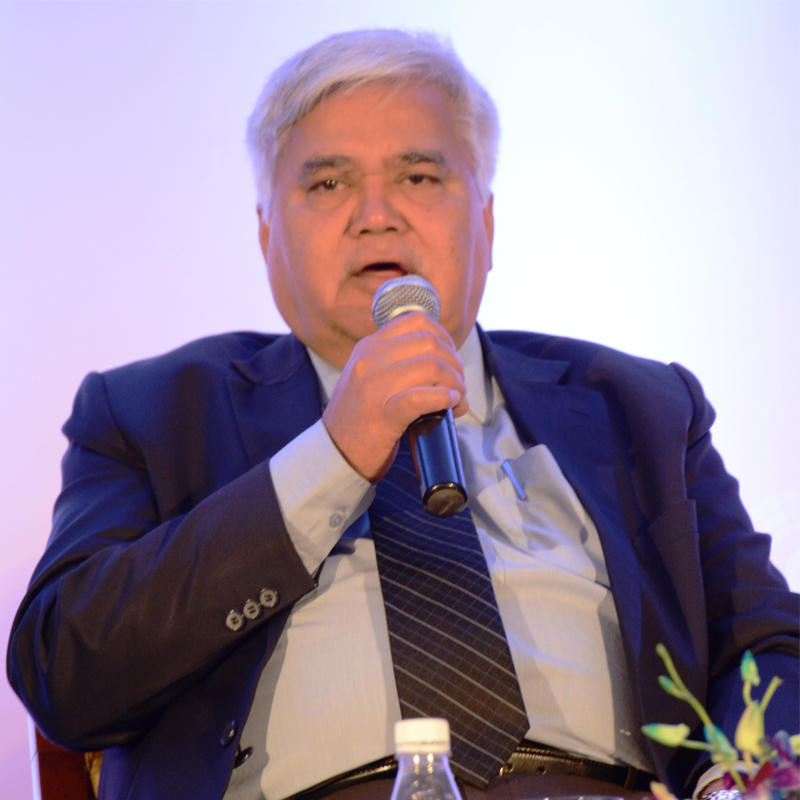
    “We are bringing out a comprehensive and common framework for all platforms relating to quality of service (QoS), tariff and interconnect. We have been working on it for many months now,” TRAI chairman RS Sharma told indiantelevision.com in an exclusive interview, adding that criticism of draft guidelines were part of a democratic consultation process.

    According to Sharma, the final recommendations of the regulator, which are being framed after a lengthy process of consultation with all stakeholders spread over several months, will be “issued by the end of this month (2016 end).”

    Sharma, who spoke on a whole range of issues on telecoms and broadcast sectors that it oversees, said the overall effort of TRAI was to create a framework for industry players that will boost digitization making the dream of Digital India come true. “We are working towards an environment that will reduce ambiguity in regulations and help all stakeholders, including the consumer,” he added.  

    Last week, the Delhi High Court removed almost all legal hurdles to complete digital rollout of TV services in the country by vacating all interim court orders that had been passed by other courts in the country extending the deadline for implementation of Phase III of digital addressable system (DAS).

    Though Sharma pointed out that the legal cases (taken care by Delhi HC on direction from Supreme Court) had no direct bearing on TRAI’s efforts to bring about a comprehensive regulatory framework for digital TV services in India, Sharma said, “It is the Ministry of Information and Broadcasting (MIB) that will have to enforce the (digitization) schedule, but we are ready to provide any assistance to MIB if needed.”

    On the entry of new technologies in India, which give window to innovations, the TRAI chief opined new technologies should be actively promoted without an attempt to throttle them through regulations.

    “We should not try to throttle them (new technologies) just because there are legacy business models. Business models must adapt to technology rather that technology being stifled in order to protect business models,” Sharma said.

    Quizzed, on the issue of Net Neutrality and new techs like OTT, Sharma explained, “We have already dealt with the issue of Net Neutrality from the tariff perspective (TRAI banned zero-tariff plans by telcos earlier this year). But as the government has asked us to provide it with comprehensive recommendations on the issue, we are in the final stages… (but) it may take a couple of months more.”

    While agreeing with the broad idea that time has arrived for India to have a comprehensive convergence law and regulator, Sharma made it clear that TRAI was not a competent authority to take a call on such policy matters and it was the government’s prerogative. “What should be the methods of regulatory structure (for a convergence law)? How will it be governed? Who will do it? I am not the competent person (on such issues) as it’s for the government to decide. But I certainly agree that because of technological developments, lot of convergence is happening in various sectors.”

    Asked to comment on a common criticism that India is an over-regulated market, Sharma disagreed and said, “We don’t believe in unnecessary regulations. However, at the same time, some regulation is necessary for an orderly growth of the industry; especially so consumers don’t suffer because of ambiguities in rules.”   

    Keep tuned in to read the full interview of TRAI chief, which is coming soon.

    ALSO READ:

    Delhi HC removes legal hurdles to implement DAS IV by 1 Jan 2017
     

  • TRAI chief: Pending DAS tariff, interconnect, QoS norms by year-end

    TRAI chief: Pending DAS tariff, interconnect, QoS norms by year-end

    NEW DELHI: India’s telecoms and broadcast carriage regulator Telecom Regulatory Authority of India (TRAI) has said it would issue final guidelines relating to broadcast tariff, interconnect and quality of service issues by this month-end and reiterated its overall aim is to “harmonise” norms so as to facilitate growth of the industry in an ambiguity-free regulatory environment.

    “We are bringing out a comprehensive and common framework for all platforms relating to quality of service (QoS), tariff and interconnect. We have been working on it for many months now,” TRAI chairman RS Sharma told indiantelevision.com in an exclusive interview, adding that criticism of draft guidelines were part of a democratic consultation process.

    According to Sharma, the final recommendations of the regulator, which are being framed after a lengthy process of consultation with all stakeholders spread over several months, will be “issued by the end of this month (2016 end).”

    Sharma, who spoke on a whole range of issues on telecoms and broadcast sectors that it oversees, said the overall effort of TRAI was to create a framework for industry players that will boost digitization making the dream of Digital India come true. “We are working towards an environment that will reduce ambiguity in regulations and help all stakeholders, including the consumer,” he added.  

    Last week, the Delhi High Court removed almost all legal hurdles to complete digital rollout of TV services in the country by vacating all interim court orders that had been passed by other courts in the country extending the deadline for implementation of Phase III of digital addressable system (DAS).

    Though Sharma pointed out that the legal cases (taken care by Delhi HC on direction from Supreme Court) had no direct bearing on TRAI’s efforts to bring about a comprehensive regulatory framework for digital TV services in India, Sharma said, “It is the Ministry of Information and Broadcasting (MIB) that will have to enforce the (digitization) schedule, but we are ready to provide any assistance to MIB if needed.”

    On the entry of new technologies in India, which give window to innovations, the TRAI chief opined new technologies should be actively promoted without an attempt to throttle them through regulations.

    “We should not try to throttle them (new technologies) just because there are legacy business models. Business models must adapt to technology rather that technology being stifled in order to protect business models,” Sharma said.

    Quizzed, on the issue of Net Neutrality and new techs like OTT, Sharma explained, “We have already dealt with the issue of Net Neutrality from the tariff perspective (TRAI banned zero-tariff plans by telcos earlier this year). But as the government has asked us to provide it with comprehensive recommendations on the issue, we are in the final stages… (but) it may take a couple of months more.”

    While agreeing with the broad idea that time has arrived for India to have a comprehensive convergence law and regulator, Sharma made it clear that TRAI was not a competent authority to take a call on such policy matters and it was the government’s prerogative. “What should be the methods of regulatory structure (for a convergence law)? How will it be governed? Who will do it? I am not the competent person (on such issues) as it’s for the government to decide. But I certainly agree that because of technological developments, lot of convergence is happening in various sectors.”

    Asked to comment on a common criticism that India is an over-regulated market, Sharma disagreed and said, “We don’t believe in unnecessary regulations. However, at the same time, some regulation is necessary for an orderly growth of the industry; especially so consumers don’t suffer because of ambiguities in rules.”   

    Keep tuned in to read the full interview of TRAI chief, which is coming soon.

    ALSO READ:

    Delhi HC removes legal hurdles to implement DAS IV by 1 Jan 2017
     

  • Govt made Rs 2152 cr less than expected from spectrum sale

    Govt made Rs 2152 cr less than expected from spectrum sale

    MUMBAI: The government raised Rs 32434.10 crore upfront from the spectrum auction this year, against the Rs 43586 cr that the Telecom Department had projected. That is a difference of Rs 2152 cr.

    Telecom minister Manoj Sinha stated in the Rajya Sabha that, for 2016-17, DoT estimated Rs 34,586 crore from spectrum auction which was raised by the finance ministry to Rs 63,580.92 crore. Against DoT’s projection of Rs 34,586 crore, Rs 32,434.10 crore had been collected as upfront payment from 2016 auction.

    The final revenue expected from airwaves auction was based on the base price of each band of spectrum in each licenced service area put to auction, fixed by the government on the recommendation of TRAI, the minister explained.

    However, budgetary target projection by DoT can be considered as the revenue target from spectrum auction. Total revenue government raised from the sale of airwaves in 2016 was Rs 65,789.12 crore, the minister added.

  • Govt made Rs 2152 cr less than expected from spectrum sale

    Govt made Rs 2152 cr less than expected from spectrum sale

    MUMBAI: The government raised Rs 32434.10 crore upfront from the spectrum auction this year, against the Rs 43586 cr that the Telecom Department had projected. That is a difference of Rs 2152 cr.

    Telecom minister Manoj Sinha stated in the Rajya Sabha that, for 2016-17, DoT estimated Rs 34,586 crore from spectrum auction which was raised by the finance ministry to Rs 63,580.92 crore. Against DoT’s projection of Rs 34,586 crore, Rs 32,434.10 crore had been collected as upfront payment from 2016 auction.

    The final revenue expected from airwaves auction was based on the base price of each band of spectrum in each licenced service area put to auction, fixed by the government on the recommendation of TRAI, the minister explained.

    However, budgetary target projection by DoT can be considered as the revenue target from spectrum auction. Total revenue government raised from the sale of airwaves in 2016 was Rs 65,789.12 crore, the minister added.

  • No BIS specification yet for interoperable DTH boxes

    No BIS specification yet for interoperable DTH boxes

    NEW DELHI: The Bureau of Indian Standards (BIS) had so far failed to come out with specifications with regard to interoperability of STBs (set-top boxes) meant for DTH (direct-to-home) platforms.

    An information and broadcasting ministry source was answering a question by indiantelevision.com in response to a reply in the Parliament given by the minister of state Rajyavardhan Rathore.

    The minister had said the ministry had accepted recommendations of the Telecom Regulatory Authority of India (TRAI) that it should work with the BIS and the Department of Electronics and IT to ensure such set-top boxes.

    TRAI, in July 2014, on “Issues relating to New DTH Licenses” said: “The Open Architecture (Non-proprietary) Set Top Box (STB), which will ensure technical compatibility and effective interoperability among different DTH service providers, shall have such specifications as laid down by the Government from time to time” with “The Set Top Box offered by a DTH service provider shall have such specifications as laid down by the Bureau of Indian Standard (BIS) from time to time.”

    TRAI recommended that BIS should come out with updated specifications for STBs from time to time and while doing so, BIS will consult TRAI and that the license conditions should mandate the licensee to comply with the tariff order/scheme prescribed by TRAI for commercial interoperability.

    In the paper, the Authority had said that STB interoperability was not possible because of the different technologies adopted by the operators due to them entering the market at different times. TRAI thus asked the BIS to regularly keep updating the standard of STB technology.

    Then I&B Minister Prakash Javadekar had told the Parliament on 24 July 2014 that the interoperability of DTH customer premises equipment has not so far proved to be effective due to various techno-economic reasons. The interoperability had been envisaged in the DTH licence conditions, he said.

    The portability in DTH service can be achieved through technical interoperability or through commercial interoperability.

  • No BIS specification yet for interoperable DTH boxes

    No BIS specification yet for interoperable DTH boxes

    NEW DELHI: The Bureau of Indian Standards (BIS) had so far failed to come out with specifications with regard to interoperability of STBs (set-top boxes) meant for DTH (direct-to-home) platforms.

    An information and broadcasting ministry source was answering a question by indiantelevision.com in response to a reply in the Parliament given by the minister of state Rajyavardhan Rathore.

    The minister had said the ministry had accepted recommendations of the Telecom Regulatory Authority of India (TRAI) that it should work with the BIS and the Department of Electronics and IT to ensure such set-top boxes.

    TRAI, in July 2014, on “Issues relating to New DTH Licenses” said: “The Open Architecture (Non-proprietary) Set Top Box (STB), which will ensure technical compatibility and effective interoperability among different DTH service providers, shall have such specifications as laid down by the Government from time to time” with “The Set Top Box offered by a DTH service provider shall have such specifications as laid down by the Bureau of Indian Standard (BIS) from time to time.”

    TRAI recommended that BIS should come out with updated specifications for STBs from time to time and while doing so, BIS will consult TRAI and that the license conditions should mandate the licensee to comply with the tariff order/scheme prescribed by TRAI for commercial interoperability.

    In the paper, the Authority had said that STB interoperability was not possible because of the different technologies adopted by the operators due to them entering the market at different times. TRAI thus asked the BIS to regularly keep updating the standard of STB technology.

    Then I&B Minister Prakash Javadekar had told the Parliament on 24 July 2014 that the interoperability of DTH customer premises equipment has not so far proved to be effective due to various techno-economic reasons. The interoperability had been envisaged in the DTH licence conditions, he said.

    The portability in DTH service can be achieved through technical interoperability or through commercial interoperability.

  • TRAI draft tariff order skewed in favour of DPOs, will harm industry: IBF

    TRAI draft tariff order skewed in favour of DPOs, will harm industry: IBF

    NEW DELHI: The Indian Broadcasting Foundation (IBF), an apex body of broadcasting companies, has criticised sector regulator TRAI for over-regulating and proposing draft guidelines on tariff and interconnection that are skewed in favour of distribution platform operators (DPOs).

    Responding to Telecom Regulatory Authority of India (TRAI) draft orders relating to tariff, inter-connections and quality of service, IBF said the new regime will lead to “de-growth” of the industry and discourage investments and production of good quality content in the television industry.

    Pointing out that the proposed regulatory regime “regresses rather than advances”, IBF in a lengthy reply has said with over 830 channels for consumers to choose from and a large pubcaster offering of over 100 private and public TV channels, whether there a “need to regulate all aspects of a set of 200 odd pay TV channels”.

    “The question for the Authority would be, is there proven evidence of market failure that a dire need has arisen to over-regulate these 200 odd pay TV channels(?). We are of the firm belief that there is no compelling reason to regulate these channels and, accordingly, only a light touch regulation, if at all, ought to have been proposed,” IBF has submitted justifying its criticism of  draft  guidelines.

    Contending that pay TV channels (read cable and DTH services) were not essential services IBF counters there was no compelling reason to regulate these channels. “The present tariff order is based on the ‘erroneous premise’ that pay TV channels are essential services,” the broadcasting industry body said.

    Citing international copyrights and IPR laws, IBF pointed out that whole exercise undertaken by TRAI was in direct conflict with the provisions of the Indian Copyright Act, 1957.

    According to IBF, the proposed tariff and inter-connect orders conflict with the Copyright Act in the following ways and need to be “harmonised”:

    a.       The proposed tariff order(s) that impose restrictions on nature of content, prices of channels, mandated discount caps and commissions, manner of offering, etc have to be reviewed and modified in the light of specific copyright laws providing freedom to broadcast organisations to charge royalties and any other consideration/fees for their works and BRR in accordance with the market demands and contract laws.

    b.      The draft interconnect regulations issued by TRAI that take away the broadcast organisations’ exclusive rights to deal and imposes restrictions on their contractual abilities and takes away their ability to negotiate the terms of trade need to be reviewed and modified to harmonise the same with the provisions of the Copyright Act pertaining to voluntary licensing and assignments by Broadcast Organisations by permitting mutual negotiations.

    c.       The existing commercial tariff orders and regulations issued by TRAI in relation to commercial establishments is also at odds with copyright laws in as much as the Copyright Act clearly provides broadcast organisations the right to charge differential rates of royalties and license fees on commercial establishments vis-a-vis domestic/residential subscribers.

    Going a step further, IBF has raised questions over transparency and the manner in which draft guidelines were issued: “The draft consultations also do not meet the threshold of transparency mandated by Section 11(4) of the TRAI Act 1997, which requires that the Authority will ensure transparency while exercising its powers and discharging its functions.”

    Also Read:

    TRAI unlikely to take final call on draft orders soon