Tag: Trai

  • DD’s digital terrestrial transmission meet today as TRAI paper awaits finalisation

    DD’s digital terrestrial transmission meet today as TRAI paper awaits finalisation

    NEW DELHI: Even as a consultation paper on Digital Terrestrial Transmission by the Telecom Regulatory Authority of India is pending finalisation, Doordarshan is holding a workshop with stakeholders to explore the potential of DTT services.

    The workshop on “Digital Terrestrial Transmission: Business Opportunities” is being organized on 23 December 2016 in the capital and will be addressed by experts.

    Experts from the Indian Institute of Management Ahmedabad, various stakeholders including Content providers, private broadcasters, receiver manufactures, and officers at Doordarshan will be participating in this workshop.

    In the paper issued on 22 June 2016, TRAI wanted to know if stakeholders perceive the need for introduction of DTT in multiple broadcasting distribution platforms and what the appropriate strategy for DTT implementation across the country should be.

    indiantelevision.com had earlier reported that the government was in the final stages of this exercise. Later, the website quoted then Prasar Bharati Chief Executive Officer Jawhar Sircar as saying that the pubcaster had itself cleared this more than a year earlier, even while pointing out that this would necessitate use of the Prasar Bharati infrastructure.

    DD, which presently has exclusive domain over terrestrial broadcasting, ranks amongst the world’s largest terrestrial television networks. It has a network of 1412 analog transmitters that provide TV services through two national channels namely, DD National and DD News. In addition to this, the network also broadcast several regional TV channels over the terrestrial network in a time sharing mode to meet the local and regional needs of people in different parts of the country. All TV channels provided by DD are free-to-air.

    In its paper, TRAI had asked whether DTT broadcasting should be opened for participation by the private players, and which model or a combination thereof for Dtt will be most suitable in Indian context.

    Trai also wanted to know what the approach for implementing DTT network (MFN/SFN/Hybrid) should be and how many digital multiplex per DTT operator should be planned for metro, major cities, urban and rural areas.

    Expert opinion had also been sought on the most appropriate frequency band as per National Frequency Allocation Plan 2011 for implementation of Digital terrestrial transmission including mobile TV.

    The DTT platform is flexible and content format agnostic – newer formats of TV channels such as HD TV, 3D TV, UHD TV, data and radio services etc. can thus be delivered with reduced transmission power requirements. Digitisation also allows for government bodies to reclaim spectrum and repurpose it.

    With standardized DTT transmission and clear advantages in terms of effective frequency utilization as well as enhanced TV quality, many countries the world over have laid down clear roadmaps to switch-off analog terrestrial TV transmission with a transition to DTT. In India, though work for changeover from Analog terrestrial transmission to digital terrestrial transmission by DD has already commenced, a clear roadmap is however unavailable.

  • TRAI: DAS-Bharatnet Digital India’s ‘Aadhaar’

    TRAI: DAS-Bharatnet Digital India’s ‘Aadhaar’

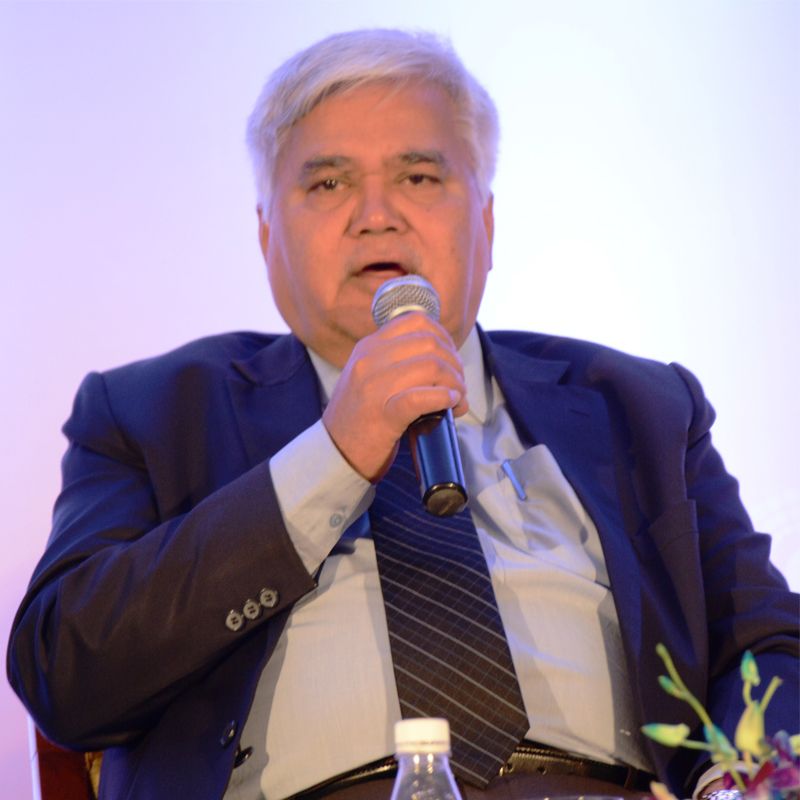
    NEW DELHI: Telecom Regulatory Authority of India chairman R S Sharma said that the country would gradually shift to a payment system using Aadhaar card instead of the various private pay systems or wallets.

    He also mentioned that the implementation of Bharatnet will be faster and effective with PPP model, and further combined with Digital Cable Television System, India will reach a new level of digital connectivity.

    At a seminar on “Demonetisation to Digital Remonetisation”, Sharma said that “Cost, Convenience, and Confidence are crucial factors for a successful Digital Payment System implementation in India.

    In the meet organzed by FICCI, he said 1.1 billion people already have Aadhaar cards and the number was going up everyday.

    Sharma said one of the nine pillars of TRAI in a report given early this year was to go cashless. This report which also refers to Unified Payment Interface (UPI) and Unstructured Supplementary Service Data (USSD) was already being implemented by banks.

    The regulator was now working on a system of Aadhaar KYC (Know Your Customer) whereby any consumer could directly be able to use his Aadhaar identification to make payments. Electronic KYC is also in place.

    He said that TRAI had given a paper about Aadhaar authentication system to UIDAI as early as October 2010 and said this is vital.

    This involved three elements: What I know (my finger print or Iris), what I have (Credit or Debit Cards) and What I am (Biometrics).

    Aadhaar interoperability was also suggested in 2010. Thus, the software for going cashless is in place but has to be implemented as both software and infrastructure are in place.

    It was important for the finance sector to get integrated into the telecom sector in this regard.

    Answering a question, he said that the systems have to be made simple so that everyone is able to understand and implement them.

    Sharma highlighted the pillars of Digital India and mentioned the need of an effective Digital Infrastructure, and how availability and affordability of digital solutions formulates the base of Digital Remonetisation. The TRAI chairman highlighted how JAM Trinity creates a robust system within India, which further creates a digital inclusion with Aadhaar users across India.

    Sharma recommended that in order to create a well operational and sustainable digital and cashless economy, it is vital to eliminate convenience charge by the banks. He firmly suggested that interoperable or interlinked digital wallets can additionally support the digital payment systems of India.

    The meet was part of an ICT policy dialogue with the agenda to discuss the challenges and opportunities that lie before the ICT sector, government and the regulators following the demonetisation move.

  • TRAI: DAS-Bharatnet Digital India’s ‘Aadhaar’

    TRAI: DAS-Bharatnet Digital India’s ‘Aadhaar’

    NEW DELHI: Telecom Regulatory Authority of India chairman R S Sharma said that the country would gradually shift to a payment system using Aadhaar card instead of the various private pay systems or wallets.

    He also mentioned that the implementation of Bharatnet will be faster and effective with PPP model, and further combined with Digital Cable Television System, India will reach a new level of digital connectivity.

    At a seminar on “Demonetisation to Digital Remonetisation”, Sharma said that “Cost, Convenience, and Confidence are crucial factors for a successful Digital Payment System implementation in India.

    In the meet organzed by FICCI, he said 1.1 billion people already have Aadhaar cards and the number was going up everyday.

    Sharma said one of the nine pillars of TRAI in a report given early this year was to go cashless. This report which also refers to Unified Payment Interface (UPI) and Unstructured Supplementary Service Data (USSD) was already being implemented by banks.

    The regulator was now working on a system of Aadhaar KYC (Know Your Customer) whereby any consumer could directly be able to use his Aadhaar identification to make payments. Electronic KYC is also in place.

    He said that TRAI had given a paper about Aadhaar authentication system to UIDAI as early as October 2010 and said this is vital.

    This involved three elements: What I know (my finger print or Iris), what I have (Credit or Debit Cards) and What I am (Biometrics).

    Aadhaar interoperability was also suggested in 2010. Thus, the software for going cashless is in place but has to be implemented as both software and infrastructure are in place.

    It was important for the finance sector to get integrated into the telecom sector in this regard.

    Answering a question, he said that the systems have to be made simple so that everyone is able to understand and implement them.

    Sharma highlighted the pillars of Digital India and mentioned the need of an effective Digital Infrastructure, and how availability and affordability of digital solutions formulates the base of Digital Remonetisation. The TRAI chairman highlighted how JAM Trinity creates a robust system within India, which further creates a digital inclusion with Aadhaar users across India.

    Sharma recommended that in order to create a well operational and sustainable digital and cashless economy, it is vital to eliminate convenience charge by the banks. He firmly suggested that interoperable or interlinked digital wallets can additionally support the digital payment systems of India.

    The meet was part of an ICT policy dialogue with the agenda to discuss the challenges and opportunities that lie before the ICT sector, government and the regulators following the demonetisation move.

  • TRAI: Give 100 MB a month free data to rural area subs

    TRAI: Give 100 MB a month free data to rural area subs

    NEW DELHI: India’s telecoms and broadcast carriage regulator Telecom Regulatory Authority of India (TRAI) has recommended to the government to provide limited free data to rural subscribers as part of efforts to boost e-payments and digital economy.

    “In order to bridge the affordability gap for the persons residing in rural areas and to support government’s efforts towards cashless economy by incentivising digital means, the Authority recommends that a scheme under which a reasonable amount of data, say 100 MB per month, may be made available to rural subscribers for free,” TRAI said in a set of recommendations on Monday on `Encouraging Data Usage in Rural Areas Through Provisioning of Free Data’.

    TRAI further stated that greater broadband access, particularly for large parts of the rural population can be the force to drive integration of the “unconnected and the underserved in economy”, thereby helping to enhance the overall value of the network.

    “Greater broadband access has the power to augment productivity of the agricultural sector as well as small enterprises, facilitate easier and more efficient participation of the rural population in governance, generate new employment opportunities and enable a host of services like e-commerce, e-learning, e-banking etc. As an increasing number of government services are also being electronically delivered, expanding rural Internet access has become a matter of urgency and is essential in fulfilling the vision of Digital India,” TRAI said.

    The regulator further suggested that the cost of implementation of the scheme may be met from the fund that telecom operators contribute to spread telecom connectivity in rural areas or known as USOF.

    TRAI also suggested that to increase participation of other entities for incentivizing free data, there is a need to introduce third party (aggregator) to facilitate schemes that are TSPs or telecom service provider agnostic and non-discriminatory in their implementation and that this scheme for free data must not involve any arrangement between the TSP and the aggregator/content provider and should not be designed to circumvent TRAI directives banning discriminatory tariffs for data.

    As part of the process, TRAI has suggested that the aggregators will need to register with Department of Telecoms (DoT); the registrant must be a company registered under Indian Companies Act, 1956; the validity of registration shall be for five years; the registrant shall not either directly or indirectly assign or transfer the registration in any manner whatsoever to a third party either in whole or in part.

  • TRAI: Give 100 MB a month free data to rural area subs

    TRAI: Give 100 MB a month free data to rural area subs

    NEW DELHI: India’s telecoms and broadcast carriage regulator Telecom Regulatory Authority of India (TRAI) has recommended to the government to provide limited free data to rural subscribers as part of efforts to boost e-payments and digital economy.

    “In order to bridge the affordability gap for the persons residing in rural areas and to support government’s efforts towards cashless economy by incentivising digital means, the Authority recommends that a scheme under which a reasonable amount of data, say 100 MB per month, may be made available to rural subscribers for free,” TRAI said in a set of recommendations on Monday on `Encouraging Data Usage in Rural Areas Through Provisioning of Free Data’.

    TRAI further stated that greater broadband access, particularly for large parts of the rural population can be the force to drive integration of the “unconnected and the underserved in economy”, thereby helping to enhance the overall value of the network.

    “Greater broadband access has the power to augment productivity of the agricultural sector as well as small enterprises, facilitate easier and more efficient participation of the rural population in governance, generate new employment opportunities and enable a host of services like e-commerce, e-learning, e-banking etc. As an increasing number of government services are also being electronically delivered, expanding rural Internet access has become a matter of urgency and is essential in fulfilling the vision of Digital India,” TRAI said.

    The regulator further suggested that the cost of implementation of the scheme may be met from the fund that telecom operators contribute to spread telecom connectivity in rural areas or known as USOF.

    TRAI also suggested that to increase participation of other entities for incentivizing free data, there is a need to introduce third party (aggregator) to facilitate schemes that are TSPs or telecom service provider agnostic and non-discriminatory in their implementation and that this scheme for free data must not involve any arrangement between the TSP and the aggregator/content provider and should not be designed to circumvent TRAI directives banning discriminatory tariffs for data.

    As part of the process, TRAI has suggested that the aggregators will need to register with Department of Telecoms (DoT); the registrant must be a company registered under Indian Companies Act, 1956; the validity of registration shall be for five years; the registrant shall not either directly or indirectly assign or transfer the registration in any manner whatsoever to a third party either in whole or in part.

  • Wi-fi proliferation: Discussion postponed to 28 Dec

    Wi-fi proliferation: Discussion postponed to 28 Dec

    NEW DELHI: The open house discussion by the Telecom Regulatory Authority of India in the capital on its consultation paper on “Proliferation of Broadband through Public Wi-Fi Networks” has been postponed to 28 December 2016 at the India Habitat Centre.

    Earlier, the discussion was slated for 20 December on the paper issued on 13 July this year in view of the importance attached to public Wi-Fi systems.

    The issuance of this paper was followed by reactions and then a workshop in Bengaluru.

    Through a set of 12 questions, the Authority had sought to get the opinion of stakeholders including internet and telecom service providers on how best Wi-fi (an acronym for Wireless Fidelity) can grow in the country.

    Later, on 16 November, TRAI issued a second paper on model for nation-wide interoperable and scalable wi-fi networks.This had posed six questions.

    Earlier, TRAI had said it realised the importance of public Wi-Fi networks as complementary to existing landline and cellular mobile infrastructure in improving broadband penetration and adoption of Digital India.

    Also read:  Public Wi-Fi: TRAI plans to evolve model, releases paper

    Wi-fi proliferation: Discussion on 20 Dec

  • Wi-fi proliferation: Discussion postponed to 28 Dec

    Wi-fi proliferation: Discussion postponed to 28 Dec

    NEW DELHI: The open house discussion by the Telecom Regulatory Authority of India in the capital on its consultation paper on “Proliferation of Broadband through Public Wi-Fi Networks” has been postponed to 28 December 2016 at the India Habitat Centre.

    Earlier, the discussion was slated for 20 December on the paper issued on 13 July this year in view of the importance attached to public Wi-Fi systems.

    The issuance of this paper was followed by reactions and then a workshop in Bengaluru.

    Through a set of 12 questions, the Authority had sought to get the opinion of stakeholders including internet and telecom service providers on how best Wi-fi (an acronym for Wireless Fidelity) can grow in the country.

    Later, on 16 November, TRAI issued a second paper on model for nation-wide interoperable and scalable wi-fi networks.This had posed six questions.

    Earlier, TRAI had said it realised the importance of public Wi-Fi networks as complementary to existing landline and cellular mobile infrastructure in improving broadband penetration and adoption of Digital India.

    Also read:  Public Wi-Fi: TRAI plans to evolve model, releases paper

    Wi-fi proliferation: Discussion on 20 Dec

  • DTH subscriber growth retards in Q1-16 as per TRAI data

    DTH subscriber growth retards in Q1-16 as per TRAI data

    BENGALURU: We at www.indiantelevision.com had noted and said thatContrary to expectations that the sunset date of 31 December 31, 2015 (Q3-16 in financial terms in India) would rake in good numbers for the DTH industry for Q4-16 the subscriber base growth just did not happen.At that time, results declared by three of India’s seven DTH players whose results are available un public domain did notshow much of a change.Further, at that time, though Airtel Digital TV and Videocon d2h had both shown a small spike in subscriber additions between Q2-2016 and Q3-2016, overall taking the combined addition in subscription numbers by all the three, the change was just 3.59per cent. In the case of the third player-Dish TV, it witnessed the lowest growth over a five quarter period starting Q3-2015 until Q3-16 at 2.19 per cent.

    Results for Q4-16 (quarter ended 31 March 2016) showed a reversal of sorts in that trend. Dish TV announced that it had added 5 lakh subscribers – the highest additions in fiscal 2016. Airtel DTH and Videocon d2h added 6.19 lakh and 5.9 lakh subscribers respectively and each reported approximately 11 percent quarter-over-quarter (q-o-q) growth in operating profits in that quarter.It may be noted that TRAI (Telecom Regulatory Authority Regulatorreports for Q3-16 (quarter ended 31 December 2015) of the net active subscriber base included temporarily suspended subscribers that have been inactive for not more than 120 days – hence reflecting a huge 36 percent growth in active subscribers for that quarter.

    Besides Airtel DTH, Dish TV and Videocon d2h, there are three other private DTH players in India – Reliance, Sun Direct and Tata Sky, and the government’s FreeDish. Airtel DTH, Dish TV and Videocon d2h (the three players in this report) represent about 65 percent of the private DTH active subscriber universe in India. Please refer to Fig A below:

    public://image1.jpg

    FreeDish DTH service – the largest DTH player by far in terms of subscribers with an estimated 15 million or 1.5 crore subscribers in 2015 as per the KPMG-FICCI Indian Media and Entertainment Industry Report 2016 (KPMG-FICCI M&E Report 2016) titled The Future: Now streaming. It must however be noted that an exact number for registered or active subscribers is not available since this is a free DTH service. The proposed merger of Videocon d2h with Dish TV will create the largest private television carriage player in India and the second largest in the world, be it cable, internet television or DTH or any other.

    As per numbers released by TRAI for Q4-16 and the quarter ended 30 June 2016 (Q1-17), the growth of registered and active DTH subscribers has reduced from 4.5 percent and 4.6 percent in Q4-16 to 3.3 percent and 3.4 percent respectively in Q1-17. Overall, DTH active subscribers grew by 19.7 lakh or 8.06 percent q-o-q in Q1-17 to 605 lakh active subscribers (66 percent of registered subscribers) from 585.3 lakh (also 66 percent of registered subscribers) in Q4-16. The three players in this report contributed a combined 12.95 lakh or 65.74 percent in subscriber growth. Registered subscriber numbers were 915.3 lakh and 886.4 lakh in Q1-17 and Q4-16 respectively. In Q3-16, registered subscribers were 848 lakh.

    In Q1-17, 4.65 lakh (3.97 percent growth), 4 lakh (2.76 percent growth) and 4.3 lakh (3.6 percent growth) were added q-o-q by Airtel DTH, Dish TV and Videocon d2h respectively.

    Among the three, Airtel DTH added more net subscribers in absolute numbers in FY-16 than in FY-15, Dish TV added approximately the same number of net subscribers in both FY-15 and FY-16, while Videocon d2h saw slightly lower absolute net subscribers increment in FY-16 as compared to FY-15. Airtel DTH added 55.6 percent more subscribers in FY-16 – 16.52 lakh to reach net subscriber base of 117.52 lakh as compared to 10.62 lakh in FY-15; Dish TV added 15 lakh subscribers in FY-16 as well as in the previous year; Dish TV’s subscriber base was 145 lakh in FY-16; Videocon d2h added 16.8 lakh subscribers in FY-16 to reach a subscriber base of 118.6 lakh as compared to 17.4 lakh subscriber additions in FY-15. The above numbers are based on the financial results/investor presentations reported by the three DTH entities.

    Please refer to Fig B below.

    public://image2.jpg

    ARPU has been steadily increasing in the case of Airtel DTH and Videocon d2h, while it has was constant in the case of Dish TV at Rs 174 in Q4-16 as well as Q1-17. In Q2-17, however, Dish TV’s ARPU has dipped q-o-q by a huge Rs 12 to Rs 162.

    For the first time in Q1-17, despite having the largest subscriber base amongst the top three, Dish TV’s revenues have been the lowest. In Q2-17, Airtel DTH reported the highest revenue amongst the three followed by Dish TV, with Videocon d2h’s revenue lower by just a few crore rupees. This could be mainly because Dish TV is more of a value player, whilst the other two are premium players.  It may be noted Videocon d2h’s ARPU in Q2-17 has also dipped q-o-q by Rs 10 to Rs 209. Please refer to Fig C below for revenue and ARPU trends (Revenue numbers have been rounded off to the nearest Rs crore, ARPU numbers are in Indian Rupees, Rs)

    public://IMAGE3.jpg

    Let us see how the three have performed in Q1-17

    Airtel DTH

    Revenue from Airtel’s DTH segment in Q1-17 increased 22.2 per cent to Rs 836.9 crore as compared to Rs 684.8 crore in the corresponding quarter of the previous year. Airtel’s DTH segment reported EBIT (Earnings before interest and tax) of Rs 121.9 crore (14.6 per cent operating margin) in Q1-17 as compared to EBIT of Rs 41.5 crore (6.1 percent operating margin) in Q1-16.

    Airtel DTH added 4.24 lakh net subscribers in Q1-17 to bring its subscriber base to 121.9 lakh from 117.25 lakh in the previous quarter. Average revenue per user (ARPU) increased to Rs 233 from Rs 229 in the immediate trailing quarter. Airtel DTH reported a monthly subscriber churn of 0.8 percent in Q1-17, same as the churn in Q1-16 and Q4-16.

    Dish TV

    Dish TV reported 6.7 percent higher y-o-y subscription revenue of Rs 728.2 crore for Q1-17, as compared to Rs 682.8 crore. Operating revenue in Q1-17 increased 5.7 percent y-o-y to Rs 778.6 crore from Rs 736.7 crore in the corresponding quarter of the previous year.

    Dish TV says that:
    (1.1) For Q1-17, subscription revenue, on a like-to-like basis, was Rs 766.9 crore, a growth of 12.3 percent y-o-y.
    (1.2) For Q1-17 operating revenue, on a like-to-like basis, was Rs 817.2 crore, a growth of 10.9 percent y-o-y.

    Dish TV reported PAT of Rs. 40.9 crore in Q1-17, down 24.5 percent as compared to Rs 54.2 crore in Q1-16.

    EBIDTA in the Q1-17 increased 12.2 percent to Rs 264.6 crore from Rs 235.7 crore in Q1-16.

    The company reported addition of 4.02 lakh net subscribers for Q1-17. It closed the quarter with 149 lakh subscribers. Average revenue per user (ARPU) for Q1-17 remained the same year-over-year (y-o-y) and quarter-over-quarter (q-o-q) at Rs 174.

    Videocon d2h

    Videocon d2h is the second listed Indian DTH player to report a profit after tax (PAT), after the Essel group’s Dish TV that turned the numbers black last year. Videocon d2h reported PAT of Rs 2.7 crore for Q1-17. For the corresponding year ago quarter (Q1-17), the company had reported a loss of Rs 24.4 crore and for the immediate trailing quarter (Q4-16) reported loss was Rs 21.2 crore.

    Videocon d2h subscription and activation revenue in Q1-17 increased 23.9 percent y-o-y to Rs 752.3 crore from Rs 607.3 crore and increased 6.6 percent q-o-q from Rs 705.6 crore.

    The DTH major also reported 15.5 percent year-over-year (y-o-y) growth in net subscriber number growth at 122.9 lakh for Q1-17 as compared to 106.4 lakh and a 3.6 percent quarter-over-quarter (q-o-q) growth from118.6 lakh. Average revenue per user (ARPU) in Q1-17 increased to Rs 219 from Rs 205 in Q1-16 and from Rs 214 in the immediate trailing quarter.

    Subscriber monthly churn in the current quarter was 0.49 percent; in Q1-16 it was slightly lower at 0.46 percent, while in the immediate trailing quarter it was much higher at 0.58 percent.

    Comments

    There is not much of a change in the comments and conclusions drawn by us for FY-16 numbers. Overall, the pay DTH industry is turning profitable as is obvious from the results.

    DAS III and IV were/are sunshine periods for the television carriage industry. Activation revenues have been adding to the top lines and bottom lines of most of the players. Have they been able to optimise the opportunity that DAS has offered? Not fully! At present the focus of a majority of the players is more investor oriented, not viewer oriented. This has to change. DTH has the potential to grow even more than the predictions of the industry pundits, provided they get their act together in coming out with packaging – as has Dish TV to a limited extent. India is a price sensitive market, offer the viewers what they want at a reasonable price and the sheer volumes will bring in more and more moolah.And what happens to profits once the activation fee component goes down?
     

  • DTH subscriber growth retards in Q1-16 as per TRAI data

    DTH subscriber growth retards in Q1-16 as per TRAI data

    BENGALURU: We at www.indiantelevision.com had noted and said thatContrary to expectations that the sunset date of 31 December 31, 2015 (Q3-16 in financial terms in India) would rake in good numbers for the DTH industry for Q4-16 the subscriber base growth just did not happen.At that time, results declared by three of India’s seven DTH players whose results are available un public domain did notshow much of a change.Further, at that time, though Airtel Digital TV and Videocon d2h had both shown a small spike in subscriber additions between Q2-2016 and Q3-2016, overall taking the combined addition in subscription numbers by all the three, the change was just 3.59per cent. In the case of the third player-Dish TV, it witnessed the lowest growth over a five quarter period starting Q3-2015 until Q3-16 at 2.19 per cent.

    Results for Q4-16 (quarter ended 31 March 2016) showed a reversal of sorts in that trend. Dish TV announced that it had added 5 lakh subscribers – the highest additions in fiscal 2016. Airtel DTH and Videocon d2h added 6.19 lakh and 5.9 lakh subscribers respectively and each reported approximately 11 percent quarter-over-quarter (q-o-q) growth in operating profits in that quarter.It may be noted that TRAI (Telecom Regulatory Authority Regulatorreports for Q3-16 (quarter ended 31 December 2015) of the net active subscriber base included temporarily suspended subscribers that have been inactive for not more than 120 days – hence reflecting a huge 36 percent growth in active subscribers for that quarter.

    Besides Airtel DTH, Dish TV and Videocon d2h, there are three other private DTH players in India – Reliance, Sun Direct and Tata Sky, and the government’s FreeDish. Airtel DTH, Dish TV and Videocon d2h (the three players in this report) represent about 65 percent of the private DTH active subscriber universe in India. Please refer to Fig A below:

    public://image1.jpg

    FreeDish DTH service – the largest DTH player by far in terms of subscribers with an estimated 15 million or 1.5 crore subscribers in 2015 as per the KPMG-FICCI Indian Media and Entertainment Industry Report 2016 (KPMG-FICCI M&E Report 2016) titled The Future: Now streaming. It must however be noted that an exact number for registered or active subscribers is not available since this is a free DTH service. The proposed merger of Videocon d2h with Dish TV will create the largest private television carriage player in India and the second largest in the world, be it cable, internet television or DTH or any other.

    As per numbers released by TRAI for Q4-16 and the quarter ended 30 June 2016 (Q1-17), the growth of registered and active DTH subscribers has reduced from 4.5 percent and 4.6 percent in Q4-16 to 3.3 percent and 3.4 percent respectively in Q1-17. Overall, DTH active subscribers grew by 19.7 lakh or 8.06 percent q-o-q in Q1-17 to 605 lakh active subscribers (66 percent of registered subscribers) from 585.3 lakh (also 66 percent of registered subscribers) in Q4-16. The three players in this report contributed a combined 12.95 lakh or 65.74 percent in subscriber growth. Registered subscriber numbers were 915.3 lakh and 886.4 lakh in Q1-17 and Q4-16 respectively. In Q3-16, registered subscribers were 848 lakh.

    In Q1-17, 4.65 lakh (3.97 percent growth), 4 lakh (2.76 percent growth) and 4.3 lakh (3.6 percent growth) were added q-o-q by Airtel DTH, Dish TV and Videocon d2h respectively.

    Among the three, Airtel DTH added more net subscribers in absolute numbers in FY-16 than in FY-15, Dish TV added approximately the same number of net subscribers in both FY-15 and FY-16, while Videocon d2h saw slightly lower absolute net subscribers increment in FY-16 as compared to FY-15. Airtel DTH added 55.6 percent more subscribers in FY-16 – 16.52 lakh to reach net subscriber base of 117.52 lakh as compared to 10.62 lakh in FY-15; Dish TV added 15 lakh subscribers in FY-16 as well as in the previous year; Dish TV’s subscriber base was 145 lakh in FY-16; Videocon d2h added 16.8 lakh subscribers in FY-16 to reach a subscriber base of 118.6 lakh as compared to 17.4 lakh subscriber additions in FY-15. The above numbers are based on the financial results/investor presentations reported by the three DTH entities.

    Please refer to Fig B below.

    public://image2.jpg

    ARPU has been steadily increasing in the case of Airtel DTH and Videocon d2h, while it has was constant in the case of Dish TV at Rs 174 in Q4-16 as well as Q1-17. In Q2-17, however, Dish TV’s ARPU has dipped q-o-q by a huge Rs 12 to Rs 162.

    For the first time in Q1-17, despite having the largest subscriber base amongst the top three, Dish TV’s revenues have been the lowest. In Q2-17, Airtel DTH reported the highest revenue amongst the three followed by Dish TV, with Videocon d2h’s revenue lower by just a few crore rupees. This could be mainly because Dish TV is more of a value player, whilst the other two are premium players.  It may be noted Videocon d2h’s ARPU in Q2-17 has also dipped q-o-q by Rs 10 to Rs 209. Please refer to Fig C below for revenue and ARPU trends (Revenue numbers have been rounded off to the nearest Rs crore, ARPU numbers are in Indian Rupees, Rs)

    public://IMAGE3.jpg

    Let us see how the three have performed in Q1-17

    Airtel DTH

    Revenue from Airtel’s DTH segment in Q1-17 increased 22.2 per cent to Rs 836.9 crore as compared to Rs 684.8 crore in the corresponding quarter of the previous year. Airtel’s DTH segment reported EBIT (Earnings before interest and tax) of Rs 121.9 crore (14.6 per cent operating margin) in Q1-17 as compared to EBIT of Rs 41.5 crore (6.1 percent operating margin) in Q1-16.

    Airtel DTH added 4.24 lakh net subscribers in Q1-17 to bring its subscriber base to 121.9 lakh from 117.25 lakh in the previous quarter. Average revenue per user (ARPU) increased to Rs 233 from Rs 229 in the immediate trailing quarter. Airtel DTH reported a monthly subscriber churn of 0.8 percent in Q1-17, same as the churn in Q1-16 and Q4-16.

    Dish TV

    Dish TV reported 6.7 percent higher y-o-y subscription revenue of Rs 728.2 crore for Q1-17, as compared to Rs 682.8 crore. Operating revenue in Q1-17 increased 5.7 percent y-o-y to Rs 778.6 crore from Rs 736.7 crore in the corresponding quarter of the previous year.

    Dish TV says that:
    (1.1) For Q1-17, subscription revenue, on a like-to-like basis, was Rs 766.9 crore, a growth of 12.3 percent y-o-y.
    (1.2) For Q1-17 operating revenue, on a like-to-like basis, was Rs 817.2 crore, a growth of 10.9 percent y-o-y.

    Dish TV reported PAT of Rs. 40.9 crore in Q1-17, down 24.5 percent as compared to Rs 54.2 crore in Q1-16.

    EBIDTA in the Q1-17 increased 12.2 percent to Rs 264.6 crore from Rs 235.7 crore in Q1-16.

    The company reported addition of 4.02 lakh net subscribers for Q1-17. It closed the quarter with 149 lakh subscribers. Average revenue per user (ARPU) for Q1-17 remained the same year-over-year (y-o-y) and quarter-over-quarter (q-o-q) at Rs 174.

    Videocon d2h

    Videocon d2h is the second listed Indian DTH player to report a profit after tax (PAT), after the Essel group’s Dish TV that turned the numbers black last year. Videocon d2h reported PAT of Rs 2.7 crore for Q1-17. For the corresponding year ago quarter (Q1-17), the company had reported a loss of Rs 24.4 crore and for the immediate trailing quarter (Q4-16) reported loss was Rs 21.2 crore.

    Videocon d2h subscription and activation revenue in Q1-17 increased 23.9 percent y-o-y to Rs 752.3 crore from Rs 607.3 crore and increased 6.6 percent q-o-q from Rs 705.6 crore.

    The DTH major also reported 15.5 percent year-over-year (y-o-y) growth in net subscriber number growth at 122.9 lakh for Q1-17 as compared to 106.4 lakh and a 3.6 percent quarter-over-quarter (q-o-q) growth from118.6 lakh. Average revenue per user (ARPU) in Q1-17 increased to Rs 219 from Rs 205 in Q1-16 and from Rs 214 in the immediate trailing quarter.

    Subscriber monthly churn in the current quarter was 0.49 percent; in Q1-16 it was slightly lower at 0.46 percent, while in the immediate trailing quarter it was much higher at 0.58 percent.

    Comments

    There is not much of a change in the comments and conclusions drawn by us for FY-16 numbers. Overall, the pay DTH industry is turning profitable as is obvious from the results.

    DAS III and IV were/are sunshine periods for the television carriage industry. Activation revenues have been adding to the top lines and bottom lines of most of the players. Have they been able to optimise the opportunity that DAS has offered? Not fully! At present the focus of a majority of the players is more investor oriented, not viewer oriented. This has to change. DTH has the potential to grow even more than the predictions of the industry pundits, provided they get their act together in coming out with packaging – as has Dish TV to a limited extent. India is a price sensitive market, offer the viewers what they want at a reasonable price and the sheer volumes will bring in more and more moolah.And what happens to profits once the activation fee component goes down?
     

  • Hathway promotes senior VP Rajaraman. S as COO of video business

    Hathway promotes senior VP Rajaraman. S as COO of video business

    MUMBAI: Hathway Cable and Datacom has elevated Rajaraman. S as COO of the video business. Rajaraman was the senior VP of business operations, and played an important role in streamlining the business operations of the company including the Phase-III expansion.

    With an experience of 18 years in the media & broadcasting space, Rajaraman had a long tenure with Star India’s south business as head of finance prior to joining Hathway.

    In wake of the recent changes in its management structure, the company is looking to build greater focus on its Video business to keep pace with the fast changing dynamics of the digitization regime and to grow the business in the new regulatory environment proposed by TRAI in the coming months.

    Commenting on the development, Hathway Cable & Datacom CEO Tavinderjit Panesar said, “The cable industry is set for a transformational shift in light of the new regulations. At Hathway, we are encouraged and excited to look at this as a big growth opportunity. Rajaraman has been an integral part of the change in the video business that Hathway has witnessed over the last couple of years by strengthening our processes and operations and setting the business for new challenges ahead. In his new role, we are confident that he will be able to contribute immensely in achieving our business objectives.”