Tag: Trai

  • Telcos’ carbon footprint: TRAI may seek reduction, green tech soon

    Telcos’ carbon footprint: TRAI may seek reduction, green tech soon

    MUMBAI: Telecom regulator TRAI is seeking to come out with a consultation paper that would review issues related to reduction in carbon footprint for the telecom infrastructure that includes mobile towers. A TRAI source said the green telecommunication discussion topics are expected to be finalised over next few weeks after a reference from the DoT (Department of Telecom.)

    (Owing mainly to several policy reforms, telecom sector investments in India meanwhile are expected to reach Rs 68,000 crore (approx US$ 10 billion) this fiscal year, according to telecom secretary J S Deepak, which is approx a 670 per cent increase since FY16.)

    DoT had asked TRAI to review the targets that had been stated earlier with regard to percentage of towers to be powered by hybrid energy in a time-bound manner, and the methodology of calculation of carbon footprint from the telecom networks, including base transceiver station (BTS), the TRAI source said, PTI reported.

    It said that the consultation paper would be the next step in the regulator’s previous recommendations of 2011 on the subject. TRAI had recommended to the government to reduce carbon footprint by mobile operators, which was accepted by the government, and the latter had issued directions with regard to targets through use of green technologies.

    However, the telecom operators had concerns about the capex related to conversion of BTS into green towers through the use of hybrid energy and other means, the source pointed out. The new consultation paper would review methodology of calculation and the milestone (of carbon footprint).

    TRAI had, in 2011, sought industry views on issues such as — how should the carbon footprint of the telecom industry be judged; how should carbon credit policy be evolved, and the time-frame for implementing.

    It had sought views on issues such as what proportion of non-grid power supply to towers in rural areas could be anticipated to be through renewable sources of energy, and a relevant metric for certifying a product as green. It had also sought from the industry an estimate of the carbon footprint of the mobile, fixed and broadband networks.

    TRAI had, in the paper, noted that the growing infrastructure required more electricity. Part of the power came from the grid and remainder through burning of fossil. Both sources contributed to negative eco effects.

  • TRAI violations query: Reliance Jio mum on ‘response’

    TRAI violations query: Reliance Jio mum on ‘response’

    MUMBAI: Reliance Jio chose not to respond to queries regarding its reply to TRAI that was expected today (29 December) in connection with questions raised against alleged violations in extending its free offer till 31 March 2017 much beyond its introductory offer. After two emailed queries and phone calls from indiantelevision.com, Jio chose not to respond.

    Airtel had last week filed a petition before TDSAT (Telecom Disputes Settlement and Appellate Tribunal) accusing TRAI of being ‘sleeping trustee’ and a ‘mute spectator’ to the violations carried out by Jio. Airtel had filed the petition after TRAI questioned Jio over its extended free services as Happy New Year offer.

    Reliance Jio had sought time till 29 December before it responds to the above-mentioned query.

    Soon after Jio announced its offer earlier this month, TRAI came up with a statement assuring that it will closely examine the new offer. However, TRAI failed to come to any conclusion on its examination which is why Airtel then filed the petition.

    As a result, TRAI asked Jio company to explain why its extended free services should not be seen as a violation of existing regulation which restricts promotional offers to 90 days.

    Jio, in a meeting with TRAI, had reportedly said that the latest offer was different from the previous offer as, in the former, the company provided 4GB of free data per day, but in the latter case, it restricted the free internet up to 1GB under Fair Usage Policy. Jio also stressed the fact that in the new offer if the data limit was exhausted, then one had to buy recharge vouchers, which was not the case in the initial offer.

    The petition was presented before the TDSAT bench last Friday, where TRAI sought 10 additional days to take a decision. The next date of hearing has been set on 6 January whereas Jio was expected to respond by 29 December.

  • TRAI violations query: Reliance Jio mum on ‘response’

    TRAI violations query: Reliance Jio mum on ‘response’

    MUMBAI: Reliance Jio chose not to respond to queries regarding its reply to TRAI that was expected today (29 December) in connection with questions raised against alleged violations in extending its free offer till 31 March 2017 much beyond its introductory offer. After two emailed queries and phone calls from indiantelevision.com, Jio chose not to respond.

    Airtel had last week filed a petition before TDSAT (Telecom Disputes Settlement and Appellate Tribunal) accusing TRAI of being ‘sleeping trustee’ and a ‘mute spectator’ to the violations carried out by Jio. Airtel had filed the petition after TRAI questioned Jio over its extended free services as Happy New Year offer.

    Reliance Jio had sought time till 29 December before it responds to the above-mentioned query.

    Soon after Jio announced its offer earlier this month, TRAI came up with a statement assuring that it will closely examine the new offer. However, TRAI failed to come to any conclusion on its examination which is why Airtel then filed the petition.

    As a result, TRAI asked Jio company to explain why its extended free services should not be seen as a violation of existing regulation which restricts promotional offers to 90 days.

    Jio, in a meeting with TRAI, had reportedly said that the latest offer was different from the previous offer as, in the former, the company provided 4GB of free data per day, but in the latter case, it restricted the free internet up to 1GB under Fair Usage Policy. Jio also stressed the fact that in the new offer if the data limit was exhausted, then one had to buy recharge vouchers, which was not the case in the initial offer.

    The petition was presented before the TDSAT bench last Friday, where TRAI sought 10 additional days to take a decision. The next date of hearing has been set on 6 January whereas Jio was expected to respond by 29 December.

  • Pvt b’casters also to gain from new DTT model by Feb; Rs 320 cr budgeted

    Pvt b’casters also to gain from new DTT model by Feb; Rs 320 cr budgeted

    MUMBAI: Pubcaster Doordarshan is making strategic plans to expand its digital terrestrial transmission (DTT) service across India. The public broadcaster, which runs the service in 16 cities at present, will be expanding it to three more cities by March 2017. Plans are afoot to further expand DTT to 44 additional cities in two years. The pubcaster will invest around Rs 320 crore to achieve its targets by 2018.

    Doordarshan has, for this purpose, also tied up with Indian Institute of Management – Ahmedabad (IIMA) to develop a relevant business model for the platform which it expects will be drafted by February 2017.

    The DTT service is an internet-free distribution service, through which consumers are able to receive television channels on the move or at home through television sets, tablets and smartphones with the use of a unique dongle and a DD application.

    Doordarshan director-general Supriya Sahu said that the business model would be ready by February. As reported by indiantelevision.com earlier, they might, Sahu added, share the capacity by auctioning channel slots to the private broadcasters, which could be a game-changer for the industry.

    As reported by indiantelevision.com earlier, a consultation paper on Digital Terrestrial Transmission by the Telecom Regulatory Authority of India has been pending finalisation. Meantime, Doordarshan on 23 December held a workshop with stakeholders to explore the potential of DTT services. Experts from the Indian Institute of Management Ahmedabad, various stakeholders including Content providers, private broadcasters, receiver manufactures, and officers at Doordarshan participated.

    DD, which presently has the exclusive domain over terrestrial broadcasting, ranks amongst the world’s largest terrestrial television networks. It has a network of 1412 analog transmitters that provide TV services through two national channels namely, DD National and DD News. In addition to this, the network also broadcast several regional TV channels over the terrestrial network in a time sharing mode to meet the local and regional needs of people in different parts of the country. All TV channels provided by DD are free-to-air.

    In its paper, TRAI had asked whether DTT broadcasting should be opened for participation by the private players, and which model or a combination thereof for DTT will be most suitable in Indian context.

    Also read

    http://www.indiantelevision.com/regulators/trai/dtt-could-be-thrown-open-for-pvt-sector-companies-160606

    http://www.indiantelevision.com/regulators/trai/dds-digital-terrestrial-transmission-meet-tomorrow-as-trai-paper-awaits-finalisation-161222

    http://www.indiantelevision.com/regulators/trai/trai-extends-time-for-views-on-opening-up-dtt-to-private-players-160723

  • Pvt b’casters also to gain from new DTT model by Feb; Rs 320 cr budgeted

    Pvt b’casters also to gain from new DTT model by Feb; Rs 320 cr budgeted

    MUMBAI: Pubcaster Doordarshan is making strategic plans to expand its digital terrestrial transmission (DTT) service across India. The public broadcaster, which runs the service in 16 cities at present, will be expanding it to three more cities by March 2017. Plans are afoot to further expand DTT to 44 additional cities in two years. The pubcaster will invest around Rs 320 crore to achieve its targets by 2018.

    Doordarshan has, for this purpose, also tied up with Indian Institute of Management – Ahmedabad (IIMA) to develop a relevant business model for the platform which it expects will be drafted by February 2017.

    The DTT service is an internet-free distribution service, through which consumers are able to receive television channels on the move or at home through television sets, tablets and smartphones with the use of a unique dongle and a DD application.

    Doordarshan director-general Supriya Sahu said that the business model would be ready by February. As reported by indiantelevision.com earlier, they might, Sahu added, share the capacity by auctioning channel slots to the private broadcasters, which could be a game-changer for the industry.

    As reported by indiantelevision.com earlier, a consultation paper on Digital Terrestrial Transmission by the Telecom Regulatory Authority of India has been pending finalisation. Meantime, Doordarshan on 23 December held a workshop with stakeholders to explore the potential of DTT services. Experts from the Indian Institute of Management Ahmedabad, various stakeholders including Content providers, private broadcasters, receiver manufactures, and officers at Doordarshan participated.

    DD, which presently has the exclusive domain over terrestrial broadcasting, ranks amongst the world’s largest terrestrial television networks. It has a network of 1412 analog transmitters that provide TV services through two national channels namely, DD National and DD News. In addition to this, the network also broadcast several regional TV channels over the terrestrial network in a time sharing mode to meet the local and regional needs of people in different parts of the country. All TV channels provided by DD are free-to-air.

    In its paper, TRAI had asked whether DTT broadcasting should be opened for participation by the private players, and which model or a combination thereof for DTT will be most suitable in Indian context.

    Also read

    http://www.indiantelevision.com/regulators/trai/dtt-could-be-thrown-open-for-pvt-sector-companies-160606

    http://www.indiantelevision.com/regulators/trai/dds-digital-terrestrial-transmission-meet-tomorrow-as-trai-paper-awaits-finalisation-161222

    http://www.indiantelevision.com/regulators/trai/trai-extends-time-for-views-on-opening-up-dtt-to-private-players-160723

  • “There would be  a lot on TRAI’s plate in 2017” – RS Sharma

    “There would be a lot on TRAI’s plate in 2017” – RS Sharma

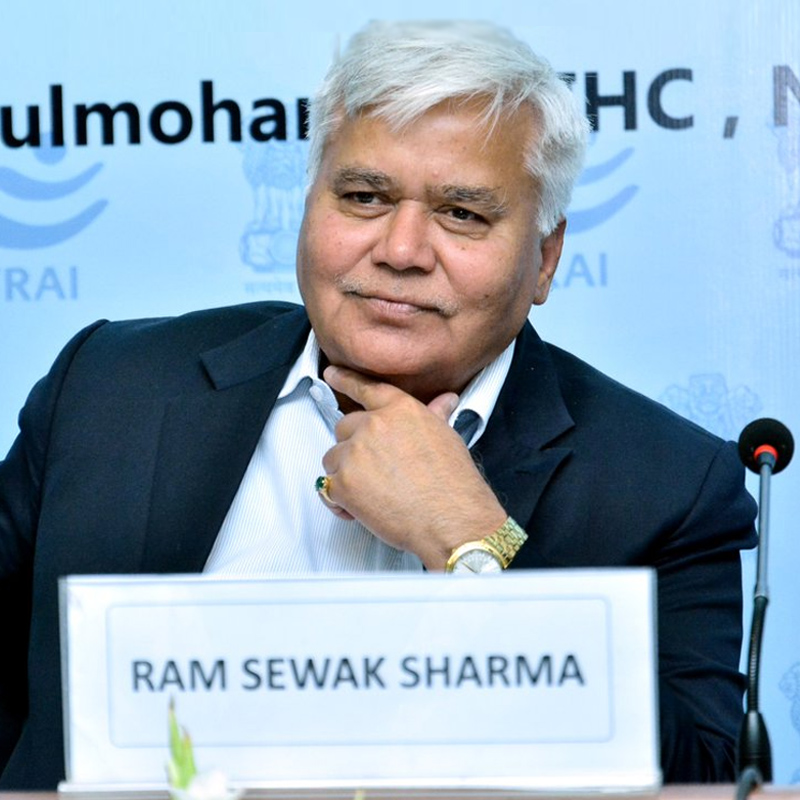
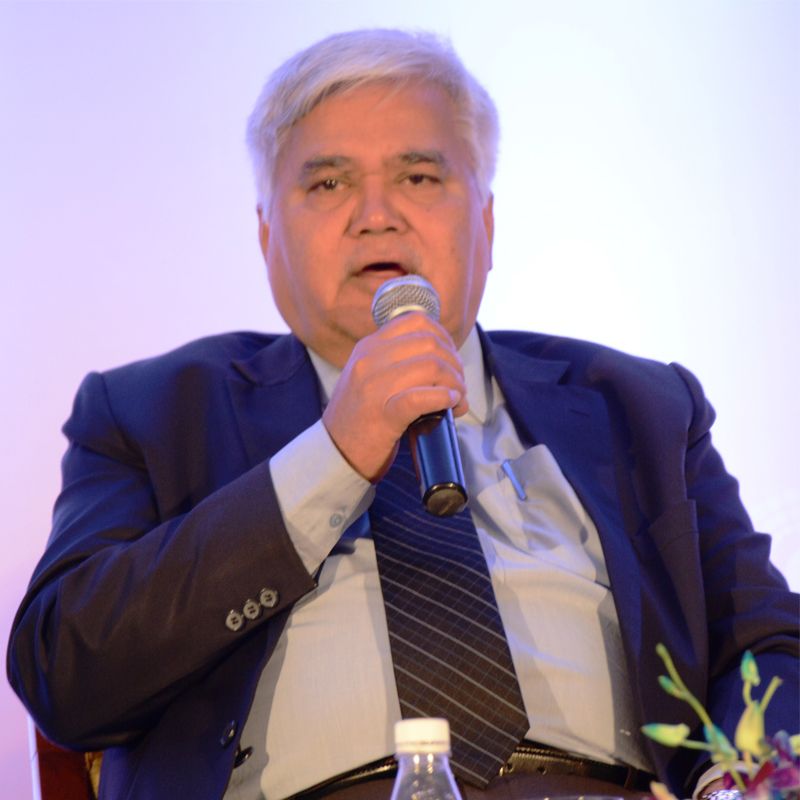
    RS Sharma, chief regulator of India’s telecoms and broadcast carriage services, is a plain-speaking person who doesn’t mince words. He is forthright inhis thoughts on the Telecom Regulatory Authority of India (TRAI)’s role, which, according to several reiterations, is work towards creating a regulatory environment to remove ambiguities and litigations. While doing so, if the regulator has over-reached, Sharma says, he and his colleagues are willing to correct themselves if stakeholders convince them of their viewpoints as part of a healthy and democratic process of debateand discussions.

    A senior-level bureaucrat, whose last assignment in the government was Secretary, Department of Electronics and Information Technology, Sharma as the Chairman of TRAI is convinced that pressures notwithstanding, it’s the job of a regulator to be not only technology agnostic, but also stakeholder-neutral in its efforts to create a level-playing field for all for the growth of telecoms and broadcast sectors. Being tech-savvy (he is one of those in the government who was active on Twitter much before it became a buzzword as a communication tool within government setups) helps in a highly technological world.

    Indiantelevision.com’s Consulting Editor Anjan Mitra engages Sharma on various issues and Sharma, true to his self, doesn’t flinch away from answering the queries, even those critical of TRAI’s role.

    Edited excerpts from the interview:

    As the chief regulator what would be your overview of the telecom and the broadcast sectors?

    Both the sectors are very vibrant in our country.  In the telecoms sector, we have almost a billion plus people connected through mobile phones and other devices. However, we need to essentially now focus on the issue of data speed and availability. In this regard we have already given various recommendations to the government, both in the wireless as also in the fixed line segments.

    The focus is on implementation of Bharat Net (taking broadband to all parts of India, including rural areas, via fibre optics), promotion of digital cable TV for supply of broadband, facilitating an environment for creating Wi-Fi hotspots and liberalizing the satellite bandwidthregime so satellites can also be used to provide broadband services, which also means an Open Sky policy. All these initiatives,if implemented, are expected to increase availability and improvement of internet infrastructure for the people of this country, which is the first most important prerequisite of Digital India — broadband as a utility to the citizens. We see telecom space developin that direction.

    The broadcasting sector too is vibrant where we now have about 900 plus TV channels, which have a wide range of programming catering to a wide section of the people through various delivery platforms. Fortunately, by the end of this calendar year, the fourth phase of digitization (of TV services) could be completedwhere all stakeholders have contributed and participated equally. We should also not forget the Indian TV network is one of the largest networks in the world and when it gets fully digitized, it would be a real achievement.

    So, to facilitate further smoothening of the digitization path, we would be bringing out three important guidelines on issues relating to tariff, interconnection and quality of service. After having worked almost through the year (2016) and examining the broadcast and cable sector comprehensively, the final guidelines on the three issues would be issued that will herald a new, but common framework for all platforms.

    When are these final guidelines likely to be issued by TRAI now that legal hurdles to implementation of digitization or DAS have been cleared by courts?

    The final recommendations will be issued at the end of this month, which will also coincide with end of this year and the guidelines, hopefully, will bring about more harmony in the TV sector and various delivery platforms prevalent in the country.

    At TRAI, we can only create an environment for TV (carriage) services, while it’s the Ministry of Information and Broadcasting (MIB)’s role to actually push networks and stakeholders to adhere to the digital deadlines and enforce the schedule. But we are ready to provide any assistance to MIB if asked for.

    (This interview was taken earlier in December after the Delhi High Court had dismissed all cases relating to extension of  deadline of Phase III of digitization. Subsequently on December 23, 2016, MIB extended the deadline for Phase IV of DASto 31 March, 2017 owing to uncertainties in the market.  The last and fourth phase was to have been completed on 31 December, 2016. Same day, Madras High Court passed an interim order, valid till next hearing mid-January 2017, directing TRAI to maintain status quo and refrain from issuing any further guidelines relating to the broadcast sector, especially if those guidelineshad any bearing on copyright issues raised by petitioner Star India and Vijay TV, amongst other things.)

    A regulator’s job is to be a facilitator and help create a business environment that’s win-win for all stakeholders. But why is it that many directives and guidelinesare legally challenged by the industry?

    Everybody in this country has a right to take recourse to legal help and I would not like to comment at all on the issue as to why our directives are challenged by the industry. However, all that I would say is that there is a due process of law and which takes care of many such issues. While many of our directives are upheld by the courts and TDSAT(the Telecoms Disputes Settlement & Appellate Tribunal), some of them are struck down too. It’s a process available to Indians under the Constitution.

    What were the underlying objectives of TRAI when it started drafting a new set of guidelines for the broadcast and cable sector?

    Our main objective — and purpose for all guidelines for both the broadcast and telecoms sectors — is to reduce ambiguity in regulations. The broadcast segment is no exception.The aim is to create a kind of regulatory environment where there is less ambiguity and lesser scope for litigations. Litigations take place because of ambiguity (in rules and regulations).Especially in the broadcasting sector there are no or few contracts (amongst stakeholders), which result in people going to courts of law. So, TRAI is trying to streamlinethe sector. It is not only the TRAI regulations that are (legally) challenged, but stakeholdersalso litigate amongst themselves. We want to create a much more rational level playing field for all stakeholders, including the consumer.

    However critics, including domestic and foreign industry bodies, say TRAI ends up over regulating. What do you have to say about this criticism?

    In sectors where there are multiple stakeholders litigating amongst themselves, somebody will have to establish basic rules. If stakeholders interact among themselves without any rules, that is fine with us. However, we also have to understand that the most important stakeholder in all this is the consumer and it should not happen that the consumer ultimately is the sufferer. Though TRAI doesn’t believe in unnecessary regulations, at the same time some regulation defining the playing area isnecessary for an orderly growth of the industry.

    When industry bodies do benchmarking of Indian regulations versus FCC or Ofcom or some other Asian markets, India and China emerge as highly regulated markets. Comment.

    I don’t want to comment on those benchmarks as I am not really aware of them or the methodology used. But I certainly don’t agree that we are regulating when regulation is not necessary. We also believe in minimal regulation. Because of high level of litigation-related activities happening in the Indian broadcast sector, we feel there is a need to clarify issues. It is better to have some basic rules of the game rather than having ambiguous situations, which results into too many litigations and waste of time.

    So, you feel the draft broadcast regulations are aimed at streamlining the sector and bring about more transparency?

    Certainly yes and that’s what we hope will be achieved ultimately. Recent courtjudgments have also clearly held that the processes in this kind of interconnection environment should be transparent. So, less ambiguity and more transparency are two guiding principles that have helped us in draftingthose regulations, though we are still open to amendments.

    Why is the Indian Broadcasting Foundation (IBF)critical of many TRAI stands if the regulatory bodyis working towards transparency?

    We have had very intense and vibrant engagement with the industry on all the consultation papers.Stakeholders’ comments have been very precise and in a way it has been an enriching experience for TRAI. So, as and when we do come out with final recommendations, we hope to have plugged any loopholes in the drafts.Every stakeholder has a right to be critical and IBF too is expressing its views. I think it is all part of a healthy democratic and transparent process of interaction.

    What is TRAI’s stand on new technologies being introduced in the telecom and broadcast sectors?

    Our view on technology is that we must promote innovation and technology in these sectors. We should not try to throttle them (new techs) just because there are legacy business models. Business models must adapt to technology, rather than technology being stifled in order to protect business models. That essentially has been our approach to technology.

    There’s lot of fusion taking place in the technological world and India must not shy away from embracing them. For example, in certain countries 4G is passé and they are talking about 5G, which too would ultimately arrive in India. As both our telecom and broadcast and cable networks would be one of the largest in the world soon, if infrastructure development is robust, why should India or its consumers be five years behind in technology and be deprived of latest marvels of technology? As a developing country we need technology more. Reason is simple: a better technology is not only cost-effective, but also helps in more productive use of resources. Technology will help the country in more efficient use of bandwidth, for example, which is not a commodity that’s in unlimited supply.

    Why then a new content delivery tech like OTT, for example,is being attempted to be regulated with a legacy mindset?

    TRAI is not looking at any extra regulation as we feel regulations, in general, should be technology agnostic. However, if there are any barriers to adoption of a technology, TRAI would try to either remove those or work towards relaxing those barriers. For example, there is a consultation paper on sharing of infrastructure in the broadcasting sector. At present,sharing of infrastructure is not permitted essentially because of certain licence conditions. On this issue,we feel — though final recommendations are awaited— a broadcast carriage company need not necessarily share infrastructure even after TRAI comes out with guidelines.But if there is a condition in thelicence that prohibits sharing, we may, probably, have to relax those conditions. Our broader approach is if some licence conditions stop a business from optimal utilization of resources, we should try to remove such regulatory barriers.

    We should facilitate adoption of new technologies, not really regulate or mandate them. If there are regulatory barriers, then appropriate action for introduction of newer technologies should be taken.

    Though TRAI has dealt with it in a piecemeal fashion earlier, what is the regulator’s overall stand on the contentious issue of Net Neutrality?

    We have already dealt with the issue of Net Neutrality from the zero tariff perspective sometime in February. Now the government has asked us to provide it with comprehensive recommendations on the issue. We are in the process of further studying the feedback from people and stakeholders on the issue after which some additional consolations would take place. As the drafting of our final position may take a couple of months more, I am unable to spell out TRAI’s stand on Net Neutrality at this point of time. But I hope it should suffice when I say TRAI is not against any new technology whether it is OTT or 5G or anything else.

    Q: Earlier, you referred to an issue relating to Open Sky policy aimed at making leasing of capacity on Indian and foreign satellites liberal. That matter is not moving within the government. Any comment?

    I don’t want to comment on that as ultimately it is for the government to act on TRAI’s recommendations. We have recommended a number of times (in favour of a more liberalized satellite policy).On such policy matters, it’s the government’s prerogative to take some action. However, TRAI will keep tracking the issue. But there’s no denying for the success of Digital India, providing broadband via satellites in difficult geographical terrains like India’s North-Eastern states is a crucial aspect. But on such matters the government’s decision is final.

    Don’t you think that the time has come for India to have a comprehensive convergence law and a fully converged regulator?

    I certainly agree we need to, probably, have alaw on convergence. But I am not the competent authority to comment on such a regulatory regime’s structure and mandate as it is the government’s job and prerogative to do so. However, I do feel because of technological developments, a lot of convergence is happening in various sectors, including telecom and broadcast segments. Probably, we need to revisit our regulatory structures. But, as I said earlier, it is the government’s prerogative.

    As the chief regulator you must be coming in for pressure from many sides, including political. How do you keep yourself neutral?

    For the last 15-16 months that I have been at TRAI, I have not been subject to any pressure. I am very happy that we at TRAI are doingour job of being a facilitator and see that both the segments grow in an unhindered fashion.

    What would are the achievements of TRAI in 2016 and what is the agenda for 2017?

    As we are not an operation agency, we don’t have quantifiable targets,unlike the Aadhaar (unique identity for Indians) project, of which I was a crucial part, where we had a measurable target of for a particular period of time.TRAI primarily has three functions. Function No. 1 is to advise government on issues referred to us. Function No. 2 is that TRAI can also take up issues suo moto and advise the government accordingly. Function No. 3 is to issue regulations related to tariff. I think, we have discharged our duty in a satisfactory manner during 2016.

    What we plan to do in 2017 is something interesting. While there will be always issues that willneed TRAI’s urgent attention — for example, the government may ask foradvice on spectrum prices — we are trying to create a calendar for the next year. So we hope by the end of this year we will come up with calendar highlighting the works that need to be taken up in 2017 and which will act as a roadmap.

    What are the issues likely to figure in that roadmap?

    There are many issues. For example, various issues relating to data and bandwidth are important and TRAI would like to examine those, including data and  consumer protection. Then there are matters like Internet of Things (IoT) and other new areas where our approach will always remain to regulate minimally. I would also like TRAI to take up the implementation of the framework that we are putting in place for the broadcast sector. Then there are issues like audience measurement and digital terrestrial broadcasting. There would be lots on the plate in 2017 for TRAI.
  • “There would be  a lot on TRAI’s plate in 2017” – RS Sharma

    “There would be a lot on TRAI’s plate in 2017” – RS Sharma

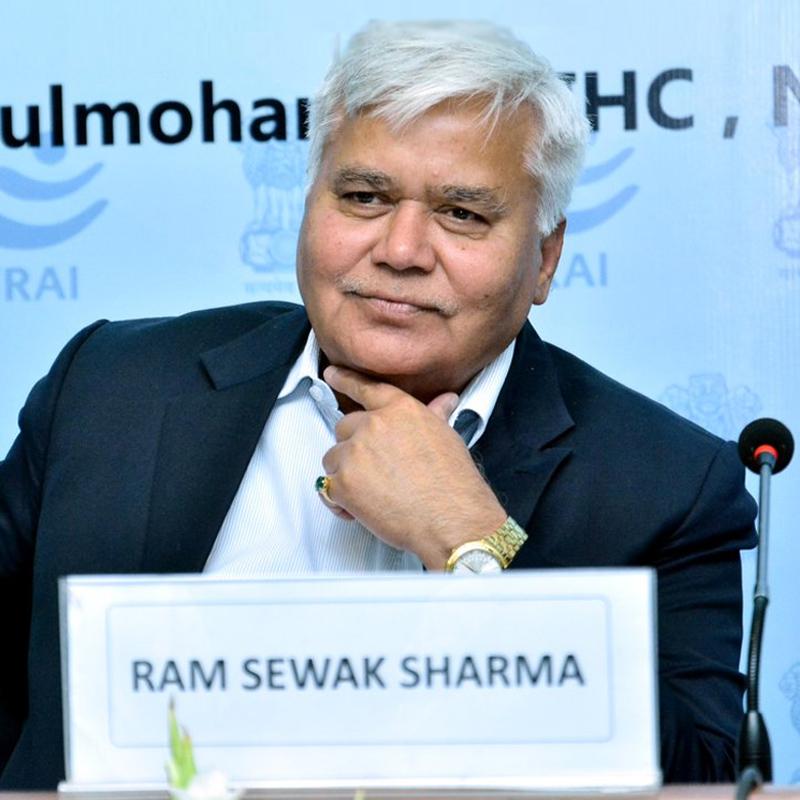
    RS Sharma, chief regulator of India’s telecoms and broadcast carriage services, is a plain-speaking person who doesn’t mince words. He is forthright inhis thoughts on the Telecom Regulatory Authority of India (TRAI)’s role, which, according to several reiterations, is work towards creating a regulatory environment to remove ambiguities and litigations. While doing so, if the regulator has over-reached, Sharma says, he and his colleagues are willing to correct themselves if stakeholders convince them of their viewpoints as part of a healthy and democratic process of debateand discussions.

    A senior-level bureaucrat, whose last assignment in the government was Secretary, Department of Electronics and Information Technology, Sharma as the Chairman of TRAI is convinced that pressures notwithstanding, it’s the job of a regulator to be not only technology agnostic, but also stakeholder-neutral in its efforts to create a level-playing field for all for the growth of telecoms and broadcast sectors. Being tech-savvy (he is one of those in the government who was active on Twitter much before it became a buzzword as a communication tool within government setups) helps in a highly technological world.

    Indiantelevision.com’s Consulting Editor Anjan Mitra engages Sharma on various issues and Sharma, true to his self, doesn’t flinch away from answering the queries, even those critical of TRAI’s role.

    Edited excerpts from the interview:

    As the chief regulator what would be your overview of the telecom and the broadcast sectors?

    Both the sectors are very vibrant in our country.  In the telecoms sector, we have almost a billion plus people connected through mobile phones and other devices. However, we need to essentially now focus on the issue of data speed and availability. In this regard we have already given various recommendations to the government, both in the wireless as also in the fixed line segments.

    The focus is on implementation of Bharat Net (taking broadband to all parts of India, including rural areas, via fibre optics), promotion of digital cable TV for supply of broadband, facilitating an environment for creating Wi-Fi hotspots and liberalizing the satellite bandwidthregime so satellites can also be used to provide broadband services, which also means an Open Sky policy. All these initiatives,if implemented, are expected to increase availability and improvement of internet infrastructure for the people of this country, which is the first most important prerequisite of Digital India — broadband as a utility to the citizens. We see telecom space developin that direction.

    The broadcasting sector too is vibrant where we now have about 900 plus TV channels, which have a wide range of programming catering to a wide section of the people through various delivery platforms. Fortunately, by the end of this calendar year, the fourth phase of digitization (of TV services) could be completedwhere all stakeholders have contributed and participated equally. We should also not forget the Indian TV network is one of the largest networks in the world and when it gets fully digitized, it would be a real achievement.

    So, to facilitate further smoothening of the digitization path, we would be bringing out three important guidelines on issues relating to tariff, interconnection and quality of service. After having worked almost through the year (2016) and examining the broadcast and cable sector comprehensively, the final guidelines on the three issues would be issued that will herald a new, but common framework for all platforms.

    When are these final guidelines likely to be issued by TRAI now that legal hurdles to implementation of digitization or DAS have been cleared by courts?

    The final recommendations will be issued at the end of this month, which will also coincide with end of this year and the guidelines, hopefully, will bring about more harmony in the TV sector and various delivery platforms prevalent in the country.

    At TRAI, we can only create an environment for TV (carriage) services, while it’s the Ministry of Information and Broadcasting (MIB)’s role to actually push networks and stakeholders to adhere to the digital deadlines and enforce the schedule. But we are ready to provide any assistance to MIB if asked for.

    (This interview was taken earlier in December after the Delhi High Court had dismissed all cases relating to extension of  deadline of Phase III of digitization. Subsequently on December 23, 2016, MIB extended the deadline for Phase IV of DASto 31 March, 2017 owing to uncertainties in the market.  The last and fourth phase was to have been completed on 31 December, 2016. Same day, Madras High Court passed an interim order, valid till next hearing mid-January 2017, directing TRAI to maintain status quo and refrain from issuing any further guidelines relating to the broadcast sector, especially if those guidelineshad any bearing on copyright issues raised by petitioner Star India and Vijay TV, amongst other things.)

    A regulator’s job is to be a facilitator and help create a business environment that’s win-win for all stakeholders. But why is it that many directives and guidelinesare legally challenged by the industry?

    Everybody in this country has a right to take recourse to legal help and I would not like to comment at all on the issue as to why our directives are challenged by the industry. However, all that I would say is that there is a due process of law and which takes care of many such issues. While many of our directives are upheld by the courts and TDSAT(the Telecoms Disputes Settlement & Appellate Tribunal), some of them are struck down too. It’s a process available to Indians under the Constitution.

    What were the underlying objectives of TRAI when it started drafting a new set of guidelines for the broadcast and cable sector?

    Our main objective — and purpose for all guidelines for both the broadcast and telecoms sectors — is to reduce ambiguity in regulations. The broadcast segment is no exception.The aim is to create a kind of regulatory environment where there is less ambiguity and lesser scope for litigations. Litigations take place because of ambiguity (in rules and regulations).Especially in the broadcasting sector there are no or few contracts (amongst stakeholders), which result in people going to courts of law. So, TRAI is trying to streamlinethe sector. It is not only the TRAI regulations that are (legally) challenged, but stakeholdersalso litigate amongst themselves. We want to create a much more rational level playing field for all stakeholders, including the consumer.

    However critics, including domestic and foreign industry bodies, say TRAI ends up over regulating. What do you have to say about this criticism?

    In sectors where there are multiple stakeholders litigating amongst themselves, somebody will have to establish basic rules. If stakeholders interact among themselves without any rules, that is fine with us. However, we also have to understand that the most important stakeholder in all this is the consumer and it should not happen that the consumer ultimately is the sufferer. Though TRAI doesn’t believe in unnecessary regulations, at the same time some regulation defining the playing area isnecessary for an orderly growth of the industry.

    When industry bodies do benchmarking of Indian regulations versus FCC or Ofcom or some other Asian markets, India and China emerge as highly regulated markets. Comment.

    I don’t want to comment on those benchmarks as I am not really aware of them or the methodology used. But I certainly don’t agree that we are regulating when regulation is not necessary. We also believe in minimal regulation. Because of high level of litigation-related activities happening in the Indian broadcast sector, we feel there is a need to clarify issues. It is better to have some basic rules of the game rather than having ambiguous situations, which results into too many litigations and waste of time.

    So, you feel the draft broadcast regulations are aimed at streamlining the sector and bring about more transparency?

    Certainly yes and that’s what we hope will be achieved ultimately. Recent courtjudgments have also clearly held that the processes in this kind of interconnection environment should be transparent. So, less ambiguity and more transparency are two guiding principles that have helped us in draftingthose regulations, though we are still open to amendments.

    Why is the Indian Broadcasting Foundation (IBF)critical of many TRAI stands if the regulatory bodyis working towards transparency?

    We have had very intense and vibrant engagement with the industry on all the consultation papers.Stakeholders’ comments have been very precise and in a way it has been an enriching experience for TRAI. So, as and when we do come out with final recommendations, we hope to have plugged any loopholes in the drafts.Every stakeholder has a right to be critical and IBF too is expressing its views. I think it is all part of a healthy democratic and transparent process of interaction.

    What is TRAI’s stand on new technologies being introduced in the telecom and broadcast sectors?

    Our view on technology is that we must promote innovation and technology in these sectors. We should not try to throttle them (new techs) just because there are legacy business models. Business models must adapt to technology, rather than technology being stifled in order to protect business models. That essentially has been our approach to technology.

    There’s lot of fusion taking place in the technological world and India must not shy away from embracing them. For example, in certain countries 4G is passé and they are talking about 5G, which too would ultimately arrive in India. As both our telecom and broadcast and cable networks would be one of the largest in the world soon, if infrastructure development is robust, why should India or its consumers be five years behind in technology and be deprived of latest marvels of technology? As a developing country we need technology more. Reason is simple: a better technology is not only cost-effective, but also helps in more productive use of resources. Technology will help the country in more efficient use of bandwidth, for example, which is not a commodity that’s in unlimited supply.

    Why then a new content delivery tech like OTT, for example,is being attempted to be regulated with a legacy mindset?

    TRAI is not looking at any extra regulation as we feel regulations, in general, should be technology agnostic. However, if there are any barriers to adoption of a technology, TRAI would try to either remove those or work towards relaxing those barriers. For example, there is a consultation paper on sharing of infrastructure in the broadcasting sector. At present,sharing of infrastructure is not permitted essentially because of certain licence conditions. On this issue,we feel — though final recommendations are awaited— a broadcast carriage company need not necessarily share infrastructure even after TRAI comes out with guidelines.But if there is a condition in thelicence that prohibits sharing, we may, probably, have to relax those conditions. Our broader approach is if some licence conditions stop a business from optimal utilization of resources, we should try to remove such regulatory barriers.

    We should facilitate adoption of new technologies, not really regulate or mandate them. If there are regulatory barriers, then appropriate action for introduction of newer technologies should be taken.

    Though TRAI has dealt with it in a piecemeal fashion earlier, what is the regulator’s overall stand on the contentious issue of Net Neutrality?

    We have already dealt with the issue of Net Neutrality from the zero tariff perspective sometime in February. Now the government has asked us to provide it with comprehensive recommendations on the issue. We are in the process of further studying the feedback from people and stakeholders on the issue after which some additional consolations would take place. As the drafting of our final position may take a couple of months more, I am unable to spell out TRAI’s stand on Net Neutrality at this point of time. But I hope it should suffice when I say TRAI is not against any new technology whether it is OTT or 5G or anything else.

    Q: Earlier, you referred to an issue relating to Open Sky policy aimed at making leasing of capacity on Indian and foreign satellites liberal. That matter is not moving within the government. Any comment?

    I don’t want to comment on that as ultimately it is for the government to act on TRAI’s recommendations. We have recommended a number of times (in favour of a more liberalized satellite policy).On such policy matters, it’s the government’s prerogative to take some action. However, TRAI will keep tracking the issue. But there’s no denying for the success of Digital India, providing broadband via satellites in difficult geographical terrains like India’s North-Eastern states is a crucial aspect. But on such matters the government’s decision is final.

    Don’t you think that the time has come for India to have a comprehensive convergence law and a fully converged regulator?

    I certainly agree we need to, probably, have alaw on convergence. But I am not the competent authority to comment on such a regulatory regime’s structure and mandate as it is the government’s job and prerogative to do so. However, I do feel because of technological developments, a lot of convergence is happening in various sectors, including telecom and broadcast segments. Probably, we need to revisit our regulatory structures. But, as I said earlier, it is the government’s prerogative.

    As the chief regulator you must be coming in for pressure from many sides, including political. How do you keep yourself neutral?

    For the last 15-16 months that I have been at TRAI, I have not been subject to any pressure. I am very happy that we at TRAI are doingour job of being a facilitator and see that both the segments grow in an unhindered fashion.

    What would are the achievements of TRAI in 2016 and what is the agenda for 2017?

    As we are not an operation agency, we don’t have quantifiable targets,unlike the Aadhaar (unique identity for Indians) project, of which I was a crucial part, where we had a measurable target of for a particular period of time.TRAI primarily has three functions. Function No. 1 is to advise government on issues referred to us. Function No. 2 is that TRAI can also take up issues suo moto and advise the government accordingly. Function No. 3 is to issue regulations related to tariff. I think, we have discharged our duty in a satisfactory manner during 2016.

    What we plan to do in 2017 is something interesting. While there will be always issues that willneed TRAI’s urgent attention — for example, the government may ask foradvice on spectrum prices — we are trying to create a calendar for the next year. So we hope by the end of this year we will come up with calendar highlighting the works that need to be taken up in 2017 and which will act as a roadmap.

    What are the issues likely to figure in that roadmap?

    There are many issues. For example, various issues relating to data and bandwidth are important and TRAI would like to examine those, including data and  consumer protection. Then there are matters like Internet of Things (IoT) and other new areas where our approach will always remain to regulate minimally. I would also like TRAI to take up the implementation of the framework that we are putting in place for the broadcast sector. Then there are issues like audience measurement and digital terrestrial broadcasting. There would be lots on the plate in 2017 for TRAI.
  • Maintain status quo on broadcast guidelines, Madras HC tells TRAI

    Maintain status quo on broadcast guidelines, Madras HC tells TRAI

    NEW DELHI: The Madras High Court today ordered that the Telecom Regulatory Authority of India (TRAI) should maintain status quo with regard to any tariff orders or regulations for the broadcast sector.

    The Court directed that the stay will be in place till 12 January when the case comes up for hearing.

    The Madras HC order came on a petition filed by Star India and Vijay TV on the ground that the TRAI orders are in conflict with the Copyright Act 1957. As a result of this court order and pending the full hearing of the case, TRAI would not be able to pass any guideline for issues such as broadcast tariff, broadcast interconnect, and quality of services.

    A TRAI spokesperson said that although it was still waiting to receive the order from the Court, one immediate result would be that the draft tariff and interconnect guidelines issued by the regulator will be subject to the order of the court in this regard.

    A few months ago, TRAI had issued draft guidelines on tariff interconnect and quality of service, while TRAI chairman RS Sharma had told indiantelevision.com earlier this month that the regulator would come out with its final recommedation by the end of the year.

    It may be recalled that the Indian Broadcasting Foundation had also said in reaction to the TRAI drafts that the exercise was in direct conflict with the provisions of the Copyright Act.

    The comments had been stated in the comments to the Telecommunication (Broadcasting and Cable Services) Interconnection (Addressable Systems) Regulations 2016; the Telecommunication (Broadcasting and Cable Services) (Eighth) (Addressable Systems) Tariff Order 2016; and the Standards of Quality of Service) and Consumer Protection (Digital Addressable Systems) Regulations 2016.

    The IBF has said the Copyright Board is fully empowered to adjudicate upon disputes between any person and Content or Broadcast Reproduction Rights owners. Hence the Copyright Act and Rules provide for protection, monetisation, enforcement and adjudication procedures for all copyrightable work and broadcast reproduction rights.

    Also read:

    DAS 4 deadline extended to 31 Mar

  • Maintain status quo on broadcast guidelines, Madras HC tells TRAI

    Maintain status quo on broadcast guidelines, Madras HC tells TRAI

    NEW DELHI: The Madras High Court today ordered that the Telecom Regulatory Authority of India (TRAI) should maintain status quo with regard to any tariff orders or regulations for the broadcast sector.

    The Court directed that the stay will be in place till 12 January when the case comes up for hearing.

    The Madras HC order came on a petition filed by Star India and Vijay TV on the ground that the TRAI orders are in conflict with the Copyright Act 1957. As a result of this court order and pending the full hearing of the case, TRAI would not be able to pass any guideline for issues such as broadcast tariff, broadcast interconnect, and quality of services.

    A TRAI spokesperson said that although it was still waiting to receive the order from the Court, one immediate result would be that the draft tariff and interconnect guidelines issued by the regulator will be subject to the order of the court in this regard.

    A few months ago, TRAI had issued draft guidelines on tariff interconnect and quality of service, while TRAI chairman RS Sharma had told indiantelevision.com earlier this month that the regulator would come out with its final recommedation by the end of the year.

    It may be recalled that the Indian Broadcasting Foundation had also said in reaction to the TRAI drafts that the exercise was in direct conflict with the provisions of the Copyright Act.

    The comments had been stated in the comments to the Telecommunication (Broadcasting and Cable Services) Interconnection (Addressable Systems) Regulations 2016; the Telecommunication (Broadcasting and Cable Services) (Eighth) (Addressable Systems) Tariff Order 2016; and the Standards of Quality of Service) and Consumer Protection (Digital Addressable Systems) Regulations 2016.

    The IBF has said the Copyright Board is fully empowered to adjudicate upon disputes between any person and Content or Broadcast Reproduction Rights owners. Hence the Copyright Act and Rules provide for protection, monetisation, enforcement and adjudication procedures for all copyrightable work and broadcast reproduction rights.

    Also read:

    DAS 4 deadline extended to 31 Mar

  • DD’s digital terrestrial transmission meet today as TRAI paper awaits finalisation

    DD’s digital terrestrial transmission meet today as TRAI paper awaits finalisation

    NEW DELHI: Even as a consultation paper on Digital Terrestrial Transmission by the Telecom Regulatory Authority of India is pending finalisation, Doordarshan is holding a workshop with stakeholders to explore the potential of DTT services.

    The workshop on “Digital Terrestrial Transmission: Business Opportunities” is being organized on 23 December 2016 in the capital and will be addressed by experts.

    Experts from the Indian Institute of Management Ahmedabad, various stakeholders including Content providers, private broadcasters, receiver manufactures, and officers at Doordarshan will be participating in this workshop.

    In the paper issued on 22 June 2016, TRAI wanted to know if stakeholders perceive the need for introduction of DTT in multiple broadcasting distribution platforms and what the appropriate strategy for DTT implementation across the country should be.

    indiantelevision.com had earlier reported that the government was in the final stages of this exercise. Later, the website quoted then Prasar Bharati Chief Executive Officer Jawhar Sircar as saying that the pubcaster had itself cleared this more than a year earlier, even while pointing out that this would necessitate use of the Prasar Bharati infrastructure.

    DD, which presently has exclusive domain over terrestrial broadcasting, ranks amongst the world’s largest terrestrial television networks. It has a network of 1412 analog transmitters that provide TV services through two national channels namely, DD National and DD News. In addition to this, the network also broadcast several regional TV channels over the terrestrial network in a time sharing mode to meet the local and regional needs of people in different parts of the country. All TV channels provided by DD are free-to-air.

    In its paper, TRAI had asked whether DTT broadcasting should be opened for participation by the private players, and which model or a combination thereof for Dtt will be most suitable in Indian context.

    Trai also wanted to know what the approach for implementing DTT network (MFN/SFN/Hybrid) should be and how many digital multiplex per DTT operator should be planned for metro, major cities, urban and rural areas.

    Expert opinion had also been sought on the most appropriate frequency band as per National Frequency Allocation Plan 2011 for implementation of Digital terrestrial transmission including mobile TV.

    The DTT platform is flexible and content format agnostic – newer formats of TV channels such as HD TV, 3D TV, UHD TV, data and radio services etc. can thus be delivered with reduced transmission power requirements. Digitisation also allows for government bodies to reclaim spectrum and repurpose it.

    With standardized DTT transmission and clear advantages in terms of effective frequency utilization as well as enhanced TV quality, many countries the world over have laid down clear roadmaps to switch-off analog terrestrial TV transmission with a transition to DTT. In India, though work for changeover from Analog terrestrial transmission to digital terrestrial transmission by DD has already commenced, a clear roadmap is however unavailable.