Tag: Trai

  • No exclusive pacts with telcos: TRAI to building-owners; CTI mooted

    No exclusive pacts with telcos: TRAI to building-owners; CTI mooted

    MUMBAI: The Telecom Regulatory Authority of India (TRAI) has issued its recommendations on “In-Building Access by Telecom Service Providers”.

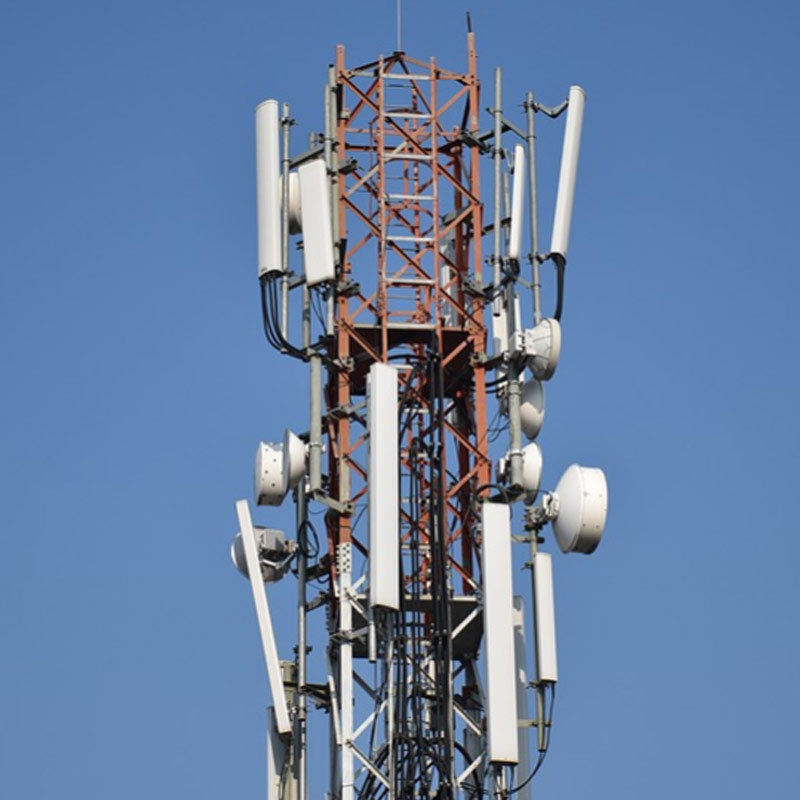
    An effective telecommunications infrastructure is an essential component of any building for its connectivity to the outside world. Telecommunications services such as voice, data and wideband multimedia services are indispensable in the modern society. In order to improve in-building coverage and to offer quality high data rate services, installation of in-building solutions (IBS) for wireless services and laying of cables such as copper cables, optical fibre cables (OFC),LANcables etc. is required.

    To lay  cables  or  install  telecom  infrastructure   inside  the  building, Telecom Service Providers (TSP) lnfrastructure Providers (lP-I) require permission of the owner of the building. However, it is seen that generally restrictive practices are adopted by building owners while giving access to the building due to commercial. interests. In many cases, these owners enter into exclusive agreement with one of the TSPs for providing telecom services to dwellers and deny access to other TSPs, thus creating an artificial entry barrier for other TSPs. Such practices not only limit competition, it also leaves no choice to consumers except to avail services from the TSP with whom the contract is done; taking away choice and flexibility from the consumers which they would have had in terms of quality of service (QoS), tariff, redundancy etc.

    In view of the above, a need was felt for policy intervention and to evolve a framework applicable to in-building facilities to enable the telecom operators to obtain efficient access on reasonable terms and conditions. Therefore, the Authority, suo-motu, decided to initiate a consultation process on the issue. Accordingly, a Consultation Paper on “In-Building Access by Telecom Service Providers” was released on 6 June 2016 seeking the comments of the stakeholders. An Open House Discussion (OHD) on the issue was also convened on 30 September 2016 at New Delhi.

    Based on the comments received and further analysis, draft recommendations on ‘In-Building Access by Telecom Service Providers’ have been issued and the same have also been placed on TRAI’s web site. Some of the main recommendations are:

    (i)    TSPs/IP-ls be mandated to share the in-building infrastructure (IBS, OFC and other cables, ducts etc) with other TSPs, in large public places, commercial complexes and residential complexes in transparent, fair and non-discriminatory manner.

    (ii)    Indulgence   into  exclusive  contract   prohibiting   access  to  other TSPs may be treated as violation of the license agreement / registration.

    (iii)    Suitable provisions for  the creation of  Common Telecom Infrastructure (CTI) inside the building should form part of the Model Building Bye-Laws.

    (iv)    The essential requirement for telecom installations and the associated cabling should be formed part of National Building Code of India (NBC), being amended by Bureau of Indian Standards (BIS).

    (v)    Completion certificate to a building to be granted only after ensuring that the CTI as per the prescribed standards is in place.

    (vi)    Access to building including CTI facilities be available to the TSPs on a fair, transparent and non-discriminatory manner and minimum three TSPs/IP-Is should have presence in the building.

    Also Read:

    “There would be a lot on TRAI’s plate in 2017” – RS Sharma

    Wi-fi proliferation, Net Telephony discussion in January
     

  • Idea petitions TDSAT against TRAI; price war set to escalate

    Idea petitions TDSAT against TRAI; price war set to escalate

    MUMBAI: Idea Cellular has petitioned TDSAT seeking to stop Reliance Jio from continuing free services till 31 March. In December 2016, India’s largest telco Bharti Airtel had moved the tribunal over the same issue.

    TDSAT had, in its last hearing, directed TRAI to come to a conclusion in “reasonable time”.

    Jio’s free services have set off a price war. After Reliance proposing investment of Rs 30,000 crore by end of this fiscal, the war is set to escalate. The recent cut-down — by approximately 66 per cent — in data rates impacted Idea’s stock prices. Airtel’s stock too was in the list of the losers on Nifty.

    India’s third largest wireless operator Idea Cellular, run by the multi-billion dollar conglomerate Aditya Birla Group, has now filed a petition in the appellate telecom tribunal (TDSAT) against the telecom regulator TRAI. According to an unidentified TRAI official, the authority has sought opinion of attorney-general Mukul Rohatgi on the matter related to Jio’s extension of free services.

    TRAI chairman R.S. Sharma said that everybody in India was free to move court. The Constitution provided them the right. TRA was looking into the matter of Jio’s promotional services and the presentations / arguments made by other operators, and would decide the issue very soon.

    Airtel had said that TRAI was allowing Jio to continue with its free internet services beyond the stipulated 90-days time period. It had accused TRAI of acting as a “mute spectator” and killing competition in the sector by allowing Jio to offer free services. Rival telcos had said the free services were predatory in nature.

    Also Read:

    Jio may use US$4.4bn to lay OFC, expand network to stifle competition

    Rs 30k cr to enhance Jio coverage; A-G clears DoT’s power to penalise telcos

    Q3-17: Reliance: Jio busts records, organized retail op profit grows 55 percent

    BSNL launches FMT & Ditto TV; 4G planned this year


  • Idea petitions TDSAT against TRAI; price war set to escalate

    Idea petitions TDSAT against TRAI; price war set to escalate

    MUMBAI: Idea Cellular has petitioned TDSAT seeking to stop Reliance Jio from continuing free services till 31 March. In December 2016, India’s largest telco Bharti Airtel had moved the tribunal over the same issue.

    TDSAT had, in its last hearing, directed TRAI to come to a conclusion in “reasonable time”.

    Jio’s free services have set off a price war. After Reliance proposing investment of Rs 30,000 crore by end of this fiscal, the war is set to escalate. The recent cut-down — by approximately 66 per cent — in data rates impacted Idea’s stock prices. Airtel’s stock too was in the list of the losers on Nifty.

    India’s third largest wireless operator Idea Cellular, run by the multi-billion dollar conglomerate Aditya Birla Group, has now filed a petition in the appellate telecom tribunal (TDSAT) against the telecom regulator TRAI. According to an unidentified TRAI official, the authority has sought opinion of attorney-general Mukul Rohatgi on the matter related to Jio’s extension of free services.

    TRAI chairman R.S. Sharma said that everybody in India was free to move court. The Constitution provided them the right. TRA was looking into the matter of Jio’s promotional services and the presentations / arguments made by other operators, and would decide the issue very soon.

    Airtel had said that TRAI was allowing Jio to continue with its free internet services beyond the stipulated 90-days time period. It had accused TRAI of acting as a “mute spectator” and killing competition in the sector by allowing Jio to offer free services. Rival telcos had said the free services were predatory in nature.

    Also Read:

    Jio may use US$4.4bn to lay OFC, expand network to stifle competition

    Rs 30k cr to enhance Jio coverage; A-G clears DoT’s power to penalise telcos

    Q3-17: Reliance: Jio busts records, organized retail op profit grows 55 percent

    BSNL launches FMT & Ditto TV; 4G planned this year


  • CASBAA hails judicial review of broadcast & cable tariff

    CASBAA hails judicial review of broadcast & cable tariff

    MUMBAI: CASBAA, the association of Asia’s pay-TV industry, has applauded the judicial review now under way in India of proposed extension and tightening of India’s pay-TV rate regulations.

    The Madras High Court is reviewing the clash between the rights of copyright owners around the world and new tariff regulations proposed by the Telecom Regulatory Authority of India (TRAI). The court has ordered the TRAI not to give effect to the rules until the underlying issues are considered, with a hearing now set for 19 January.

    CASBAA CEO Christopher Slaughter observed that the new rules would be a major negative factor for the business environment in the US$ 17 billion Indian media industry. “India’s pay-TV regulations have long been among the strictest in the world”, he said. “The proposed new rules are highly intrusive and would make the environment much worse. Such a heavy-handed regulatory regime will inevitably hit foreign companies’ interest in investing in India.”

    Indian law gives copyright owners the ability to price and sell their creative works. In filing the Madras suit, the petitioner broadcasting organizations denounced the TRAI regulation as contrary to these principles as enshrined in the law, and in international treaties to which India is a signatory. (The TRAI rules would establish a controlled price regime by mandating a la carte channel supply, setting the ceiling, by specific genres, that broadcasting organizations can charge to multi-channel programme distributors, limiting discounts, prescribing carriage fees, and stipulating a compulsory distribution fee to be paid by Broadcasting Organizations to multichannel programme distributors.

    CASBAA has long expressed concern about India’s previous rate regulations, which included a cable retail price freeze imposed in 2004 “until the market became more competitive” and never revoked.

    “Today, India’s television content market is among the most competitive in the world,” said Slaughter. “Modern cable MSOs, six different DTH platforms and now online OTT television are all giving Indian consumers a wide range of viewing options.”

    CASBAA’s chief policy officer John Medeiros observed, “As convergence and greater competition sweep the TV economy, other governments around the world are eliminating rate controls, to give more scope to competition among traditional and new online providers. In the last few years, Korea and Taiwan have both undertaken to liberalize their pay-TV price controls, leaving India as the last market economy in Asia with a hyper-regulatory regime. The proposed new rules would take India in the opposite direction from the rest of the world.”

    Also Read:  Tariff order: Don’t notify without SC nod, TRAI told; Madras HC case to continue

    Also Read:  Copyright owners call for competitive pricing over TRAI regulation

  • CASBAA hails judicial review of broadcast & cable tariff

    CASBAA hails judicial review of broadcast & cable tariff

    MUMBAI: CASBAA, the association of Asia’s pay-TV industry, has applauded the judicial review now under way in India of proposed extension and tightening of India’s pay-TV rate regulations.

    The Madras High Court is reviewing the clash between the rights of copyright owners around the world and new tariff regulations proposed by the Telecom Regulatory Authority of India (TRAI). The court has ordered the TRAI not to give effect to the rules until the underlying issues are considered, with a hearing now set for 19 January.

    CASBAA CEO Christopher Slaughter observed that the new rules would be a major negative factor for the business environment in the US$ 17 billion Indian media industry. “India’s pay-TV regulations have long been among the strictest in the world”, he said. “The proposed new rules are highly intrusive and would make the environment much worse. Such a heavy-handed regulatory regime will inevitably hit foreign companies’ interest in investing in India.”

    Indian law gives copyright owners the ability to price and sell their creative works. In filing the Madras suit, the petitioner broadcasting organizations denounced the TRAI regulation as contrary to these principles as enshrined in the law, and in international treaties to which India is a signatory. (The TRAI rules would establish a controlled price regime by mandating a la carte channel supply, setting the ceiling, by specific genres, that broadcasting organizations can charge to multi-channel programme distributors, limiting discounts, prescribing carriage fees, and stipulating a compulsory distribution fee to be paid by Broadcasting Organizations to multichannel programme distributors.

    CASBAA has long expressed concern about India’s previous rate regulations, which included a cable retail price freeze imposed in 2004 “until the market became more competitive” and never revoked.

    “Today, India’s television content market is among the most competitive in the world,” said Slaughter. “Modern cable MSOs, six different DTH platforms and now online OTT television are all giving Indian consumers a wide range of viewing options.”

    CASBAA’s chief policy officer John Medeiros observed, “As convergence and greater competition sweep the TV economy, other governments around the world are eliminating rate controls, to give more scope to competition among traditional and new online providers. In the last few years, Korea and Taiwan have both undertaken to liberalize their pay-TV price controls, leaving India as the last market economy in Asia with a hyper-regulatory regime. The proposed new rules would take India in the opposite direction from the rest of the world.”

    Also Read:  Tariff order: Don’t notify without SC nod, TRAI told; Madras HC case to continue

    Also Read:  Copyright owners call for competitive pricing over TRAI regulation

  • Shift to energy-efficient tech; TRAI seeks ideas by 27 Feb

    Shift to energy-efficient tech; TRAI seeks ideas by 27 Feb

    NEW DEHI: With the world coming to grips with problems of climate change and green house gas emissions, the Telecom Regulatory Authority of India is in the process of preparing a strategy to tackle the problems created by the telecom sector in this regard.

    Following a request received from the Department of Telecom, TRAI has issued the Consultation Paper on Approach towards Sustainable Telecommunications. The paper has raised 14 questions on which stakeholders have to respond by 27 February 2017.

    TRAI had issued a paper on similar issues in 2012 and the DoT had in fact given directions on that basis, but new issues have cropped up with emerging technologies.

    India has the second largest and fastest growing mobile telephone market in the world. Power and energy consumption for telecom network operations is by far the most important significant contributor of carbon emissions in the telecom industry.

    Hence, it is important for the telecom operators to shift to energy efficient technologies and alternate sources of energy. Moreover, Going Green has also become a business necessity for telecom operators with energy costs becoming as large as 25 per cent of total network operations costs. A typical communications company spends nearly one per cent of its revenues on energy which for large operators may amount to several million rupees.

    The Telecom Sector witnessed substantial growth in the number of subscribers during the year 2015-16 and up to September 2016. As of November 2016, the subscriber base was 1123.95 million, out of which 1099.51 million were wireless subscribers.

    During the year 2015-16, subscriber base recorded an increase from 969.89 million to 1033.63 while the overall teledensity increased from 79.38 to 83.36. The year also saw density from 48.37 to 51.37 while the urban teledensity increased from 148.61 to 154.01.

    The Internet subscriber base in the country as on September 2016 stood at 367.48 million as compared to 324.95 million as on September 2015. This growth also leads to greater carbon dioxide and green house gases and the DoT is working on checking this damage to the environment.

    To develop the roadmap, comprehensive program and viability gap funding for mobilizing the renewable energy technology deployment in telecom sector, DoT constituted a Renewable Energy Technology (RET) committee which submitted its report on 1 August 2014. The recommendations of RET committee were further examined by a departmental committee which has submitted its report in May 2015.

    In light of the above mentioned reports of the Committee and deliberation thereof, DoT has sought recommendations of TRAI on the methodology of measuring Carbon Emission and calibration of Directives issued by DoT in 2012 and approach for implementation (Target on the implementation of RETs).

  • Shift to energy-efficient tech; TRAI seeks ideas by 27 Feb

    Shift to energy-efficient tech; TRAI seeks ideas by 27 Feb

    NEW DEHI: With the world coming to grips with problems of climate change and green house gas emissions, the Telecom Regulatory Authority of India is in the process of preparing a strategy to tackle the problems created by the telecom sector in this regard.

    Following a request received from the Department of Telecom, TRAI has issued the Consultation Paper on Approach towards Sustainable Telecommunications. The paper has raised 14 questions on which stakeholders have to respond by 27 February 2017.

    TRAI had issued a paper on similar issues in 2012 and the DoT had in fact given directions on that basis, but new issues have cropped up with emerging technologies.

    India has the second largest and fastest growing mobile telephone market in the world. Power and energy consumption for telecom network operations is by far the most important significant contributor of carbon emissions in the telecom industry.

    Hence, it is important for the telecom operators to shift to energy efficient technologies and alternate sources of energy. Moreover, Going Green has also become a business necessity for telecom operators with energy costs becoming as large as 25 per cent of total network operations costs. A typical communications company spends nearly one per cent of its revenues on energy which for large operators may amount to several million rupees.

    The Telecom Sector witnessed substantial growth in the number of subscribers during the year 2015-16 and up to September 2016. As of November 2016, the subscriber base was 1123.95 million, out of which 1099.51 million were wireless subscribers.

    During the year 2015-16, subscriber base recorded an increase from 969.89 million to 1033.63 while the overall teledensity increased from 79.38 to 83.36. The year also saw density from 48.37 to 51.37 while the urban teledensity increased from 148.61 to 154.01.

    The Internet subscriber base in the country as on September 2016 stood at 367.48 million as compared to 324.95 million as on September 2015. This growth also leads to greater carbon dioxide and green house gases and the DoT is working on checking this damage to the environment.

    To develop the roadmap, comprehensive program and viability gap funding for mobilizing the renewable energy technology deployment in telecom sector, DoT constituted a Renewable Energy Technology (RET) committee which submitted its report on 1 August 2014. The recommendations of RET committee were further examined by a departmental committee which has submitted its report in May 2015.

    In light of the above mentioned reports of the Committee and deliberation thereof, DoT has sought recommendations of TRAI on the methodology of measuring Carbon Emission and calibration of Directives issued by DoT in 2012 and approach for implementation (Target on the implementation of RETs).

  • Supreme Court flags privacy issues regarding WhatsApp, FB

    Supreme Court flags privacy issues regarding WhatsApp, FB

    NEW DELHI: The Supreme Court on Monday sought the central government’s response on a plea seeking to put in place regulation to protect the privacy of the messages of WhatsApp and Facebook users.

    The court also issued notices to the Telecom Regulatory Authority of India (TRAI), online messaging service WhatsApp and the social networking site Facebook, according to a report filed by news agency IANS.

    Petitioners Karmanya Singh Sareen and Shreya Singhal contended that under the new policy of WhatsApp, the online messaging service could access, read, share and use the contents for commercial purposes. A bench of Chief Justice Jagdish Singh Khehar and Justice D.Y. Chandrachud said, “It is a private person extending a private service. You take it or leave it — that is your right.”

    Appearing for the petitioners, senior counsel Harish Salve told the court that it was the duty of the government to protect people’s rights under Articles 19 and 21 of the Constitution and safeguard their privacy.
    As he urged the court to intervene in the matter as new policy of WhatsApp affected the privacy of the people using the site, the bench observed whenever the messaging service will change their conditions, they will give a notice to its users, IANS reported.

    Telling the court that private communication between two persons had to be protected, Salve said that TRAI was not doing anything about it and government was under duty to regulate the online messaging site and the social networking site. The court was told that TRAI has inserted a condition, which says that if you intercept a call without government permission, you would be prosecuted.

    Sareen and Singhal have challenged Delhi High Court’s September 23, 2016 order by which it had allowed WhatsApp to roll out its new privacy policy but said it cannot share data of its users collected up to September 25, 2016 with Facebook or any other related company.

    The High Court had further directed that WhatsApp would completely delete all data of users who chooses to opt out of the instant messaging app after the coming into force of its new privacy policy. While allowing WhatsApp to roll out its new privacy policy, it had said: “We have taken note of the fact that under the privacy policy of WhatsApp, the users are given an option to delete their WhatsApp account at any time, in which event, the information of the users would be deleted from the servers of WhatsApp. We are, therefore, of the view that it is always open to the existing users of WhatsApp, who do not want their information to be shared with Facebook, to opt for deletion of their account.”

    The High Court had also asked the Centre to consider if instant messaging app WhatsApp and social networking site could be brought under the statutory regulatory framework.

    TRAI is undertaking a consultation process, at the moment, to decide on Net Neutrality, which will at one point of time will also take into account services like WhatsApp, FB Messenger and other similar services offered by Indian companies too.

  • Supreme Court flags privacy issues regarding WhatsApp, FB

    Supreme Court flags privacy issues regarding WhatsApp, FB

    NEW DELHI: The Supreme Court on Monday sought the central government’s response on a plea seeking to put in place regulation to protect the privacy of the messages of WhatsApp and Facebook users.

    The court also issued notices to the Telecom Regulatory Authority of India (TRAI), online messaging service WhatsApp and the social networking site Facebook, according to a report filed by news agency IANS.

    Petitioners Karmanya Singh Sareen and Shreya Singhal contended that under the new policy of WhatsApp, the online messaging service could access, read, share and use the contents for commercial purposes. A bench of Chief Justice Jagdish Singh Khehar and Justice D.Y. Chandrachud said, “It is a private person extending a private service. You take it or leave it — that is your right.”

    Appearing for the petitioners, senior counsel Harish Salve told the court that it was the duty of the government to protect people’s rights under Articles 19 and 21 of the Constitution and safeguard their privacy.
    As he urged the court to intervene in the matter as new policy of WhatsApp affected the privacy of the people using the site, the bench observed whenever the messaging service will change their conditions, they will give a notice to its users, IANS reported.

    Telling the court that private communication between two persons had to be protected, Salve said that TRAI was not doing anything about it and government was under duty to regulate the online messaging site and the social networking site. The court was told that TRAI has inserted a condition, which says that if you intercept a call without government permission, you would be prosecuted.

    Sareen and Singhal have challenged Delhi High Court’s September 23, 2016 order by which it had allowed WhatsApp to roll out its new privacy policy but said it cannot share data of its users collected up to September 25, 2016 with Facebook or any other related company.

    The High Court had further directed that WhatsApp would completely delete all data of users who chooses to opt out of the instant messaging app after the coming into force of its new privacy policy. While allowing WhatsApp to roll out its new privacy policy, it had said: “We have taken note of the fact that under the privacy policy of WhatsApp, the users are given an option to delete their WhatsApp account at any time, in which event, the information of the users would be deleted from the servers of WhatsApp. We are, therefore, of the view that it is always open to the existing users of WhatsApp, who do not want their information to be shared with Facebook, to opt for deletion of their account.”

    The High Court had also asked the Centre to consider if instant messaging app WhatsApp and social networking site could be brought under the statutory regulatory framework.

    TRAI is undertaking a consultation process, at the moment, to decide on Net Neutrality, which will at one point of time will also take into account services like WhatsApp, FB Messenger and other similar services offered by Indian companies too.

  • Tariff order: Don’t notify without SC nod, TRAI told; Madras HC case to continue

    Tariff order: Don’t notify without SC nod, TRAI told; Madras HC case to continue

    NEW DELHI: Declining to stay proceedings in the Madras High Court, the Supreme Court today said the Telecom Regulatory Authority of India could continue with its work relating to consultation papers and tariff orders, but will not notify these without first referring them to the apex court.

    The apex court direction came on an appeal by TRAI against an order of the Madras High Court. When contacted by indiantelevision.com, TRAI said it has no comments to make on the Supreme Court directive or on the course of action in the high court.

    The high court had, on 12 January 2017, extended the status quo ordered by it on 23 December 2016 with regard to any tariff orders or regulations for the broadcast sector that related to copyrights issue. The HC was informed that India’s telecoms and broadcast regulator had filed an appeal in the Supreme Court. After today’s apex court directive, the case filed by Star TV and Vijay TV will come up in the Madras High Court as slated on 19 January 2017.

    The petitioner-broadcasters had sought to argue that the TRAI orders on tariff regulations were broadly in conflict with the Copyright Act 1957. Pending the full hearing of the case, TRAI would not be able to pass any guidelines for issues such as broadcast tariff, broadcast interconnect, etc.

    A few months ago, TRAI had issued draft guidelines on tariff, interconnect and quality of service wherein it had suggested various parameters for stakeholders of the broadcast and cable sectors.

    It may be recalled that the Indian Broadcasting Foundation (IBF) had said in a submission to the TRAI drafts last year that the exercise was in direct conflict with the provisions of the Copyright Act and other international copyrights laws, especially the Berne Convention. The IBF had said the Copyright Board is fully empowered to adjudicate upon disputes between any person and Content or Broadcast Reproduction Rights owners. Hence the Copyright Act and Rules provide for protection, monetisation, enforcement and adjudication procedures for all copyrightable work and broadcast reproduction rights.

    Meanwhile, weighing in with the IBF, Asian pay TV industry body CASBA today in a statement said that it has long expressed concern about India’s previous rate regulations, which included a cable retail price freeze imposed in 2004 “until the market became more competitive” and never revoked.

    Also read:   TRAI regulations threaten investment, warns CASBAA

    Also read:   Maintain status quo on broadcast guidelines, Madras HC tells TRAI

    Also read:   TRAI tariff: Madras HC extends status quo; SC to hear regulator’s appeal on 16 Jan