Tag: Trai

  • Telcos’ gross revenue slips 0.01% to Rs 76,408 cr  in Apr-Jun’2022: Trai

    Telcos’ gross revenue slips 0.01% to Rs 76,408 cr in Apr-Jun’2022: Trai

    Mumbai: The Telecom Regulatory Authority of India (Trai) has released the latest edition, for the quarter ending 20 June 2022, of its report “Indian Telecom Services Performance Indicator” on Wednesday.

    The report provides a broad view of telecom services, including key parameters and growth trends, as well as cable TV, DTH, and radio broadcasting services in India from April 1 to June 30.

    According to the report, the number of telephone subscribers has increased from 1,166.93 million at the end of March 22 to 1,172.96 million at the end of June 22, registering a growth rate of 0.52 per cent over the previous quarter. This reflects a year-on-year (YoY) decline rate of 2.46 per cent over the same quarter of the last year. Overall teledensity in India increased from 84.88 per cent on March 22 to 85.13 per cent on June 22.

    Trends in Telephone subscribers and Tele-density in India

    Telephone subscribers in urban areas increased to 649.09 million at the end of Jun-22, in comparison to 647.11 million at the end of Mar-22. During the same time period, however, urban tele-density fell from 134.94 per cent to 134.72 per cent.

    Rural telephone subscribers increased from 519.82 million at the end of Mar-22 to 523.27 million at the end of Jun-22 and rural tele-density also increased from 58.07 per cent to 58.46 per cent during the same period.

    Out of the total subscriptions, the share of rural subscriptions increased from 44.55 per cent at the end of Mar-22 to 44.66 per cent at the end of Jun-22.

    Composition of Telephone Subscribers

    With a net increase of 5.30 million subscribers during the quarter, the total wireless subscriber base increased from 1,142.09 million at the end of Mar-22 to 1,147.39 million at the end of Jun-22, registering a growth rate of 0.46 per cent over the previous quarter. On Y-O-Y basis, wireless subscriptions decreased at the rate of 2.83 per cent during the year. 

    Wireless tele-density increased from 83.07 per cent at the end of Mar-22 to 83.27 per cent at the end of Jun-22 with quarterly growth rate of 0.24 per cent.

    Wireline subscribers increased from 24.84 million at the end of Mar-22 to 25.57 million at the end of Jun-22, representing a quarterly growth rate of 2.92 per cent, and wireline subscriptions increased by 17.62 per cent year-on-year at the end of quarter ended Jun-22.

    Wireline tele-density increased from 1.81 per cent at the end of Mar-22 to 1.86 per cent at the end of Jun-22 with quarterly growth rate of 2.69 per cent.

    Total number of internet subscribers increased from 824.89 million at the end of Mar-22 to 836.86 million at the end of Jun-22, registering a quarterly growth rate of 1.45 per cent. Out of 836.86 million internet subscribers, the number of wired subscribers is 28.73 million, and the number of wireless subscribers is 808.13 million.

    Composition of internet subscription

    There are 800,94 million broadband internet subscribers and 35.92 million narrowband internet subscribers in the internet subscriber base.

    The broadband internet subscriber base increased by 1.60 per cent from 788.30 million at the end of Mar-22 to 800.94 million at the end of Jun-22. The narrowband internet subscriber base declined by 1.84 per cent from 36.59 million at the end of Mar-22 to 35.92 million at the end of Jun-22.  

    Monthly average revenue per user (ARPU) for wireless service increased by 5.02 per cent, from Rs 127.17 in Mar-22 to Rs 133.55 in Jun-22. On a YoY basis, monthly ARPU for wireless service increased by 27.61 per cent in this quarter.

    Prepaid ARPU per month increased from Rs 121.91 in Mar-22 to Rs 128.61 in Jun-22, however, postpaid ARPU per month decreased from Rs 200.56 in Mar-22 to Rs 197.55 in Jun-22.

    On an all-India average, the overall MOU per subscriber per month decreased by 4.38 per cent from 955 in March 2022 to 914 in June 2022.

    Prepaid MOU per subscriber per month fell from 972 in March to 936 in June. Postpaid MOU per subscriber per month fell from 721 in March to 621 in June.

    The telecom service sector’s gross revenue (GR) and adjusted gross revenue (AGR) for the quarter ended June 22 were Rs 76,408 crore and Rs 60,530 crore, respectively. GR decreased by 0.01 per cent and AGR increased by 2.79 per cent in Jun-22, as compared to the previous quarter.

    The YoY growth in GR and AGR in Jun-22 over the same quarter last year has been 17.91 per cent and 17.91 per cent, respectively.

    Pass-through charges decreased from Rs 13,568 crore in Mar-22 to Rs 13,415 crore in Jun-22, with a quarterly decline rate of 1.12 per cent. Pass-through charges for the quarter ended June 22 have decreased by 0.38 per cent YoY.

    The licence fee increased from Rs 4,712 crore to Rs 4,844 crore for the QE Mar-22 to QE Jun-22. The quarterly and the YoY growth rates of the licence fee are 2.79 per cent and 18.05 per cent, respectively, in this quarter.

    Service-wise composition of Adjusted Gross Revenue

    Access services contributed 80.95 per cent of the total adjusted gross revenue of telecom services. In access services, gross revenue (GR), adjusted gross revenue (AGR), license fee, spectrum usage charges (SUC) and pass through charges increased by 1.67 per cent, 5.55 per cent, 5.53 per cent, 3.82 per cent and -3.41 per cent, respectively in QE Jun-22.

    The performance of cellular mobile service providers in terms of quality of service performance in all the parameters remains the same, i.e., neither performance has improved nor deteriorated in this quarter as compared to the previous quarter.

    A total of approximately 892 private satellite TV channels have been permitted by the ministry of information and broadcasting (MIB) for uplinking only/downlinking only/both uplinking & downlinking.  

    As per the reporting done by broadcasters in pursuance of the tariff order dated 3 March 2017 as amended, out of 879 permitted satellite TV channels which are available for downlinking in India, there are 347 satellite pay TV channels as on 30 June 2022. Out of 347 pay channels, 249 are SD satellite pay TV channels and 98 are HD satellite pay TV channels.

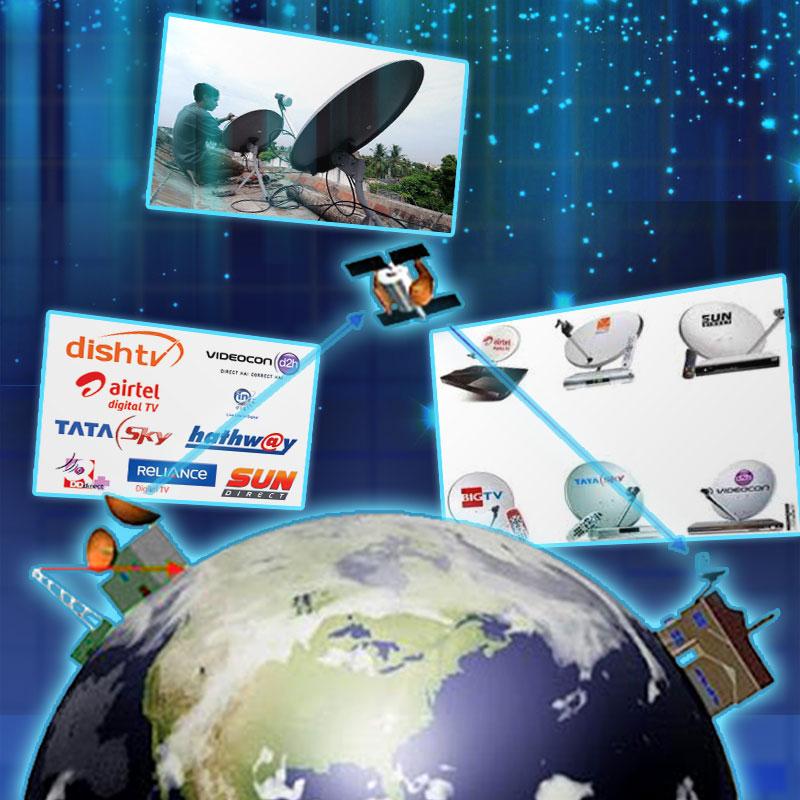
    Since the introduction of the DTH sector in 2003, Indian DTH (direct-to-home) services have displayed phenomenal growth. There were four pay DTH service providers in the country during the quarter that ended in June 2022.

    As of June 30, 2022, Pay DTH had approximately 67.04 million active subscribers. This is in addition to the DD Free Dish (free DTH services from Doordarshan) subscribers.

  • Trai issues amendments to the regulatory framework for broadcasting and cable services

    Trai issues amendments to the regulatory framework for broadcasting and cable services

    Mumbai: The Telecom Regulatory Authority of India (Trai) on Tuesday issued the telecommunication services tariff order, 2022 and the telecommunication services interconnection regulations, 2022.

    In consonance with the complete digitisation of the cable TV sector, Trai on 3 March 2017 notified the new regulatory framework for broadcasting and cable services. After passing legal scrutiny in Madras High Court and Supreme Court, the new framework came into effect from 29 December 2018.

    As the new regulatory framework changed quite a few business rules, many positives emerged. However, upon implementation of the new regulatory framework 2017, Trai noticed some inadequacies impacting the consumers. To address certain issues that arose after implementation of the new regulatory framework, after a due consultation process with stakeholders, Trai on 1 January 2020 notified the new regulatory framework 2020.

    Some stakeholders challenged provisions of tariff amendment order 2020, interconnection amendment regulations 2020 and QoS amendment regulations 2020 in various High Courts including in the High Court of Bombay and Kerala. The court upheld the validity of the new regulatory framework 2020 except for a few provisions.

    The provisions related to network capacity fee (NCF), multi-TV homes and long-term subscriptions of new regulatory framework 2020, have already been implemented and due benefits are being passed on to the consumer at large. Every consumer now can get 228 TV channels instead of 100 channels earlier, in a maximum NCF of Rs 130. It has enabled consumers to reduce their NCF for availing a similar number of channels as per 2017 framework, by an estimated cost varying Rs 40 to 50. Additionally, the amended NCF for multi-TV homes has enabled further savings to the consumers to the tune of 60 per cent on second (and more) television sets.

    However, as per RIOs filed by the broadcasters in November 2021, the new tariffs reflected a common trend i.e., the prices of their most popular channels including sports channels were enhanced beyond Rs 19 per month. Complying to the extent provisions, as regards the inclusion of pay channels in a bouquet, all such channels that are priced beyond Rs 12 per month are kept out of the bouquet and are offered only on a-la-carte basis. The revised RIOs as filed indicate a wide-scale changes in composition of almost all the bouquets being offered.

    Immediately after new tariffs were announced, Trai received representations from distribution platform operators (DPOs), associations of local cable operators (LCOs) and consumer organisations. DPOs highlighted difficulties likely to be faced by them in implementing new rates in the system and migrating the consumers to the new tariff regime through the informed exercise of options impacting almost all bouquets, especially due to upward revision in the rates of pay channels and bouquets declared by broadcasters. Therefore, Trai engaged with all the different associations and consumer groups including representatives of LCOs.

    To deliberate on the various issues related to implementation of new regulatory framework 2020 and suggest a way forward, a committee consisting of members from Indian Broadcasting & Digital Foundation (IBDF), All India Digital Cable Federation (AIDCF) & DTH Association was constituted under the aegis of Trai.

    The purpose of the committee was to facilitate discussions among various stakeholders to come out on a common agreed path for smooth implementation of Tariff Amendment Order 2020. Stakeholders were advised to come out with an implementation plan with minimum disruptions and hassles to the consumers while implementing the new regulatory framework 2020.

    The committee listed several issues related to the new regulatory framework 2020 for consideration. The stakeholders, however, requested Trai to immediately address critical issues which could create impediments for smooth implementation of tariff amendment order 2020.

    In order to address the issues as identified by the stakeholders’ committee; Trai issued a consultation paper for seeking stakeholders’ comments on points/issues which are pending for full implementation of the new regulatory framework 2020. The consultation paper sought comments and suggestions from various stakeholders, on issues related to discount given in the formation of the bouquet, ceiling price of channels for inclusion in bouquet, and discount offered by broadcasters to DPOs in addition to distribution fee.

    The authority analysed the comments of the stakeholders and to protect the interests of consumers has notified the amendments to tariff order 2017 and interconnection regulations 2017. The main features of the amendments are as follows:

    a.    Continuance of forbearance on MRP of TV channels

    b.    Only those channels which are having MRP of Rs 19 or less will be permitted to be part of a bouquet.

    c.    A broadcaster can offer a maximum discount of 45 per cent while pricing its bouquet of pay channels over the sum of MRPs of all of the pay channels in that bouquet.

     d.   Discount offered as an incentive by a broadcaster on the maximum retail price of a pay channel shall be based on combined subscription of that channel both in a-la-carte as well as in bouquets.

    All the broadcasters shall report to the authority, any change in name, nature, language, MRP per month of channels, and composition and MRP of bouquets of channels, by 16 December 2022, and simultaneously publish such information on their websites. The broadcasters who have already submitted their RIOs in compliance with the new regulatory framework 2020 may also revise their RIOs by 16 December 2022.

    All the distributors of television channels shall report to the authority, DRP of pay channels and bouquets of pay channels, and composition of bouquets of pay and FTA channels, by 1 January 2023, and simultaneously publish such information on their websites. DPOs who have already submitted their RIOs in compliance with the new regulatory framework 2020 may also revise their RIOs by 1 January 2023.

    All the distributors of television channels shall ensure that services to the subscribers, with effect from 1 February 2023, are provided as per the bouquets or channels opted by them.

    Trai in the present amendments, addressed only those critical issues which were suggested by the stakeholders’ committee to avoid inconvenience to consumers while implementing the tariff amendment order 2020. The stakeholders’ committee also listed other issues for subsequent consideration by Trai. In addition, the authority held multiple meetings with representatives of LCOs including an online meeting which was attended by more than 200 LCOs from across the country. Several issues were put forward during these meetings. Trai has noted the suggestions and may take further suitable measures to address the ensuing issues, if the situation warrants.

  • Trai recommends an apex body for data governance to promote data economy 

    Trai recommends an apex body for data governance to promote data economy 

    Mumbai: The Telecom Regulatory Authority of India (Trai) has advocated for an apex body for data governance and to guide India’s digital economy as soon as the government introduced the new Personal Data Protection Bill, 2022.

    Trai noted that a statutory body should be established at the centre, with suitable representation from the department of telecommunications (DoT) and the ministry of electronics and information and technology (MeitY).

    Trai, after receiving comments from stakeholders on the consultation paper, has finalised recommendations for the establishment of data centres (DCs), content delivery networks (CDNs), and interconnect exchanges (IXPs) in India.

    The recommendations were made by the telecom watchdog at a time when the government suggested creating a Data Protection Board to address data-related issues.

    Also Read: Government announces draft bill on personal data protection; proposes penalty of up to Rs 500 cr

    To manage all matters relating to data, including digitisation, monetisation, sharing, and storage, a top organisation known as the Data Digitisation and Monetisation Council (DDMC) would be established by either changing the current law or creating a new one.

    The authority recommends that trusted source procurement, which is applicable for licensees under Section 4 of the India Telegraph Act 1885, be made applicable for DCs (data centres) for security-sensitive equipment.

    It might happen very soon that DCs companies will have to source equipment from trusted sources only. The government has designated the National Cyber Security Coordinator as the body in charge of determining whether or not a source is trustworthy. In addition, the regulatory body has said that the government should define certain fiscal and non-fiscal incentives for the data centre sector. These incentives should be applicable to all the states while giving the states further flexibility to announce additional incentives.

    The regulator further suggested CDN players should be registered with the department of telecommunications through a simple online registration process. DCs hosting CDNs are connected to each other and the internet cloud via internet exchange points (IXPs).

    Trai has recommended bringing IXPs under a separate authorization in a unified licence that is much less onerous than internet service providers’ licence authorization.

    The authority also recommends that any entity that intends to provide IXP services in India can do so either under an ISP licence or UL-ISP authorization or under standalone UL-IXP authorization.

    The authority also recommends that all existing players, including NIXI, be brought within this licensing framework in a stipulated time not exceeding six months.

  • “Our focused efforts and investments in content and user experience enhancements are displaying positive results”: ZEEL MD & CEO Punit Goenka

    “Our focused efforts and investments in content and user experience enhancements are displaying positive results”: ZEEL MD & CEO Punit Goenka

    Mumbai: Speaking in a conference call, ZEEL managing director & CEO Punit Goenka said during the company’s Q2 FY23 earnings call that he remains hopeful of a steady recovery in the advertising environment during the second half of the fiscal given some of the green shoots due to a good monsoon and the onset of the festive season.

    “We are utilising this period to further strengthen the resilience and fundamentals of our business across all aspects. Our focused efforts and investments in content and user experience enhancements are displaying positive results. Going forward, we remain cautiously optimistic about the overall advertising sentiment gradually recovering through the second half of the fiscal year, which will further aid revenue growth.”

    While the underlying impact of the macroeconomic headwind across the industry continued to spill over in the second quarter of the fiscal year, Goenka emphasised, “That said, we have been able to moderately grow our advertising revenues sequentially in the second quarter on the back of our network share gain and focused efforts from our ad sales team.”

    He noted that the merger with Sony should be completed within this financial year. “As you would know, this is something that we are grappling with on a daily basis because the regulatory approval is required, and we can’t give you one final date. The number of days required for delisting or the company’s continued delisting, our expectation is it will be about five to six weeks.”

    Talking about sports being a newer growth opportunity. Goenka mentioned, “In addition to strengthening our current offerings, we are also consistently identifying new growth opportunities for sustained value creation. We took yet another firm step in this direction by sharpening our strategic vision to build the sports business for the company. The strategic licensing agreement with Disney Star makes Zee the exclusive TV destination for all ICC events starting in 2024. Going forward, all our investment decisions to make the sports segment a compelling value proposition for the company will continue to be taken with a prudent approach. Our energies remain focused on enhancing performance across platforms through compelling content offerings and delivering a robust user experience.”

    “For instance, our linear viewership share has increased QoQ, and our key markets like Hindi and Tamil are showcasing an improvement in their performance.” He explained that both in Tamil and Hindi, it is basically implementation and picking the right shows that have worked for it. “In Hindi, particularly, both fiction and non-fiction have done well for us. Tamil is still largely fiction-driven, and we are pretty confident that these will now continue to grow from here. They are stabilised at this level, and now we should see more growth coming. In Marathi, as I mentioned in previous calls to Abneesh, it was an implementation and team issue. A new team was formed about a quarter of a year ago. They are working on plans for getting the turnaround to happen in Marathi, too. I’m quite hopeful that in the next couple of quarters we’ll see something turn around there.”

    When asked about the reason for the NTO 2.0 delay, Goenka stated, “I don’t know what Trai was planning to do, but as I understand it from informal sources, they were trying to build consensus amongst all the stakeholders. As you will understand, building consensus in this industry among broadcasters, cable operators, and DPOs is not easy. I think that is largely the reason for the delay.”

    “My view is that they are finished with all the discussions and everything. We should see the NTO guidelines come out anytime now. As Rohit (ZEEL CFO Rohit Gupta) mentioned, the 28 of February is the deadline they have kept, but I’m quite confident that they will not miss this deadline,” he added further.

    Gupta noted that in the absence of a clear path ahead for NTO 2.0, the near-term outlook for subscription growth remains uncertain and muted. “We will continue to monitor NTO 2.0 guidelines and will be prepared to implement the same for improved long-term revenue outcomes.”

    When asked about the possibility of rethinking capital allocation towards movies given the disappointing performance of Hindi cinema, Goenka said that the company is rethinking or re-studying its movie portfolio strategy and maybe rejigging the capital allocation within that. “So, instead of spending a lot more on, let’s say, Hindi, for example, do we want to spend a little bit more on the regional languages, which are doing much better than the Hindi side, but will we completely look at reducing capital allocation to movies. No, that’s not in the thought process.”

    When asked if it makes sense to buy movie rights after their theatrical release, Goenka responded that, unfortunately, the industry does not work that way because these films are sold even during production. “If we were to wait for the film to be released in theatres and then take the chance of buying the film, there is a risk to that as well. So therefore, the industry is behaving in the manner that it does. Therefore, we have to participate and play the game as per the industry, and our view is that we would also like to continue to build and buy as little as possible. At times that’s not possible, but we are working on that strategy,” he concluded.

  • MIB orders central ministries, state governments to exit broadcast business

    MIB orders central ministries, state governments to exit broadcast business

    Mumbai: The ministry of information and broadcasting (MIB) has issued an advisory which asks any ministry/department of the central and state/UT governments and entities related to them to exit the broadcasting business by 31 December 2023.

    If the ministries of the central government, state/UT governments, and entities related to them are already broadcasting their content, it must be done through Prasar Bharati, through appropriate agreements between Prasar Bharati and the concerned central, state, and union governments. The advisory will affect the Tamil Nadu and Andhra Pradesh state governments, which operate in the content distribution space.

    The advisory will mean the withdrawal of Tamil Nadu and Andhra Pradesh state governments from the content distribution space. The Tamil Nadu government owns and operates a cable distribution company called Arasu Cable TV  while the Andhra Pradesh government runs the AP Fibernet service, which has a triple-play offering of IPTV, internet, and telephony. The Tamil Nadu government also operates an educational channel ‘Kalvi Tholaikkatchi’.

    The Telecom Regulatory Authority of India (Trai) had made recommendations on “issues relating to the entry of certain entities into broadcasting and distribution activities” dated 12 November 2008, 28 December 2012, and 22 January 2015. Its recommendations dated 28 December 2012 have been accepted by the MIB and the ministry of law and justice.

  • Trai extends date for stakeholder’s comments on proposed amendments to the telecommunication services interconnection regulations, 2022

    Trai extends date for stakeholder’s comments on proposed amendments to the telecommunication services interconnection regulations, 2022

    Mumbai: The Telecom Regulatory Authority of India (Trai) has extended the date for stakeholders’ comments and counter comments on the Draft Telecommunication (Broadcasting and Cable) Services Interconnection (Addressable Systems) (Fourth Amendment) Regulations 2022, released on 9 September.

    Last month Trai released a consultation paper on proposed changes to the interconnection regulation 2017. The regulator has amended the regulation to include digital rights management (DRM) system requirements

    Also read : TRAI invites stakeholder’s comments on proposed amendments to the interconnection regulation 2017

    The last date for receiving written comments from the stakeholders was fixed as 7 October 2022, and counter comments, if any, by 21 October 2022.

    In view of this, it has been decided to extend the last date for submission of written comments up to 4 November 2022. Counter comments, if any, may also be submitted by 18 November, 2022. No further requests for extensions will be considered.

    The consultation paper (CP) was prepared in response to the report submitted by the Trai committee formed to investigate DRM system issues. The Trai formed a committee in response to numerous comments and suggestions from stakeholders on DRM System issues.

    Trai has proposed that IPTV service providers use a closed network to retransmit linear channels to subscriber-owned set-top boxes (STBs). It was expressly stated that IPTV would not include any electronic delivery for receipt and viewing via the internet/OTT. It also stated that IPTV linear services should not be made available over the Internet or public networks.

    The regulator also stated that IPTV transmission must be done in multicast mode only, just like cable TV transmission, and that unicast mode is not permitted. STBs with recording capabilities must have a copy protection system in place, and recorded content cannot be transferred to another device.


  • Delhi HC stays TDSAT order asking broadcasters to provide OTT content information

    Delhi HC stays TDSAT order asking broadcasters to provide OTT content information

    Mumbai: The Delhi High Court has stayed Telecom Disputes Settlement and Appellate Tribunal (TDSAT) order and the proceedings until the next date of hearing. TDSAT issued an order last week requiring broadcasters to provide information on content available on over-the-top (OTT) platforms.

    In past legal processes, Trai has publicly indicated that it does not regulate OTT platforms or the content that is associated with them.

    “Prima facie, the court finds itself unable to sustain the order of 20 September by TDSAT,” said the order dated 28 September by Delhi HC.

    According to the High Court, the TDSAT was not authorised to make the ‘contested decision’ while the main dispute over whether it had the authority to issue the ‘contested direction’ was still being resolved.

    A source informes Indiantelevision.com that the court judge made oral remarks saying “what kind of order is this? Later he also said (in a lighter vein) there seem to be lofty principles in the order.”

    Broadcasters are allegedly breaking Clause 5.6 of the TV channel uplinking and downlinking guidelines by providing linear channel signals to OTT services, claimed Trai.  

    This clause requires broadcasters to make satellite TV signals available to registered cable operators, multi-system operators, direct-to-home players, and internet protocol TV service providers.

    As the clause reads, “The applicant company shall provide satellite TV channel signal reception decoders only to MSOs/cable operators registered under the Cable Television Networks (Regulation) Act 1995 or to a DTH operator registered under the DTH guidelines issued by the government of India or to an Internet Protocol Television (IPTV) service provider duly permitted under their existing telecom licence or authorised by the department of telecommunications or to a HITS operator duly permitted under the policy guidelines for HITS operators issued by the ministry of information and broadcasting to provide such service.”

    While OTT services are exempt from Trai oversight, broadcasters contend that Clause 5.6 has not been violated. They claim that both platforms controlled by broadcast networks and those owned by independent players are covered by this.

    Broadcasters including Sony, Star, and Sun TV had approached TDSAT to challenge Trai’s directive. The networks, on the other hand, had received no relief from the appellate tribunal, with TDSAT ordering them to provide the information to Trai within a week.

    The Court also questioned Trai’s authority to control OTT and make the requests for information that they did. In past legal proceedings, Trai has publicly indicated that it does not regulate OTT platforms or the content that is associated with them.

    When Trai requested certain broadcasters (such as Star India, Sony, and Sun TV) to submit detailed information on the content of TV channels that were available on OTT, the problem began.

    Dissatisfied broadcasters challenged Trai’s decision, which ordered the disclosure of information and architecture in TDSAT, among other things, by questioning Trai’s authority to request such information.

    Notably, the broadcasters asserted that Trai has always maintained in court proceedings that it does not regulate over-the-top (OTT) content.

    The TDSAT had previously provided broadcasters with ad-interim protection against Trai coercion. However, it later directed broadcasters to provide information, which resulted in the current petition before the Delhi High Court.

  • Trai has to play a balancing role: advisor of broadcasting & TCSR DG Anil Bhardwaj

    Trai has to play a balancing role: advisor of broadcasting & TCSR DG Anil Bhardwaj

    Mumbai: In an interaction with independent consultant Anuj Gandhi at Ficci Frames Fasttrack 2022, Trai advisor (broadcasting) and TCSR DG Anil Bhardwaj said that the regulator has to play a balancing role. He compared it to making a decision about what to do with a screw. One either loosens or tightens it, he said.

    In addition, he also mentions that a consultation process is going on regarding NTO 2.0. One side wants everything controlled, while the other does not want the regulator to control anything at all. The industry, he said, needs a regulator because they cannot sort out their issues. The aim is to have as light a touch of regulation as possible. That is Trai’s ethos.

    While saying that Trai has done some good things, he admitted that some bad things may have been done. But Trai is willing to review, consult, and come back. He also noted that while content is king, distribution remains extremely important. For the linear TV ecosystem to sustain, the stakeholders have to nurture and support each other. There are 1,00,000 LCOs in the country. Each has two to three people on the ground. That is the kind of distribution power available. “Ignore them at your own peril. Everybody is at a crossroads with everybody else. A linear TV channel needs a content creator, an aggregator, or a broadcaster. You need an integrator and then the last mile operators. If someone is dying and someone else is making money as a result, ultimately, who will suffer? Linear will be dead if one arm starts killing the other. Linear TV will grow if people are willing to nurture and sustain each other,” he noted.

    He said that regulation does not put a cap on pricing. One can charge Rs 100 for a channel. What he is against is the mirage of pricing that happens with bundling. That results in consumers being misled, which is what Trai is completely against. Certain channels, he said, are sold at Rs 6 through reverse deals and have fixed the MRP (maximum retail price) at Rs 19. Privately, he has asked them why this is being done. As a regulator, data is obtained and almost everything comes to Trai. The reason given is that the channel level will go down if it is not priced at that rate. “This is the mentality of the distribution head of one of the largest broadcasters in our country. In that situation, you need a regulator. We have not asked a niche English channel not to price themselves at Rs 50 or Rs 100. They have shut down because they could not sustain their model. They were showing ads and they also wanted to charge a certain fee. Previously, this was being driven through deals done with the distributor, which today is not possible because there is transparency in the system. For bundling, we said a mirage of price was created. So we will have some semblance. We tried Rs 19. We thought of Rs 12. The purpose is not to tell the industry what to fix. It is to avoid misleading the consumer. We are again reviewing that in the consultation. We have kept postponing the implementation of NTO 2.0 till we are through with this consultation process. We want to know if the price of Rs 12 is okay or not.”

    He further said, “We have done certain good things. Maybe we have done some bad things. That is why nothing is cast in stone. We are willing to come back and consult. We are willing to forego regulation provided the market matures. If we reduce or remove regulation, we will find that the market is not functioning as it should.” He noted that in the current consultation, one side says control everything and the other side says do not control anything. One side desires a minimum level of assurance regarding distribution effort. So a balancing role has to be played by Trai. The market is not mature. There are issues, he noted, with broadcasting, with channels shutting down. He also noted that channels are sometimes shut down by distribution as a certain show or content might cause a problem for some people. “This is the kind of country that we live in.”

    He said that as a regulator, Trai has to act strongly, but it cannot be done tomorrow or people will complain of high-handedness. The market has to mature to a level where certain things are known and numbers and facts are known. He gave the example of hundreds of MSOs getting audits done themselves by one of the 52 auditors chosen by Trai. That is, until you reach a certain place. “Without distribution, no ecosystem can survive.” On the content front, he said that Arpu is Rs 273. The ecosystem decides this, not the regulator. “If the industry is dying, please raise prices. Content is king, which is why digital media is paying five times more for content production compared to linear broadcast. So, if broadcasters need more revenue for content investment, then please review your models. Trai has never said not to invest in content. Broadcasters should make models in such a way that the money invested comes back. We will not stop you. Please make good content.”

    He added that numbers for the broadcasting industry are coming down, which could be due to a combination of factors, including OTT, DD Freedish, and Covid. Today, there are 900 or so TV channels. There are 1,000 odd MSOs. DTH is 70 million homes, and cable is not at 70 million. The balance is DD Freedish, which is growing. “Linear TV is finding its own new paradigm, new place. The punch is with OTT. It is important to understand why. Content is king, but distribution remains extremely important,” he said.

    He stated that some consumers believe that content is better on digital or OTT apps. That is why some have cut the cord. A broadcaster should allow a user to have five screens at the same cost or at a much lower cost than what is charged for linear TV. Then users will not go elsewhere. There are millions of smart connected TVs today.

    He also noted that India is unique in many ways. He gave the example of the mandatory content sharing bill for events of national importance. That applies to some sports events, even if the acquisition price is high. The aim is to have the events seen by the masses, and it goes beyond the ambit of commercial deals done. This is something that the Supreme Court has agreed with. “We are a very different country. It is an evolution. I am not saying that we are 100 per cent correct or that the US is correct,” he concluded.

  • Reliance Jio adds 2.9 mn wireless subscribers in July: Trai

    Reliance Jio adds 2.9 mn wireless subscribers in July: Trai

    Mumbai: Reliance Jio added 2.9 million wireless subscribers at the end of July, as per subscription data by the Telecom Regulatory Authority of India (Trai). Bharti Airtel added 0.51 million wireless subscribers during the same period. Vodafone Idea lost 1.54 wireless subscribers in July.

    The total number of wireless subscribers increased from 1,147.39 to 1,148.03 million in July. The number of wireless subscribers in urban areas decreased from 625.49 million to 626.74 million. However, wireless subscriptions in rural areas increased from 521.90 million to 521.29 million.

    As per Trai data, there were 1,013.18 million active wireless subscribers during the month. Reliance Jio had the highest number of active wireless subscribers at 382.17 million, followed by Bharti Airtel at 356.17 million and Vodafone Idea at 216.92 million. BSNL had 52.27 active wireless subscribers.

    As per information received from 694 operators in July, Trai found that total broadband subscribers increased from 800.94 million to 807.42 million. The broadband subscribers comprised 776.81 mobile device users, 29.47 million wired subscribers, and 1.14 million fixed wireless subscribers.

    The top five broadband service providers were Reliance Jio Infocomm with 422.23 million subscribers, Bharti Airtel with 222.12 million subscribers, Vodafone Idea with 122.98 million subscribers, BSNL with 25.25 million subscribers, and Atria Convergence with 2.13 million subscribers.

    The top five wired broadband service providers were Reliance Jio Infocomm with 6.27 million subscribers, Bharti Airtel with 4.99 million subscribers, BSNL with 3.85 million subscribers, Atria Convergence with 2.13 million subscribers, and Hathway Cable and Datacom with 1.13 million subscribers.

    The top five wireless broadband service providers were Reliance Jio Infocomm with 415.96 million, Bharti Airtel with 217.13 million, Vodafone Idea with 122.97 million, BSNL with 21.39 million, and Intech Online with 0.22 million.

    The number of wireline subscribers increased from 25.57 million to 25.63 million in July.

    The number of telephone subscribers in India increased from 1,172.96 million to 1,173.66 million. Urban telephone subscriptions increased from 649.09 million to 650.40 million. However, rural subscriptions decreased from 523.87 million to 523.26 million.

    During July, a total of 10.23 million requests were received for mobile number portability (MNP).

  • TRAI invites stakeholder’s comments on proposed amendments to the interconnection regulation 2017

    TRAI invites stakeholder’s comments on proposed amendments to the interconnection regulation 2017

    Mumbai: The Telecom Regulatory Authority of India (TRAI) has issued a draft consultation paper to bring necessary changes in the Telecommunication (Broadcasting & Cable) services interconnection (Addressable System) Regulation, 2017. 

    Trai notified the interconnection regulation on 3 March 2017 and further its first amendment was notified on 30 October 2019. The first draft of the interconnection regulation was issued on 27 August 2019 and a proposed amendment was initiated to include Digital Rights Management System requirements (DRM).

    What is DRM?

    “DRM is a systematic approach to copyright protection for digital media. The purpose of DRM is to prevent unauthorized redistribution of digital media and restrict the ways consumers can copy content they’ve purchased,” Trai stated in a statement. 

    “DRM products were developed in response to the rapid increase in online piracy of commercially marketed material, which proliferated through the widespread use of peer-to-peer file exchange programs. Typically, DRM is implemented by embedding code that prevents copying, specifies a time period in which the content can be accessed or limits the number of devices the media can be installed on,” it stated.

    The authority also stated in a release that during its consultations, it received numerous feedback that the IPTV-based DPOs are switching to DRM technology. “It is necessary that the consultation committee covers the DRM-based networks and provides for enabling provisions for such operators,” Trai stated. 

    Trai conducted numerous consultation processes and gathered comments and suggestions from various stakeholders on this issue. Realising the concern with DRM, the authority decided to deal with DRM issues in a separate consultation paper. Trai further formed a committee to study DRM system issues. This committee prepared and submitted a report as well as the draft of ‘System Requirement for Digital Right Management (DRM)’ to the authority

    Currently, Trai has invited comments and suggestions from stakeholders on the proposed amendment and draft of the Telecommunication (Broadcasting & Cable) services interconnection (Addressable System) Regulation, 2022, which includes the issues related to the DRM system. The stakeholders can submit their comments on the draft regulations by 7 October and counter-comments by 21 October.