Tag: Trai

  • Broadcast biz ease exercise progresses, TRAI expects conclusive ideas by 11 Sept

    Broadcast biz ease exercise progresses, TRAI expects conclusive ideas by 11 Sept

    NEW DELHI: More time has been given by the Telecom Regulatory Authority of India for stakeholders to respond to its consultation paper issued last month on the ease of doing broadcast business.

    Stakeholders can send in their comments by 11 September and counter-comments by 18 September 2017 to the paper of 31 August based on views received by it on 19 April’s pre-consultation paper.

    The paper was issued noting that a business-friendly environment is a pre-requisite for the growth of a nation and makes a country a favorite business destination particularly with the fast changing regulatory framework for the media and entertainment sector. Seventeen questions were raised by TRAI.

    Noting that the media and entertainment sector in India is one of the fastest growing sectors, TRAI noted that it not only leads to employment generation but also helps in the growth and development of an economy.

    The economic liberalisation measures initiated in the early 1990s had focused on reduction of regulatory burden on enterprises as an underlying objective of the reform process. The government has launched an ambitious programme of regulatory reforms aimed at making it easier to do business in India. The programme aims at pinpointing the bottlenecks and ease them to create a more business-friendly environment. The efforts have yielded some results with India ranked at 130 according to the World Bank’s “Doing Business” report. But, there is still huge scope for further improvements.

    TRAI notes that the IMF has titled India as the brightest spot in the global economy. Several global institutions have projected India as the leading destination for FDI, and a number of recent global reports and assessments, show that India has considerably improved its policies, practices and economic profile. It is expected that enabling policies and determination to continue with economic reforms, various initiatives taken by the government such as ‘Make in India,’ Smart City Mission, Skill India Mission, Digital India, etc. would further spur the growth of the economy.

    The pre-consultation paper on the “Ease of Doing Business” in broadcasting which covered all media came just a few months after a similar paper on telecom. In the new era of convergence, the two sectors are expected to complement each other.
     
    The aim is also to remove entry barriers by laying down well-defined and transparent procedures and processes thereby creating level playing field and competition in the sector and to facilitate innovation and technology adoption for providing better quality of services to the consumers to steer further growth of the sector by attracting investment through investor friendly policies 

    Subjects to be covered are related to processes and procedures for obtaining permission/ license/ registration for the following broadcasting services and subsequent compliances connected with these permissions. The fields include:

    (a) Uplinking of TV channels 
    (b) Downlinking of TV channels 
    (c) Teleport services 
    (d) Direct-to-home services 
    (e) Private FM services 
    (f) Headend-in-the sky services 
    (g) Local Cable Operators 
    (h) Multi System Operators 
    (i) Community Radio Stations 

    Also read:
    TRAI seeks conclusive views on ease of doing broadcast biz

    TRAI begins work on data protection and government’s role

  • TRAI QoS implementation stayed by Delhi HC awaiting Madras HC verdict

    TRAI QoS implementation stayed by Delhi HC awaiting Madras HC verdict

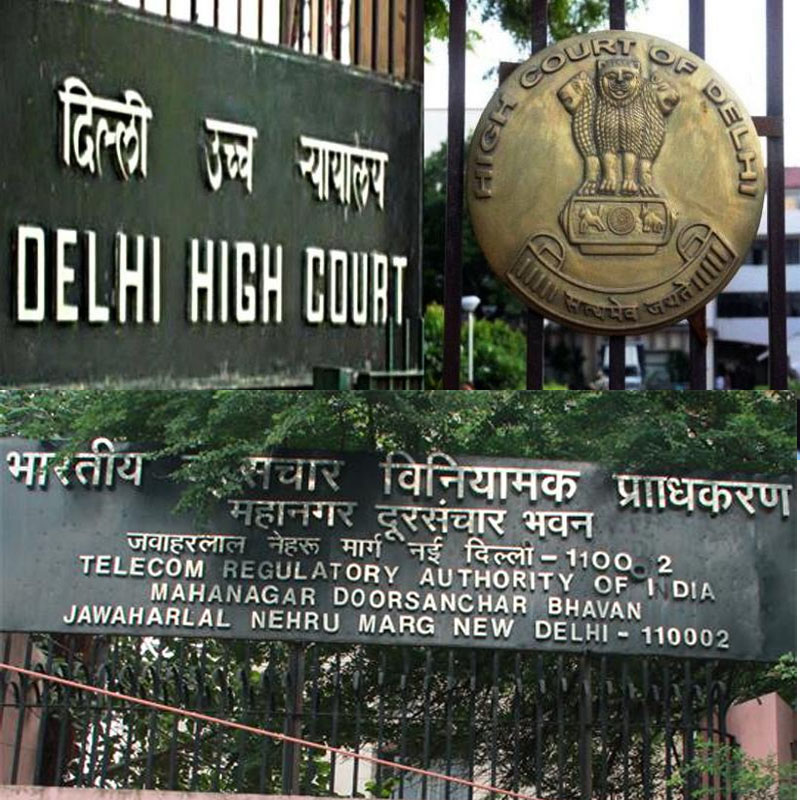
    MUMBAI: The Delhi High Court has stayed TRAI’s QoS regulations till the time the Madras High Court gives its judgement in TRAI tariff order case.

    Earlier, joining issues with a petition being heard by the Supreme Court on a similar matter, the Madras High Court had, three weeks ago, directed the federal government to clarify on the existing regulatory setup governing contents aired by television channels in India. The Supreme Court is hearing a similar case and has enquired from the central government whether it had a proper mechanism in place to regulate TV content.

    Prior to that, the Madras HC had, on 31 July, reserved orders on the Star India-Vijay TV challenge to the jurisdiction of TRAI to issue tariff orders.  The court received a compliance report from its registry that all parties had filed their written submissions.

    In the most recent development, the Delhi High Court bench, comprising acting chief justice Gita Mittal and justice C Hari Shankar, stated that it would wait for the verdict of the Madras High Court in relation to the tariff order dispute before deciding on the prayers of Tata Sky and Bharti Telemedia. Till that time, the implementation of TRAI tariff order, interconnect regulations and QoS (quality of service) and  consumer protection regulations would not be effected.

    The two companies had questioned the validity of the QoS.

    ALSO READ :

    Star India-TRAI jurisdiction case to come up in Madras HC today

    Govt rules out TV channel categorisation (updated)

    TRAI can only regulate transmission, not broadcast material: Star tells Mds HC

    SC stays new TRAI tariff, asks Madras HC to complete hearing in four weeks

  • DTH subscriber growth on upswing in first quarter?

    DTH subscriber growth on upswing in first quarter?

    BENGALURU: Is the DTH subscriber growth in the first quarter of fiscal 2017 (Q1-18, quarter ended 30 June 2017, current quarter) on an upswing?  Of the six private players in the Indian DTH ecosystem, three are publically listed and their numbers are available in the public domain. Two players, Airtel DTH and Dish TV, have indicated a quarter-on-quarter growth in number of subscriber additions. Telecom Regulatory Authority of India (TRAI) has yet to release subscription numbers for Q1-18.

    Airtel has indicated subscriber additions of 0.499 million for Q1-18 as compared to 0.228 million for the previous quarter (quarter ended 31 March 2017, Q4-17, previous quarter). Dish TV reported adding 0.186 million subscribers as compared to an estimated 0.165 million additions for the previous quarter.

    The third player – Videocon d2h reported adding 0.13 million subscribers in Q1-18 as compared to the slightly higher 0.14 million for Q4-17. It may be noted that subscriber numbers are generally rounded off by the players in their reports, in some case to an extent of 10,000. Also, the sum of the net subscriber additions per quarter may not be equal to the overall subscribers reported as added in a fiscal by the companies because of subscriber churn and rounding off.

    Please refer to the figure below:

    public://F1_18.jpg

    As reported by us earlier, despite the sunset date for DAS IV having passed, the DTH industry had not been able to leverage the opportunity that it presented. Financial results of  Airtel Digital TV (Airtel DTH), Dish TV, and Videocon DTH show poor subscriber adds in the quarter ended 31 March 2017 (fourth quarter, Q4-17). As a matter of fact, subscriber additions in Q4-17 was the lowest that the three Indian major operators reported in a quarter for the financial year ended 31 March 2017 (FY-17). The combined subscribers for all the three players grew 8.33 percent to 41.23 million in FY-17 from 38.06 million in FY-16. In FY-16, the three players had added about 65 percent more subscribers in absolute numbers at 4.93 million as compared to the 3.81 million added in FY-17.

    The DTH industry witnessed a slowdown in subscriber growth even in fiscal 2016. Combined subscriber additions of the three pay-direct to home operators in India for the annual period ended 31 March 2016 (FY-16) vis-à-vis the previous year (FY-15) grew by 14.8 percent.  This subscriber growth rate was however was much lower than the growth that these entities had in FY-15 at 24.7 percent as compared to FY-14.

    The current DTH scenario in India

    Dish TV is at present the largest private DTH player in the country in terms of number of subscribers. The three players – Airtel DTH, Dish TV and Videocon d2h represent about 60 to 65 percent marketshare of the pay-TV DTH industry subscribers. The other three players are Tata Sky, Sun Direct and Big TV. Please refer to the figure below for the estimated subscriber marketshare of the private pay-TV players.

    public://F2_9.jpg

    The government’s FreeDish DTH service is the largest DTH player by far in terms of subscribers with an estimated 22million or 2.2 crore subscribers in 2016 as per the KPMG-FICCI Indian Media and Entertainment Industry Report 2017 (KPMG-FICCI M&E Report 2017) titled Media for the Masse: The Future Unfolds. It must however be noted that an exact number for registered or active subscribers is not available since this is a free DTH service. Also, the proposed merger of Videocon d2h with Dish TV will create the largest private television carriage player in India and quite likely the second largest in the world, be it cable, internet television or DTH or any other.


  • TDSAT ‘no’ to stay Star Bharat launch, DPO payments subject to adjudication

    TDSAT ‘no’ to stay Star Bharat launch, DPO payments subject to adjudication

    NEW DELHI: Even as it declined to stay or restrain the launch of Life OK channel as Star Bharat, the Telecom Disputes Settlement and Appellate Tribunal (TDSAT) yesterday said the amounts paid to the distribution platform operators or DPOs will be subject to the final orders of the tribunal.

    The bench, comprising TDSAT chairman Shiva Keerti Singh and members B B Srivastava and A K Bhargava, observed that the agreements between broadcaster Star India and DPOs Dish TV and Videocon d2h (both entities in the process of merging) will continue to operate and the cost being offered by the broadcaster cannot be reduced unilaterally.

    While Star India was given four weeks to reply, the two DTH platforms were asked to file their counter-affidavits too. Thus, the next hearing may come up some time in October 2017.

    The tribunal said if it is proved that the presence of Star Bharat on Prasar Bharati’s free to air DTH platform FreeDish is tantamount to the channel’s conversion from pay to FTA, then both Dish TV and Videocon d2h will be entitled a refund from Star.

    Star India had contended that merely making a channel available on FreeDish platform does not tantamount to a conversion in the nature of the channel for which the DPOs are being charged.

    Dish TV and Videocon d2h had moved the tribunal earlier this week alleging that Star India was converting its pay channel Life OK into a FTA network by putting the rebranded channel (Star Bharat) on FreeDish platform without informing the Telecom Regulatory Authority of India (TRAI). In its defense before the court, Star India responded by saying that “we are only rebranding” and not “converting our pay channel” into FTA.

    Interestingly, this petition came just two days after Essel/Zee Group’s Dish TV had sent a letter to the Ministry of Information and Broadcasting, Indian cricket board BCCI, TRAI and monopoly watchdog Competition Commission of India. In the letter Dish MD Jawahar Goel had alleged that Star was trying to create a monopoly over cricket broadcast rights in the country, a move that would be detrimental for all stakeholders, including consumers who would ultimately dish out more subscription money to watch cricket on telly.

    To buttress his arrangements, Goel had contended that Star had even challenged rge sector regulator TRAI’s jurisdiction to fix tariff charges — a case that’s pending before the Madras High Court.

    ALSO READ:

    Dish TV moves TDSAT against Star Life OK name change & turning FTA

    Dish TV shoots off letter to IBF; alleges discrimination by b’casters, OTT platforms

    Jawahar Goel raises alarm of emerging Star cricket monopoly (updated)


  • Dish TV shoots off letter to IBF; alleges discrimination by b’casters, OTT platforms

    Dish TV shoots off letter to IBF; alleges discrimination by b’casters, OTT platforms

    NEW DELHI: In a move that’s certain to set the cat amongst the pigeons, Dish TV, one of India’s biggest satellite platform in terms of subscribers, has not only accused broadcasters of  “discrimination” relating to making available content to various pay distribution platforms vis-à-vis likes of OTT, but also “creating huge disparity” in the market.

    “Broadcasters, on one hand, keep on charging huge subscription fee from us and, on the other hand, provide the same content/channel to the OTT platforms at highly subsidized rates, thereby not only creating a non-level field, but also causing huge detriment to the subscribers of Dish TV. Availability of same content/channel on alternate distribution platform on much cheaper rate vis-a-vis DTH has started resulting into migration to the alternate distribution platforms,” Dish TV has said in a letter to the Indian Broadcasting Foundation, an apex body of TV channels or broadcasting companies operating in India.

    The Dish TV letter dated 11 August 2017, reviewed by Indiantelevision.com, goes on to highlight why the move of TV channels to turn FTA, join Doordarshan’s free-to-air DTH platform DD FreeDish after paying a carriage fee, and making available content at highly subsided rates to OTT platforms like YouTube and that being proposed by Reliance Jio slides the Indian television market’s business model to be largely advertising driven.

    “It is a common industry knowledge that the broadcasters have provided their channels to the OTT platforms at a highly discounted rates, which is totally prejudicial and discriminatory to the DTH platforms,” the Dish TV letter stated, which has also been sent to the DTH Association of India and the All India Digital Cable Federation, a body of digitally-able MSOs.

    The letter from Dish TV, written by the satellite platform’s managing director Jawahar Goel, is addressed to IBF president Punit Goenka, who also is Zee Entertainment Enterprises Limited MD and CEO, and a nephew of Goel. Goenka’s father and media baron Subhash Chandra is a member of India’s Upper House or Rajya Sabha.

     According to people familiar with the development, IBF’s member-companies have been asked to give their feedback on the content of the letter, which could be put to vote some time mid-September.

    “The IBF constitutes of seven major members, viz. Star, Zee, Sony, IndiaCast, Sun (TV group), Discovery and Times, which not only control the IBF but also are the major players collecting the subscription and advertisement revenue— collecting more than 99 per cent of the subscription and advertisement revenue of the Indian broadcasting industry,” the letter stated, adding that actions of the broadcasters “clearly indicate” the focus was shifting towards increasing the advertising revenue against subscription revenue.

    Raising the issue of sector regulator TRAI and disputes tribunal TDSAT’s emphasis on “fairness, reasonability and non-discrimination” as far as making available content to distribution platforms,  Dish TV pointed out that strategies employed by broadcasters were “deterrent to the pay TV market.”

    Pointing out that certain actions of the broadcasters could amount to breach of cross-media restrictions too, the letter exhorted the IBF members to discuss “whether the emphasis has to be on pay model (where the broadcasters can collect subscription) or an FTA model (where the broadcasters can get the advertisement revenue)”.

    Till the time of writing this report, Indiantelevision.com could not get across to IBF for a reaction.

    “Availability of same content/channel on alternate distribution platform on much cheaper rate vis-a-vis DTH rate has started resulting in(to) migration to the alternate distribution platforms,” the letter highlighted, adding that big broadcasters’ own OTT platforms (like Star’s Hotstar, Viacom18’s Voot, Sony Pictures Entertainment’s SonyLIV and Zee’s dittoTV, for example) also contributed to compounding the problem.

    The letter added: “It will be critical for your (IBF) members to spell out the strategy to hold/grow the pay TV market, which has been contributing to around 35-40 per cent of the total revenue of the pay broadcasters.”

    However, it seems that the present slew of letters from Dish TV and accusations will again rock the approximately Rs 558  billion Indian media and entertainment industry, which had thought corporate skirmishes of mid 1990s to mid 2000s had been buried in favour of overall growth of the broadcast and cable sectors and the media and entertainment industry, in general.

    ALSO READ:

    Jawahar Goel raises alarm of emerging Star cricket monopoly


  • TRAI & Malaysian counterpart announce collaboration

    TRAI & Malaysian counterpart announce collaboration

    NEW DELHI: The Telecom Regulatory Authority of India (TRAI) and the Malaysian Communications and Multimedia Commission (MCMC) have agreed to exchange information and regulatory best practices in the fields of broadcasting and telecommunications, including new and emerging areas.

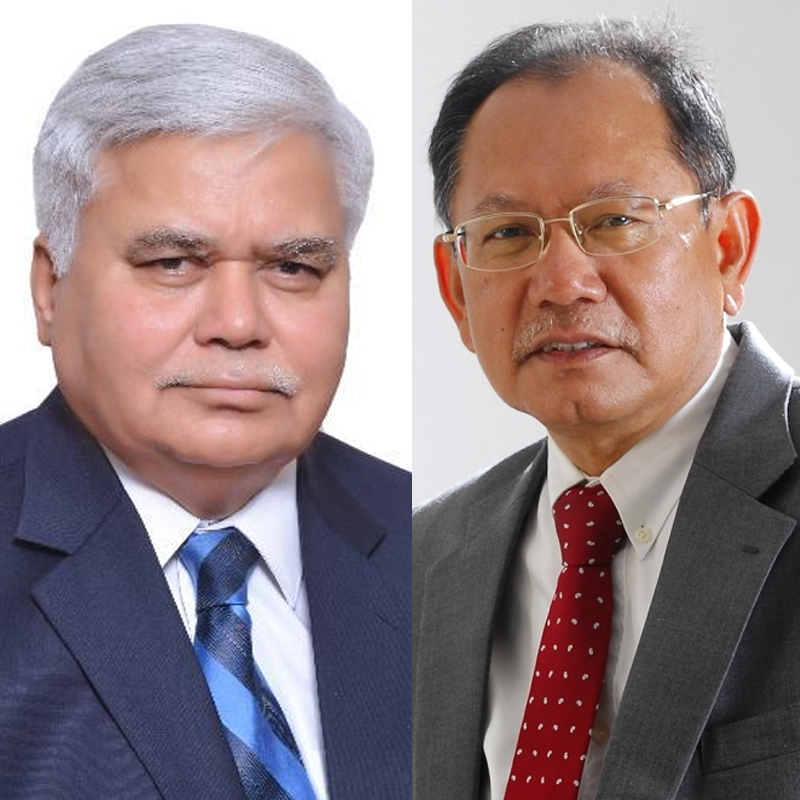
    A Letter of Intent (Lol) was signed by the TRAI chairman R S Sharma and MCMC chairman Halim Shafie in the presence of the Malaysian high commissioner to India Hidayat Abdul Hamid. This historic agreement would help both the regulators to work closely in enhancing mutual cooperation and bilateral relations.

    The signing of this agreement assumes significance for both India and Malaysia as both countries can learn from each other.

    The other activities planned under the agreement to promote international and technical cooperation between the two organizations are:

    Exchange, deployment and attachment of experts, including but not limited to during bilateral consultations;

    Jointly conducting capacity building exercises in the fields of broadcasting and telecommunications regulation;

    Collaboration in various international forums including but not limited to the Association of Southeast Asian Nations (ASEAN), Asia-Pacific Telecommunity (APT) and International Telecommunication Union (ITU); and

    Any other forms of cooperation that are mutually agreed upon by the Parties in the fields of broadcasting and telecommunications regulation.

  • Training programme on collaboration among digital societies commences in capital

    Training programme on collaboration among digital societies commences in capital

    NEW DELHI: Delegates from 24 countries are participating in a training programme on “Collaborative Regulation for Digital Societies” being hosted by the Telecom Regulatory Authority of India (TRAI).

    Teleom Disputes Settlement and Appellate Tribunal Chairman Justice Shiva Kirti Singh inaugurated the programme organized between 23 and 25 August 2017 by TRAI jointly with International Telecommunication Union (ITU) on ‘Collaborative regulation for digital societies.’

    The delegates are particularly from the Asia-Pacific region. Besides, this training programme is being attended by large number of domestic participants representing various stakeholders such as government departments, telecom service providers, telecom vendors, academia etc.

    This ITU-TRAI International Training Programme 2017 aims to build skills to address the policy and regulatory issues in the emerging era beyond convergence of telecommunications and information technology. The Programme will highlight the building blocks required to ensure that regulatory measures remain relevant and appropriate for the new environment. It will bring together international experiences in this area with a focus on India’s experiences and the lessons learnt.

    The theme of this training programme is extremely relevant for all the economies worldwide. Collaborative regulation in ICT sector has various facets. In the converged ICT era, the physical boundaries would cease to exist. The seamless communication would transcend across geographical boundaries and therefore requires fine tuning of existing regulations. The Cloud computing technologies has made revolutionary trends in data storage and management.  The need for developing ecosystems for launch of new services has become inevitable.   With ever increasing subscriber base, there is a great need for optimum utilization of available spectrum through harmonization. With technological development, the task of harmonization of spectrum has become much easier and has become important.

    Cross sectoral collaboration is one of the most important aspects of regulating ICT sector. Governments should aim to improve coordination across regulators for the ultimate benefit of consumers and for coherent and consistent economic regulations across different sectors. Collaboration of regulators with researchers and academicians is another aspect of ICT regulations. Collaborative regulations can result in significant benefits for competition and the economy as a whole if working synergies are created through ongoing dialogue and regulatory cooperation.

    This three day training programme has been divided into 12 sessions and each session will be dealing with pertinent issues related to regulation of digital societies. The sessions will deal with topics such as ‘Regulatory approaches for smart societies’, ‘Converged Licensing Regime’, ‘Spectrum Planning and Management – Strategies for SG’, ‘Building Trust in Digital World’,  ‘Internet  of Things (loT)/Machine  to Machine (M2M) Communications’ etc. This training programme will assist in building institutional capacity by sharing experiences and successful case studies for potential collaboration in all these areas.

  • TRAI to host APAC regulators’ meet in Delhi

    TRAI to host APAC regulators’ meet in Delhi

    NEW DELHI: Delegates from more than 23 countries will be participating in the Asia-Pacific Regulators’ Roundtable followed by the International Training Programme being organized next week by the International Telecommunication Union (ITU) and the Telecom Regulatory Authority of India (TRAI).

    About 60 delegates from different countries have registered for the “ITU-TRAI Asia-Pacific Regulators’ Roundtable” and the “ITU- TRAI International Training Program (ITP) 2017” during 21-22 August 2017 and 23-25 August 2017 respectively.

    The Regulators’ Roundtable is the 7th edition of the Asia-Pacific Region initiative to organize an annual Roundtable to provide telecommunication/ICT regulators in the region to mutually learn from the experiences of each other.

    In a release, TRAI said: “Regulators around the globe have been dealing with the regulatory challenges created by the digital advancements. Digitization has created rapid technological progress and growth, which has generated tremendous benefits for all economies around the world. New opportunities for growth and innovation are emerging, and it is crucial that the new regulatory requirements and challenges are anticipated and addressed at both National and International level, in a coordinated way. Growing innovation and rapid deployment of digital technologies necessitates a proactive regulatory framework”.

    The main regulatory challenges include promoting growth in digital ecosystem, maximizing consumers’ interest, ensuring level playing field for all players on new and cross-sectoral markets, promoting competition, among others.

    The Regulators’ Roundtable fosters dynamic and strategic discussions, facilitates sharing of information, relevant experiences and practices as well as conclusively debate on possible solutions and opportunities for potential collaboration to address emerging regulatory issues and challenges in Digital Societies, TRAI Secretary Sunil Gupta.

    The ITU-TRAI International Training Programme 2017 will build skills to address the policy and regulatory issues in the era beyond convergence of telecommunications and information technology. In particular, the event will focus on the implications of Collaborative Regulations for Digital Societies, he added.

  • June: Jio & ACT lead wireless, wired broadband subs growth

    BENGALURU:MukeshAmbani’s Reliance Jio juggernaut continued leading growth in wireless broadband internet in the country nine months after its commercial launch on 5 September 2016. Jio has added 51.2 million subscribers in calendar year 2017 (CY-17) until 30 June 2017 (Jun-17) At the same time, ACT Broadband, probably the largest private wired internet service player in South India, continued to lead subscriber acquisitions in CY-17 with the addition of about  100,000 (0.1 million) broadband internet subscribers until Jun-17.

    Wireless broadband numbers grew 9.14 million or 3.35 percent month-on-month (m-o-m) in Jun-17 to 281.99 million from 272.85 million in May-17 according to Telecom Regulatory Authority of India (TRAI) data for the month of June 2017. Jio’s subscriber base grew by 13.68 percent in Jun-17.The top 5 wireless broadband service providers were Reliance JioInfocomm Ltd (123.36 million), Bharti Airtel (53.25 million), Vodafone (41.13 million), Idea Cellular (26.37 million) and Reliance Communications (13.54 million). Please refer to the figure below:

    public://1111111111111111_1.jpg

    The figure below shows the m-o-m subscriber base growth of the top 5 service providers in India.

    public://22222222222222_2.jpg

    Top five broadband internet service providers constituted 89.08 percent market share of the total broadband subscribers at the end of Jun-17. The subscriber base of these service providers was Reliance JioInfocom Ltd (123.36 million), Bharti Airtel (55.34 million), Vodafone (41.14 million), Idea Cellular (26.37 million) and BSNL (21.76 million).

    In the case of wired broadband subscribers, the all India subscriber base grew by 0.19 million or by 1.04 percent in CY-17 – from 18.14 million on 1 January 2017 to 18.33 million as on 30 June 2017.

    As on 30 June 2017, the top five Wired Broadband Service providers were BSNL (9.73 million), Bharti Airtel (2.1 million), Atria Convergence Technologies (1.22 million), MTNL (0.98 million) and You Broadband (0.65 million). Among the top 5 wired broadband internet service providers the government run providers – Bharat Sanchar Nigam Limited (BSNL) and Mahanagar Telecom Nigam Limited (MTNL) lost subscribers, Airtel saw an increase of 10,000 subscribers, while ACT and You Broadband both gained subscribers in June 17 as compared to May 17. Please refer to the figure below.

    public://3333333333333333333333.jpg

    It must be noted thatTRAI reports indicate data in millions of numbers up to 2 decimal places. Hence it is assumed in this report that a figure of 0.51 million (5.1 lakh) subscribers for You BB for Dec-2015 would be granular to the nearest 10,000. While percentages have been mentioned up to two decimal places, the accuracy may vary, depending upon the exact number.

    Multi-system operators (MSOs’) and Local cable operators (LCOs’) or cable video service providers also provide broadband internet services in the country. These cable service providers have a number of subsidiaries and alliances, hence broadband numbers are split as applicable. The consolidated subscription numbers of these entities could be larger than the numbers of some of the wired internet services providers mentioned above.

    ALSO READ ;

    ACT still leads in wired sub addition, Idea & BSNL lose wireless subs

    ACT to invest Rs 7 bn in wireline infra, Rs 1 bn for Delhi

    Jio juggernaut rolls on, wired segment wobbles

    TRAI may invite ideas to boost b’cast & tele-products manufacturing

  • TRAI starts process of STBs’ interoperability, issues consultation note

    NEW DELHI: Realising that lack of technical interoperability of set-top boxes creates problems for consumers wanting to switch over to another service provider, the Telecom Regulatory Authority of India today issued a consultation note on the solution architecture for technically interoperable STBs after receiving 28 comments to a pre-consultation note issued on 4 April 2016.

    All stakeholders which include CAS providers, SoC vendors, middleware providers, EPG solution providers, STB manufacturers, smart card providers, and service providers like Broadcasters, Multi System Operators, and DTH operators are requested to provide their written comments on the proposed solution architecture for technical interoperable STBs by 25 August 2017.

    Subsequently, TRAI is planning to organise a workshop on proposed solution architecture for technically interoperable STB during the first fortnight of September 2017 to elaborate in detail on various technical aspects commented upon by the stakeholders in response to this consultation note.

    After incorporation of comments received from the stakeholders and the workshop, TRAI will be launching a pilot project on STB interoperability. Entities interested in pilot projects for deployment of Interoperable STBs can also send their details to TRAI.

    TRAI said this inter-operability between different service providers has an adverse effect on competition and service quality in the Pay-TV distribution market. Non-availability of STB in an open market is also a major hindrance to technological innovations. Whenever, a consumer changes its service provider, the STB of existing service provider becomes useless as the same STB cannot be used; resulting in electronic waste (e-waste). The availability of practical solution which can provide technical interoperability of STB is always desirable.

    The framework of interoperable STB should ensure the following:

    a. The level of security should be similar to or better than what is present today.

    b. The framework must be sound enough to prevent reception of services by unauthorized persons.

    c. The prices of the interoperable STBs should remain comparable to non-interoperable STBs.

    d. The portability cost should reduce considerably

    e. The DPOs should be able to choose security solutions (Conditional Access System) as per their requirements.

    f. The proposed solution must be able to identify pirates, if any

    g. The User Interface (UI) and Electronic Program Guide (EPG) format customization.

    h. The framework should ensure that TV channels with EPG listing continue toØ be available to the consumers on migration to another operator.

    At the outset, TRAI said digital TV broadcasting services can be received by a subscriber using STB which is connected with the TV set (sometimes the STB is in-built in the TV set). The STB receives TV signals from distribution network and decodes them into viewable form on a TV set. STB enables the subscriber to view only those TV channels which he/she has subscribed.

    Cable TV and direct-to-home (DTH) platforms are the major distribution platforms for delivery of TV broadcasting services in India. Whereas, the DTH services delivered in digital mode since beginning, the migration of cable TV services, from analogue to digital, has also been completed with implementation of Digital Addressable Cable TV systems (DAS) in the country.

    Presently, Distribution Platform Operator (DPO) provides STB, which is compatible with his network to provide services to subscriber. Over a period of time, variety of technologies has been deployed by DPOs into the networks. It has led to a situation where STBs provided by one operator are not compatible with the system of the other operator. This impedes portability of a subscriber from one operator to another in case he wishes to do so

    TRAI collaborated with IIT-Bombay and Centre for Development of Telematics (C-DOT). The issues identified by stakeholders in response to the pre-consultation paper were communicated to C-DOT and IIT-Bombay. Now C-DOT, the telecom technology development centre of the Government of India, in close coordination with TRAI, has developed a solution for interoperable STBs. Describing the same, C-DOT has provided TRAI, a copy of the document titled “C-DOT framework and feature requirements for the ecosystem entities towards implementation of STB interoperability framework.”

    Through this consultation note, TRAI presents the solution architecture for technically interoperable STB to all the concerned stakeholders to seek their comments on proposed solution.

    Some of the reasons for non-interoperability of STBs and the C-DOT framework and feature requirements for the ecosystem entities towards implementation of STB interoperability framework” are available on trai.gov.in.