Tag: Trai

  • TRAI Conducted Drive Test across cities to access telecom network quality

    TRAI Conducted Drive Test across cities to access telecom network quality

    Mumbai: TRAI (Telecom Regulatory Authority of India) with the assistance of the Telecom Service Providers, conducted Drive Tests at twenty cities, their surrounding areas and highways namely: Vellore, Kadapa, Berhampur, Thiruvananthapuram, Raigad, Bengaluru, Bhagalpur & Munger, Dibrugarh-Sivasagar-Tinsukia, Kalimpong-Jalpaiguri-Alipurdwar, PatnaMuzaffarpur-Motihari, Ajmer & Pushkar, Karnal, Moga, Korba, Sagar, Jaipur-Pushkar HW, Panipat- Ambala HW, Ja11andhar-Moga HW, Sagar-Lakhnadan HW and Korba-Raipur HW, in the quarter ending September 2023.

    The Drive tests were conducted to assess the cellular/ mobile network quality of service provided by telecom service providers, for voice and data services. The details of cities and LSAs wherein drive tests conducted, are given below.

    Location                           Licensed Service Area (LSA) 1.
    Vellore                              Tamilnadu
    Kadapa                              Andhra Pradesh
    Berhampur                       Odisha
    Thiruvananthapuram      Kerala
    Raigad                                Maharashtra
    Bengaluru                          Karnataka
    Bhagalpur-                        Munger Bihar
    Dibrugarh-                        Sivasagar- Tinsukia Assam
    Kalimpong-                       Jalpaiguri- Alipurdwar West Bengal
    Patna-                                Muzaffarpur-Motihari Bihar
    Ajmer-                                Pushkar Rajasthan
    Karnal                                 Haryana
    Moga                                  Punjab
    Korba                                 Madhya Pradesh
    Sagar                                  Madhya Pradesh
    Jaipur-                                Pushkar HW Rajasthan
    Panipat-                             Ambala HW Haryana 1
    Jalandhar-                         Moga HW Punjab
    Sagar-                               Lakhnadan HW Madhya Pradesh
    Korba-                              Raipur HW Madhya Pradesh.

    The Key Performance Indicators (KPIs) assessed for the network includes the following: I) for voice service: Coverage; Call Setup Success Rate (CSSR); Drop Call Rate; Block Call Rate, Handover Success Rate; Rx Quality. ii) For data services: Download and Upload Throughputs, Web Browsing Delay, Video Streaming Delay and Latency.

    The complete report is available at TRAI website www.analytics.trai,gov.in .

  • BSNL focusing on increasing 20 per cent market share – Report

    BSNL focusing on increasing 20 per cent market share – Report

    Mumbai: As per the Telecom Regulatory Authority of India (TRAI) latest data, BSNL held lost market share in the country by year-end. According to media reports, BSNL is losing subscribers hence it is targeting 20 per cent of mobile subscribers in the country.

    The BSNL planned to roll out 4G services this year, also focusing on the quality of the network along with frequency and speed.

    According to media reports, BSNL chairman and managing director P K Purwar said, ‘ Company aims for 20 per cent subscribers is practically possible. It depends on the quality of our services and how fast we roll out 4 G, and 5 G services. Customers are looking forward to our 4 G services. People have trust in BSNL. We are upgrading our services.’

    In the last financial year, TRAI data highlighted the loss of subscribers of BSNL. Data specified by TRAI on 3 January indicate Jio and Airtel’s dominance in the market segment with 39.3 per cent and 32.85 per cent respectively. It is followed by Vodafone Idea at 19.6 per cent.

    BSNL planned to expand its telecom 4 G services on 1 Lac base transceiver stations. (BTSs). BSNL also has plans to roll out 5 G services in 2025.

    Recently IT Minister Ashwini Vaishnav in the BSNL event also emphasised the growth of BSNL services saying, ‘In June and July this year, 4 G services will be expanded to 50000 towers.’

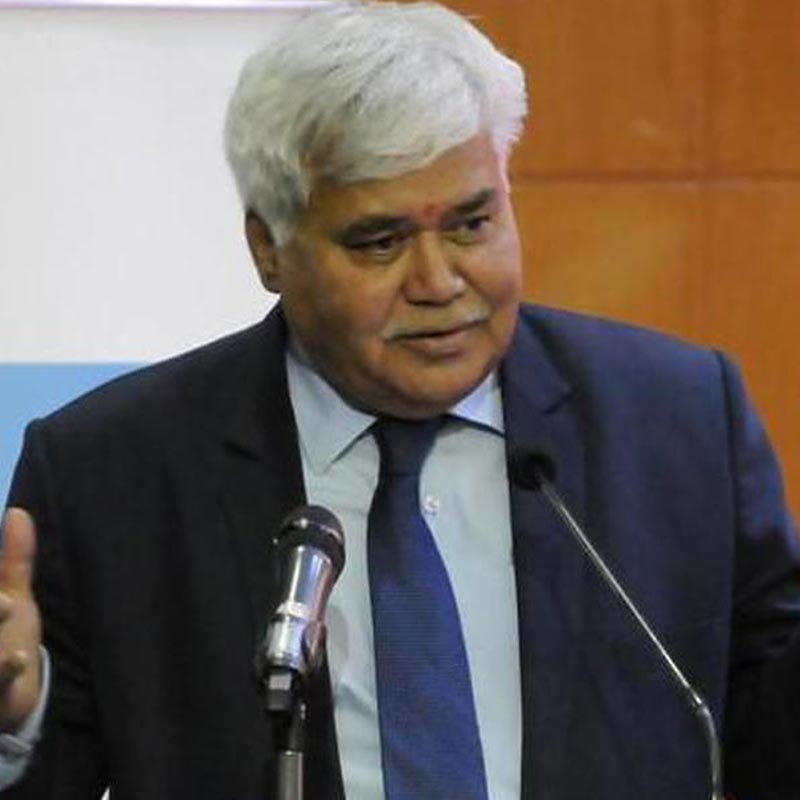
  • Tanla appoints former TRAI chairman R S Sharma to BOD

    Tanla appoints former TRAI chairman R S Sharma to BOD

    Mumbai: One of India’s CPAAS Players, Tanla announced RS Sharma to facilitate the BOD ( Board of Directors). The BOD number of directors increases to 7 including Sharma.

    While expressing happiness on the appointment of Dr. Sharma appointment, founder and chairman Uday Reddy said, ‘ Dr. Sharma’s incredible vision and track record in India’s digital transformation journey makes him an invaluable addition to Tanla’s August board. We are excited to learn from his pioneering experiences and advice for the continued success of Tanla Platforms globally.’

    He was the chairman of TRAI ( Telecom Regulatory Authority of India) from 2015 to 2020. He had unparalleled work on taking new initiatives in Technologies and transformation.

    Speaking on the appointment as Director at Tanla Dr R S Sharma said, ‘Tanla is adept at harnessing disruptive technologies. And I see how they have innovated to foster trust in the CPaas ecosystem. Joining the board of such a forward-thinking technology company is really an opportunity to contribute to nation-building. ‘

    His tenure was marked by initiatives promoting net neutrality and consumer rights. He worked on many government initiatives and projects for the betterment of consumers

  • The monthly growth rate of subscribers is 0.37 per cent – TRAI

    The monthly growth rate of subscribers is 0.37 per cent – TRAI

    Mumbai: According to the recent TRAI ( Telecom Regulatory Authority of India) data release, total broadband subscribers increased in October 2023 to 1115 from 1108 operators in September 2023. The total broadband subscribers increased to 885 million in September 2023 whereas at the end of October 2023 was 888.27 million. The monthly growth rate of monthly subscribers is 0.37 per cent as per data provided by telecom services providers to TRAI.

    On 30 September 2023, wired subscribers were 36.87 million which increased by 1.32 per cent in October 2023 sized around 37. 35 per cent. The mobile and dongle users category also increased by 0.33 per cent from 847 million on September 23 to 849.97 million by October 23.

    In the category of fixed wireless subscribers, Wi-Fi, Wi-Max, point-to-point radio & V SAT was 0.97 per cent on September 23 which decreased by 0.95 per cent. Concluding a total number of user base it increased sharply by 0.37 per cent from 885 million on September 23 to October 23 to 888.27 million.

    A total of five service providers represented 98.35 per cent of market share at the end of October 23 including Reliance Jio, Bharti Airtel, Vodafone Idea, BSNL, and Atria Convergence.

    Market shares represented by each company separately –

    1) Reliance Jio – 462. 34 million

    2) Bharti Airtel – 252.25 million

    3) Vodafone Idea – 125. 68 million

    4) BSNL – 25. 09 million

    5) Atria Convergence – 2.21 million

    Wireline subscribers also increased from 30.97 million at the end of September 23 to 31.33 million in October 2023. The net increase in the wireline subscribers base is increased with a growth rate of 1.13 per cent. Currently, BSNL, MTNL, APSFL, and three PSUs are mainstream wireline service providers. The total number of market shares held by these 3 companies is 29.02 per cent.

    Currently, in the era of rapid digital transformation, Wireless subscribers increased from 1150.15 million at the September 23 end. Particularly in urban areas, the subscription base increased from 630.17 million and wireless subscriptions in rural areas also increased from 519. 99 million to 520.62 million at the same time. The growth rate of urban and rural wireless subscriptions was 0.003 per cent and 0.12 per cent respectively.

    Except for Uttar Pradesh, North East, J & K, Punjab, Kerala, Gujarat, Kolkata, and Himachal Pradesh, the rest Indian states showed growth in wireless subscribers. Telephone subscribers also increased from 1181.13 million on September 23 to 1182.31 million at the end of October 23.  Urban telephone subscriptions have also increased from 658. 46 million to 658.99 million at the end of October 23.

    The rural subscription has also increased from 532.65 million to 523. 32 million which is a 0.008 per cent increase in subscription base. As per TRAI data release Bharti Airtel has the maximum proportion of 99.16 per cent of its active wireless subscribers ( VLR) as against total wireless subscribers (HLR) in October 2023. The minimal proportion of VLR is 26.80 per cent of its HLE during the same period.

  • TRAl extends last date to comments on Consultation Paper

    TRAl extends last date to comments on Consultation Paper

    Mumbai: In a recent notification release, The Telecom Regulatory Authority of India (TRAI) had sought comments / counter-comments of stakeholders on the Consultation Paper on “Digital Transformation through 5G Ecosystem” dated 29th September 2023. The last date for receiving written comments and counter-comments from the stakeholders was initially fixed as 30 October 2023 and 13 November 2023 respectively, which have been extended twice.

    The last date for submission of written comments was 26 December 2023 and that for counter-comments is now 8 January, 2024. Meanwhile TRAI has received requests from Industry Associations for further extension of timeline for submission of comments citing various reasons like difficulty in collecting the inputs from their members due to Christmas and New Year.

    They have also mentioned that the Indian Parliament has passed the new Telecom Bill-2023 very recently, so the comments need to be updated accordingly. Keeping in view the requests of stakeholders, TRAI decided to extend the last date for submission of written comments up to 22 January 2024 and for counter-comments up to 5 February 2024.

    For more information visit TRAI website 

  • Indian advertising economy touches Rs1Tn

    Indian advertising economy touches Rs1Tn

    Mumbai :  The winter update of MAGNA’s “Global Ad Forecast” predicts that global media owners net advertising revenues (NAR) will reach $853bn this year, more than 5.5 per cent above the 2022 level and will grow by more than 7.2 per cent in 2024.

    •  The Asia Pacific advertising economy grew more than 8.2 per cent to $286bn this year powered by India, Pakistan and China. In 2024, APAC advertising revenues will increase more than 6 per cent.

    •  India is now consistently the fastest growing market and leads the ad spend growth globally. India moves into top ten markets and forecast to climb to 8 position by 2028. Indian advertising sales grew over 11.8 per cent in 2023 to Rs 1099bn ($14bn) and is the 11 largest market.

    •  In India, Digital formats contribution to growth is slowing down (more than 14.2 per cent in 2023 Vs more than 25.7 per cent in 2022), however digital remains the largest at Rs 500bn ($6.4bn) with a share of 46 per cent. Linear formats will grow by more than 9.9 per cent with both television and print growing equally at more than 8 per cent. Radio (more than 12.1 per cent) and OOH (more than 29.8 per cent) are seeing a robust recovery though still short of pre- covid revenue.

    •  In 2024, the India advertising market will grow by more than 11.4 per cent. Digital formats will rise more than 13.9 per cent to reach Rs 569bn ($7.2bn), while linear ad sales will increase by more than 9.3 per cent to reach Rs 655bn ($8.3bn).

    MAGNA India SVP, director – intelligence practice Venkatesh S, said: “In 2023H1 advertising spend grew more than 9.6 per cent, accelerated in the second half of 2023 to more than 13.8 per cent. The recovery is driven by festive spending and marquee events like ICC WC and elections. Globally, Traditional media owners’ (TMO) ad revenue growth is slowing down, while in India both Linear (more than 9.9 per cent) and Digital formats ( more than 14.5 per cent) are growing. Traditional formats will still be the largest, at least till 2027, though pure play digital is driving the adex. Non-linear formats (AVOD, Digital Newspaper, Podcasting & DOOH) of TMOs are growing steadily in double digits and contribute 5 per cent to the total revenue of TMOs.”

    India along with China is projected to contribute about half of global GDP growth in 2023 & 2024. After a more than 7.3 per cent expansion in 2022, the IMF in their latest October 2023 update predicts a slight deceleration in economic activity with real GDP growth of more than 6.3 per cent in 2023. The GDP has been revised up by 0.4 per cent from the April 2023 update as economic growth remains robust. India is reliant on its own domestic demand, private consumption, and investment spending for its growth. The overall sentiment is positive and upbeat though the market remains complex with local and global pressures. Large consumer base and aspirations of the young Indians works in its favour.

    Inflation remains vulnerable to rising food and fuel prices. The task of bringing inflation back to target is a priority for the government through macro prudential measures and monetary policy tightening. After more than 6.7 per cent in 2022, inflation though expected to ease down to more than 5.5 per cent in 2023 is still in the upper bracket of the central bank’s desired range.

    The Union Budget’s focus on boosting manufacturing, higher disposable income with lowering of taxes and increased spending on infrastructure augurs well for the adex growth. Advertising spending is growing at a healthy rate of over 11.8 per cent in 2023. Total ad sales are rising from Rs 982bn ($12.5bn) in 2022 to Rs 1099bn ($14bn) in 2023.

    Consumers are increasing their spending, primarily driven by the young working adults who are investing in experiential led categories like travel, auto, and entertainment. Impassable categories like CPG, continue to see higher spending. 2023H2 which includes festive spending, ICC World Cup and government spending before the upcoming national elections early next year is expected to contribute 10-12 per cent incremental growth to adex.

    CPG, auto and fintech are the most dominant sectors contributing to India’s adex growth followed by government, communication, travel, and real estate. Retail including e-commerce, financial services, Media & Entertainment and Apparel will see average growth, Startups who have been the mainstay for all tent poles properties have either cut budgets or moved to performance marketing than brand marketing. With the new retrospective taxation policy on gaming, brands have exercised caution in spending.

    According to TRAI In the last few years, the Government has fostered the digital ecosystem with inimitable assets like Aadhar, UPI & DigiLocker taking the digital public goods to a higher level. Also, driven by rising internet user base and affordable devices, currently 881mn have access to internet as of march 2023. Government has also initiated labs to develop applications using 5G service to ramp up digital business services and this will have a rub off on the digital advertising economy. In 2023, overall digital ad spends will grow over 14.2 per cent to top Rs 500bn ($6.4bn). India takes the lead in mobile growth followed by the US and Brazil according to a report by Adjust and it is a mobile first market. The share of mobile within digital will touch 59 per cent this year. There are 467mn social users in the country and it has been the bellwether for digital growth with more than 19 per cent growth. Total video registers more than 16 per cent growth. It is noteworthy that OTT players display robust growth trends driven by increased CTV subscribers, content choices and local language play. The OTT subscription is estimated to be at 50mn this year. In 2024 total digital growth estimated at more than 13.9 per cent to touch Rs 569bn ($7.2bn).

    Overall Television is growing but Pay TV is facing challenges from Free Dish, FTA channels and OTT in terms of subscriber base. Following the implementation of the amended New Tariff Order (NTO) 3.0 which allowed broadcasters to hike channel access price, subscribers have moved out of Pay TV being a price sensitive market. Despite this, Television is still the largest video medium with over 900 million viewers and daily viewing at 222 mins. In the light of rising consumption of short form content along with web series and availability of TV shows on OTT platforms, the time spent indicates TV is holding onto its audiences. The proposed broadcast bill extending its purview to include OTT, will help eliminate disparities to the advantage of linear television. Also, there remains considerable growth opportunity for TV and advertisers are keen to cover the vast population of live audiences. Television ad revenues in 2023 will grow more than 8.9 per cent to reach an estimated Rs 365bn ($4.6bn). In 2024 TV advertising was estimated to grow more than 9.9 per cent to reach Rs 401bn ($5.1bn).

    Newspaper has risen to be the most credible source of information. With 391mn copies (2021-22) circulated every day and language print taking the lead, the geographical spread and the audience size presents a massive marketing opportunity. The advertising growth is on the back of recovery in volumes; however, yield remains a challenge. In 2023, ad sales revenue will grow over 8.1 per cent to Rs 175bn ($2.2bn). Growth expected to continue in 2024 to drive an increase of over 9 per cent, Rs 187bn ($2.4bn).

    Radio’s road to recovery has been a gradual one. Despite the volumes crossing pre-covid levels, yield has been a struggle though ad rates have flared up slightly. The industry is battling challenges of measurement limitations and audio streaming apps gaining user base. Radio players are offering airtime bundled with off air solutions to make up for the revenue. Government led allowance of news broadcast and increase in Government advertising rates will accelerate ad spends. Overall, advertising revenues are growing by 12.1 per cent to reach Rs 18bn ($229mn), which is 80 per cent of the pre-COVID market size. In 2024, radio estimated to grow over 11 per cent, Rs 20bn ($254mn)

    OOH advertising has consistently grown post the pandemic as audience movement continues to ascend. Rising roadside DOOH screens in metros and state capitals, substantial presence in ambient spaces have added to demand, leading to growth in DOOH spends which contributes 5% to total. In 2023 OOH revenue increased by 26.7 per cent valued at Rs 30bn ($382mn) reaching 90 per cent of the pre-COVID market size. This pace will be sustained for a few more years and in 2024, OOH will exceed 2019 revenues adding over 16% to the size. In-cinema advertising is up sharply as audiences are flocking to cinemas. State-of-the-art technologies like IMAX and Dolby Atmos, has transformed movie-watching into a truly awe-inspiring experience and this has been another reason for audience draw. It will cover 74 per cent of 2019 market size by the end of 2023 with an impressive over 43% growth to reach Rs 8bn ($102mn). In 2024, the growth is estimated to be more than 19%.

    IPG Mediabrands India Chief Investment Officer Hema Malik, commented: “India continues to script its unique narrative in the advertising landscape, boasting robust growth across diverse mediums despite evolving consumer preferences and market dynamics. The promising trajectory across television, digital, radio, and out-of-home channels signifies the dynamic nature of our advertising landscape. I am optimistic about the future as India’s advertising story unfolds, driven by innovation, adaptability, and a burgeoning consumer base.”

  • TRAI releases consultation paper on ‘Digital Inclusion in the Era of Emerging Technologies’

    TRAI releases consultation paper on ‘Digital Inclusion in the Era of Emerging Technologies’

    Mumbai: The Telecom Regulatory Authority of India (TRAI) has released a consultation Paper on “Digital Inclusion in the Era of Emerging Technologies” on 14 September 2023. The consultation paper has aimed to explore and address the challenges and opportunities presented by the rapid advancement of emerging technologies, with a focus on ensuring inclusivity for all segments of society and industries particularly Micro Small and Medium Enterprises (MSMEs).

    In the consultation paper, TRAI has emphasised the need for a robust policy framework and collaborative efforts among stakeholders to ensure participation of individuals in digital economic activities. The authority has also analysed various gaps in digital inclusion present in the country such as the mobile internet usage gap, rural urban internet penetration disparities, gender gaps in internet access, etc. as well as gaps identified from some global indices. Proactively prioritising inclusion can create an ecosystem that benefits every individual, fostering a more equitable and accessible digital economy.

    TRAI has also identified various challenges being faced by the Micro, Small and Medium Enterprises (MSME) sector in the country from the adoption of new and emerging digital technology solutions. As the MSME sector contributes significantly towards the nation’s economy, it is imperative that the MSMEs are empowered to contribute more towards the digital economy through new emerging technology solutions, especially the micro-enterprises as the majority of the MSMEs are micro-enterprises.

    The consultation paper, for seeking inputs from the stakeholders, has been placed on TRAI’s website (www.trai.gov.in). Written comments on the issues for consultation are invited from the stakeholders by 16 October 2023 and counter comments by 31 October 2023.


  • Unencrypted channels on DD Free Dish suspected of promoting privacy: A growing concern

    Unencrypted channels on DD Free Dish suspected of promoting privacy: A growing concern

    Mumbai: Cable operators have alleged that unregistered local players are illegally taking unencrypted feed from DD Free Dish. Over the last few years there have been increasing discussions on the growing popularity of DD Free Dish, a free-to-air service being provided by Prasar Bharati. While consumers continue to enjoy the FTA service, cable operators are disturbed by the fact that DD Free Dish is providing unencrypted channels, which is “promoting piracy”.

    According to big cable operators, Prasar Bharati, which is selling DD Free Dish slots to broadcasters at huge prices, is allegedly not complying with TRAI’s Telecommunication (Broadcasting and Cable) Services Standards of Quality of Service and Consumer Protection (Addressable Systems) Regulations, 2017 (Quality of Service Regulations) which makes it mandatory to provide encrypted channels.

    The AIDCF recently moved the Telecom Disputes Settlement and Appellate Tribunal (TDSAT) against DD Free Dish for allegedly not abiding by TRAI’s regulation that requires the channels to be provided in an encrypted manner. TDSAT has issued notice to Prasar Bharati and other respondents in the matter which will now be heard next month.

    Industry experts say while all the multiple system operators (MSOs) have implemented DAS in phase wise manner from 2012 to 2016, thereby helping in curbing piracy, DD Free Dish is still providing its signals in non-encrypted mode.

    MSOs operate through their deployed cable network, wherein the consumer/subscriber is provided encrypted signals of television channels through a set-top box deployed at their premises. This, say experts, has also led to a non-level playing field for cable operators with DD Free Dish.

  • TRAI releases recommendations on FM radio broadcasting

    TRAI releases recommendations on FM radio broadcasting

    Mumbai: The Telecom Regulatory Authority India (TRAI) has released recommendations on FM radio broadcasting in order to discuss various issues related to FM Radio broadcasting.

    In order to discuss various issues related to FM Radio broadcasting, TRAI held a meeting with representatives of AROI on 5 August 2022. Representatives of AROI, inter-alia, raised the following issues for consideration of the authority:

    (i) Permitting private FM Radio channels to broadcast independent news bulletins

    (ii) Availability of FM Radio receivers in mobile handsets

    After considering all comments or counter-comments received from stakeholders during the consultation process and further analysis of the issues, the Authority has finalised its recommendations. The salient features of the recommendations are given below:

    (1) The annual licence fee of a FM radio channel should be de-linked from NOTEF.

    (ii) The license fee should be calculated as four percent of the Gross Revenue (GR) of the FM radio channel during the respective financial year. GST should be excluded from Gross Revenue (GR).

    (iii) The Government may take appropriate measures to provide relief to the FM radio operators to address challenges posed due to Covid-19 pandemic.

    (iv) Private FM Radio operators should be allowed to broadcast news and current affairs programs, limited to 10 minutes in each clock hour.

    (v) The program code of conduct as applicable to All India Radio for news content may also be applied to Private FM Radio channels.

    (vi) Functions or features pertaining to FM radio should remain enabled and activated on all mobile handsets having the necessary hardware. Built-in FM radio receivers in mobile handset must not be subjected to any form of disablement or deactivation.

    (vii) A Standing Committee, headed by a senior officer of Joint Secretary or above level, to oversee and monitor the compliance by mobile phone manufacturers (or importers) may be established by MeitY. The committee should include key stakeholders such as MIB, AROI, MAlT, and ICEA.

    (viii) An online grievance redressal portal should be provided for submitting information or complaints in case of any noncompliance as regards enablement of FM radio functionality in such mobile handsets that have the necessary functionality for FM receivers.


  • Trai releases recommendations on ‘Leveraging Artificial Intelligence and Big Data in Telecommunication Sector’

    Trai releases recommendations on ‘Leveraging Artificial Intelligence and Big Data in Telecommunication Sector’

    Mumbai: Telecom Regulatory Authority of India (TRAI) has released  recommendations on ‘Leveraging Artificial Intelligence and Big Data in Telecommunication Sector’. The regulatory authority stated in a press release, dated 20 July 2023, “The impact of AI is not limited to only the telecom sector. AI has the potential to impact a wide range of sectors, including healthcare, finance, transportation, education, agriculture and many others. Therefore, it is important to take a holistic approach for examining the impact of AI across all sectors rather than focusing only on telecom.”

    It further said, “As AI technology is still evolving, it took time to examine and bring out the multiple aspects of AI/ML in the telecommunication and other sectors by studying various international practices which are also in the nascent stage.” 

    Based on the comments of the stakeholders, discussion during the Open House Discussion and analysis thereof, the authority has finalised these recommendations. In view of the impact of AI in all sectors, the framework which has to be suggested for telecom cannot be treated in isolation and hence a common framework covering all the sectors is being proposed.