Tag: Trai

  • Guest column: Net neutrality – ensuring an open internet

    Guest column: Net neutrality – ensuring an open internet

    At a time when the US Federal Communications Commission is to vote on a rollback on the Net Neutrality Rules notified during the Obama administration, the Telecom Regulatory Authority of India (TRAI) has published its recommendations on the subject. Making headlines during the days of Zero Rating and products of the kind, and coming after nearly three years of setting up of a committee by the TRAI to make recommendations in this regard (January 2015), the document attempts to balance the interest of the general public by including ‘internet access services’ within the regulation of net neutrality and excluding “specialised services” that are “optimised for specific content, protocols or user equipment where optimisation is necessary in order to meet specific quality requirements.’’

    Net neutrality, in theory, is a laudable concept. It also finds mention in the UL, VNO and ISP licensing terms notified by the Department of Telecom. The specific mention is absent from the UASL and CMTS licenses. However, this principle can nevertheless be read into the obligation to provide non-discriminatory access even by the telecom service providers. In this background, what is to be considered is whether net neutrality, with its basic principle already enshrined in the law and some contours such as specialised services yet to be clearly defined, is even required to be separately regulated.

    First, net neutrality is, as stated in the recommendations, primarily to address and ensure “public internet access”. Importantly, what has not been considered is how much of this “public” of the country actually has access to broadband. The answer would be in the vicinity of 15 per cent. Of this “preferred public population,” many would be multiple connection/access holders and, hence, the effective penetration of broadband would be less than 12 per cent. With this background, the debate, rather than focusing on net neutrality, should focus on access to broadband for all. It is only when such a objective is achieved that the issue of whether or not we have a neutral internet would really need to be studied.

    Second, OTT, which is one of the aspects central to the debate on net neutrality, has been currently left out for separate consideration. It is unclear, therefore, as to what position is taken vis-à-vis this very important piece of the net neutrality puzzle.

    Third, it is strange that the document should pluck out internet of things, a concept and technology so nascent in India that even its mention in this document makes it conspicuous by its presence. Why is there a need for identification of such detail of a technology still under development, not only in India but in most parts of the world?

    Having said the above, all the right words have been used in the recommendations–non-discriminatory access, non-provision of fast lanes, etc. All or most of these recommendations are great in theory. However, and especially with the carving out for specialised services, the workability of these recommendations, if they are to be accepted and converted into regulations, is suspect. We need to have enough cars (population access to broadband) before we can deride the provision of fast lanes.

    (Abhishek Malhotra is a partner at Bharucha & Partners)

  • TRAI releases recommendations on net neutrality

    TRAI releases recommendations on net neutrality

    MUMBAI: The Telecom Regulatory Authority of India (TRAI) has released its recommendations on net neutrality. These recommendations are the result of a long, multistage consultation process.

    On 27 March,2015, TRAI had issued a consultation paper titled ‘Regulatory Framework for Over-The-Top Service.’ Apart from issues relating to Over-The-Top (OTT) service, this consultation paper also touched upon issues related to net neutrality.

    TRAI first decided to deal with the issue of differential pricing of data access. Accordingly, after following a public consultation process, TRAI issued the “Prohibition of Discriminatory Tariffs for Data Services Regulations, 2016” on 8 Feb,2016. Subsequently, Department of Telecommunications (DoT) vide letter dated 3 March, 2016 sought TRAI’s recommendations on net neutrality including traffic management and economic, security and privacy aspects of OTT services, apa1i from other relevant standpoints as covered in the consu ltation paper dated

    27 March, 2015. TRAI considered the matter and decided to deal with the issue of Net Neutrality first. The recommendations released by TRAI today are an outcome of this decision.

  • Trai to make recommendations on net neutrality today

    Trai to make recommendations on net neutrality today

    New Delhi: The Telecom Regulatory Authority of India (Trai) will issue its much-awaited recommendations on net neutrality today.

    “We will issue the recommendations on net neutrality tomorrow,” Trai chairman RS Sharma told reporters on Monday.

    Trai, which has so far adopted a pro-net neutrality stand, is expected to stick to its stand of ensuring a free and open internet for all.

    Net neutrality requires telecom service providers to treat all internet traffic equally, without regard for the type, origin, or destination of the content or the means of its transmission.

    The recommendations are expected to include the definition of what constitutes reasonable traffic management practices by ISPs. A likely negative list of non-reasonable traffic management practices could also emerge.

    The issue has been debated upon globally as well as in India, with activists arguing the case for an open internet without any restrictions on speed.

    The recommendations that the regulator releases on Tuesday will assume significance, especially at a time when the US plans to repeal its existing rules on net neutrality, which will essentially allow telecom companies in the US to restrict broadband speeds and favour their own services if they want.

    Trai had in January floated a consultation paper on the topic, seeking views on issues such as how to ensure non-discriminatory access to content on internet, among others.

    This was followed up by an open house discussion in August which saw participation by representatives from telecom and ISPs, consulting firms, activists, and policy experts.

  • TRAI wants spectrum cap revised to 35 per cent

    TRAI wants spectrum cap revised to 35 per cent

    NEW DELHI: The Telecom Regulatory Authority of India (TRAI) has suggested the revision of overall spectrum cap from the current limit of 25 per cent to touch 35 per cent.

    In its responses to the paper ‘Issues relating to spectrum cap’, TRAI said that there should be a cap of 50 per cent on the combined spectrum holding in the sub-1 GHz bands (700 MHz, 800 MHz and 900 MHz bands) instead of the intra-cap band which it suggests removing.

    The government recently constituted an inter-ministerial group (IMG) on ‘Stress in balance sheet in select sectors’. The IMG, among others, reviewed the spectrumcap applicable for telecom service providers (TSPs). IMG, in its report, stated that the issue of spectrum cap merits detailed examination and variety inputs from sectoral regulators. In light of IMG report, DoT, on 29 September 2017 requested TRAI to provide its views on spectrum cap.

    Presently, there is a cap of 25 per cent of the total spectrum assigned in 700/800/900/1800/2100/2300/2500 MHz bands and 50 per cent within a given band in each of the service area.

    The authority sought comments of the telecom service providers and took note of the following:

    • Overall spectrum cap of 25 per cent was imposed at a time when there were 6-10 TSPs in a local service area (LSA). After the ongoing consolidation in the sector, the number of TSPs in a LSA may be much less.

    • The spectrum being assigned through auction is a liberalised spectrum. At present, more than 80 per cent of the spectrum held by various service providers is liberalised spectrum wherein they can use any technology of their choice in any band or using multiple bands.

    • As LTE device ecosystem is evolving in each of the spectrum band, there is no real need to put spectrum cap in each spectrum band. In fact, asking a TSP to acquire spectrum in different band to deploy the same technology increase the cost of network with no real gains.

    • Sub-1 GHz bands are perceived as the most optimal bands to ensure availability of wireless broadband services over large areas with low population density. Therefore, spectrum in sub-1 GHz range – 700 MHz, 800 MHz and 900 MHz should be treated separately and special provisions have to be made to safeguard against creation of monopoly

  • TRAI landing page norms stayed till 22 December 2017

    TRAI landing page norms stayed till 22 December 2017

    NEW DELHI: The direction on landing page norms issued by the Telecom Regulatory Authority (TRAI) of India has been stayed till 22 December 2017 following an appeal in the Telecom Disputes Settlement and Appellate Tribunal (TDSAT).

    Even as the tribunal admitted the petitions for hearing, it said: “Since there is a prayer for stay of the impugned direction dated 8 November 2017 issued by TRAI, let the matter be listed on 22 December 2017 under the head “for orders” to consider that prayer in light of the reply of the respondent.”

    “Till then, the impugned direction shall not be given effect to,” it added further.

    Chairman Shiva Keerti Singh and members B B Srivastava and A K Bhargava gave TRAI two weeks’ time for filing the reply. Further time of two weeks is granted to the appellants to file the rejoinder.

    On November 8, TRAI had issued a direction to all broadcasters and distributors of television channels to not place any registered satellite television channel. TRAI had said the orders would be implemented within 15 days.

    The direction was challenged in TDSAT by Bennett Coleman and Company Limited (BCCL), Den Networks Limited (Den), All India Digital Cable Federation (AIDCF), Fastway Transmission Private Limited, and Satellite Channels Private Limited.

    Den has appealed that the “impugned direction issued by the respondent, Telecom Regulatory Authority of India, are beyond the jurisdiction of the authority as given to it under TRAI Act.” It further said that the TRAI direction was curtailing the “freedom of the distributor of TV channels to position the channels over their network”.

    TRAI had said in its November 8 direction that it had been repeatedly brought to the authority’s attention by various stakeholders that satellite TV channels are placed on the landing page and this practise was influencing the television audience measurements/television ratings.

    TRAI in its direction had also concluded that “this practice may affect the orderly growth of the sector and is against the spirit of the policy guidelines for TV rating agencies.”

    Also read:

    TRAI tightens landing-page norms

  • Broadband: Jio leads wireless; Hathway enters top-five list

    Broadband: Jio leads wireless; Hathway enters top-five list

    BENGALURU: Mukesh Ambani’s Reliance Jio Infocomm Limited (Jio) continued expanding its subscriber base one year after launch as per Telecom Regulatory Authority of India (TRAI) data for September 2017 (Sep-17, as on 30 September 2017, month under review). The wireless broadband internet subscriber base in India grew by 8.41 million to which Jio added 70 percent or 5.94 million subscribers during the month.

    The heavily indebted Anil Ambani-led Reliance Communications Limited (RCom), which will shut voice call services from 1 December 2017, continued to lose wireless broadband internet subscribers in Sep-17. RCom lost 1.89 million subscribers during the period under review.

    In the meantime, the wireline broadband internet subscriber base in the country continued the decline that commenced in July-17. Wireline broadband internet subscriber base in India fell by 0.106 million in September 2017 to 18.04 million from 18.11 million at the end of August 2017.

    Hathway Cable and Datacom Limited (Hathway) entered the list of top five wireline broadband internet service providers in the country at fifth place with an internet subscriber base of 0.67 million. It displaced You Broadband which had a subscriber base of 0.66 million as on 31 August 2017.

    Among the top five wireline broadband services providers in the country from the August 2017 list, only Bharati Airtel (Airtel) which is ranked second added 0.01 million subscribers to reach wireline internet subscriber bases of 2.12 million. The third largest wireline internet player in India and probably the largest private sector player in South India- Atria Convergence Technologies (ACT) reported no change in its August 2017 internet subscriber base of 1.24 million.

    The fall in wireline internet subscribers was once again led by the public sector government telecom companies – Bharat Sanchar Nigam Limited (BSNL) and Mahanagar Telecom Nigam Limited (MTNL). The former lost 0.06 million subscribers, while the latter lost 0.01 million in September 2017. The largest wireline internet player in terms of subscribers, BSNL, closed September 2017 with a wireline internet subscriber base of 9.54 million, while its smaller public sector peer closed the month with a subscriber base of 0.95 million. MTNL is the fourth largest wireline internet services provider in the country in terms of subscriber base.

    Overall broadband internet service providers

    The top five broadband service providers (wireless and wireline) constituted 91.64 percent market share of the total broadband subscribers at the end of Sep-17. These service providers were Jio (138.62 million), Airtel (62.29 million), Vodafone (45.98 million), Idea Cellular (29.61 million) and BSNL (21.24 million).

    Top five wireless broadband internet service providers

    As on 30 September 2017, the top five wireless broadband service providers were Jio (138.62 million), Airtel (60.17 million), Vodafone (45.97 million), Idea Cellular (29.61 million) and Reliance Communications (8.98 million).

    After Jio, Vodafone added the second largest number of wireless subscribers – 2.42 million or 28.5 percent of the total subscribers added in September 2017. Airtel added 21.4 million or the third largest number of wireless subscribers (25.2 percent while Idea cellular added 0.15 million wireless internet subscribers.

    Other broadband internet service providers

    Multi-system operators (MSOs) and local cable operators (LCOs) or cable video service providers also provide wired broadband internet services in the country. These cable service providers have a number of subsidiaries and alliances, hence broadband numbers are split as applicable. The consolidated subscription numbers of these entities could be larger than the numbers of some of the wired internet services providers mentioned above. However, it must be noted that some of these MSOs and LCOs could have lost subscribers in September 2017, considering the fact that the top five wired broadband internet services providers have lost only 0.05 million of the 0.106 million wireline internet subscribers in September 2017.

  • Aug-17:Jio leads broadband subscriber growth, BSNL leads wireline subscriber decline

    Aug-17:Jio leads broadband subscriber growth, BSNL leads wireline subscriber decline

    BENGALURU: India’s broadband subscriber base grew 1.81 percent in the month of August 2017 (Aug-17) by 5.61 million to 316.48 million from 310.87 million at the end of July 2017 (Jul-17). The growth was led by the Mukesh Ambani-led unstoppable juggernaut Reliance Jio Infocomm Limited (Jio), which added 4.1 million new subscribers in August 2017 to take its subscriber base to a staggering 132.68 million. At the same time, the government’s Bharat Sanchar Nigam Limited (BSNL) reported a loss of 60,000 wireline internet subscribers – to take its wireline subscriber base to 9.60 million from 9.66 million in the previous month. Overall, wireless subscriber numbers grew, while wireline and fixed wireless subscriber numbers continued to decline in Aug-17 as compared to the numbers reported for Jul-17.

    As per data published by the Telecom Regulatory Authority of India (TRAI), the top  five  service  broadband internet service providers  (across all platforms – wireless, wireline, fixed wireless (Wi-Fi, Wi-Max, Point-to- Point Radio & VSAT) constituted 90.85 percent market  share  of  the  total  broadband  subscribers  at  the  end  of  Aug-17. These  service  providers  were  Jio (132.68  million),  Bharti  Airtel  (60.14  million), Vodafone (43.56 million), Idea Cellular (29.46 million) and BSNL  (21.69 million).

    Wireless Broadband Internet Subscribers

    As mentioned above, Jio still continued to lead growth in wireless broadband internet subscribers in the country eleven months after its commercial launch on 5 September 2016. Jio has added 60.52 million subscribers in calendar year 2017 (CY-17) until Aug-17.

    The top five wireless broadband service providers were Jio (132.68 million), Bharti Airtel (58.03 million), Vodafone (43.55 million), Idea Cellular (29.46 million) and Reliance Communications (10.87 million).

    Wired Broadband Internet Subscribers

    The top five wired broadband srvice providers were BSNL (9.60 million), Bharti Airtel (2.11 million), Atria Convergence Technologies or ACT (1.24 million), MTNL (0.96 million) and You Broadband (0.66 million).

    ACT Broadband, probably the largest private wired internet service player in South India, continued to lead subscriber acquisitions in calendar year 2017 (CY-17, since 31 December 2016 or Dec-16) to Aug-17 with the addition of about 0.12 million broadband internet subscribers. Airtel has added around 70,000 wireline broadband internet service providers in CY-17 until Aug-17.

    As per TRAI data, the broadband wireline subscriber base in India declined in Aug-17 to 18.10 million from 18.40 million in Jul-17. Among the top five wireline broadband internet services providers in the country, BSNL and MTNL lost 60,000 and 10,000 subscribers respectively in the month of Aug-17. Airtel, the second largest wireline broadband internet player and ACT, reported a gain of 10,000 subscribers each and You Broadband reported a steady subscriber base of 0.66 million. This implies that the other wireline broadband internet service providers in the country besides those mentioned above gained 0.2 million subscribers in the month of Aug-17. Amongst the other wireline broadband internet service providers are multi-system operators and local cable operators that provide internet services through their video cables using technology that includes various versions of DOCSIS technology.

  • TRAI tightens landing-page norms

    TRAI tightens landing-page norms

    MUMBAI: Distributors of television channels, according to a directive issued by the Telecom Regulatory Authority of India (TRAI), have been restrained from placing any registered satellite television channel whose TV rating is released by a TV rating agency on the boot-up screen or the landing channel.

    Broadcasters and distributors are required to comply with the direction within fifteen days.

    The landing channel or the logical channel number (LCN) is first displayed when the set-top box is switched on. The landing channel, or page, is normally used by the distributor of television channels for providing information to consumers and promotion of its distribution platforms.

    In the recent past, however, a number of representations from stakeholders have been received stating that the landing page has the potential to affect the viewership data of that channel and, therefore, it is susceptible to influence the television audience measurement ratings.

    Placing of a channel on the landing page is the issue relating to interconnectivity between the broadcaster and the distributor of the television channel.

    The regulator, on examination of the issue, reached the conclusion that placement of any registered TV channel, whose rating is released by a TV ratings agency, on the landing page may affect orderly growth of the sector and is against the spirit of the policy guidelines for such agencies.

  • TRAI pushes DTH cos for BHIM & Bharat QR payments

    TRAI pushes DTH cos for BHIM & Bharat QR payments

    NEW DELHI: The Telecom Regulatory Authority of India (TRAI) has asked direct to home operators (DTH) to enable digital payments via BHIM/UPI and Bharat QR code by onboarding billers on the Bharat Bill Payment System and print the QR code on DTH bills.

    The TRAI also said that DTH operators should enable at least two ofthe following options in all physical payment receipt counters:

    • Pull request through mobile number virtual payment address (VPA) wherein a request of bill amount is received on BHIM/ UPI enabled app of the customer.

    • Prominent display of printed static Bharat QR code on the billing counter to enable customer to scan and pay.

    • Dynamic Bharat QR code on a display facing the customer.

    They have also been asked to provide a visible discount to encourage digital payment over cash and hold campaigns to promote it. “The government is making efforts for promoting a less cash economy and digital payments in various utilities. To achieve this, the government is working with multiple stakeholders for promotion of digital payments,” it said.

  • MIB, TRAI allay industry fears on sat capacity leasing & content regulations

    MIB, TRAI allay industry fears on sat capacity leasing & content regulations

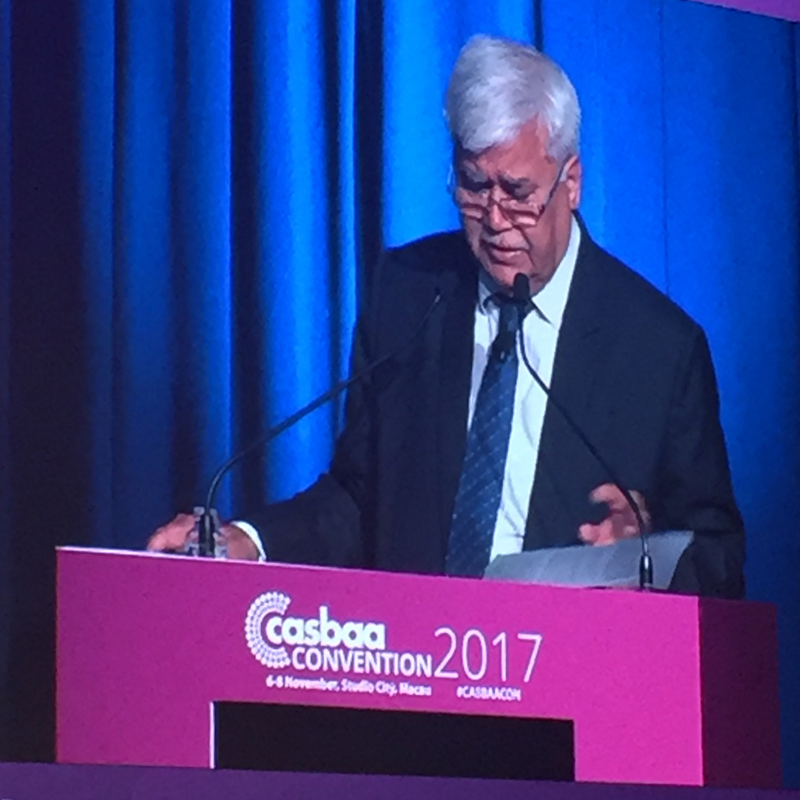
    MACAU: Indian government officials on Tuesday used an international platform of CASBAA Convention 2017 here to allay some of the industry fears on regulatory challenges involving satellite capacity leasing on foreign satellites and possible content regulations, while stating the country strives to be vibrant, living up to PM Modi’s stated policy of ease of doing business.

    “The improvement in India’s ease of doing business global ranking to 100 is not just eyewash. It represents real changes,” Ministry of Information and Broadcasting (MIB) secretary NK Sinha said here, adding that though general talks with the department of space and Indian space agency ISRO were continuing to ease policy restrictions for Indian customers to lease capacity on foreign satellites, a meeting on some specific issues were yet to take place.

    “Prime Minister Narendra Modi’s mantra is perform, reform, transform,” Sinha said stressing on the message that efforts were on to remove bottlenecks to doing business in India’s thriving broadcast and cable sectors and that technology was critical for both communications and content.

    Telecom Regulatory Authority of India (TRAI) chairman RS Sharma chipped in to state the regulatory body had recommended to the government to adopt an open sky policy. “These (ISRO issues) are not issues of principle, but of operation,” he added.

    “The issue also affects broadband provision. To ensure affordable broadband in rural areas, India will need to use satellites to provide this (service),” Sharma elaborated, adding that TRAI was presently studying stakeholders’ comments on its consultation paper on ease of doing business in the broadcast sector “to resolve the matters raised” by the industry.

    The two top Indian regulatory officials involved in matters of broadcast and media were responding to a question from the audience on whether they were aware that it was increasingly becoming challenging for Indian customers (like broadcasters, Vsat and teleport operators, for example) to lease capacity on foreign satellites in the wake of a maze of clearances and paperwork sought by ISRO.

    It must be clarified here that though TRAI has been repeatedly suggesting an open sky policy related to satellite capacities (both C and KU bands), the nodal ministry governing ISRO was yet to take an official stand on the regulatory body’s recommendations.

    public://CASBAA-RS_Sharma.jpg

    In what would — or could — bring smiles on the faces of many in the Indian broadcast and content business, the top MIB official also batted for self-regulation as a way forward, hinting that irresponsible behavior from stakeholders, however, would not be tolerated.

    “Happy with (present) self /co-regulation. Future will be self-regulation. The volume of content is going to explode exponentially. It will not be possible to pre-check each bit of data (but) citizens must be responsive and responsible,” Sinha said responding to another audience query on whether the government proposed to bring in a content regulatory body.

    At present, both the News Broadcasters Association and Indian Broadcasting Foundation have frameworks for self-regulation governing their member-companies. However, there are many out of the 800+ licensed TV channels that are not members of these industry organisations.

    He further pointed out that there needs to be a mechanism to ensure self-regulation comes back on track if it “strays”, though “pre-certification” didn’t look to be the future.

    Earlier speaking at a session themed `View From India’ on Tuesday, both Sinha and Sharma gave a snapshot of the Indian broadcast and media industry to a primarily international and Indian audience at the ongoing three-day CASBAA Convention 2017 here. They highlighted that India thrives as the second largest TV market with  183 million TVHH, 900 TV channels, 310 FM radio stations, 60,000 LCOs, 1,500 MSOs, 360 broadcasters, expanding reach of Doordarshan’s FTA DTH service, multiple DTH platforms, one HITS and several IPTV platforms, apart from OTT services.

    The chief of TRAI, which regulates the carriage and tariff segments of the broadcast sector and delivery platforms, in his address said the industry had grown at the rate of 15 per cent CAGR for the last five years and is projected to grow a shade less at 14 per cent for the next five years.

    While skirting a direct reference to TRAI’s new tariff regime for the broadcast and cable sectors being legally challenged by some industry players and presently being debated in Indian courts, Sharma mentioned the regulatory body had announced a framework that was “fair, transparent and non-discriminatory”.

    “Centralised distribution audits will ensure all broadcasters get audit information. This will reduce the burden on distributors and broadcasters,” he highlighted as an example of its regulatory fairness vis-a-vis multiple audits of customers being presently done draining human and financial resources of stakeholders.

    Dwelling on the ambitious multi-million Indian rupee national fibre optic network project or Bharat Net, Sharma said it was now a public-private venture not only for broadband, but also for delivering TV services. “Come, analyse and invest in the Indian broadcast sector,” he exhorted the global investment and media community.

    ALSO READ:

    MIB reverts to earlier norms of seeking nod from ISRO on uplink/downlink of TV channels

    MIB secy Sinha, Viacom18 CEO Vats to speak at CASBAA convention in Nov