Tag: Trai

  • TRAI extends dates for comments on uplinking/downlinking consultation paper

    TRAI extends dates for comments on uplinking/downlinking consultation paper

    MUMBAI: The Telecom Regulatory Authority of India (TRAI) has extended the deadline for receiving comments on the consultation paper relating to uplinking and downlinking of TV channels. The new dates for receiving comments and counter-comments are 31 January and 10 February respectively.

    The TRAI had released the paper on 19 December 2017 inviting comments by 18 January 2018 but has pushed the date on the request of stakeholders. It has also warned that no further extension of dates will be entertained.

    The paper seeks to update guidelines and also talk about setting up of teleports. Ministry of Information and Broadcasting (MIB) additional secretary Jayashree Mukherjee had sought TRAI’s views on the issues keeping in mind the changes in technology, market scenarios and lessons learnt over six years since the last guidelines were passed.

    The specific question asked to broadcasters was if there was a need to redefine the definition of news and non-news channels.

    The paper also hints at a possible hike in the net worth requirement to obtain uplinking/downlinking licence to ensure only serious players stay in the game.
    On the teleport side, the TRAI is asking the industry how to define the word in the digital era, licencing norms, fee structures and if there is a need to restrict the number and location of teleports in India.

    Also Read:

    Trai paper seeks to streamline uplinking, downlinking norms

    TRAI sees merit in using satcom for broadband delivery

    MSOs move Madras HC seeking relief on inter-connect pacts

  • TRAI invites ICT-based solution providers to upgrade tech

    TRAI invites ICT-based solution providers to upgrade tech

    NEW DELHI: With the demand for a wide range of services based on ICT platform involving machine-to-machine and internet of things, etc. increasing, Indian broadcast and telecom regulator TRAI is looking at expanding its technical capabilities and, in this regard, has invited proposals from application service providers (ASPs).

    As TRAI envisages massive expansion in the field of ICT and electronic governance services, it is looking at an ASP/IT solution provider/IT infrastructure maintenance/cloud management company having the capability of providing customised ICT-based solutions in telecom and broadcasting domains. Experience of integration of software application, database management, cloud/data centre administration, mobile applications, etc. is a pre-requisite.

    The ASP would be responsible for exploring opportunities, designing solutions and hardware and software management of TRAI’s partners, along with the capability to fulfill TRAI’s goals of having an integrated platform to effectively measure and represent the network performance of telecom and broadcasting stakeholders towards customer perceived quality of service.

    All rights on software/solutions developed by vendors would be vested with TRAI, according to a statement of the regulatory body. Development of solution will be on open source platforms and source code of all such development(s) will be provided to TRAI and stored at the designated location indicated by it.

    ALSO READ :

    TRAI issues new consultation paper on VNO

    150 IoT start-ups in 3 cities in as many yrs: IAMAI, Napino tie up

  • Nov 2017: Wireline internet bleeds subscribers

    Nov 2017: Wireline internet bleeds subscribers

    BENGALURU: Mukesh Ambani’s Reliance Infocomm Limited (Jio) closed the month of November 2017 (Nov-17, month ended 30 November 2017) with 152.08 million wireless broadband subscribers having added 6.12 million subscribers (grown by 4.19 percent). As per Telecom Regulatory Authority of India (TRAI) data, the number of wireline broadband internet subscribers in India has declined 0.13 million from 17.98 million in Oct-17 to 17.85 million in Nov-17. This decline in wireline broadband internet subscribers is more than the 0.06 million decline in Oct-17 and the decline of 0.07 million subscribers in Sep-17.

    Overall broadband internet service providers

    The top five service providers constituted 92.92 percent market share of the total broadband subscribers (wired, mobile wireless, fixed wireless) at the end of Nov-17. These service providers were Jio (152.08 million), Bharti Airtel (69.38 million), Vodafone (50.16 million), Idea Cellular (32.90 million) and Bharat Sanchar Nigam Limited or BSNL (21.37 million).

    Wireless broadband internet service providers

    The fastest growth rate in mobile wireless internet subscribers was by Idea Cellular – its subscriber base increased by 6.03 percent (grew 1.87 million) in Nov-17. Jio had the second fastest growth as per the numbers mentioned above followed by Bharti Airtel Limited that grew 3.77 percent (added 2.44 million subscribers) in Nov-17, followed by Vodafone India. Vodafone’s wireless internet subscribers grew 3.59 percent or by 1.74 million. With the exit of Reliance Infocomm due to restructuring, BSNL entered the top five wireless broadband internet list in Nov-17. The public sector telecom player had 11.94 million broadband internet subscribers at the end of Nov-17.

    Top five wireline broadband internet service providers

    As on 30 November 2017, the top five Wired Broadband Service providers were BSNL (9.43 million), Airtel (2.14 million), Atria Convergence Technologies or ACT(1.27 million), Mahanagar Telecom Nigam Limited or MTNL (0.94 million) and Hathway Cable & Datacom (0.69 million). Airtel, ACT and Hathway gained 0.01 million subscribers each in Nov-17, while the public sector BSNL and MTNL lost 0.05 million and 0.2 million subscribers respectively.

    Overall, the combined subscriber base of the top five wireline broadband internet service providers lost 0.04 million subscribers in Nov-15. This means that the rest of the players besides the top five players lost another 0.09 million subscribers.

    Other broadband internet service providers

    MSOs and cable video service providers (LCOs) also provide wired broadband internet services in the country. These cable service providers have a number of subsidiaries and alliances, hence broadband numbers are split as applicable. The consolidated subscription numbers of these entities could be larger than the numbers of some of the wired internet services providers mentioned above. However, it must be noted that some of these MSOs and LCOs could have lost subscribers in November 2017, considering the fact that the top five wired broadband internet services providers have lost only 0.04 million of the 0.13 million wireline internet subscribers in November 2017.

    Notes: (1) TRAI reports indicate data in millions of numbers up to 2 decimal places. Hence it is assumed in this report that a figure of 0.51 million (5.1 lakh) subscribers for You BB for Dec-2015 would be granular to the nearest 10,000. While percentages have been mentioned up to two decimal places, the accuracy may vary, depending upon the exact number.

    Also Read:

    Jio continues leading broadband subs addition while wireline internet loses subs in Oct

    Wireline broadband subs base falls, overall broadband subs base grows

    Aug-17:Jio leads broadband subscriber growth, BSNL leads wireline subscriber decline
  • TRAI releases paper on National Telecom Policy 2018

    TRAI releases paper on National Telecom Policy 2018

    MUMBAI: Seeking views from stakeholders on the new telecom policy, the Telecom Regulatory Authority of India (TRAI) today released a consultation paper on inputs for formulation of the National Telecom Policy 2018.

    The Department of Telecommunications, through its letter dated 21 August 2017, requested the TRAI to suggest its policy inputs for formulation of the policy. Based on preliminary discussions with various stakeholders, including telecom service providers, telecom equipment manufacturers, industry associations, consulting firms, and cloud service providers, the regulator has prepared inputs for formulating the National Telecom Policy 2018 in line with the technological advancements in the sector and customer aspirations  for  digital services.

    The regulator is seeking views of stakeholders for formulating the policy by 19 January 2018.

    “National Telecom Policy-2018 can have twin goals viz. facilitate development of communication infrastructure and services to achieve inclusive socio-economic growth in the country,” the paper stated.

    “This policy would set the mission and objectives to be accomplished by the end of calendar year 2022, when India will be celebrating its 75 years of independence,” the paper added while underlining that the policy would also specify the strategies to accomplish such objectives as well as capacity building in general.

    The paper has set out the mission and objectives for the policy besides outlining common strategies to help India leapfrog to amongst the top-50 nations in international rankings in terms of network readiness, communications systems and services, and to attract an investment of USD 100 billion in telecommunications.

    Also Read:

    Trai to make recommendations on net neutrality today 

    TRAI tightens landing-page norms

    TRAI seeks better accessibility for persons with disabilities

  • TRAI tightens the screws on interconnectivity for telcos

    TRAI tightens the screws on interconnectivity for telcos

    Mumbai: The Telecom Regulatory Authority of India (TRAI) has issued a mandate to service providers directing them to enter into an interconnection agreement on a “non-discriminatory basis” within 30 days of receiving a connectivity request from another mobile operator.

    The regulator’s release on the subject comprises regulations on important aspects of interconnection such as interconnection agreement, provisioning of initial interconnection and augmentation of points of interconnection (Pols), interconnection charges, disconnection of Pols, and the financial disincentive on interconnection matters.  

    The regulations will come into effect from 1 February 2018 and “will apply to all the service providers offering telecom services in India,” the TRAI release stated.

    Through these regulations, the TRAI has mandated that every service provider shall, within thirty days of receipt of request from a service provider, enter into an interconnection agreement. In has also laid down the framework for provisioning and augmentation of ports at Pols, which stipulates a step­by-step process for provisioning of ports at Pols.

    In October 2016, the TRAI had issued a consultation paper on ‘Review of Regulatory Framework for Interconnection’ for seeking comments of the stakeholders. The comments and counter-comments received from the stakeholders were uploaded on the TRAI’s website.

    The issue of interconnectivity was a bone of contention in 2016 between then newbie Reliance Jio and other established telecom companies such as Airtel, Vodafone and Idea Cellular.

    Also Read:

    TRAI open house to discuss ease of doing broadcast biz

    TRAI landing page norms stayed till 22 December 2017

    Trai to make recommendations on net neutrality today 

  • Cross-media holding: Indian policymakers push for regulations

    Cross-media holding: Indian policymakers push for regulations

    NEW DELHI: A section of policymakers in India is not in favour of market forces taking care of monopolistic trends in the increasingly converging print and electronic media. It has recommended government intervention—a thought-process that can have wide-ranging implications on activities of broadcasting companies, MSOs and even LCOs if put into action.

    Stating that it cannot “ignore the concerns expressed by the industry,” parliament’s Standing Committee on Information Technology in its 44th report last week observed that issues related to vertical monopolies and cross-media holdings have “serious implications for the print and electronic media in India and cannot be simply left to the market forces…  (and) need suitable intervention of government from time to time.”

    In its submission before the committee, comprising members of parliament (MPs) from the upper and lower houses, TRAI made it clear that it had twice in the last six years submitted wide-ranging suggestions on media holdings and vertical monopoly that were not yet accepted by the Ministry of Information and Broadcasting (MIB) though it would be “desirable” to implement the recommendations on a “priority basis”.

    MIB, however, told the parliamentary panel that it was not in favour of “too much control to restrict” the areas of operation of media entities and regulations should aim at preventing exploitation by any particular entity while leaving the remaining dynamics to the market forces.

    Among the many suggestions made by the TRAI to calculate market dominance via a complex formula, the regulator had strongly advocated barring federal and state governments and organisations controlled by it from entering into the business of broadcasting and distribution of TV services while suggesting exit options for such organisations. Political parties, too, were isolated by the regulator from entering directly into the broadcasting and distribution business.

    In India, quite a few broadcasting and distribution platforms, especially MSOs and LCOs, are directly or indirectly owned and controlled by political parties/politicians/MPs/state government(s). Tamil Nadu government-owned MSO Arasu—also discussed by the committee in its report—is one such example.

    The committee directed the government to update it on the action taken on recommendations made by TRAI on issues of vertical monopolies and cross-media holdings.

    Interestingly, the News Broadcasters Association or the NBA had strongly pleaded before the committee that vertical monopoly or integration of distribution platforms and broadcasting companies was “not healthy” for either the cable or the broadcasting sectors. Reason: such integration and interplay made room for “bias” and, more importantly, removed the concept of a level playing field. The NBA had also clarified its apprehensions saying vertical integration would affect consumer choice too.

    “NBA has submitted that cross media ownership is not a healthy trend in media industry and has the potential of creating serious conflict of interest situation, which can stifle both the content side and business side of media companies,” the parliamentary panel in its report said.

    ALSO READ:

    DTH licensing recommendations: TRAI restricts vertically integrated broadcasters from owning more than one DPO

    TRAI managed to give broadcasting as much importance as telecom in 2014

    Parliamentary panel pushes for TRAI’s empowerment

    Parliamentary panel raps MIB on knuckles for DAS implementation

    Column-Policy Cross-Connections

  • Parliamentary panel pushes for TRAI’s empowerment

    Parliamentary panel pushes for TRAI’s empowerment

    MUMBAI: Parliament’s Standing Committee on Information Technology and Communications (SCIT) wants more regulations for the broadcast industry. Finding the current powers given to the Telecom Regulatory Authority of India (TRAI) inadequate, it has recommended that either the scope of its authority be increased or the broadcast industry be given its own regulator.

    In the committee’s report on ‘Status of Cable TV Digitisation and Interoperability of Set-top Boxes’, it noted that since 2004, when the TRAI was entrusted with the responsibility to oversee the broadcast sector, the industry has seen enormous growth in the number of satellite TV channels, DTH services, digitisation of cable TV networks, and TV ratings agencies. With its limited ability, TRAI has efficiently handled issues to bring about transparency and non-discrimination, improve the quality of service and allow the sector to grow.

    It noted that TRAI recommendations were the basis for the government to form several policy decisions. “The committee is, however, constrained to note that TRAI at present has got very limited powers due to which enforcement of its regulations, directions and tariff orders becomes difficult,” the panel mentioned.

    Several services providers have freely violated TRAI orders and cases against them were filed in pertinent courts. The committee doesn’t find this an effective way to get the broadcast industry to fall in line with rules. The TRAI’s recommendations of modifications to its Act are under consideration by the government.

    The committee has suggested the government to evaluate the need for a separate regulator for the broadcast industry and, until such a time, the TRAI be empowered for effective enforcement of its regulations.

    It appreciated the efforts taken by TRAI to regulate pricing of set top boxes, but strongly recommends for unbundling of hardware and associated services and making provision for itemised billing for hardware as well as associated services such as installation, activation and maintenance and providing more option to the customer to procure similar compatible hardware from the open market.

    The TRAI’s effort on addressing carriage fee details was also lauded by the committee. It stated that “despite extreme reluctance on the part of broadcasters to share the details of the carriage fee”, it has now addressed the issue in its new regulatory framework capping it at 20 paise per subscriber per channel and which is expected to further decrease till zero when 20 per cent of subscribers will be available on the platform who choose the channel. Though this decision is being scrutinised at the High Courts of Delhi and Chennai, the committee hoped the TRAI’s efforts will go a long way in addressing the issue to the satisfaction of all stakeholders.

    Also read:

    TRAI on carriage fee, other issues in draft interconnect guidelines

    TRAI tariff order’s impact on the industry

  • Parliamentary panel raps MIB on knuckles for DAS implementation

    Parliamentary panel raps MIB on knuckles for DAS implementation

    MUMBAI: The Parliament’s Standing Committee on Information Technology and Communications (SCIT) has sent out a stern message to the stakeholders of India’s broadcast and cable industry, including the Ministry of Information and Broadcasting (MIB): get your acts together.

    BJP MP Anurag Thakur-chaired all-party parliamentary panel has been especially critical of MIB’s handling of country’s digitisation of TV services or digital addressable system (DAS). It pointed out that MIB could not “absolve” itself of “responsibility” of DAS implementation as it was the administrative ministry for media matters.

    It has exhorted the ministry to put in place a monitoring mechanism at the federal level at the earliest to coordinate with the authorised officers for tracking violations by operators and to also hold periodic meetings with the stakeholders concerned to ensure that the mandated cable TV digitisation process is enforced.

    Putting the onus on the ministry to persuade MSOs to complete seeding of consumer data in the cable TV operators’ management information systems at the earliest, the parliamentary panel has directed the government to ensure proper agreements are signed between stakeholders (broadcasters, MSOs and LCOs). MIB has also been directed to update the panel on the progress made by MIB and to take extreme step of even cancellation of MSO licence in case of non-compliance.

     Interestingly, the committee told the nodal ministry to take a final decision within a definite time period in the case of Tamil Nadu government-controlled MSO Arasu Cable in keeping with TRAI norms for MSOs seeking to provide digital service.

     Arasu has been seeking temporary extension of its licence saying it has been unable to fully seed its subscribers with STBs that were taking long to import. In separate recommendations made earlier — not yet accepted by the government — TRAI had suggested barring federal or state governments or its organisations from segments of broadcast and TV services’ distribution.

     The committee said that it expects MIB to address effectively issues raised in the complaints filed by some MSOs and LCOs in Tamil Nadu (mostly against Arasu) and that the ministry should revert within three months reporting the progress made.

    The committee, while suggesting infrastructure sharing for distribution platforms, urged the government to provide necessary resources or financial incentives to distribution platforms like MSOs who were aiming to provide services in rural areas. Its rationale: developing infrastructure individually may be a costly proposition for cable TV operators.

     Alive to number of litigations in the broadcast and cable sectors, the committee exhorted MIB and the government to explore having a dialogue with courts on the need to close early cases relating to TRAI’s new guidelines on tariff, QoS and inter-connect, which were issued in 2016 but challenged in Chennai and Delhi high courts by Star TV-Vijay TV combine and Tata Sky and Airtel Digital. Both the cases are still pending final verdicts from the courts.

    The committee has recommended that an option of pay-per-use, as made available by DTH operators to subscribers, be explored for cable TV too as it could give the consumer more flexible options.

    Finally, the committee has directed the MIB to do a formal cable TV digitisation impact assessment study including all its aspects to get a clear picture on how far DAS has actually been able to achieve its intended objectives.

    Also read:

    Arasu can’t operate outside Tamil Nadu despite DAS compliance

    MIB report: 50% digital STBs seeded during DAS’ first three phases

    Arasu digital STB costs Rs 200, govt alerts subs


  • DTH subscriber growth down in second quarter

    DTH subscriber growth down in second quarter

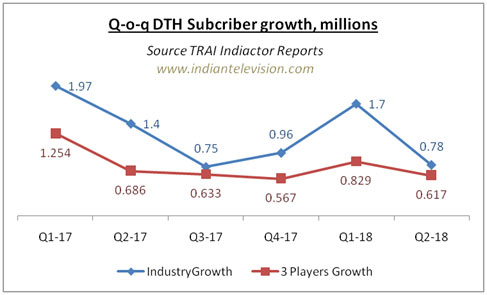
    BENGALURU: The carriage industry and more specifically the direct to home or DTH industry had a disappointing fiscal year 2017 (FY-17, year ended 31 March 2017) in terms of subscriber growth. Going by the subscriber numbers data of the six private DTH players in India provided by the Telecom Regulatory Authority of India (TRAI) in its Indicator Reports of the Indian Telecom Sector. This dismal performance seems to have spilled over to the second quarter of financial year 2017 (FY-18, year commenced on 1 April 2017 until 31 March 2018) as per TRAI data for the quarter ended 30 September 2017 (Q2-18, quarter under consideration). The industry could add just 2.47 million subscribers during the first six months (first 2 quarters, 1 April 2017 to 30 September 2017) as compared to the 3.37 million subscribers it added during the corresponding year six-month period the year before. Active DTH subscribers added in Q2-18 were just 0.78 million as compared to 1.4 million in Q2-17.

    Further, as reported by us earlier, despite the sunset date for DAS IV having passed, the DTH industry had not been able to leverage the opportunity that it was presented with. Earlier, TRAI numbers for the six private players in the DTH industry showed a very poor growth rate of just 0.96 million and 5.08 million during the quarter and year ended 31 March 2017 (Q4-17, FY-17) respectively. This figure is far lower – less than one-third of the 17.38 million active DTH subscribers that were added in fiscal 2016 by the six.

    Please refer to the figure below – The three players whose numbers are available in the public domain and whose combined q-o-q subscriber growth has been represented in the figure are Dish TV, Airtel DTH and Videocon d2h

    public://1_6.jpg

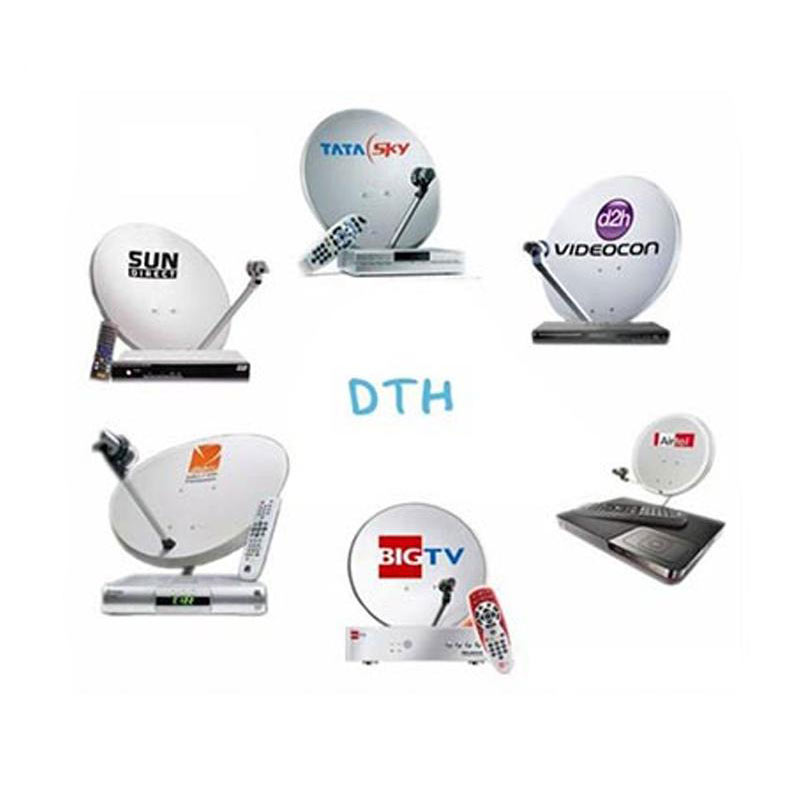
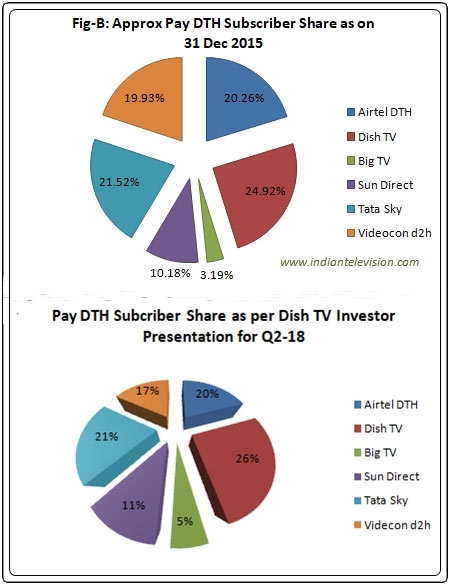
    Let us understand the status of the DTH industry at the end of September 2017. The six private DTH players are – Dish TV, Tata Sky, Airtel Digital Services (Airtel DTH), Videocon DTH, Sun Direct, and the Anil Ambani-led Reliance Big TV (Big TV). It may be noted that Big TV announced closure of its operations since November 2017. The three players – Dish TV, Airtel DTH and Videocon d2h represented approximately 63 to 65 percent of the active pay-TV DTH subscribers at the end of September 2017. Please refer to figure below for subscriber share of the private DTH players as per data in the public domain:

    public://2_1.jpg

    Besides the six private pay DTH players, Doordarshan’s (DD) Free Dish DTH service is a major player in terms of subscribers with an estimated 22 million as per the numbers available in the public domain. It must however be noted that an exact number for registered or active subscribers is not available even with DD, since this is a free DTH service. When the announced Dish TV Videocon d2h merger happens, the merged entity will probably be one of the largest DTH players in the world in terms of subscriber numbers.

    According to an E&Y report titled ‘India’s Free TV’ released in July 2017, among the DTH operators in India, DD Free Dish has grown to become the largest with its estimated 22 million subscribers which E&Y predicted could cross 40 million over the next two to three years.

    A number of reasons can be attributed to this dismal performance – two of the chief ones that are touted over the recent past by most players in media and entertainment industry – demonetisation in November 2016 and the implementation of GST. Another important reason could be that DTH is considered a premium service – by all the stakeholders in the carriage ecosystem with the resulting perception that procurement as well as monthly subscription will be premium and hence a deterrent for the consumer. While some players such as Dish TV have been making attempts to come up with packages that it perceives should attract the masses, but, results as per TRAI data seem to indicate otherwise. Yes, Dish TV is the largest private player in the country that has come up with different pricing models under different brands. Whether unwittingly or not, most of the other players present themselves as premium players and seem to have done little in that direction.


  • TRAI considers independent auditors for DAS audits

    TRAI considers independent auditors for DAS audits

    MUMBAI: In a bid to improve transparency, the Telecom Regulatory Authority of India (TRAI) is mulling the virtue of having on board independent auditors for the technical and subscription audit of the digital addressable system (DAS) of distribution platform operators (DPOs).

    In a consultation paper titled ‘Empanelment of Auditors for Digital Addressable Systems,’ the regulator is seeking views of stakeholders on various audit-empanelment related issues, such as scope of audit, eligibility criteria and experience, length of empanelment, audit fee and payment terms, time period for completion of audit work, de-empanelment, and reporting requirements of auditors. The consultation process will enable the TRAI to prepare a comprehensive document to seek proposals from auditors in line with the industry requirement and formulate guidelines to auditors.

    Written comments on the paper have been invited from the stakeholders by 22 January 2018 and counter-comments by 7 February 2018. The TRAI clarified that the empanelment of the auditors and other related activities would be done only after the ongoing matter pending before the Madras and Delhi high courts was decided.

    The interconnection regulations that form a part of the regulatory framework for DAS have provisions relating to technical audit and subscription audit, wherein it has been provided that the authority may empanel auditors for this purpose. Distributors such as multi-system operators (MSO), direct-to-home (DTH) operators, headend in the sky (HITS) and IPTV operators are required to install digital headends, including Subscriber Management System (SMS) and Conditional Access System (CAS) for distributing signals of TV channels through digital addressable systems. To have a level playing field amongst all the distributors, the authority has prescribed minimum technical specifications for addressable systems.

    Also read:

    TRAI seeks better accessibility for persons with disabilities

    Trai paper seeks to streamline uplinking, downlinking norms

    Trai paper seeks to streamline uplinking, downlinking norms