Tag: Trai

  • MIB admits no DTH infra sharing permission sought

    MIB admits no DTH infra sharing permission sought

    NEW DELHI: Despite the initial hype and enthusiasm over infrastructure sharing by broadcast, cable and satellite-delivered service players (such as DTH operators) and lengthy suggestions on the subject by the Telecom Regulatory Authority of India (TRAI), the government has admitted no stakeholder has evinced interest so far.

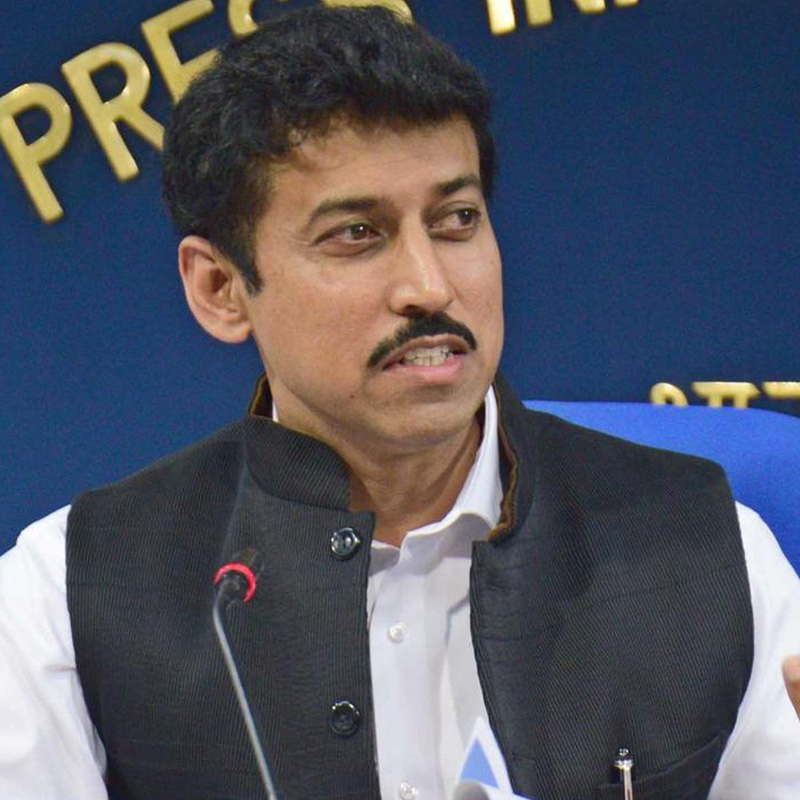
    “Ministry of Information and Broadcasting has not received any proposal from DTH operators for sharing of satellite transponders and earth station facilities with other DTH players and distribution platforms,” junior MIB minister Rajyavardhan Rathore told the Indian Parliament last week.

    Pointing out that sector regulator TRAI had made recommendations in March 2017 on infrastructure sharing by broadcast and cable sector players, the minister admitted that enabling sharing could address the issue of the demand-supply mismatch. Such a sharing could also “reduce capital and operating expenditure” of a service provider to an appreciable extent, Rathore added.

    TRAI had made suggestions on the hows and whys of infrastructure sharing, especially by DTH players, and had also exhorted the government to tweak policy guidelines to enable such sharing.

    “To enable [the] sharing of the DTH platform and transport streams transmitted on the DTH platform, the authority recommends that the guidelines for providing DTH services should be suitably amended,” TRAI had noted while making recommendations on infrastructure sharing.

    A decision to review the DTH policy guidelines is pending with the MIB with no firm decision on it being taken yet, if industry sources are to be believed, who also pointed out that the ministry may be readying files to refer the issue to the Ministry of Law and Justice for an opinion—a move that could be time consuming. The lack of a policy review has resulted in several glitches hitting DTH operators in India.

    TRAI had suggested that to ensure efficient use of scarce satellite resources, DTH operators—which have already set up earth stations and hired satellite transponder capacities, and willing to share the platform and transport stream of TV channels—should be allowed to do so with prior written intimation to the government.

    Amongst other recommendations of TRAI on sharing of infrastructure by DTH and distribution platforms, the following are noteworthy:

    — The central government should encourage sharing of infrastructure, wherever technically feasible, in TV broadcasting distribution network services on a voluntary basis.

    — To allow a new DTH operator to use the existing DTH platform and transport streams of TV channels transmitted on that platform, the conditions relating to hiring of satellite capacity and setting up of an earth station should be amended suitably.

    — A DTH operator, providing DTH services using the shared infrastructure with another DTH operator, should be allowed to establish, maintain and operate its own platform at a later date within the licence validity period if it decides so after following the due procedure.

    — An easier process should be put in place to ensure continuity of services to subscribers in the event of any disaster. One of the way in which it could be ensured is sharing of the main and the disaster recovery site in hot standby mode with the prior approval of the licensor.

    — The DTH operator, willing to share its transport stream of TV channels with another DTH operator, should ensure that the other DTH operator has valid written interconnection agreements with broadcasters concerned for distribution of pay TV channels to the subscribers.

    — On a voluntary basis, sharing of head-end used for cable TV services and transport streams transmitting signals of TV channels, among MSOs, should be permitted.

    Also Read :

    Law ministry likely to give opinion on DTH guidelines review 
    DTH’s year of consolidation

  • Law ministry likely to give opinion on DTH guidelines review
    Law ministry likely to give opinion on DTH guidelines review
    MUMBAI: Even as the government admitted in Parliament yesterday that it has granted six companies licences to operate DTH services in India, the Ministry of Information and Broadcasting (MIB) has, reportedly, referred to the Law Ministry a long-pending proposal to review DTH guidelines in the country.

    Replying to a question in Lok Sabha or Lower House on the DTH sector, Minister of Information and Broadcasting Smriti Irani, in written statement, said Dish TV, Tata Sky, Sun Direct, Reliance BIG TV, Bharti Telemedia and Videocon d2h are licenced to provide services in India under the DTH guidelines issued on 15 March 2001, which is amended from time to time.

    She said that in addition to the private players, pubcaster Doordarshan too operated a free to air DTH services in the country and there was no restriction on the total number of DTH licences.

    According to the minister, a licencee, in addition to an initial non-refundable entry fee of Rs 10 crore (Rs 100 million), is required to pay an annual licence fee that amounts to 10 per cent of its gross revenue.

    In the meanwhile, the DTH players who had been lobbying for the last 24 months or so for another review of the DTH guidelines, aimed at bringing down the annual revenue sharing percentage to between 6-8 per cent amongst other things, may have to wait for relief.

    MIB, which was studying a proposal to review the DTH guidelines based also on some past recommendations of the Telecom Regulatory Authority of India, has already referred or is in the process of referring the matter to the Law Ministry for an opinion, if government sources are to be believed.

    Amongst the six DTH licencees, a few are operating on the basis of temporary extension of their licences as the DTH guidelines do not spell out clearly the modalities for licence renewal once the initial 10-year period is over, DTH industry sources explained.

    MIB’s indecision on the regulatory review process hasn’t helped the industry much as the sector is witnessing consolidation — for example, the ongoing Dish TV-Videocon d2h merger and the sale of Reliance’s DTH business to a set of new investors — apart from the expiry of the 10-year licence period.

    Also Read:

    DTH’s year of consolidation

    Recalibrating India’s DTH sector after Airtel DTH-Warburg Pincus deal

    Dish TV-Videocon d2h deal on course

  • Broadcasters, DPOs oppose TV channel auction proposal

    Broadcasters, DPOs oppose TV channel auction proposal

    NEW DELHI: Most big and small broadcasting companies owning and operating TV channels in India, along with distribution platforms, have categorically opposed any move by the government to auction satellite TV channels as a complete package similar to FM radio channels.

    Leading the opposition charge is the broadcasting sector’s domestic industry body Indian Broadcasting Foundation (IBF). Decrying having similar regulatory approach of auction for radio and satellite TV broadcasting as “completely undesirable,” IBF said auctions would not only breach certain privileges granted under Fundamental Rights by the Indian Constitution but would also go against the ethos of international commitments made by India to organisations such as the ITU.

    “Costs are likely to increase manifold [if the government went ahead with auctioning of satellite TV channels] because of lack of supply of ISRO launched geo-stationary satellites. This would squeeze out smaller operators resulting in artificial entry barriers. In fact, the auction of TV licenses will also have a cascading effect on larger corporations, which may also have to rationalise the number of channels that they run as the cost of operating all the channels will spiral, making the business unviable,” IBF highlighted the economic downside of the proposal in its response to a TRAI consultation paper exploring the feasibility—or the non-feasibility—of auction of satellite TV channels and other related issues.

    Weighing in with the IBF argument against auctioning of satellite TV channels, Star India, probably India’s biggest broadcasting company in terms of revenue, said successful broadcasting of channels required coordinated use of the uplinking space spectrum, satellite transponder capacity and downlinking space spectrum, which cannot be “auctioned together” as they are not controlled by the same entity or even the Indian government.

    Many TV channels targeting India’s 183 million TV universe uplink to ITU-coordinated foreign satellites owing to Indian space agency ISRO’s inability to keep pace with the growing demand for satellite transponder capacity, apart from other commercial considerations.

    “The introduction of an auction route for channels would necessarily require the auction of the spectrum bundled with the satellite transponder allocation [and] complexity of [the] process would not justify the negligible revenue that may be anticipated [by the government/Ministry of Information and Broadcasting] from such auction,” Star India said in its submission to TRAI, adding to artificially limit a commodity, satellite spectrum that is not scarce, would be a “brazen attempt at maximising revenue” by the government that would ultimately harm the media and entertainment industry of the country.

    According to the Subhash Chandra family-controlled Zee, TRAI was “erroneously” attempting to treat broadcasters such as Zee, Star India, Sony, Viacom18, BBC and Discovery as entities subject to the Indian Telegraph Act [that, incidentally, was drafted sometime in the late 19th century].

    “Under the uplinking and downlinking guidelines notified by MIB, an up-linking/downlinking ‘permission’ is granted to a TV channel by MIB and not any ‘licence’ [is given] as sought to be suggested by TRAI in the present CP [consultation paper]. Permission is granted under the executive instructions/guidelines notified by MIB and not under any statute. These executive instructions/guidelines do not have any statutory basis/source. Thus, any attempt to levy revenue-based licence fee on broadcasters on the premise that they are licencee[s] under the Indian Telegraph Act would not only be fallacious, but also without any legal sanction,” Zee noted while punching legal holes in the government thinking.

    While Sony Pictures Networks India opined imposition of additional fees for satellite spectrum usage and mandating use of Indian satellites would have “unforeseen outcomes” owing to “economic pressures,” Times Network said the auction model may be suitable for the digital terrestrial TV transmission (DTT) when introduced but not for satellite TV.

    Viacom18, operating over a dozen TV channels and also a studio business, felt that the operation of satellites for broadcasting cannot be compared with operations of FM radio channels simply because spectrum for the latter (radio FM) is limited and rare as against satellite spectrum that is in abundance and would continue to increase over a period of time with the increase in the number of satellites.

    “Auction is appropriate only for such natural and rare public resources as for FM [radio],” the joint venture between US’ Viacom and Reliance Industries-controlled TV18 Broadcast submitted.

    In its independent submission, TV18/Network18 (both entities controlled by Mukesh Ambani’s Reliance Industries), while giving international examples of countries such as Greece and Thailand where auctioning of TV channels had failed to get desired results, said auctioning will have an economic impact on the broadcast business.

    Pointing out that an auction would “unduly increase the cost of grant of permissions and the cost of permits”, costs that would have to be passed on to end subscribers/viewers making content expensive all across the distribution chain, TV18 exhorted the government to “focus on increasing the number of satellites,” which will increase competition and not “create entry barriers” that will impede competition.

    Comparatively, smaller broadcasters operating on tight budget and limited distribution budgets such as Odisha TV Network said it was “not in favour of auctions.” Global companies such as BBC Global News submitted that TV channels were inherently different from FM radio broadcasting and such a move could “adversely impact small broadcasters” like BBC as it would amount to an anti-competitive move favouring some big players. Channels like News24, too, echoed similar sentiments.

    Distribution platform IMCL was of the opinion it was not possible to auction uplink spectrum “like in the case of FM [radio].” DTH player Dish TV added that “discrimination and/or restrictions in the licencing conditions” should be done away with and there should be no differentiation between usage of Indian and foreign satellites. Players should be given the right to choose as to what was best for their services, it added. Similar comments came from other DPOs like DEN.

    Some other industry organisations such as Broadband India Forum and Hong Kong-headquartered CASBAA, too, stated that auctioning of satellite TV channels was not feasible.

    CASBAA, while supporting an open policy regarding satellite capacity usage for downlink and uplink, said restricting the use of foreign satellites just so an auction can be conducted would be a “most undesirable” outcome.

    “The Indian broadcasting sector has flourished in no small part because of the ample and competitive supply of satellite capacity–both foreign and domestic–made available for broadcasting purposes under the existing policy guidelines. Indeed, investments in foreign satellite capacity over India have contributed mightily to the growth in this sector to date. An attempt to restrict use of foreign satellites now would cause immeasurable harm to this currently ‘vibrant’ sector,” the Asian pay TV and satellite industry organisation said. Similar sentiments were expressed by other international organisations such as GVF, ASPCC and ESOA.

    ALSO READ:

    MIB to collect data on satellite capacity needs, digital chatter

    2017 was a regulatory roller coaster and the ride continues

    MIB, DoS nudge TV channel to use Indian satellites

    MIB reverts to earlier norms of seeking nod from ISRO on uplink/downlink of TV channels

  • TRAI bats for converged regulator & renaming of NTP’18

    TRAI bats for converged regulator & renaming of NTP’18

    NEW DELHI: The Telecom Regulatory Authority of India (TRAI) has not only suggested that the National Telecom Policy 2018 should be renamed as the Information and Communication Technologies Technology Policy – 2018 but also the regulator’s own restructuring so it can function as a converged regulator for the ICT (information and communications technology) and broadcasting sector.

    TRAI has batted for an “integrated regulation of ICT and broadcasting sector led by economic and social policy goals of the country” suggesting delivery of broadcast services using converged wire line and wireless networks be allowed.

    The regulator, in its inputs to the National Telecom Policy 2018 formulation, has also suggested “review of [the] satellite communications (SATCOM) policy” for communication services “keeping in view the international developments” and social and economic needs of the country.

    It has advocated simplification of telecom licensing and regulatory frameworks and rationalisation of high taxes and levies by 2019 to attract a whopping USD100 billion in investments into the financially beleaguered telecom industry by calendar year 2022 and as much as USD 60 billion in the next two years itself.

    “Digital communication has presented India an opportunity to overcome the impediments posed by deficiencies in its brick and mortar based physical infrastructure and opened doors to new paradigms in all sectors of economy whereby the common man at the bottom of the pyramid is being served much more efficiently and at a fraction of the cost as compared to earlier days,” TRAI stated explaining the rationale behind its suggestion to rename the National telecom Policy 2018 (NTP2018) as the ‘Information and Communication Technology Policy 2018’.

    The lengthy submission to the government for consideration, which some broadcast industry observers felt was an attempt to gain more regulatory control over the sector even though a parliamentary panel had suggested a separate broadcast regulator, encompasses a wide range of inputs to NTP 2018.

    What’s TRAI’s vision while submitting the inputs to NTP 2018? To develop a competitive, sustainable and investor-friendly ICT market for rollout of state-of-the-art ubiquitous digital communication infrastructure to provide resilient, reliable, affordable, and consumer-friendly products and services to meet local as well as global needs that will transform India’s knowledge economy, support inclusive development, foster innovation and stimulate job creation.

    TRAI’s recommendations on the vision, mission and objectives for NTP 2018 include the following:

    — Leveraging the cable TV sector and power sector assets (for broadband and related services)

    — Upgrade of cable TV networks for delivery of converged broadcast and broadband services

    — Facilitating development of content delivery networks for improved quality of experience

    — Prescription of a simple and enabling regulatory framework for application service providers in order to promote innovation in application services

    — To fulfill the information and communication needs of individuals, including persons with disabilities, governments, enterprises, and industries with high quality of experience at affordable prices on a sustainable basis

    — To facilitate growth of state-of-the-art, secure and energy-efficient digital communication infrastructure for delivering ubiquitous, resilient, reliable and ultra-high speed connectivity with extremely low latency for objects, machines and devices

    — To stimulate the environment for innovation and entrepreneurial opportunities making India a global centre for research and development, patent-creation, and standardisation in ICT and services

    — To develop indigenous technologies, equipment, platforms and applications ecosystem for providing digital services to local and global markets

    — To establish India as a global hub for cloud computing, content hosting and delivery and data communication systems and services in a net-neutral environment

    — To protect consumers’ interests by increasing awareness and putting in place an effective grievance redressal mechanism, improving quality of experience, ensuring network, communication and data security, encouraging adoption of environment and safety standards for ICT and modernising public safety and emergency communications  networks

    — To attract investments by enhancing ease of doing business through simplification of licensing and regulatory frameworks, rationalisation of taxes, levies and related compliances and facilitating availability of resources including spectrum

    — To enable access at affordable prices for wireless broadband services, including through satellite to 90 per cent population by 2022

    — To ensure availability of bandwidth on demand through wire line, including cable TV and optical fibre networks to 30 per cent households by 2020 and 50 per cent households by 2022

    —  To provide at least 1 gbps data connectivity to all gram panchayats (village administrations) to enable wireless broadband services to inhabitants by 2022

    —  To achieve 900 million broadband subscriptions supporting download speed of 2 mbps, out of that at-least 150 million broadband subscriptions supporting download speed of 20 mbps and 25 million at a download speed of 50 mbps by 2022

    —  To achieve ‘unique mobile subscriber density’ of 55 by 2020 and 65 by 2022 by enhancing mobile network coverage to 95 per cent of inhabitants by 2020 and 100 per cent by 2022

     — To deploy 2 million public WLAN, including Wi-Fi hotspots in the country by 2020 and 5 million by 2022

    — To leapfrog India into the top-50 nations in the ICT Development Index (IDI), released by ITU every year, by 2022

    — To enable access for connecting to 1 billion IoT/ M2M sensors/ devices by 2020 and 5 billion by 2022

    — To attract an investment equivalent to USD 60 billion in the communication sector by 2020 and USD 100 billion by 2022

    — To become net positive in international trade of communication systems and services by 2022

    — To put in place an online platform for all government to business (G2B) activities, including spectrum and licence-related information, applications, clearances, compliances and payments by 2019

    — To simplify licencing and regulatory frameworks and rationalise taxes, levies and related compliances by 2019

    — To put in place a flexible, robust data protection regime powered by a strong encryption policy by 2019

    — To establish a policy framework for facilitating setting up of data centers by 2019

    ALSO READ:

    Zee, Star, NBA oppose converged regulator for broadcast and telecoms

    TRAI seeks to regulate online streaming platforms

    Parliamentary panel pushes for TRAI’s empowerment

    MIB reverts to earlier norms of seeking nod from ISRO on uplink/downlink of TV channels

  • TRAI suggests auction of 200 khz band for digital radio broadcast

    TRAI suggests auction of 200 khz band for digital radio broadcast

    NEW DELHI: While recommending financial incentives by government, the Telecom Regulatory Authority of India (TRAI) today recommended auctioning of 200 KHz bandwidth spectrum in VHF-II band for providing digital radio broadcasting services.

    “Auction should be carried out in phases, starting with cities of category A+ and A, and subsequently in cities of other categories,” TRAI said while releasing a series of recommendations for ushering in digital radio broadcasting services in India.

    TRAI further added: “Immediately after the successful auction of spectrum for digital radio broadcasting, an offer should be made to the existing FM radio broadcasters to get their existing frequency bandwidth of +100 KHz, already allocated through auction in Phase-III of FM radio, liberalised and provide digital radio broadcasting services in simulcast mode with analog FM radio services.”

    Suggesting further liberalisation of existing spectrum, already allocated to the FM radio broadcasters in Phase-III of FM radio, according to TRAI, the existing FM players will have to pay an amount equal to the difference of auction determined price of equivalent spectrum for digital radio broadcasting in a city and amount paid for allocation of FM radio frequency.

    At present, analog terrestrial radio broadcast in India is carried out in medium wave (MW) short wave (SW) and VHF-II (FM band) spectrum bands. AIR, the public service broadcaster, has established 467 radio stations encompassing 662 radio transmitters, which include 140 MW, 48 SW and 474 FM transmitters. Private sector radio broadcasters are licensed to transmit programs in FM frequency band (88-108 MHz) only and presently operate through 322 radio stations in 86 cities. Presently, radio signals are largely transmitted in analog mode in the country.

    Analog terrestrial radio broadcasting, when compared with digital mode, is inefficient and suffers from operational restrictions. With the advancement in technologies, digital radio technologies around the globe have been developed and adopted by a number of countries in order to offer more choice to listeners along with efficient use of spectrum. Digital Radio broadcasting provides a number of advantages over analog radio broadcasting. The biggest advantage of digital radio is that it is possible to broadcast three to four channels on a single frequency carrier, while ensuring excellent quality of audio for all the channels whereas analog mode broadcasts only one channel on a frequency carrier.

    The TRAI said it hopes the recommendations would enable a smooth transition from analog to digital radio broadcasting services, without disruption of the existing FM Radio services.

    The salient features of the recommendations are as follows:

    — Government should notify the policy framework for digital radio broadcasting in India in time bound manner with clear roadmap for rollout of digital radio broadcasting services.

    — The WPC wing of telecoms Ministry should carry out necessary amendments in NFAP- 2011 for permitting digital radio broadcasting in MW, SW, and VHF-II frequency bands.

    — Private sector should .be permitted to provide digital radio broadcasting services within the existing frequency band of 88 -108 MHz used for FM radio broadcasting.

    — Frequency and geographical area coverage planning for digital radio broadcasting using the vacant 600 KHz spectrum in VHF-II (88 -108 MHz) and VHF-III (174-230 MHz) bands should be completed by BECIL, AIR, and WPC together in phased manner.

    — 200 KHz bandwidth spectrum in VHF-II band should be auctioned for providing digital radio broadcasting services.

    — In case market determined price of 200 KHz for digital radio broadcasting is less than or equal to the price paid by FM radio broadcasters then FM radio broadcasters will not be required to pay any additional amount and it will be permitted to provide digital radio broadcasting services also for the remaining period of permission.

    — The broadcasters should be allowed to make use of any available digital technology, recognised by ITU, within the allocated/liberalised spectrum for providing digital radio broadcasting services subject to adaptation, if any, recommended by MIB/TRAI from time to time.

    — No date for digital switch over of radio broadcasting services should be declared at this stage.

    — Existing analog FM radio channels should be allowed to remain operational for the remaining period of their Phase-III permissions.

     — The continuance of operation of existing analog FM radio channels that do not migrate to digital radio broadcasting should be reviewed after the expiry of their existing Phase-III permissions.

    — The auction of remaining channels of Phase-III should be done by delinking them from technology. Broadcasters should be permitted to use any technology (analog or digital or both) for radio broadcasting on the frequency allocated to them through auction in future.

    — For initial three years after declaration of digital radio broadcasting policy, the government should grant fiscal incentives in the form of lower tax rates to manufacturers of digital radio receivers.

    Also Read:

    TRAI seeks to regulate online streaming platforms

    Trai paper seeks to streamline uplinking, downlinking norms

  • TRAI seeks to regulate online streaming platforms

    TRAI seeks to regulate online streaming platforms

    MUMBAI: Online streaming platforms may come under the purview of the Telecom Regulatory Authority of India (TRAI). The regulator is likely to bring out a consultation paper to bring online video-streaming platforms like Netflix, Amazon Prime and Hotstar under the regulatory ambit, according to a report in Livemint.

    Industry stakeholders wrote to the TRAI to come up with a pricing framework and is likely to add a section in its upcoming consultation paper on over-the-top (OTT) services. They state that some broadcasters air content for free on their streaming platforms for which they charge customers on cable and DTH.

    Indian broadcasters such as Star, Zee and Viacom18 all have their own OTT sites and apps wherein some content is monetised while some is not kept behind a paywall.

    Some broadcasters and OTT players are up in arms against such a regulation because nowhere in the world does it exist. They claim that people have to pay for data charges if not content. OTT cannot be clubbed with DTH and cable and it comes under rules regarding net neutrality.

    Also Read:

    Pleased with India progress, says Netflix’s Reed Hastings

    Star to air IPL on 10 channels, in 6 languages; live on Hotstar

    Star to air IPL on 10 channels, in 6 languages; live on Hotstar

  • Zee, Star, NBA oppose converged regulator for broadcast and telecoms

    Zee, Star, NBA oppose converged regulator for broadcast and telecoms

    MUMBAI: Two of India’s biggest broadcasters Star India and Zee Network and industry association News Broadcasters Association (NBA) have opposed the TRAI’s proposal to have a converged regulator, a concept being debated as part of a consultation paper floated by the regulatory body. 

    In its lengthy submission to the TRAI’s paper on formulation of National Telecoms Policy 2018, Star, while suggesting a “separate regulator” for broadcasting sector was unfeasible, has said, “With a converged regulator for ICT and broadcasting there is always the risk of ‘false equivalence’ being drawn between the two sectors.”

    Pointing out that convergence was an aid to make content available to consumers and increasing the opportunities for content producers/rights holders to maximise monetisation opportunities involving intellectual property rights over content, Star highlighted, “Creative eco-system being an entirely separate unique value chain from ICT, should always be treated with a view to uphold and protect IPs.”

    Echoing similar sentiments, Zee said the Ministry of Information and Broadcasting (MIB) was the nodal ministry for all broadcasting related issues and it would be “inappropriate” for the Department of Telecommunications (DoT) to propose a converged regulator in its policy document without making the MIB a part of the process.

    “It may also be pointed out that setting up a convergent regulator would also require a convergence bill (to be okayed by Parliament) outlining the very scope of convergent regulations and various issues associated with it,” Zee explained its stance.

    Subhash Chandra-controlled Zee network has gone ahead and questioned the TRAI’s various consultation papers on broadcasting industry-related issues that include the one on NTP 2018 and another one on uplinking and downlinking.
    “It is astounding that there is no correlation between the two consultation papers,” Zee has submitted, “If the comments (from the industry) provided against one consultation paper are accepted, these would be counter to the comments/ recommendations against the other consultation paper.”

    Both Star and Zee in their submissions have cited in the defence of their stance views of Parliament’s Standing Committee on Information Technology on broadcast regulation articulated in its latest report tabled few weeks back.
    In its report, the parliamentary panel observed that the broadcast sector has developed so much that it would be advisable for the government to explore a separate regulator and till that happens, powers of TRAI could be explored to be expanded as an interim measure.

    By trying to bring in the “convergence issue”, wherein broadcasting and telecom were “treated under the same umbrella” in a converged manner, the TRAI “would be acting contrary” to the views articulated by the parliamentary panel that had pushed for separate regulators for telecoms and broadcast sectors, both Star and Zee pointed out.

    NBA, which is an apex industry body comprising most of the TV (and digital) news ventures as its members, also joined in the issue with Star and Zee to observe the regulatory authority dealing with content issues must be different from the body dealing with other issues in the broadcasting sector.

    The TRAI regulates the carriage side of the broadcast industry that includes issues such as tariff, inter-connect and quality of service. It also holds sway over matters like OTT, broadband and net neutrality that straddle both segments of broadcast and telecoms services.

    Also Read :

    MIB reverts to earlier norms of seeking nod from ISRO on uplink/downlink of TV channels

    Government toying easing downlink norms

    The Communication Convergence Bill, 2001

  • MIB, DoS nudge TV channel to use Indian satellites

    MIB, DoS nudge TV channel to use Indian satellites

    MUMBAI: In what could be interpreted as unease of doing business instead of ease of it, the Indian government is nudging TV channels to deal with Indian entities if they employ the services of foreign satellites. And, till that happens, permissions are being withheld or delayed.

    A letter, dated mid January 2018, from the Ministry of Information and Broadcasting (MIB) to a Madhya Pradesh-based company owning and operating a TV channel suggested that as the Department of Space (DoS) was refusing to entertain the company’s application for a name change since it was uplinking to a foreign satellite, a strategy review could be considered.

    Pointing out that DoS was “not considering” the application for changes as the broadcaster stated in its application it would be using a foreign satellite—in this case, an ITU co-ordinated IS-17—MIB’s letter stated that DoS had also asked it to advise the applicant to “make effort to use” either an Indian satellite or teleports operating on domestic satellites.

    The applicant broadcaster has been given 15 days’ time by the MIB to respond with an update on plans for usage of an Indian satellite instead of a foreign satellite.

    The company in question had made an application for a name and logo change of the TV channel twice in November and December last year. In its present avatar, the channel is uplinked to IS-17 satellite and its license, according to the MIB letter, is valid till June 2018.

    These developments are taking place even as broadcast carriage regulator TRAI is in the process of holding consultations with stakeholders on the issue of ease of doing business in the broadcasting sector and its final recommendations are awaited. Towards the fag end of 2017, the regulator also separately floated a consultation paper on the various issues related to uplink and downlink of TV channels in India and industry submissions are still to flow in as the deadline was extended by the TRAI.

    Over the last 10 days, TRAI has had two separate meetings—one a closed-door meeting with broadcast, cable and radio sectors’ senior representatives and the other an open house discussion on National Telecom Policy 2018 in New Delhi—with the industry, wherein various regulatory irritants were, reportedly, highlighted, including the fact that use of foreign satellites could very well give an additional fillip to PM Modi’s dream of taking broadband services to every nook and corner of India.    

    The regulator, in its recent recommendations on providing broadband and voice call services aboard airplanes in Indian airspace, had suggested that domestic and foreign satellites both be allowed to provide in-flight connectivity subject to certain security concerns being addressed. It is still to be seen whether the telecom ministry and the DoS-ISRO combine give their assent to the usage of non-Indian satellites, too.

    Also Read :

    2017 was a regulatory roller coaster and the ride continues

    MIB reverts to earlier norms of seeking nod from ISRO on uplink/downlink of TV channels

    ISRO stresses on indigenization; TRAI for Open Sky policy

    MIB, TRAI allay industry fears on sat capacity leasing & content regulations
     

  • TRAI clears path for broadband, voice services aboard planes

    TRAI clears path for broadband, voice services aboard planes

    NEW DELHI: Broadband connectivity and making voice calls from 32,000 feet above sea level while flying may soon become a reality over Indian space if broadcast and telecom regulator TRAI’s recommendations are accepted by some other government organisations, including ISRO.

    TRAI, while giving an in-principle green signal to in-flight connectivity (IFC), has suggested use of both domestic and foreign satellite systems for providing such services onboard airplanes and has dangled as an incentive levying of a token annual license fee of Re 1 on the service provider that could be reviewed at a later stage.

    TRAI has also recommended that the gateway for providing the IFC be located in India and that such a deployment will provide an effective mechanism to lawfully intercept and monitor the in-cabin internet traffic while the aircraft is in Indian airspace.

    Pointing out that onboard Internet traffic’s routing must be made obligatory via a satellite gateway on Indian soil, TRAI on Friday in a series of guidelines said, “The IFC service provider should be permitted to use either (Indian) INSAT systems or foreign satellite capacity leased through Department of Space (DOS) or foreign satellites outside INSAT systems in the Indian airspace (coordinated by ITU).”

    The Telecom Ministry had requested TRAI to furnish recommendations on licencing terms and conditions for provision of IFC for voice, data and video services, including those related to entry fee, licence fee and spectrum allocations.

    Making a case for creating and registration with the government a “separate category” for IFC service provider, TRAI said the operation should be permitted with minimum height restriction of 3,000 meters in Indian airspace for its compatibility with terrestrial mobile networks. Internet services through wi-fi onboard should be made available when electronic devices are permitted to use only in flight/ airplane mode, it added highlighting the IFC provider need not necessarily be an Indian entity.

    According to TRAI, the IFC service provider should be permitted to provide services after entering into an arrangement with unified licensee(s) having appropriate government authorisation.

    “If IFC service provider partners with… the licencee (that) also has commercial VSAT CUG service authorisation, it can provide the satellite links also. Alternatively, unified licencee with national long distance service authorisation can provide the satellite links,” the regulator suggested, adding, the regulatory requirements should be same for both India and foreign-registered airlines for offering IFC services in Indian airspace.

    https://ssl.gstatic.com/ui/v1/icons/mail/images/cleardot.gif

    Some of the other recommendations include the following:

    — Spectrum neutral approach should be adopted, subject to the condition that the frequency bands have been harmonized and coordinated for their use at the ITU.

    — It would facilitate the IFC services in all the bands (L, Ku and Ka) in which IFC services are currently being provided.

    — The framework recommended for IFC services in Indian airspace should be made applicable to all types of aircrafts such as commercial airlines, business jets, executive aircrafts etc.

    — There should not be any difference in the charges to be levied for domestic and foreign airlines in Indian Airspace

    — Satellite operators should be permitted to use of bandwidth already assigned to satellite operators for the use of IFC services also.

    — In case of multiple spot beam satellite, an aircraft may pass through many beams. In such a scenario, DOS should consider not charging for individual beams, but evolve the charging mechanism based upon the actual usage of the bandwidth.

    Also Read:

    TRAI says all stakeholders responsible to protect user data

    Trai to make recommendations on net neutrality today 

    TRAI releases recommendations on net neutrality 

  • 2017 was a regulatory roller coaster and the ride continues

    2017 was a regulatory roller coaster and the ride continues

    NEW DELHI: The year 2017 for the media industry certainly couldn’t be called easy from the point of doing business despite efforts and claims by the federal government that significant progress had been made in the regard.

    The downside of demonetisation of high-value currency notes not only continued to be felt well into 2017, but the introduction of the GST (goods and services tax) in July and its compliance added to the woes as it increased paperwork and investment in human resources for the entire media sector. The cascading effect of the tax and monetary policies on the general economy of the country had a telling effect on the media and entertainment industry as companies, big and small, struggled to keep up with compliance (and sliding revenue) and changing guidelines owing to teething problems.

    2017 began with broadcast and telecoms regulator TRAI’s new set of guidelines relating to tariff, QoS and inter-connection, issued in the second half of 2016, being challenged by one of the biggest broadcasting companies (in terms of reach and revenue), Star India, and its ally Vijay TV in a Chennai court. Separately, two other DTH companies filed a similar challenge in a Delhi court.

    Over a year later, the regulator’s guidelines-touted to be an effort in creating fair ground rules for all stakeholders leaving them free to take commercial decisions-remain in suspended animation as the Chennai court is yet to deliver its final verdict till the time of writing this piece though the arguments and other legal processes have been completed.

    And, then Ministry of Information and Broadcasting (MIB) got in Smriti Irani as minister, a person with a background in the media and TV industry and as someone with strong views on issues. The sudden cancellation of a programming contract to Balaji Telefilms, awarded by pubcaster Doordarshan after a tendering process, could be cited as Irani’s aggressive stand on matters relating to her ministry and the media sector. Ditto for Doordarshan’s parent company Prasar Bharati deciding suddenly during the year not to renew contracts of some private sector TV channels that rode piggyback on DD’s free-to-air DTH platform Free Dish. The latter case is now being debated at the disputes tribunal.

    Over the 12 months in 2017, the MIB came out with a series of regulations, ranging from advisories on condom ads (the flip-flop was surprising) to a sharp hike in processing fees for clearances without clear definitions on some matters to the dos and don’ts of covering sensitive developments, all of which have left most industry players uneasy.

    A section of the industry also feels that the government has cleverly fired the gun, at times, keeping it on the shoulder of TRAI. Even while the regulator is in the process of wrapping up a consultation on various points of ease of doing business in the broadcast and cable sector, towards the fag end of the year, the MIB requested the regulator to examine whether TV channel permissions to beam into the 183-odd million TV homes in the country could be auctioned and the entry-level threshold increased-all aimed at arresting the spiralling number of applications seeking permissions to start a new channel. If legislated, it would be a sort of first where TV channel permissions, and not spectrum, would be auctioned.

    Another directive causing concerns for broadcasters is an MIB order making provision for processing fees on account of change of satellite, channel name/logo, language of channel, category of channel, mode of transmission, teleport, teleport location and change in the category of a channel from a GEC to a news channel for temporary uplink of a live event. The regulation stipulates that a processing fee of Rs 100,000 would have to be paid by a TV channel if seeking temporary uplink permission for, say, a cricket match. Nothing wrong in putting an amount to undertake processing.

    But what is troubling the TV channels is that the fee of Rs 100,000 is for each channel. So, for example, if a broadcaster having four sports channels proposes to telecast live a test cricket match for five days, then the amount for processing of temporary uplink permission by MIB would be Rs 100,000 each for five days for each of the four sports channels (100,000x5x4). That, stakeholders point out, is quite a large sum of money for a five-day match telecast in different languages over several TV channels.

    The MIB also, for the first time, introduced new categories of channels, namely regional and national. As per the extant uplinking and downlinking guidelines of 2011, however, all the licences, whether it is an Assamese or a Tamil language channel, are for pan-India channels and can be distributed throughout India. In fact, many broadcasters obtain multi-language permission for their channels to be able to run in multiple language feeds. The ministry later had to come out with clarifications defining what constitutes a national channel and what is a regional channel, which makes things a bit more complicated in sharp contrast to the federal government’s claim of having created a more conducive business environment in India, a senior executive of a broadcast company opined. What’s more, some experts pointed out, it was surprising that the MIB took the decision on re-classification of TV channels because such policy decisions would ideally need to be ratified by the federal cabinet of ministers.

    The TRAI, however, was banking on its ground rules for the broadcast and cable sectors to herald a new era that is not to be–not at least in 2017. But the regulator’s earnestness to hold a dialogue with stakeholders cannot be faulted despite questions being raised on some of its consultation papers; the one on STB inter-operability, for example. The TRAI should be lauded for upholding principles of net neutrality, in general, and giving thumbs down to content availability in a walled-garden environment, while in the US the FCC is preparing ground to dismantle net neutrality regulations that claimed to be protecting consumer interest.

    What comes out quite clearly in the year of disruptions and a clear change in the ways media, especially TV news, functions is that the thin line blurred between ethics and the dance-on-the-unethical-side-while-remaining- technically-correct.

    The all’s-fair-in-love-and-war thinking was written all over the audience measurement controversy that broke out involving a new news channel that debuted with a bang and the incumbents of the news genre in 2017. Accused by a section of news channels of using dual LCN or frequency strategy to increase sampling and snacking to up audience ratings, the new news channel hit back saying all other players too had sometime used the same strategy. Subesequently, the regulator had to step in directing stakeholders to desist from using practices that were not allowed in the TRAI’s books.

    Such instances-apart from the now-contested TRAI directive barring use of the `landing page’ by TV channels-highlight one thing: if the industry craves for a light-touch regulatory regime, restraint and maturity is needed from the industry, too. For example, despite the TRAI cracking the whip on dual LCNs, many TV channels, including the not-so-new-news-channel-on-the-block, were repeatedly accused by competition of continuing to use the dual LCN strategy throughout 2017.

    If the TRAI-and the government-hoped its guidelines and advisories would reduce litigation in the broadcast and cable sectors, the dream is yet to be fulfilled. The website of broadcast and telecoms disputes tribunal TDSAT states there are approximately 800 cases (in both sectors) still pending till 22 December 2017 if statistics from January 2017 were considered. The high pendency was despite the fact that TDSAT disposed of hundreds of other cases in 2017.

    The broadcast and cable industry would hope that 2018 would be less challenging, at least from the point of view of regulations. Some issues (like the consultation paper on uplink/downlink of TV channels, online video piracy and lack of any guideline for M&As for the media sector), however, continue to rankle even as we all enter 2018, not to mention that a proposal to review DTH guidelines, involving issues like rationalising revenue sharing with the government and renewing of licenses have been seemingly put in the cold storage by the government.