Tag: Trai

  • TRAI-Star case back to Madras HC with SC rider

    TRAI-Star case back to Madras HC with SC rider

    NEW DELHI: The Supreme Court (SC) today referred the case relating to the Telecom Regulatory Authority of India (TRAI) and Star India involving the proposed tariff regulations back to the Madras high court (HC) with a rider that the judgement should be delivered within a month.

    TRAI had filed a review petition in the SC after the Madras HC delivered a split verdict on the case on 2 March 2018.

    The Madras HC judges, while agreeing that various tariff-related points (such as capping the discount offered by broadcasters and maximum retail price [MRP]) in the TRAI’s proposed tariff regulations were arbitrary, could not arrive at a consensus whether the regulator had overstepped to regulate business models related to copyrights over content.

    The Madras HC had further said that another judge would hear the issues. It was hearing the case as petitioners Star India and Vijay TV had filed a case against the 2016 tariff regulations and the SC had directed the HC to dispose of the case within a certain time frame. While striking down certain aspects of the tariff guidelines (MRP and discounting limits), issued by the TRAI late in 2016 and upholding the petitioners’ plea, the two-judge bench of the high court referred to another yet-to-be-decided judge the issue of jurisdiction of the TRAI on matters such as copyright over content.

    “The reason for putting a cap of 15 per cent to the discount on the MRP of a bouquet disclosed in to the impugned tariff order is that, as per data available with the TRAI, some bouquets are being offered by the distributors of television channels at a discount of up to 80-90 per cent of the sum of a-la-carte rates of pay channels constituting those bouquets. Such high discounts force the subscribers to take bouquets only and thus reduce subscriber choice. This, in my view, cannot be a reason to restrict the discount,” the judgement observed at one point.

    The lengthy verdict (over 140 pages) of the two-judge bench of the HC, which had been hearing a case filed by Star TV and associate Vijay TV challenging the TRAI’s tariff guidelines on various grounds of copyright and whether the regulator had the jurisdiction to make regulatory guidelines, was delivered after the hearings got over several months back and the verdict was kept in abeyance.

    Also Read:

    SC could take up TRAI-Star case on tariff regulations

    Madras HC gives split verdict in Star India versus TRAI case

  • TDSAT ‘reserves’ order on landing-page case

    TDSAT ‘reserves’ order on landing-page case

    NEW DELHI: Telecoms and disputes tribunal TDSAT on Thursday reserved its order—the judge will pronounce the verdict later—on a case filed by a few multi-system operators (MSO) on sector regulator Telecom Regulatory Authority of India’s (TRAI) decision to ban the use of boot-up or landing page for anything else other than promotion of the distribution platform’s services.

    TDSAT, after hearing all sides, including TRAI, will now give a direction later. The arguments, amongst other issues, revolved around the fact whether all laid down norms and procedures were followed by the regulator before passing an order on the landing page matter on 8 December 2017.

    “In order to protect the interest of service providers and consumers, and orderly growth of the sector, [TRAI] directs all broadcasters and distributors of TV channels to restrain from placing any registered satellite TV channel, on the landing page LCN or landing channel or boot-up screen within 15 days from the date of issuance of this direction,” the regulator had stated in its order, asserting it was well within its right and powers to do so.

    Soon after this directive was issued, a clutch of MSOs and TV channels, including Fastway (operating in Punjab and Haryana states), DEN Networks and the Times group, moved the TDSAT challenging the regulator’s diktat.

    The landing or the boot-up page is what a viewer sees first when a TV set and the connected set-top box are switched on. This page on the screen remains for a certain period of time after which the EPG or the electronic programming guide of the distribution service provider comes up. The landing page, considered hot real estate, usually carries paid advertisements of a TV channel programme or messages (like audience-measurement data relating to a particular TV channel or even initial sampling of a new channel). The commercial use of the landing page results in sizeable revenue for distribution platforms.

    Asked about the legality of the whole issue, lawyer Abhishek Malhotra, a partner in Bharucha & Partners, a law firm specialising in media sector-related cases, said, “The legal position on transparency required to be followed by TRAI under Section 11(4) of the Act is very clear and has been reiterated by the Supreme Court. It seems likely that non-observance by TRAI of this basic condition could result in the matter being remanded back before the merits of the matter are taken up.”

    While passing the directive on use of the landing page, TRAI had said it had received a number of representations from stakeholders stating the practice of placing a registered TV channel—whose audience data was recently released—on the landing page had the potential to influence TV-audience measurements.

    The genesis of this TRAI order is connected to the rousing debut of an English news channel last year, which got high viewership ratings from the audience-measurement agency and the data was questioned by a section of the competition on the grounds that some unethical practices were followed. It had then resulted in a public spat.

    Also Read :

    TRAI tightens landing-page norms

    Republic TV curiosity factor wanes, NBA channels data absent in week 21

    Republic TV, TRAI, NBA and the case of multiple LCNs

    News channel controversy: BARC India fires riposte to NBA

    “Dual LCNs is not the best thing to do” — Chrome Data CEO Pankaj Krishna


  • ISRO, DoT turf wars delaying connectivity reach: govt official

    ISRO, DoT turf wars delaying connectivity reach: govt official

    MUMBAI: India builds low-cost satellites but has the most expensive bandwidth, a senior Indian government official said on Tuesday, blaming turf wars between ISRO and Department of Telecoms (DoT) for delays in taking connectivity to far-flung areas.

    DoT special secretary N Sivasailam also flagged issues of costs and said that the Indian Space and Research Organisation (ISRO) should do more in order to take the charges at par with global experience.

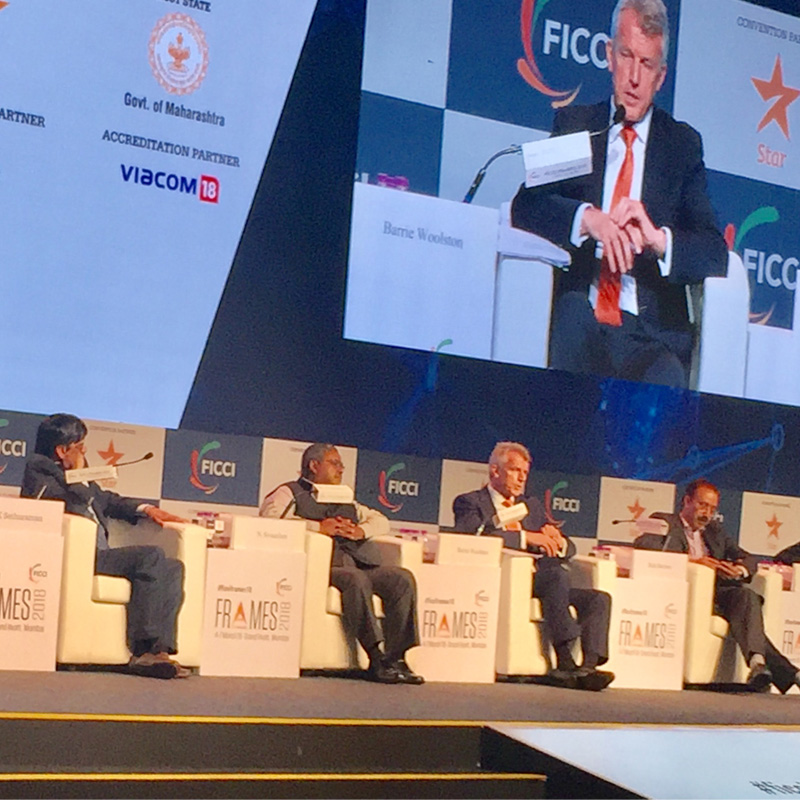
    “Here is the paradox. We produce the cheapest satellite but the costliest bandwidth,” Sivasailam was quoted by PTI as saying in a report, adding that India required more transponders on satellites. He was speaking at the ongoing FICCI-Frames 2018 here at a session on ‘Digital India: Sparking the Access Revolution.’ The session also had a talk by ISRO director for the satcom and navigation programme office, K Sethuraman, who dwelled on the agency’s vision for satellite programme of India.

    Sivasailam said there is a “problem of domains” between the DoT and the ISRO that has impacted, for the last 20 years, the roll-out of connectivity in the far flung areas of the country. 

    “The problem is of domains. We [DoT] don’t want to leave our domain [of spectrum allocation]. ISRO doesn’t want to leave its domain. It is a domain related problem…I do not see people coming together and negotiating this aspect out,” he said. Admitting that there is “politics”, which “makes things difficult”, PTI reported, adding that Sivasailam pitched for both the agencies getting over the problems for an overall benefit. 

    “It is time it stopped because it is hurting business development and ultimately people are not getting [benefited],” he said. On the critical issue of pricing, he asserted it will cost around Rs 150 to serve one user with the current cost structure in the country, whereas in the US, it costs $1 or Rs 65. “If the US is getting it for $1 for the same bandwidth for the life of the satellite, I should be getting it at the same rate. There is no reason why it should not happen in India. That is my refrain,” he said.

    Conceding that ISRO helps take satellite connectivity to 5240 far-flung locations in the country, including 4300 in North-East India, Sivasailam elaborated that the cost of satellite, bandwidth and spectrum makes “operations unviable”. 

    “If you have the volume of business, we should be able to provide at the rates internationally available and that is a matter of some concern for us. We have been working on it, but not necessarily successful on this,” he said, stressing that the industry will have to find solutions on this and DoT and ISRO also need to work together on this issue.

    Speaking of self-regulation in over the top (OTT) services, he said it cannot substitute regulation. “When you talk of regulator’s way of looking at regulations, it lies on consumer side and that’s where self-regulation in itself will fail,” he said, pointing out that while it is particularly important in the telecom sector with issues of call drop and number portability, it may not be applicable too much in the broadcasting sector.

    Sivasailam also spoke of the Telecom Regulatory Authority of India (TRAI) recommendation on in-flight connectivity, which will be taken to the Telecom Commission “sooner than later” and it “could be a reality soon”. On 20 January 2018, the TRAI came out with recommendations suggesting that airlines should be allowed to offer in-flight connectivity over Indian airspace, including broadband services. The Civil Aviation Ministry, Department of Space and DoT now have to act on the suggestions to make it a reality. 

    The Telecoms Ministry official said there are discussions within the department on whether to allow both voice and data on flights or restrict it to voice connectivity alone. The new telecom policy will also be out “very soon,” he said.

    Also Read :

    M&E stakeholders need to collaborate for growth: Sudhanshu Vats

    Broadcasters see positive future for TV in India

  • SC could take up TRAI-Star case on tariff regulations

    SC could take up TRAI-Star case on tariff regulations

    MUMBAI: The Star India-TRAI (Telecom Regulatory Authority of India) case, which attracted a split verdict in the Madras High Court (HC) recently, took another turn today with the Supreme Court (SC) while adjourning case till Monday showed inclination to dispose of the case itself.

    As per reports emanating from the SC, the broadcast carriage regulator TRAI will likely file in SC a transfer petition by Monday when the apex court will look into the case for possible listing for likely hearing in July 2018.

    The Madras HC judges, while agreeing that various tariff related points (like capping discounting offered by broadcasters and MRP, for example) in TRAI’s proposed tariff regulations were arbitrary, could not arrive at a consensus whether the regulator had overstepped to regulate business models related to copyrights over content.

    The Madras HC had further said that another judge would hear the issues. It was hearing the case as petitioners Star India and Vijay TV had filed a case against the 2016 tariff regulations and the SC had directed the HC to dispose of the case within a certain time frame.

    As hearings continued in the HC, other industry bodies like AIDCF and a couple of companies joined the issue with high profile lawyers arguing the case for and against the petition.

    Also Read :

    Madras HC gives split verdict in Star India versus TRAI case

    MSOs move Madras HC seeking relief on inter-connect pacts

    Orders reserved by Madras HC on TRAI jurisdiction case

  • Madras HC gives split verdict in Star India versus TRAI case

    Madras HC gives split verdict in Star India versus TRAI case

    NEW DELHI: While parts of the country took a break on a moderately warm day after playing Holi, the Madras High Court delivered a split verdict in a case involving Star India and the Telecom Regulatory Authority of India (TRAI), apart from several other private and government organisations. This effectively means that the Supreme Court will again have to take a stand on whether the regulator’s proposed tariff order relating to broadcast and cable sectors could be implemented or remains in suspended animation.

    While striking down certain aspects of the tariff guidelines (maximum retail price and discounting limits), issued by TRAI late 2016, and upholding the petitioner’s plea, the two-judge bench of the high court referred to another yet-to-be-decided judge the issue of jurisdiction of TRAI on matters such as copyright over content.

    Now that the high court has delivered a fractured verdict, raising fears of a status quo and non-implementation of the TRAI tariff guidelines in certain sections of the cable distribution industry, the Supreme Court could likely early next week take a view whether TRAI can go ahead and implement the regulations or further judicial clarity is needed.

    “The reason for putting cap of 15 per cent to the discount on the MRP of a bouquet disclosed in to the impugned Tariff Order is that, as per data available with TRAI, some bouquets are being offered by the distributors of television channels at a discount of up to 80-90 per cent of the sum of a-la-carte rates of pay channels constituting those bouquets. Such high discounts force the subscribers to take bouquets only and thus reduce subscriber choice. This, in my view, cannot be a reason to restrict the discount,” the judgement observed at one point.

    The lengthy verdict (over 140 pages) of the two-judge bench of the high court, which had been hearing a case filed by Star TV and associate Vijay TV challenging tariff guidelines of TRAI on various grounds of copyright and whether the regulator has the jurisdiction to make regulatory guidelines, was delivered after the hearings got over several months back and the verdict was kept in abeyance.

    While stakeholders refused to comment on the verdict officially, saying the fine prints of the lengthy order need to be studied over the weekend, TRAI could not be reached for its version on the Madras HC verdict.

    However, an industry observer opined that considering the high court’s observations on MRP and discounts relating to TV channels, implementing the remaining part of TRAI’s proposed tariff and inter-connect guidelines would make less sense as both the issues frowned down upon by the high court form an integral part of the overall regulations.

    The tariff issue has been in the courts since late 2016. The Delhi High Court too is hearing a similar matter involving TRAI’s proposed tariff guidelines. In this case the petitioners are DTH operators Tata Sky and Airtel Digital.

    ALSO READ:

    MSOs move Madras HC seeking relief on inter-connect pacts

    Orders reserved by Madras HC on TRAI jurisdiction case

    SC stays new TRAI tariff, asks Madras HC to complete hearing in four weeks


  • TRAI suggests simplifying processes for broadcast, cable-related businesses

    TRAI suggests simplifying processes for broadcast, cable-related businesses

    MUMBAI: The Telecom Regulatory Authority of India (TRAI), in its bid to ease business norms relating to the broadcast and cable sector, has urged the government to simplify various licensing and clearance processes, putting time limits in some cases.

    The TRAI has also said that the satellite spectrum allocation process undertaken by various government agencies, such as the WPC in the telecom ministry and the ISRO/Department of Space, should be carried out throughout the year instead of “intermittent” opening of such processes.

    Some of the recommendations that have been suggested in its latest ‘Ease of doing Business in Broadcasting Sector’ paper are:

    http://www.indiantelevision.com/regulators/trai/trai-extends-dates-for-comments-on-uplinking/downlinking-consultation-paper-180116
    http://www.indiantelevision.com/regulators/trai/trai-paper-seeks-to-streamline-uplinking-downlinking-norms-171219 
    http://www.indiantelevision.com/regulators/trai/trai-releases-paper-on-national-telecom-policy-2018-180103

    – The process of granting permission/licence/registration for broadcasting services should be streamlined by removing redundant processes, re-engineering necessary processes and making them efficient using ICT.

    – An integrated portal to be set up by the government for broadcasters, teleport operators and TV channel distributors for filing, processing, tracking applications, payments, frequency assignments, endorsements, renewals etc.

    – Security clearances to be done within 60 days.

    – Setting up a system of self declaration.

    – Total time (including all kinds of ministerial clearances) to not exceed six months for granting licences or permissions.

    – Simpler process for logo, name, format and language change.

    – Create a centre for excellence for broadcasters.

    The TRAI says that the Indian broadcasting sector presents a vibrant picture but it has ‘immense potential to move on to a higher trajectory of growth by removing procedural bottlenecks and making business propositions more attractive.’ It states that checks must be done from time to time to ensure procedures are up to date or removed if no longer needed.

    A consultation paper was issued last year after which an open house was conducted with stakeholders on the topic of ease of doing business.

    Also Read:

    TRAI extends dates for comments on uplinking/downlinking consultation paper

    Trai paper seeks to streamline uplinking, downlinking norms

    TRAI releases paper on National Telecom Policy 2018

  • DTH subscriber growth muted in CY-2017

    DTH subscriber growth muted in CY-2017

    BENGALURU: DAS, especially phases 3 and 4, was supposed to be a great growth opportunity for television direct-to-home (DTH) service providers. Has that been the case? Not if one were to go by data released by the Telecom Regulatory of India (TRAI) and three of the six private DTH players in India.

    The status quo
         
    At present, there are six private pay-TV players (five active in the true sense of the word) and one government free-TV player DD FreeDish. The five players are: Airtel Digital TV or Airtel DTH, Dish TV, Sun Direct, TataSkyand Videocon DTH–the sixth player being Reliance Digital TV or Big TV.

    Reliance Big TV has been acquired by Pantel Technologies and Veecon Media. Normal operations have to recommence as yet. A number of Big TV customers were acquired by other players and the true status of its operations and current subscriber numbers are still unclear at the time of writing.

    Please refer to the figure below for subscriber share of the six private players at the end of 30 September 2017 (Q2-18 or Q2-2108).

    public://11_0.jpg

    DTH subscriber acquisition seems to have petered down in calendar year 2017 (CY2017, 1 January 2017 to 31 December 2017) as compared with CY 2016. Please refer to the chart below for active subscribers addedas per TRAI data until 30 September 2017 (Q2-2018) and data reported by the three private players – Airtel DTH, Dish TV and Videocon d2h until 31 December 2017. It may be noted that these three players had almost 63 percent share of subscribers according to the above-mentioned Dish TV investor presentation.

    The continuous blue curved line in the chart below represents the total number of net active subscribersaddedfor each quarter – this number has been obtained by deducting the number of active subscribers in a quarter from the number of subscribers in the previous quarter. The combined total number of the three subscribers has been obtained by addition of net subscribers added by each of the three players – Airtel DTH, Dish TV and Videocon d2h – as declared by them in their financial/other releases and presentations. Thesecombined subscriber additions are represented by the continuous maroon line in the figure. The broken grey line represents the percentage of the combined net subscriber additions by the three players of the total subscriber additions as per TRAI data.

    public://2_6.jpg

    The chart below indicates the subscriber base of the three players and all private DTH players as per quarterly data released by TRAI. TRAI data for the October-December 2017 quarter has not been released at the time of writing. Subscriber data for each of the three players mentioned below has been obtained from their respective financial releases and presentations. The numbers have been rounded off to the nearest lakh by the author.

    As is obvious, Dish TV is the biggest player in the country in terms of subscribers followed by Airtel DTH and Videocon d2h in that order. It may be noted that Tata Sky subscriber base could be higher than Airtel’s subscriber base. Tata Sky data is not available in the public domain, and hence this cannot be verified.

    public://3_2.jpg

    Overall, the players are faced with declining monthly average revenue per user (ARPU). In absence of complete ARPU data, the author has taken the liberty to calculate ARPUs of each of the three players by using quarterly operating revenue/subscription revenue of the players and dividing it by the subscriber base at the end of that quarter and then calculating the ARPU per month. Similarly, the quarterly operating/subscription revenues of the three players have been added and then divided by the combined subscriber base of the three players at the end of that quarter and then the average monthly average ARPU has been arrived at. In each case calculated ARPU numbers have been rounded off to the nearest rupee.

    The combined four quarter average monthly ARPU of the three players across four quarters of 2017 has declined by Rs 9 to Rs 183 from Rs 192 in CY-2016. Airtel DTH is the premium player – its four quarter average monthly ARPU in 2017 increased by Rs 2 to Rs 230 from Rs 228 in 2017. Dish TV is a value player, its average declined by Rs 18 in 2017 to Rs 143 from Rs 161 in 2016. Videocon d2h four quarter average monthly ARPU in 2017 declined by Rs 9 to Rs 186 from Rs 195 in 2017. It must be reiterated here that the ARPU numbers mentioned in this paper have been calculated by the author and may vary from the actual numbers. The numbers in the graph below are just indicative numbers.

    public://4_1.jpg

    Besides the six private pay DTH players, FreeDish is a major player in terms of subscribers with an estimated 2.2 crore as per the numbers available in the public domain. It must however be noted that an exact number for registered or active subscribers is not available even with DD, since this is a free DTH service. If and when the announced Dish TV Videocon d2h merger happens, the merged entity will probably be one of the largest DTH players in the world in terms of subscriber numbers.

    According to an E&Y report titled ‘India’s Free TV’ released in July 2017, among the DTH operators in India, FreeDish has grown to become the largest with its estimated 2.2 crore subscribers which E&Y predicted could cross 4 crore over the next two to three years.

    A number of reasons can be attributed to this dismal performance–two of the chief ones that have been touted over the recent past by most players in media and entertainment industry are demonetisation in November 2016 and the implementation of the new GST regime. Given that most of India faced a cash crunch for a few months post demonetisation, money spends for entertainment took the least priority for the common man.Subscriber acquisition seems to have picked up in the April-June 2017 quarter, only to be dampened in the July-September 2017 – the quarter in which the new GST regime was implemented. The glitches of the new GST are slowly being ironed out. In the absence of TRAI data for the October-December 2017 quarter, numbers reported by the three players seem to indicate that DTH subscriber acquisition should have improved. Despite this, it seems unlikely that the industry was able to surpass or even match subscriber growth of CY-2016.

    Another important reason could be that DTH is considered a premium service – by all the stakeholders in carriage ecosystem with the resulting perception that procurement as well as monthly subscription will be premium and hence a deterrent for the consumer. While some players such as Dish TV have been making attempts to come up with packages that it perceives should attract the masses, but, results as per TRAI data seem to indicate otherwise. Yes, Dish TV is the largest private player in the country that has come up with different pricing models under different brands, whether unwittingly or not, most of the other players present themselves as premium players and seem to have done little in that direction.

    Also Read :

    DTH’s year of consolidation

    Recalibrating India’s DTH sector after Airtel DTH-Warburg Pincus deal

    Veecon Media acquires Reliance Big TV

  • TV channels cite logistical challenges in broadcast for the disabled

    TV channels cite logistical challenges in broadcast for the disabled

    NEW DELHI: A debate on broadcasting for persons with disabilities (PWDs) has thrown up more questions than solutions. TV channels have stated that though desirable, the process is expensive and challenging, for instance, in case of live events and that before setting guidelines for private broadcasters, pubcaster Doordarshan should lead by setting an example.

    Pointing out that content to be made accessible to PWDs is viewed by the masses as well, which itself increases backend work, the Indian Broadcasting Foundation (IBF) has said in a country such as India, where varied languages, dialects and language-scripts prevail, broadcasting for specially abled people is challenging.

    “There should be synergies between capacity building for equipment manufacturers, distributors/re-distributors (DPOs) as well as broadcasters who are working with the Ministry [of Information and Broadcasting] for framing the Accessibility Standards for TV channels and the entire end-to-end chain of broadcasting should be coordinated, including amongst distributors and consumer premise equipment providers,” it added.

    IBF, an industry organisation comprising TV channels, was articulating its views on a consultation paper floated by the TRAI on making broadcast and ICT services accessible to persons with disabilities.

    If the IBF stated more co-ordination was needed amongst various stakeholders in the broadcasting value chain, another industry body representing news TV channels, the News Broadcasters Association (NBA), highlighted: “Though desirable, the effort required to make broadcasting and ICT accessible to PWDs is a major and expensive exercise.”

    What are the challenges in making broadcasts suitable for PWDs? There are several financial, technical and logistical challenges, including closed captioning, which is critical for people who are deaf or hard-of-hearing, or those who may have a disability that requires audio description. Wikipedia clarifies the term `closed’ indicates that the captions are not visible until activated by the viewer, usually via the remote control or menu option. Many Hollywood and European films providing subtitles sometimes have closed captioning, too.

    “News content presents special challenges to provide subtitling, especially in multiple languages. Most news items are cut live or within minutes of an event and there is no time to redo the content in multiple languages or provide subtitles,” the IBF has pointed out adding that TV screens in most news channels are “clogged with scrolls and headlines” leaving little space for additional closed captions to be run.

    However, it was conceded by the IBF that an effort to provide closed captioning can be made in repeat news bulletins, which, again, will carry a heavy financial burden as old clips also need to be captioned apart from news.

    According to the NBA, a universal categorisation is an impediment to finding a solution to the problem of accessibility for PWDs as broadcasting and ICT services include inadequate “distribution equipment and consumer premise equipment,” including remote-control systems that have voice recognition and a touch­-screen.

    The two industry organsiations, representing a wide spectrum of TV channels in India, have not only exhorted the regulator to advise the government to provide financial incentives before launching such guidelines, but have also suggested identifying certain percentage limits (50 per cent in one case) in the category or genre of TV channels that could possibly make broadcasts more accessible to PWDs.

    “We request that the consultation on issues relating to distribution/re-distribution of broadcast signals and related equipment and technical aspects be suspended till the time Accessibility Standards for Television Channels are issued by the Ministry,” the IBF has submitted, adding DD must “take the lead” in providing access solutions such as visual captioning to PWDs and demonstrate their applicability for private broadcasters to develop appropriate programming and technology to meet threshold requirements.

    Also Read :

    TRAI seeks better accessibility for persons with disabilities

    Broadcasters, DPOs oppose TV channel auction proposal

     TRAI bats for converged regulator & renaming of NTP’18

  • Hathway leads the way in wireline net subs addition in Q3

    Hathway leads the way in wireline net subs addition in Q3

    BENGALURU: Over the past few years, multi-system operators, or MSOs, and cable television operators have been trying to enhance revenue by offering broadband internet services riding piggyback on their cable TV network wires. The second largest—considering that Atria Convergence Technologies is also an MSO and has far more broadband subscribers— cable television-wired broadband internet services provider, Hathway Cable & Datacom Services Ltd (Hathway) added more subscribers than any other wired internet service provider between October 2017 and December 2017. Going by data provided by the Telecom Regulatory Authority of India (TRAI), Hathway added 60,000 subscribers in the third quarter of fiscal 2018 (FY 2018) or the last quarter of calendar year 2017 (CY-2107). The TRAI report indicated that Hathway added 40,000 subscribers in Dec-17, the highest by any of top five wireline broadband internet services providers in the country. Since Sep-17 Hathway is the fifth largest wired broadband internet services provider in India.

    In its investor presentation, the now pure broadband internet services provider, Hathway, says that it added net 50,000 wireline broadband internet subscribers in Q3 2018. In the same investor presentation, Hathway claims that it has added 1.5 lakh broadband internet subscribers in CY-17–its subscriber base grew from 6 lakh at the end of December 2016 to 7.5 lakh as on 31 December 2018. TRAI data pegs Hathway’s subscriber base at 7.3 lakh as on the same date.

    It may be noted that both ACT and Hathway started off as MSOs, but now their core business focus is on wireline broadband internet services. In the case of Hathway, after restructuring, it is now a pure wired broad internet services provider, with its cable TV operations now under Hathway Digital Pvt Ltd. While ACT has continued to service its existing cable TV subscribers in the limited territory that it operates – South India mostly – its wireline broadband internet subscriber base has grown quite remarkably notwithstanding its geographical limitations. ACT added 1.6 lakh wireline broadband internet subscribers in CY-17 and 40,000 in Q3 2018. In Dec-17, ACT added 10,000 wireline broadband internet subscribers. ACT is the third largest wired broadband internet service providers in terms of number of subscribers in India with a subscriber base of 12.8 lakh. ACT is probably the largest private wireline broadband internet services provider in South India.

    TRAI provides data in units of million up to 2 fractions and hence the subscription numbers mentioned in this report are accurate to the nearest 10,000.

    The largest wireline broadband internet services provider in the country – the public sector Bharat Sanchar Nigam Limited (BSNL) lost 5.7 lakh wireline broadband internet subscribers in CY-17 and 1.6 lakh in Q3-2018. In Dec-17, the public sector internet and telephony services provider bled 50,000 subscribers. It closed CY-17 or Dec-17 with a wired broadband internet subscriber base of 93.8 lakh.

    Indian telephone major Bharti Airtel Limited (Airtel) is the second largest wired broadband internet services provider in India – it closed Dec-17 with 21.5 lakh subscribers. Airtel added 1.1 lakh wired broadband internet subscribers in CY-17, 30,000 in Q3-2018 and 10,000 in Dec-17.

    The public sector Mahanagar Telecom Nigam Limited (MTNL) was once the third largest wired broadband internet services providers in the country, until it was replaced by ACT. MTNL lost 1.3 lakh wired broadband internet subscribers in CY-17, lost 40,000 subscribers in Q3 2018 and lost 10,000 subscribers in Dec-17. The company closed CY-17 with a wired broadband internet subscriber base of 9.1 lakh.

    Overall, the wireline broadband subscriber base in India declined by 2.8 lakh in CY-17, by 1.8 lakh in Q3 2018, but increased by 10,000 in Dec-17. The share of subscribers of the top five wired broadband internet service providers fell from 81.31 per cent as at the end of Dec-16 to 80.91 per cent at the end of Dec-17.

    The combined total number of subscribers of the top five broadband internet services in the country reduced by 3 lakh in CY-2017, reduced by 70,000 in Q3-2018 and remained the same in Dec-17 as in Nov-17 (144.5 lakh). It is quite obvious that the largest subscriber losses were by the public sector BSNL and MTNL. However, some MSOs such as Siti Networks Limited and regional player Ortel Communications had reported wireline broadband internet subscriber declines during CY-2017.

    Top 5 wireless broadband internet service providers

    As on 31 December 2017, the top five wireless broadband service providers were Mukesh Ambani’s Reliance Jio Infocomm Ltd (16.009 crore) followed by Bharti Airtel (6.894 crore), Vodafone (5.243 crore), Idea Cellular (3.480 crore) and BSNL (1.257 crore).

    Overall broadband internet subscription

    A majority of the 36.287 crore internet subscribers in India subscribe to wireless internet services through mobile phones and dongles – the number grew from 33.24 crore in Nov-17 to 34.457 crore in Dec-17. Fixed wireless subscribers –  (Wi-Fi, Wi-Max, Point-to-Point Radio & VSAT) declined to 4.4 lakh in Dec-17 from 4.5 lakh in Nov-17. As mentioned above, wired broadband internet subscribers grew by 10,000 from 178.5 lakh in Nov-17 to 178.6 lakh in Dec-17.

    The top five service providers constituted 93.80 per cent market share of the total broadband subscribers at the end of Dec-17. These service providers were Reliance Jio Infocom Ltd (16.009 crore), Bharti Airtel (7.109 crore), Vodafone (5.244 crore), Idea Cellular (3.481 crore) and BSNL (2.195 crore).

    Other broadband internet service providers

    As also mentioned above, MSOs and LCOs or cable video service providers also provide wired broadband internet services in the country. These cable service providers have a number of subsidiaries and alliances, hence, broadband numbers are split as applicable. The consolidated subscription numbers of these entities could be larger than the numbers of some of the wired internet services providers mentioned above.

    Also Read :

    Nov 2017: Wireline internet bleeds subscribers

    Jio continues leading broadband subs addition while wireline internet loses subs in Oct

    RIL’s Rs 2.35 lakh crore investments in Jio start to payoff
  • Dish TV bemoans govt’s neglect of DTH sector

    Dish TV bemoans govt’s neglect of DTH sector

    MUMBAI: Dish TV, while lamenting neglect and step-motherly treatment of the whole DTH sector by the government, has exhorted policy-makers to remove various discriminations in the licencing conditions of various distribution platforms as it has resulted in taxing times for DTH operators.

    Furthermore, Dish TV has also pointed out that video distribution on OTT platforms should be brought under government regulations, similar to those governing other distribution platforms (DPs) to remove anomalies and creation of a level playing field for every stakeholder.

    “The present [regulatory] regime for the licence fee is discriminatory against the DTH operators and is designed to provide the leveraged position to cable operator, HITS, IPTV and MSO, etc in the market place as they are not required to pay any annual licence fee,” Dish TV has said in its submission to regulator TRAI’s consultation paper on issues related to uplink/downlink of TV channels and whether they could be auctioned in a way similar to FM radio licences.

    One of the largest satellite TV operators in India has added that because of discriminatory licencing regimes, the additional financial burden in terms of monthly subscription fee is put on a subscriber of DTH service when compared to subscribers of cable TV or HITS services.

    “It is a matter of record that in the month of March 2008, the Ministry of Information and Broadcasting (MIB) had taken a decision to fix the [DTH operator’s] licence fee @ 6 per cent of the gross revenue, which had the concurrence of the TRAI also. However, for reasons best known to the government, the decision is yet to be put into effect,” Dish TV has said.

    Pointing out that the DTH sector (India has six DTH licencees at present, according to MIB) has played a critical role in making the digitisation dream a success even while providing a world class experience to consumers, Dish TV has urged the government/regulator to “remove anomalies” by creating a level playing field for the DTH operators and rationalising the licence fee.

    Dish TV is also hopeful that TRAI’s new tariff structure and inter-connect regulations—which are in suspended animation owing to being legally challenged in Madras and Delhi High Courts by Star TV and Tata Sky and Airtel Digital combine, respectively—would go a long way in easing the pains of DTH ops. “Though the tariff order and the regulation are under challenge, however, it is just a matter of time that when the new regulation will sail through these minor hiccups and become a reality,” it added.

    Incidentally, as reported by Indiantelevision.com earlier, MIB is contemplating referring the issue of DTH policy guidelines review to its sister organisation, Ministry of Law, for an opinion.

    Meanwhile, Dish TV in its submission to TRAI has made a strong financial case for rationalisation of DTH licencing regime, while highlighting how owners of TV channels continue to play favourites with various DPs, has also urged a regulatory regime for video distributed on OTT platforms.

    In a section that dwells on OTT platforms, Dish TV has accused broadcasters or owners of TV channels of circumventing regulatory framework by distributing video on the internet or OTT platforms.

    Arguing that by starting OTT platforms broadcasters don’t just remain ‘broadcasters’, but also become ‘distributors’ of TV channels, Dish TV has said that such an arrangement breaches various existing regulations, including cross-media and cross-services restrictions.

    “It is important to note that the content being provided by the broadcasters [on OTT platforms] are free of cost with an intention to create a captive subscriber base and create a monopolistic situation. Because of ‘free of cost’ provision of the content by the broadcasters through OTT services, other distributor[s] of TV channels are heavily prejudiced… threatening the existence of other distribution platforms,” Dish TV has stated, adding such an arrangement could also create a monopoly where the broadcaster, being the distributor, would also control the end mile solution.

    It may be pertinent to note here that Dish TV’s sibling Zee group too has an OTT platform whereby it distributes TV programming to subscribers. Zee unveiled on Valentine’s Day a new avatar of its video streaming service called ZEE5.

    Though TRAI had initially left video streaming services out of a regulatory framework when it announced guidelines pertaining to Net Neutrality late last year, a section of the media has reported that the regulator is now thinking afresh and could bring in regulations for video content distributed via the internet (read video OTT platforms).

    Also Read :

    Law ministry likely to give opinion on DTH guidelines review

    Broadcasters, DPOs oppose TV channel auction proposal

    Dish TV-Videocon d2h deal on course