Tag: Trai

  • TRAI says b’cast & cable tariff, inter-connect orders come into effect 3 July

    TRAI says b’cast & cable tariff, inter-connect orders come into effect 3 July

    NEW DELHI: The Telecom Regulatory Authority of India (TRAI) today issued a statement stating that its tariff order for the broadcasting and cable sector will come into effect from 3 July 2018 as judicial compliances have been complied with.

    “Having complied with  the  judicial  mandates  in  the  matter,  the Telecommunication (Broadcasting and Cable) Services (Eighth) (Addressable Systems)  Tariff   Order, 2017 and  the Telecommunication (Broadcasting and Cable) Interconnection (Addressable Systems) Regulations, 2017 as upheld by the Hon’ble Madras High  Court and the Telecommunication (Broadcasting and Cable) Services Standards  of   Quality  of  Service and  Consumer  Protection (Addressable Systems) Regulations, 2017 come into effect from 3rd July 2018,” the regulator said in a statement pointing out that all timelines mentioned in the original order should be adhered to immediately.

    Star Tv and Vijay Tv had moved Madras High Court against the TRAI tariff order late 2016 and after protracted hearing the court finally gave its final judgement earlier this year. Subsequently Star and the regulator had both filed caveats at Supreme Court. Meanwhile, Tata Sky, Airtel Digital Tv had filed petitions in Delhi High Court on matters relating to the tariff order and the case is still pending a judgement or direction.

    According to TRAI, implementation of the new regulatory framework will “bring in transparency”, enable provisioningof affordable broadcasting and cable TV services for the   consumer and, at the   same time, “would lead to an orderly growthof the sector”.

    Some of the important activities and timelines are as under:

    #The  Telecommunication (Broadcasting and Cable)  Services (Eighth) (Addressable Systems) Tariff Order, 2017: Declaration ofMRP and nature of channels by broadcasters within 60  days; declaration of network capacity fee and  distribution  retail price  by distributors (DPO)  within  180   days; reporting by broadcasters within 120  days.

    # The Telecommunication (Broadcasting and Cable) Interconnection (Addressable    Systems) Regulations, 2017:    Publication     of     Reference Interconnect Offer (RIO) by   broadcasters   within 60   days; publication of referenceinterconnect offers by distributors within 60 days; Signing of the interconnection agreements within 150 days;

    # The Telecommunication (Broadcasting and Cable) Services Standards of   Quality of   Service ·and Consumer  Protection (Addressable Systems) Regulations, 2017:  Migration of the subscribers to the new framework within 180  days; Establishment of customer care center, website, consumer care channel and publication of manual of practice within 120 days.

    It would be interesting to see how the original petitioners react to the latest TRAI salvo. The regulator and petitioners were not available for immediate comments.

    ALSO READ:

    Third Madras high court judge gives TRAI tariff order thumbs up

    Star files caveat in Supreme Court on TRAI tariff order

    TRAI tariff order’s impact on the industry

    Decks cleared for TRAI tariff order implementation as HC declines stay
  • TRAI fines Jio, Airtel, others for not meeting service quality norms

    TRAI fines Jio, Airtel, others for not meeting service quality norms

    MUMBAI: Telecom Regulatory Authority of India (TRAI) rapped leading operators, including Reliance Jio, Bharti Airtel, Vodafone and Idea Cellular on the knuckles for failing to meet the Quality of Service standards in the December quarter, reported news agency PTI.

    Data disruptor Reliance Jio was handed a fine of Rs 31 lakh based on the TRAI-defined service quality parameters such as Point of Interconnect congestion, accessibility of call centres and customer care. TRAI’s fine pertains to multiple circles or service areas in which Jio offers it service.

    Idea Cellular was fined Rs 28-29 lakh for the December quarter for its inability to match benchmarks on call drops, metering and billing, both pre-paid and post-paid, accessibility of call centre or customer care and its timelines for multiple circles.

    Bharti Airtel, the biggest player in the market, was slapped with a Rs 23 lakh for the same period for non-compliance on parameters entailing metering and billing (postpaid and prepaid) and accessibility of call centres, and stipulated response time on operators answering calls in certain circles.

    Vodafone was fined Rs 9 lakh for non-compliance of select criteria like time-bound refund of deposits after closure, response time for calls answered by operators, as well as call drops.

    Aircel and Bharat Sanchar Nigam Ltd (BSNL) too were handed fines by the regulator.

    The fines were in line with TRAI’s renewed focus on quality benchmarks in the telecom sector.

    Last year, the regulator had ordered telcos to adhere to the quality of service benchmarks from October 1, 2017.

    Also Read:

    Third Madras high court judge gives TRAI tariff order thumbs up

    Comment: TRAI uplinks progressive recommendations; now MIB, others need to downlink them

  • After consistent rise, DTH subscribers fall in  Jan-Mar quarter

    After consistent rise, DTH subscribers fall in Jan-Mar quarter

    MUMBAI: After a consistent upward trend, total active DTH pay-TV subscribers in India dropped slightly during the January-March quarter this year. The overall active subscriber numbers dropped to 67.53 million from 67.56 million.

    Telecom Regulatory Authority of India’s (TRAI) quarterly performance indicator indicated that in 2017, six pay DTH operators had added 4.91 million net pay active subscribers reaching the base of 67.56 million.

    While there were six DTH players earlier, the merger of Dish TV and Videocon d2h reduced the number to five. Following the merger Dish TV has the lion’s share standing at 43 per cent. Tata Sky (25 per cent), Airtel DTH (21 per cent), Sun Direct (10 per cent) and Reliance Digital TV (one per cent) follow the leader with respective shares. Tata Sky’s share has increased but Reliance Digital TV’s share has dropped.

    The quarter had 308 pay channels including 213 SD pay TV channels and 95 HD pay TV channels as reported by 49 broadcasters. Five new pay channels including Zee Cinemalu HD, Zee Telugu HD, Zee Kannada HD, Colors Tamil HD, and Discovery Jeet HD commenced during the quarter ending 31 March 2018.

    Also Read :

    Uplink, downlink issue: TRAI pushes for a liberal regime keeping most existing norms unchanged

    Third Madras high court judge gives TRAI tariff order thumbs up

  • Comment: TRAI uplinks progressive recommendations; now MIB, others need to downlink them

    Comment: TRAI uplinks progressive recommendations; now MIB, others need to downlink them

    The approximately Rs 1,400 billion Indian broadcasting and cable sectors, reeling under the impact of a slow economy and hemmed in by erratic policy-making, would be breathing a bit easy after TRAI’s recommendations on issues related to uplink and downlink of TV channels and teleports.

    And, why not?  When the consultation paper on uplinking and downlinking guidelines was released by TRAI in December last year, the concept paper had sent alarm bells ringing in the media industry. Reason? The consultation paper had references about auctioning of satellite spectrum and TV channel permissions, introduction of AGR (adjusted gross revenue) sharing based licence fee (the concept of licensing itself was a debatable issue) and introduction of other changes.

    Most media houses sensed that an auction and AGR-based licensing and spectrum regime could have an irreparable impact on the industry, a la telecom sector, where winding down of businesses and pink slips are becoming common. Even more worrying for the sector was the assertion by TRAI — probably egged on by the Ministry of Information and Broadcasting (MIB)’s reference letter on the issue — that the administrative permissions received by TV channels under the existing norms were licences under Section 4 of the Telegraph Act, 1885, which in itself is an antiquated piece of legislation harking back to the 19th century.

    Though TRAI may not have been directly responsible for suggesting in the consultation paper, issues that rankled the industry, it did experience a rare united and collective views of the industry. Though consensus among stakeholders is rare, on this matter there was no such hesitation. And, an open house forum organised by TRAI on the issue to get further feedback could be cited as an example of this rare unity of views.

    Most attendees to the open forum conveyed loud and clear that concepts like auctioning of TV channels’ permission and AGR-based annual revenue sharing (with the government) would do more harm to the industry than any good. What’s more, some of the industry representatives reminded TRAI of its recommendations for National Telecom Policy 2018 where it had suggested “review” of all levy and fees imposed on telecom service providers.

    In the final recommendations issued earlier this week, TRAI has categorically struck down the possibility of either auctioning of permissions and/or spectrum and steered clear of AGR altogether. Rather, it has taken a highly progressive stance, which if accepted by MIB and other government organisations can inject the much-needed fuel in the industry for it to propel forward faster over the next decade.

    By not increasing any substantial financial burden on media companies in this sector, TRAI has enabled the capex to go into creating newer ventures, innovative products and business models, and other expansionary activities, rather than simply paying fees and levies. Though the suggested framework has been left mostly untouched from the perspective of administrative fees, there are a few notable changes.

    The annual licence fee for uplinking of a TV channel has been enhanced from Rs 200,000 to Rs 300,000. Similarly, the annual fee for downlinking of a TV channel has been increased to Rs 750,000 from Rs 500,000. Also, the fee for downlinking of channels uplinked from abroad has been increased to Rs 22,50,000 per annum.

    TRAI, while exhorting the likes of MIB, Department of Space and DoT to streamline processes, has interestingly suggested transfer of permissions between two companies be permitted only in the case of mergers and acquisitions as recognised under applicable laws. However, free transfer has been recommended for permission of a TV channel to its subsidiary company or holding company or a subsidiary company of the holding company. The caveat being such a company should have a valid uplinking and downlinking permission.

    A time period of only one year has been given for operationalisation of a TV channel and a lock-in period of one year from the date of operationalisation of a channel for the transfer of permission of such a channel too has been introduced.

    As for teleports, no change in the amount of one- time non-refundable processing fee levied for seeking permission for establishing a teleport has been suggested. Similarly, it has been suggested that no entry fee is levied for granting permission for establishing a teleport. However, for each antenna, a fixed annual license fee of Rs 300,000 has been recommended.

    What will also come as a relief to the teleport industry is that TRAI has refrained from restricting the number of teleports in India.

    And, once again TRAI has nudged Department of Space and Department of Telecoms to take time-bound and liberalised policy decisions relating to satellite capacity. Though not said upfront and in so many words, the regulator has pitched in for foreign satellites too. “The issue of open sky policy for Ku band frequencies may be taken up by MIB in INSAT Coordination Committee (ICC) meeting and the open sky policy should be adopted.”

    Any regulator would vouch that it’s hard to please the core constituency and stakeholders don’t always agree with its stand, but on the uplink/downlink matter the industry would agree with most of the suggestions of TRAI — and also breathe a little easy.

    Hang on, don’t pop the champagne yet. TRAI can only make suggestions — it admitted so in an open forum — and it’s up to MIB, DoT and Department of Space to accept the suggestions and implement them. And, therein lies the catch because quite a few other sets of TRAI recommendations have been gathering dust in various corridors of power.

    Also Read :

    Uplink, downlink issue: TRAI pushes for a liberal regime keeping most existing norms unchanged

    TRAI extends dates for comments on uplinking/downlinking consultation paper

  • Uplink, downlink issue: TRAI pushes for a liberal regime keeping most existing norms unchanged

    Uplink, downlink issue: TRAI pushes for a liberal regime keeping most existing norms unchanged

    NEW DELHI: The Telecom Regulatory Authority of India today stuck with most of the existing guidelines and norms for uplink and downlink permissions for TV channel and teleports, refusing to recommend auction of TV channels — flagged as a contentious issue by stakeholders. However, it suggested enhancing of annual permission fees from the present levels, amongst some other changes.

    The TRAI recommendations on uplink and downlink of TV channels and teleports had been awaited eagerly by the industry, already reeling under pressures from various sides, including economic.

    The regulator also said that mandating encryption of broadcast of FTA TV channels was not a good idea, while suggesting that various processes for various government clearances should be streamlines done within stipulated time-frame.

    Some of the major recommendations of the TRAI are as follows:

    Issues related to uplinking and downlinking of satellite TV channels

    i) No change in the existing definitions of ‘News and Current Affairs TV channels’, and ‘Non-News and CurrentAffairs TV channels’ mentioned in   the   existing uplinking and downlinking guidelines dated 05.12.2011.

    ii) No change in the amount of minimum net-worth of an applicant company seeking permissions for uplinking anddownlinking of TV channels.

    iii) Auction not feasible for grant of permissions for uplinking and downlinking of TV channels.

    iv) Existing administrative system for grant of permissions for uplinking and downlinking of TV channelsshould be continued and should be streamlined.

    v) TRAI reiterated its recommendations on “Ease of Doing Business in Broadcasting Sector” dated 26th February 2018 sent to the Government wherein several measures have been recommended for streamlining the existingprocess of granting permissions for uplinking and downlinking of TV channels.

    vi) No change in the permission fee and entry fee for uplinking and downlinking permissions.

    vii) Annual license fee for uplinking anddownlinking permissions should be enhanced as follows:

    public://list_14.jpg

    viii) Encryption of broadcast of FTA channels should not be mandated and it should be left to the broadcasters providingFTA channels.

    ix) Transfer of permissions should not be permitted between two different companies. In case of mergerand acquisition as recognized under the Companies Act, 20 13 or any other applicable law(s), transfer of permissionsshould be permitted after following the   due process. Transfer of permission of TV channels to its subsidiarycompany or holding company or subsidiary company of the holding company should be allowed freely, provided such company has a valid uplinking and downlinking permission.

    x)A lock-in period of one year from the date of operationalization of a channel for the transfer of permission of such channel.

    B. Issues related to Teleports

    i) No change in the amount of onetime non-refundable processing fee levied for seeking permission for establishing a teleport.

    ii) No Entry fee for granting permission for establishing teleport.

    iii) For each antenna a fixed annual license fee of Rs 3 lakh should be charged.

    iv) No need to restrict the number of teleports in India.

    v) Location of teleports should be left to the teleport operators subject to site clearance from WPC wing of DoT.

    Also Read:

    TRAI extends dates for comments on uplinking/downlinking consultation paper

    TV channels’ uplinking / downlinking procedure simplified

    MIB reminds TV channels, teleport ops about timely online payments

    MIB bumps up TV channel processing fee

  • TRAI, European regulator BERC sign net neutrality MoU

    TRAI, European regulator BERC sign net neutrality MoU

    MUMBAI : Telecom Regulatory Authority of India (TRAI) and The Body of European Regulators for Electronic Communications (BEREC) on Thursday signed a “Memorandum of Understanding” (MoU) on net nuetrality. The MoU, signed by TRAI chairman Ram Sewak Sharma and BEREC chair Johannes Gungl, also adopted a “Joint Statement for an Open Internet”, pledging to work together to ensure that the internet remains an open and non-discriminatory platform.

    “Net neutrality is a vital principle and an open internet crucial for people around the globe. We are very happy to have TRAI as a partner to ensure a univocal protection of net neutrality principles for internet access services,” said Gungl.

    Last year, TRAI, post a consultation process,  issued recommendations to protect net neutrality. However, those recommendations haven’t yet been enacted by the telecom department.

    The joint statement not only highlighted the regulators’ common understanding of net neutrality rules but also their intention to protect them. TRAI and BEREC have also decided to work together in implementing these rules.

    The  MoU has been designed to faciliatate effective electronic communications regulation. Its aim is to build a mutual relationship between the two parties to identify and tackle current and future regulatory issues. This effort is also aimed at nurturing a sound working partnership between the experts from both regulators.

    “We consider that the intemet will continue to be an enabler of growth and innovation for countries like India who can use technology to leapfrog to the next stage of development. Therefore, it is important that the intemet is kept as an open and non-discriminatory platform. Our MoU with BEREC gives us an opportunity to not only work closely together in areas like net neutrality, but also to collaborate in other areas where the EU has adopted a very effective regulatory framework like consumer protection, broadband development and promotion of Next Generation Access roll-out ” said Sharma.

    Also Read:

    Third Madras high court judge gives TRAI tariff order thumbs up

    Madras HC gives split verdict in Star India versus TRAI case

  • Hathway plans to seed 2.5 lakh high definition set top boxes in FY19

    Hathway plans to seed 2.5 lakh high definition set top boxes in FY19

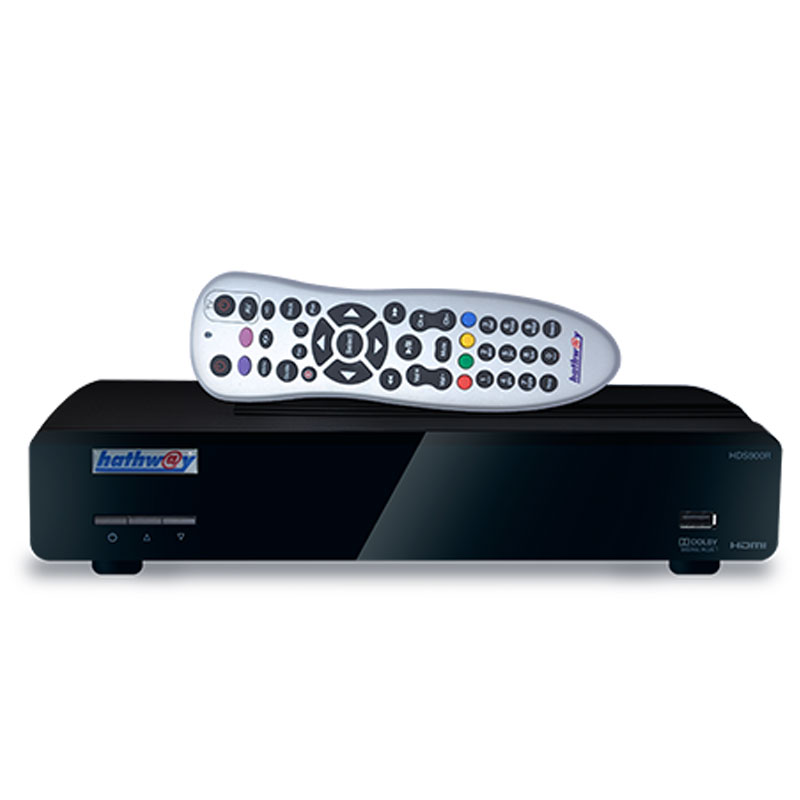
    MUMBAI: Going along the lines of FY18, broadband and cable TV service provider Hathway Cable and Datacom is planning a Capex of Rs 310 crore in FY19. In addition to that, it plans to seed 2.5 lakh high definition (HD) set top boxes (STB) in FY19. The company had 2.16 lakh HD subscribers at the end of March 2018.

    While in FY18 Hathway spent Rs 225 crore on broadband business and Rs 85 crore on the cable TV business, the company has a similar planning of expenditure in both the business for FY19. The company had 7.2 million cable TV subscribers along with a broadband subscriber base of 0.8 million.

    “In FY18, we spent around Rs. 225 crore in broadband capex and around Rs. 85 crore in video business capex. We intend to spend similar capex in FY2019 as well. In terms of addition of consumers, we have seen good momentum so we are confident that this momentum will continue in FY2019 as well,” Hathway Cable and Datacom MD Rajan Gupta told analysts during an earnings call.

    The company is focusing on four key markets including Maharastra, Mumbai, Karnataka, Bengaluru, Hyderabad, and West Bengal.

    Due to the inability to implement the Telecom Regulatory Authority of India’s (TRAI) upcoming tariff order and regulations, a number of MSOs may collapse. Taking the opportunity, company is looking to acquire customers of MSOs to increase market share. Along with increase in market share, increase in average revenue per user (ARPU), HD STB seeding will play key role in the subscription revenue growth in next fiscal year.

    More importantly, Gupta revealed that the company has closed content deals with broadcasters for FY19. While net increase in content cost for FY19 will be Rs. 40 crore, however, there will be no increase in content cost for two to three large broadcasters.

    Also Read:

    Hathway CFO Vineet Garg resigns

    IndiaCast, Hathway fail to concur on carriage, subscription fees

  • TRAI stands up to DoT on use of foreign satellites for comms services on aircrafts

    TRAI stands up to DoT on use of foreign satellites for comms services on aircrafts

    NEW DELHI: India’s telecoms and broadcast regulator Telecom Regulatory Authority of India today stood up again for the lawful right of satellite industry stakeholders. It reiterated that the nation’s policies and guidelines for on- board aircraft communications services like broadband should also allow use of foreign satellites despite Department of Telecoms raising objections on the matter.

    “If we do not allow the foreign aircrafts to provide the MCA (mobile on-board aircraft) services using their satellite and gateways over the Indian airspace, other countries will also not allow the Indian aircrafts to provide

    MCA services while over-flying their jurisdictions,” TRAI justified its stance to DoT as part of clarifications sought by the latter on the regulator’s recommendations on in-flight connectivity services.

    TRAI pointed that though a government panel may have suggested use of Department of Space-approved satellites only with Indian gateways, the in-flight connectivity or IFC services are technically complex withservice providers handling the logistics do so in partnership with foreign mobile service providers having created on-ground facilities for provisioning of MCA.

    “Even if it is assumed that such a facility is created on Indian soil, aircrafts will need to be fitted with pico cell/equipment, which are compatible with one of the Indian TSP (telecom service provider)’s core network. There are several countries where IFC services are already operational and, accordingly, their aircrafts are equipped with pico cell which is connected to the core network of partnering foreign mobile service provider. These airlines certainly won’t be willing to carry out any modification due to the downtime and costs involved. Therefore, for such aircrafts, MCA over the Indian airspace seems feasible only with the existing arrangements in which partnering mobile service provider would be a foreign entity. It may require the use of foreign satellites and gateway, and traffic from aircraft may not be routed through gateway in Indian soil,” TRAI explained, adding that its recommendations have enough in-built safeguards to take care of concerns on India’s security.

    If that was not enough, TRAI, at present helmed by chairman RS Sharma who’s due to superannuate in a few months’ time, categorically said in its response to DoT clarifications that the government panel’s decision to use only satellites approved by DoS with Indian gateways for MCA service was “not implementable”.

    “If the use of foreign satellites and gateways are not permitted for MCA services, it would make the recommendation infructuous”, the regulator emphasized, though admitting that it’s role is recommendatory and the final decision would have to be taken by the government. “With this perspective, the Authority recommended that `use of foreign satellites and gateway would be permitted for the establishment of satellite backhaul links only for the provisioning of MCA services’,” TRAI added.

    On several other objections raised by DoT on suggestions on providing communications services on aircrafts within India airspace, TRAI has stood its ground, reiterating that such bans on foreign satellites and non-Indian gateways could be against international laws and may make the service unviable.

    The full text of TRAI reply to DoT can be found at http://www.trai.gov.in/sites/default/files/RecommendationIFC05062018_0.pdf.

    Also Read:

    TRAI clears path for broadband, voice services aboard planes

  • Star files caveat in Supreme Court on TRAI tariff order

    Star files caveat in Supreme Court on TRAI tariff order

    MUMBAI: So the slugfest on the pricing of digital television in India is entering the next round. And, it is Star India now that has approached the Supreme Court and filed a caveat with it on the Telecom Regulatory Authority of India’s (TRAI) tariff regulations and more specifically on the 15 per cent discount issue.

    According to sources, TRAI too had filed earlier a caveat at the apex court. A caveat is a notice given by a person or an organisation, informing the court that another person/company may file a suit or application against him/them and that the court must give the caveator – person/company filing the caveat – a fair hearing before deciding any matter brought before it in the relevant case.

    Last week, the third judge of the Madras High Court had upheld the regulator TRAI’s order on channel tariffs and dismissed the petitioners’ (Star India and Vijay TV) plea that pricing of content is not under the jurisdiction of the TRAI.

    Even as the high court upheld all the proposed regulations, it disallowed one that puts a cap of 15 per cent on the discount that can be offered by broadcasters or TV channels to distributors on the maximum retail price.

    Another observation of the high court relating to broadcast re-transmission rights or BRR too hasn’t gone down too well with the petitioners and that could be an issue too behind an appeal at the Supreme Court. Though, it is still not clear whether the petitioners or respondent would appeal the Chennai court order.

    Meanwhile a similar case is pending against the TRAI in the Delhi High Court. It involves Bharti Airtel Telemedia, Tata Sky and Discovery Communication India, which had filed petitions against the tariff order in 2017. The TRAI had then informed the court that the issues raised in the petitions were the subject matter of two writ petitions already filed in the Madras High Court and requested that it may await the outcome of those proceedings.

    The Delhi high court had accepted the request but had directed TRAI that it should inform it and the petitioners about the judgment before effectuating the orders. Additionally, earlier the Supreme Court too had ordered the maintenance of status quo as far as the pricing regulations were concerned.  

    The Madras HC has suspended its decision for two weeks to give time to parties involved to appeal to a higher court or seek further clarifications from it.

    Also Read:

    Madras HC gives split verdict in Star India versus TRAI case

    SC could take up TRAI-Star case on tariff regulations

    TRAI-Star case back to Madras HC with SC rider

  • Industry optimistic about RPD technology for viewership

    Industry optimistic about RPD technology for viewership

    MUMBAI: Across the world, efforts are on to make audience measurement systems more reliable and tamper-proof so that advertisers can get the right value and content providers can tailor content as per market demand.

    Return Path Data (RPD) is a globally used system for collecting viewership data and is used by distribution players to study consumer behaviour in the UK, US, Canada and South East Asia. India’s Broadcast Audience Research Council (BARC) has tied up with Airtel Digital TV, Den Networks and Siti for including its subscriber homes on the BARC India RPD Panel. The partnerships will provide a fillip to BARC India’s plan for scaling up panel homes to multiples of the mandated 50,000.

    Zee Melt 2018 saw a session on ‘how return path data will turbo-boost television audience measurement globally’ with panellists DEN Networks Group CTO Sanjay Jain, IndiaCast EVP Amit Arora, Tata Sky CCO Arun Unni, Star India head data science and IT Kaushik Das, Numeris Canada VP research Ricardo Gomez-Insausti and TRAI principal advisor Debkumar Chakrabarti. The panel was moderated by Castle Media executive director Vynsley Fernandes.

    Chakrabarti said that single third-party body with proper governance structure is best placed to do RPD. BARC India, with its experience of panel-based TV measurement is best placed to partner with DTH and cable platforms for RPD based measurement. “This will avoid confusion, give single comparable metric and thus give confidence to both advertisers and broadcasters. It has been the experience in other fields that multiple bodies can lead to conflict and confusion,” he said.

    Tata Sky too has realised the importance of increasing the panel home size. While it started RPD with 10,000 boxes, it has now upped it to 30,000. “Considering the changing consumer preferences, their choice of content also changes. This makes it important to refresh the panel every year,” said Unni. He also added that it is still representative of only seven to eight per cent of Indian households. “RPD is the lifeline and every decision taking place in the future will be based on this data. Changes in environment lead to consumer behaviour changes and it is fundamental to do business.”

    Das said that first we need to understand the raw data right. In terms of OTT you know exactly what every viewer is doing; whereas in linear, you have limited samples. “If we look at what Google and Facebook are doing, we need to understand our viewers correctly. What makes them choose to turn on a TV channel or to watch a show on OTT and unless we really know why they are making a choice what they like, what they don’t like, it is very difficult to respond appropriately because TRPs exist today, all of us know that we have been exposed to Netflix and the user experience we get from that, there is no reason why Indian television cannot provide the same user experience.”

    According to Arora, there is a need for a single agency for RPD as it is only then that the platform will remain neutral. “I am presuming that we are talking about one single agency realising now that actually, it has to be the representative of the 1100 platforms that we have in our country.” He said that we cannot have a Netflix kind of an environment where every viewer sending the time and then what is the size of sample will remain the question.  

    The motivation for Den Networks to join hands with BARC India came from their need to go beyond just installing Den STBs in subscribers’ homes. “We wanted insights into viewer behaviour to understand who is watching what. This data is important for us to be able to present the kind of content that consumers actually want,” Jain said.

    Unni said that they have been closely watching what’s happening for the last 12-18 months. He said that huge digital consumption has been happening in the country. “How did it impact our platform, which segments of our consumers are visiting and what’s the reaction to that, so does it mean that the platform consumption is going down? It doesn’t actually,” he said.

    Unni added that the digital data consumption has gone up. It is adding on top, rather than substituting conventional television.

    Star has subscribed to the RPD data from Tata Sky. But it too agrees that broad-basing the RPD panel would be the right way to move ahead. Das said, “For better targeting, we need to experiment. Currently, we do not have enough data that gives deep insights into consumer behaviour.”

    Arora explained his point by giving an example that a particular platform with whom the data is available, the data is open for intervention, and so those safety pacts will become the most important thing altogether. So now, what is relevant? “India being such a rigorous country, the representation of every language, every society, and every market for that matter may have lower RPDs influencing the data in the different markets,” he added.

    Summing up the panel discussion, Fernandes said that RPD is a way to go in the future as it increases the sample size; it increases our understanding overall of stakeholder levels by the broadcasters, big agencies, digital platform operators and benefits to consumers. It is very important to have a single apex body in terms of monitoring all the data provided a single currency to the industry.